Medical Marijuana Spawning Pump-and-Dump Scams: Finra

Medical Marijuana Spawning Pump-and-Dump Scams: Finra

Con artists are taking advantage of the legalization of medical marijuana to lure investors into buying stock in weed-related companies, regulators said.

The scammers may be promoting the shares, then selling them to gullible investors in what’s called a “pump-and-dump” scheme, the Financial Industry Regulatory Authority said today in an e-mailed statement. The companies are touting their growth potential as more states allow pot for medical or recreational use, Wall Street’s self-funded regulator said.

“We’ve seen a rise over the last couple of months in marijuana-related potential stock scams,” Gerri Walsh, Finra’s senior vice president for investor education, said in a phone interview. “We often see with these stock-fraud scams that the next big thing, the cons tend to circle around.” Read more of this post

Elixir of Life sought from creatures of night prompted by bats’ ability to do better with DNA damage repair, live longer, have less cancer, carry viruses without disease

Bat Man Aims for Elixir of Life From Creatures of Night: Health

Count Dracula was onto something. Bats.

The immortal Prince of Darkness has been associated with the flying mammals since he first flitted through Bram Stoker’s 1897 novel. Now, scientists seek to unlock another trait the vampire shares with bats: the secret of longevity.

The volume of published scientific research on bat viruses has doubled in the past decade with the discovery that they’re probably a natural reservoir for global killers such as Ebola, severe acute respiratory syndrome and the Middle East respiratory syndrome. Along the way, scientists have been startled by how well they respond to the genetic wear and tear that’s a feature of life, aging and diseases such as cancer. Read more of this post

More Hospitals Use Social Media to Gather Feedback from Patients’ Families; With Some Medicare Payments Based on Patient Satisfaction, More Hospitals Are Relying on Parents as Virtual Advisers

August 19, 2013, 6:57 p.m. ET

More Hospitals Use Social Media to Gather Feedback from Patients’ Families

With Some Medicare Payments Based on Patient Satisfaction, More Hospitals Are Relying on Parents as Virtual Advisers

LAURA LANDRO

Hospitals are turning to social media to engage patients and improve the patient experience, which is by its nature often frightening and unpleasant. WSJ’s Laura Landro and virtual advisor Jim Burrows join Lunch Break with details. Photo: Getty Images.

When staffers at the Nemours/Alfred I. duPont Hospital for Children in Wilmington, Del., want to simplify appointment scheduling, make surgery smoother for kids or even work on doctors’ bedside manner, they turn to a special group of experts, a “virtual advisory council” made up of parents on a private social network. Read more of this post

Antibiotics Do’s and Don’ts; Doctors Too Often Prescribe ‘Big Guns’; Impatient Patients Demand a Quick Fix

August 19, 2013, 7:12 p.m. ET

Antibiotics Do’s and Don’ts

Doctors Too Often Prescribe ‘Big Guns’; Impatient Patients Demand a Quick Fix

SUMATHI REDDY

OB-YP112_RightP_G_20130819193804

Doctors aren’t only handing out too many antibiotics, they also are frequently prescribing the wrong ones, researchers and public-health officials say. Recent studies have shown that doctors are overprescribing broad-spectrum antibiotics, sometimes called the big guns, that kill a wide swath of both good and bad bacteria in the body. Instead, narrow-spectrum antibiotics, like penicillin, amoxicillin and cephalexin, can usually clear up many infections, while targeting a smaller number of bacteria. Professional organizations, including the American Academy of Pediatrics, and public-health groups such as the Centers for Disease Control and Prevention are pushing doctors to limit the use of broad-spectrum antibiotics. Among the most common broad-spectrum antibiotics are ciprofloxacin and levofloxacin—a class of drugs known as fluoroquinolones—and azithromycin, which is sold by one drug maker under the brand name Zithromax, or Z-Pak.   Read more of this post

A Dry Pipeline for Psychiatric Drugs

August 19, 2013

A Dry Pipeline for Psychiatric Drugs

By RICHARD A. FRIEDMAN, M.D.

Fully 1 in 5 Americans take at least one psychiatric medication. Yet when it comes to mental health, we are facing a crisis in drug innovation. Sure, we have many antidepressants, antipsychotics, hypnotic medications and the like. But their popularity masks two serious problems. First, each of these drug classes is filled with “me too” drugs, which are essentially just copies of one another; we have six S.S.R.I. antidepressants that essentially do the same thing, and likewise for the 10 new atypical antipsychotic drugs. Second, the available drugs leave a lot to be desired: patients with illnesses like schizophreniamajor depression and bipolar disorder often fail to respond adequately to these medications or cannot tolerate their side effects. Yet even though 25 percent of Americans suffer from a diagnosable mental illness in any year, there are few signs of innovation from the major drug makers. Read more of this post

What If What You ’Survived’ Wasn’t Cancer?

What If What You ’Survived’ Wasn’t Cancer?

You’re feeling fine when you go for your annual physical. But your mammogram looks a little funny, or your PSA test is a little high, or you get a CT lung scan and a nodule shows up. You get a biopsy, and the doctor delivers the bad news: You have cancer. Because you don’t want to die, you agree to be sliced up and irradiated. Then, fortunately, you’re pronounced a “cancer survivor.” You’re glad they caught it early.

But maybe you went through all that pain for nothing.

For decades, the reigning theory has been that the earlier a cancer is spotted and treated, the less likely it is to be lethal, because it won’t have time to grow and spread. Yet this theory infers causality from correlation. It implicitly assumes that cancer is cancer is cancer, even though we now know that even in the same part of the body, cancer is many different diseases — some aggressive, some not. Perhaps people survive early-stage cancers not because they’re treated in time, but because their disease never would have become life-threatening at all. Read more of this post

Next Out of the Printer, Living Tissue

August 18, 2013

Next Out of the Printer, Living Tissue

By HENRY FOUNTAIN

20PRIN-articleLarge

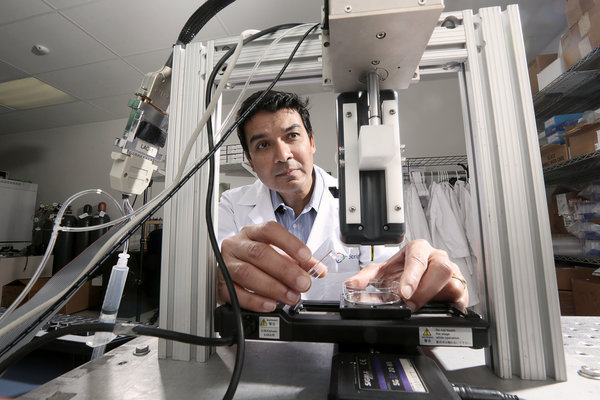
Darryl D’Lima, an orthopedic specialist, worked with a bioprinter in his research on cartilage at Scripps Clinic in San Diego.

SAN DIEGO — Someday, perhaps, printers will revolutionize the world of medicine, churning out hearts, livers and other organs to ease transplantation shortages. For now, though, Darryl D’Lima would settle for a little bit of knee cartilage.

Dr. D’Lima, who heads an orthopedic research lab at the Scripps Clinic here, has already made bioartificial cartilage in cow tissue, modifying an old inkjet printer to put down layer after layer of a gel containing living cells. He has also printed cartilage in tissue removed from patients who have undergone knee replacement surgery. Read more of this post

Out-of-Pocket Healthcare Costs Soar in Singapore as 3M Healthcare System Breaks Down and Chronic Patients Cannot Utilize Their Own Hard-Earned Money Tied Up In Healthcare System Used to Fund Investments

Whither our 3M healthcare system?

There are great expectations arising from the year-long Our Singapore Conversation. Many have expressed their concerns and wishes for the future development of healthcare. And recently, we have been deluged with many articles and commentaries on the advantages and disadvantages of the Singapore system, offering various diagnoses, prognoses and even policy lessons for other countries.

BY PHUA KAI HONG –

6 HOURS 53 MIN AGO

There are great expectations arising from the year-long Our Singapore Conversation. Many have expressed their concerns and wishes for the future development of healthcare. And recently, we have been deluged with many articles and commentaries on the advantages and disadvantages of the Singapore system, offering various diagnoses, prognoses and even policy lessons for other countries.

Healthcare consultant Dr Jeremy Lim, who has worked in the public and private sectors, will be launching his book, Myth or Magic: The Singapore Healthcare System, next month.

As a frequent commentator on the local health scene — having written several pieces for this paper, for instance — he recently noted that “it is not the invisible hand of the market that drives costs down in Singapore’s healthcare system. It is the very visible hand of a strong Government that does so, as regulator and in deciding what to subsidise and what not to subsidise”. Read more of this post

Dengue Fever Sweeps Southeast Asia; Thailand, Laos, Singapore See Surge in Mosquito-Borne Illness; Unusually Early Rains Are Blamed

August 16, 2013, 7:13 p.m. ET

Dengue Fever Sweeps Southeast Asia

Thailand, Laos, Singapore See Surge in Mosquito-Borne Illness; Unusually Early Rains Are Blamed

NOPPARAT CHAICHALEARMMONGKOL

An early rainy season in Southeast Asia has led to an unexpected jump in cases of dengue fever as governments struggle to control the mosquito populations that transmit the disease. Video by WSJ’s Nopparat Chaichalearmmongkol.

BANGKOK—Southeast Asia is scrambling to combat a deadly outbreak of dengue fever, the tropical illness transmitted by mosquitoes, which has hit parts of the region especially hard. Health experts suspect that an unusually early rainy season that brought mosquitoes out in April, months ahead of what is expected, contributed to the seriousness of the dengue challenge. Also, above-average temperatures that many experts blame on global warming encouraged early mosquito breeding. Meanwhile, dengue is thought to be mutating as a result of immunity that has built up in the region. And as the virus is spread by travelers, more countries are expected to be affected.

Read more of this post

A Powerful Tool in the Doctor’s Toolkit; How caregivers present and administer treatments has a powerful effect on clinical outcomes

AUGUST 15, 2013, 2:39 PM

A Powerful Tool in the Doctor’s Toolkit

By DANIELLE OFRI, M.D.

It was well past midnight and most of the patients had settled in. The hospital ward was quiet, except for “the howler.”

The howler was a patient in his 30s who earned his nickname for his nightly bouts of yelling. This was in the early 1990s, during the peak of the AIDS epidemic. I was a second-year medical resident at Bellevue Hospital, in charge of the sprawling AIDS ward that night. Admissions were rolling in, one after another, each more feverish and emaciated than the previous. Read more of this post

Shooting Beams at Brain Helps Ease Tremors in Patients

Shooting Beams at Brain Helps Ease Tremors in Patients

Researchers have devised a way to shoot focused beams of ultrasound through the skull to calm essential tremor, potentially the first non-invasive approach for hard-to-treat forms of the involuntary-shaking disorder.

As many as 10 million people in the U.S. have essential tremor, which is four times more common than its close cousin Parkinson’s disease. The condition often begins in young adults, worsening over time. While drugs help, deep-brain stimulation and surgery are used for those with disabling symptoms. Read more of this post

Tuberculosis “time bomb” costs Europe billions of euros a year

Tuberculosis “time bomb” costs Europe billions of euros a year

Thu, Aug 15 2013

By Kate Kelland

LONDON (Reuters) – Europe is facing a multi-billion-euro time bomb of rising costs to control tuberculosis (TB) as drug-resistant forms of the lung disease spread, a pioneering study found. Often thought of as a disease of the past or one restricted to marginalized communities, TB is already inflicting annual direct costs of more than 500 million euros on the region and another 5.3 billion euros in productivity losses. The study, by health economists based in Germany, also suggests the economic burden of TB far outweighs the likely costs of investing in much-needed research to develop more effective medicines and vaccines – something they said governments and the drug industry should do urgently. Read more of this post

Campbell Soup Sued Over Heart Association Endorsements; The association labels more than 30 of Campbell’s Healthy Request soups as “heart-healthy” even though a can has at least six times as much sodium as the organization recommends

Campbell Soup Sued Over Heart Association Endorsements

Campbell Soup Co. (CPB) and the American Heart Association were sued by a consumer who claimed the AHA fraudulently certifies the company’s products as healthy.

The association labels more than 30 of Campbell’s Healthy Request soups as “heart-healthy” even though a can has at least six times as much sodium as the organization recommends, according to a complaint filed yesterday by Kerry O’Shea in federal court in Camden, New Jersey. Those soups display the AHA’s “Heart-Check Mark” logo, which the organization licenses, according to the complaint. Read more of this post

E-ppointments: Will patients shop around online for a doctor as tourists do for a hotel on TripAdvisor?

Online healthcare

E-ppointments

Aug 13th 2013, 22:11 by C.S.-W.

RIGHT after 8.30am is a busy time for the ill in Britain. Many medical surgeries do not allow patients to pre-book appointments with their doctors: people must call up in the morning to book an appointment later in the afternoon. Come opening time, the phone lines are jammed with hacking, spluttering sick people trying to beg an audience with their doctor. Being able to book appointments online and outside of office hours not only makes life easier for patients, but gives them more choice. Zesty, a start-up based in London, has signed up 200 dental practices across ten London boroughs since launching at the end of April. Further healthcare sectors, such as surgeries, physiotherapists and osteopaths, will be implemented into its online booking system later this month. Co-founder Lloyd Price is banking on medicine being the next sector to take advantage of e-commerce. He wagers an online interface to make appointments and to compare doctors and dentists against each other, similar to the hotel-booking and rating model perfected by TripAdvisor and Expedia, will replace the engaged-tone at surgeries up and down the land. Read more of this post

A new generation of synthetic drugs is presenting novel legal problems; “The bad guys know what we do and they just tweak another molecule. They’re changing faster than we can write our names.”

August 14, 2013, 7:52 p.m. ET

‘Bath Salts’ Pose a Hurdle for Prosecutors

Chemical Tweaks Can Keep Synthetic Drugs From Being Linked to Banned Substances

DEVLIN BARRETT

A new generation of synthetic drugs is presenting novel legal problems, according to law-enforcement agents and prosecutors, who say the shifting chemistry behind the products makes it difficult to win convictions. The synthetic drugs are typically sold in retail shops in small packages labeled “bath salts,” which investigators say is a ploy to hide their true purpose. When smoked, snorted or injected, they can cause a range of reactions, from increased energy and euphoria similar to cocaine or ecstasy, to hallucinations, similar to LSD. Users who have had bad reactions report feeling extreme paranoia, or the sensation that their skin is burning, leading them to tear off their clothes. Read more of this post

Beautiful Pathologies: Medical-school students sometimes get carried away by their enthusiasm for the science of disease and forget the human suffering that comes with it

AUGUST 14, 2013, 8:39 PM

Beautiful Pathologies

By NATHANIEL P. MORRIS

At our medical school, we have something called the organ transplant observation program, which allows students to shadow the doctors who transfer functional organs from deceased or living donors into the bodies of dying patients. It’s pretty great. When it’s your turn, you might go to a nearby hospital and watch surgeons put in a heart, or hop on a private plane and fly to another state to get a kidney. The program is wildly popular and often a highlight of the medical school experience. This year, over half of my class signed up as soon as the forms went online.

Read more of this post

Brain Shaking Technique Offers Measure of Consciousness

Brain Shaking Technique Offers Measure of Consciousness

A new technique for measuring consciousness offers a reliable way to guide treatment of patients with brain injuries who can’t respond to commands, according to a study.

By using a device that shakes the entire brain with strong magnetic stimulation, researchers led by a team at University of Milan in Italy measured the amount of information flow occurring in the brain. They were able to discriminate between various levels of consciousness with a numerical index they developed. The study was published today in Science Translational Medicine. Read more of this post

America’s doctors, like Wall Street, need a cultural shift; An ‘eat what you treat’ system can tempt doctors to offer excessive treatments

August 14, 2013 6:39 pm

America’s doctors, like Wall Street, need a cultural shift

By Gillian Tett

An ‘eat what you treat’ system can tempt doctors to offer excessive treatments

How can America cut its healthcare costs? The question is generating political heat in Washington right now. No wonder. Healthcare spending now stands at an eye-popping 17 per cent of US gross domestic product. And next year, President Barack Obama’s divisive “Obamacare” reforms will take effect, extending insurance to a much wider part of the population than ever before. But as politicians trade ideas (and insults) about cutting costs – with proposals ranging from better use of information technology through to insurance exchanges – there is another issue that needs to be discussed: doctors’ pay. Read more of this post

Bee Sting Therapy Causing a Buzz in China

Bee Sting Therapy Causing a Buzz in China

By Neil Connor on 2:15 pm August 13, 2013.

In a photo taken on August 2, 2013, a patient receives a bee sting administered by a doctor of traditional Chinese medicine at a clinic on the outskirts of Beijing. Patients in China are swarming to acupuncture clinics to be given bee stings to treat or ward off life-threatening illness, arthritis, and cancer, practitioners say. More than 27,000 people have undergone the painful technique — each session can involve dozens of punctures — at Wang Menglin’s clinic in Beijing, says the bee acupuncturist who makes his living from believers in the concept. (AFP Photo/Ed Jones)

Beijing. Patients in China are swarming to acupuncture clinics to be given bee stings to treat or ward off life-threatening illness, practitioners say. More than 27,000 people have undergone the painful technique — each session can involve dozens of punctures — at Wang Menglin’s clinic in Beijing, says the bee acupuncturist who makes his living from believers in the concept. But except for trying to prevent allergic reactions to the stings themselves, there is no orthodox medical evidence that bee venom is effective against illness, and rationalist websites in the West describe so-called “apitherapy” as “quackery.” Read more of this post

This Little Sticker Works Like an Anti-Mosquito Force Field; The Kite Patch is a little square sticker that emits a cloak of chemical compounds that block a mosquito’s ability to sense humans

This Little Sticker Works Like an Anti-Mosquito Force Field

BY LIZ STINSON

08.06.13

kite11

The Kite Patch is a little square sticker that emits a cloak of chemical compounds that block a mosquito’s ability to sense humans. Image: ieCrowd

Mosquitos were born to bite us, and aside from lighting worthless tiki candles, haplessly swatting them away, or resorting to spraying toxic DEET all over ourselves, there’s really not a whole lot we can do about it. Imagine then, if you could be encapsulated in an anti-mosquito bubble simply by wearing a small square sticker. Not only would it save mosquito-magnets like myself some really uncomfortable moments, it could be a major game changer in the way we prevent mosquito-borne illnesses like Malaria, Dengue Fever, and West Nile Virus. The good news is that a sticker like this is not some far away concept dreamed up by scientists in a lab–it’s actually a real thing that you’ll likely be able to find on the shelves of your local Walgreens sometime in the not-so-distant future. Read more of this post

Device Nags You to Sit Up Straight; LumoBack Sensor Vibrates Whenever You Slouch

Updated August 13, 2013, 6:09 p.m. ET

Device Nags You to Sit Up Straight

LumoBack Sensor Vibrates Whenever You Slouch

KATHERINE BOEHRET

PJ-BP905_DSOLUT_G_20130813171028

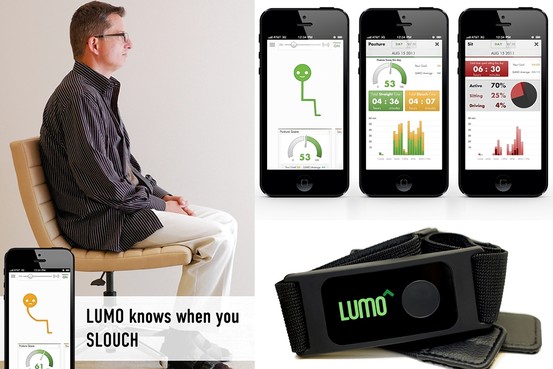
The LumoBack app tracks and scores your posture, with a stick figure. It compares straight versus slouching time, middle, and measures sitting time, right screen. The sensor and band, at right. The LumoBack from Lumo Body Tech is a $150 sensor that straps around your lower waist to track your posture, sending you a vibrating nudge whenever you start slouching. WSJ’s Katherine Boehret says it might be what some people need to straighten up.

“Sit up straight. Put your shoulders back. Don’t slouch.” Chances are good that you’ve heard nags like these from your mother more than a few times in your life. This week, I tested a gadget that might give mothers a rest. It’s a $150 sensor called LumoBack, from a company called Lumo BodyTech, that straps around your lower waist to track your posture and vibrates whenever you slouch. It also tracks steps while walking and running, standing time, sitting time, sleep positions and sleep time. Read more of this post

Prathap C. Reddy, the cardiologist who built a hospital chain valued at $2 billion over three decades in India, says he’s seeking growth overseas as the nation’s visa policies drive medical tourists to rivals.

Cayman to Singapore Gain as Rules Stump Clinics: Corporate India

Prathap C. Reddy, the cardiologist who built a hospital chain valued at $2 billion over three decades in India, says he’s seeking growth overseas as the nation’s visa policies drive medical tourists to rivals.

Apollo Hospitals Enterprise Ltd. (APHS) is considering hospitals in Indonesia, Cambodia and Tanzania, Reddy said in an interview at his Chennai office. Growth in the number of visitors seeking treatment for heart ailments, cancer and orthopedic surgery is falling short of Reddy’s estimates as India’s special visa for patients forces them to visit an immigration office, he said. Read more of this post

Surge of brain activity may explain near-death experiences

Surge of brain activity may explain near-death experiences

BY MEERI KIM

THE WASHINGTON POST

AUG 13, 2013

WASHINGTON – You feel yourself float up and out of your physical body. You glide toward the entrance of a tunnel, and a searing bright light envelops your field of vision. Rather than an ascent into the afterlife, a new study says these features of a near-death experience may just be a bunch of neurons in your brain going nuts. “A lot of people believed that what they saw was heaven,” said lead researcher and neurologist Jimo Borjigin. “Science hadn’t given them a convincing alternative.” Read more of this post

A Glut of Antidepressants: Overdiagnosis of depression is seen as one factor in the rise in antidepressant use

AUGUST 12, 2013, 2:53 PM

A Glut of Antidepressants

By RONI CARYN RABIN

Over the past two decades, the use of antidepressants has skyrocketed. One in 10 Americans now takes an antidepressant medication; among women in their 40s and 50s, the figure is one in four. Experts have offered numerous reasons. Depression is common, and economic struggles have added to our stress and anxiety. Television ads promote antidepressants, and insurance plans usually cover them, even while limiting talk therapy. But a recent study suggests another explanation: that the condition is being overdiagnosed on a remarkable scale. Read more of this post

New Laws and Rising Costs Create a Surge of Supersizing Hospitals

August 12, 2013

New Laws and Rising Costs Create a Surge of Supersizing Hospitals

By JULIE CRESWELL and REED ABELSON

Hospital Merger

Hospitals across the nation are being swept up in the biggest wave of mergers since the 1990s, a development that is creating giant hospital systems that could one day dominate American health care and drive up costs. The consolidations are being driven by a confluence of powerful forces, not least of which is President Obama’s signature health care law, the Affordable Care Act. That law, many experts say, is transforming the economics of health care and pushing a growing number of hospitals into the arms of suitors. Read more of this post

Gene Breakthroughs Spark a Revolution in Cancer Treatment

August 12, 2013, 11:03 p.m. ET

Gene Breakthroughs Spark a Revolution in Cancer Treatment

RON WINSLOW

A growing number of cancer practices are sequencing the DNA of tumors to uncover their genetic abnormalities. The aim: to pair a drug with the specific mutation fueling a patient’s disease. UC San Francisco’s Dr. Trever Bivona discusses.

Kellie Carey’s doctor finally stopped dodging questions about how long she had to live six weeks after he diagnosed her lung cancer. “Maybe three months,” he told her in his office one sunny May morning in 2010, she recalls. Yet she is still alive, a testament to the most extraordinary decade of progress ever in the long scientific struggle against lung cancer. Tests found Ms. Carey’s lung cancer to be of a rare type that researchers had found just three years earlier by deciphering its genetic code. The 45-year-old businesswoman in 2010 went on a drug Pfizer Inc. PFE -0.07% was testing for that type. By pinpointing her cancer, the drug probably helped give her years more to live than chemotherapy would have, her doctors say. That is remarkable because lung cancer for decades defied efforts to find drugs that could extend an average patient’s life by even a few weeks. But an explosion in knowledge about the genetic mutations that cause tumors is just now offering the first real promise of drugs that can control what is the most-common and most-deadly cancer. Ms. Carey has one of at least 15 lung-cancer variations, almost all of which scientists didn’t know existed 10 years ago. Researchers have identified those variations, most of them in just the past four years, by decoding DNA in tumors—akin to how crime labs analyze DNA to genetically fingerprint suspects. Read more of this post

Drug companies are shifting their focus to researching complex molecules to enable more personalised treatments

August 12, 2013 7:21 pm

Pharmaceuticals: Back to the lab

By Andrew Jack

Drug companies are shifting their focus to researching complex molecules to enable more personalised treatments

He has promised no big shift in strategy or focus, spurned big acquisitions and suffered a series of research setbacks. Yet Pascal Soriot, who became chief executive of AstraZeneca last October, has been rewarded by investors as he attempts to turn round the Anglo-Swedish pharmaceutical group. Mr Soriot, who left a secure senior job at Roche to take the top post at AstraZeneca, has ridden a fresh wave of investor optimism towards the prescription medicines sector after a long period of gloom. “We are committed to science and innovation,” he says. “If we make the right choices, we’ll transform our portfolio.” Read more of this post

Autism Risk May Be Raised for Children When Labor Induced

Autism Risk May Be Raised for Children When Labor Induced

Boys born to mothers who needed their doctor to start or help along the birth may have a higher risk of autism, a study found.

Boys whose mothers had labors that were induced, which stimulates the uterus to bring on contractions, or augmented, which increases the strength, duration and frequency of contractions, had a 35 percent greater risk of autism then children whose mothers didn’t need those procedures to help the births, according to research today in JAMA Pediatrics.

Today’s study is the largest to examine the potential link between birth procedures and autism and to find that males may be more affected than females, said Simon Gregory, the lead author. While induced labors help reduce deaths among mothers and babies, more studies are needed to better understand why these procedures may raise autism risk, he said. Read more of this post

Bursting the Neuro-Utopian Bubble; Pyschosocial problems cannot simply be solved in the neuroscientist’s lab

AUGUST 11, 2013, 9:31 PM

Bursting the Neuro-Utopian Bubble

By BENJAMIN Y. FONG

During my graduate studies in the Department of Religion at Columbia, I spent countless hours in the Burke Library of Union Theological Seminary, where I had a spectacular, cater-corner view of the construction and unveiling of the Northwest Corner Building, Columbia’s new interdisciplinary science building. Although the 14-story steel and aluminum tower was designed to complement the brick and limestone gothic tower of Union, its dominating presence on the corner of Broadway and 120th serves as a heavy-handed reminder of where we are heading. Walking from Union toward Columbia’s main campus through its doors, I often felt, passing through the overwhelmingly aseptic marble lobby, as if the building was meant to cleanse northwesterly intruders who have not been intimidated by the facade. Read more of this post

Autism’s Unexpected Link to Cancer Gene

August 11, 2013

Autism’s Unexpected Link to Cancer Gene

By GINA KOLATA

Researchers studying two seemingly unrelated conditions — autism and cancer — have unexpectedly converged on a surprising discovery. Some people with autism have mutated cancer or tumor genes that apparently caused their brain disorder. Ten percent of children with mutations in a gene called PTEN, which causes cancers of the breast, colon, thyroid and other organs, have autism. So do about half of children with gene mutations that can lead to some kinds of brain and kidney cancer and large tumors in several organs, including the brain. That is many times the rate of autism in the general population. “It’s eerie,” Evan Eichler, a professor of genome science at the University of Washington, said about the convergence. Read more of this post