U.S. Probes Use of Antipsychotic Drugs on Children

August 11, 2013, 10:39 p.m. ET

U.S. Probes Use of Antipsychotic Drugs on Children

Federal health officials are reviewing antipsychotic drug use on children in the Medicaid system

LUCETTE LAGNADO

P1-BM655A_ANTIP_G_20130811180008

Federal health officials have launched a probe into the use of antipsychotic drugs on children in the Medicaid system, amid concern that the medications are being prescribed too often to treat behavioral problems in the very young. The inspector general’s office at Department of Health and Human Services says it recently began a review of antipsychotic-drug use by Medicaid recipients age 17 and under. And various agencies within HHS are requiring officials in all 50 states to tighten oversight of prescriptions for such drugs to Medicaid-eligible young people. Read more of this post

China’s Guangdong Province Confirms Bird-Flu Case; The Confirmation Raises Concerns That the Virus May Be Resurfacing

August 10, 2013, 8:54 p.m. ET

China’s Guangdong Province Confirms Bird-Flu Case

The Confirmation Raises Concerns That the Virus May Be Resurfacing

TE-PING CHEN

HONG KONG—Southern China’s Guangdong province confirmed its first case of H7N9 bird flu on Saturday, rekindling concerns that the virus may be resurfacing and could spread to Hong Kong and elsewhere. Authorities in Guangdong said a 51-year-old woman surnamed Chen living in Boluo county, about 80 miles east of the capital Guangzhou, had contracted the disease. She is in critical condition after having been admitted to a hospital on Aug. 3 following signs of a fever. Read more of this post

A new prescription: New Zealand’s plan to regulate designer drugs is better than trying to ban them and failing

A new prescription: New Zealand’s plan to regulate designer drugs is better than trying to ban them and failing

Aug 10th 2013 |From the print edition

AS THE world’s drug habit shows, governments are failing in their quest to monitor every London window-box and Andean hillside for banned plants. But even that Sisyphean task looks easy next to the fight against synthetic drugs. No sooner has a drug been blacklisted than chemists adjust their recipe and start churning out a subtly different one. These “legal highs” are sold for the few months it takes the authorities to identify and ban them, and then the cycle begins again. In June the UN reported more than 250 such drugs in circulation.

Read more of this post

Why Health Care for All is Still a Joke in India

Why Health Care for All is Still a Joke in India

by Seema Singh | Aug 9, 2013

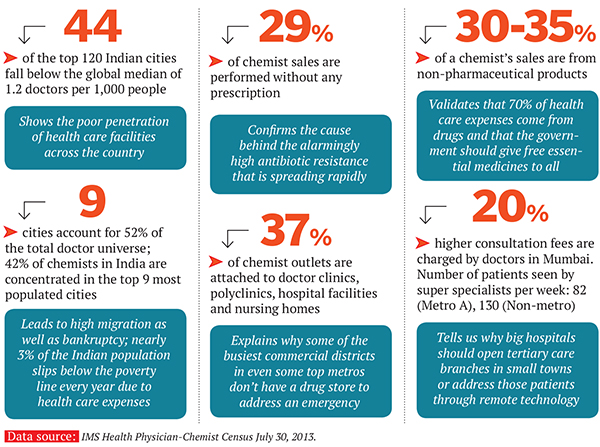
IMS Health, which provides information and services for health care, unveiled India’s first physician-chemist census in order to fill gaps in the health care value chain. The census covered 120 cities, 3.73 lakh doctors and 99,000 chemists. We list some key findings that point towards the skewed reach of medical care and decode what the numbers mean.

V5_I17_Page_6_Final.indd


Scientists Solve DNA Puzzle of Cord Stem Cell Infection

Scientists Solve DNA Puzzle of Cord Stem Cell Infection

Researchers studying diseases with an unknown cause may have a new method to try, as scientists reverse engineered a new bacterium responsible for a syndrome discovered fewer than two years ago.

The quest began in 2011, after doctors reported a syndrome they called cord colitis in a small group of patients treated with umbilical cord stem cells for blood cancer and other hematologic diseases. Researchers at Dana-Faber Cancer Institute in Boston hypothesized that the new ailment, which responded to antibiotics, stemmed from a previously unknown infectious agent. Read more of this post

Race to Publish Shows Glaxo Zeal to Get Leg Up in China

Race to Publish Shows Glaxo Zeal to Get Leg Up in China

Liu Xuebin recalls working 12-hour shifts and most weekends for months, under pressure to announce research results that would distinguish his GlaxoSmithKline Plc (GSK) lab in China as a force in multiple sclerosis research.

It paid off — for a while. Nature Medicine published findings about a potential new MS treatment approach in January 2010 and months later Liu was promoted to associate director of Glaxo’s global center for neuro-inflammation research in Shanghai. Two months ago, his career unraveled. An internal review found data in the paper was misrepresented. Liu, 45, who stands by the study, was suspended from duty on June 8 and quit two days later. Read more of this post

Anti-malaria drug Lariam causes psychiatric symptoms like amnesia, hallucinations, aggression and paranoia and FDA required label to carry a “black box” warning

August 7, 2013

Crazy Pills

By DAVID STUART MacLEAN

0808OPEDsampson-popup

CHICAGO — ON Oct. 16, 2002, at 4 p.m., I walked out of my apartment in Secunderabad, India, leaving the door wide open, the lights on and my laptop humming. I don’t remember doing this. I know I did it because the building’s night watchman saw me leave. I woke up the next day in a train station four miles away, with no idea who I was or why I was in India. A policeman found me, and I ended up strapped down, hallucinating in a mental hospital for three days. The cause of this incident was drugs. And these drugs had been recommended to me by the Centers for Disease Control and Prevention. I had been prescribed mefloquine hydrochloride, brand name Lariam, to protect myself from malaria while I was in India on a Fulbright fellowship. Since Lariam was approved in 1989, it has been clear that a small number of people who take it develop psychiatric symptoms like amnesiahallucinations, aggression and paranoia, or neurological problems like the loss of balance, dizziness or ringing in the ears. F. Hoffmann LaRoche, the pharmaceutical company that marketed the drug, said only about 1 in 10,000 people were estimated to experience the worst side effects. But in 2001, a randomized double-blind study done in the Netherlands was published, showing that 67 percent of people who took the drug experienced one or more adverse effects, and 6 percent had side effects so severe they required medical attention. Last week, the Food and Drug Administration finally acknowledged the severity of the neurological and psychiatric side effects and required that mefloquine’s label carry a “black box” warning of them. But this is too little, too late.

Read more of this post

Probiotics Fail to Foil Diarrhea in Setback for Gut-Taming Pills

Probiotics Fail to Foil Diarrhea in Setback for Gut-Taming Pills

A daily dose of probiotics failed to ward off diarrhea caused by antibiotics in a study of thousands of elderly patients that may deal a blow to the industry.

The study of 2,941 patients found little difference between the group of hospitalized people who, in addition to a course of antibiotics, were given strains of gut microbes known as bifidobacteria and lactobacilli, and those who unknowingly took a placebo for the same 21-day period. The trial results, published in The Lancet today, run counter to findings from earlier tests, in which probiotics showed promise in reducing the risk of antibiotic-associated diarrhea and infections with the bug Clostridium difficile, which can cause life-threatening bowel inflammation. Read more of this post

Family Gets Say on Immortal Cells That Led to 74,000 Studies

Family Gets Say on Immortal Cells That Led to 74,000 Studies

Descendants of Henrietta Lacks, a poor black tobacco farmer whose cells were taken without consent and used in 74,000 medical studies since the 1950s, will now have a say in how that genomic information will be applied.

Any scientist using National Institutes of Health funds to study the cells’ genome must apply to a panel of scientists and two of Lacks’s descendants for access to the data, according to research guidelines published in the journal Nature. Read more of this post

First likely case of H7N9 bird flu spread by humans reported

First likely case of H7N9 bird flu spread by humans reported

POSTED: 07 Aug 2013 7:03 AM
Chinese scientists on Wednesday reported the first likely case of direct person-to-person transmission of the H7N9 bird flu virus that has killed over 40 people since March. PARIS, France: Chinese scientists on Wednesday reported the first likely case of direct person-to-person transmission of the H7N9 bird flu virus that has killed over 40 people since March. The development was “worrying” and should be closely watched, the team wrote in the British online journal bmj.com, but stressed that the virus, believed to jump from birds to people, was still inadept at spreading among humans.  Read more of this post

Gum Sleuths Find Sick Mouths a Factor in Deadly Diseases

Gum Sleuths Find Sick Mouths a Factor in Deadly Diseases

Bacteria-laden mouths and bleeding gums are giving medical researchers plenty to think about. Turns out gum disease is associated with a greater risk of developing diabetes, heart disease and even pregnancy complications. And a study released last week found evidence that bacteria linked to gingivitis traveled to brains afflicted by Alzheimer’s disease, hinting at a role in dementia. As the latest research deepens scientists’ understanding of the link between dental health and disease, the potential implications are coming into focus. Something as simple as treating gum disease, a neglected, often painless condition, could limit damage from some of the world’s most widespread and costly illnesses. About half of all adults have some form of gum disease, says Iain Chapple, a professor of periodontology at the University of Birmingham in England. That shows the potential impact of healthier mouths, he said. Read more of this post

“There are so many unhappy thyroid patients”; Traditional means for diagnosing and treating the condition don’t work for all patients who are calling for doctors to be open to other therapies

August 5, 2013, 8:14 p.m. ET

New Call for More Thyroid Options

SUMATHI REDDY

Hashimoto’s disease, the most common cause of underactive thyroid, is easily treated with hormone replacement drugs. But it’s hard to spot and often misdiagnosed, as the symptoms can have multiple causes. Sumathi Reddy looks at efforts to improve diagnosis. 

Some people with hypothyroidism, or underactive thyroid glands, are organizing and agitating. Their complaint? That traditional means for diagnosing and treating the condition don’t work for all patients. Grass roots patient-activist organizations with names like ThyroidChange and Thyroid Patient Advocacy, and the doctor-founded National Academy of Hypothyroidism, say that the current screening test for hypothyroidism leaves out some symptomatic patients and that the main medication used to treat patients, doesn’t always alleviate many symptoms. They are calling for doctors to be open to other therapies, including a combination of synthetic hormones and the use of natural, animal-based ones. Read more of this post

The Finances of Serious Illness; For people facing a grim diagnosis, finances are often the last thing they want to talk about. But they shouldn’t be

August 4, 2013, 4:55 p.m. ET

FUNDAMENTALS OF INVESTING

The Finances of Serious Illness

For people facing a grim diagnosis, finances are often the last thing they want to talk about. But they shouldn’t be.

LISA WARD

It’s the news no one wants to hear: a diagnosis of a dire, possibly fatal, disease. As questions about life and death naturally overshadow everything else, financial planners and advisers say, it’s common for people in this situation to let their finances fall to the wayside. Nevertheless, they say, coming up with a financial plan, which may involve making changes to your investment portfolio, is crucial to achieving the best possible outcome for patients and their families. Here are some pointers from advisers on how to handle the financial impact of a serious illness. Read more of this post

Sanofi Dengue Bid Seen as $2.6 Billion Hit or Major Flop

Sanofi Dengue Bid Seen as $2.6 Billion Hit or Major Flop

Drug ineffective in tests against most common strain in Thailand

By Simeon Bennett on 9:33 am August 5, 2013.

Sanofi, whose vaccines have all but eradicated polio, recently flew journalists from around the globe to a sparkling new factory in France to tout its next big project — the world’s first vaccine for dengue. That takes confidence, considering mid-stage studies for the shot last year yielded results that ranged from perplexing to disappointing. Sanofi is forging ahead. It’s readying commercial production of a vaccine to prevent the debilitating and sometimes fatal mosquito-borne malady that’s had outbreaks in the US and Europe and threatens half the global population. The drug maker is making the first batches of the shot at its new 300 million-euro ($398 million) plant, even as it waits for results next year of make-or-break trials to determine whether the product will be a $2.6 billion-a-year success or an $800 million flop. Read more of this post

Is It Possible to Recover from Autism? New research says yes, but how to spark recovery remains a mystery

Is It Possible to Recover from Autism?

New research says yes, but how to spark recovery remains a mystery

By Jennifer Richler  | Monday, July 29, 2013 | 11

When I was training to be a clinical psychologist, telling parents that their child had autism was a regular part of my job. Now that I’m a parent, I understand better the pained expression that came over their faces as they contemplated this news. Among the many questions taking shape in their minds, I can imagine the one looming largest: Could their child ever be like other children?

A recent study, published in February in the Journal of Child Psychology and Psychiatry, suggests that for some people, the answer is yes. The researchers found that some individuals who had been diagnosed with autism as young children no longer had symptoms—such as difficulty interacting and communicating with others, rigid adherence to rituals and routines, and repetitive movements of their bodies and objects—when they were older. Read more of this post

Bacteria ‘Invest’ Their Resources To Seek Evolutionary Success

Bacteria ‘Invest’ Their Resources To Seek Evolutionary Success

August 2, 2013

Researchers have recreated and analyzed the complex interplay between bacterial investment strategies and their outcomes for the first time. Asian Scientist (Aug. 2, 2013) – The complex interplay between bacterial investment strategies and their outcomes has been recreated and analyzed for the first time by researchers in Australia and the UK. Since the 1960s, theories have been floated on how decision-making by organisms is related to their survival on one hand or to rapid growth on the other. It is not possible to do both simultaneously because of insufficient resources. Bacteria, like humans, have limited resources and are constantly faced with decisions on how to invest in their future. In their study, published in Ecology Letters, the researchers developed a mathematical model to predict the best way for bacteria to invest resources in a trade-off between growth and stress resistance. The researchers modeled how, like humans investing in cash, bacteria trade in costly proteins to reduce their stress levels or to increase consumption and so grow faster. Evolution can be seen as a decision making process where different choices are encoded in the genes. Each bacterium makes an investment decision; the bad investors fall by the wayside, the good ones survive. Read more of this post

Increase in Urine Testing Raises Ethical Questions; The growth of tests for painkillers has led to concerns about their accuracy and whether some companies and doctors are exploiting them for profit

August 1, 2013

Increase in Urine Testing Raises Ethical Questions

By BARRY MEIER

As doctors try to ensure their patients do not abuse prescription drugs, they are relying more and more on sophisticated urine-screening tests to learn which drugs patients are taking and — just as important — which ones they’re not. The result has been a boom in profits for diagnostic testing laboratories that offer the tests. In 2013, sales at such companies are expected to reach $2 billion, up from $800 million in 1990, according to the Frost & Sullivan consulting firm. Read more of this post

Getting cancer cells to scream “come and get me!” Getting cancer cells to scream “come and get me!”

Innovation: Cancer Vaccine by Stanford’s Irving Weissman

By Olga Kharif on August 01, 2013

Innovator: Irving Weissman
Age: 73
Title: Stanford Medical School director of stem cell biology and regenerative medicine

Form and function: Creating antibodies capable of blocking the protein most cancer cells use to hide themselves from a body’s immune system.

tech_innovation32__01__950

15 per cent of Singaporean Chinese older than 60 have dementia: Study

15 per cent of Chinese older than 60 have dementia: Study

Friday, Aug 02, 2013
The Straits Times
By Linette Lai

SINGAPORE – Three in 20 Chinese Singaporeans above the age of 60 suffer from cognitive impairment or dementia, according to a study conducted by the National University Health System (NUHS). Issues with poor brain function were found to increase with age, with close to half the participants over 80 years old suffering from some form of cognitive impairment. Before being diagnosed as suffering from full-blown dementia, many show symptoms that may go unrecognised and ignored, said Dr Mohammad Kamran Ikram, who co-authored the two-year study involving 1,226 participants. These symptoms include memory loss and difficulty in carrying out simple tasks like following recipes or keeping track of household bills. The study found those with diabetes, high cholesterol or high blood pressure are most at risk of developing cognitive impairment problems. But associate professor Christopher Chen, director of the NUHS Memory, Aging & Cognition Centre, debunked the idea that being at risk guarantees the development of dementia in an individual. “Many people have the idea that it’s all due to age and there’s nothing that can be done about it,” he said. “You may have forgetfulness, but you can compensate and take steps to identify if you have these risk factors and halt progression.” Two separate studies on the prevalence of dementia in the Malay and Indian communities will be conducted, with the former slated to be completed by the end of this year.

linettel@sph.com.sg


For surgery, big and famous hospitals aren’t always the best

For surgery, big and famous hospitals aren’t always the best

8:25am EDT

By Sharon Begley

NEW YORK (Reuters) – Patients going to a hospital for surgery care about many things, from how kind the nurses are to how good the food is, but Consumers Union (CU) figures what they care about most is whether they stay in the hospital longer than they should and whether they come out alive. In the first effort of its kind, the nonprofit publisher of Consumer Reports magazine released ratings of 2,463 U.S. hospitals in all 50 states on Wednesday, based on the quality of surgical care. The group used two measures: the percentage of Medicare patients who died in the hospital during or after their surgery, and the percentage who stayed in the hospital longer than expected based on standards of care for their condition. Both are indicators of complications and overall quality of care, said Dr John Santa, medical director of Consumer Reports Health. Read more of this post

Bacteria linked to gum disease traveled to the brains of people with Alzheimer’s disease, suggesting that dental hygiene plays a role in the development of the memory-robbing illness

Bacteria in Brains Suggest Alzheimer’s-Gum Disease Link

Bacteria linked to gum disease traveled to the brains of people with Alzheimer’s disease, suggesting that dental hygiene plays a role in the development of the memory-robbing illness, British researchers said.

Signs of the bacterium, known as Porphyromonas gingivalis, were found in four out of 10 samples of brain tissue from Alzheimer’s patients, while no signs of the bug were found in 10 brains from people of similar age who never developed dementia, according to the results of the study published in the Journal of Alzheimer’s Disease. Read more of this post

Overuse of antibiotics has caused growing resistance to drugs, and many scientists say their heavy use on farm animals is a major culprit

July 29, 2013

Tracing Germs Through the Aisles

By SABRINA TAVERNISE

Twice a month for a year, Lance Price, a microbiologist at George Washington University, sent his researchers out to buy every brand of chicken, turkey and pork on sale in each of the major grocery stores in Flagstaff, Ariz. As scientists pushed carts heaped with meat through the aisles, curious shoppers sometimes asked if they were on the Atkins diet.

In fact, Professor Price and his team are trying to answer worrisome questions about the spread of antibiotic-resistant germs to people from animals raised on industrial farms. Specifically, they are trying to figure out how many people in one American city are getting urinary infections from meat from the grocery store. Read more of this post

Some of the top scientists in cancer research are recommending sweeping changes in the approach to detection and treatment, including eliminating the word cancer entirely from some common diagnoses.

JULY 29, 2013, 11:00 AM

Scientists Seek to Rein In Diagnoses of Cancer

By TARA PARKER-POPE

A group of experts advising the nation’s premier cancer research institution has recommended sweeping changes in the approach to cancer detection and treatment, including changes in the very definition of cancer and eliminating the word entirely from some common diagnoses.

The recommendations, from a working group of the National Cancer Institute, were published on Monday in the Journal of the American Medical Association. They say, for instance, that some premalignant conditions, like one that affects the breast called ductal carcinoma in situ, which many doctors agree is not cancer, should be renamed to exclude the word carcinoma so that patients are less frightened and less likely to seek what may be unneeded and potentially harmful treatments that can include the surgical removal of the breast. The group, which includes some of the top scientists in cancer research, also suggested that many lesions detected during breast, prostate, thyroid, lung and other cancer screenings should not be called cancer at all but should instead be reclassified as IDLE conditions, which stands for “indolent lesions of epithelial origin.” Read more of this post

Heart Surgery in India for $1,583 Costs $106,385 in U.S.

Heart Surgery in India for $1,583 Costs $106,385 in U.S.

Devi Shetty is obsessed with making heart surgery affordable for millions of Indians. On his office desk are photographs of two of his heroes: Mother Teresa and Mahatma Gandhi.

Shetty is not a public health official motivated by charity. He’s a heart surgeon turned businessman who has started a chain of 21 medical centers around India. By trimming costs with such measures as buying cheaper scrubs and spurning air-conditioning, he has cut the price of artery-clearing coronary bypass surgery to 95,000 rupees ($1,583), half of what it was 20 years ago, and wants to get the price down to $800 within a decade. The same procedure costs $106,385 at Ohio’s Cleveland Clinic, according to data from the U.S. Centers for Medicare & Medicaid Services. Read more of this post

A Mysterious Hum Is Driving People Around The World Crazy

A Mysterious Hum Is Driving People Around The World Crazy

MARC LALLANILLALIVESCIENCE JUL. 26, 2013, 1:11 PM 17,165 27

It creeps in slowly in the dark of night, and once inside, it almost never goes away. It’s known as the Hum, a steady, droning sound that’s heard in places as disparate as Taos, N.M.; Bristol, England; and Largs, Scotland. But what causes the Hum, and why it only affects a small percentage of the population in certain areas, remain a mystery, despite a number of scientific investigations. [The Top 10 Unexplained Phenomena] Reports started trickling in during the 1950s from people who had never heard anything unusual before; suddenly, they were bedeviled by an annoying, low-frequency humming, throbbing or rumbling sound. The cases seem to have several factors in common: Generally, the Hum is only heard indoors, and it’s louder at night than during the day. It’s also more common in rural or suburban environments; reports of a hum are rare in urban areas, probably because of the steady background noise in crowded cities. Read more of this post

DuPont Sees Niche in Curing China’s Indigestion with state-of-the-art probiotics

DuPont Sees Niche in Curing China’s Indigestion

By Christina Larson on July 24, 2013

Just reading recent headlines about food-safety scandals in China might be enough to give a polite person indigestion. This week CCTV reported that ice cubes found in some KFC (YUM) and McDonald’s (MCD) Beijing branches contained more bacteria than toilet water. Other recent media investigations have exposed gutter oil “recycled” as cooking oil; rat meatsold as “lamb”; and growth-chemical-laced exploding watermelons. But where there’s a problem, there’s often a business opportunity: Companies selling digestive aids, dietary supplements, are nutrition products are now finding a hungry market in China. Read more of this post

Viagra patent expiry in July 2014 arouses interest from Chinese pharmas to target US$81.4 billion market

Viagra patent expiry arouses interest from Chinese pharmas

Staff Reporter

2013-07-26

Pfizer’s Viagra patent will expire in July 2014 and Chinese corporations such as Guangzhou Pharmaceutical Holdings and Lianhuan Pharmaceutical are getting ready to flood the market with generic versions of the erectile dysfunction drug. In fact, the expiry of Viagra’s patent is just one instance from the over 600 patented drugs whose patents started expiring after 2012, according to the Chinese Medical Report. Read more of this post

America spends more on health care than any other country in the world. What is more, spending within America varies dramatically from one region to the next. This is well known. Less understood is how best to change it

The high cost of health care

Searching for a diagnosis

Jul 24th 2013, 18:24 by C.H. | NEW YORK

AMERICA spends more on health care than any other country in the world. What is more, spending within America varies dramatically from one region to the next. This is well known. Less understood is how best to change it. The health system is enormously complex. Differing views on reform inspire rowdy protests and send pundits into frothy-mouthed rants. To lower health spending, it would help to know what drives it up. A huge new report from America’s Institute of Medicine (IOM) helps provide an answer. In the study, commissioned by Congress, the IOM looked at the geographic variation in spending within Medicare, the health programme for the old, and within the commercially insured population. It is the biggest ever analysis of why some regions spend more than others. Crucially, the factors driving the variation in Medicare spending are different from those affecting private coverage. Read more of this post

Parents are turning to medical clinics run by pharmacies like CVS and Walgreen to treat their children for minor illnesses rather than their pediatricians because of the convenience

Retail Health Clinics More Popular on Ease for Parents

Parents are turning to medical clinics run by companies like CVS Caremark Corp. (CVS) and Walgreen Co. (WAG) to treat their children for minor illnesses rather than their pediatricians because of the convenience, a study found.

Parents used the clinics instead of their child’s doctor because the retail health outlets had more suitable hours, their pediatrician had no available appointments or they didn’t want to bother the doctor after hours, according to research published today in JAMA Pediatrics. Read more of this post

Glaxo holds 24% of the global vaccines market with $5.1 billion revenue, followed by Sanofi, which commands a 23% share

Glaxo in Active Talks to Set Up China Joint Venture on Vaccines

GlaxoSmithKline Plc (GSK), the world’s largest maker of vaccines, is in discussions to form a joint venture with a Chinese company to help with research and marketing.

Talks with several potential partners haven’t been affected by an investigation on alleged “economic crimes” in China, said Christophe Weber, head of the company’s vaccines unit. Read more of this post