Sick workers pay price for Chinese growth

Sick workers pay price for Chinese growth

By Carol Huang (AFP) – 1 hour ago

SHUANGXI, China — As China boomed around 200 men set out from Shuangxi’s rural idyll to build its infrastructure and skyscrapers. Now lung disease from dust has killed a quarter of them and 100 more are waiting to die.

Back home amid rice paddies and forested hills, Xu Zuoqing walks outside and his face contorts in pain from the effort. As he struggles to breathe, his wife rushes over a stool so he can recuperate.

“It’s like my lungs are being choked. My chest feels so tight,” says the 44-year-old who worked on construction sites for about 15 years, his voice strained at times.

“I just wish I could die comfortably… Well, I wish I didn’t have to die.” Read more of this post
New Tools to Hunt New Viruses

May 27, 2013

New Tools to Hunt New Viruses

By DONALD G. McNEIL Jr.

A new flu, H7N9, has killed 36 people since it was first found in China two months ago. A new virus from the SARS family has killed 22 people since it was found on the Arabian Peninsula last summer.

In past years, this might have been occasion for panic. Yet chicken and pork sales have not plummeted, as they did during flus linked to swine and birds. Travel to Shanghai or Mecca has not been curtailed, nor have there been alarmist calls to close national borders.

Is this relatively calm response in order? Or does the simultaneous emergence of two new diseases suggest something more dire?

Actually, experts say, the answer to both questions may well be yes. Read more of this post

Bird Flu Virus Is Capable of Human Spread, Ferret Studies Show

Bird Flu Virus Is Capable of Human Spread, Ferret Studies Show

The bird flu virus that’s killed 36 people in China is capable of human-to-human spread, scientists found in animal studies that highlight its pandemic potential.

Ferrets experimentally infected with the new H7N9 strain passed it to other ferrets occupying the same cage, indicating the virus’s ability to spread via direct contact, researchers at the Chinese Center for Disease Control and Prevention in Beijing and the University of Hong Kong said. Flu transmission in ferrets is a predictor of patterns in humans, the authors said in the study, published yesterday in Science Express.

The research will help health officials tailor their response to the H7N9 strain, which is known to have infected 131 people since March, mostly through contact with virus-laden poultry. No cases have been reported since May 8, weeks after authorities curbed live poultry sales in the eastern cities of Shanghai, Nanjing and Hangzhou. So far, there is no evidence of sustained human-to-human transmission — a feature required for flu to spark a pandemic — the World Health Organization said. Read more of this post

H7N9 bird flu found to spread through the air, a team at the University of Hong Kong found after extensive laboratory experiments.

H7N9 bird flu found to spread through the air

Friday, 24 May, 2013, 12:00am

Jeanette Wang jeanette.wang@scmp.com

Virus can also infect pigs, say HKU researchers, who warn officials to maintain tight scrutiny even though threat seems under control

The H7N9 bird flu virus can be transmitted not only through close contact but by airborne exposure, a team at the University of Hong Kong found after extensive laboratory experiments. Read more of this post

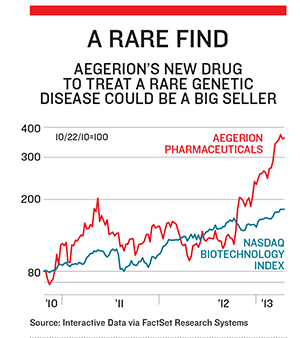
How Marc Beer Scipted Aegerion Pharma’s Success Story

How Marc Beer Scipted Aegerion Pharma’s Success Story

by Matthew Herper | May 23, 2013

topimg_21723_marc_beer_and_daniel_rader_300x400

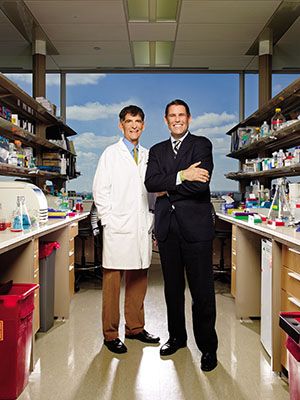
Marc Beer (right) and Daniel Rader created a great drug—and a hot stock

Marc Beer was done starting companies—until he met a doctor who could help patients with a rare and terrible disease. Investors couldn’t be happier

When Marc Beer sold his first public company, the biotech ViaCell, to PerkinElmer for $300 million in 2007 it seemed like the beginning of an amazing entrepreneurial career. But just months later it was cut short: His wife of 18 years died suddenly from a pulmonary embolism at the age of 42, and he committed himself to parenting his three teenagers full-time. Two years later, his 14-year-old daughter told him to start another company. “Dad, you’ve been preaching purpose to me my entire life,” she said. “I don’t think purpose is driving me home from school.” Just a few weeks after that conversation, Daniel Dubin, a physician, old friend and vice chairman of Leerink Swann, told him about a promising drug being shunned by investors but backed by one of cardiology’s best minds: Daniel Rader, chief of translational medicine and human genetics at the University of Pennsylvania. Beer called Rader and found himself sold. “All I did was listen,” Beer says. “He just needed to be listened to.” The result of that listening is one of this year’s biggest biotech success stories: Aegerion Pharmaceuticals. On Christmas Eve, less than two years after Beer took the helm, the tiny company won approval from the Food & Drug Administration to sell its drug, Juxtapid, as a treatment for patients with a rare genetic disease that frequently causes fatal heart attacks before age 20.

SECOND CHANCES.indd Read more of this post

World Not Ready for Mass Flu Outbreak: WHO

World Not Ready for Mass Flu Outbreak: WHO

By Agence France-Presse on 9:53 am May 22, 2013.
Geneva. The world is unprepared for a massive virus outbreak, the deputy chief of the World Health Organization warned on Tuesday, amid fears that H7N9 bird flu striking China could morph into a form that spreads easily among people. Keiji Fukuda told delegates at a WHO meeting that despite efforts since an outbreak of another form of avian influenza, H1N1, in 2009-10, far more contingency planning was essential. “Even though work has been done since that time, the world is not ready for a large, severe outbreak,” Fukuda said. Rapid-reaction systems were crucial, given that health authorities’ efforts are already hampered by lack of knowledge about such diseases, he insisted. “When people get hit with an emerging disease, you can’t just go to a book and know what to do,” he said.

Read more of this post

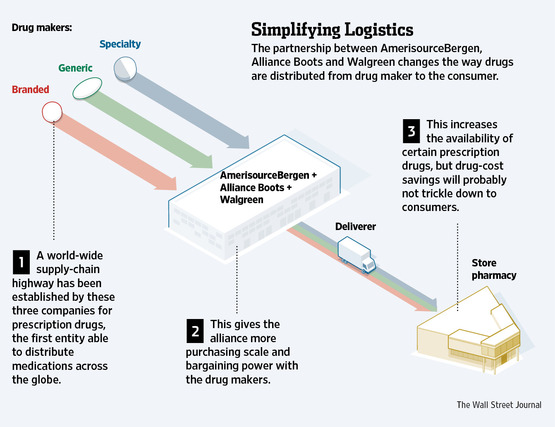
Stefano Pessina, the Italian billionaire you’ve never heard of, is reshaping the fast-evolving, global pipeline that determines whether your prescription drugs are in stock when you need them

May 20, 2013, 6:50 p.m. ET

Stefano Pessina, the Man Shaking Up U.S. Pharmacy Distribution

Head of Alliance Boots Says Partnership With Walgreen, AmeriSource Bergen Will Streamline System

By TIMOTHY W. MARTIN

MK-CD373_PESSIN_G_20130520183604MK-CD383_PASSIN_DV_20130520174911

Stefano Pessina, the Italian billionaire you’ve never heard of, is reshaping the fast-evolving, global pipeline that determines whether your prescription drugs are in stock when you need them.

Mr. Pessina, who speaks fluent Italian, English and French, is the executive chairman of European pharmacy giant Alliance Boots GmbH. In the past four decades, he transformed his family’s fledgling Italian warehouse into a European drug retailing and wholesaling powerhouse by doing 150 “significant deals,” the biggest of which was taking the company private in a leveraged buyout, valued at $18.5 billion—still one of the largest ever.

Far from retiring, the 71-year-old has designs on America, where he thinks the U.S. health-care system, compared with Europe’s, is “quite rich, quite fat” and “not particularly efficient at all.” Read more of this post

Forget to Take Medicine? An IDEO concept for a medicine bottle that would show spots like a rotting banana when past expiration date.

May 20, 2013, 8:07 p.m. ET

Forget to Take Medicine? These Pills Will Tell Your Doctor

Startups Devise Ways to Help Patients Stick to Their Pill-Taking Schedule

By TIMOTHY HAY

MK-CD365_PILL_S_DV_20130520183345MK-CD389_PILLS__G_20130520182723

AdhereTech pill bottle. It glows blue during the optimal dosage time and it flashes red when the dosage is missed. An IDEO concept for a medicine bottle that would show spots like a rotting banana when past expiration date.

Startups are coming up with new technologies, such as “digital pills,” aimed at getting people to take medicine only as directed. Timothy Hay joins The News Hub. Photo: AdhereTech. Startup companies are coming up with new technologies aimed at getting people to take medicine only as directed. Taking medication haphazardly—skipping doses, lapsing between refills or taking pills beyond their expiration date—has been linked to health complications and hundreds of millions of wasted dollars for insurers and hospitals. “After six months’ time, only half of people taking prescription medicines are taking them as directed,” said Troyen Brennan, chief medical officer of drug retailer CVS Caremark Corp.CVS -0.77% Health insurers and pharmacy-benefits managers like CVS have long relied on robo-calls, mailers and face-to-face meetings with pharmacists to keep patients on their dosing schedule. Now they are evaluating a range of more cost-effective technologies, from pills and bottles with digital sensors, to data analytics software and social games that offer patients rewards. Read more of this post

When Social Skills Are a Warning: Behavior Changes Serve as an Early Signal of Mental-Health Issues; Starting Treatment Sooner

Updated May 20, 2013, 7:11 p.m. ET

When Social Skills Are a Warning

Behavior Changes Serve as an Early Signal of Mental-Health Issues; Starting Treatment Sooner

By SHIRLEY S. WANG

PJ-BO379_LAB_DV_20130520154859

With many neurological disorders, from Alzheimer’s to ADHD, the first clue something is wrong may be atypical social behavior. Shirley Wang reports on Lunch Break. Photo: Getty Images.

An uncle starts believing all your sarcastic comments. Or a kindhearted friend never understands anymore how you feel. These people may not just be momentarily off. Recent research indicates they may be exhibiting early signals that something is going awry in their brains.

Changes in social behavior, such as difficulty detecting insincere comments or feeling empathy, can be a window into our neurological health, scientists say. That is because how we interact with other people is one of the more complex functions the brain must perform. It requires a symphony of neurons firing throughout the brain and working together in networks so that we can detect, decode and interpret social signals. Deterioration in social functioning can begin even while executive functions like planning and organizing remain intact during the early stages of mental disorders. Behavior changes can serve as an early signal of mental-health issues. Read more of this post

Vitamins That Cost Pennies a Day Seen Delaying Dementia (Research Sponsored by Vitamin-Makers?)

Vitamins That Cost Pennies a Day Seen Delaying Dementia

A cheap regimen of vitamins in use for decades is seen by scientists as a way to delay the start of Alzheimer’s disease and dementia, a goal that prescription drugs have failed to achieve.

Drugmakers including Bristol-Myers Squibb Co., Pfizer Inc. (PFE) and Eli Lilly & Co. (LLY) have spent billions of dollars on ineffective therapies in a so-far fruitless effort to come up with an effective treatment for dementia and Alzheimer’s.

Now, in the latest of a steady drumbeat of research that suggests diet, exercise and socializing remain patients’ best hope, a study published today in the Proceedings of the National Academy of Sciences shows that vitamins B6 and B12 combined with folic acid slowed atrophy of gray matter in brain areas affected by Alzheimer’s disease.

“You don’t have any other options for these patients, so why not try giving them this cocktail of B vitamins?” says Johan Lokk, a professor and head physician in the geriatric department at Karolinska University Hospital Huddinge in Sweden, who wasn’t involved in the study.

Alzheimer’s disease and dementia mostly affect older people. As people live longer, the number afflicted by the conditions is growing. Delaying dementia with an inexpensive vitamin regimen may help stem the surge in cases, which the World Health Organization predicted would more than triple from 36 million worldwide in 2010 to 115 million in 2050, as well as the cost, estimated at $604 billion in 2010 by Alzheimer’s Disease International. Read more of this post

‘Love Hormone’ Promises Safer Births After Pfizer Flop

‘Love Hormone’ Promises Safer Births After Pfizer Flop

A hormone treatment based on technology used in Pfizer Inc. (PFE)’s failed inhalable insulin shows promise in fighting the leading cause of maternal mortality.

Six years after Pfizer pulled Exubera from the market at a cost of more than $2.8 billion, scientists at Melbourne’s Monash University are revisiting the inhalable technology to deliver a life-saving medicine to stop post-delivery hemorrhage.

The Bill & Melinda Gates Foundation is backing the effort to produce a better way to give oxytocin, a brain chemical that helps the uterus contract after birth and is sometimes referred to as the “love hormone” because of its role in orgasm and bonding. The project is one of several testing inhalations to deliver medicines, salvaging the know-how of a product that was taken off the market after just 14 months of lackluster sales.

“Exubera was the first generation,” said John Patton, one of the original inventors of Pfizer’s inhaled insulin technology system. “When you’re first, you take a lot of bullets. With the developments in the industry, it’s just a matter of time before we will be inhaling lots of medicine.”

The lead scientist for the Monash project, Michelle McIntosh, says her group plans to start testing a dry-powdered form of oxytocin by early 2014. Patton’s company Dance Biopharm Inc., is working on an inhaled insulin, as is Mannkind Corp. (MNKD), the biotech company founded by billionaire investor Alfred Mann. Read more of this post

Is there a link between suicide and weakened social ties? The problem is that as it’s grown easier to be remarkable and unusual, it’s arguably grown harder to be ordinary

May 18, 2013

All the Lonely People

By ROSS DOUTHAT

OVER the last decade, the United States has become a less violent country in every way save one. As Americans commit fewer and fewer crimes against other people’s lives and property, they have become more likely to inflict fatal violence on themselves.

In the 1990s, the suicide rate dipped with the crime rate. But since 2000, it has risen, and jumped particularly sharply among the middle-aged. The suicide rate for Americans 35 to 54 increased nearly 30 percent between 1999 and 2010; for men in their 50s, it rose nearly 50 percent. More Americans now die of suicide than in car accidents, and gun suicides are almost twice as common as gun homicides.

This trend is striking without necessarily being surprising. As the University of Virginia sociologist Brad Wilcox pointed out recently, there’s a strong link between suicide and weakened social ties: people — and especially men — become more likely to kill themselves “when they get disconnected from society’s core institutions (e.g., marriage, religion) or when their economic prospects take a dive (e.g., unemployment).” That’s exactly what we’ve seen happen lately among the middle-aged male population, whose suicide rates have climbed the fastest: a retreat from family obligations, from civic and religious participation, and from full-time paying work. Read more of this post

Researchers at Princeton and Johns Hopkins universities used a 3-D printer to create bionic ears with auditory powers far beyond the natural human endowment. A look at the implications.

All Ears for a Revolution

By DANIEL AKST

The singularity may not be near, but it’s getting close enough that you might just hear it coming—if you had the kind of synthetic ears scientists recently developed.

The singularity is a term used by futurists for the merger of human and machine into an infinitely malleable, self-determining species with powers of intelligence that flesh-and-blood-mortals can only dream of. Although superhuman mental powers aren’t yet on the horizon, the new ears remind us that our future is very likely bionic.

Human ears are a problem for plastic surgeons. But writing in Nano Letters, researchers at Princeton and Johns Hopkins universities described how they used a standard 3-D printer to create bionic ears with auditory powers far beyond the natural human endowment. The technique lets scientists mimic the structural complexity of the ear while achieving a wider range of audible frequencies through the embedded electronics. They used the printed ear to culture genuine cartilage in vitro from calf cells. Read more of this post

Children’s Mental Illness Costs $247 Billion, U.S. Says

Children’s Mental Illness Costs $247 Billion, U.S. Says

Mental illness in children costs $247 billion annually, a figure increasing along with the number of kids hospitalized for mood disorders, substance abuse and other psychiatric disorders, according to a U.S. report.

As many as 1 in 5 children ages 3 to 17 years old has a mentally illness, with attention deficit hyperactivity disorder as the most prevalent diagnosis, according to the report from the Centers for Disease Control and Prevention. The rate of children hospitalized for mood disorders increased 80 percent from 1997 to 2010, the report said, citing a U.S. study from that year.

The CDC report released yesterday draws on a number of U.S. surveys that collect data on children’s mental health. The Atlanta-based agency uses the report to mark the prevalence of the disorders and promote public health initiatives to treat and prevent them. Researchers found that suicide, often stemming from mental illness, was the second-leading cause of death in 2010 among adolescents ages 12 to 17.

“Millions of children in the U.S. have mental disorders that affect their overall health and present challenges for their loved ones,” Thomas Frieden, the director of the CDC, said in a statement. “We are working to both increase our understanding of these disorders, and help scale up programs and strategies to promote children’s mental health so that our children grow to lead productive, healthy lives.” Read more of this post

Sweden is leading the world in allowing private companies to run public institutions

Sweden is leading the world in allowing private companies to run public institutions

May 18th 2013 |From the print edition

SAINT GORAN’S hospital is one of the glories of the Swedish welfare state. It is also a laboratory for applying business principles to the public sector. The hospital is run by a private company, Capio, which in turn is run by a consortium of private-equity funds, including Nordic Capital and Apax Partners. The doctors and nurses are Capio employees, answerable to a boss and a board. Doctors talk enthusiastically about “the Toyota model of production” and “harnessing innovation” to cut costs.

Welcome to health care in post-ideological Sweden. From the patient’s point of view, St Goran’s is no different from any other public hospital. Treatment is free, after a nominal charge which is universal in Sweden. St Goran’s gets nearly all its money from the state. But behind the scenes it has led a revolution in the relationship between government and business. In the mid-1990s St Goran’s was slated for closure. Then, in 1999, the Stockholm County Council struck a deal with Capio to take over the day-to-day operation of the hospital. In 2006 Capio was taken over by a group of private-equity firms led by Nordic Capital. Stockholm County Council recently extended Capio’s contract until 2021.

St Goran’s is now a temple to “lean management”—an idea that was pioneered by Toyota in the 1950s and has since spread from carmaking to services and from Japan to the rest of the world. Britta Wallgren, the hospital’s chief executive, says she never heard the term “lean” when she was at medical school (she is an anaesthetist by training). Now she hears it all the time. Read more of this post

Obamacare Sees Swiss Show Mandatory-Private System Works

Obamacare Sees Swiss Show Mandatory-Private System Works

Money manager Tim McCarthy has worked in the U.S., Russia and Switzerland, and has seen doctors in all three countries for Hashimoto disease, a condition in which his immune system attacks his thyroid. He has no doubt which health system is best.

“On a price-quality ratio, Switzerland is better,” McCarthy said in a phone interview. “It’s not cheap, but you get what you pay for.”

McCarthy, 46, has lived in Switzerland for about five years, where he oversees more than $1 billion at Valartis Asset Management SA in Geneva. He said he pays about 16,500 Swiss francs ($17,220) a year in insurance premiums for his family of four. Buying private health coverage has been obligatory in Switzerland for all residents since 1996.

As the U.S. moves towards mandatory health insurance, the small alpine nation offers clues about what does and doesn’t work, said Valerie Paris, a senior health policy analyst at the Organization for Economic Co-operation and Development, who co-authored a 2011 report on the Swiss health system.

“Everybody has access to a wide benefit package, which is uniform and very popular,” Paris said in a telephone interview. “It is a unique system that makes sense.” Read more of this post

Out of sync with the world: Depressed people suffer with ‘broken body clocks’

Out of sync with the world: Depressed people suffer with ‘broken body clocks’

  • There is a link between depression and changes in the body’s circadian rhythm, or body clock
  • There is a daily rhythm to the activity of many genes across many different areas of the brain
  • The pattern of gene activity is so distinctive that it can be used to estimate the hour of someone’s death
  • In people with depression clock is so disrupted that day pattern of gene activity can look like night pattern

By EMMA INNES

PUBLISHED: 11:39 GMT, 14 May 2013 | UPDATED: 11:48 GMT, 14 May 2013

Depressed people are out of sync with the rest of the world because their body clocks are broken, according to a new study.

The discovery of disrupted body clocks in the brains of people with depression is the first link to be found between the condition and changes in the circadian rhythm.

It is hoped that the finding will allow for the development of better treatments. Read more of this post

WHO reports first patient-to-nurse spread of new SARS-like virus

WHO reports first patient-to-nurse spread of new SARS-like virus

Wed, May 15 2013

By Kate Kelland

LONDON (Reuters) – Two health workers in Saudi Arabia have become infected with a potentially fatal new SARS-like virus after catching it from patients in their care – the first evidence of such transmission within a hospital, the World Health Organization said. The new virus, known as novel coronavirus, or nCoV, is from the same family of viruses as those that cause common colds and the one that caused the deadly outbreak of Severe Acute Respiratory Syndrome (SARS) that emerged in Asia in 2003. “This is the first time health care workers have been diagnosed with (novel coronavirus) infection after exposure to patients,” the Geneva-based U.N. health agency said in a disease outbreak update late on Wednesday. Read more of this post

Cancer researchers are growing increasingly enthusiastic about harnessing the body’s own immune system to fight tumors

May 15, 2013

Melanoma Treatment Harnesses Immune System to Combat Cancer Cells

By ANDREW POLLACK

Cancer researchers are growing increasingly enthusiastic about harnessing the body’s own immune system to fight tumors. And new research shows that two drugs that use this approach may be even better than one. Researchers reported on Wednesday that a combination of two drugs from Bristol-Myers Squibb shrank tumors significantly in about 41 percent of patients with advanced melanoma in a small study. In few of the 52 patients in the study, tumors disappeared completely, at least as could be determined by imaging.

“I think it was really the rapidity and the magnitude of the responses that was impressive to us,” Dr. Jedd D. Wolchok of the Memorial Sloan-Kettering Cancer Center, said in a telephone news conference organized by the American Society of Clinical Oncology. Read more of this post

India: Patents and precedents; Pharmaceutical companies fear that the battle raging in India over patents will inspire other countries to change their laws

May 15, 2013 8:12 pm

India: Patents and precedents

By Amy Kazmin

Pharmaceutical companies fear that the battle raging in India over patents will inspire other countries to change their laws

Meena, a 45-year-old New Delhi widow with a 10-year-old son, was diagnosed with potentially fatal blood cancer in 2010. To control it, her doctors prescribed an Indian*- made generic version of Novartis’ leukaemia drug. But her body stopped responding to it and Meena was advised to switch to a more expensive drug, Sprycel, a second-line cancer drug made by Bristol-Myers Squibb. Sprycel costs Rs160,000 ($2,900) per month, far out of reach for a woman living on her late husband’s Rs17,000 monthly pension. A solution appeared to be at hand last May when Natco, an Indian generic drugs company, started selling its own version of Sprycel for Rs9,000 a month. A charity helped Meena to buy it. But Meena’s ability to obtain potentially lifesaving medicine became tied up in a dispute pitting the interests of the world’s largest drugmakers – who spend $70bn annually developing drugs – and generic manufacturers in the developing world. Read more of this post

Deadly Diseases and Their Upcoming Drugs

Deadly Diseases and Their Upcoming Drugs

by Matthew Herper, Erin Carlyle | May 15, 2013

Diseases that are attracting the most attention

The diameters of the bubbles to the bottom represent the number of drugs in mid-to latestage development for seven important disease categories; their height from the bottom of the page corresponds to those drugs’ projected revenues in 2016. Deadlier diseases are positioned farther to the right. “The total cost of the disease is the driving factor, not just the number of deaths,” says Pratap Khedkar of health care consultancy ZS Associates.

US_drug_money.indd

Sources: ZS Associates; World Health Organization; National Heart, Lung And Blood Institute; Centers For Disease Control & Prevention; EvaluatePharma; Adis R&D


Lowering Salt Intake to Improve Health May Backfire

Lowering Salt Intake to Improve Health May Backfire

Lowering sodium intake, a drumbeat of doctors’ efforts to improve patient health, may have the opposite effect if taken to the extreme, scientists said.

U.S. dietary guidelines to reduce sodium intake to 1,500 milligrams a day for certain people aren’t supported by enough scientific evidence, an Institute of Medicine panel said today in a report. Studies reviewed by the panel didn’t prove health outcomes improved when salt consumption was cut to that level.

“Lowering sodium intake too much may actually increase a person’s risk of some health problems,” Brian Strom, the panel chairman and a public health professor at the University of Pennsylvania Perelman School of Medicine, said in a statement. The studies still “support previous findings that reducing sodium from very high intake levels to moderate levels improves health.” Read more of this post

Caffeine key to cloning ‘Holy Grail’: Scientists have used caffeine to achieve a stem cell breakthrough that many researchers thought impossible but which could lead to new therapies for many crippling diseases

Shot in the arm for mission to take stem cells from embryos

May 16, 2013

Nicky Phillips

Scientists have used caffeine to achieve a stem cell breakthrough that many researchers thought impossible but which could lead to new therapies for many crippling diseases. A US team used a human skin cell to create a cloned human embryo from which they were able to extract embryonic stem cells, a world first. This technique, known as somatic cell nuclear transfer, or therapeutic cloning, is ethically controversial because it involves the production, and subsequent destruction, of a human embryo.

1_art-353-16cloning_update-300x0 Read more of this post

Game Theory and the Treatment of Cancer; Thinking about cancer as an ecosystem is giving biologists access to a new armoury of mathematical tools for tackling it, such as evolutionary game theory

The Physics arXiv Blog

May 14, 2013

Game Theory and the Treatment of Cancer

Thinking about cancer as an ecosystem is giving biologists access to a new armoury of mathematical tools for tackling it, such as evolutionary game theory

“A small but growing number of people are finding interesting parallels between ecosystems as studied by ecologists (think of a Savanna or the Amazon rain forest or a Coral reef) and tumours.” So begin David Basanta and Alexander Anderson at the Moffitt Cancer Centre in Florida in a fascinating paper describing a new way of thinking about cancer and the way to treat it. They point out that it’s more or less impossible to understand any creature or its behaviour without thinking carefully about the environment in which it lives and evolves.  “As convenient as it would be for cancer biologists to study tumour cells in isolation, that makes as much sense as trying to understand frogs without considering that they tend to live near swamps and feast on insects,” say Basanta and Anderson . What would biologists make of a frog’s sticky tongue without knowing how it is used for catching flies, for example? Similarly, how should cancer biologists think about cancer cells capable of producing vascular endothelial growth factor, a protein that promotes the growth of blood vessels?  Read more of this post

Markers of Schizophrenia Are Found in the Nose

May 10, 2013, 6:58 p.m. ET

Markers of Schizophrenia Are Found in the Nose

By DANIEL AKST

Mental illness isn’t like diabetes or cancer. It is usually diagnosed based on subjective evaluation rather than on definitive lab findings, which makes it hard to say for sure who has it. The result, in the eyes of critics, is a bogus epidemic and vast overmedication.

But more rigorous methods may be on the way. A recent study found telltale biological markers of schizophrenia in people’s noses. A reliable test for the disorder—which is believed to afflict 1 in 100 people—has long been a holy grail for psychiatrists, who lack a safe way to sample the living brain tissue.

As it turns out, the olfactory epithelium, which contains neurons and their stem cells, offers a window into the central nervous system—and thus access to physical indicators of the disease. Researchers who biopsied nasal tissue in 38 individuals found that, on average, the subset of 20 who met the diagnostic criteria for schizophrenia had more of a key genetic regulator, miR-382, than did the 18 normal volunteers.

The genetic difference wasn’t present in all the schizophrenic participants, but because their diagnoses were based on standard clinical assessments, without biological confirmation, it’s conceivable that some of them suffer from a different disease altogether. Read more of this post

Air Pollution Raises Risk of Diabetes Precursor in Kids

Air Pollution Raises Risk of Diabetes Precursor in Kids

Exposure to air pollution raises the risk of resistance to insulin, a typical warning sign of diabetes, according to a study of almost 400 German children.

Insulin resistance climbed by 17 percent for every 10.6 micrograms per cubic meter increase in ambient nitrogen dioxide and by 19 percent for every 6 micrograms per cubic meter increase in particulate matter in the study of 10-year-olds. The findings were published today in Diabetologia, the journal of the European Association for the Study of Diabetes.

The study adds to previous research that showed a link between traffic-related air pollution and the development of diabetes in adults. Those studies have shown that exposure to fine pollution particles that invade the breathing system and get into the heart and blood vessels increases inflammation, which may be linked to insulin resistance, said Joachim Heinrich of the German Research Center for Environmental Health, one of the study authors.

“Given the ubiquitous nature of air pollution and the high incidence of insulin resistance in the general population, the associations examined here may have potentially important public health effects,” Heinrich said in the published paper.

Diabetes occurs when blood-sugar levels are too high. In the Type 1 form of the disease, the body is unable to produce insulin, the hormone used to convert blood sugar into energy. In Type 2 diabetes, the body either can’t produce enough insulin or becomes resistant to its effects. Read more of this post

The new, aggressive pathogens in China and Saudi Arabia may or may not carve a deadly path to the West. But sooner or later, you can be sure, one will

May 9, 2013

The Next Pandemic: Not if, but When

By DAVID QUAMMEN

TERRIBLE new forms of infectious disease make headlines, but not at the start. Every pandemic begins small. Early indicators can be subtle and ambiguous. When the Next Big One arrives, spreading across oceans and continents like the sweep of nightfall, causing illness and fear, killing thousands or maybe millions of people, it will be signaled first by quiet, puzzling reports from faraway places — reports to which disease scientists and public health officials, but few of the rest of us, pay close attention. Such reports have been coming in recent months from two countries, China and Saudi Arabia.

You may have seen the news about H7N9, a new strain of avian flu claiming victims in Shanghai and other Chinese locales. Influenzas always draw notice, and always deserve it, because of their great potential to catch hold, spread fast, circle the world and kill lots of people. But even if you’ve been tracking that bird-flu story, you may not have noticed the little items about a “novel coronavirus” on the Arabian Peninsula. Read more of this post

Heart Patient Risk From iPad2 Found by 14-Year-Old

Heart Patient Risk From iPad2 Found by 14-Year-Old

Gianna Chien is somewhat different from all the other researchers reporting on their work today to more than 8,000 doctors at the Heart Rhythm Society meeting.

Chien is 14, and her study — which found that Apple Inc. (AAPL)’s iPad2 can, in some cases, interfere with life-saving heart devices because of the magnets inside — is based on a science-fair project that didn’t even win her first place.

The research offers a valuable warning for people with implanted defibrillators, which deliver an electric shock to restart a stopped heart, said John Day, head of heart-rhythm services at Intermountain Medical Center in Murray, Utah, and chairman of the panel that reviews scientific papers to be presented at the Denver meeting.

If a person falls asleep with the iPad2 on the chest, the magnets in the cover can “accidentally turn off” the heart device, said Chien, a high school freshman in Stockton, California, whose father is a doctor. “I definitely think people should be aware. That’s why I’m presenting the study.”

Defibrillators, as a safety precaution, are designed to be turned off by magnets. The iPad2 uses 30 magnets to hold the iPad2’s cover in place, Chien said. While the iPad2 magnets aren’t powerful enough to cause problems when a person is holding the tablet out in front of the chest, it can be risky to rest it against the body, she found. Read more of this post

Will Health-Care Law Beget Entrepreneurs? Thousands of would-be entrepreneurs want to start their own businesses, but are shackled to their current employer by the need for affordable health insurance

Updated May 8, 2013, 7:59 p.m. ET

Will Health-Care Law Beget Entrepreneurs?

By EMILY MALTBY and ANGUS LOTEN

Thousands of would-be entrepreneurs are itching to start their own businesses, but many are shackled to their current employer by health-care benefits they don’t think they could otherwise afford. Economists call this phenomenon “job lock,” or “entrepreneurship lock.”

But the pressure some Americans feel to cling to a corporate job chiefly for the health insurance could, conceivably, ease in coming years. Under provisions of the health-care law, new-business owners will be able to get coverage through public marketplaces, or “exchanges,” beginning in October, for policies that will take effect starting in January. Read more of this post

Tanning Beds Should Carry Skin Cancer Warnings, FDA Says

Tanning Beds Should Carry Skin Cancer Warnings, FDA Says

Tanning beds would be forced to warn young people of the dangers of skin cancer and face tighter oversight under a proposal from U.S. regulators.

The Food and Drug Administration proposed today that sunlamp products recommend against use by those younger than 18 years old and warn frequent users to regularly screen for cancer. The proposed order would also require sunlamp products seek FDA clearance before sale, the agency said in a statement.

The risk of melanoma, the deadliest type of skin cancer, rises 75 percent in those exposed to ultraviolet radiation from indoor tanning, the FDA said. The agency has been reviewing its oversight of tanning beds since 2010 and still could choose to propose banning the products for use by young people, said Jeffrey Shuren, director of the FDA’s Center for Devices and Radiological Health. Read more of this post