Orphan Drug Prices Under Siege in Austerity-Minded Europe

Orphan Drug Prices Under Siege in Austerity-Minded Europe

Treatments for rare diseases are hot properties for drugmakers, who covet the medicines for their exclusive markets, tax breaks and through-the-roof prices. Now that’s changing.

This year, the Netherlands demanded cuts in the prices of enzyme-replacement therapies including Sanofi (SAN)’s Myozyme, which costs 700,000 euros ($909,000). Ireland won a “significant” reduction in the cost of Vertex Pharmaceuticals Inc. (VRTX)’s Kalydeco for cystic fibrosis, and the U.K. rejected a recommendation to expand the use of Alexion Pharmaceuticals Inc. (ALXN)’s drug Soliris, which is prescribed for two blood disorders.

As more medicines win approval to treat diseases that affect no more than 5 in 10,000 people, austerity-conscious governments in Europe are applying the same pressure to so- called orphan drugs that they do to widely prescribed medicines for heart disease and diabetes. That’s putting the brakes on an $86 billion sector of the pharmaceutical industry that’s been expanding twice as fast as the market as a whole. Read more of this post

Shenzhen-based BGI holds 20 percent of the world’s genome-sequencing capacity, and is using it to unlock the genetic mysteries of autism

Chinese Genome-Sequencer Leads World Autism Research

April 8, 2013
By Nick Compton

Apr 2 marked the sixth World Autism Awareness Day.  While surging diagnostic rates and extensive media coverage of the disorder have raised public awareness to unprecedented heights, the autism research community has a new, unlikely star: China.

The Shenzhen-based BGI (formerly Beijing Genomics Institute) is a privately held, non-profit research institute staffed by thousands of young Chinese scientists and powered by 100 of the most sophisticated DNA sequencing machines on the planet.  Since its establishment in 1999, it’s become the world’s largest genomic-focused institute, and in 2011, it announced a $30 million, two-year partnership with the U.S. autism advocacy group Autism Speaks. Its goal: to sequence the whole-genomes of close to 10,000 individuals with autism.

Autism, like cancer, is a multifactorial disease with at least some genetic roots. This project aims to pinpoint, for the first time, biomarkers and genetic defects that may be linked to the disorder. Although other research institutes, most notably California’s UC Davis, are involved in similar projects, none have the depth or breadth of the project underway at BGI. Read more of this post

Why Alzheimer’s Will Be The Fiscal Nightmare Of The Century

Why Alzheimer’s Will Be The Fiscal Nightmare Of The Century

Michael HoldinThe Fiscal Times | Apr. 8, 2013, 9:51 AM | 564 | 1

A new study by the RAND Corporation projects that the cumulative costs of caring for people with dementia could be as high as $215 billion annually in the United States – which would exceed the combined costs of heart disease and cancer.

The RAND study, published in the New England Journal of Medicine, estimates that by 2040, these costs will nearly double.

RAND’s research is the latest addition to the growing body of evidence that shows Alzheimer’s is poised to become the fiscal nightmare of the 21st century. Perhaps most notably, their work confirms the World Health Organization’s bold claim a year ago that Alzheimer’s was a “public health priority.” The WHO, to be sure, doesn’t use this language lightly. Read more of this post

Shanghai McDonalds Slashes McNuggets Price By Nearly Half As Birdflu Fears Drive Away Buyers

Shanghai McDonalds Slashes McNuggets Price By Nearly Half As Birdflu Fears Drive Away Buyers

Tyler Durden on 04/07/2013 22:48 -0400

How do you know when the people “just say no” to chicken over rampant bird flu concerns? When even McDonalds (whose ad campaign for the past decade “I am loving it” continues to be an anagram for “ailing vomit“) is forced to slash chicken-related prices, in this case the 20 piece McNuggets, from CNY36 to CNY20. Pretty soon not even giving away the McMystery meat will clear out the shelves of all chicken-related fast food first in Shanghai and soon elsewhere in China. Finally, we dread to imagine the horrors that will befall Yum (read China KFC sales), now that after so much pain, the fast-food chain had finally reported a modest bounce in Chinese sales. So much for that.

McD Nuggets Shanghai

Thousands of Dead Fish in Shanghai River prompt safety fears (Bloomberg TV)

Dead fish in Shanghai river prompt safety fears

A total of 250 kilograms of dead fish, mainly crucian carp, have been retrieved in suburban Shanghai’s Sijing pond since last week. -China Daily/ANN

i7U4oobTwK50
Shi Yingying
Mon, Apr 08, 2013
China Daily/Asia News Network

SHANGHAI – Hundreds of dead fish have washed up along the shorelines of a man-made river in Shanghai’s Songjiang district since April 3, but the local water authority and environmental protection bureau insist the water is safe.

A total of 250 kilograms of dead fish, mainly crucian carp, have been retrieved in suburban Shanghai’s Sijing pond since last week. Gao Yunchu, director of Songjiang water authority, said small fish with relatively weaker body defence systems were found dead at the beginning of April and the bodies of bigger fish such as carp were discovered on Saturday. Read more of this post

To crack human brain’s code, a search for visionaries

To crack human brain’s code, a search for visionaries

Sun, Apr 7 2013

By Deborah Zabarenko

WASHINGTON (Reuters) – To crack the code of the human brain, Cori Bargmann figures it’s best to keep an open mind.

As one of two leaders of a scientific “dream team” in the initial phase of President Barack Obama’s ambitious $100 million project to map the brain, Bargmann said the first step is to find the right combination of people to set research priorities.

“You might start with people who are very senior and are household words in their fields, and then you may realize that what (you) actually need is the young Turk who’s a visionary wild man,” Bargmann said.

Bargmann, a neurobiologist at The Rockefeller University in New York, and William Newsome, a neurobiologist at Stanford Medical School in California, are the co-chairs of a committee announced by the White House on Tuesday for the Brain Research through Advancing Innovative Neurotechnologies Initiative. That long title has been dubbed BRAIN for short.

Both Newsome and Bargmann are at the top of the neurobiology pyramid, professors at premiere institutions, winners of dozens of scientific honors and awards, authors of research papers in prestigious journals. As Newsome noted wryly, “I don’t need this aggravation, to some extent, but I think this is really important.”

Bargmann, who recalls watching the first Apollo moon landing in 1969 as an 8-year-old, this year won a $3 million Breakthrough Prize in Life Sciences for her work on the genetics of neural circuits and behavior and synaptic guidepost molecules. Read more of this post

Acupuncture For India’s Poor; Middle and upper-middle class patients pay between 800 and 1,000 rupees ($15 – $18) for a session of acupuncture. This subsidizes the cost of running the clinic for the underprivileged, who pay 20 rupees a session

April 7, 2013, 9:00 AM

Acupuncture For India’s Poor

By Shanoor Seervai

Sheetal Tupare sits in the waiting room of the Barefoot Acupuncturists clinic in Mumbai’s Vijay Nagar slum. She is accompanying her uncle, who was left partially paralyzed from a stroke eight months ago, for his second session of acupuncture.

Ms. Tupare has also been treated at the clinic. The 25-year-old went there last year because her menstrual cycle was irregular.

“The medicines other doctors gave me only made my stomach hurt more,” she says, adding that she felt better after three months of regular acupuncture treatment.

Barefoot Acupuncturists runs five clinics — three in Mumbai and two in rural Tamil Nadu — that provide low-cost acupuncture to poor communities. The organization was founded by Walter Fischer, a Belgian businessman-turned-acupuncturist, in 2008. Read more of this post

Concerns Grow About New Avian-Flu Strain; Disease May Move Easily to Humans; U.S. Is Preparing to Develop a Vaccine

Updated April 7, 2013, 12:14 p.m. ET

Concerns Grow About New Avian-Flu Strain

Disease May Move Easily to Humans; U.S. Is Preparing to Develop a Vaccine

By JOSH CHIN And BETSY MCKAY

AI-CA156_BIRDFL_G_20130405020009

BEIJING—Concerns about a deadly new strain of bird flu intensified last week as the disease claimed a sixth life in eastern China and agricultural authorities in Shanghai ordered a wide-scale slaughter of poultry in an effort to stem its spread.

The U.S. Centers for Disease Control and Prevention warned U.S. public-health departments and physicians to be on the lookout for signs of the new virus, a variant of the H7N9 strain of avian flu. The CDC said it is developing a diagnostic kit to send to U.S. states and China, and is working on a seed virus for a vaccine that could be prepared should the disease start spreading human-to-human.

Flu experts said they are concerned about the new virus because it exhibits signs of being more readily able to infect humans from ailing birds than is another form of avian flu known as H5N1, which has been infecting people off and on for more than a decade.

The number of people infected nationwide as of Sunday evening had risen to 21, according to the official Xinhua news agency, up from Friday’s 16. The death toll was unchanged from Friday, Xinhua said. The latest was a 55-year-old male working in the live poultry trade in the Chinese province of Anhui who began exhibiting flu symptoms on March 28, Xinhua said. The number of cases, while small, is large for the early stages of an outbreak, and some flu experts said the fact that they are spread over a relatively wide geographic region is reason for concern. Read more of this post

The New Bird Flu Could Be Way More Widespread Than Tests Are Showing; Even patients on their death beds are only “weakly positive”; New Bird Flu Seen Having Some Markers of Airborne Killer; “This virus really doesn’t look like a bird virus anymore; it looks like a mammalian virus.”

The New Bird Flu Could Be Way More Widespread Than Tests Are Showing

Jennifer Welsh | Apr. 5, 2013, 6:36 PM | 2,527 | 5

A new bird flu is infecting patients across China, currently 16 patients have tested positive for the virus and six have died. But some flu watchers are convinced that the test that doctors are using to detect the H9N7 virus are faulty — that they aren’t sensitive enough. Even patients on their death beds are only “weakly positive” Laurie Garrett, senior editor for the Council on Foreign Relations and flu-outbreak-follower notes on twitter: This could mean that the test is missing vital cases before they get to the seriously ill stage, so we won’t know who is infected until it gets really bad. It could also mean the virus is more widespread than tests are showing us. This is especially important for the 520 people that the WHO is monitoring for infection. These people were in close contact with people who died or became seriously ill. Reports yesterday said that one of these people showed flu-like symptoms but tests later confirmed to show negative results. If that test was faulty…. that person could still have the virus. And it would be a sign that the virus can spread between humans — a very dangerous omen. There are also reports that animals are falling ill with the disease, even birds falling out of the sky. These animals test negative for the virus, but if the tests are faulty, that could be a big problem.

New Bird Flu Seen Having Some Markers of Airborne Killer

The new bird influenza that’s killed six people in eastern China has some of the genetic hallmarks of an easily transmissible virus, according to the scientist who showed how H5N1 avian flu could become airborne.

The H7N9 strain, which is a new virus formed as a result of two others merging their genetic material, has features of viruses that are known to jump easily from birds to mammals, and a mutation that may help it attach to cells in the respiratory tract, said Ron Fouchier, a professor of molecular virology at Erasmus Medical Center in the Netherlands, in a telephone interview yesterday.

“That’s certainly not good news,” said Fouchier, who reviewed a gene sequencing of H7N9 published by Chinese health authorities. “This virus really doesn’t look like a bird virus anymore; it looks like a mammalian virus.” Read more of this post

Chronic pain common after strokes caused by clots

Chronic pain common after strokes caused by clots

Fri, Apr 5 2013

By Andrew M. Seaman

NEW YORK (Reuters Health) – One in 10 people who have a stroke caused by a clot blocking blood to the brain go on to develop chronic pain, according to a new study.

Researchers found that just over 10 percent of about 16,000 study participants developed chronic pain after their strokes, and that was also linked to a greater risk of physical and mental decline.

While pain has been known to follow strokes, there has been confusion about how many people experience it and whether it causes other health problems. Read more of this post

There Is A Worrying Sign That The New Bird Flu May Spread Between Humans

There Is A Worrying Sign That The New Bird Flu May Spread Between Humans

Jennifer Welsh | Apr. 4, 2013, 5:49 PM | 7,592 | 8

A person who had been in contact with a patient that died of H7N9 has been quarantined with flu symptoms, Xinhua reports. The person had close contact with one of the five patients that have died from this new bird flu. If this person, who lives in Changhai, does have the H7N9 virus, he could be the 15th case in China. He is the first of the 400 close contacts that the WHO is monitoring for show signs of infection. Science writer Ed Yong said on Twitter that this news is a “potential catastrophe.” We agree. This could mean that the virus has the ability to spread between humans directly, making it much deadlier, especially because humans don’t have a natural immunity to this strain of virus, because it usually can’t infect us.

Dementia Care More Expensive Than Heart Disease, Study Says; the yearly expense of dementia care and treatment doubled to $215 billion in 2010, to jump to $511bn by 2040 vs the direct cost of treating heart disease, the leading cause of death in the U.S., was $102 billion in 2010, while cancer cost $77 billion

Dementia Care More Expensive Than Heart Disease, Study Says

The cost of caring for dementia patients has reached $109 billion annually, exceeding that for heart disease and cancer, and will double by the time the youngest Baby Boomers reach their 70’s, according to a study.

Dementia, most commonly taking the form of Alzheimer’s, results in a loss of brain function affecting memory, thinking, language, judgment and behavior. More than 5 million Americans have the Alzheimer’s, according to the Alzheimer’s Association, and that number will rise 40 percent by 2025. Dementia represents a substantial financial burden on society, researchers said in the study, published today in the New England Journal of Medicine.

The goal now is to find treatments for Alzheimer’s and other brain disorders. To speed along research, President Barack Obama announced earlier this week a campaign called the BRAIN Initiative, which will spend $100 million beginning in 2014 to map the complex interactions between brain cells and neurological circuits.

“We need more research into interventions to delay or halt the onset of dementia, right now we don’t really have anything at all,” said Michael Hurd, an author of the study and director of Rand Corp.’s Center of the Study of Aging, in an interview. “The problem is going to grow rapidly.”

When support from family and friends is given a cost value, the yearly expense of dementia care and treatment doubled to $215 billion in 2010, the study, which was funded by the National Institutes of Health, said. That figure will jump to $511 billion by 2040, as the generation born between 1946 and 1964 range become elderly, according to the study. By comparison, the direct cost of treating heart disease, the leading cause of death in the U.S., was $102 billion in 2010, while cancer cost $77 billion, according to the paper. Read more of this post

New Bird Flu Strain Creates Fear And Surveillance; “I can tell you this thing is real and definitely has the markings of being a killer,” says Jason Tetro, coordinator of the Emerging Pathogens Research Centre in Ottawa. “Infecting a big poultry reservoir, on the other hand, might well enable H7N9 to access Asia’s wild bird population.”

New Bird Flu Strain Creates Fear And Surveillance

Tyler Durden on 04/03/2013 15:23 -0400

Authored by Peter Christian Hall, originally posted at Reuters,

An emerging bird flu that is mysterious and deadly is haunting China. With four fresh H7N9 cases reported in Jiangsu Province and no indication as to how three Chinese adults caught the little-noted avian flu virus that killed two of them in March, the global medical community is hoping the new flu will calm down until China’s health system can determine how it spread.

“I can tell you this thing is real and definitely has the markings of being a killer,” says Jason Tetro, coordinator of the Emerging Pathogens Research Centre in Ottawa, which on Monday examined gene sequences from three of China’s H7N9 cases.

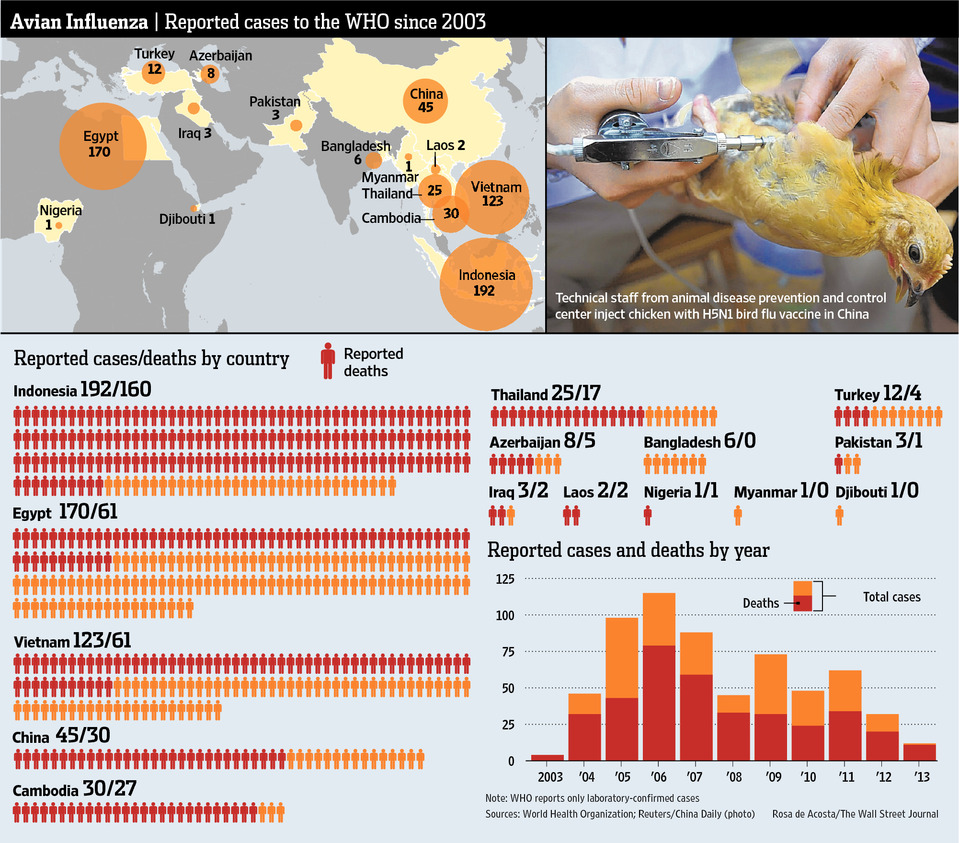
“I don’t wish to cause panic,” Tetro said in an interview, noting that if the subtype were proven to have emerged from a small farm, he wouldn’t be much alarmed. Infecting a big poultry reservoir, on the other hand, might well enable H7N9 to access Asia’s wild bird population. The upstart subtype could then become as menacing as H5N1, which since 2005 has officially taken 371 lives in 622 cases, mostly in China, Southeast Asia and Egypt, according to the World Health Organization. The additional Chinese cases have convinced Tetro that “close contact with birds” has been involved. “And I think the CAFOs [industrial chicken farms] have definitely contributed to the evolution of this virus,” he says. Read more of this post

Chinese toll from new bird flu rises to 9 cases, 3 dead; Hanoi bans China poultry after new bird flu strain deaths

Chinese toll from new bird flu rises to 9 cases, 3 dead

1:00pm EDT

By Ben Blanchard and Kate Kelland

BEIJING/LONDON (Reuters) – China has found two more cases of a new strain of bird flu and one of the victims has died, state media said on Wednesday, bringing to nine the number of confirmed human infections from the previously unknown flu type.

A 38-year-old cook fell ill early last month while working in the province of Jiangsu, where five of the other cases were found. He died in hospital in Hangzhou city on March 27, the Xinhua news agency reported. Samples tested positive on Wednesday for the new bird flu strain, H7N9.

The second patient, also in Hangzhou, is a 67-year-old who is having treatment. Xinhua said no connection between the two cases had been discovered, and no one in close contact with either patient had developed any flu-like symptoms.

The World Health Organization said it was “following the event closely” and was in contact with Chinese authorities, which it said were actively investigating the cases amid heightened disease surveillance. Read more of this post

Aspirin Seen Fueling $100 Billion Pensions Cost; Employers and governments are grappling with obligations to retirees as low bond yields make it harder to generate returns on funds set aside for the benefits. Daily doses of aspirin reduce the chances of developing or dying from cancer earlier than previously thought and also prevent tumors from spreading

Aspirin Seen Fueling $100 Billion Pensions Cost

Aspirin’s use fighting cancer has the potential to increase pension liabilities by as much as $100 billion by extending lifespans, a risk modeler said in a report.

The pension costs for men in the U.K. could rise by 0.7 percent within 20 years if more people begin taking aspirin daily, according to a statement by Risk Management Solutions Inc. today. An increase of that magnitude across the more than $13 trillion in pension liabilities in North America and Europe would be about the same as everyone giving up smoking within a generation, the modeling firm said.

Employers and governments are grappling with obligations to retirees as low bond yields make it harder to generate returns on funds set aside for the benefits. Actuaries’ assumptions about costs have been challenged as medical advances and changes in behavior help people live longer.

“Aspirin was not known to be a protection against cancer,” said Andrew Coburn, a senior vice president of RMS’s LifeRisks platform and one of the report’s authors. “It’s another one that people just didn’t expect” when they forecast liabilities.

Daily doses of aspirin reduce the chances of developing or dying from cancer earlier than previously thought and also prevent tumors from spreading, studies published in the Lancet medical journal last year showed.

The findings could increase the use of a drug that’s cheaper and more readily available than other cancer-fighting treatments, RMS said in its report. The modeling firm ran different scenarios about how widely aspirin would be used to predict additional pension costs. Read more of this post

New Bird Flu Virus Kills 2 in China, Sparking WHO Probe

New Bird Flu Virus Kills 2 in China, Sparking WHO Probe

A new strain of bird flu sickened four people and killed two in eastern China, prompting the World Health Organization to investigate whether the virus has the potential to spread easily among people. The H7N9 strain of avian influenza struck two people in Shanghai, one in Anhui province, and a fourth in the city of Nanjing, according to the Geneva-based WHO and China Central Television. Two of the people died and a third is in critical condition, the United Nations health agency said in a statement yesterday. No link between the cases has been identified, and no further infections have been found among 88 contacts of the first three patients, the WHO said, suggesting the virus isn’t easily transmissible between people. The fourth case is a 45- year-old woman who slaughters poultry at a local farmers’ market, CCTV reported on its website today. “This is of concern,” Gregory Hartl, a WHO spokesman, said by phone today. “These are the first cases we’ve seen in human beings. We’re watching this very closely.” The virus is genetically an avian flu virus, and hasn’t mixed with human or pig pathogens, Hartl said. The WHO is looking into whether the virus has evolved to become more of a threat to humans, he said.

To contact the reporter on this story: Simeon Bennett in Geneva at sbennett9@bloomberg.net

Himalaya, India’s Booming Ayurveda Herbal “Alternative Healthcare” Company; Sales have quadrupled in the last five years to reach 12 billion rupees ($220 million) in 2012

Himalaya, India’s Booming Herbal Healthcare Company
Adam Plowright | March 31, 2013

Bangalore, India. Its raw materials are plants and it bases its products on texts dating back millennia, but don’t dare call India’s biggest herbal healthcare group a maker of “alternative medicine.” “It’s high time people took us very seriously and did not view us as an alternative form of medicine,” says Philipe Haydon, the India chief executive of the Himalaya group from his office in tech and healthcare hub Bangalore. “This is not a feel-good product. This will save a man’s life,” he says, taking a box from a stack next to his desk.

It is marked Liv 52, a blend of six herbs used to treat liver disorders, and is one of the firms best-selling products. In two recent clinical tests, results published in the World Journal of Gastroenterology in 2007 and in the Antiviral Research journal in 2009 showed significant results. “It so happens that the input material is a herb but the rest of it is very very modern,” said the 50-year-old, who joined Himalaya in 1979. The group is an Indian healthcare success story, combining ancient traditional medicine known as Ayurveda with cutting-edge technology. Its air-tight production facility converts truck-loads of fragrant organic matter into eight million tablets a day and 10,000 bottles of medicine. In the quality control area, men and women in lab coats sit next to conveyor belts as tablets fly past on their way into plastic pots carrying Himalaya’s green and orange labels. In the research and development wing, 250 scientists are working to find new combinations of herbs whose active ingredients are extracted and concentrated to form products that are then tested by humans.

Sales have quadrupled in the last five years to reach 12 billion rupees ($220 million) in 2012. Its target is a billion dollars in annual revenue in the next four years as it spreads into foreign markets. Read more of this post

A Chinese Hearing Implant Takes Aim at Cochlear; At 98,000 yuan ($16,000), the price of its devices is less than half that of imported implants

A Chinese Hearing Implant Takes Aim at Cochlear

By Bruce Einhorn and Natasha Khan on March 28, 2013

www.nurotron.com

After suddenly going deaf at age 30, Ke Liu, a civil servant in China’s eastern Jiangxi province, didn’t have many options. A cochlear implant might’ve restored his hearing, but the imported device cost tens of thousands of dollars. In 2010, Ke learned about a clinical trial for an implant made by a Chinese company, Hangzhou Nurotron Biotechnology. That year he had one surgically implanted and has since recovered nearly all of his hearing. “I have my old life back,” says the 38-year-old.

Unlike hearing aides, which simply amplify sound, cochlear implants translate soundwaves into signals sent directly to the brain. Nurotron has received approval from China’s health regulators to sell its implant on the mainland. At 98,000 yuan ($16,000), the price of its devices is less than half that of imported implants, says Nisa Leung, a board member who is a partner at Qiming Ventures Partners, a venture capital firm and an investor in Nurotron.

That price gap threatens companies that dominate the estimated $1 billion market for cochlear implants. The leader is Australia’s Cochlear (COH), which sold more than $600 million of the devices in its 2012 fiscal year ended June. Cochlear has enjoyed “a virtual monopoly,” says Stuart Roberts, an analyst with Bell Potter Securities in Sydney. He notes the price of cochlear implants has barely budged over the years, while other sophisticated electronics—such as computer chips—have gotten less expensive even as quality has improved. Read more of this post

Businesses Bet on Iron Man-Like Exoskeletons; Taking a nod from Iron Man, bionic suits are available for almost $70,000. About 20 individuals in Europe have bought them so far.

Businesses Bet on Iron Man-Like Exoskeletons

By Thomas Black on March 28, 2013

comp_ironsuits14__01__630x420

In the 1960s, the Incredible Hulk rose to fame as Marvel Comics’ green mutant antihero with superhuman strength and some serious anger issues. Now Lockheed Martin (LMT) is betting that a modern-day hulk—make that HULC—will one day bring it supersize sales. Lockheed, the world’s largest defense contractor, envisions a leap forward in battlefield mobility with its Human Universal Load Carrier (HULC), a wearable exoskeleton intended to let a soldier lug a 200-pound pack with minimal effort over a 20-kilometer (12.4-mile) hike. That’s no small feat, since back strain is the military’s most common noncombat injury because of the heavy packs soldiers carry. Exoskeletons hold “tremendous potential” to ease those burdens, says David Accetta, a spokesman for the U.S. Army Natick Soldier Research, Development, and Engineering Center, in an e-mail. The Army is planning a field demonstration of the device in May, and the HULC device is being refined to be more easily worn under a uniform. Neither Lockheed nor the Army would disclose funding details.

Lockheed, Parker Hannifin (PH), and a handful of startups are vying to find practical—and profitable—uses for the kind of bionic suits inspired by novelist Robert Heinlein’s 1959 novel Starship Troopers and Marvel editor Stan Lee’s Iron Man comic-book character. Wearable machines that enhance human muscle power may not only lighten soldiers’ loads but help factory workers hoist heavier tools and even enable some paraplegics to walk. “We’re now seeing a golden age in which we can produce this technology and derive benefit from it,” says Keith Maxwell, business development manager for Lockheed’s program. “There’s a host of industries where this works.” Read more of this post

Why is American health care so absurdly expensive?

Why is American health care so absurdly expensive?

By Derek Thompson — March 28, 2013

Derek Thompson is a senior editor at The Atlantic, where he oversees business coverage for TheAtlantic.com.

The U.S. medical system is absurdly expensive. You knew that already. But you probably didn’t realize just how absurdly expensive it is compared to other countries. These 21 graphs (one of them you’ll see above) from the International Federation of Health Plans, via Ezra Klein, start to paint the picture. The average routine office visit in the U.S. is three-times more expensive than in Canada. The average CT scan is five-times more expensive than in Canada. And as a share of GDP, our health care costs are an ignominious colossus towering over the rest of the world:

2012-physican-fees Read more of this post

Fat-Buster Bacteria Helps in Gastric Surgery, Researchers Find

Fat-Buster Bacteria Helps in Gastric Surgery, Researchers Find

Bacteria that live in the gut change after gastric-bypass surgery, and may aid in weight loss, according to a Harvard University study.

Researchers gave mice the stomach-shrinking surgery and monitored changes in the gut’s bacterial inhabitants, according to a study in the journal Science Translational Medicine. When bacteria from the mice that got surgery were transferred into mice with no gut germs, those mice also lost weight, about a fifth of what they would have lost with surgery.

Gastric surgery helps people lose weight by shrinking the size of the stomach, making it tougher to absorb calories. Now scientists think it may also adjust gastrointestinal bacteria, contributing to weight loss and raising the possibility for less-drastic obesity treatments, according to the authors. Read more of this post

Drugs for Indian Poor Spark Pfizer Anger at Lost Patents; The dispute illustrates how emerging markets are turning out be less lucrative than drugmakers expected

Drugs for Indian Poor Spark Pfizer Anger at Lost Patents

In trying to get sophisticated medicines to its neediest citizens, India is increasingly pitting its generic-pharmaceutical industry against international drugmakers, threatening their growth in emerging markets.

An Indian regulatory board this month upheld a ruling that allows Natco Pharma Ltd. (NTCPH) to make a low-priced copy of Bayer AG (BAYN)’s Nexavar cancer treatment. The drug is one of at least four that have had their patents weakened, revoked or rejected in India in the past year. The country also has refused a patent for Novartis AG’s (NOVN) Gleevec leukemia medicine, and the Supreme Court will rule April 1 on the company’s appeal of the decision.

Those steps are needed to put modern medicines into the hands of Indians, according to aid groups and doctors. Western drugmakers including New York-based Pfizer Inc. (PFE) say the country, which has a $30 billion drug market that’s growing 13 percent a year, is abusing international law and allowing domestic companies to profit from products discovered at Big Pharma’s expense.

The dispute illustrates how emerging markets are turning out be less lucrative than drugmakers expected. London-based GlaxoSmithKline Plc (GSK) has warned that so-called compulsory licensing of patented products may hurt profit growth. One advocacy group now is pushing stricken Western countries such as Greece to follow India’s lead, raising the prospect of further pressure on drug prices. Read more of this post

How to Beat Childhood Cancer; The past 40 years have demonstrated the remarkable return on investment to be gained in collaborative scientific research

How to Beat Childhood Cancer

Peter C. Adamson is Chair of the Children’s Oncology Group at The Children’s Hospital of Philadelphia.

26 March 2013

PHILADELPHIA – For a parent, there is perhaps no greater fear than the prospect of losing a child to illness or accident. And it is childhood cancer that has the greatest potential to catapult a remote fear into an unimaginable reality. As a pediatric oncologist, having cared for children with cancer and their families for more than 25 years, I know that only a parent who has confronted such a diagnosis truly understands the depth of this fear, as it touches the core of who we are as parents.

I also know that we are treating more children more effectively than ever before – and that we can do much better still. Read more of this post

‘Big Data’ for Cancer Care; Vast Storehouse of Patient Records Will Let Doctors Search for Effective Treatment; Some 1.6 million Americans are diagnosed with cancer every year, but in more than 95% of cases, details of their treatments are “locked up in medical records and file drawers or in electronic systems not connected to each other,”

Updated March 26, 2013, 8:46 p.m. ET

‘Big Data’ for Cancer Care

Vast Storehouse of Patient Records Will Let Doctors Search for Effective Treatment

By RON WINSLOW

A major oncology group is launching an ambitious project to collect data on the care of hundreds of thousands of cancer patients and use it to help guide treatment of other patients across the health-care system.

Cancer doctors would be able to consult the database, much like doing a GoogleGOOG +0.34% search. They would get advice on treatment strategies that might work for their patients based on how similar patients fared in practices around the U.S.

Details of the plan are being unveiled Wednesday by the American Society of Clinical Oncology, a nonprofit professional association.

It is the latest example of emerging efforts in medicine to harness the power of “Big Data” to improve care. It reflects growing expectations that information gleaned from huge clinical databases can speed learning about benefits and harms of treatments, support efforts to improve quality of care and hasten development of new medicines.

Some 1.6 million Americans are diagnosed with cancer every year, but in more than 95% of cases, details of their treatments are “locked up in medical records and file drawers or in electronic systems not connected to each other,” said Allen Lichter, chief executive office of ASCO. “There is a treasure trove of information inside those cases if we simply bring them together.” Read more of this post

Europe’s financial crisis costing lives, suicides and infectious diseases on the rise

Published: Wednesday March 27, 2013 MYT 8:49:00 AM

Europe’s financial crisis costing lives, suicides and infectious diseases on the rise

LONDON: Europe’s financial crisis is costing lives, with suicides and infectious diseases on the rise, yet politicians are not addressing the problem, health experts said on Wednesday.

Deep budget cuts and growing unemployment are tipping more people into depression, and falling incomes mean fewer people can see their doctors or afford to buy medicines.

The result has been a reversal since 2007 of a long-term decline in suicide rates, coupled with worrying outbreaks of diseases including HIV – and even malaria – in Greece, according to an major analysis of European health in The Lancet journal.

Countering these threats requires strong social protection schemes, researchers argue. But the austerity measures imposed after a string of crises in southern Europe – most recently in Cyprus – has shredded such safety nets. Read more of this post

Reforming MediShield to be truly national; “Cancer treatment can be very, very expensive. This is something our health system will have to deal with. It is not surprising if some patients have to sell their house.”

Reforming MediShield to be truly national

Every now and then, Singaporeans come across a media report of a medical bill in the hundreds of thousands of dollars, and everyone seems to know someone struggling financially after a prolonged illness.

Jeremy Lim has held senior executive positions in both the public and private healthcare sectors. He is writing a book on the Singapore health system.

4 HOURS 51 MIN AGO

Every now and then, Singaporeans come across a media report of a medical bill in the hundreds of thousands of dollars, and everyone seems to know someone struggling financially after a prolonged illness.

In fact, the late Dr Balaji Sadasivan, previously a junior minister in the Health Ministry, while undergoing treatment for cancer commented: “Cancer treatment can be very, very expensive. This is something our health system will have to deal with. It is not surprising if some patients have to sell their house (sic).”

In dealing with the financials of catastrophic illness, Singaporeans are likely most concerned about two issues: The uncertainty of illness severity with an attendant massive hospital bill, and their share of the bill. Read more of this post

Science Fiction Comes Alive as Researchers Grow Organs in Lab

March 22, 2013, 10:36 p.m. ET

Science Fiction Comes Alive as Researchers Grow Organs in Lab

By GAUTAM NAIK

OB-WU659_BODYPA_DV_20130322173513P1-BK796_BODYPA_OR_20130322192503P1-BK794_bodypa_DV_20130322191355

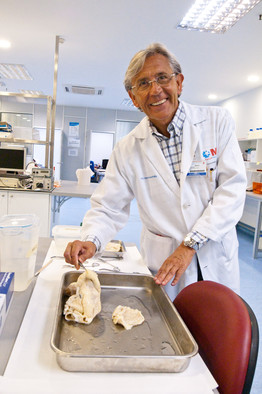
Francisco Fernandez-Aviles with a human heart that is devoid of its cells.

Building a complex human organ in the lab is no longer a dream of science fiction. At London’s Royal Free Hospital, a team of 30 scientists is manufacturing a variety of body parts, including windpipes, noses and ears. WSJ’s Gautam Naik reports. Photo: Gareth Phillips

MADRID—Reaching into a stainless steel tray, Francisco Fernandez-Aviles lifted up a gray, rubbery mass the size of a fat fist.

It was a human cadaver heart that had been bathed in industrial detergents until its original cells had been washed away and all that was left was what scientists call the scaffold.

Next, said Dr. Aviles, “We need to make the heart come alive.”

P1-BK792_BODYPA_G_20130322221602 Read more of this post

Progress Fighting Parkinson’s Drug Side Effects; “I’m basically going to be incapacitated by the drug that’s helping me, and that’s terrifying,”

March 25, 2013, 6:38 p.m. ET

Progress Fighting Parkinson’s Drug Side Effects

By SHIRLEY S. WANG

As they continue to wait for a cure, patients with Parkinson’s disease may soon see more consistent relief from side effects of the drugs that treat it.

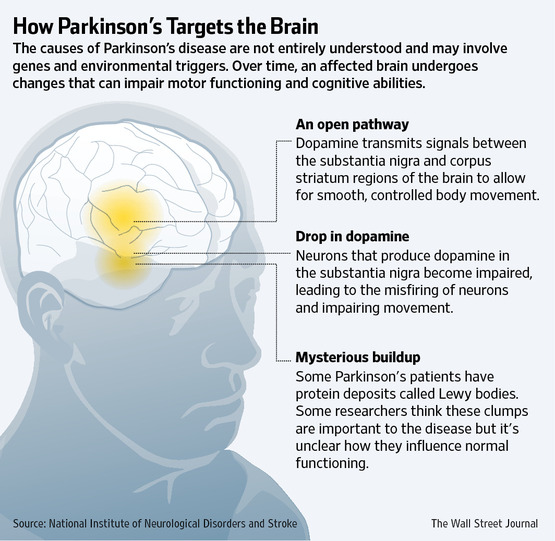
One of the most pressing problems facing patients today is that the most effective treatment available wears off over time and may induce often severe involuntary movements. A number of new treatments are being developed to address the wearing-off effect or attenuate the movement side effects, called dyskinesia, that come with the drug, levodopa.

PJ-BN319A_LAB_G_20130325175416 Read more of this post

Experts warn of untreatable TB risk; “With ease of international travel and increased rates of MDR tuberculosis… the threat and range of the spread of untreatable tuberculosis is very real,”

Experts warn of untreatable TB risk
Posted: 24 March 2013 0827 hrs

PARIS: Disease experts called on Sunday for decisive leadership and more research funding to fend off the “very real” risk of an untreatable strain of tuberculosis (TB) emerging as more people develop resistance to existing drugs.

In a series of papers in the Lancet medical journal to mark World TB Day on Sunday, they warned that health systems risked being overwhelmed by increasing numbers of drug-resistant TB patients.

Already, more than 30 percent of newly-diagnosed patients in parts of eastern Europe and central Asia have multi-drug resistant (MDR) TB, a form of the disease which does not respond to the two most potent drugs — isoniazid and rifampin.

There were believed to be about 630,000 MDR cases out of some 12 million TB cases in 2011.

Extensively drug resistant (XDR) TB, thus far reported in 84 countries, does not respond to an even wider range of drugs.

“The widespread emergence of XDR tuberculosis could lead to virtually untreatable tuberculosis,” wrote the authors of one study, led by Alimuddin Zumla, director of the Centre for Infectious Diseases and International Health at University College London Medical School.

“With ease of international travel and increased rates of MDR tuberculosis… the threat and range of the spread of untreatable tuberculosis is very real,” they said. Read more of this post

Biosimilars Lure Major Drugmakers Into the Generics Biz; Generic medicine makers may have a harder time succeeding with biologic drugs, which are dynamic and more difficult to replicate.

Biosimilars Lure Major Drugmakers Into the Generics Biz

By Makiko Kitamura and David Wainer on March 21, 2013http://www.businessweek.com/articles/2013-03-21/biosimilars-lure-major-drugmakers-into-the-generics-biz

Call it the Revenge of Big Pharma. Generic drug companies such as Teva Pharmaceutical Industries (TEVA) have made billions since the late 1980s by reverse engineering best-selling drugs that came off patent—escaping hefty development and marketing costs—and selling them cheaply. When it comes to copying the best-selling treatments that are coming off patent today—a category known as biologics, medicines produced using the body’s own cells rather than through chemical reactions in a lab—the companies with the expertise to develop and market them are pharmaceutical giants. That leaves companies like Israel-based Teva, the largest maker of generics, increasingly on the sidelines.

The biologics losing patent protection over the next six years had total annual sales of $47 billion in 2012, according to Bloomberg Industries. However, the rules of the lucrative knockoff drug game are being altered. The derivatives of biologics, known as biosimilars, are far more complex to make than chemical generics. Drug companies that want to sell copies of biologic medicines such as Roche Holding’s (RHHBF) $7 billion-a-year rheumatoid arthritis treatment Rituxan require expertise and money to produce and market to the public and physicians. “There’s this dawning realization that biosimilars are in many ways the same as branded products,” says Duncan Emerton, Datamonitor Consulting’s biosimilars practice leader. Read more of this post