A glimpse into the world of Google; an insider’s view of the company’s multi-billion dollar search to stay ahead. Larry Page personally signs off every new recruit in a firm which now has 39,000 staff.

A glimpse into the world of Google

As the first UK newspaper allowed to attend a “Nooglers” session for new Google employees at its California HQ, The Sunday Telegraph gets an insider’s view of the company’s multi-billion dollar search to stay ahead.

Google’s co-founder Larry Page personally signs off every new recruit in a firm which now has 39,000 staff.

By Katherine Rushton

8:30PM BST 29 Jun 2013

It is Monday morning, and 150 “Nooglers” are gathered in a large room on Google’s campus in Mountain View, California.

Jennifer, a woman in her early thirties wearing a pair of the hi-tech “Google Glass” spectacles, bounces around the stage welcoming the new starters. She is a compelling mix of preppy Californian girl and science fiction-obsessed geek that is de rigueur in Silicon Valley. “I’m a little bit nerd. I love Star Trek. But I also love reading,” she says. “This summer, in fact, I’m reading all of Shakespeare’s works in chronological order.” Read more of this post

Big companies don’t have to lose their souls; How to grow your business without crushing creativity

Big companies don’t have to lose their souls

June 28, 2013: 9:24 AM ET

How to grow your business without crushing creativity.

By Joris Luijke

(TheMIX) — Remember working for that start-up? Things were good. You responded quickly to change. You could, and often did, roll out new programs within weeks or days. Your boss approved quick changes with a simple nod. And you got results — fast. Then you moved to an important role at a big enterprise. Things were different — slower, costlier, stuck in red tape, less tangible, less experimental. That’s because big organizations are complex. And when we are accosted by complexity, we get anxious. We need certainty and coordination — in the form of structures, policies, responsibilities, and rules — to push that fear away. We can’t change our fear of complexity, nor our desire for control. So, what can we do to keep our organizations agile — even as they grow? How can we ensure that innovation doesn’t get crushed? Read more of this post

A 15 Year-Old Girl From Canada Has Built A Flashlight Powered By The Heat Of A Hand

A 15 Year-Old Girl From Canada Has Built A Flashlight Powered By The Heat Of A Hand

JAY YAROW 16 MINUTES AGO 241

There’s almost no real reason to own a flashlight now that all smartphones have bright flashes that work as flashlights. However! If, for some reason, you do want a dedicated flashlight in your life, a 15 year-old genius, Ann Makosinski from Victoria, B.C. has developed a new innovative version of the flashlight.  Instead of using batteries, the flashlight converts the heat from your palm into energy that powers LED lightbulbs. Incredible! The best part of this invention is not the flashlight, which, as we already noted is obsolete. The best part is knowing that a 15 year-old is already playing around with this energy technology. Hopefully in the next ten years she can do the same sort of thing for smartphones. Imagine just having to hold your smartphone for it to have enough energy to run?

Institutional Imperative and Differentiating Between the Tech Innovators, the Imitators and the Swarming Incompetents in Asia. Bamboo Innovator is featured in BeyondProxy.com, where value investing lives

Bamboo Innovator is featured in BeyondProxy.com, where value investing lives:

  • Institutional Imperative and Differentiating Between the Tech Innovators, the Imitators and the Swarming Incompetents in Asia, June 27, 2013 (BeyondProxy)

Institutional Imperative

More big-name hedge funds nurse wounds from bond sell-off

More big-name hedge funds nurse wounds from bond sell-off

4:57pm EDT

By Katya Wachtel and Jennifer Ablan

NEW YORK (Reuters) – One of last year’s top-performing hedge fund managers, Deepak Narula, is suffering a reversal of fortune as the mortgage bonds that steered him to the top of the industry in 2012 are now delivering losses.

His Metacapital Management’s roughly $1.5 billion flagship fund was down 5.66 percent for the year through June 14, according to an investor with knowledge of the numbers. Read more of this post

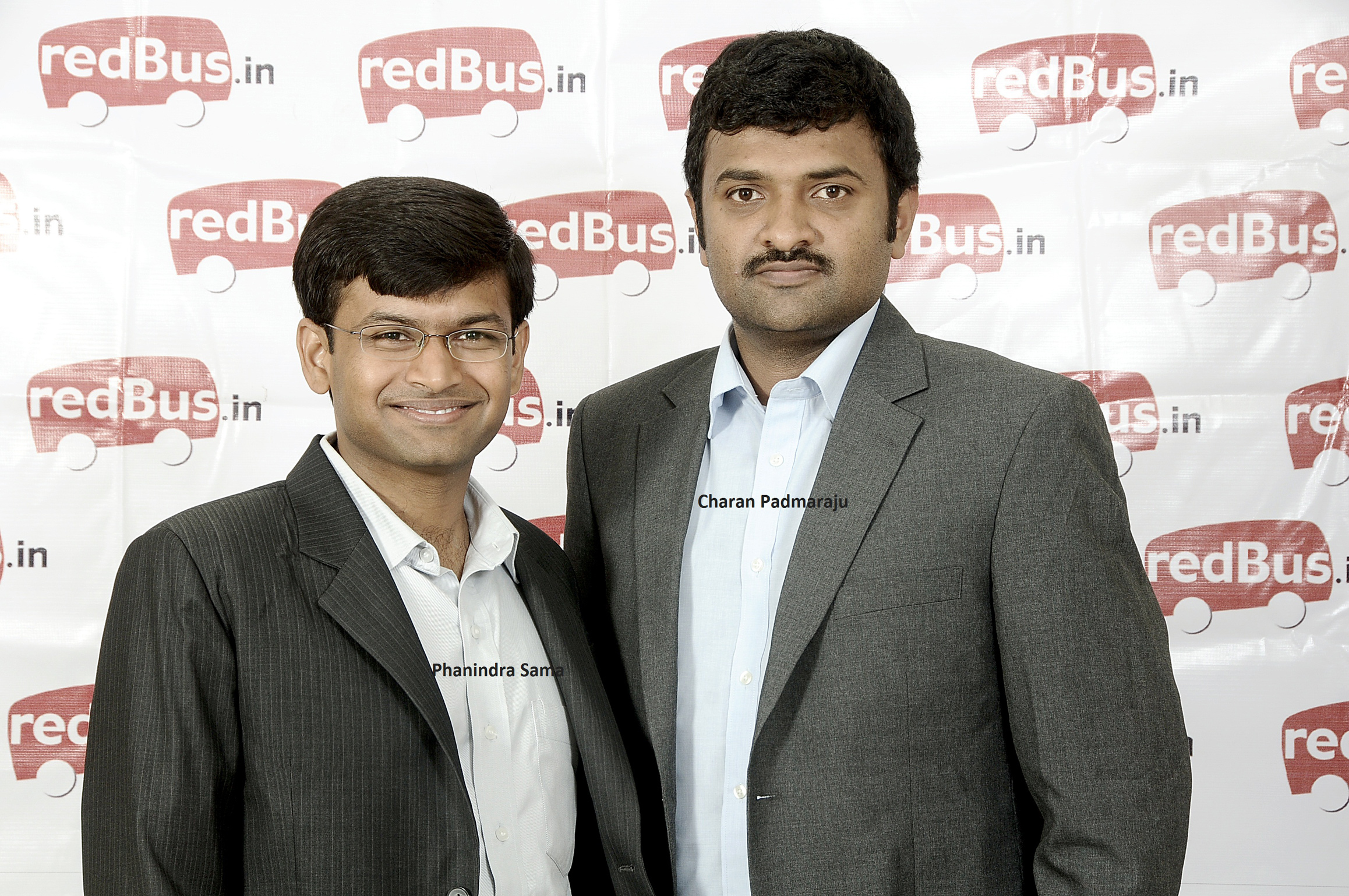
Tencent-Naspers JV Ibibo Buys Redbus To Grow Its Online Travel Empire In India

Tencent, Naspers JV Ibibo Buys Redbus To Grow Its Online Travel Empire In India

VICTORIA HO

posted yesterday

redBus-Founders-Phani-and-Charan_1 img_64030_redbus

China’s internet giant Tencent and South Africa’s media powerhouseNaspers are doubling down on tech in India. TechCrunch has just found out that Ibibo, their domestic joint venture, has acquiredredBus.in, a Bangalore-based online bus ticketing company that has become a dominant and disruptive force in how people travel in the country. Read more of this post

Abe’s Arrows of Growth Dulled by Japan’s Three Principles

Abe’s Arrows of Growth Dulled by Japan’s Three Principles

As Japan’s economy fell into recession last year, Yoichi Uehara wanted to save money at his family firm. Firing workers wasn’t an option: Under Japan’s labor laws, that would have increased costs, not cut them.

“It’s almost impossible to fire people,” said the head of Uehara Nameplate Co., whose 500 employees make more than a million emblems and hub caps a month for the likes of Honda Motor Co. (7267) “It would be good if we were able to lay people off like they do in America.” Read more of this post

BNSF + JB Hunt = Buffett + Munger = Lollapalooza! How About Asia? Bamboo Innovator is featured in BeyondProxy.com, where value investing lives

Bamboo Innovator is featured in BeyondProxy.com, where value investing lives:

  • BNSF + JB Hunt = Buffett + Munger = Lollapalooza! How About Asia? (BeyondProxy)

BNSF

12 Of The Shrewdest Business Maneuvers Of All Time

12 Of The Shrewdest Business Maneuvers Of All Time

MAX NISEN AND ALEXANDRA MONDALEK JUN. 17, 2013, 8:54 AM 14,405 6

The success of failure of a business can come down to one single bold decision. A recent thread on Quora asked users to name the “the shrewdest, smartest maneuver you’ve ever seen in business.” We’ve broken out some of the best answers, including critical decisions by Bill Gates, Steve Jobs, and Henry Ford. Bill Gates originally wrote a PC operating system for IBM. He convinced them to let him sell it to others, starting him on the way to becoming the richest man in the world.

Bill Gates using an early version of Microsoft Excel

bill-gates-originally-wrote-a-pc-operating-system-for-ibm-he-convinced-them-to-let-him-sell-it-to-others-starting-him-on-the-way-to-becoming-the-richest-man-in-the-world

Via Quora user Prakul Agarwal:

Back in the 1980s, IBM asked Bill Gates to produce the operating system for its PCs. He licensed an operating system from Tim Patterson (QDOS) for $50,000, modified it, named it MS-DOS, and sold it to IBM. Gates managed to convince IBM to let him market the system separately, because IBM thought all of the money was in hardware. When other companies started to build their own PCs, MS-DOS was the standard, and Microsoft made a fortune.  Read more of this post

Original Mad Man David Ogilvy on the 10 Qualities of Creative Leaders: A capacity for hard work and midnight oil; A streak of unorthodoxy – creative innovators

Original Mad Man David Ogilvy on the 10 Qualities of Creative Leaders

Ogilvy

The rare talents of trust, gusto, and guts under pressure.

Long before the listicle epidemic of the social web, 11th-century Japanese courtesan Sei Shanagon, the world’s first “blogger,” enumerated 7 rare things in life, beloved novelist Umberto Eco asserted the list was the origin of culture, and the inimitable Susan Sontag reflected on why lists appeal to us. One of modern history’s most fierce list-lovers is advertising legend and original “Mad Man” David Ogilvy, as evidenced by his enduring 10 no-bullshit tips on writing. From The Unpublished David Ogilvy (public library) – which also gave us Ogilvy’s endearing note to a veteran copywriter – comes his list of the ten qualities he looks for in creative leaders, as originally delivered in one of Ogilvy’s eloquent talks to the staff. Among expected necessities like work ethic and the ability to transcend fear in the creative process are also a few oft-overlooked but equally important requirements like a healthy dose of nuttiness and comedic sensitivity. (We already know that humor and creativity are driven by the same mechanics.)

High standards of personal ethics.

Big people, without pettiness.

Guts under pressure, resilience in defeat.

Brilliant brains – not safe plodders.

A capacity for hard work and midnight oil.

Charisma – charm and persuasiveness.

A streak of unorthodoxy – creative innovators.

The courage to make tough decisions.

Inspiring enthusiasts – with trust and gusto.

A sense of humor.

The Unpublished David Ogilvy features many more of Ogilvy’s lists, as well as a wealth of his insights on everything from creativity to management to the nitty-gritty of the communication arts.

Why Berkshire Hathaway’s McLanee Has a Moat, and Are There Similar Companies In Asia? Bamboo Innovator is featured in BeyondProxy.com, where value investing lives

Bamboo Innovator is featured in BeyondProxy.com, where value investing lives:

Why Berkshire Hathaway’s McLanee Has a Moat, and Are There Similar Companies In Asia? (BeyondProxy)

McLane

The high cost of sad workers; Not happy at your job? Your company is paying for it in innovation potential

Not happy at your job? Your company is paying for it in innovation potential.

By Vivek Wadhwa, Updated: June 13, 2013

A Nov. 2011 paper from European Union-backed academic institution evoREG makes the case that happiness is both integral to the innovation process and oddly enough simultaneously misunderstood. The authors find happiness to be both an input factor as well as an output factor of the innovation process. In other words, happiness leads to more innovation, and when directed properly, innovation creates more happiness for societies. Read more of this post

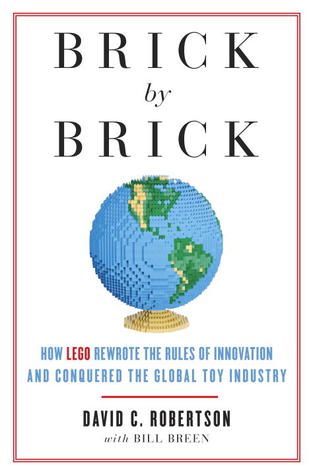
Brick by Brick: How LEGO Rewrote the Rules of Innovation and Conquered the Global Toy Industry

Brick by Brick: How LEGO Rewrote the Rules of Innovation and Conquered the Global Toy Industry

by David Robertson  (Author) , Bill Breen  (Author)

16054798

Brick by Brick takes you inside the LEGO you’ve never seen. By following the teams that are inventing some of the world’s best-loved toys, it spotlights the company’s disciplined approach to harnessing creativity and recounts one of the most remarkable business transformations in recent memory.
Brick by Brick reveals how LEGO failed to keep pace with the revolutionary changes in kids’ lives and began sliding into irrelevance. When the company’s leaders implemented some of the business world’s most widely espoused prescriptions for boosting innovation, they ironically pushed the iconic toymaker to the brink of bankruptcy. The company’s near-collapse shows that what works in theory can fail spectacularly in the brutally competitive global economy.
It took a new LEGO management team – faced with the growing rage for electronic toys, few barriers to entry, and ultra-demanding consumers (ten-year old boys) – to reinvent the innovation rule book and transform LEGO into one of the world’s most profitable, fastest-growing companies.
Along the way, Brick by Brick reveals how LEGO:
– Became truly customer-driven by co-creating with kids as well as its passionate adult fans
– Looked beyond products and learned to leverage a full-spectrum approach to innovation
– Opened its innovation process by using both the “wisdom of crowds” and the expertise of elite cliques
– Discovered uncontested, “blue ocean” markets, even as it thrived in brutally competitive red oceans
– Gave its world-class design teams enough space to create and direction to deliver
built a culture where profitable innovation flourishes
Sometimes radical yet always applicable, Brick by Brick abounds with real-world lessons for unleashing breakthrough innovation in your organization, just like LEGO. Whether you’re a senior executive looking to make your company grow, an entrepreneur building a startup from scratch, or a fan who wants to instill some of that LEGO magic in your career, you’ll learn how to build your own innovation advantage, brick by brick. Read more of this post

The 10 Things Innovative Companies Do To Stay On Top

The 10 Things Innovative Companies Do To Stay On Top

JULIE BORT JAN. 25, 2013, 10:09 AM 50,035 3

Innovation isn’t this abstract thing that some companies have and some don’t. Innovation is actually a business skill that executives and employees can develop and master. So says Booz & Company management consultants Barry Jaruzelski, John Loehr, and Richard Holman. The authors of Booz’s annual “Global Innovation 1,000 report” named the most innovative companies in the world for 2012 and studied what makes them so. In addition to looking at what these 1,000 companies do right, it also surveyed some 700 companies not on the list to find out how they come up with new products and services.

No. 10: Innovative companies systematically create new ideas Read more of this post

Pepsi’s Chief Design Officer On How To Invest In Innovation

Pepsi’s Chief Design Officer On How To Invest In Innovation

KATHLEEN DAVISENTREPRENEUR 10 MINUTES AGO 110

The fast-paced business world is focused on results and returns, but truly innovative companies have a culture focused on long-term gains where innovation can thrive. Mauro Porcini, the chief design officer of PepsiCo, argues that true innovation isn’t about creating the “next big thing” to capture their fleeting attention. He says companies should instead focus on connecting with customers on a more meaningful level.
Porcini spoke at the World Innovation Forum in New York today about the evolution of “design thinking,” a form of creative problem solving. “Design thinking is not a job; it’s a lifestyle,” he says. “There’s no difference for a design thinker between life and work.”
He offers these insights to foster a company culture where innovation can thrive. Read more of this post

The fall of Israel’s Better Place: When vision isn’t enough; From the very beginning, the electric-car company lacked a solid business model. Its collapse is sad, but no surprise

The fall of Israel’s Better Place: When vision isn’t enough

From the very beginning, the electric-car company lacked a solid business model. Its collapse is sad, but no surprise.

By Ora Coren | May.26, 2013 | 5:41 PM |  5

At a lecture three years ago Shai Agassi, the founder of the Better Place electric car venture, accused the state of Israel of lacking vision.

The state had refused to give him a $150 million grant to build a factory making electric cars in Beit She’an, Agassi griped. It also declined to offer him a gift in the form of a large plot of land in the Negev to generate solar power. Read more of this post

What 10-Foot Noodles Have to Do with Competitive Advantage

What 10-Foot Noodles Have to Do with Competitive Advantage

by Scott Anthony  |  12:00 PM June 12, 2013

“A properly integrated business model forms the essence of a company’s competitive advantage,” my colleague Mark Johnson advises. That quote ran through my head as I watched a young man in a track suit prance around my table twirling a 10-foot noodle.

I was in one of the Shanghai locations of a chain of hot pot restaurants called Hai Di Lao. If anything deserves to be commoditized, it would be a hot pot restaurant. The essence of the meal is cooking food yourself in close-to-boiling broth. The popularity of that cooking style in many parts of China means many nondescript restaurants compete ferociously for customers. Somehow in this crowded field, Hai Di Lao commands fierce loyalty; has expanded to 75 locations across China, Singapore, and soon the U.S.; and generates about $500 million a year in revenue. Read more of this post

Bamboo Innovator mentioned on TEDxWallStreet

TEDxWallStreet

How do you build a culture of innovation? Tim Brown, CEO of IDEO, describes why empathy is an important part of the equation

How do you build a culture of innovation?

by SHANE PARRISH on JUNE 2, 2013

http://bcove.me/v25prnc1

How does a successful company maintain a climate in which new ideas and risk-taking are encouraged? In this interview, Tim Brown, CEO and president of the design consultancy IDEO, describes how he thinks about innovation and why empathy is an important part of the equation. Organizations are well intentioned. They put people in charge of innovation. They hold meetings on innovation. They mandate innovation. Yet, despite all of these words and actions, to no one’s surprise, they largely fail to innovate. That’s because innovation is cultural. A 2009 study in the Journal of Marketing set out to identify the factors that predicated whether a firm would innovate or not. While there are a lot of variables at play, the study found, the most important driver of innovation was internal corporate culture. An article in Sloan MIT Management Review identifies a series of “building blocks” for an innovative culture, including hard-to-measure characteristics such as values, behavior, and climate. “An innovative climate,” the authors write, “cultivates engagement and enthusiasm, challenges people to take risks within a safe environment, fosters learning, and encourages independent thinking.” Here’s the transcript of the Interview with Tim Brown. Read more of this post

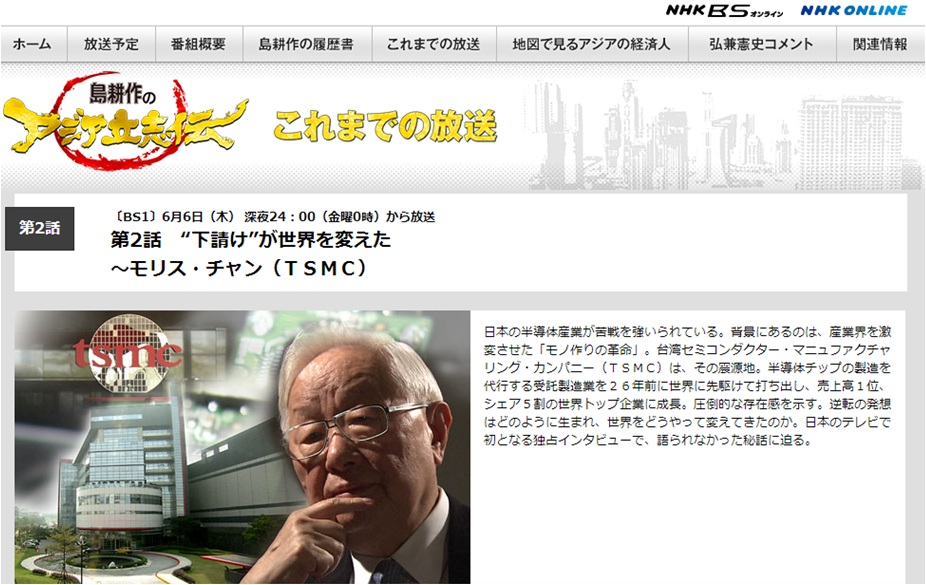
TSMC to feature on Japanese show about industry in Asia; NHK’s new show — Shima Kosaku’s Asia Success Story — focuses on famous Asian business leaders and their innovative strategies that make their businesses succeed and drive the Asian economy

TSMC to feature on Japanese show about industry in Asia

CNA and Staff Reporter

2013-06-08

TSMC NHK

Japan’s NHK network is scheduled to broadcast an animated documentary on Taiwan Semiconductor Manufacturing Co at midnight Thursday, with TSMC’s chairman and CEO Morris Chang portrayed by the fictional character Shima Kosaku.

NHK’s new show — Shima Kosaku’s Asia Success Story — combines documentary footage and anime sequences, and focuses on famous Asian business leaders and their innovative strategies that make their businesses succeed and drive the Asian economy, according the program’s official website.

The TSMC episode, titled OEM that Changed the World — is the second in the series and will depict Chang and his company’s journey to the top of the semiconductor industry. Read more of this post

Costco CEO Craig Jelinek Leads the Cheapest, Happiest Company in the World; I hope when I’m 90, and this company is around 30 years from now, I can go eat a hot dog at a Costco food court and hear someone say, ‘I remember you.’”

Costco CEO Craig Jelinek Leads the Cheapest, Happiest Company in the World

By Brad Stone on June 06, 2013

http://www.businessweek.com/articles/2013-06-06/costco-ceo-craig-jelinek-leads-the-cheapest-happiest-company-in-the-world

covertrail24_304feature_costco24__01__304

Costco CEO Craig Jelinek

How this week’s cover got madeJoe Carcello has a great job. The 59-year-old has an annual salary of $52,700, gets five weeks of vacation a year, and is looking forward to retiring on the sizable nest egg in his 401(k), which his employer augments with matching funds. After 26 years at his company, he’s not worried about layoffs. In 2009, as the recession deepened, his bosses handed out raises. “I’m just grateful to come here to work every day,” he says.

This wouldn’t be remarkable except that Carcello works in retail, one of the stingiest industries in America, with some of the most dissatisfied workers. On May 29, Wal-Mart Stores (WMT) employees in Miami, Boston, and the San Francisco Bay Area began a weeklong strike. (A Walmart spokesman told MSNBC the strike was a “publicity stunt.”) Workers at an Amazon.com (AMZN)fulfillment center in Leipzig, Germany, also recently held strikes to demand higher pay and better benefits. (An Amazon spokesman says its employees earn more than the average warehouse worker.) In its 30-year history, Carcello’s employer, Costco, has never had significant labor troubles. Costco Wholesale (COST), the second-largest retailer in the U.S. behind Walmart, is an anomaly in an age marked by turmoil and downsizing. Known for its $55-a-year membership fee and its massive, austere warehouses stocked floor to ceiling with indulgent portions of everything from tilapia to toilet paper, Costco has thrived over the last five years. While competitors lost customers to the Internet and weathered a wave of investor pessimism, Costco’s sales have grown 39 percent and its stock price has doubled since 2009. The hot streak continued through last year’s retirement of widely admired co-founder and Chief Executive Officer Jim Sinegal. The share price is up 30 percent under the leadership of its new, plain-spoken CEO, Craig Jelinek. Read more of this post

Innovation: DNA Fog security system that marks intruders with genetic material derived from plants. It’s hard to remove and links suspects to crime scenes

Innovation: DNA Fog by Applied DNA Sciences and SmokeCloak

By Caroline Winter on June 06, 2013

Form and function A fog-based security system that marks intruders with genetic material derived from plants. It’s hard to remove and links suspects to crime scenes.

Partners Stony Brook (N.Y.)-based Applied DNA Sciences developed the tracers, and Danish security company SmokeCloak builds the deployment devices.

“Police often have a very good idea who the criminals are, but they just cannot prove it.” — Applied DNA Sciences Chief Executive Officer James Hayward

tech_innovation2413__01__950

Starbucks regularly launches products before they’re perfect. Why does such a risky approach to innovation work so well?

RISKY INNOVATION: WILL STARBUCK’S LEAP OF FAITH PAY OFF?

THE WORLD’S LARGEST COFFEEHOUSE CHAIN REGULARLY LAUNCHES PRODUCTS BEFORE THEY’RE PERFECT. WHY DOES SUCH A RISKY APPROACH TO INNOVATION WORK SO WELL?

BY: AUSTIN CARR

In late March, as Starbucks was preparing to introduce its first offer on Groupon, the daily-deal service, the coffee chain’s chief digital officer, Adam Brotman, realized he had no clue whether the gambit would pay off. The discount wasn’t for anything crazy like bungee jumps or skydiving lessons–it was for 50% off a $10 Starbucks Card eGift–but to Brotman, the deal was just as risky because of how the company would be offering it. His team had to integrate Starbucks’s eGift platform with Groupon’s system for the one-off promotion, and it was about to go live to the world. “They’d never done deals at the scale we were offering, and we had never put our [eGift] platform through that type of pressure test,” Brotman says. “But we didn’t have the luxury to say anything other than, ‘We think we got this right, so let’s see what happens.’ There are times when we just completely don’t know how things are going to work.” Read more of this post

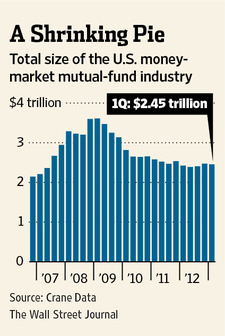
SEC Ready to Curb Money Funds; ‘Prime’ Investment Vehicles Would Have to Relinquish Fixed $1 Share Price Under Proposed Rule

Updated June 4, 2013, 9:33 p.m. ET

SEC Ready to Curb Money Funds

‘Prime’ Investment Vehicles Would Have to Relinquish Fixed $1 Share Price Under Proposed Rule

By ANDREW ACKERMAN And JESSICA HOLZER

MI-BW376_MONEYF_NS_20130604184803

WASHINGTON—U.S. securities regulators are expected to take a significant step toward reining in money-market-mutual funds on Wednesday, resurrecting an effort that appeared to be on life support late last year.

The Securities and Exchange Commission is set to propose a rule aimed at fixing structural problems that make money funds susceptible to investor runs, as was the case during the 2008 financial crisis. The proposal, fleshed out over several months, would require “prime” funds whose shares are held by corporations and other institutional investors to abandon their fixed $1 share price and allow their values to float like other mutual funds. Prime funds invest in short-term corporate debt. Read more of this post

Apple’s Tim Cook: You look for people that are not political. People that are not bureaucrats. People who care enough that they have an idea at 11 at night and they want to call and talk to you about it.

In One Of His Most Revealing Quotes, Tim Cook Explains His Strategy For Running Apple

Jay Yarow | Jun. 2, 2013, 9:07 AM | 8,495 | 7

Tim Cook gave one of his most revealing quotes to date about how he’s running Apple in an interview at Duke’s Fuqua School of Business. Cook got his MBA at Duke 25 years ago. He was on campus for a reunion and did a one hour interview with Fuqua’s Dean. Duke posted a clip from the interview to YouTube. In it, Cook answers a question about what he looks for when trying to get employees who collaborate. Cook has done a lot of interviews since being CEO. Much of the time it with the business press, or Wall Street analysts. As a result, Cook is normally pretty guarded in his answers. In this short answer, though, Cook is somehow more revealing than normal. Maybe we’re reading into it too much, but swe think it explains his entire philosophy about running Apple and how he’s completely different than Steve Jobs. A lot of people have asked him to compare himself to Jobs. For the most part he’s resisted. In this instance, he accidentally tells us. Here’s the question and answer, with our comments following:

What qualities do you look for in terms of what you think will produce effective collaboration?And what’s your role as CEO in fostering that kind of collaboration?

You look for people that are not political. People that are not bureaucrats. People that can privately celebrate the achievement, but not care if their name that is in the one in the lights. There are greater reasons to do things. You look for wicked smart people. You look for people who appreciate different points of view. People who care enough that they have an idea at 11 at night and they want to call and talk to you about it. Because they’re so excited about it, they want to push the idea further. And that they believe that somebody can help them push the idea another step instead of them doing everything themselves. Read more of this post

Disney U: How Disney University Develops the World’s Most Engaged, Loyal, and Customer-Centric Employees

Disney U: How Disney University Develops the World’s Most Engaged, Loyal, and Customer-Centric Employees[Hardcover]

Doug Lipp (Author)
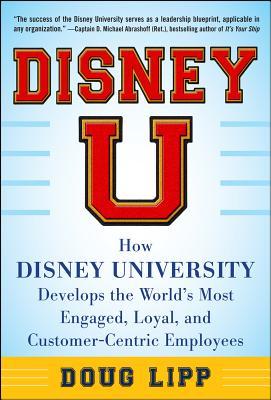
16189537

Publication Date: March 5, 2013

With a Foreword by Jim Cora, former Chairman of Disneyland International

“A leadership blueprint, applicable in any organization.” — Captain D. Michael Abrashoff, U.S. Navy (Ret.), and author of It’s Your Ship

“When I first arrived at The Walt Disney Company, I was surprised to find I had to go back to school–at Disney University! There, I learned the fundamentals of guest service that consistently gave Disney a tremendous advantage in the marketplace. Now, anyone can know these secrets of success thanks to Doug Lipp’s informative book. No matter what your business, the lessons taught at Disney University will prove invaluable.” — Michael Eisner, Former CEO and Chairman, The Walt Disney Company

When it comes to world-class employees, few organizations rival Disney. Famous for their friendliness, knowledge, passion, and superior customer service, Disney’s employees have been fueling the iconic brand’s wild success for more than 50 years.

How has Disney succeeded in maintaining such a powerful workforce for so many years? Why are so many corporations and executives drawn to study how Disney continues to exemplify service and leadership standards?

The Disney University, founded by Van France, trains the supporting cast that helps create the world-famous Disney Magic. Now, for the first time, the secrets of this exemplary institution are revealed. In Disney U, Doug Lipp examines how Van perpetuated Walt Disney’s timeless company values and leadership lessons, creating a training and development dynasty. It contains never-before-told stories from numerous Disney legends. These pioneers share behind-the-scenes success stories of how they helped bring Walt Disney’s dream to life.

Disney U reveals the heart of the Disney culture and describes the company’s values and operational philosophies that support the iconic brand. Doug Lipp lays out 13 timeless lessons Disney has used to drive profits and growth worldwide for more than half a century.

To this day, the Disney University continues to turn out some of the most engaged, loyal, and customer-centered employees the business world has ever seen. Using the lessons outlined in Disney U will set your organization on a path of sustained success. Read more of this post

How Stravinsky’s Rite of Spring has shaped 100 years of music; From start to finish The Rite of Spring exalts in a new and explosive sense of musical movement

How Stravinsky’s Rite of Spring has shaped 100 years of music

Piece first performed in Paris exactly 100 years ago emblematic of era of great scientific, artistic and intellectual ferment

George Benjamin, The Guardian, Wednesday 29 May 2013

Stravinsky in 1914Stravinsky’s Rite of Spring

Stravinsky in 1914. Photograph: Lebrecht Music & Arts Photo Library; A section of a facsimile of Stravinsky’s manuscript for Rite of Spring, which was published this year to mark the centenary

The Rite of Spring was a revolutionary work for a revolutionary time. Its first performance in Paris, exactly 100 years ago on Wednesday, was a key moment in cultural history – a tumultuous scandal.

Written on the eve of the first world war and the Russian revolution, the piece is the emblem of an era of great scientific, artistic and intellectual ferment. No composer since can avoid the shadow of this great icon of the 20th century, and score after score by modern masters would be unthinkable without its model. Read more of this post

Bank of Korea Governor Fears Fed Tightening

May 30, 2013, 9:13 p.m. ET

Bank of Korea Governor Fears Fed Tightening

By ALEX FRANGOS

A move by the Federal Reserve to unwind its monetary easing in the near future is a major risk for emerging economies, the head of South Korea’s central bank said.

In an interview late Thursday in Shanghai, Bank of Korea Governor Kim Choong-soo warned that the withdrawal of Fed stimulus could shake global financial markets.

“That is one of the most important concerns for me,” he said. When the Fed begins to dial back its stimulus program, “volatility in the capital markets is likely to remain high for a relatively long period of time,” he said. Read more of this post

S.Korea’s Pension Fund Lowers Return Target as Economy Slows

S.Korea’s Pension Fund Lowers Return Target as Economy Slows

South Korea’s National Pension Service, the nation’s biggest investor, cut its five-year target for investment returns to account for slowing economic growth.

The agency, which had about $359 billion in assets as of March, is targeting returns on its stock, bond and property investments of 6.1 percent for 2014-2018, down from 6.6 percent announced last year for 2013-2017, according to a statement released today by the Ministry of Health & Welfare, which oversees the NPS.

The lower objective comes after the government cut its forecast for 2013 gross domestic product on March 29 to 2.3 percent from 3 percent. The Finance Ministry unveiled a $15 billion supplementary budget on April 16 to support exporters pressured by a weaker Japanese yen and revive an economy that grew last year at the slowest pace since 2009. Read more of this post

Creative companies: What are the 10 secrets of innovative offices? Allow Time for Ideas to Emerge; Improvise at the Edge of Chaos; Manage Knowledge for Innovation; Ditch the Organizational Chart; Build Decentralized Networks

Creative companies: What are the 10 secrets of innovative offices?

by Eric Barker

What do creative companies do right?

Keith Sawyer got his PhD studying under Mihaly Csikszentmihalyi — the researcher who coined the idea of Flow. I’ve posted about his research on top creative teams and how brainstorming is broken. What did he find when he studied creative companies?

1) Keep Many Irons in the Fire

“In 1997, Shona Brown of McKinsey and Company, working with Kathleen Eisenhardt of Stanford University’s business school, compared three collaborative organizations with three organizations that didn’t innovate. The collaborative organizations constantly experimented, and they always had several different low-cost projects in the works. But instead of a grand plan that organized all the projects, they responded to what emerged. The contrast with the noninnovative companies couldn’t have been more stark— those companies didn’t have any experimental projects under way. And their managers dealt with the future by planning the future— spending months on elaborate strategy and product development plans. The problem was that if the future didn’t unfold according to plan, they were doomed to fail.” Read more of this post