Money to be made by forensic accounting; And it can also be a useful tool to hunt down market inefficiency

June 30, 2013 2:00 pm

On Monday: There’s money to be made through forensic accounting

By John Authers

And it can also be a useful tool to hunt down market inefficiency

The words “forensic accounting” conjure up images of detectives on the hunt for corporate malfeasance. By such means were frauds like Enron hunted down. But it is also a way to hunt down something much more prosaic: market inefficiency. And if harnessed correctly, it could prove to be a way to make money. Aggressive accounting and earnings management may be quite legal, but when companies use them, it is a great sign that they are running into trouble, at least relative to their peers and to the expectations for them. Measure aggressive accounting well and there is money to be made. With the second quarter just ended, and a new earnings season about to begin, it is an important point to remember.

Read more of this post

High profile Australian-listed Phosphagenics chief executive Esra Orgu has been suspended from her duties after the discover of “irregular transactions” in relation to the company’s accounting records

Phosphagenics chief suspended from duties

July 1, 2013 – 2:52PM

Eli Greenblat

art-613082620-620x349

Phosphagenics chief executive Esra Ogru. Photo: Arsineh Houspian

High profile Phosphagenics chief executive Esra Orgu has been suspended from her duties after the discover of “irregular transactions” in relation to the company’s accounting records. Phosphagenics made the announcement to the Australian Securities Exchange this morning after entering a trading halt on Friday. In the release the company, which is developing a portfolio of cosmetics for the international beauty industry, said it believed the amount of money unaccounted for was material.

Read more of this post

World’s Most Respected Companies: And the winner is … Berkshire Hathaway, knocking the crown off three-time winner Apple. Market history is rife with costly examples, from Enron and WorldCom back to John Law’s Mississippi Bubble in France 300 years ago. For both companies and investors, it pays to remember that the ways to fall down the ranking are myriad, but the ways up, few.

SATURDAY, JUNE 29, 2013

Most Respected

By VITO J. RACANELLI | MORE ARTICLES BY AUTHOR

And the winner is … Berkshire Hathaway, knocking the crown off three-time winner Apple. Who’s up, who’s down, who’s on, and who’s off.

Apple‘s reign is over.

Its remarkable three-year hold on the throne of Barron’s annual ranking of the world’s most respected companies is history. No longer the apple of the market’s eye, the immensely successful maker of iPads, iPhones, and Mac computers slipped to third place in the 2013 survey (ticker: AAPL). And proving that comebacks are possible even for an 82-year-old CEO, Warren Buffett’sBerkshire Hathaway (ticker: BRK/A) came out on top this year, up from a No. 15 finish in 2012 — the only time in this ranking’s nine-year history that it finished out of the top five.

Read more of this post

From the Fund Management Jungles: Value Investing Exposed and Explored (Public Workshop Series) (Preview Slides)

The Intelligent Investor: Saving Investors From Themselves

Jun 28, 2013

The Intelligent Investor: Saving Investors From Themselves

By Jason Zweig

Editor’s note: Jason Zweig recently wrote his 250th “Intelligent Investor” column for The Wall Street Journal and shortly thereafter won a Gerald Loeb Award, considered the most prestigious in business journalism, in the Personal Finance category.

I was once asked, at a journalism conference, how I defined my job. I said: My job is to write the exact same thing between 50 and 100 times a year in such a way that neither my editors nor my readers will ever think I am repeating myself. That’s because good advice rarely changes, while markets change constantly. The temptation to pander is almost irresistible. And while people need good advice, what they want is advice that sounds good. Read more of this post

The myth of the all-weather portfolio using leveraged asset allocation strategies

The myth of the all-weather portfolio

September 24th, 2009

For quite some time now financial advisers of all stripes have been in search of the elusive “all-weather portfolio.”  That is, an asset allocation that serves to protect investors in bad times (bear markets) and performs well in good times (bull markets).  Does an all-weather portfolio really exist?

Prior to the economic crisis many would have answered in the affirmative and would have pointed to the large university endowment funds as examples of investors who had achieved this goal.  However the aftermath of the credit crisis and ensuing bear market indicate these funds have failed to achieve this goal. Read more of this post

Fashionable ‘Risk Parity’ Funds Hit Hard; Strategy, Using Leverage to Boost Returns, Hurt by Market Tumult

June 27, 2013, 8:44 p.m. ET

Fashionable ‘Risk Parity’ Funds Hit Hard

Strategy, Using Leverage to Boost Returns, Hurt by Market Tumult

MICHAEL CORKERY, CAROLYN CUI and KIRSTEN GRIND

Investors who piled into “risk parity” funds, which follow a popular strategy that promises to make money in most environments, are being hit hard by the current market turmoil. The losses are touching a broad swath of investors, ranging from hedge-fund firms Bridgewater Associates LP and AQR Capital Management LLC, to mutual funds and local pension funds. Risk-parity funds use leverage to try to increase returns on bond investments so they more closely resemble returns of stocks. The basic idea of the strategy is that by equally distributing risks among stocks, bonds and commodities, the portfolio can weather huge price swings without sacrificing returns. Read more of this post

Behind the Krispy Kreme turnaround; The doughnut chain has slowly repaired its business and built a foundation that it hopes will protect it against future blow-ups

Behind the Krispy Kreme turnaround

June 27, 2013: 12:23 PM ET

The doughnut chain has slowly repaired its business and built a foundation that it hopes will protect it against future blow-ups.

By Beth Kowitt, writer

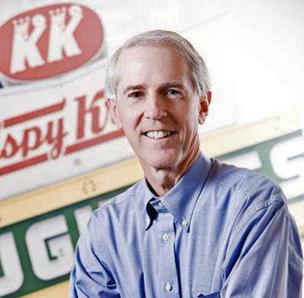
post-krispy-kreme-Jim Morgan-304

FORTUNE — It was only after three years of year-over-year revenue and gross profit growth, 18 consecutive quarters of same-store sales increases, and an eight-year high on the stock that Krispy Kreme Doughnut’s (KKD) executives finally turned to one another and acknowledged that they had turned the company around. The hesitant optimism at the doughnut enterprise, best known for its Original Glazed doughnut, is understandable. Krispy Kreme had been a growth company before — until it imploded in the mid-2000s. Profits tumbled after the company grew too quickly, and an SEC investigation of its accounting practices led to high-level departures. A previous unsuccessful turnaround attempt led to talk of having to sell the chain. “It was just a constant turmoil of, ‘is the company going to make it?'” says CFO Doug Muir. Read more of this post

Arrest warrant sought for Korean CJ Group chairman

2013-06-26 16:46

Warrant sought for CJ Group chairman

By Kim Jae-wo

The prosecution said Wednesday that it has applied for an arrest warrant for CJ Group Chairman Lee Jay-hyun on charges of tax evasion, corporate fund embezzlement and stock manipulation. The Seoul Central District Prosecutors’ Office said that it asked the Seoul Central District Court to issue the warrant, saying the charges are serious enough for him to be taken into custody and the amount of illegal gains was huge.  The court said that senior Judge Kim Woo-soo will review the application. Prosecutors quizzed the 53-year-old tycoon Tuesday for 17 hours over allegations that he amassed a secret fund worth between 400 billion won ($347 million) and 500 billion won both at home and abroad through various illegal methods, and evaded taxes in the process. Sources say Lee admitted to instructing the group’s executives to manage the secret fund, but said it was not for personal use and that there was no intentional criminal acts. Lee is under suspicion of evading 51 billion won in taxes in creating the fund and misappropriating 60 billion won of company money. The country’s 10th richest man is additionally accused of inflicting financial losses worth 35 billion won on the group by fraudulently purchasing two buildings in Tokyo.

Debt crisis blows South Korea’s STX on to the rocks

June 26, 2013 2:22 pm

Debt crisis blows South Korea’s STX on to the rocks

By Simon Mundy in Seoul

Kang Duk-Soo was sanguine when asked three years ago whether choppy industry conditions could spell trouble for STX Group, which he had built into one of the world’s leading shipping and shipbuilding groups in less than a decade.

“We have no liquidity problems because we never seek excessive expansion. We will make efforts not to follow in the footsteps of Daewoo,” the chairman told the Financial Times, referring to the defunct South Korean conglomerate wound up in 1999 after years of debt-fuelled international growth. Read more of this post

Bamboo Innovator Workshop Series (#3 of 4): Tipping Point Analysis in Value Investing

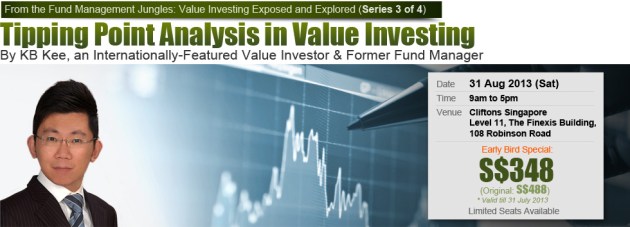
Tipping Point Analysis in Value Investing
Saturday, 31 August 2013 from 09:00 to 17:00 (SGT)
jph7p5

Waiting is the main drawback in value investing. Investors often lose patience with their stocks when they don’t perform in the short-term to produce a feel-good comfort that we are right in our stock calls. That’s why fund managers under pressure to deliver short-term results always ask, “Any upcoming catalysts?” This cannot be more misleading when there is an insufficient understanding in the scalability and resilience of the underlying business model.

When iPod was introduced on November 10, 2001, Apple’s share price was US$9.40 per share and had jumped to US$12 by year end. Those who had loaded up on the “iPod effect” or “new product” catalyst suffered for the next year-and-a-half as the shares plunged to US$6.70 in April 2003. Disappointed, momentum traders cloaked under the label of fund managers sell the stock. Then a “tipping point” moment happened in April 2003 to bring about the extraordinary 60-fold returns in the next decade to US$428 per share, or US$400 billion in market cap. What was this “tipping point” event? One such “tipping point” event is the launch of the iTunes Store on April 28, 2003.

Serious institutional investors spend most of their time not in looking at stock price screens or gaining “insider” knowledge of “catalysts” to generate alpha or excess returns, but in analyzing the interaction of business model dynamics with “tipping point” events so that they literally hear and see the “clicking” sound when they occur to produce a resilient compounder. It is our task to have a systematic framework to understand and identify “tipping point” events when they occur to stay ahead of the momentum traders and colluding insiders (庄家) on the investing curve.

Course Highlights:

– Mr Kee, one of the few Asian fund manager being invited to speak at a number of top banking & finance conferences around the world alongside with renowned speakers such as Praveen Kadle, Chief Executive Officer of Tata Capital & Lauren Templeton, President of Lauren Templeton Capital Management

– Learn from an experienced & qualified instructor who has taught in local Universities

Program Outline and Key Learning Points:

  • UNDERSTAND the stock market reactions to a wide-range of “catalysts”:

–          “Post-earnings announcement drift (PEAD)”,

–          “Capital management programs” (e.g. dividends, capital reduction, share buybacks, bonus issue, rights, splits, share/debt placement) and “Financial structure changes”,

–          “Analyst coverage and recommendations”,

–          and many more.

  • GAIN the surprising insight to why certain positive catalyst signals can be      misleading noise, for instance, insider purchase can be negative. And also      why overreaction to certain negative catalyst signals can be an opportunity.
  • DEVELOP the ability to distinguish between “catalysts” with unsustainable short-term      effects and “tipping point” with long-term value relevance.
  • LEARN where M&A pays and where it strays and the pitfalls.
  • DISSECT a wide range of real-world cases of Asian and global Bamboo Innovators in various industries and understand the tipping point in their business models.
  • UNIFY at the end of the day all the previously disparate loose-hanging concepts,      descriptive facts and “checklists” you have learnt from various sources into the practical Bamboo Innovator mental model when it comes to real investment decision-making.

Understand more about the Instructor’s investment approach with the following published articles:

About the Instructor:

Koon Boon is the founder and managing director of the Singapore-based Bamboo Innovator Institute to establish the thought leadership of resilient value creators around the world. KB has been rooted in the principles of value investing for over a decade as a fund manager and analyst in the Asian capital markets. He was a fund manager and head of research/analyst at a Singapore-based investment management organization dedicated to the craft of value investing in Asia. He had been with the firm since 2002 and was also part of the core investment committee in significantly outperforming the index in the 10-year-plus flagship Asian fund. He was previously the portfolio manager for Asia-Pacific equities at Korea’s largest mutual fund company. He received his Masters in Finance (magna cum laude) and double degree in Accountancy and Business Management (both summa cum laude) from the Singapore Management University (SMU). He had taught accounting at his alma mater in SMU and at SIM University. He had published research in the Special Issue of Istanbul Stock Exchange 25th Year Anniversary of the Boğaziçi Journal, Review of Social and Economic Studies, as well as wrote articles about value investing and corporate governance in the media. He had also presented in top banking and finance conferences in Sydney, Cape Town, HK, Beijing and in the recent Emerging Value Summit 2013. He had trained CEOs, entrepreneurs, CFOs, management executives in business strategy, macroeconomic and industry trends in Singapore, HK and China.

Institutional Imperative and Differentiating Between the Tech Innovators, the Imitators and the Swarming Incompetents in Asia. Bamboo Innovator is featured in BeyondProxy.com, where value investing lives

Bamboo Innovator is featured in BeyondProxy.com, where value investing lives:

  • Institutional Imperative and Differentiating Between the Tech Innovators, the Imitators and the Swarming Incompetents in Asia, June 27, 2013 (BeyondProxy)

Institutional Imperative

Leadership vacuum hits Korean chaebol CJ stocks

2013-06-25 17:27

Leadership vacuum hits CJ stocks

By Kim Tae-jong
CJ Group and its affiliates face a leadership vacuum because Chairman Lee Jay-hyun is under investigation for allegedly creating massive secret funds and evading payment of taxes.
CJ Cheiljedang’s stocks fell by 3.89 percent to close at 247,000 won, while CJ E&M plunged by 6.41 percent to end at 32,850 won. In comparison, the benchmark KOSPI fell by 1.02 percent to close at 1,780.63 that day. Read more of this post

The head of a top South Korean food and entertainment conglomerate, CJ Group, presented himself to prosecutors to face questioning over alleged tax evasion and embezzlement

June 25, 2013, 4:55 PM

Chaebol Leader Answers Summons: A Familiar Scene

By Jaeyeon Woo

OB-XY776_cj_G_20130625033021

South Korea’s CJ Group chairman Lee Jae-hyun appears at the Seoul Central District Prosecutors’ Office in southern Seoul on Tuesday. The head of a top South Korean food and entertainment conglomerate, CJ Group, presented himself to prosecutors to face questioning over alleged tax evasion and embezzlement.

The tense-looking head of the large conglomerate slowly made his way to answer a prosecutors’ summons through a throng of reporters.

“I am sorry for causing concern to the public,” he said. “I will sincerely respond to the investigation.”

It’s an all-too-familiar scene in South Korea. Tuesday’s tableau could have involved any of a dozen business leaders, but in this case, it was 53-year-old CJ Group Chairman Lee Jae-hyun. He didn’t have anything else to say to the media, and his legal representative couldn’t be reached by The Wall Street Journal. Read more of this post

Cappuccino Billionaire De’Longhi Brews Fortune on Coffee; Europe’s third-largest coffee-machine manufacturer by retail volume has risen more than 250 percent since the end of 2007

Cappuccino Billionaire De’Longhi Brews Fortune on Coffee

De'Longhi

The boutiques and restaurants lining Monmouth Street in central London’s Covent Garden neighborhood stand empty on a recent Wednesday morning, except for the 11-person line that stretches out of the Monmouth Coffee Company cafe.

“In the last few years, I’ve replaced bad coffee with good coffee,” said Holly Woodford, a 35-year-old sports consultant, as she sipped a 2.60 pound ($4) cappuccino at one of the restaurant’s farmhouse-style tables. Read more of this post

Korea’s CJ boss Lee Jae-Hyun face arrest for buying, selling artworks through third persons to evade taxes

2013-06-23 16:45

CJ boss face arrest for buying, selling artworks through third persons to evade taxes Read more of this post

SEC charges China MediaExpress, CEO with fraud

SEC charges China MediaExpress, CEO with fraud

Thu, Jun 20 2013

By Sarah N. Lynch

WASHINGTON (Reuters) – The Securities and Exchange Commission charged defunct company China MediaExpress and its chief executive officer on Thursday with misleading investors, the agency’s latest case alleging fraud at a U.S.-listed China-based company.

The SEC alleges that China MediaExpress falsely reported increases in its business operations, profits and overall financial condition as soon as it became a publicly traded company in October 2009 through a backdoor method known as a “reverse merger.” Read more of this post

Ambow Education setback teaches Baring a lesson in China investing as stock had lost 87 percent of its value; The company’s market capitalisation, which peaked at $1 billion, is now $70 million

Ambow setback teaches Baring a lesson in China investing

Tue, Jun 18 2013

By Matthew Miller and Stephen Aldred

June 18 (Reuters) – Baring Asia Private Equity, with $5 billion in assets under management, has a reputation as one of the savviest investors in China.

But the Hong Kong-based firm is now sitting on an $43 million paper loss from a $57 million investment in New York Stock Exchange-listed Ambow Education Holdings Ltd., the latest example of how even the smartest money managers continue to get trapped in risky Chinese investments. Read more of this post

BNSF + JB Hunt = Buffett + Munger = Lollapalooza! How About Asia? Bamboo Innovator is featured in BeyondProxy.com, where value investing lives

Bamboo Innovator is featured in BeyondProxy.com, where value investing lives:

  • BNSF + JB Hunt = Buffett + Munger = Lollapalooza! How About Asia? (BeyondProxy)

BNSF

Fidelity’s Anthony Bolton to Stop Managing China Fund and return to retirement after it failed to match the returns of the U.K. trust that made his reputation

Fidelity’s Anthony Bolton to Stop Managing China Fund

Anthony Bolton will give up managing the Fidelity China Special Situations fund and return to retirement after it failed to match the returns of the U.K. trust that made his reputation.

Bolton, 63, will be succeeded by Dale Nicholls, manager of Fidelity’s Pacific Fund since 2003, Fidelity said in a statement today. The handover will be completed in April 2014, almost four years after China Special Situations became the nation’s largest equity fund to be listed on the London Stock Exchange.

Over 28 years running the U.K.-focused Fidelity Special Situations fund, Bolton delivered average annual returns of 19.5 percent, transforming a 10,000 pound ($15,720) investment in 1979 into 1.49 million pounds in 2007, according to Morningstar Inc. After coming out of retirement to start China Special Situations in April 2010, the fund has lost about 15 percent, matching the MSCI China Index’s decline in British pound terms. Read more of this post

There’s Always Something to Do: The Peter Cundill Investment Approach

There’s Always Something to Do: The Peter Cundill Investment Approach [Paperback]

Christopher Risso-Gill (Author)

SomethingToDo

Publication Date: February 10, 2011

Peter Cundill, a philanthropist and investor whose work has been praised by the likes of Warren Buffett, found his life changed forever when he discovered the value investment principles of Benjamin Graham and began to put them into action. There’s Always Something to Do tells the story of Cundill’s voyage of discovery, with all its ups and downs, as he developed his immensely successful investment strategies. In the context of recent financial upheavals and ongoing uncertainty, Peter Cundill’s wise and frequently funny reflections are more important than ever. In a seamlessly assembled narrative drawn from interviews, speeches, and exclusive access to the daily journal Cundill kept for forty-five years, Christopher Risso-Gill outlines Cundill’s investment approach and provides accounts of his investments and the analytical process that led to their selection. A book for everyday investors as much as professional investors and investment gurus, There’s Always Something to Do offers a compelling perspective on global financial markets and on how we can avoid their worst pitfalls and grow our hard-earned capital.

Senior bank debt issues slump to decade low as investors grow increasingly wary of being forced to take losses amid regulators’ demands for greater protection of taxpayers and depositors

June 16, 2013 6:00 pm

Senior bank debt issues slump to decade low

By Christopher Thompson

European banks’ issuance of senior debt has fallen to its lowest level in more than a decade as investors grow increasingly wary of being forced to take losses amid regulators’ demands for greater protection of taxpayers and depositors.

This year EU banks have issued $132bn in senior debt to date, down from $158bn over the same period last year and the lowest total since 2002, according to data compiled by Dealogic. Read more of this post

Korean prosecutors are expanding their probe into CJ Group’s slush fund by questioning chiefs of the conglomerate’s overseas operations in the United States and Indonesia

2013-06-16 19:18

CJ’s US unit under probe

By Kim Se-jeong
Prosecutors are expanding their probe into CJ Group’s slush fund by questioning chiefs of the conglomerate’s overseas operations in the United States and Indonesia.
Sources from the Seoul Central District Prosecutors’ Office said Sunday that tens of billions of won in illicit funds could be involved.
Already, CJ’s offices in Hong Kong, Japan and China are under investigation.
“We are investigating to determine the exact amount of the slush fund and for what the money was raised and spent,” said an official from the prosecution office.
He said that some of the money CJ siphoned off through paper firms in tax havens was channeled to its U.S. branch. Read more of this post

GS Engineering and Construction suspected of accounting fraud

2013-06-16 16:40

GS E&C suspected of accounting fraud

By Kim Rahn

The Financial Supervisory Service (FSS) is considering launching a probe into GS Engineering and Construction over suspicions of it manipulating its accounts, officials said Sunday.

The Solidarity for Economic Reform, a civic group, asked the regulator to conduct a special inspection into the nation’s fourth-largest builder last month.

If the allegations are confirmed, the FSS may ban the company from issuing new bonds or stock certificates and recommend the dismissal of its chief. The company’s CEO Huh Myung-soo already resigned last Wednesday. He is the younger brother of Huh Chang-soo, GS Group chairman and largest shareholder of the construction arm. Read more of this post

Value is Now Generated Pre-IPO; for companies going public before 2000, almost 75 percent of their eventual market value was realized in the public market, post-IPO; Who would have imagined that Splunk, which started out just analyzing log files, could be worth over $4 billion?

The Right Now Economy: The Next Wave of Startup Success

Mark Siegel6/12/13Follow @msiegel11

[Editor’s Note: Mark Siegel, managing director at Menlo Ventures, was the keynote speaker at IBF’sVenture Capital Investing Conference today in San Francisco. The post below summarizes his talk, in which he argued that the convergence of mobility, cloud infrastructure, social and big data—what he calls the Right Now Economy—sets the stage for $500 billion in venture returns over the next decade.]

Every technology cycle is driven by a huge disruptive new trend in innovation, such as the PC, the Internet/telecom boom, or the rise of social networking. We’re in the midst of the latest cycle, and it’s particularly compelling because it marks the convergence of four important trends: mobile, social, cloud infrastructure and Big Data.

These technological mega-trends have converged to create the real-time marketplaces of the Right Now Economy, which are already disrupting trillions of dollars in aggregate market value and have produced an incredibly fertile area for entrepreneurs to grow ideas into well-funded companies with the potential to take on established stalwarts. Read more of this post

Why Berkshire Hathaway’s McLanee Has a Moat, and Are There Similar Companies In Asia? Bamboo Innovator is featured in BeyondProxy.com, where value investing lives

Bamboo Innovator is featured in BeyondProxy.com, where value investing lives:

Why Berkshire Hathaway’s McLanee Has a Moat, and Are There Similar Companies In Asia? (BeyondProxy)

McLane

Integrating Suppliers: Moving Impact from Lean Programs to the Next Level

Integrating Suppliers: Moving Impact from Lean Programs to the Next Level
by Thomas Frost, Holger Gottstein, Christian Greiser, and Robert Tevelson

JUNE 04, 2013

Overview

Integrating-Suppliers-ex1_large_tcm80-135656 Integrating-Suppliers-ex-sidebar_large_tcm80-135652 Integrating-Suppliers-ex2_large_tcm80-135660 Integrating-Suppliers-ex3_large_tcm80-135663 Integrating-Suppliers-ex4_large_tcm80-135666

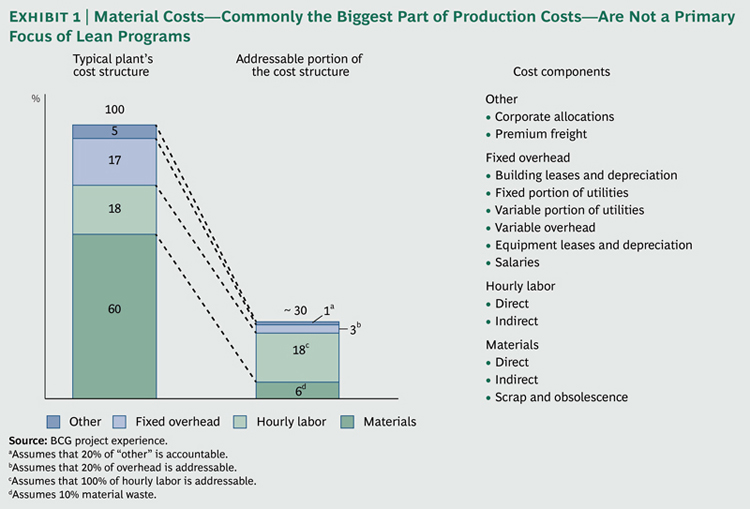
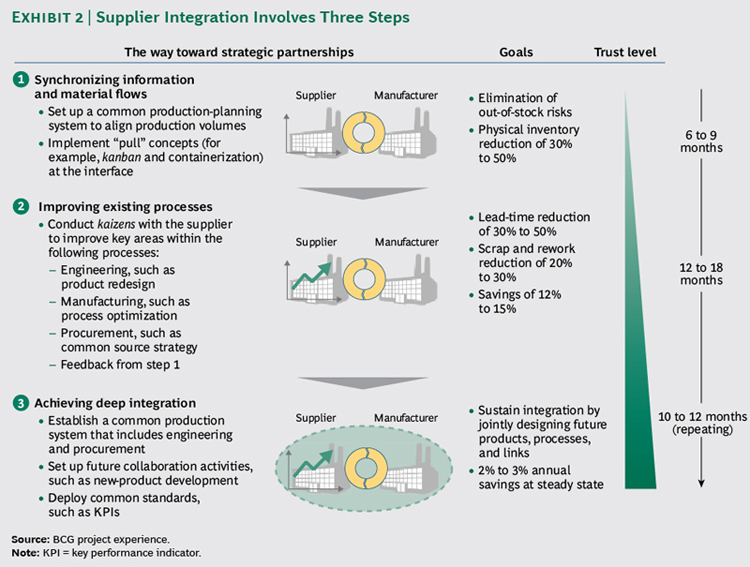
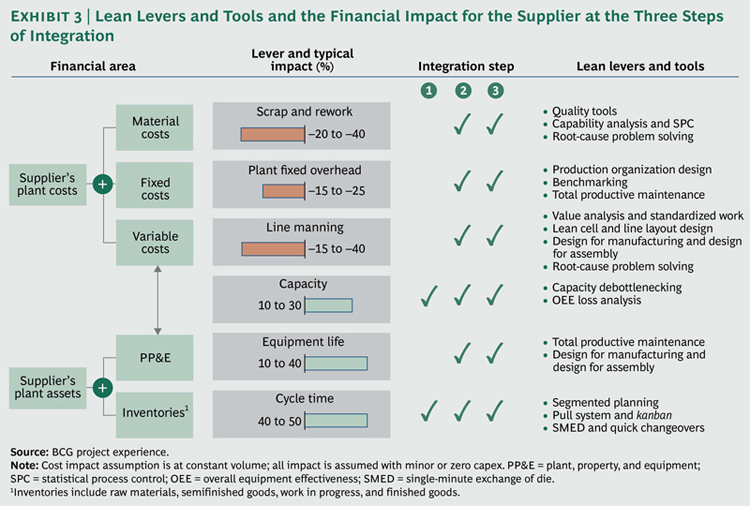
Many manufacturers that have applied lean concepts to their operations find that although they do achieve significant savings, their production costs remain high. This is, in most cases, attributable to material costs, which, depending on industry can range from 60 to 80 percent of total production costs. (See Exhibit 1.)

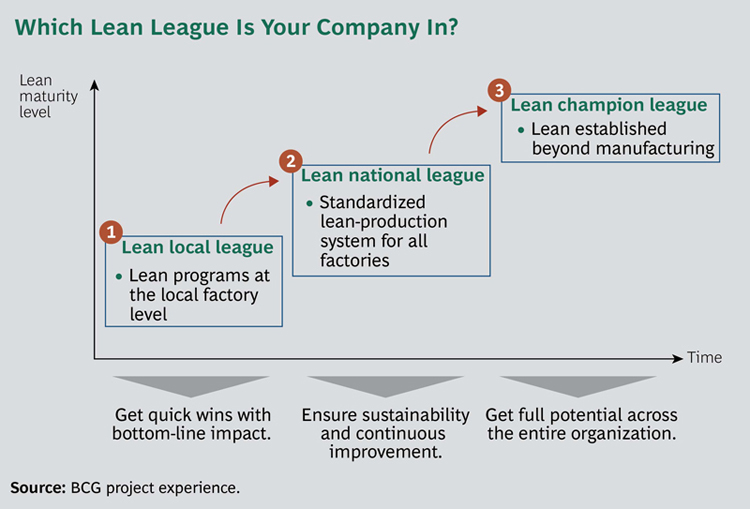
The challenge for these manufacturers is to discover how to extend lean concepts and practices beyond the walls of their own factories. The most effective way is to forge links with key suppliers on the basis of lean principles. In addition to yielding cost savings, this kind of collaboration can form the foundation of a profitable strategic partnership. More than simply an approach to eliminating waste in procurement, creating such relationships means leveraging existing lean techniques to the fullest and using them to transform a manufacturer’s entire supply chain. Read more of this post

Quality Street: The latest fashion in equity investing; Quality stocks now trade at around 3.5 times their book (or asset) value

Quality Street: The latest fashion in equity investing

Jun 15th 2013 |From the print edition

20130615_FNC785

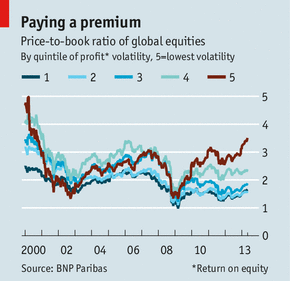
EQUITY investors have had a turbulent time over the past 15 years, including a dotcom boom and bust, the financial crisis in 2008 and the rise and fall of the mining sector. So it is hardly surprising that they have become a little choosy about the stocks they favour.

Orrin Sharp Pierson, a strategist at BNP Paribas, points to a huge preference among investors in recent years for “quality” stocks. He defines such stocks as those with the least volatile profits. As the chart shows, when the market was bottoming in late 2008 and early 2009 there was little difference in valuation between high-quality and low-quality companies. But the gap has widened steadily ever since. Quality stocks now trade at around 3.5 times their book (or asset) value. Read more of this post

The fall of Israel’s Better Place: When vision isn’t enough; From the very beginning, the electric-car company lacked a solid business model. Its collapse is sad, but no surprise

The fall of Israel’s Better Place: When vision isn’t enough

From the very beginning, the electric-car company lacked a solid business model. Its collapse is sad, but no surprise.

By Ora Coren | May.26, 2013 | 5:41 PM |  5

At a lecture three years ago Shai Agassi, the founder of the Better Place electric car venture, accused the state of Israel of lacking vision.

The state had refused to give him a $150 million grant to build a factory making electric cars in Beit She’an, Agassi griped. It also declined to offer him a gift in the form of a large plot of land in the Negev to generate solar power. Read more of this post

Lululemon’s chairman sold $50 million worth of stock in the firm through a prearranged trading plan just days before shares slid on the unexpected news the CEO would depart

Updated June 12, 2013, 9:39 p.m. ET

Timing of Stock Sales Favors Lululemon Insider

By SUZANNE KAPNER

MK-CD970_LuLU_G_20130612183006

Lululemon Athletica Inc. LULU -5.23% Chairman Dennis “Chip” Wilson sold $50 million worth of stock in the company four days before the shares plummeted on the unexpected news that the yoga-gear maker’s chief executive would step down.

The sales were made as part of a prearranged trading plan known as a 10b5-1, which lets executives buy or sell shares in their own company according to preset conditions even if they have inside information at the time of the sale that could affect the stock price. Read more of this post