Stock Splits Rekindle a Polarizing Debate; eight of the 11 S&P 500 companies that have split their stock this year have since outperformed their peers, rekindling the debate about the value for shareholders

November 5, 2013, 12:27 AM ET

Stock Splits Rekindle a Polarizing Debate

MAXWELL MURPHY

Senior Editor

Stock splits have all but disappeared from the corporate playbook, but eight of the 11 S&P 500 companies that have split their stock this year have since outperformed their peers, rekindling the debate about the value for shareholders. Noble Energy Inc.NBL +1.25%Flowserve Corp.FLS +1.16% and Gilead SciencesInc.GILD -2.30%, for example, all have at least doubled their number of shares outstanding this year, and had beaten the benchmark index by 20 to 63 percentage points as of the end of October. Read more of this post

Zoomlion circus exposes China bond puzzle

November 4, 2013 8:40 am

Zoomlion circus exposes China bond puzzle

By Paul J Davies in Hong Kong

Who will be winners and losers as Beijing reforms state-owned firms? The tale of Chinese journalist Chen Yongzhou of the New Express Daily andZoomlion, a maker of diggers and concrete mixers, must seem completely bizarre to anyone outside of China. But it holds important lessons for investors, especially those holding bonds. The tabloid reporter was arrested last month then confessed on live TV to taking bribes to help an unidentified party defame the accounts of a large publicly listed, government-backed company. It sounds like a thriller, but it has become a lengthy saga involving accusations and denials of fraud and corruption flying in all directions, protests over press censorship from the newspaper and then an embarrassing retraction. Read more of this post

Lion Corp’s escape plan to exit PN17 status; Tan Sri William Cheng’s Lion subsidiary Megasteel is Malaysia’s sole hot rolled coils (HRC) manufacturer v

Updated: Tuesday November 5, 2013 MYT 9:06:13 AM

Lion Corp’s escape plan to exit PN17 status

BY HANIM ADNAN

Cheng had said last year ‘several foreign investors from South Korea, China and Taiwan have shown keen interest to take up some stakes in Megasteel. KUALA LUMPUR: Troubled steel product manufacturer Lion Corp Bhd, which recently slipped into Bursa Malaysia’s Practice Note (PN) 17 list, is in the midst of formulating a “workable” structure for its regularisation plan. Read more of this post

The Inner Light of Asian Compounders: The Reborn of India’s Hero Motocorp (Bamboo Innovator Insight)

The following article is extracted from the Bamboo Innovator Insight weekly column blog related to the context and thought leadership behind the stock idea generation process of Asian wide-moat businesses that are featured in the monthly entitled The Moat Report Asia. Fellow value investors get to go behind the scene to learn thought-provoking timely insights on key macro and industry trends in Asia, as well as benefit from the occasional discussion of potential red flags, misgovernance or fraud-detection trails ahead of time to enhance the critical-thinking skill about the myriad pitfalls of investing in Asia at the microstructure- and firm-level.

The weekly Bamboo Innovator Insight series brings to you:

  • The Inner Light of Asian Compounders: The Reborn of India’s Hero Motocorp, Nov 4, 2013 (Moat Report Asia, BeyondProxy)

Hero

Dear Friends and All,

The Inner Light of Asian Compounders: The Reborn of India’s Hero Motocorp

A Hero lights up this Diwali festival: Hero Motocorp (HMCL IN, MV $6.8 billion), the world’s largest two-wheeler manufacturer (by volume), announced on Nov 1, the first day of Diwali, that they achieved the highest-ever retail sales (625,420 units, +18.2% yoy) for any month in October in India. This is also the first time that any two-wheeler manufacturer has exceeded the landmark 6 lakh (600,000) unit sales in a month. Hero sold 6.23 million units in the year ended March 31, and has a capacity to produce 7 million annually. Hero’s performance stood in contrast to the four-wheeler market in which the automakers from Maruti Suzuki, Tata Motor and Mahindra & Mahindra reported lower or nearly flat sales with the Indian economy growing at its slowest pace in a decade and accelerating inflation (onion prices has surged from Rs 16 a kg in Jun to Rs 100) leading the central bank to raise its lending rate twice in as many months. Interestingly, just three years ago on Dec 21, 2010, Hero hit a crisis and was thought to have problems surviving in India. Yet, Hero has emerged stronger from the crisis because of its “Inner Light”, just like the spiritual significance of Diwali.

Diwali, also called Deepavali or the “festival of lights”, is a five-day Hindu festival to celebrate the slaying of the evil demon Narakasura by Lord Krishna, the incarnation of Vishnu (the supreme god of Hinduism), signifying the victory of good over evil and light over darkness. The deeper spiritual meaning of Diwali celebrates the belief that there is something beyond the physical body and mind which is pure, infinite, and eternal, called the Atman or the Inner Light. With this awakening of the Inner Light comes compassion and the awareness of the oneness of higher knowledge which brings ananda (joy or peace).

Hero Motocorp is an incarnation of Hero Honda, the JV formed between founder Brijmohan Lall Munjal and Japan’s Honda Motor (7267 JP) in 1984 in a country that did not think beyond scooters back then. By 2001, Hero Honda beat Bajaj Auto (BJAUT IN) to become India’s largest two-wheeler manufacturer – and also the world’s largest for 12 consecutive years. In the years between March 2000 and March 2011, Hero Honda’s revenue grew from Rs 2,118 crore to Rs 20,787 crore ($3.4 billion); profits increased from Rs 192 crore to Rs 1,927 crore ($314 million).

On Dec 21, 2010, Honda announced a bitter split up and Hero bought over their 26% stake for Rs 3,842 crore ($622 million), ending the 26 year-old JV which started with equity of Rs 16 crore, of which Honda contributed Rs 4 crore. Worse, Honda will be competing with Hero in India and Hero has to drop the Honda name from its brands, products, and distribution outlets after March 2014. How would customers know that the Hero bike is not Honda nad that the quality has not gone down? Dealers are thought to be stampeding out of Hero to join Honda. Prior to the termination of the joint venture, Honda supplies technology for products which Hero marketed in India and Hero’s right to use Honda’s new technology for Hero’s new products will end in 2017, though they can continue to use the existing technology. The 90 year-old Munjal commented, “They didn’t tell us that they want to leave. We told them that if they, themselves, are here to make motorcycles, then they become competitors. How can a competitor and principal be the same?” Since the split, Honda, the world’s biggest motorcycle maker, overtook Bajaj Auto to become India’s second biggest two-wheeler seller with around a 20% market share and vowed to overtake former partner Hero’s 43% leadership by 2020.

So how did Hero survive the crisis? What are the lessons for value investors in assessing stocks in Asia beyond the quantitative financial numbers? What are the five key Bamboo Innovator takeaways?
Ten Things a Fund Prospectus Won’t Tell You; A lot of crucial information isn’t there. Here’s what’s missing—and how to get it

Ten Things a Fund Prospectus Won’t Tell You

A lot of crucial information isn’t there. Here’s what’s missing—and how to get it.

KAREN DAMATO

Nov. 3, 2013 4:00 p.m. ET

So, you’re trying to decide whether to buy a mutual fund or ETF, and you need to know the essential facts. Here’s an unfortunate truth: You won’t find many of the answers you need in the prospectus. Whether you have the svelte “summary” version or the less commonly distributed “statutory” prospectus, which can run to dozens of pages, a lot of the information necessary to make an informed decision just isn’t there. Here are 10 key questions that aren’t answered by the prospectus, and instructions on how to easily find this must-have information: Read more of this post

NQ Mobile Sales Search Leads to Suburban Beijing Office

NQ Mobile Sales Search Leads to Suburban Beijing Office

NQ Mobile Inc. (NQ), ensnared in allegations of fraud, employs a company that has 15 workers sitting in the corner of a suburban Beijing office registered in the name of another business. Whether that arrangement contributed to “massive fraud,” as research firm Muddy Waters LLC has asserted, or simply illustrates the local idiosyncrasies of young tech companies doing business in China is at the heart of a dispute that has tanked the fast-growing maker of mobile-phone security software. The stock fell 62 percent in the three days after the fraud allegations emerged last month and were down 44 percent through Nov. 1. Read more of this post

Korean government has asked financially-troubled conglomerates to sell off their assets in an effort to improve their liquidity

2013-11-03 16:41

Troubled companies asked to sell off assets

By Yi Whan-woo
The government has asked financially-troubled conglomerates to sell off their assets in an effort to improve their liquidity, according to industry sources Sunday. The Financial Services Commission (FSC) and the Financial Supervisory Service (FSS) recently indicated that there will be no additional financial support for troubled firms this year. The regulators called on financially-unstable conglomerates to sell of their assets quickly instead of bargaining to receive good deals, according to industrial sources. “The authorities are especially urging firms in the shipbuilding and construction sectors to take appropriate action as a number of them are suffering from the prolonged slump in their respective industries,” a market observer said. Read more of this post

Muddy Waters Viewed Right on NQ Mobile Payments, Wrong on Cash

Muddy Waters Viewed Right on NQ Mobile Payments, Wrong on Cash

Research firm Muddy Waters LLC was correct to focus on NQ Mobile Inc. (NQ)’s delays in collecting customers’ payments as part of an 81-page report that labeled the Beijing-based mobile service provider a “massive fraud,” according to three accounting experts. At the same time, accountants, professors and a lawyer interviewed by Bloomberg News said the report’s criticism of NQ’s cash accounting and the way the Chinese company got funds from its U.S. public offering may be unfounded. On other points Muddy Waters raised in its Oct. 24 report, it’s still hard for observers to gauge their validity. Read more of this post

If you’re not “smart,” does that mean you’re “dumb?” Some Indexers Grouse About ‘Smart Beta’ Approaches; Talk of improved index strategies riles some classic index investors

Some Indexers Grouse About ‘Smart Beta’ Approaches

Talk of improved index strategies riles some classic index investors

KAREN DAMATO and ARI I. WEINBERG

Nov. 3, 2013 4:16 p.m. ET

If you’re not “smart,” does that mean you’re “dumb?” That’s the question proponents of classic index investing are asking these days. Index funds aim to provide exposure to the performance—or beta—of any market. But now, new mutual and exchange-traded funds are billing themselves as “smart beta” funds, and some investors and advisers are upset. Their gripe: The term “smart beta” implies that older indexing varieties are, well, not so intelligent. Read more of this post

Welcome To The Unicorn Club: Learning From Billion-Dollar Startups

Welcome To The Unicorn Club: Learning From Billion-Dollar Startups

Posted 13 hours ago by Aileen Lee (@aileenlee)

Editor’s note: Aileen Lee is founder of Cowboy Ventures, a seed-stage fund that backs entrepreneurs reinventing work and personal life through software. Previously, she joined Kleiner Perkins Caufield & Byers in 1999 and was also founding CEO of digital media company RMG Networks, backed by KPCB. Follow her on Twitter @aileenlee
Many entrepreneurs, and the venture investors who back them, seek to build billion-dollar companies.

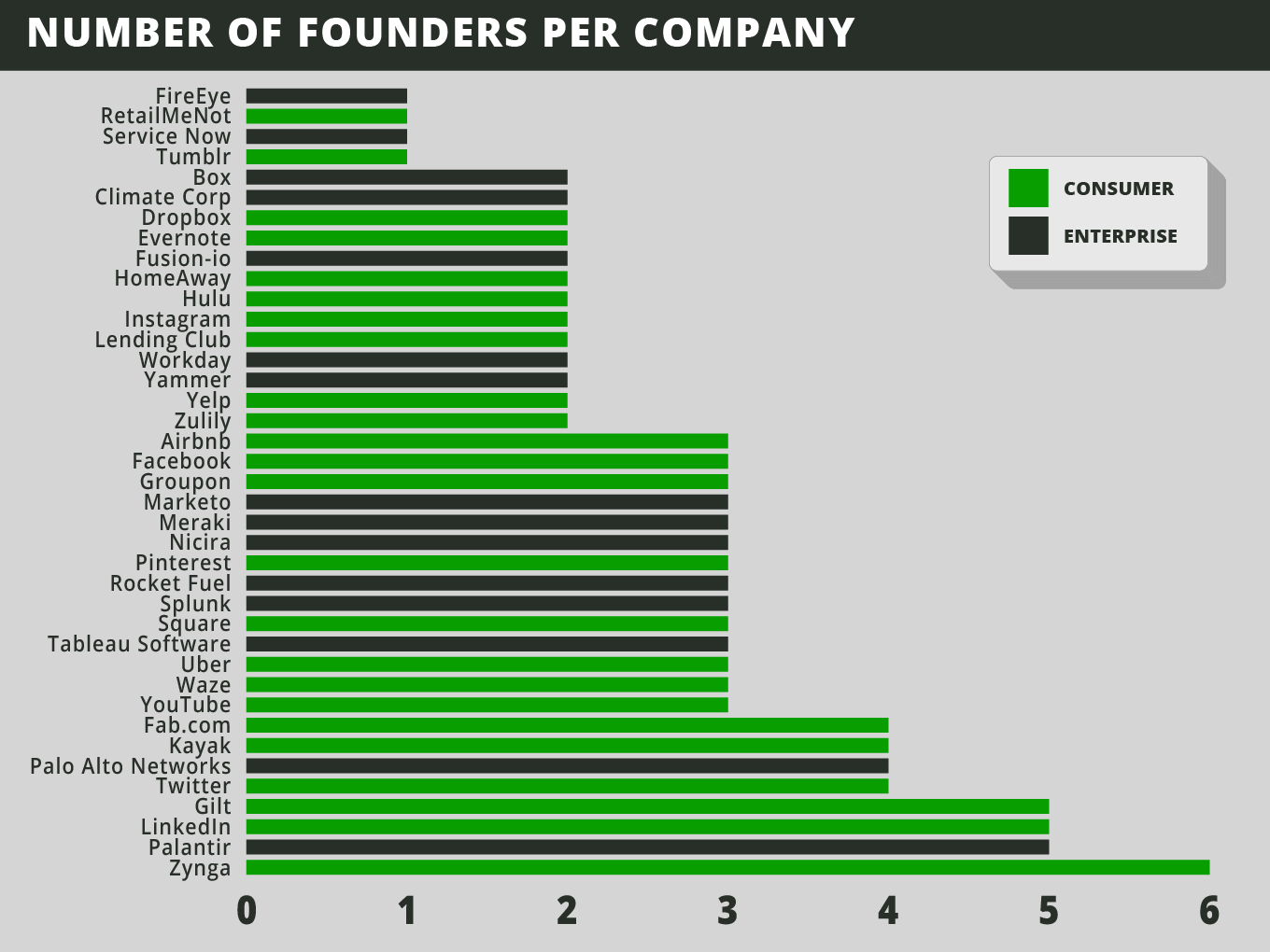
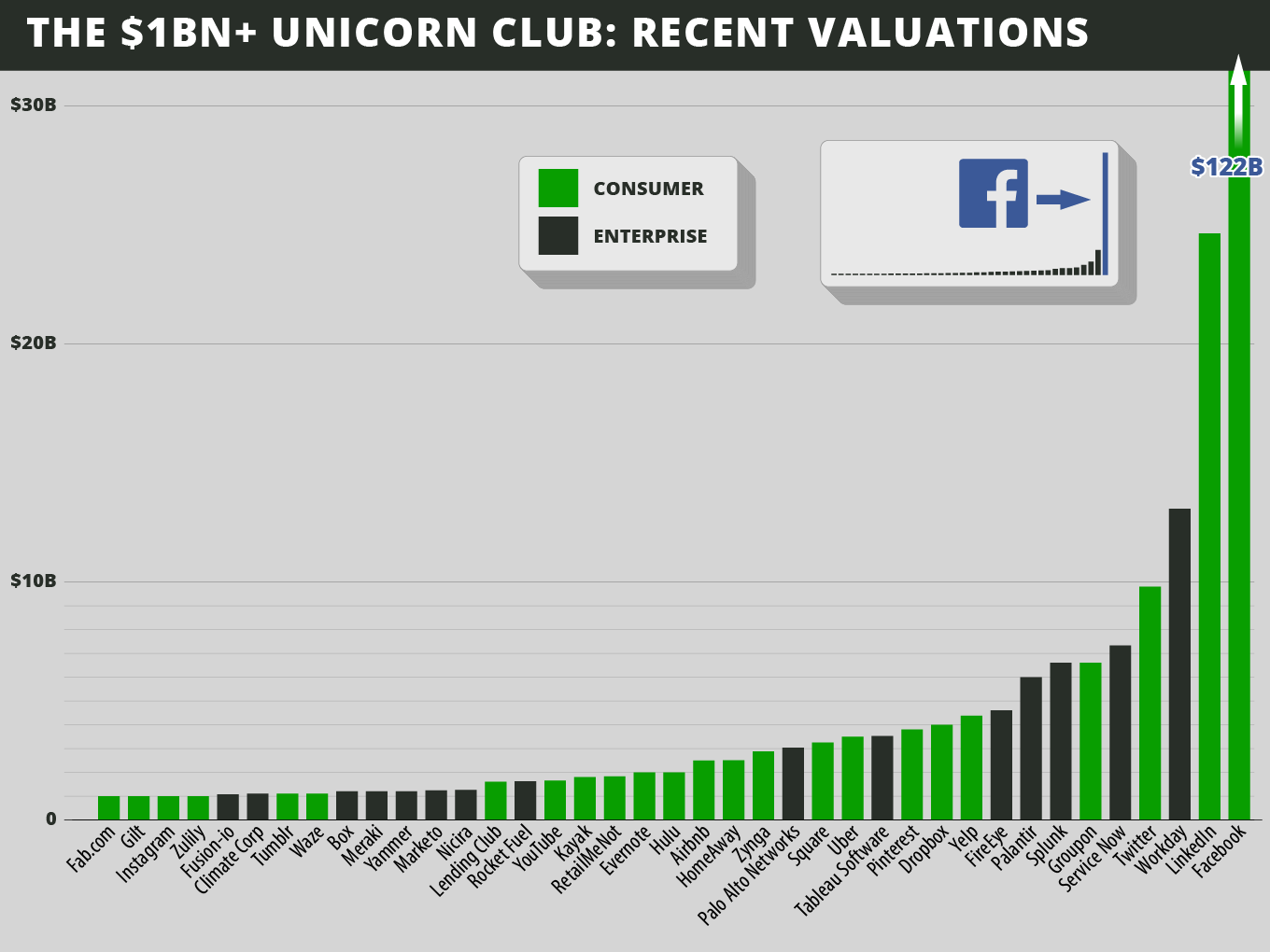
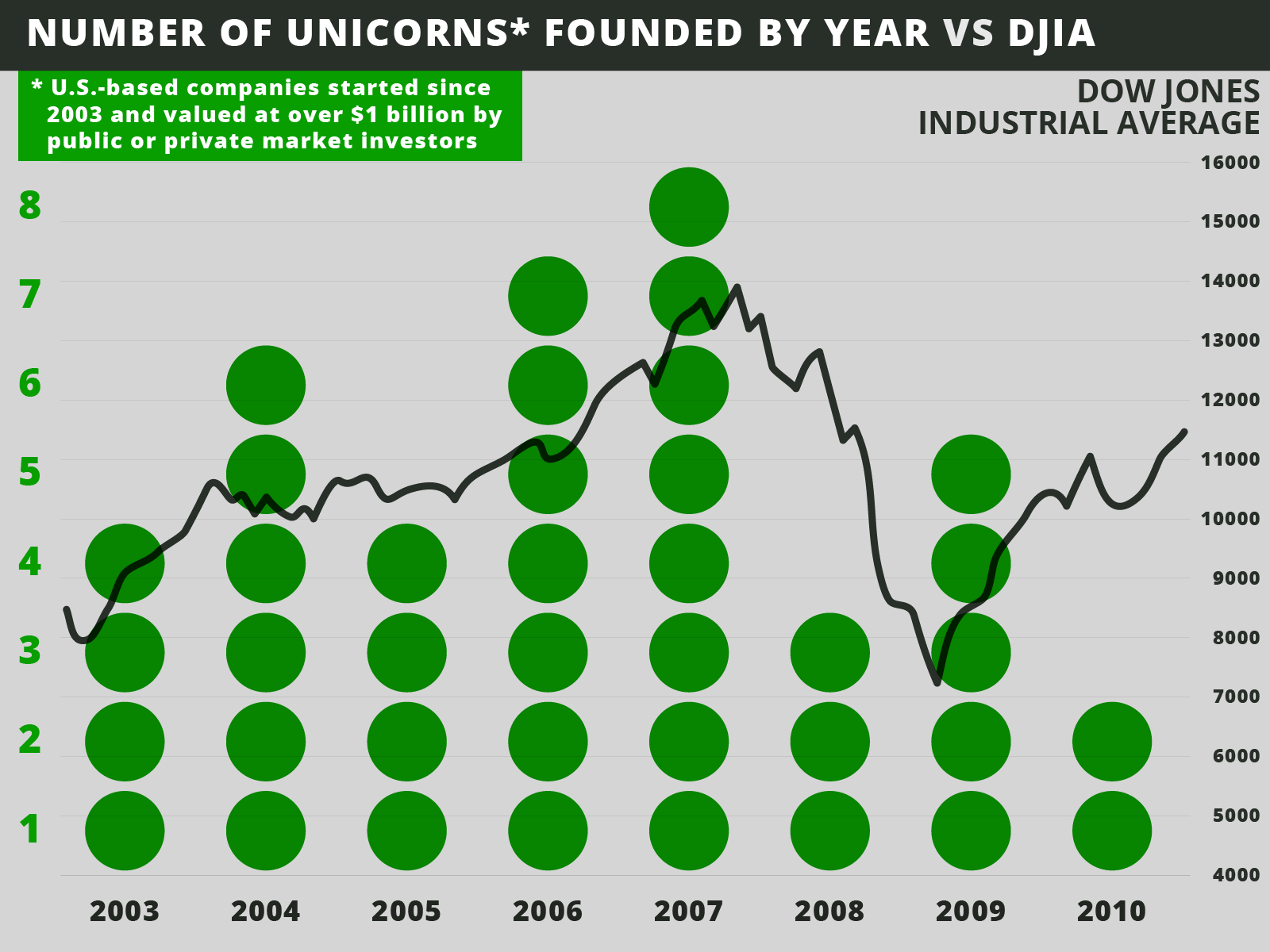
Why do investors seem to care about “billion dollar exits”? Historically, top venture funds have driven returns from their ownership in just a few companies in a given fund of many companies. Plus, traditional venture funds have grown in size, requiring larger “exits” to deliver acceptable returns. For example – to return just the initial capital of a $400 million venture fund, that might mean needing to own 20 percent of two different $1 billion companies, or 20 percent of a $2 billion company when the company is acquired or goes public. So, we wondered, as we’re a year into our new fund (which doesn’t need to back billion-dollar companies to succeed, but hey, we like to learn): how likely is it for a startup to achieve a billion-dollar valuation? Is there anything we can learn from the mega hits of the past decade, likeFacebookLinkedIn and Workday? To answer these questions, the Cowboy Ventures team built a dataset of U.S.-based tech companies started since January 2003 and most recently valued at $1 billion by private or public markets. We call it our “Learning Project,” and it’s ongoing.

unicorn-graph1c unicorn-graph2c unicorn-graph3c Read more of this post

Reduce the noise levels in your investment process

Reduce the noise levels in your investment process

By Barry Ritholtz, Published: November 1

“Signal-to-noise ratio” is an engineering concept that focuses on the amount of useful information being received compared with false or useless data. This is an especially important concept to investors. Over the past few years, I have been reducing the meaningless distractions in my investing process. You should, too. You want less of the annoying nonsense that interferes with your portfolios and more of the significant data that allow you to become a less distracted, more purposeful investor. Read more of this post

Veteran investor Donald A. Yacktman finds much to like in Coke, Pepsi, and P&G which he views as bargains

SATURDAY, NOVEMBER 2, 2013

Why Three Big Stocks Look Like Bargains

By LAWRENCE C. STRAUSS | MORE ARTICLES BY AUTHOR

Veteran investor Donald A. Yacktman finds much to like in Coke, Pepsi, and P&G which he views as bargains.

Donald A. Yacktman is regarded as an insightful investor with a keen analytical mind, as his long-term results attest. The Yacktman Fund (ticker: YACKX) has a 15-year annual return of 10.62%, besting 99% of its peers in Morningstar’s large-cap blend category. Yacktman and his team hew to a buy-and-hold approach, content to hold stocks for years. Annual turnover averages about 20%. The fund’s top 10 holdings account for about 50% of assets. Yacktman, 72, who is president of Yacktman Asset Management in Austin, Texas, oversees nearly $30 billion of assets. To find out about a few of his holdings and his sense of where the markets stand, Barron’s caught up with him recently by telephone. Read more of this post

Bible-toting Gary Wang sentenced to prison for his involvement in the EMG and Rebar Group (力霸集團) embezzlement scandals

Bible-toting Gary Wang sentenced to prison

By Ashley Yen, Special to The China Post
November 2, 2013, 12:15 am TWN

p16c

TAIPEI, Taiwan — Former Eastern Multimedia Group (EMG, 東森集團) Chairman Gary Wang (王令麟) reported to the Taipei District Prosecutors’ Office yesterday with a Bible in his hands to begin serving his prison term. Wang was given a five-year, six-month sentence for his involvement in the EMG and Rebar Group (力霸集團) embezzlement scandals. Wang was escorted in handcuffs by his attorney and the police. He expressed his apologies to the public in front of the prosecutors’ office. Read more of this post

Sohn London Conference Notes 2013

Sohn London Conference Notes 2013: Hohn, Armitage, Tangen, Gaonkar & More

Posted: 01 Nov 2013 07:49 AM PDT

The 2013 Sohn London Conference just took place and MarketFolly has notes below.  The event featured hedge fund managers presenting their latest investment ideas benefiting paediatric cancer and childhood disease research. Read more of this post

Fund managers ‘buy shares they don’t like’; “I’ve had managers admit to me that they own stocks in which they have no conviction. They do it because they don’t want to stray too far from the benchmark.”

Fund managers ‘buy shares they don’t like’

Some fund managers copy their rivals with large holdings in the same shares to avoid standing out from the crowd

By Richard Evans, Investment Editor

7:56AM GMT 02 Nov 2013

If the manager of a football club picked players he didn’t believe in, supporters would be up in arms. But a similar practice on the part of fund managers is accepted by thousands of investors. Many of the professionals paid to manage your money back companies despite privately rating them as poor investments, some experts within the industry say. Private investors would expect the fund managers they trust with their money to research companies thoroughly and then invest only in those that they believe in. So why does the opposite sometimes happen? Read more of this post

Muddy Waters: Chinese Media Exposes Lies About NQ’s “Partnerships”

Chinese Media Exposes Lies About NQ’s “Partnerships” (NYSE: NQ)
Published On November 1, 2013

It is beneficial for US investors to read Chinese media coverage of our NQ reports. This update consists of English translations of four articles that have appeared in Chinese media in the past week. There are two articles quoting certain of NQ’s purported partners (e.g., ZTE) as stating that NQ fabricated the partnerships. One article covers the disappearance of NQ / FL Mobile’s games from the iTunes store. One article is an IM exchange between Chinese investors and Chairman Lin. (The host of the chat was Xueqiu.com, a Chinese investment site.) Chairman Lin seems to take pain to avoid directly answering tough questions, such as those stating that NQ’s market share claims do not match with Chinese investors’ observations. The articles also mention Chairman Lin’s (unverified) claim that NQ has sued Muddy Waters in China.

The articles are:

  • NQ’s “Business Partners” ZTE, Huawei and Lenovo, Denied There Was Pre-installation Cooperation, The Beijing News, Oct. 30, 2013.
  • NQ Accused of Unilaterally Fabricating Reports of Cooperation with ZTE, Money.163.com, Oct. 25, 2013.
  • FL Mobile: iOS Games Drop-off Issue Still Under Discussion, Sina Technology, Oct. 29, 2013.
  • NQ Mobile CEO Yu Lin: We have filed a lawsuit in China against Muddy Waters, and are considering organizing an anti-Muddy-Waters group, Caijing News, Oct. 29, 2013.

A Dozen Things I’ve Learned from Philip Fisher and Walter Schloss About Investing

A Dozen Things I’ve Learned from Philip Fisher and Walter Schloss About Investing

25iq

1. “I had made what I believe was one of the more valuable decisions of my business life. This was to confine all efforts solely to making major gains in the long-run…. There are two fundamental approaches to  investment.  There’s the approach Ben Graham pioneered, which is to find  something intrinsically so cheap that there is little chance of it having a big  decline. He’s got financial safeguards to that. It isn’t going to go down much,  and sooner or later value will come into it.  Then there is my approach, which is to find  something so good–if you don’t pay too much for it–that it will have very,  very large growth. The advantage is that a bigger percentage of my stocks is apt  to perform in a smaller period of time–although it has taken several years for  some of these to even start, and you’re bound to make some mistakes at it. [But]  when a stock is really unusual, it makes the bulk of its moves in a relatively  short period of time.”  Phil Fisher understood (1) trying to predict the direction  of a market or stock in the short-term is not a game where one can have an advantage versus the house (especially after fees); and (2) his approach was different from Ben Graham. Read more of this post

Mahindra & Mahindra: SUVival of the fittest; Mahindra has become the pin-up of Indian capitalism—a home-grown automotive champion. Now it must resist complacency and be prepared to take bigger risks

Mahindra & Mahindra: SUVival of the fittest; Mahindra has become the pin-up of Indian capitalism—a home-grown automotive champion. Now it must resist complacency and be prepared to take bigger risks

Nov 2nd 2013 | MUMBAI |From the print edition

20131102_WBD001_0

INSIDE Anand Mahindra, an Indian tycoon, there is a rebel bursting to get out. He works amid aircraft models and walls of framed posters and has a mildly indiscreet Twitter account with a million followers. A former film student at Harvard, he describes his country’s malaise using the metaphor of “Star Wars”. Graft and cronyism in India are like an evil Empire that has struck back. His hope is that middle-class and young Indians become Jedi knights to battle the Dark Side. Read more of this post

Muddy Waters: Game over for Olam if Temasek pulls out

PUBLISHED NOVEMBER 01, 2013

Muddy Waters: Game over for Olam if Temasek pulls out

ANDREA SOH SANDREA@SPH.COM.SG

Mr Block: Had not foreseen Temasek moving in to support Olam, a move which he believes was driven by systemic considerations. – PHOTO: YEN MENG JIIN

[SINGAPORE] Almost a year after it first released its report on Olam International, shortselling research firm Muddy Waters is not letting up on the agri-commodities trader yet. “My view is that if Temasek decides tomorrow that it wanted out of this investment, it would be game over within months for them, without Temasek’s backstop,” its research director Carson Block told The Business Times in his first visit to Singapore since launching its report against Olam last November. Read more of this post

Muddy Waters Attack Forces NQ Mobile CEO Khan to Fight Tarnish

Muddy Waters Attack Forces NQ Mobile CEO Khan to Fight Tarnish

By Bloomberg News  Oct 31, 2013

As Omar Khan helped whip up 1,500 guests and employees gathered in a Beijing ballroom for NQ Mobile Inc.’s eighth birthday on Oct. 25, the co-chief executive officer himself had little to celebrate. A day earlier, NQ Mobile, the maker of security software to thwart mobile-phone hackers, was accused by a research firm of inflating revenue, triggering a 47 percent stock decline. The “Never Quit” emblazoned on workers’ purple shirts was no longer just a sales slogan: It could be read as a reminder for the 38-year-old executive to dig in and defend his company. Read more of this post

Warren Buffett and Charlie Munger’s best advice: “The big secret is that we’re good at lifelong learning. If you keep learning all the time, you have a wonderful advantage.”

Warren Buffett and Charlie Munger’s best advice

By Patricia Sellers October 31, 2013: 11:50 AM ET

The world’s greatest investing duo talk about how they’ve helped each other exceed at investing–and life.

Warren Buffett and his lifelong investing partner Charlie Munger are rarely interviewed together except in front of 30,000-plus shareholders at the Berkshire Hathaway (BRKA) annual meeting in Omaha each spring. So, my recent sit-down with the two investing legends was a special event. The new issue of Fortune features Buffett, 83, and Munger, 89 and other super-successful duos who have thrived by sharing advice with one another over the years. Here’s an expanded piece of my interview that didn’t make it into the magazine. You don’t have to be a billionaire to understand that following  this advice can lead to a truly successful life. Read more of this post

David Teoh: Untangling the start-up web of TPG’s reclusive billionaire and his family

Ben Hurley Reporter

David Teoh: Untangling the start-up web of TPG’s reclusive billionaire and his family

Published 30 October 2013 15:36, Updated 31 October 2013 01:27

4b5ed6e8-3d1f-11e3-ab36-6925a5387f6d_777013947--646x363

Evasive: David Teoh ducks the lens of BRW’s photographer. Photo: Nic Walker

He’s a self-made billionaire. He heads what could soon become the second-biggest privately-owned fixed line network in the country, and compete with the National Broadband Network. More recently his wife and four sons have pumped tens of millions of dollars into a vision to own disruptive start-up companies and incubators in every major capital city. And yet, hardly anybody in the start-up world seems to know Malaysian businessman David Teoh – the executive chairman of TPG Telecom – his Taiwan-born wife Vicky, and their four sons Shane, Jack, John and Bob. Read more of this post

Harvard: Great school, lousy investor

Harvard: Great school, lousy investor

By Dan Primack October 31, 2013: 12:13 PM ET

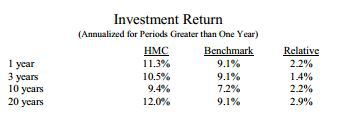
Harvard has America’s largest college or university endowment, but not nearly its best. FORTUNE — Harvard University has the nation’s largest college or university endowment, valued at $32.7 billion through the end of June. It also has worse investment returns than any of its peers over the past five years, according to a Fortune analysis. This may come as a surprise to Harvard employees and alums, who have been told that the endowment’s investment arm — Harvard Management Company — regularly beats its benchmarks. For example, HMC CEO Jane Mendillo wrote the following last month in a public letter:

capture14 Read more of this post

China’s Zoomlion and Sany Heavy suffer third-quarter profit hits

October 30, 2013 1:25 pm

China’s Zoomlion and Sany Heavy suffer third-quarter profit hits

By Paul J Davies in Hong Kong

Zoomlion, the diggers and pumps company whose finances have been at the centre of a Chinese media scandal, said third-quarter profits dropped by more than one-third as its bitter local rival Sany Heavy reported profits down by half. On Saturday a Chinese reporter confessed to taking bribes to write damaging stories about the company after being arrested by police from Zoomlion’s home city of Changsha in the latest set of accusations against the group. Read more of this post

FARMING FOLLY: How One PRC Investor Lost 90% On Agriculture Picks

FARMING FOLLY: How One PRC Investor Lost 90% On Agriculture Picks

Andrew Vanburen (China Correspondent)

Thursday, 31 October 2013 07:00

A CHINESE WOMAN lost nearly all of her investment in just one month betting on spot agricultural commodities.
In China’s agricultural heartland of Hubei Province in the city of Wuhan, Ms. Liu managed to lose around 90% of her original 260,000 yuan capital while trying to make a few bucks on the commodities exchange. And around 100 people in the investing group on chat forum QQ that she frequents also claim to have suffered “major losses” playing the exchange. So how did Ms. Liu’s catastrophic crop failure come about? She was lured early on by small initial gains which ended up draining her life savings in the blink of an eye. Read more of this post

More investors shun penny stocks; The former executive director of local building solutions company Natural Cool has been fined $150,000 for carrying out purchases to create a false or misleading appearance with respect to the price

More investors shun penny stocks

By Yvonne Chan
POSTED: 31 Oct 2013 22:31
Analysts said investors are shunning this particular market segment after the recent fiasco involving penny stocks.

SINGAPORE: Investor confidence in penny stocks has taken quite a beating. The Singapore Exchange (SGX) junior board, the Catalist Index, has fallen 17.5 per cent since September following the sharp drop in the share prices of some penny stocks. In comparison, the market’s benchmark Straits Times Index (STI) has gained six per cent over the same period. Analysts said investors are shunning this particular market segment after the recent fiasco involving penny stocks. Three penny stocks Asiasons, Blumont and LionGold were suspended by the SGX on October 4 after sharp declines in their stock prices erased S$8.6 billion in market value over three days. They were later allowed to resume trading as “designated securities”. However, when shares of Sky One Holdings plunged as much as 91 per cent on October 28, SGX did not confer the same ruling on Sky One Holdings. Analysts said investors are likely to remain jittery until SGX releases information about its investigation into the previously suspended stocks. “Even though SGX came up with certain explanations, there’s no exact description as to what is called fair orderly transparent trade,” said Ng Kian Teck, analyst at Voyage Research. Daryl Liew, head of Portfolio Management at Reyl Singapore, said SGX faces a delicate balancing act. “On one hand, the SGX has a duty to let the free markets move. On the other hand, there’s an expectation that they need to protect investors as well,” he explained. As for measures to reduce speculation in penny stocks, Mr Ng argued that making it mandatory for small cap companies to increase their free float wouldn’t work. He said: “You cannot ask a company to issue shares for the sake of issuing shares because if the company doesn’t need the money, it defeats the purpose. “It’s an intervention and it would not be as fair, and to the owners, they might not really want to divest in the first place. You’d be forcing them and this would deter people from coming to the exchange.”And as to whether penny stocks would be sullied with a reputation similar to the S-chips saga in the past, Mr Liew thought otherwise. He said: “While there have always been cases of suspicious behaviour or trading pertaining to penny stocks, my sense is that it won’t follow in the footsteps of S-chips. “If you look at the trading habits of investors in penny stocks, they just like the speculative nature. You can’t curb them over the long term.” Analysts said there will still be room for penny stocks among retail investors and speculators.

Singapore company director fined $150,000 by MAS

Thursday, Oct 31, 2013

AsiaOne

SINGAPORE – The former executive director of local building solutions company Natural Cool Holdings has been fined $150,000 by the Monetary Authority of Singapore (MAS) for contravening the Securities and Futures Act (SFA). Read more of this post

Financial watchdog probes into Gamevil, CJ E&M’s information leakage

Financial watchdog probes into Gamevil, CJ E&M’s information leakage

Hwang Ji-hye, Oh Soo-hyun

2013.10.31 14:47:48

The Financial Supervisory Service (FSS) launched an investigation on suspicions that information about Gamevil’s rights offering and CJ E&M’s third quarter (Q3) earnings was leaked prior to the release of such information to the public. Allegedly, the confidential information was delivered only to certain institutions so that some groups exploited it to make profits.  Read more of this post

Exchange Failure Prompts Commodity Bourse Audit: Corporate India

Exchange Failure Prompts Commodity Bourse Audit: Corporate India

India’s commodities futures market regulator has sought an audit of the Multi Commodity Exchange of India Ltd. after a related spot bourse failed in August. The Forward Markets Commission wants to examine large expenditures by the MCX and related-party transactions, Ramesh Abhishek, chairman of the regulator said in an interview. The MCX has set up a panel to run the bourse after the government in July ordered the National Spot Exchange Ltd., founded by MCX Vice Chairman Jignesh Shah, to halt trading. Read more of this post

Never lose the start-up mentality; Act like a start-up, even if you’re a well established company,

Never lose the start-up mentality

Act like a start-up, even if you’re a well established company, advises our entrepreneurial columnist.

Martin Luther King perhaps unwittingly captured the essence of the start-up spirit when he spoke of the “fierce urgency of now.” Photo: GETTY IMAGES

By Michael Hayman

9:09AM GMT 29 Oct 2013

My team is thrilled. The Start-ups 100, the listing of the most inspiring early stage businesses in Britain, has just ranked us as No.11. It’s a landmark for us. Not least because from next year we will cease to “officially” be a start up; we will have moved on to the ranks of the grown-ups. Indeed, some of the feedback we have had on the ranking is that many never really considered our firm as a struggling start-up anyway. We did, still do, and this is why. Read more of this post

Singapore’s Sky One share price collapse of over 90% in one day; “A lot of people lost a lot of money on these. What’s on the street right now is, ‘Oh gosh, what’s next?’ This needs to stop . . . Why don’t we just set everything back to zero, start all over again? Press the reset button.”

PUBLISHED OCTOBER 30, 2013

Brokers raise shields with Sky One falling

BY ANGELA TAN ANGELAT@SPH.COM.SG AND KENNETH LIM KENLIM@SPH.COM.SG

SGX has so far only queried Sky One, but not intervened in the trading of its shares – PHOTO: SPH

‘SGX might as well switch off its system at this rate. Its poor communication has killed what’s left of the penny stock market,’ a broker complained.

[SINGAPORE] Sky One Holdings’ collapse on Monday prompted a number of brokers to update their lists of restricted stocks this week, raising questions about why the Singapore Exchange (SGX) did not impose trading curbs as it had done with three other stocks a few weeks earlier. Trading in shares of Sky One, a logistics provider being targeted in a reverse takeover (RTO) by a coal- mining business, whose stock fell as much as 91 per cent early Monday before being halted, is currently restricted at several brokers, including AmFraser, CIMB, DMG, OCBC Securities and UOB Kay Hian, according to market sources and some of the brokers’ own websites. Read more of this post