The 30-Year-Old Macintosh and a Lost Conversation With Steve Jobs

JANUARY 24, 2014, 11:57 AM  1 Comment

The 30-Year-Old Macintosh and a Lost Conversation With Steve Jobs

By NICK BILTON

imageab

Associated PressSteven P. Jobs, left and John Sculley presented the Macintosh computer at an Apple shareholder meeting in Cupertino, Calif, in January 1984.

On a late-November day in 1983, Steven Levy, then a freelance journalist for Rolling Stone, got into a car outside 10460 Bandley Drive, in Cupertino, Calif.

As the vehicle sped away from the white office building, Mr. Levy looked at the driver and said hello to Steven P. Jobs, then the young, spry co-founder of Apple, who immediately responded with a voluble tirade about the magazine Mr. Levy worked for.

As he zigzagged Cupertino’s streets toward a pizza restaurant, Mr. Jobs complained that a coming article about the Macintosh — a computer that was still two months away from being announced — would not be on the cover of Rolling Stone, but rather stuffed inside a planned issue. Mr. Jobs groused that the magazine was, as Mr. Levy remembers, an expletive, and said a previous cover article about MTV was an expletive, too.

Mr. Levy couldn’t get a word in, but when he finally did, he explained that the he had written the MTV cover article Mr. Jobs hated so much.

“He immediately changed the subject,” Mr. Levy recalled with a chuckle in a phone interview.

For the next couple of hours, over pizza with olives, Mr. Levy interviewed Mr. Jobs about the coming Mac computer, his design philosophy, a breakup which had left Mr. Jobs love-sick and, ominously, struggles with Apple’s board over the direction of the company. (Mr. Jobs would be fired two years later.)

The interview was a rare and raw moment for Mr. Jobs, where he bared his true feelings on the record with a reporter.

While some snippets of the 11,500-word conversation were used in the Rolling Stone feature (which never did make it to the cover), until now, the transcript has been tucked away in one of Mr. Levy’s files.

To celebrate the 30-year anniversary of the Mac, Mr. Levy said Friday that he was appending the transcript, which is “essentially unexpurgated,” in an updated Kindle version of the book about the birth of the Macintosh, “Insanely Great: The Life and Times of Macintosh, the Computer that Changed Everything.”

It’s clear in the interview that Mr. Jobs was struggling with a few demons. For one, he was upset about a recent article in Time magazine that described himas petulant and unkind. And he blamed his obsession with work for a breakup.

“I just had a romance that I really care about, a lot — I mean, a lot — go up in smoke. Because of the stress, and the sort of other woman that Macintosh is,” Mr. Jobs said.

Yet what is apparent in the discussion is that Mr. Jobs knows he is about to introduce a computer that is going to change the world. He discusses the graphics and the design of the machine with the passion of an artist describing a newly completed masterpiece. “I mean, it’s incredibly great,” Mr. Jobs said when asked about the Mac. “It’s insanely great.”

The Macintosh he was so excited about would be the world’s first mass-market personal computer that had a graphical user interface and a mouse.

“It’s hard to put yourself in the mindset, to look back at the way things were back then,” Mr. Levy told me when I asked about re-reading the interview after all these years. “Computers had these glowing green letters back then and there was no Internet.”

But Mr. Jobs seemed to know exactly the kind of impact the Mac would have, and the team of people who had helped make it a reality.

He repeatedly refers to the team that built the Mac as “pirates,” and then says a quote that became famous years later: “Better to be a pirate than join the navy.” It’s also clear that Mr. Jobs and his band of over-worked pirates had agonized over every detail of the computer, even analyzing the details of the manual.

There are some aspects of the 30-year-old interview that might answer some unanswerable questions about what Mr. Jobs would have done with his life if he were still alive today.

When Mr. Levy told Mr. Jobs that there was “speculation” that he might go into politics, Mr. Jobs replied that he had no desire to enter the public sector and noted that the private sector could have a greater influence on society. “I’m one of those people that think Thomas Edison and the light bulb changed the world more than Karl Marx ever did,” Mr. Jobs said.

One thing Mr. Levy was continually searching for in the interview, was what was driving Mr. Jobs — a question that was echoed in 2011 in “Steve Jobs,” the biography written by Walter Isaacson.

In the 1983 interview, it’s clear that money isn’t the answer. Mr. Jobs talked about his net worth falling by $250 million in six months. ”I’ve lost a quarter billion dollars! You know, that’s very character building,” he said, and notes that at some point, counting your millions of dollars is “just stupid.”

Mr. Levy pressed again. “The question I was getting at is, what’s driving you here?”

“Well, it’s like computers and society are out on a first date in this decade, and for some crazy reason we’re just in the right place at the right time to make that romance blossom,” Mr. Jobs replied, noting that the 1980s were the beginning of the computing revolution. “We can make them great, we can make a great product that people can easily use.”

Such passion is something that would follow Mr. Jobs through his career, and what he said next seemed to be the driving force behind that passion.

“I look at myself as an artist if anything,” Mr. Jobs said. “Sort of a trapeze artist.”

“With or without a net?” Mr. Levy asked.

“Without,” Mr. Jobs replied, and then he said one of the more profound things in the interview: ”You know we’re constantly taking. We don’t make most of the food we eat, we don’t grow it, anyway. We wear clothes other people make, we speak a language other people developed, we use a mathematics other people evolved and spent their lives building. I mean we’re constantly taking things. It’s a wonderful ecstatic feeling to create something and put it into the pool of human experience and knowledge.”

Given that we’re still talking about the Mac computer 30 years later, and a long list of other products Mr. Jobs helped create, it’s apparent that he was able to add something to that pool.
 

Entrepreneurship: Where failure is part of recipe for success

anuary 24, 2014 5:00 am

Entrepreneurship: Where failure is part of recipe for success

By Amie Tsang

With Silicon Valley constantly generating tales of innovation and moneymaking, it is hardly surprising that many should hope to emulate that success – especially young people who find themselves in a tough economic climate after leaving schools and universities.

Governments, too, are hoping that young enterprise will go some way towards lowering youth unemployment and spurring their economies.

In December, George Osborne, the UK chancellor, announced an expansion of the government’s Start Up Loans scheme.

However, many organisations offering funding and training have realised that their approach has to be reassessed in light of the skills gap.

Richard Branson, the Virgin Group founder, listed some of the elements that young people need to succeed: “Secondary education should place greater emphasis on critical thinking, problem-solving and emotional intelligence – key traits of successful entrepreneurs and indeed successful people.”

But skills such as these are difficult to measure and hard to teach. Some organisations have found ways to ensure young people going through their entrepreneurial programmes get experience to help develop these qualities.

Rather than allowing young people to pitch for funding early on, a scheme run by Prince Charles’s charity for young people gives participants a mentor and a small grant first to test out their plan, for example by setting up stall for a day in a market.

“Businesses that we saw weren’t necessarily being successful and it was our responsibility to help a young person understand exactly what running a young business means,” says Martina Milburn, chief executive of the Prince’s Trust.

“A lot of the young people we work with don’t understand that.”

Ashoka, the social enterprise network, also tries to enrol people at an early stage, as it means they get more opportunities to test themselves and fail.

Marina Mansilla Hermann, campaigns director for Ashoka’s global Youth Venture project, compares the approach with five-a-side football, where younger players can develop on a smaller pitch.

This ultimately makes people more prepared when they bid for funding or try to launch their project. It also breaks down the sense of social stigma that might be attached to failure in places such as Japan.

“As part of our process, we embrace failure,” she explains. “Of course, it’s not [the] ultimate goal, but if it happens we have to learn from it.”

Rob Wilson, a co-director at Youth Venture UK, adds that “the challenge is that the education system says it’s bad to fail”.

European graduates are “graduating through an education system that hasn’t challenged them in any way shape or form about the world”, he says.

“I would much rather employ someone who has tried to set up a venture and failed … They’ll have tried to recruit, sold things, manufactured, done logistics, dealt with everything.”

And this is advice many organisations that want to help budding young entrepreneurs would do well to follow themselves, according to a study conducted by the Overseas Development Institute.

Claudia Pompa, a researcher at the ODI, points out that data on the success of entrepreneurial schemes are often incomplete and not comparable, so many organisations do not know what works and what does not.

“The [development] industry itself could do so much more in terms of sharing best practice … [It] is not very good at acknowledging failure,” she says.

“There are fundamental things you have to take into account when you ask an 18-year-old to walk into a bank to ask for a loan and offer collateral.”

——————————————-

Networks: Budding entrepreneurs find support and contacts in shared forums

“When you announce you’re going to start up your own business, people are either worried for you or they have over-expectations,” says Rachel Hanretty, who set upMademoiselle Macaron, a business making macaroon biscuits.

Faced with such differing attitudes, young Scottish entrepreneurs have turned to enterprise networks.

Ms Hanretty has found reassurance in meeting others at networking events run by the Prince’s Trust charity.

Mhairi MacLeod, founder of Lux, a marketing agency dedicated to building food and drink brands, has also found that entrepreneurship does not necessarily mean working alone.

She found support in a shared workspace for young businesses: “You’re all in the same boat. I can go over and ask my neighbours what they would do. More often than not they have been in that situation.”

In South Korea meanwhile, networks are opening streams of funding to budding entrepreneurs.

The Banks Foundation for Young Entrepreneurs, a non-profit group funded by banks, set up a hub for entrepreneurs in Gangnam, the Silicon Valley of Seoul. The hub, calledD.Camp, gives members access to a network of contacts, workspace and mentorship.

Hahn Ryu, manager of business planning at the Banks Foundation, says the opportunities D.Camp has given young entrepreneurs have been crucial to funding new companies.

He cites Korbit, a Bitcoin exchange, as one of the start-ups that attracted funding through contacts made at the hub.

“Lots of people come here – investors casually drop by to see if there are any companies they would like to invest in,” he says. “They have a casual conversation over coffee and this leads to investment.”

While the South Korean hub is funded by banks, back in Scotland, Vicky MacDonald credits the government for the existence of young enterprise networks.

When she set up Edinburgh Markets, which helps street traders, she was pleasantly surprised by the support for social enterprises. It made her feel “there was a revolution happening in Scotland”.

Ahead of this year’s in­dependence referendum, Angela Constance, minister for youth employment, says the young enterprise networks and her portfolio, which does not exist at UK level, are evidence that “Scotland has what it takes” to survive alone.


Carlyle Co-Founder’s Formula for Success: Study the Humanities

JANUARY 23, 2014, 1:17 PM

Carlyle Co-Founder’s Formula for Success: Study the Humanities

By CHAD BRAY

DAVOS, Switzerland – David M. Rubenstein, the co-founder of the Carlyle Group, believes American students have lost a valuable skill that can help them succeed in business and life: critical thinking.

Speaking on a panel at the World Economic Forum, Mr. Rubenstein, the co-chairman of the private equity firm, said American policy makers and educators have put too much of a focus on the fields of science, technology, engineering and mathematics at the expense of the study of literature, philosophy and other areas in the humanities.

Mr. Rubenstein’s comments offered a sharp contrast to a recurring theme in Davos this year: that more technical-based training could help solve a crisis in youth unemployment since the financial crisis.

Humanities teach problem-solving skills that enable students to stand out among their peers and to achieve success in the business world, Mr. Rubenstein said. Career-specific skills can be learned later, he said, noting that many of Wall Street’s top executives studied the humanities.

“You shouldn’t enter college worried about what you will do when you exit,” said Mr. Rubenstein, who majored in political science.

Students increasingly face pressure to enter fields that are perceived as higher paying — many times because of the skyrocketing costs of higher education, said Mr. Rubenstein, chairman of the John F. Kennedy Center for the Performing Arts in Washington.

But the reasoning skills that come with a well-rounded humanities education actually result in higher-paying jobs over time, Mr. Rubenstein said.

He’s even come up for an abbreviation to counter S.T.E.M., the often-cited acronym used by advocates of more career-focused disciplines.

“H=MC. Humanities equals more cash,” Mr. Rubenstein said.


Fed May Protect Warren Buffett as a National Treasure

Fed May Protect Warren Buffett as a National Treasure

Should Berkshire Hathaway be designated a systemically important non-bank financial firm and subjected to Federal Reserve oversight, as the Financial Stability Oversight Council is considering? Oh I don’t know. Obviously, insurers don’t want to be subjected to Federal Reserve oversight; pretty much no one ever wants to be subjected to any oversight. I’m not entirely clear on what that oversight would entail, though the Fed might “impose stricter capital, leverage and liquidity requirements and demand stress testing for crisis scenarios.” I don’t know if that would be good or bad or irrelevant; so far Berkshire seems to have done a decent job of avoiding crises all on its own. Better than the Fed, even.

And it would sure be a shame if a systemic-importance designation took away Berkshire’s ability to, I don’t know, bet a billion dollars on some random numbers picked by a monkey rolling dice. That seems like the sort of thing you can get away with as a scrappy little $280 billion AA/Aa2-rated insurance company, but that gets a little bit more awkward once you’re systemically important. AIG, which has received the systemic-importance designation, hasn’t bet that much money on monkeys since it closed AIG Financial Products, ZING!

Maybe a simpler question is, is Berkshire Hathaway systemically important? Arithmetically the answer seems to be yes, or yes-ish:

non-bank financial companies that have $50 billion or more in assets and meet any one of five other criteria, including having $30 billion in credit-default swaps linked to their debt, can be evaluated.

Berkshire had $458.1 billion of assets as of Sept. 30, the company said in a filing with the SEC. It had $31.4 billion in credit-default swaps linked to its debt as of Jan. 17, according to data from the Depository Trust & Clearing Corp.

Berkshire also had $5.8 billion in derivative liabilities as of Sept. 30, more than the $3.5 billion trigger set by the FSOC.

That $30 billion in CDS criterion is particularly interesting: Why is there so much CDS on Berkshire? Well, there’s only like $5.8 billion of net notional (that is, most of the $31.4 billion is offsetting trades within dealers), but that’s still a lot, more than the net notional outstanding on systemically important issuers like JPMorgan, Citigroup, Bank of America, Deutsche Bank, Goldman Sachs, the United Kingdom and the United States of America.

Are people really into betting against Berkshire? Meh. If you wanted to bet on a really serious meltdown of the global financial system, I guess buying Berkshire CDS at say 70 basis points running might be a cheap way to do it. But, you know, who are you buying it from? If you’re expecting the sort of global meltdown that bankrupts Berkshire, your Berkshire CDS starts looking dicey. Better to buy gold or farmland or ammunition or Dogecoins.1

More likely — well, notice how close that $5.8 billion net notional is to Berkshire’s $5.8 billion in derivative liabilities. There’s probably a link there. Berkshire’s insurance and insurance-ish businesses are about taking financial risks away from other people — a Nomura analyst describes it as, “You’re taking volatility away from other people and accepting it to your own balance sheet” — and some of those people obviously want to be sure that Berkshire will pay up on that insurance. Buying Berkshire CDS is a way to insure that insurance, as it were, though it raises the same “who are you buying it from” issue as a straight bet against Berkshire. (More practically, buying CDS is a way for banks to reduce CVA charges for capital purposes on their trades with Berkshire. Capital regulation doesn’t care as much about the who-are-you-buying-it-from issue.)

So the CDS notional outstanding serves as a rough proxy for how interconnected Berkshire is with the rest of the financial system. And the answer is, relatively speaking, pretty big.

But there’s no sense in measuring Berkshire’s interconnectedness in purely mechanical ways. It’s Berkshire! It’s Warren Buffett! He’s the frequent savior of the financial system! His mere stamp of approval — typically in the form of a large investment in a risky-looking institution — is enough to calm markets and bring firms back from the brink. Once Buffett has invested in a bank, the conspiracy theory goes, regulators will find it a bit harder to let that bank fail, because how can you look Warren Buffett in the eye and take away a toy from him?2 And if Buffett has the power to bestow halos on banks, then that’s a decent argument that the Fed should be monitoring his halo-distributing activities for signs of excessive risk.

Because the main systemic thing about Berkshire is, come on, it’s Berkshire Hathaway. It’s got Warren Buffett and Graham and Dodd and Cherry Coke and weird annual meetings in Omaha and that 29-year-old who’s in charge of everything and whose name is literally Cool. It’s a piece of wholesome Americana incongruously deposited in the heart of the financial system. That’s irreplaceable, and a collapse of Berkshire could destroy America’s already near-zero trust in its financial system. You can see why the FSOC would think it’s too big to fail.

1 By the way, if there’s an argument of the form “If X goes bankrupt, then the entire financial system will probably be bankrupt, so you might as well stockpile weapons in your remote cabin,” then I guess that itself is an argument that X is too big to fail? I mean, not strictly — correlation with end times is not causation — but still.

2 Salomon Brothers is arguably a counterexample, though not a clear-cut one.

Dad, Someday Can I Grow Up to Be Too Big to Fail? Even if you idolize Berkshire and believe Warren Buffett is infallible, there’s no telling how Berkshire’s businesses will perform once he’s no longer at the helm

Dad, Someday Can I Grow Up to Be Too Big to Fail?

Now I understand what it means to reach the pinnacle of achievement as an American investor.

First, you start with a modest kitty, and over the course of several decades, you succeed so far beyond anyone’s wildest dreams that the government has to deem your enterprise a systemically important financial institution. Then, you’re officially too big to fail. And there aren’t many rungs on the ladder left to climb after that. So hand off the management to some young up-and-comers, who over time may benefit from the government halo or perhaps suffer from its smothering embrace.

This is where Berkshire Hathaway Inc. may well be headed. Yesterday, Bloomberg News reported that regulators at the U.S. Financial Stability Oversight Council have begun scrutinizing Berkshire to determine whether it is important enough to the financial system to warrant Federal Reserve supervision. It would be no surprise if the conclusion is that it does. And when you think about this for even a moment, it is a sad turn of events.

I don’t doubt that a meltdown at one of Berkshire’s reinsurance units, which include General Re Corp. and National Indemnity Co., might send world markets into a tizzy. Berkshire long has been the premier backstop of choice for huge financial institutions that get in trouble. It bought stakes in Goldman Sachs Group Inc. and Bank of America Corp. when they needed to restore investor confidence after the banking system almost fell apart. Years before American International Group Inc. imploded, Gen Re once even helped AIG cook its books.

Even if you idolize Berkshire and believe Warren Buffett is infallible, there’s no telling how Berkshire’s businesses will perform once he’s no longer at the helm. It makes sense, too, that the nation’s most favored rescuer of ailing megabanks itself would be deemed too big to fail. Under Fed supervision, an investment from Berkshire might become an even more powerful endorsement than it is already. The Fed conceivably could gain influence in deciding who gets one.

But this isn’t how capitalism and free markets are supposed to work. As Buffett wrote in a 2010 letter to shareholders: “Too-big-to-fail is not a fallback position at Berkshire.” It sure shouldn’t be.

Nobody told Buffett on his way up which securities, derivatives and business acquisitions were appropriate risks for Berkshire to take on, or how concentrated or diversified his company’s bets should be. Nor is it right that the government should deem Berkshire so vital to the financial system that it deserves special treatment.

Regulators and lawmakers can crow all they want about how the Dodd-Frank Act ended “too big to fail.” But there don’t seem to be many investors who believe that. Fannie Mae and Freddie Mac are still around as wards of the state. Congress has been known to change its mind in a panic, as it did in 2008 when it passed the law that created the Troubled Asset Relief Program. Plus, Dodd-Frank gave the government the option of placing insolvent, systemically important companies into a special resolution program and letting them avoid traditional bankruptcy proceedings.

If the government decides that Berkshire’s insurance operations are so critical that their failure might threaten the financial system, the proper thing to do would be to break them up. In other words, make them less important. The same goes for all of the other financial institutions that already have been deemed systemically important. But as everybody knows, that isn’t going to happen.

We decided as a nation years ago that we’re no longer willing to let the markets sort out such companies when they falter. Nobody wants to take the economic hit. So now an icon widely revered as an exemplar of U.S. corporate excellence one day may come to represent something we once prided ourselves on being against: protection rackets for the richest, most powerful corporations — the very embodiment of crony capitalism.

Maybe someday we’ll tell our children: Kids, if you work hard enough, with a little bit of luck, someday you can build something that becomes too big to fail, too. We all should hope for something better.

(Jonathan Weil is a Bloomberg View columnist.)

To contact the writer of this column: Jonathan Weil in New York at jweil6@bloomberg.net.

Brembo Chairman Becomes Billionaire on Brakes for Porsche

Brembo Chairman Becomes Billionaire on Brakes for Porsche

Five different drivers took the checkered flag during the Formula One season last year. The winning cars all had one thing in common — brakes or clutches supplied by Italian auto-parts maker Brembo SpA. (BRE)

The Bergamo-based company established its foothold in the racing world 40 years ago. Since then, Brembo has expanded its customer base by supplying braking systems for car manufacturers such as Ferrari SpA and Porsche SE, a business that has made the company’s chairman, Alberto Bombassei, a billionaire.

“One of Brembo’s greatest fortunes has been the opportunity to enter the world of racing in 1975, when the company started to supply Ferrari in Formula One,” Bombassei said in a Jan. 17 e-mail. “This has enabled Brembo over the years to test on the track new technological solutions, which over time have been transferred to road cars and bikes.”

Demand for the vehicles has helped Brembo’s share price double in the last year. Revenue increased 11 percent to 1.4 billion euros ($1.8 billion) in 2012.

Bombassei controls 53.5 percent of Brembo and has a net worth of $1.2 billion, according to the Bloomberg Billionaires Index. He has never appeared on an international wealth ranking.

The billionaire’s stake in the brake manufacturer is controlled through the family’s holding company, Nuova Fourb Srl, whose shares are held in equal proportion under the names of Bombassei’s two children, according to Italian newspaper Corriere della Sera.

‘Family Business’

The stake is credited to Bombassei because the 73-year-old and his wife still receive the income from 80 percent of the shares. As patriarch and chairman, the billionaire also retains effective control of the family business.

“The fact that Brembo is a family business gives strength to the company,” Bombassei said. “I don’t have plans to reduce my involvement, or to lose control of the company.”

He declined to comment on his net worth.

Brembo was founded by Bombassei’s father, Emilio, and Italo Breda in 1961, when the partners established a workshop making spare parts for vehicles. Their breakthrough came in 1975, when Enzo Ferrari asked the company to equip his F1 racing cars.

Brake Caliber

Five years later, the company developed an aluminum brake caliper that was adopted by manufacturers like Porsche, Mercedes and BMW. It also helped pioneer carbon ceramic discs, which have been a staple of the company since 2002.

“The business is doing well thanks to the company’s focus on high-end road cars, a sector growing three times faster than the auto supplier market in general,” said Monica Bosio, a Milan-based analyst at Banca IMI SpA.

The Bloomberg Billionaires Index takes measure of the world’s wealthiest people based on market and economic changes and Bloomberg News reporting. Each net worth figure is updated every business day at 5:30 p.m. in New York and listed in U.S. dollars.

To contact the reporters on this story: Tom Metcalf in London at tmetcalf7@bloomberg.net; Zohair Siraj in New York at zsiraj1@bloomberg.net

4 Lessons in Building a Brand; Lessons on How to Build a Successful Brand from Popular Snowboarding Company Neff Headwear

4 LESSONS IN BUILDING A BRAND
LESSONS ON HOW TO BUILD A SUCCESSFUL BRAND FROM POPULAR SNOWBOARDING COMPANY NEFF HEADWEAR.
BY KAIHAN KRIPPENDORFF
Love it or hate it, your success this year and beyond depends on your ability to shape a brand: your career’s, product’s, department’s, or company’s.
Here are some counterintuitive lessons from a man who built a popular snowboarding brand as a college sophomore, knowing little about his industry, marketing, or business.Shaun Neff, founder and CEO of Neff Headwear, now has his products in 3,500 stores in 40 countries, and his gear is sported on ski slopes and streets, by celebrities from Holly Madison to Lil’ Wayne.
I got a chance to sit down with Neff, to learn how he did it and, more importantly, what we can extract from his success to help us build whatever brands we are working on.
(You can watch the 15-minute interview segment on “The Outthinker: Shaun Neff” here.)
Here are four lessons on building a brand from Shaun Neff:
1. FIND YOUR “PRE-EXISTING COMMITMENT”
We hold this fantasy about great entrepreneurs being oracles who somehow recognize and move on new opportunities more quickly than others. But my research for The Way of Innovation showed that they actually make a commitment before the opportunity arises and so are poised to step into it when an opening appears.
Neff knew he wanted to start a brand long before college. He noticed what brands people wore and was fascinated by their power. His drive stemmed not from a calculated market view, but from an internal personal passion. When you choose a pre-existing commitment, it becomes an always-there, always-searching filter through which you scan for opportunities.
What pre-existing commitment are you willing to pursue, regardless of when the market offers you a profitable opportunity to do so?
2. YOUR BRAND IS A FAN BASE, NOT A LOGO
The term “brand” brings up thoughts of logos, colors, and products. But when I asked Neff what a brand was, he spoke of none of these things. He said a brand is “a loyal fan base.” When you think of a brand as something to be looked at, when you admire it, you turn your back on what really matters: your fan base. Instead, think of your would-be fans: who are they, what are their passions, where do they spend their time?
If you thought of your brand as your fan base, rather than its elements and colors and meanings, what would you do differently?
3. STAND FOR SOMETHING MORE THAN PRODUCT
Shaun said that lots of brands “get stuck in one product: If you are a footwear company, you are always selling footwear. If you are an eyewear company, you’re always in eyewear.” A product-defined brand is inherently limiting. Neff Headgear has top-selling watches, sunglasses, and snowboard gloves. When they think of expanding into a new product they ask two questions: (a) do our retailers know how to sell this and (b) does our “gut” tell us this fits.
If your brand were not defined by your product or category, what would it stand for?
4. SEARCH TIRELESSLY FOR THE OPENING
With your pre-existing commitment in your heart and your fan base in mind, find your opening. If one angle doesn’t work, back up and try again, then again, until you find a way through.
Neff started out selling T-shirts. He’d paste stickers on signs, win over local taste-makers, and seek out the coolest snowboard shops. This created a small ecosystem in which his brand started selling. But he wanted to replicate this on a larger scale. For that he needed nationally known snowboarders to wear Neff gear. But he quickly learned that the best snowboarders were prevented by current sponsors from wearing other people’s shirts.
So Shaun studied their contracts one night and realized, “These apparel deals said nothing about the head!” Snowboarders couldn’t wear Neff T-shirts, but they could wear Neff headwear.
Unfortunately, Neff didn’t make headwear. So he went to the local dollar store, bought a stack of beanies, removed their labels, and wrote his last name with a black marker on each one. At the next tournament he convinced several competitors to wear his Neff hat. When two of them stood on the medal podium, “Neff” inscribed prominently over their heads, he knew he had found his opening. “The heavens opened … I am no longer Neff clothing; I’m Neff Headwear.”
Are you stuck pursuing just one “opening”? If so, think of three more you can try this month.

David Brooks: The Art of Presence; Do be a builder

The Art of Presence
JAN. 20, 2014
David Brooks
Tragedy has twice visited the Woodiwiss family. In 2008, Anna Woodiwiss, then 27, was working for a service organization in Afghanistan. On April 1, she went horseback riding and was thrown, dying from her injuries. In 2013, her younger sister Catherine, then 26, was biking to work from her home in Washington. She was hit by a car and her face was severely smashed up. She has endured and will continue to endure a series of operations. For a time, she breathed and ate through a tube, unable to speak. The recovery is slow.
The victims of trauma, she writes in a remarkable blog post for Sojourners, experience days “when you feel like a quivering, cowardly shell of yourself, when despair yawns as a terrible chasm, when fear paralyzes any chance for pleasure. This is just a fight that has to be won, over and over and over again.”
Her mother, Mary, talks about the deep organic grief that a parent feels when they have lost one child and seen another badly injured, a pain felt in bones and fiber.
But suffering is a teacher. And, among other things, the Woodiwisses drew a few lessons, which at least apply to their own experience, about how those of us outside the zone of trauma might better communicate with those inside the zone. There are no uniformly right responses, but their collective wisdom, some of it contained in Catherine’s Sojourners piece, is quite useful:
Do be there. Some people think that those who experience trauma need space to sort things through. Assume the opposite. Most people need presence. The Woodiwisses say they were awed after each tragedy by the number of people, many of whom had been mere acquaintances, who showed up and offered love, from across the nation and the continents. They were also disoriented by a number of close friends who simply weren’t there, who were afraid or too busy.
Anna and Catherine’s father, Ashley, says he could detect no pattern to help predict who would step up and provide the ministry of presence and who would fumble. Neither age, experience nor personal belief correlated with sensitivity and love.
Don’t compare, ever. Don’t say, “I understand what it’s like to lose a child. My dog died, and that was hard, too.” Even if the comparison seems more germane, don’t make it. Each trauma should be respected in its uniqueness. Each story should be heard attentively as its own thing. “From the inside,” Catherine writes, comparisons “sting as clueless, careless, or just plain false.”
Do bring soup. The non-verbal expressions of love are as healing as eloquence. When Mary was living with Catherine during her recovery, some young friend noticed she didn’t have a bathmat. He went to Target and got a bathmat. Mary says she will never forget that.
Do not say “you’ll get over it.” “There is no such thing as ‘getting over it,’ ” Catherine writes, “A major disruption leaves a new normal in its wake. There is no ‘back to the old me.’ ”
Do be a builder. The Woodiwisses distinguish between firefighters and builders. Firefighters drop everything and arrive at the moment of crisis. Builders are there for years and years, walking alongside as the victims live out in the world. Very few people are capable of performing both roles.
Don’t say it’s all for the best or try to make sense out of what has happened.Catherine and her parents speak with astonishing gentleness and quiet thoughtfulness, but it’s pretty obvious that these tragedies have stripped away their tolerance for pretense and unrooted optimism.
Ashley also warned against those who would overinterpret, and try to make sense of the inexplicable. Even devout Christians, as the Woodiwisses are, should worry about taking theology beyond its limits. Theology is a grounding in ultimate hope, not a formula book to explain away each individual event.
I’d say that what these experiences call for is a sort of passive activism. We have a tendency, especially in an achievement-oriented culture, to want to solve problems and repair brokenness — to propose, plan, fix, interpret, explain and solve. But what seems to be needed here is the art of presence — to perform tasks without trying to control or alter the elemental situation. Allow nature to take its course. Grant the sufferers the dignity of their own process. Let them define meaning. Sit simply through moments of pain and uncomfortable darkness. Be practical, mundane, simple and direct.
Ashley and Mary went to Afghanistan a few months after Anna’s death. They remember that as a time out of time. They wept together with Afghan villagers and felt touched by grace. “That period changed me and opened my imagination,” Ashley recalls. “This thing called presence and love is more available than I had thought. It is more ready to be let loose than I ever imagined.”

Efraim Benmelech on Financial Contagion; The economist explains how financial crises spread and what companies can do to immunize themselves.

Published: January 20, 2014
Efraim Benmelech on Financial Contagion
The economist explains how financial crises spread and what companies can do to immunize themselves.
by Frieda Klotz
When the global economic crisis took hold in 2008, a central concern among economists and officials was contagion: the idea that the failure of one company (or one sector of the economy) would spread to others like an infectious disease. This type of risk is familiar to people who study financial events, but until recently little light had been shed on how to most effectively recognize and, thus, address it.
Such was the purpose behind groundbreaking research by Efraim Benmelech, an associate professor of finance at the Kellogg School of Management. Together with Nittai Bergman of the MIT Sloan School of Management, Benmelech has demonstrated that an effective response to a financial crisis begins by understanding its roots: Was it caused by a systemic shock that simultaneously hit everyone in the sector (be that defined by industry or geography), or did it originate with a single, company-specific malady—a contaminant?
EFRAIM BENMELECH ON FINANCIAL DISEASE
The associate professor of finance at the Kellogg School of Management discusses the life cycle of a financial crisis.
Focusing on the airline industry, Benmelech and Bergman devised a method for pinpointing the origins of major financial events and, thus, giving direction to the most effective remedy. Their work also informs how companies can shield themselves from the worst effects of a financial outbreak. Their research won theJournal of Finance’s annual Brattle Prize, given for the best paper in finance, in 2011.
Before his academic career, Benmelech served briefly as a junior economist at the Israeli Ministry of Finance, which sparked his interest in debt and credit markets. Since completing a Ph.D. at the University of Chicago’s Booth School of Business in 2005, he has studied bankruptcy, corporate finance, and financial distress, among other things. He has won numerous awards, including the 2004 Lehman Brothers Fellowship for Research Excellence in Finance and the Review of Corporate Finance Studies Best Paper award in 2012.
He talked to s+b about the genesis of financial contagion and how companies can best protect themselves.
S+B: What did your research add to what is already known about the risk of financial contagion?
BENMELECH: We were able to make a case for a causal effect.
Let me begin by talking about contagion and the empirical challenges that are involved in understanding it. Contagion begins with an entity facing some form of financial difficulty, even a bankruptcy. The effects are not isolated to the firm, but spread out and cause financial distress among other companies that are associated with it—they could be suppliers, customers, bankers. They are often competitors.
But not all financial disruptions are driven by contagion, and once a crisis has happened, the cause is not immediately obvious. This is the main difficulty we have whenever we deal with the empirical evaluation of contagion: How can we tell whether this is real contagion in which one country or one firm is causing the distress or it is just a reflection of a bad situation, a bad jolt that has affected everyone?
There is a huge difference between the two. Where there is contagion, we can—potentially—help one sick firm, and, by doing that, help heal other firms. In the second case, a broader remedy is required—for instance, a major policy intervention.
Let me be more specific about contagion by drawing on our research of the airline industry. Let’s say for the sake of argument that Airline One is flying only Boeing aircraft. Airline Two flies two types of aircraft, Boeing and Airbus. Airline Two has issued two bonds. One is secured by Boeing, and the other is secured by Airbus.
Now there is a disruption within the industry: Airline One files for bankruptcy. As it quickly attempts to restructure to a scaled-down enterprise, Airline One’s managers begin to sell off aircraft. When you sell a lot of assets on short notice, the prices are going to drop. Hence, this is going to affect Airline Two. For the bonds issued by Airline Two that were secured by Boeing and, thus, overlapped with the aircraft of Airline One, we will see the credit spreads grow. But we won’t see a change in the credit spreads of Airline Two’s other bonds, which were secured by Airbus, the aircraft not used by Airline One.
So how do we know that the effect on Airline Two is driven by Airline One and not by an industry-wide shock? Because only the bonds secured by the same aircraft as those being sold by Airline One have seen their credit spreads increasing.
In our analysis, we look at the two types of aircraft bonds that were issued by Airline Two. We differentiate between how much each bond overlaps with the fleet of Airline One. There we can identify contagion. If both types of Airline Two’s bonds were similarly affected, it would be an indication that larger forces were causing the industry disruption and that Airline One’s distress was not the cause of Airline Two’s.
S+B: Does the airline analogy map onto other kinds of contagion?
BENMELECH: We believe so. We used the airline industry because we wanted to have precise estimates and it’s such a clean test. We can classify individual aircraft and we can look at the overlap between different types of collateral, so this facilitates the study. But the methods of the study should not be confined to the airline industry. We can extend the argument to housing markets, which are incredibly important. We can extend the argument to sovereign debt, and we can extend the argument to other types of corporate debt.
S+B: Are there particular sectors in which we’re more likely to see contagion occur?
BENMELECH: Industries in which there are a lot of networks and industries that share the same types of assets are industries in which you might have contagion. The more connections—the more business that occurs within the industry, the more the firms depend on one another—the more potential for contagion you have.
S+B: The 2008 crisis is still very much on people’s minds.  Would you say that’s a clear example of contagion in the banking sector?
BENMELECH: The whole reason that people are concerned about banking is contagion. Banks make loans to one another, and if one bank collapses it could lead to the collapse of another bank and potentially the collapse of the sector. This is why people were so worried about the collapse of Lehman Brothers. Other financial institutions had made loans to Lehman Brothers or had securities insured with Lehman. Once the value declined, they had to sell them, and then the value of the collateral fell further and then more banks failed.
In the Great Depression, many banks failed, and they failed in a domino pattern. In 2008, banks were failing, but the domino effect was smaller because we had more regulation and more intervention in place. But it’s still a major concern.
S+B: If contagion spreads across industries like a disease in the body, can a company immunize itself against it?
BENMELECH: It’s not exactly that a company can immunize itself completely, but it can definitely take steps to avoid having a weak immune system. The strength of a company’s immune system is directly tied to the amount of debt it has.
When there is a lot of debt, the immune system is weak. And when there is less debt and more cash, the firm is more resilient. If you think about a contagious disease, the disease spreads most easily to people with weak immune systems.
S+B: It seems sort of obvious that a company (or a person) shouldn’t take on too much debt. Why have these situations occurred?
BENMELECH: In fact, it’s not clear that firms should not take on a lot of debt. Debt is not as negative as some people try to portray it; it is actually very useful. Why do firms have debt? Some firms need to invest in capital and may not see the profits until a few years later. If they have fantastic projects and good ideas, why shouldn’t they take on debt? That’s the only way in which one can grow and invest. We need debt.
All firms will have debt, but they need to get the balance right. What’s the optimal level of debt? No one knows. Economics is not only about giving numbers; it’s also about describing trade-offs. Companies must weigh the value of debt against the need for strong immune systems. Our research helps lay out the issues for consideration.

Reading Books Is Fundamental; “You think your pain and your heartbreak are unprecedented, but then you read. It was books that taught me that the things that tormented me the most were the very things that connected me with all the people

Reading Books Is Fundamental
JAN. 22, 2014
Charles M. Blow
The first thing I can remember buying for myself, aside from candy, of course, was not a toy. It was a book.
It was a religious picture book about Job from the Bible, bought at Kmart.
It was on one of the rare occasions when my mother had enough money to give my brothers and me each a few dollars so that we could buy whatever we wanted.
We all made a beeline for the toy aisle, but that path led through the section of greeting cards and books. As I raced past the children’s books, they stopped me. Books to me were things most special. Magical. Ideas eternalized.
Books were the things my brothers brought home from school before I was old enough to attend, the things that engrossed them late into the night as they did their homework. They were the things my mother brought home from her evening classes, which she attended after work, to earn her degree and teaching certificate.
Books, to me, were powerful and transformational.
So there, in the greeting card section of the store, I flipped through children’s books until I found the one that I wanted, the one about Job. I thought the book fascinating in part because it was a tale of hardship, to which I could closely relate, and in part because it contained the first drawing I’d even seen of God, who in those pages was a white man with a white beard and a long robe that looked like one of my mother’s nightgowns.
I picked up the book, held it close to my chest and walked proudly to the checkout. I never made it to the toy aisle.
That was the beginning of a lifelong journey in which books would shape and change me, making me who I was to become.
We couldn’t afford many books. We had a small collection. They were kept on a homemade, rough-hewn bookcase about three feet tall with three shelves. One shelf held the encyclopedia, a gift from our uncle, books that provided my brothers and me a chance to see the world without leaving home.
The other shelves held a hodgepodge of books, most of which were giveaways my mother picked when school librarians thinned their collections at the end of the year. I read what we had and cherished the days that our class at school was allowed to go to the library — a space I approached the way most people approach religious buildings — and the days when the bookmobile came to our school from the regional library.
It is no exaggeration to say that those books saved me: from a life of poverty, stress, depression and isolation.
James Baldwin, one of the authors who most spoke to my spirit, once put it this way:
“You think your pain and your heartbreak are unprecedented in the history of the world, but then you read. It was books that taught me that the things that tormented me the most were the very things that connected me with all the people who were alive, who had ever been alive.”
That is the inimitable power of literature, to give context and meaning to the trials and triumphs of living. That is why it was particularly distressing that The Atlantic’s Jordan Weissmann pointed out Tuesday that:
“The Pew Research Center reported last week that nearly a quarter of American adults had not read a single book in the past year. As in, they hadn’t cracked a paperback, fired up a Kindle, or even hit play on an audiobook while in the car. The number of non-book-readers has nearly tripled since 1978.”
The details of the Pew report are quite interesting and somewhat counterintuitive. Among American adults, women were more likely to have read at least one book in the last 12 months than men. Blacks were more likely to have read a book than whites or Hispanics. People aged 18-29 were more likely to have read a book than those in any other age group. And there was little difference in readership among urban, suburban and rural population.
I understand that we are now inundated with information, and people’s reading habits have become fragmented to some degree by bite-size nuggets of text messages and social media, and that takes up much of the time that could otherwise be devoted to long-form reading. I get it. And I don’t take a troglodytic view of social media. I participate and enjoy it.
But reading texts is not the same as reading a text.
There is no intellectual equivalent to allowing oneself the time and space to get lost in another person’s mind, because in so doing we find ourselves.
Take it from me, the little boy walking to the Kmart checkout with the picture book pressed to his chest.

Rima Regas
Mission Viejo, CA 5 hours ago
You’re so right, Charles! Those few hours we spend outside of ourselves and inside the mind and world of someone else enrich us. Those few hours of pleasure that we invest in ourselves teach us how to empathize with the world that is beyond our immediate reach. As good as the Disney version is, there is no substitute for reading Les Miserables and actually living the story, visualizing it in our minds, experiencing the emotions of the characters. The same was true for me when I first read Shogun. I spent a few days in ancient Japan. There have been many books I’ve read since that have left a deep impression.
I suspect the recession is a big factor in the decline. We lived in Los Angeles at the start of the recession. One of the first actions of then incoming Mayor Villaraigosa was closing 70 libraries, close all libraries on Mondays, and reduce the number of hours libraries are open.
The Pew study Charles links is packed with information. We should also read about states that closed libraries or severely limited visiting hours since the start of the Great Recession. Los Angeles is hardly the only city to have done both. For those whose budgets are tight and book-buying isn’t an option, libraries are an essential resource. Schools depend on them. Families depend on them. We need to support them.
http://www.ala.org/news/mediapresscenter/americaslibraries/soal2012/publ…
http://www.neontommy.com/news/2011/01/youths-impacted-los-angeles-public…

Fidelity Asset Management Head Ron O’Hanley to Leave; “Because it is a family company, the number two job at Fidelity is a challenging one”

Fidelity Asset Management Head Ron O’Hanley to Leave

Ronald P. O’Hanley, Fidelity Investments’ head of asset management, is stepping down after less than four years in the role, giving President Abigail Johnson an opportunity to consolidate control of the family-owned firm.

Fidelity, the second-largest mutual fund company, plans to replace O’Hanley with an internal successor, whom it didn’t name, according to a note to employees today from Johnson. O’Hanley, in a separate memo, said he plans to spend more time with his family and nonprofit organizations, before considering a new professional challenge.

O’Hanley, 56, was hired by Chairman Edward C. “Ned” Johnson III as Boston-based Fidelity struggled to recover from the 2008 financial crisis and investors fled actively managed stock funds, the firm’s traditional area of strength. Two years later, the elder Johnson promoted his daughter to be O’Hanley’s boss and positioning her to succeed him as chairman. O’Hanley is the second high-profile executive to quit at a top U.S. money manager in as many days, after the resignation of Pimco head Mohamed El-Erian yesterday.

“Because it is a family company, the number two job at Fidelity is a challenging one,” Russel Kinnel, director of mutual-fund research at Chicago-based Morningstar Inc., said in a telephone interview. “Historically it is a position in which people don’t stay very long.”

Losing Executives

O’Hanley joined from Bank of New York Mellon Corp., where he also oversaw money management. Upon his hiring, Fidelity split its investing and distribution businesses. Abigail Johnson took over all client-facing units the same day.

“Ron has effectively led the globalization of our investment team, driven solid investment performance across asset classes, built influential stakeholder relationships and launched innovative advancements to existing and new products,” Johnson said in the memo.

Fidelity lost executives in the past, such as Robert Reynolds, now chief executive officer of Putnam Investments LLC, when it became clear their path to the top job was blocked. That was not the case with O’Hanley, according to Donald Phillips, president of research at Morningstar who has followed Fidelity for more than 25 years.

“I’m shocked that he’s leaving, but it was always clear Ron was never going to run all of Fidelity,” Phillips said.

Trailing Vanguard

At the end of 2010 Fidelity managed $1.59 trillion, according to the company. While that amount rose to $1.7 trillion as of Oct. 31, Fidelity lost ground to faster-growing rivals including New York-based BlackRock Inc. and Vanguard Group Inc. in Valley Forge, Pennsylvania.

Fidelity’s mutual funds attracted $5 billion in 2013, compared with $74.6 billion for market leader Vanguard, according to data compiled by Morningstar.

“It has been a tough time for Fidelity,” Geoff Bobroff, a mutual-fund consultant based in East Greenwich, Rhode Island, said in a telephone interview. “They have lost market share and when that happens the guy on top usually gets blamed.”

O’Hanley arrived at Fidelity with the goals of improving asset management and helping Abigail Johnson take over the company from her father, according to John Bonnanzio, editor of Fidelity Monitor & Insight, a newsletter for investors, based in Wellesley, Massachusetts. He feels he accomplished both, said Bonnanzio, who spoke to O’Hanley today.

“On reflection, the time is right for me to move on,” O’Hanley said in his memo.

ETF Push

While O’Hanley struggled to attract assets, he pushed Fidelity into new product areas such as exchange-traded funds. The firm opened 10 equity ETFs in October, each focusing on a broad industry group. It also filed for permission from regulators to introduce actively managed ETFs.

The firm’s target-date retirement funds retained their top spot in the industry and grew by 49 percent to $188 billion.

O’Hanley leaves as the importance of Fidelity’s money-management business within the larger firm is waning. It was once the industry’s biggest player and the heart of the company founded in 1946 by Edward C. Johnson II, Abigail Johnson’s grandfather. It now produces less than half of Fidelity’s revenue. It’s outsized by the combined retirement, brokerage and advisory services units, which together oversee about $2.6 trillion in assets.

Given Abigail Johnson’s still young tenure as president of all of Fidelity’s main businesses, investors should watch closely who will replace O’Hanley, James Lowell, editor of Fidelity Investor, a newsletter based in Needham, Massachusetts, said in a telephone interview.

“It is imperative that Abigail has a trusted wingman going forward,” he said. “That is critical for running the company.”

To contact the reporters on this story: Christopher Condon in Boston at ccondon4@bloomberg.net; Charles Stein in Boston at cstein4@bloomberg.net

Fish Oil May Help Preserve Brain Cells, Study Suggests

Fish Oil May Help Preserve Brain Cells, Study Suggests

Women with high blood levels of fish oils have larger brain volumes then those with lower levels, suggesting the oils may delay the normal loss of brain cells due to aging, research found.

Those who raised their levels of two major omega-3 fatty acids by eating fish or taking supplements had larger total brain volume than those who didn’t, according to research posted online today by the journal Neurology.

As people age, their brains get smaller but the shrinkage is accelerated in those with dementia or Alzheimer’s disease, the authors said. While today’s findings suggest that larger brain volumes equal a one- to two-year delay in the normal loss of brain cells, more studies are needed to look at what that means for memory, said James Pottala, the lead study author.

“Omega-3s are building blocks for brain cell membranes” said Pottala, assistant professor of internal medicine at the University of South Dakota in Sioux Falls and principal biostatistician at Health Diagnostic Laboratory Inc. in Richmond, Virginia, in a Jan. 20 e-mail. If achieving certain omega-3 levels “can prevent or delay dementia, that would have huge mental health benefits, especially since levels can be safely and inexpensively raised through diet and supplementation.”

More than 5 million people in the U.S. have Alzheimer’s disease, a number projected to triple by 2050, according to the Alzheimer’s Association. There is no treatment for the mind-debilitating disease. The only drugs approved for the condition ease symptoms for a few months while the disease continues to worsen.

Study Data

Researchers looked at 1,111 post-menopausal women from the Women’s Health Initiative Memory Study. During that trial, women had their red blood cell levels tested for eicosapentaenoic acid, or EPA, and docosahexaenoic acid, or DHA, two major fish-derived omega-3 fatty acids, Pottala said. Eight years later, MRI scans were taken to measure their brain volume when they were an average age of 78 years.

They found that those whose omega-3 fatty acid levels were twice as high, 7.5 percent, had 0.7 percent larger brain volume. Those with the higher levels also had a 2.7 percent larger volume in the hippocampus area of the brain, which plays an important part in memory and can begin to atrophy in Alzheimer’s disease before symptoms even appear.

While the study didn’t measure how much fish or supplements the women consumed, previous research showed that healthy men and women eating non-fried oily fish like tuna, salmon or herring twice a week and taking fish oil supplements had a mean red blood cell level of EPA and DHA of 7.5 percent, Pottala said.

The brain uses DHA to make anti-inflammatory compounds that may help prevent cell death. Also the brain cell membranes are made up of DHA and insufficient amounts may cause the brain matter to decline over time, he said.

More studies are needed looking at men and women at risk for dementia and whether increasing their fish oil dose until their red blood cell levels were more than 8 percent benefited them, Pottala said.

To contact the reporter on this story: Nicole Ostrow in New York at nostrow1@bloomberg.net

8 Scientific Reasons Self-Control Affects Your Success

8 Scientific Reasons Self-Control Affects Your Success
SIMON MOESGAARD-KJELDSEN, REFLECTD
JAN. 22, 2014, 4:27 PM 2,513
“Overcoming the self’s natural, impulsive nature requires self-control … Without this capacity, we would be slaves of our emotional impulses, temptations, and desires and thus unable to behave socially adequately” (Knoch & Fehr, 2007, pp. 128-132).
Self-control is delaying short-term gratification in favour of long-term outcomes. It is the investment of cognitive, emotional and behavioral resources to achieve a desired outcome. Self-control often involves resisting temptations and impulses, and habits often undermine self-control. Humans are relatively successful at exerting self-control to achieve long-term outcomes (Hagger et al., 2009).
However, people are better at exerting self-control when it comes to making decisions that are distant in time compared to near (Fujita, 2008). Eight facts about self-control are presented in this article.
1. Self-control is a limited resource.
According to the self-control strength model, exerting self-control at one time or over one set of behaviors may deplete the ability to exhibit subsequent self-control over another set of behaviours. A study by Shmueli & Prochaska (2009) supports this idea. In this study, smokers who resisted sweets were more likely to smoke a cigarette during a break compared to smokers who resisted raw vegetables. Participants, whose self-control strength was depleted (due to temptation resistance), were more likely to smoke compared to those who had not depleted their self-control strength.
A study by Vohs & Heatherton (2000) also supports the idea of a self-control strength model. The study draws three conclusions:
1. Perceived availability and proximity of tempting snacks undermined subsequent self-control among dieters.
2. Exerting self-control in one domain leads to subsequent reductions in self-control in another domain.
3. Asking dieters to suppress their emotional reactions to a movie depleted their self-control resources.
Hagger and colleagues (2009) found that breaks in exerting control (since it is a limited resource) and training in self-control makes people better at exerting self-control.
2. You can improve your self-control.
Research suggests that the following ways of thinking promote self-control (Fujita, 2008):
▪ Global construals: This means keeping in mind one’s goal. Actions are a part of a goal. For example, most dieters commit to healthier diets out of global concerns about health or physical appearance.
▪ Abstraction: This means paying attention to how one’s actions can fulfil one’s goal. For example, a dieter can have an emotional reaction to both the concrete taste of a chocolate cake and to the abstract implications of eating the cake (shame and disgust).
3. Lack of self-control leads to selfishness.
One way of illustrating the fact that lack of self-control leads to selfish behaviours is by playing the ultimatum game. This game demonstrates the tension between economic self-interest and fairness goals (i.e., self-control). The rationale behind this game is that, if people are driven by their economic self-interest instead of fairness, they accept even very low offers such as $1 because $1 is better than $0.
On the contrary, if people are driven by fairness (concerns for reciprocity and equity), they reject low offers because they are viewed as unfair. So self-control is believed to encourage people to reject low offers and behave socially adequately. Evidence suggests that most people (up to 80%) reject low offers in the ultimatum game (Knoch & Fehr, 2007), which indicates that people are relatively self-controlled in a setting like this.
4. Certain brain regions process self-control.
In a brain study by Knoch & Fehr (2007), the authors found that the right prefrontal cortex plays a crucial role with regard to self-control. The study showed that participants, whose right prefrontal cortices were stimulated (i.e., inhibited), exerted significantly less self-control in the ultimatum game (i.e., they were less able to resist economic temptation).
As a result, it was concluded that the capacity for restraint (self-control) depends on the activity of the right prefrontal cortex. These findings are congruent with other research findings (Knoch & Fehr, 2007). For example, patients with right prefrontal lesions are characterized by an inability to behave in normatively appropriate ways.
Moreover, patients with predominantly right front lesions show empathy deficits: self-control is necessary to tone down one’s self-perspective and to allow the perception of others’ perspectives. At last, patients with right-sided frontotemporal dementia show aggressive, antisocial and other socially undesirable behaviours. Taken together, much evidence suggests that the right prefrontal cortex is involved in the human capacity of self-control or behavioural inhibition.
5. Self-control is linked to successful outcomes.
A paper by Tangney and colleagues (2004) highlight the five following research findings that link self-control to successful outcomes.
1. People with high self-control have better grades. This is probably due to the fact that people with poor self-control are likely to procrastinate on tasks, which can lead to poorer performance and lower grades.
2. People with high self-control show fewer impulse control problems, such as binge eating and alcohol abuse.
3. They show better psychological adjustment, including somatization, obsessive-compulsive patterns, depression, anxiety, hostile anger, phobic anxiety, paranoid ideation, and psychoticism. These people also show greater self-acceptance or self-esteem.
4. High self-control is linked to better interpersonal relationships as well (better family cohesion and less family conflict). More specifically, it is linked to more secure attachment style, and better perspective-taking (empathy) and it is associated with less personal distress. In addition, people with high self-control report better emotional responses (less anger and better anger management).
5. People with high self-control report more guilt and less shame than others. Guilt has recently been associated with beneficial outcomes, whereas shame has been associated with more destructive, divisive outcomes, the authors note.
6. Training self-control promotes behaviour changes.
Unwanted eating behaviours can be inhibited by training self-control. A study by Houben & Jansen (2011) shows that training to inhibit food-related responses (i.e., self-control) can help people gain control over eating behaviour and decrease food intake (chocolate consumption).
Research has also shown that drinking behavior can be inhibited by training self-control. In a study by Houben and colleagues (2011), participants who repeatedly inhibited responding to alcohol cues (i.e., self-control) showed both increased negative automatic associations with alcohol-related stimuli and reduced alcohol intake. Withholding a response (self-control) to a positive stimulus may lead to a devaluation of this stimulus, research suggests (Veiling et al., 2008).
7. Self-control and overcontrol are not the same.
Theories about overcontrol stress the fact that high levels of self-control lead to psychopathologies such as obsessive-compulsive tendencies. However, Tangney and colleagues (2004) suggest that self-control might be better conceptualized as self-regulation — the ability to regulate the self strategically in response to goals, priorities, and environmental demands.
From this perspective, the authors state, “rigid ‘overcontrolled’ individuals suffer from problems regulating and directing their capacity for self-control. Such overcontrolled individuals might lack the ability to control their self-control. In contrast, individuals with a genuine high self-control have the ability to exert self-control when it is required and to suspend self-control when it is not” (p. 314).
8. People with self-control are happier.
A recent study by Hofmann and colleagues (2013) has linked self-control to life satisfaction. Self-control may not give instant gratification, instead it may bring contentment in the long run or long-term happiness. Postponing needs and achieving one’s goals is a measure of success and it provides satisfaction, which is likely to make us happy.
The study further shows that participants with a high self-control are not necessarily better at resisting temptations. In fact, they may just expose themselves to fewer craving-provoking situations. In this way, self-disciplined people can remain happy because they avoid desires and conflicts.

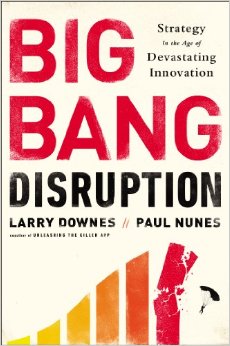
Big Bang Disruption: Business Survival in the Age of Constant Innovation

January 22, 2014 4:15 pm
‘Big Bang Disruption’, by Larry Downes and Paul Nunes
Review by Jonathan Guthrie
Bigbang
Big Bang Disruption: Business Survival in the Age of Constant Innovation, by Larry Downes and Paul Nunes, Portfolio Penguin, $29.95; £14.99
When asked how he went bankrupt, a character in Ernest Hemingway’s novel The Sun Also Rises, replies: “Two ways. Gradually and then suddenly.” This neat summation of how business failure creeps up on victims is quoted in Big Bang Disruption , a book with more than a whiff of apocalyptic prophecy about it.
The book plays to the belief that technology has made incumbent companies more prone to destruction by new entrants than ever before. Authors Larry Downes and Paul Nunes have encapsulated this in a buzzphrase – “Big Bang Disruption” – as anyone writing a popular business tome must do for marketing purposes. But any reader who is not a technology obsessive is likely to be no more than half convinced by their thesis.
Noting the rapid uptake and equally fast abandonment of new personal technology such as games consoles and smartphones by consumers, Downes and Nunes theorise that Everett Rogers’ classic bell curve of demand is redundant. Instead of anticipating smoothly rising and falling sales of new products, business must retool to cope with a “shark fin” pattern of purchasing. Here, demand is explosive and its collapse almost as precipitous.
A sceptic would argue that the shark fin is merely a bell curve with a telescoped time axis.
It is true that cycles of product development in personal technology and web-based business are punishingly short. But it is wrong to assert that the same pattern and the same threats apply to all other industries. Incumbents retain significant competitive advantage across a swath of sectors.
Another fallacy common within the tech industry is that we live in age of unprecedented innovation. The first shaggy warrior to have his stone weapon knocked from his hand by an early adopter with a bronze sword would have disagreed. The micro processor is just the latest in a long line of disruptive technologies. In the past few centuries alone we have had cast iron, canals, railways, penicillin, domestic electricity, internal combustion engines, aircraft and the telephone.
The authors correctly point out that barriers to entry have toppled in some parts of the software and internet industries as memory has become cheaper and open-source tools and cloud-based services more available. But as they rather uncomfortably admit, the opposite applies in pharmaceuticals, where breakthroughs are increasingly expensive. Perplexingly they blame this in part on regulation. Personally, I am glad that groovy young drug developers cannot randomly release new treatments dreamt up during coffee-fuelled “hackathons” in imitation of peers in the software business.
The criticisms above are a sign that Big Bang Disruption is, at the least, a stimulating read. It is carefully researched and accessibly written, if a tad breathless in style. The case studies on disruption alone are worth the cover price. These include the destruction of the pinball machine industry by computer games.
The book partly draws on research by the Accenture Institute for High Performance, of which Nunes is a managing director. Downes, meanwhile, is a consultant and co-author of the book Unleashing the Killer App.
The marketing pitch for Big Bang Destruction is partly that it will help incumbents avoid annihilation at the hands of disruptive entrepreneurs. The book is a bit light on such advice. There is a section on stalling tactics. The wisdom here boils down to “sue ’em”. The authors, one sometimes suspects, are secretly rooting for the disrupters.
Probably the best strategy for avoiding disrupters – which is not covered in the book – is to avoid vulnerable sectors such as entertainment or information retailing. Try banking, instead.

Big Bang Disruption: Strategy in the Age of Devastating Innovation Hardcover
by Larry Downes  (Author) , Paul Nunes (Author)
It used to take years or even decades for disruptive innovations to dethrone dominant products and services. But now any business can be devastated virtually overnight by something better and cheaper. How can executives protect themselves and harness the power of Big Bang Disruption?
Just a few years ago, drivers happily spent more than $200 for a GPS unit. But as smartphones exploded in popularity, free navigation apps exceeded the performance of stand-alone devices. Eighteen months after the debut of the navigation apps, leading GPS manufacturers had lost 85 percent of their market value.
Consumer electronics and computer makers have long struggled in a world of exponential technology improvements and short product life spans. But until recently, hotels, taxi services, doctors, and energy companies had little to fear from the information revolution.
Those days are gone forever. Software-based products are replacing physical goods. And every service provider must compete with cloud-based tools that offer customers a better way to interact.
Today, start-ups with minimal experience and no capital can unravel your strategy before you even begin to grasp what’s happening. Never mind the “innovator’s dilemma”—this is the innovator’s disaster. And it’s happening in nearly every industry.
Worse, Big Bang Disruptors may not even see you as competition. They don’t share your approach to customer service, and they’re not sizing up your product line to offer better prices. You may simply be collateral damage in their efforts to win completely different markets.
The good news is that any business can master the strategy of the start-ups. Larry Downes and Paul Nunes analyze the origins, economics, and anatomy of Big Bang Disruption. They identify four key stages of the new innovation life cycle, helping you spot potential disruptors in time. And they offer twelve rules for defending your markets, launching disruptors of your own, and getting out while there’s still time.
Based on extensive research by the Accenture Institute for High Performance and in-depth interviews with entrepreneurs, investors, and executives from more than thirty industries, Big Bang Disruption will arm you with strategies and insights to thrive in this brave new world.

Gross Told El-Erian ‘Hell No’ Seeking to Stop Departure; El-Erian, 55, for years had been putting in long hours as the public face of Pimco next to Gross, appearing in the office as early as 5 a.m., speaking on national TV throughout the day

Gross Told El-Erian ‘Hell No’ Seeking to Stop Departure

When Mohamed El-Erian first told Bill Gross several weeks ago that he wanted to leave to “recharge the batteries,” the co-founder of Pacific Investment Management Co. was “shocked” and “discouraged.”

El-Erian, 55, for years had been putting in long hours as the public face of Pimco next to Gross, appearing in the office as early as 5 a.m., speaking on national television throughout the day, and responding to messages well past regular working hours. Gross, battling record redemptions from his biggest bond fund, tried to persuade El-Erian to stay.

“From our standpoint he was doing a great job,” Gross said in a phone interview from Newport Beach, California. “The answer we gave him was basically, ‘Hell no, you can’t go.’ ”

El-Erian, viewed as the successor to 69-year-old Gross in running the $237 billion Pimco Total Return Fund, stuck with his decision to step down as chief executive officer and co-chief investment officer of Pimco. The move took investors and analysts by surprise and forced Pimco to revisit its plans for a future after Gross, by naming two deputy CIOs. The firm is seeking to emphasize the depth of its investment talent by appointing several more in coming weeks, Gross said in the interview.

“I intend there to be a number of heirs apparent and for each of them to have assigned asset roles on a global basis with a global menu,” Gross said in the interview. “We’re not just bond people anymore.”

Deputy CIOs

Money managers Andrew Balls and Daniel Ivascyn will become deputy investment chiefs, helping Gross oversee the firm’s $1.97 trillion. Gross said that as Pimco continues to evolve from a bond-centric firm to a diversified money manager, he intends to appoint investment professionals specializing in equities, global fixed income and other asset classes to leadership roles.

Douglas Hodge, the firm’s operating chief, will succeed El-Erian as CEO, though with no history in managing money he’s not a candidate to replace Gross in managing the Total Return Fund.

Pimco Total Return had record withdrawals of $41 billion last year as investors fled traditional bond funds because of rising interest rates. Pimco as a whole had $30.4 billion in net redemptions during 2013, compared with net deposits of $62.7 billion in 2012, the biggest drop in organic growth among the 10 largest U.S. mutual-fund families, according to Morningstar Inc.

‘Sound Match’

The turbulence in the bond market over the past year isn’t the cause for El-Erian’s resignation, according to Gross. He cited other difficult times that El-Erian has weathered, such as turmoil in Brazil and Argentina when he invested in emerging-market debt.

“Total Return is more on my shoulders than his,” Gross said, referring to the firm’s biggest fund. “I didn’t notice any additional stress whatsoever. He’s a man that deals with stress and that’s part of his makeup.”

While the two occasionally disagreed, they’ve been “on the same page” in how they assessed the macroeconomic environment and the direction of the market, Gross said.

“He’s a classically trained economist, I’m sort of a seat-of-the-pants-economist. All of that in combination was just a sound match,” Gross said. “If there was a disagreement at all, it was his decision to leave.”

‘Open Question’

El-Erian plans to write a second book and spend more time with his family, Gross said. El-Erian’s “When Markets Collide: Investment Strategies for the Age of the Global Economy” was published in 2008. El-Erian didn’t respond to e-mails and phone calls seeking comment.

In an internal memo to employees, El-Erian said he has no plans as of now.

“What happens longer-term is an open question,” he wrote.

Gross brought El-Erian back to Pimco in 2007 following a stint running Harvard University’s endowment because he knew “Mohamed could fill an important part of the puzzle” in planning for succession, he said in a 2010 Bloomberg interview. El-Erian was responsible for transforming Pimco from a bond shop to a diversified fund manager, and led the firm’s push into equities in 2009.

Gross said growth in Pimco’s equity unit has been “disappointing” since then as the funds have been slow to gather assets and performance has been lackluster. Pimco’s four main U.S. equity mutual funds collectively manage less than $5 billion in assets.

Stocks, Alternatives

A separate family of funds, the StocksPlus lineup, attempts to beat the stock market by using a combination of bonds and derivatives. Pimco intends to emphasize the performance of its StocksPlus family, led by Gross since he started them in the 1980s, he said. The $840 million Pimco StocksPlus Fund has averaged annual returns of 24 percent in the past five years, beating 91 percent of peers, according to data compiled by Bloomberg.

“The world obviously in terms of flows isn’t a bond-friendly climate,” Gross said. “We anticipated this when Mohamed came back and have been building ever since. In some cases not too well like with equities, and others very well like alternatives.”

Gross said some of the new deputy CIOs would be given seats on Pimco’s investment committee, which sets strategy guidelines for fund managers. Gross has no intention of scaling back his role even as he elevates other executives.

‘Permanent Fixture’

“Think of me sort of as a permanent fixture,” he said. “I’d like to be here for a long time.”

Under El-Erian, who made a name for himself investing in emerging-market debt early on in his career at Pimco, the bond firm more than tripled its assets under management as investors flocked to fixed income after the 2008 financial crisis. Money in non-traditional funds rose to 66 percent of Pimco’s assets from 56 percent when El-Erian became CEO, according to the internal memo to employees.

El-Erian is listed as manager of eight mutual funds with $10.2 billion, according to data compiled by Bloomberg, including two U.S. mutual funds. The Pimco Global Advantage Strategy Bond fund, opened in 2009 and run by El-Erian, has advanced 3.2 percent annually in the past three years, behind 53 percent of rivals, according to data compiled by Bloomberg. El-Erian’s Global Multi-Asset Fund has gained an annual 6.5 percent over the past five years, trailing 82 percent of similarly managed funds.

El-Erian, the son of an Egyptian diplomat who’s fluent in English, French and Arabic, joined Pimco in 1999 as a senior member of the money management and investment strategy group. He left in 2006 to serve as CEO of Harvard Management Co. and revamp the university’s endowment before rejoining Pimco in 2007. He also worked at the International Monetary Fund for 15 years, and served as a deputy director at the IMF from 1995 to 1997. El-Erian received a bachelor’s and master’s degree in economics from Cambridge University as well as a Ph.D. from Oxford University.

To contact the reporters on this story: Sree Vidya Bhaktavatsalam in Boston at sbhaktavatsa@bloomberg.net; Alexis Leondis in New York at aleondis@bloomberg.net

Howard Lerman Shares the Secrets of Starting Up

Howard Lerman Shares the Secrets of Starting Up
by JJ Colao | Jan 23, 2014
Now in his fourth startup, Howard Lerman has an uncanny sense of timing. What’s his secret?
Dante had his Beatrice, and Keats, Fanny Brawne. Howard Lerman’s muse? It appeared after he stepped onto a treadmill at a Manhattan Upper West Side gym seven years ago. “So I’m looking at Al Sharpton’s Spandex butt, and I’m like, ‘I don’t want to look at that,’” recalls the 33-year-old CEO of Yext. “So I look out the window instead.” Outside he spotted a gym salesman spinning a ‘Wheel of Savings’ to lure pedestrians with free trials and discounts. “I walked out and said, ‘This is crazy. Why are you doing this?’” The rep told him nobody read the Yellow Pages anymore, so he had to find some way. Inspiration struck. Less than a year later Lerman’s GymTicket.com, a lead-generation service, had signed up 3,000 gyms around the country.
Epiphanies come in strange packages. The most successful entrepreneurs act on them— but also know when to let go. Lerman has been through that respiratory exercise three times. At his corner office near Madison Square Park, he’s now deep into his fourth company, the result of abrupt, decisive shifts in strategy—the sort that transformed GymTicket.com into Yext.
Investors, who have bet $66 million on two incarnations of the business since 2006, haven’t yet seen a dime. But with this latest iteration, Lerman is pretty sure he has it right.
Today his 250-person outfit sells cloud software that helps brick-and-mortar businesses manage online storefront data—addresses, phone numbers and business hours among them—to keep listings accurate while monitoring customer reviews and referral traffic from 46 websites, including Facebook, Yahoo and Yelp. They pay $500 per year for each location while massive enterprise customers like Citibank and FedEx get a discount. Just three years old, it should do $33 million in sales this year, with 70 percent gross margins, says Lerman. He’s confident sales will double again in 2014.
Growing up in Vienna, Lerman went to a magnet high school that had a $1 million supercomputer. He rigged a phone line to his PC to access an online network of local hackers. (Sean Parker grew up nearby and occasionally joined the chats.)
While at Duke University he studied history, the easiest major he could find, and teamed up as a sophomore in 2000 with high school classmates Tom Dixon and Sean MacIsaac, now Yext’s COO and CTO, to launch JustATip.com. Based on a whim—prank calls from high school days—the service let users send ‘tips’ anonymously, e-mailing friends about, say, their offensive body odour or lack of rhythm. An intern at the White House at the time, Lerman says he “may or may not have used government computers to build it”. The gag caught fire on college campuses. Jon Stewart used the website on The Daily Show in 2001 and usage rocketed to a million visitors per month. But token revenue from banner ads barely made a dent in server bills, and the founders searched for an acquirer. Two deals fell through before Traffix, a publicly traded online marketer, bought the site for $150,000.
After “a couple of roaring keg parties”, the trio launched Intwine, a consulting firm that specialised in Microsoft’s .NET programming language. Within three years it grew to 30 consultants and $5 million in sales. It sold to Datran Media, a digital marketer, for $7 million in 2005.
Next up, GymTicket.com. It worked like this: Web surfers on the hunt for a gym found the site through ads and search engines, entered their Zip codes, then viewed a list of local gyms. When they called to sign up for a trial membership, GymTicket pocketed a fee. Lerman enlisted Brent Metz, a high school friend and IBM speech scientist, and Brian Distelburger, a colleague at Traffix, as co-founders. Sales jumped to $1 million within a year, and soon they expanded to nine more categories, including LocalVets.com and TVRepairman.com.
With the sites rolled into Yext, they developed transcription technology that recorded customer phone calls and charged clients based on keywords in conversations. For vets, ‘spay’ might incur an $80 charge, ‘checkup’ just $5. By 2009 the company was nearly profitable and approaching $20 million in sales, yet few had heard of it. Lerman and company did the rounds on Sand Hill Road, emerging with $25 million from Institutional Venture Partners.
Yet after just a couple months Lerman saw he was on the wrong path. “We f—ed up,” he concedes. “We should have never raised that money.” The model turned into a “quagmire”, as clients disputed charges and tied up account managers. Growth slowed; managing 10 websites grew untenable. Instead of folding up or searching for a sucker to buy the operation, Lerman decided to start an entirely new company within Yext.
In the spring of 2010 he grabbed three employees, appointed Metz de facto CEO of the old operation and holed up in a separate room. For years his customers had told him how hard it was to keep tabs on different online listings. When the cloud software debuted in January 2011, it was an immediate hit. Sales were $2.7 million in 2011, $14.2 million last year. The old business, meanwhile, known as ‘Felix’, looked like deadweight.
At the suggestion of venture capitalist Ben Horowitz, who declined to invest in Yext, Lerman decided to spin out Felix, selling it to IAC’s CityGrid Media for $30 million in April 2012. The proceeds went directly to Yext’s balance sheet. Two months later Lerman raised a $27 million round, at a $270 million valuation, from existing investors, plus Marker and CrunchFund. (Lerman’s worth: An estimated $50 million.) Lerman is positioning Yext beyond local data. He talks of Starbucks managers using it to post pictures and specials on each location’s Facebook page. And when retailers start pinging in-store shoppers with geo-targeted ads, Yext might serve as the platform for managing such campaigns. Meantime, he can fish among the estimated 20 million storefronts in the US and 50 million globally.
His current muse is his wife, Wendy. Just months ago he sported shoulder-length curls and a beard that ran untrimmed down his neck. “One day my wife was like, ‘You’re starting to look like a homeless guy,’ ” he says.
Today, coiffed, he looks like tens of millions.

Marissa Mayer’s Remarkable Rise To The Top: In high school, Mayer was allowed 20-minute breaks during the day. “She would go to the library or the science lab to study. She wouldn’t be the one to stay and sit there and converse for 20 minutes.”

These Quotes Show Marissa Mayer’s Remarkable Rise To The Top At Yahoo
KYLE RUSSELL
JAN. 22, 2014, 8:53 PM 2,095 7
Yahoo CEO Marissa Mayer is one of the tech industry’s most exciting figures.
Publicly, she’s gone from being “the blonde woman in computer science classes” at Stanford to running one of the oldest names in consumer Internet history in less than two decades. She makes billion-dollar acquisition decisions and has made Yahoo — once an afterthought in the post dot-com boom era — a hot topic on tech blogs and mainstream news sites alike.
Behind the scenes, she’s earned something of a reputation for being a strong personality in the workplace — controlling discussions and always assuming that her view is right. Often she turns out to be just that.
Below, we’ve organized the quotes that chart both her rise and the life-long personality traits that enabled it.
Brian Jojade took Advanced Math with Mayer in eighth grade. One day, he called in to a local radio station to ask if they would announce that it was her birthday on-air. “She wasn’t amused at all. You could just tell it wasn’t fun for her,” he later recalled.
In high school, Mayer was allowed 20-minute breaks during the day. According to classmate Elize Bazter, “She would be the person to come down, get something to eat from the kitchen or the vending machines, and then she would go to the library or the science lab to study. She wouldn’t be the one to stay and sit there and converse for 20 minutes.”
Mayer was on Wausau West’s state championship winning debate team
Looking back on her time before college, Mayer herself notes: “It wasn’t until I was a professional woman mentoring other girls in math and science that I learned that openly liking math and science is unusual for girls. It’s actually considered far too nerdy and far too much for the boys. Wausau schools were so supportive that I never felt strange for a second about pursuing math and science and being good in them.”
Josh Elman, venture capitalist and a former member of one of Mayer’s study groups at Stanford, distinctly remembers their time working together: “It felt like she was the smartest student in the room — and the most serious. You always knew those two things about her. Very smart. Very serious.”
After grad school at Stanford, Mayer was presented with over a dozen job offers in the tech industry. “My quest to find, and be surrounded by, smart people is what brought me to Google,” she says.
Discussing her time at the company, Google co-founder Sergey Brin says: “Marissa makes the decisions she feels are right, and history proves that she probably calls it right.”
In 2009, Vogue Magazine ran a profile of Mayer, describing her as “the 34-year-old mega-millionaire, Oscar de la Renta-obsessed, computer-programming Google executive who lives in a penthouse atop the Four Seasons.”
“She doesn’t need any sleep. When you have four or five more hours in the day than most people do, you don’t learn to delegate because you don’t need to,” says Craig Silverstein, the Google engineer who originally hired Mayer. Many Googlers cite Mayer’s constant oversight as a frequent point of conflict when describing her time there.
When Yahoo’s board discussed the company’s future with Mayer at an informal dinner, she shocked everyone with a surprisingly detailed plan for the company going forward. “That’s the next CEO of Yahoo,” a member of the board stated after she left.
“The baby’s been way easier than everyone made it out to be,” Mayer joked during a conference on women in business, two months after giving birth.
Mayer started a weekly event called “FYI” at Yahoo, where they’d go over the company’s plans and she would take questions. Here’s how one executive described the meetings: “She is deified. The first 50 rows are packed with the engineering team and they’re cheering her on. There is no question that there’s a palpable level of energy and renewed enthusiasm and renewed pride.”
This is not one of Mayer’s “FYI” meetings.
“You have to give Marissa a lot of credit. Just because I don’t like what she’s done to me and I don’t like what she’s done to many other people, doesn’t mean I’m going to shy away from giving her credit. She brought life back to Yahoo. There’s no question about it,” says one person at Yahoo who has had clashed with Mayer.

Why every leader should care about digitization and disruptive innovation

Why every leader should care about digitization and disruptive innovation

January 2014

Digitization, automation, and other advances are transforming industries, labor markets, and the global economy. In this interview, MIT’s Andrew McAfee and McKinsey’s James Manyika discuss how executives and policy makers can respond.
The disruptive impact of technology is the topic of a McKinsey-hosted discussion among business leaders, policy makers, and researchers at this year’s meeting of the World Economic Forum, in Davos, Switzerland. In this video, two session participants preview the critical issues that will be discussed, including the impact of digitization and automation on labor markets and how companies can adapt in a world of rapid technological change. What follows is an edited transcript of their remarks.
Interview transcript
Disruption everywhere
James Manyika: The reason disruptive technologies are very important to all leaders—whether they’re CEOs or policy makers—is because, for the first time, we now have technology affecting every single sector of the economy. Every sector, whether it’s retail, financial services, shipping, manufacturing, and even agriculture, now takes inputs and uses technology to drive much of what it does.
Andrew McAfee: By now we’re all familiar with digitized text, digitized audio, and digital video. One of the profoundly interesting and important things going on these days is that lots of other information is being digitized. Our social interactions are being digitized, largely thanks to all the different social networks and social media that we have. The attributes of the physical world are being digitized, thanks to all of these sensors that we have for pressure, temperature, force, stress, strain, you name it. Our whereabouts are being digitized, thanks to GPS systems and smartphones.
James Manyika: We also have other forms of digitization. Physical products and goods continue to be quite physical but are coming wrapped in data. Think about your container on a ship that’s tagged, and it turns out that even the actuarial models for how the tracking of that is valued and insurance contracts are constructed is different whether the thing is tagged and tracked versus not.
Andrew McAfee: If this encroachment really is taking place faster and more broadly than it ever has before, there are a couple of implications. There’s good news and challenging news here. The good news is that the variety and volume and quality of things that we’ll be able to consume will go up, and the prices will go down. The challenge comes from the fact that if this encroachment really is happening quicker, more broadly, and deeper than before, the phenomenon is that technology is going to race ahead, but it could leave a lot of people behind in the capacity of folks who want to offer their labor to the economy. And how we deal with that challenge and what we do about the fact that technology is racing ahead but leaving some people, potentially a lot of them, behind is one of the great challenges for our generation.
The employment challenge
James Manyika: Between the period of 2000 and 2008—2008 because that’s when the recession started, so we have a clean look—the US lost something like 5.8 million jobs in manufacturing. If you look at those jobs that we lost, only at most 20 percent of them were due to what you might call globalization, so offshoring and outsourcing. Whereas the rest of them, which is the majority, 80 percent of them, can be explained by looking at the effects of technology and the other key culprit, which is what happens to demand.
And we know that one of the things that happened in that period between 2000 and 2008 is that the demand growth for the outputs of manufacturing coming out of the US actually fell. So that was one of the big drivers for what then happened to employment. Where you had productivity growth without the demand growth, employment tends to suffer.
Andrew McAfee: There are a couple policy implications that come out pretty quickly. One is that over the longer term, we can’t rely exclusively on economic growth alone to solve all of our employment problems. Now, in the short term, economic growth is absolutely the best way to get the hiring engine kicked in again. The robots, the androids, the artificial intelligence can’t do everyone’s job yet by a long shot. So the right way in the short term to grow employment is to grow the economy. But over the longer term, it honestly feels to me like we might be in a situation where enterprises can grow and thrive and not need nearly as much labor as they’ve needed historically.
James Manyika: Certainly education will help. We know that there’s a big gap between what most economies need and what the educational training systems create to meet those needs.1 But I would argue even that’s not enough. So, while I think it’s comfortable for policy makers—and, in fact, correct—to say, “Let’s focus on innovation and let’s focus on entrepreneurship and let’s solve education,” those are correct, but they may not be complete answers to how we tackle employment.
So think about what Uber and its like and its kin are doing. It’s making it possible for people who have cars to suddenly turn that into a potential income-generating opportunity. Think about what models and businesses like Airbnb are doing where people can then use assets that they have, like their houses or their flats, as ways to generate income. Those are just examples of ways where, if you think about it as an income-generation question as opposed to a full-time employment problem, you expand the possibilities.
Claiming the prize
Andrew McAfee: I foresee a big change coming in the way the very best organizations are making some of their key judgments, forecasts, predictions, decisions. The tough transition is going to be getting the people and the alleged experts out of the way, and teaching them to be a lot more humble and a lot more data driven.
The other very big change that’s coming is the fact that we have access—again via technology, networks, and very powerful devices—to a worldwide body of knowledge and talent and skill. And what we’re learning over and over is the truth of Joy’s Law, named for Bill Joy, one of the founders of Sun Microsystems. He said, “The smartest people work for somebody else.”
What we’re seeing is that when you can articulate the problem you’re working on or the challenge or the thing you want help with, and float it up so that the world’s community of innovators and problem solvers can work on it, you get very good results. You get them quickly and you get them from unexpected quarters. Thinking that all the expertise that you need is in-house or that you know where to go to go get the expertise or the help for the big challenge that you’re working on—that’s a really dangerous assumption.
James Manyika: We know that the Internet has created huge benefits for us as consumers. The amount of things we can now search, find, discover, consume, all of that. But the thing about that is that most of those things are things none of us pay for. And the revenue captured by companies is a fraction of the economic surplus that’s come to us as consumers.
As you look at the list of the technologies that we have in our research, many of those have the same characteristic. So if you look at what’s going to happen to cloud computing and what that’s going to do and what the mobile Internet is going to do, much of that is going to end up in consumer surplus.
Now, I think there’s going to be three interesting claims to the economic potential coming out of these technologies. One is a portion of this is going to go to consumers as things that they pay nothing for or very little for. A portion of this is going to be surplus that will move from one sector to another. And then the third claim is going to be the revenues ultimately captured by any one company. So this creates a very interesting challenge for businesses around business models.
Andrew McAfee: The other advice that I give to people leading enterprises these days is do an experiment, set up a test. It is not terribly expensive these days to engage in open innovation, to use some of these platforms to post a challenge, post a data-science challenge, post an innovation challenge. Watch what happens as a result.
Find a part of your organization that’s led by somebody who’s a little bit more comfortable working with data, who’s got a team of geeks that are part of her team, and do an experiment about becoming more data driven in forecasting, in market analysis, in product design, in human-capital management, in some of these areas. Do an experiment. It’s not going to ruin the company. It’s not going to break the bank. And then learn from it.

Beware the iSmell: 10 Rules for Successful Product Development

Beware the iSmell: 10 Rules for Successful Product Development
Jan 20, 2014 North America
Entrepreneur Dan Cohen is something of a student of failed tech products, and at the top of his list of “dishonorable mentions” is the iSmell. The desktop device was a “personal scent synthesizer” that, when hooked up via a USB port to a computer, would deliver an olfactory experience appropriate to whatever website a user was visiting. While it sounds like a cross between a parody in The Onion and an off-color joke, the iSmell actually existed, however briefly, back in the dot-com glory days of 2001.
In presentations like the one he gave recently at a Wharton Entrepreneurs Workshop conducted at Wharton San Francisco, Cohen uses the iSmell as a humorous cautionary tale about the art and science of product management, especially for what can go wrong when the process goes off the rails.
Product management, said Cohen, is a make-or-break issue for most start-ups; getting the product right is a foundation of future success. But he noted that the process of product development is poorly understood, with young companies often repeating common mistakes that can be easily avoided.
The field does not want for advice; there are plenty of product management how-to guides lining bookshelves, though Cohen said many of them are of dubious value. “There is a lot of literature out there about product management,” he stated. “But be careful about what you read, because you can really go off the deep end.”
Cohen is CEO and co-founder of Accomplio, which helps other companies bring their products to market. Before Accomplio, Cohen was involved with other web start-ups, including mySpoonful, a music site, and Pageflakes, a web page personalization service. At other points in his career, Cohen held senior positions at both Google and Yahoo.
“There is a lot of literature out there about product management. But be careful about what you read, because you can really go off the deep end.”
Much of Cohen’s presentation took the form of listing rules — notably, his 10 rules for success in product development. Among them: Don’t confuse yourself with your customer, since your requirements for a product are probably much more sophisticated than those of the rest of the market. “Remember, it’s not about you,” Cohen warned, stressing the importance of keeping the focus on the customer at all times.
Other rules: Make sure you have the right business model; you don’t want to have an expensive direct sales force for a low-cost product users could easily sign up for online. (That may seem obvious, but Cohen told the story of a web teleconferencing company that violated that very rule and quickly went out of business.) Don’t try to design a product that you don’t have the resources for, either in dollars or expertise, he noted.
And also, don’t equate innovation with value. Just because a product is technically interesting, or does something never previously possible, there is no guarantee of its success in the market. (That was one of the many rules that Cohen said was broken by iSmell.)
And there is a corollary to that rule, Cohen added: Don’t attempt to improve a product simply by adding more features to it, or making it more complex. More often than not, warned Cohen, such steps usually end up making the product worse.
Failed products have other things in common besides not following the rules for success. For example, they will often have a poorly planned user experience, Cohen noted, making the devices difficult to use.
A special danger for start-ups aiming products at the corporate market is to forget that the customer and the user often aren’t the same person, he added. A product that is popular with users might not be as warmly received in the IT departments that are responsible for technology purchase decisions.
The Importance of ‘On-boarding’
Cohen said that the goal for a start-up should be what he called a “minimum viable product,” one that a company can introduce into the marketplace and then build on with successive versions. To do so, he urged entrepreneurs to use what has come to be known as a “lean” approach popularized in such books as The Lean Startup by Eric Ries.
In the case of product development, Cohen noted, that involves taking an “iterative” approach. First, the kernel of the product is developed. It is then tested by having potential users put the item through its paces. The results are then incorporated into revisions of the prototype, with the process repeated until the product is ready for release.
This customer discovery process “involves achieving the right product-solution fit. If you can’t figure this out, then you should give up.”
“It doesn’t need to be a long and drawn out process,” Cohen pointed out. “You don’t need lots of studies.” This customer discovery process, he added, “involves achieving the right product-solution fit. If you can’t figure this out, then you should give up.”
That may sound straightforward, but Cohen said there are a number of potential stumbling blocks. One of them involves testing a product with people who aren’t representative of its actual potential customer base. That might happen when resource-strained start-ups rely on friends and family for testing. Not only might those people not be representative of potential customers, but they also might be unwilling to give the sort of candid feedback an entrepreneur needs, out of a desire to not hurt anyone’s feelings.
Cohen stressed the importance of easy “on-boarding,” which refers to the process by which a user begins to use a product, whether it’s a website or a piece of software. On-boarding, he said, should be easy and intuitive. If a product has a lot of advanced or sophisticated features, designers shouldn’t overwhelm users with them at the beginning, but instead, they should allow them to be discovered gradually as the product gets used.
He suggested a design philosophy of: Keep it simple, with a dagger preferred to a Swiss army knife. “Simplicity can be the biggest feature in and of itself,” he said. “Don’t ruin it.”
No Time Like the Present
One of Cohen’s themes during his talk was that there is no time like the present to create a start-up. The availability of free or low-cost web tools to help with the product development process is one of the main reasons for that being true, said Cohen. In fact, he added, the costs involved with starting a company have declined so much that venture capitalists are beginning to become concerned about what role they will play in the technology industry of the future.
“There really is a tectonic shift underway,” Cohen stated. “Software has become easy and cheap to build.” He added that because the barriers to entry are dropping, the marketplace will likely become increasingly crowded with competitors.
“Apple is a unique and rare case, one that is very hard to duplicate.”
Cohen also discussed some of the growing number of web tools tailored for entrepreneurs.
A product called Lean Canvas, for example, provides a blueprint that lets entrepreneurs see if their overall approach is following lean principles. Balsamiq provides an easy way to create a prototype version of a software product to test it out on users, he said. Other easily available web products that Cohen recommended include Jira, which implements what has come to be called the Agile development methodology, and GitHub, a central repository for the computer code that programmers write in the process of bringing a product to market.
Cohen also noted the popularity of sites such as eLance and oDesk, which allow start-ups to hire highly trained professional help on a per-project basis, often at a fraction of what it would cost to bring on a full-time person. Some sites are highly specialized, such as uTest, which allows for crowd-sourced debugging of software code. There is even a site called FounderDating, where entrepreneurs looking to fill out a start-up team can find potential partners.
According to Cohen, the composition of the ideal start-up team starts with the CEO, who should have a strong background in product management. Also necessary, he added, are founders with extensive know-how in technology and user experience. If not all of those boxes can be checked right away, he noted, members of the founding team may need to serve dual roles on an interim basis until a spot can be filled full-time.
Examples that Cohen gave of companies that did everything right include Mint, which has become popular for personal finance and was acquired by Quicken, and Dropbox, the file sharing site. Cohen admitted to being a huge fan of Dropbox, calling it a “massively successful lean product” and praising the company for not making it more complex as the service became more popular. “I respect those guys a lot,” he said.
While describing the lists of dos and don’ts that entrepreneurs should follow, Cohen also noted the irony of the fact that some of the most successful entrepreneurs have been those who broke all the rules. The paradigmatic example, he said, was Steve Jobs.
Apple, noted Cohen, never did any of the things it was “supposed” to: It didn’t listen to customers, and it introduced finished products all at once, rather than gradually releasing revised versions. But Cohen added that in addition to the presence of Steve Jobs, Apple also had resources that most start-ups lack, like a hefty marketing budget that allowed the company to nearly bury the country in billboards promoting products like the iPod and the iPad.
Said Cohen, “Apple is a unique and rare case, one that is very hard to duplicate.”

The Art of Strategic Renewal; What does it take to transform an organization before a crisis hits? The key often lies in strategic renewal – a set of practices that can guide leaders into a new era of innovation by building strategy, experimentation

The Art of Strategic Renewal
Magazine: Winter 2014Research Highlight
December 19, 2013  Reading Time: 9 min
Andy Binns, J. Bruce Harreld, Charles O’Reilly III and Michael L. Tushman
In recent years, we have seen well-established companies such as Kodak, Blockbuster, Nokia and BlackBerry pushed to the brink by smart competitors and changes in their industries. In each case, there were opportunities to act before a crisis engulfed the organization. At Kodak, for example, CEO George Fisher attempted to move the company into the digital era in the 1990s. However, he was unable to change course quickly enough. Fisher had an opportunity; his successor had a crisis.
What can leaders do before the depth and scope of their companies’ crises come into focus? How can they initiate major transformations proactively? As researchers and managers who have been involved in numerous corporate transformations in recent years, we have learned that applying standard formulae to corporate transformations is, at best, ineffective and, at worst, dangerous. What’s needed is a new approach that enables executives to transform organizations proactively without resorting to fear.
Is Strategic Renewal Right for You?
Strategic renewal is neither an event nor a detailed program. Rather, it’s a set of practices that can guide leaders into a new era of innovation. Because strategic renewal involves making changes ahead of a crisis, the efforts can be extremely difficult to initiate, fund and lead; many companies, including Xerox, Kodak and Firestone, attempted but failed to move ahead of their respective crises. The role of senior management is to build strategy, experimentation and execution into the day-to-day fabric of the organization. Here are four tests for deciding whether your company is ripe for strategic renewal:
1. Your profits are dominated by maturing businesses in which you see limited opportunities for growth.
Nothing breeds complacency like success, and the right time to be paranoid is when you are at the top of your game. In 2007, Nokia was the number one mobile handset manufacturer, and BlackBerry was the “killer app” for mobile email. Now, Nokia’s handset business has been sold off to Microsoft, and BlackBerry is struggling for survival. Executives at both companies were seduced by their success into thinking they had time to react. Although they saw their respective threats as serious, they made the mistake of assuming that the threats were all part of normal competition rather than an existential danger. Both companies didn’t grasp, in time, that the smartphone introduced a fundamentally new capability to the market and thus represented a different type of competitor.
2. There is a direct threat to your core source of profits.
Regional newspapers in the United States have seen their profits dry up as classified advertising has largely left print media and moved online. We have passed the point where incremental innovation (for example, better printing techniques) will matter; local listings can be posted on Craigslist for free. New digital business models have put the profits of incumbents at risk. Whether the threat is digital technology, emerging markets reshaping economics, foreign competition or breakthroughs in genetic medicine, if it has the potential to redistribute profits, beware.
3. The opportunity (or threat) is outside your core markets.
One thing that made the introduction of the iPhone and Android difficult for Nokia to anticipate is that they both came from players that had not previously been involved in the mobile phone industry. Nokia executives had been bracing for incursions from Ericsson, Samsung and Motorola, not Apple and Google. They were focused on the industry as it was, and they didn’t anticipate the extent to which the newcomers would break the rules. Dramatic change is often driven from the outside, challenging the very basis of an industry and stimulating an immune response from the incumbent.
4. New ways of making money are a threat to your core capabilities.
Nintendo’s introduction of the Wii video game console in 2006 was a masterstroke of innovation that enabled it to regain market leadership. It opened up a whole new market for computer gaming by introducing a simpler interface that made it possible for parents (and grandparents) to play alongside their children without having to memorize a list of arcane commands. However, the next wave of innovation may be more problematic, as it will put one of Nintendo’s fundamental rules about only producing software for its own consoles to the test. Popular Nintendo games like Super Mario Brothers and Donkey Kong operate exclusively on Nintendo devices. But the overall market is changing. Starting in 2011, consumers began moving from game consoles to smartphones and tablets in droves. So far, Nintendo has refused to make its games for other platforms. If the company maintains this position, it could miss the next wave, a decision that would put the company’s entire future at risk.
advertisement
The Strategic Renewal Playbook
Though strategic renewals are often more difficult to pull off than corporate turnarounds, they can result in positive outcomes if they are initiated early enough. IBM’s experience is instructive. In 1999, IBM concluded that while it was once again a stabile business following a near-death experience five years earlier, it had lost its ability to innovate, something dozens of new competitors (including Cisco and Akamai) didn’t hesitate to seize upon.
Yet over the past 14 years, IBM has become a new company. It has successfully moved away from hardware and software and refocused itself around consulting, analytics and industry-specific solutions. Based on this experience (one of the authors of this article, Bruce Harreld, reported to IBM CEO Sam Palmisano from 2001 to 2008) and our work with other organizations including Ciba Vision, Analog Devices and Ball Corporation, we have developed a set of principles for strategic renewal that we believe can be applied to other organizations aiming to renew themselvesahead of market disruption.
1. Select growth aspirations that connect with people emotionally.
Renewal needs to be tied to a growth aspiration that connects to the company’s sense of identity — what motivates employees to come to work every day. For example, at Nissan Motor Co., when the company’s future was on the line, CEO Carlos Ghosn established the goal to “renew Nissan.” This provided a rallying cry that encouraged dispirited employees to get behind the turnaround effort.
Without a crisis, the emotional energy needs to come from somewhere else. A goal that anticipates success and speaks to the core identity of employees can be more compelling than fear of loss. For example, compare how Ciba Vision, a global contact lens manufacturer, framed its program for strategic renewal in the eye-care solutions business around “healthy eyes for life” with how one British manufacturer defined its goals around 5/10/2010: 5% revenue growth and 10% profit growth by 2010. While that mantra had a catchy ring, the only person it inspired was the CEO. Not only did the company miss its numbers, it suffered a major contract loss, whereupon the stock plunged, in part because of the relentless focus on short-term results.
2. Treat strategy as a dialogue as opposed to a ritualistic, document-based planning process.
Turning an aspiration into reality requires going beyond highly formatted planning processes and having tough, fact-based conversations. In this spirit, some companies are looking beyond PowerPoint presentations in an effort to find new ways of engaging managers in their strategy process. A European-based publishing company we worked with, for example, created a set of posters that displayed market data, competitor analysis and benchmarking information as a way to spark a dialogue. During a strategy meeting, the senior team was invited to discuss the data during a “gallery walk.” At Nedbank Group, a bank holding company in South Africa, CEO Ingrid Johnson, who had been frustrated by the pace of change as she sought to capture mid-market customers, discovered that one way to gain traction for an ambitious transformation following a major management overhaul was to conduct what she called “pause and reflect” sessions. These sessions provided a safe space for the leaders to explore her expectations for them and start to make connections to their daily priorities.
3. Use experiments to explore future possibilities.
Strategic dialogues can help organizations grow new businesses through experimentation. Experimentation practices — adapted in many cases from the venture-capital world — create opportunities for established businesses to explore the future. For example, the Cisneros Group, a Spanish-language media company with operations across the United States and Latin America, decided in 2010 to expand its presence in digital media. However, since it wasn’t clear what the best business model would be, management initiated several pilots. The goal was to identify a viable value proposition, then invest in the ventures that showed promise. One of the new businesses was Adsmovil, a service that helps companies target Hispanic audiences on their mobile devices. The service was so effective that it was retained by the Obama campaign in 2012 to target Hispanic voters.
4. Engage a leadership community in the work of renewal.
Strategic renewal must be rooted in the senior team’s collective commitment to a transformation agenda. However, successful strategic renewals also need to be broadly based so they can engage managers one or two levels down in the organization. Creating leadership communities around the renewal project allows leaders to learn about the future by doing and win over potential resisters. IBM, for example, found that earmarking resources for experimentation, while continuing to hold operating units to tight cost disciplines, led to resentment, even resistance. Instead, the company’s “Strategic Leadership Forums” brought together groups of up to 100 executives to work on how to make new ventures successful. Rather than forcing people to help in the new ventures, the forums helped to build a social network of leaders who would decide to advocate for the new projects on their own.
At Cisneros, managers were wary of entering technology businesses, which were very different from the core of broadcasting. So the company assembled teams from across the organization to explore ideas for new ventures. Each team focused on a different idea and was asked to follow a specific evaluation process. “We needed these teams to go beyond managing the day-to-day and reconceive of the future of the firm by actually showing us what we needed to do,” says the CEO, Adriana Cisneros.
5. Apply execution disciplines to the effort.
Management needs to bring as much focused execution to strategic renewals as it brings to other projects that are vital to business performance. Here we disagree with other experts who have argued that this effort can be assigned to enthusiastic volunteers, who pursue it in addition to their day-to-day responsibilities. Although the idea of volunteer efforts is certainly appealing (if for no other reason than its cost), our research and experience suggest that a company’s strategic renewal shouldn’t have to compete with the pressures of day-to-day. Rather, it requires a full-fledged commitment and the necessary funding and resources.
The experience of Cisco speaks directly to this concern. Realizing the imperative to create new revenue streams as its router business matured, Cisco launched a new initiative in 2007 that was designed to get multiple levels of executives involved in identifying and investing in new business opportunities. But the approach, which was dubbed “boards and councils,” was weak on accountability, and the effort was later dismantled. Strategic renewal can’t be viewed as a night job; it is core to the work of leaders, who must be able to keep the tension between short- and long-term priorities in balance.
Strategic renewal takes guile. After all, the corporate immune response is extremely powerful: Leaders find it much easier to resist change than to embrace it. Strategic renewal acknowledges this: It is about “both, and” rather than “either, or.” The practices we propose can enable senior leaders to build a bridge to the future without burning the bridges from the past.

Israeli Ultra-Orthodox Do the Math in Bid to Enter Workforce

Israeli Ultra-Orthodox Find Path to Work Uses Secular Education

When Shimon Shur, an 18-year-old Israeli from an ultra-Orthodox Jewish home, decided he wanted to work rather than spend his days immersed in religious studies, he first had to learn to multiply and divide.

His education at that point, grounded in his community’s tradition, consisted almost solely of learning Jewish texts such as the Talmud. He knew virtually no English and barely any math. All he knew, he said, is that such a life wasn’t for him.

“I started from zero,” said Shur, wearing a black skullcap, white shirt and black pants as he spoke at a Jerusalem institute that combines religious study with academic classes. “I didn’t know arithmetic, multiplication tables, division. I didn’t know the order of the English alphabet, not even ABCD. I hardly knew what the letters looked like.”

Pushing men such as Shur into the workforce is one of the Israeli government’s top priorities, to ease their drag on the economy. The group, called haredim for a Hebrew expression meaning “trembling before God,” are projected to grow to 18 percent of the population by 2030, from 11 percent in 2010.

Because their community values full-time study above any paid occupation and rejects Israel’s obligatory military service, many of its men remain outside mainstream Israeli society. About 46 percent of working-age men in the community were employed in 2011, the most recent year available, compared with 78 percent for all Israeli adult males.

Income comes from government stipends, charity and, in many cases, a working wife. Unlike men, haredi women are educated in such work-oriented fields as teaching and software engineering after they get 12 years of religious and secular education.

Bank of Israel Governor Karnit Flug expressed concern about the relatively low workforce participation of haredi men, and Israeli Arab women. In her first speech after the cabinet approved her appointment, she said “changes in employment patterns” were necessary to allow continued economic growth.

Growth Reduction

“This is a strategic threat for the Israeli economy and for Israeli society — one that we must not ignore,” Flug said on Oct. 29.

A year before, then-Bank of Israel Governor Stanley Fischer, whom President Barack Obama has nominated as vice-chairman of the Federal Reserve, also called attention to the trend in a group whose birthrate is 6.5 children per family, versus three per family for all Israelis.

“I very much respect the ultra-Orthodox population, but I must say a continued increase in the share of the population which does not participate in the workforce cannot continue forever, and so has to stop,” Fischer said in a Jan. 2, 2012, speech.

Ending Subsidies

The opportunity to overcome entrenched political opposition to getting more haredi men into the labor force arose after elections a year ago. Prime Minister Benjamin Netanyahu was able to form a government without two ultra-Orthodox parties, Shas and United Torah Judaism, that had been part of almost every ruling coalition for the past 30 years.

Taking their place was new political faction Yesh Atid, which had campaigned against military service exemptions and subsidies for the haredim.

Yesh Atid chairman and new Finance Minister Yair Lapid proposed a bill last year to reduce the number of military exemptions for ultra-Orthodox students in religious schools to a maximum of 1,800. The remainder would be subject to the draft after a certain age; now all are exempt while in yeshiva, or religious schools.

Concurrently, those already over the age of 22 would get a permanent draft exemption, freeing up about 28,000 haredi men to start working. The bill passed its first reading in July and is under discussion in parliament.

Child Allowances

Facing budgetary pressures, the government last year also cut child allowances that had helped support many large families in the community, increasing the economic incentive for haredi men to start making a livelihood.

With unemployment at 5.5 percent, a 30-year low, Lapid says he’s confident the economy will be able to absorb the new workers, even if many lack the math skills and English that are taught to all Israelis in schools outside the ultra-Orthodox educational system.

The Economy Ministry has earmarked 500 million shekels ($143 million) over the next five years for programs to give haredi men the needed skills.

Included are programs to offer vocational training, job placement services and employment counseling. The first “one-stop” job center is operating in Bnei Brak, the largest haredi-majority city in Israel and one of the country’s poorest communities. A second is set to open in Jerusalem in March and another half-dozen are planned across the country this year.

Resume Preparation

On one recent morning, several men gathered around a large conference table in a classroom at the center, watching a Power Point presentation on preparing job resumes. Instructor Dudi Stern advised them against using an e-mail address and home phone number instead of their names — a practice some follow because they can’t even write their names in English.

The government is also helping support a pilot program combining religious studies with English, math and computer training for students from yeshiva. Shur has been there for one month and has made progress, though he is still finding it difficult.

“The challenge is to break through all the obstacles: in English, learning a new language; and in math, developing the logic that you didn’t have until now,” said Shur. “It doesn’t matter how talented someone is, math is a different way of thinking.”

In addition to the academic demands, the young men have lost their “framework” — the yeshiva, said Rabbi Karmi Gross, who runs the center. Many are rejected by their families and community, he said. His program provides religious as well as emotional support to encourage success.

Kosher Requirements

Shur, who said he wants to go into white-collar work, found that one of the hardest parts of his decision was explaining it to his family. They expected him to attend yeshiva.

“It was a difficult process, telling my parents, destroying their dream for me,” he said.

Even with the new vocational tools, cultural impediments may discourage some employers from hiring haredi men. Companies may have to take into account kosher dietary laws in cafeterias and requests for time set aside for daily prayers, as well as traditions of modesty that discourage associating with any members of the opposite sex outside their families.

One company that was successful in integrating such workers is Jerusalem’s NDS Technologies Israel Ltd., which develops software for digital and pay-television systems. It was acquired in 2012 by Cisco Systems Inc. (CSCO) The company provides haredi workers with strict glatt-kosher eating spaces and accommodates requests for same-sex work areas.

Technology Needs

“The high-tech industry needs more workers, so it’s a win-win for us and for Israel,” said Zika Abzuk, a business development manager for the company. “There’s work to be done on both sides of the equation to overcome prejudices and fear from both haredim and employers.”

Technology companies, where software developers often work in small teams easily segregated if necessary, can provide a good environment for haredim, said Gershon Porush, a projects manager at Cisco who himself emerged from that background a quarter-century ago.

Based on his own experience, Porush co-authored a report submitted to the government in July laying out a detailed plan for developing a central authority to oversee and expand on educational and training programs for the ultra-Orthodox.

Analytic Capabilities

The report argues that despite cultural obstacles, haredi men who have spent years engaged in intensive communal study of Jewish texts are particularly suited for such work, “since they excel in learning ability, analytic capabilities developed in cooperation, and teamwork.”

Those obstacles haven’t disappeared, said Maor Israel, 19, who studies in the same program as Shur.

“A lot of guys I learned with at yeshiva say ‘Good for you, I would like to do the same but it’s hard for me,” he said. “They are afraid of the reaction from their family, friends and yeshiva heads.”

To contact the reporters on this story: Calev Ben-David in Jerusalem at cbendavid@bloomberg.net; Alisa Odenheimer in Jerusalem at aodenheimer@bloomberg.net

A formula for spotting tycoons is a holy grail; Business leaders share many characteristics but defy attempts to be categorised

January 21, 2014 3:10 pm

A formula for spotting tycoons is a holy grail

By Luke Johnson

Business leaders share many characteristics but defy attempts to be categorised

Whenever I am on a public panel, I am asked one question more than any other: what is the magic that creates an outstanding entrepreneur? This week Gallup unveiled some of the findings from new research into this question. It has spent a decade on the project, called the Entrepreneurial StrengthsFinder, andinterviewed more than 5,000 people. While the full results will be published this year, it says it has identified 10 key innate traits that highly successful entrepreneurs possess and labelled them like this: business focus, confidence, creative thinker, delegator, determination, independent, knowledge-seeker, promoter, relationship-builder and risk-taker. Read more of this post

11 Extremely Successful People Share Their Best Productivity Hacks: Skillful delegation is the most powerful productivity hack. Figure out the reason you’re procrastinating. You get the most work done when everyone else is sleeping

11 Extremely Successful People Share Their Best Productivity Hacks

MAX NISEN

JAN. 21, 2014, 4:14 PM 17,053 1

Most of us have had those days when we’ve come in to work, been confronted by a massive to-do list, and had no idea how to get it all accomplished. For people running large organizations, that can be the case nearly every day. Many manage the chaos with a variety of techniques and hacks that increase their effectiveness and reduce their workloads. LinkedIn asked more than 60 of its influencers to share the best productivity hack they’ve developed. We’ve broken out a few of our favorites. Read more of this post

12 Things Successful People Do Before Breakfast

12 Things Successful People Do Before Breakfast

JENNA GOUDREAU

JAN. 21, 2014, 8:00 AM 144,944 8

A man walks his dog in the early morning hours in Poland.

“If it has to happen, then it has to happen first,” writes Laura Vanderkam, time management expert and author of “What the Most Successful People Do Before Breakfast.” Read more of this post

The Prisoner of Stress; What does anxiety mean?

THE PRISONER OF STRESS

What does anxiety mean?

by Louis MenandJANUARY 27, 2014

Scott Stossel has tried almost every treatment available for his anxiety, from drugs to yoga. Nothing has worked. Illustration by Miguel Gallardo.

People don’t ordinarily self-medicate by writing a book, but “My Age of Anxiety” (Knopf) is an attempt at recovery by a man whom modern psychiatry has failed. The man is Scott Stossel, a successful journalist (he is currently the editor of The Atlantic), now in his forties, who has suffered all his life from an acute anxiety disorder. When he was a child, he had terrible separation anxiety; as he grew up, he acquired phobias about public speaking, flying, fainting, heights, closed spaces, germs, vomiting, and cheese. Many people have an aversion to those things (cheese excepted), and, given the option, go out of their way to avoid them. But, faced with the prospect of a plane trip or a speaking engagement or sometimes even a squash match or a meeting at the office, Stossel experiences full-blown panic: insomnia, sweating, vertigo, stomach pains, and loss of control of his bowels. The sight of an unfamiliar pimple can send him down a bottomless chute of dread. He nearly passed out at his own wedding. Read more of this post

Buffett Leans on 29-Year-Old Tracy Cool to Oversee Problems; “Talented people can accomplish a whole lot. I’d rather have a relatively few that are really talented and that love what they’re doing and that are self-starters.”

Buffett Leans on 29-Year-Old Cool to Oversee Problems

When Warren Buffett bought half of a commercial mortgage finance company in 2009, he hired a 25-year-old fresh out of business school to keep tabs on the investment. Since then, Berkadia Commercial Mortgage LLC has earned back most of the $217 million that his Berkshire Hathaway Inc. (BRK/A) spent on the deal. The business also helped propel Tracy Britt Cool’s career. Read more of this post

Overseas business challenge: the quality of management

Overseas business challenge: the quality of management

Yanyong Thammatucharee January 22, 2014 1:00 am

For many companies, managing overseas businesses is a new challenge. But it is something that cannot be avoided if a business wants to grow outside the current marketplace. Besides quality products, good service, strong brands and capital, a company needs to acquire a good business-management system to be successful abroad. Read more of this post

Seven Ways To Become A Better Leader

Seven Ways To Become A Better Leader

LAURA ENTISENTREPRENEUR
JAN. 21, 2014, 7:20 PM 2,291

If you want to be a successful entrepreneur, you need to first be a successful leader. After all, motivating and inspiring your team to come in every day and do their best work is arguably the single most important aspect of the job. Read more of this post

Strengthen Your Strategic Thinking Muscles

Strengthen Your Strategic Thinking Muscles

by Liane Davey  |   1:00 PM January 21, 2014

Have you been told that you need to be more strategic? Whether through 360 feedback or after a failed promotion attempt, being told that you aren’t strategic enough really stings. Worse is when you try to clarify what “more strategic” would look like and get few tangible suggestions.  Read more of this post

Why Pain Hurts More For Some People

Why Pain Hurts More For Some People

BAHAR GHOLIPOURLIVESCIENCE
JAN. 21, 2014, 7:37 PM 1,753 1

Some people feel pain more intensely than others, and new research suggests differences in pain sensitivity may be related to differences in brain structure. In a new study, the researchers asked 116 healthy people to rate the intensity of their pain when a small spot of skin on their arm or leg was heated to 120 degrees Fahrenheit. A few days after pain-sensitivity testing, participants had their brains scanned in an MRI machine. Read more of this post