The Goals of Traders and Investors Are Light-Years Apart

December 23, 2013

The Goals of Traders and Investors Are Light-Years Apart

By CARL RICHARDS

Last week, I came across a story involving Wall Street, helicopters and the business of collecting and selling private data. It sounds like the perfect setup for an article in The Onion, but it’s true and a perfect example of Wall Street’s obsession with the speed of information. Read more of this post

Christmas Gift-Giving Has a Value Beyond Economics

The Greatest Gift of All (Economically Speaking)

In January 1993, Joel Waldfogel asked 86 undergraduate students whether they liked their Christmas gifts. But Waldfogel is an economist, so he phrased the question more precisely, asking them how much they would’ve paid to buy those items for themselves. Read more of this post

Mikhail Kalashnikov, Whose AK-47 Fuels War Worldwide, Dies at 94

Designer of the Popular Kalashnikov Rifle Dies

AK-47, Created by Mikhail Kalashnikov, Was Designed to ‘Protect the Motherland’ After World War II

LUKAS I. ALPERT And STEPHEN MILLER

Updated Dec. 23, 2013 4:48 p.m. ET

BN-AW453_1223Ka_G_20131223122831

Mikhail Kalashnikov shows a model of his world-famous AK-47 assault rifle at home in the Ural Mountain city of Izhevsk, Russia on Oct. 29, 1997. Associated Press

Acclaimed a hero in the Soviet Union for creating the most popular assault rifle in history, Mikhail Kalashnikov was the namesake of the AK-47. Mr. Kalashnikov died in Izhevsk on Monday at age 94, after a long illness, said Yelena Filatova, a spokeswoman for the gun’s manufacturer, Kalashnikov Concern. She didn’t give further details. Read more of this post

Do Investors Recognise the Conflicts and Incentives in IPOs?

Do Investors Recognise the Conflicts and Incentives in IPOs?

valuewalk.com/2013/12/investors-recognise-conflicts-incentives-ipos/

CFA Institute Contributors

Do Investors Recognise the Conflicts and Incentives in IPOs? by Colin McLeanThe process for initial public offerings (IPOs) is one of the most opaque areas of the market and is ripe for reform. The current IPO boom mirrors the excesses of the tech bubble a decade ago. That bubble resulted in fines and new rules, but it’s still not fixed. Read more of this post

Some inspiring CEOs who made the pages of MetroBiz this year

Updated: Tuesday December 24, 2013 MYT 8:27:22 AM

Some inspiring CEOs who made the pages of MetroBiz this year

BY KARINA FOONEVASH NAIRS. PUSPADEVI, AND JOY LEE

metd_pf_2412_p21e

When the going gets tough, the tough get going. And entrepreneurs are a group of people who understand what it means to rise to the occasion in times of challenges. In the past year, Metrobiz has met a number of entrepreneurs who had built businesses from scratch and endeavour to be successful despite facing multiple challenges. Most say it is worth it to follow their passion even when the odds are against them. While some were successful in their first attempt, others had to pick themselves up, dust off the failure and start again. Here are some whose stories stood out and spoke of hard work and perseverance. Read more of this post

How to eulogise the dead and departing

Last updated: December 23, 2013 11:18 pm

How to eulogise the dead and departing

By Sam Leith

There is a lot of talk at funerals: the funerals of politicians especially; the funerals of revered elder statesmen supremely. Nelson Mandela’s burial at Qunu was a case in point. Xhosa tradition says that burial should take place at midday, when the sun is at its highest and shadows at their shortest. Mandela was buried 40 minutes late because the speeches over-ran. Read more of this post

Are Cranberries a Better Way to Long Life? Berries’ Antioxidant Properties May Increase Longevity at Any Stage of Life

Are Cranberries a Better Way to Long Life?

Berries’ Antioxidant Properties May Increase Longevity at Any Stage of Life

ANN LUKITS

Updated Dec. 23, 2013 6:36 p.m. ET

PJ-BS264_RESREP_G_20131223165227

Cranberries have antioxidant properties that can prolong life when taken at any stage of life, suggests a study to be published in the February 2014 issue of Experimental Gerontology. Studies of antiaging compounds have shown that some are effective at certain stages of life but can be harmful in others, researchers said. Read more of this post

For That Zeus Bug in Your Life; The drive to exchange presents is ancient, transcultural and by no means limited to Homo sapiens

December 23, 2013

For That Zeus Bug in Your Life

By NATALIE ANGIER

Here are some last-minute gift ideas to suit even the most discriminating individuals on your list. For the female scorpionfly: an extremely large, glittering, nutrient-laced ball of spit, equivalent to 5 percent to 10 percent of a male fly’s body mass. Gentlemen: Too worn down by the holidays to cough up such an expensive package? Try giving her a dead insect instead. You can always steal it back later. Read more of this post

The Gospel According to Mary: What we can learn from early Christian texts that are not in the New Testament

December 23, 2013

The Gospel According to Mary

By JOE NOCERA

One Sunday morning a few weeks ago, Hal Taussig, the co-pastor of the Chestnut Hill United Church in Philadelphia, chose one of his favorite bits of scripture to build his sermon upon. It’s called The Thanksgiving Prayer, and the portion of it that Taussig chose goes like this:

“O light of life we have known you/

O womb of all that grows we have known you/

O womb pregnant with the nature of the Father we have known you/

O never-ending endurance of the Father who gives birth, so we worship your goodness.”

If you are thinking that you’ve never come across such a prayer in the New Testament, you’re right, of course. The prayer was part of a treasure trove of early Christian documents, written in Coptic, discovered in Nag Hammadi, Egypt, in 1945. The Nag Hammadi find was, in turn, among the 75-plus early Christian documents that have been unearthed over the last century and a half. Collectively, these works were once known as The Gnostic Gospels, and they were viewed by many theologians as the work of early Christian heretics, as their interpretation of the life of Jesus was often quite different than the one recounted in the four gospels of the New Testament. Read more of this post

The 10 myths of Christmas

Updated: Sunday December 22, 2013 MYT 7:47:10 PM

The 10 myths of Christmas

BY WONG CHUN WAI

What we’ve been fed, turkey and all, about this celebration gets dumped down the chimney.

HERE are 10 myths about Christmas and of Malaysians going on holiday this season.

Myth One: Jesus Christ was born on Dec 25 and Christians are celebrating his birthday. 

Definitely not! In fact, for the first three centuries of Christianity, Christmas wasn’t in December or any calendar at all. According to most reports, Western Christians celebrated on Dec 25 after Emperor Constantine declared Christianity the empire’s favoured religion. Eastern Orthodox churches, especially in Russia and much of Eastern Europe, however, mark Jan 7 as the date of Christ’s birth. Read more of this post

From Mikimoto’s pearls to ones of publicity wisdom: Having invented a method for creating cultured pearls in 1893, Meiji Era entrepreneur Kokichi Mikimoto set about selling them to the world

From Mikimoto’s pearls to ones of publicity wisdom

BY EDAN CORKILL

STAFF WRITER

DEC 23, 2013

Having invented a method for creating cultured pearls in 1893, Meiji Era entrepreneur Kokichi Mikimoto set about selling them to the world. Apparently not one for understatement, he once announced he hoped to “adorn the necks of all women around the world with pearls.” But how to achieve such a grand objective from the island nation of Japan — especially back at the turn of the 19th century, without telephones, planes, faxes or the Internet?  Read more of this post

Is it okay for a company to have co-CEOs? Proceed carefully. It doesn’t usually work

Is it okay for a company to have co-CEOs?

December 23, 2013: 1:23 PM ET

Proceed carefully. It doesn’t usually work.

By Verne Harnish

The co-CEO arrangement has worked for Whole Foods, but it certainly doesn’t function well at every business.

FORTUNE — Often at small and midsize companies, founders will have the same top title. Maybe they started out as a husband and wife team or as two friends writing code in a dorm room. Shared leadership is also common at professional services firms, where partners all need to be seen as equals for business reasons. Read more of this post

An investment strategy that is based on finding the legendary managers beforehand has a very low chance of success and a very high chance of excess costs, turnover and frustration

Persistence is a Killer

Joshua M Brown

December 22nd, 2013

I had dinner with a friend who works with advisory clients just like I do but he’s at one of the big wirehouses. His entire book of business is allocated toward active strategies – SMAs, mutual funds, in-house wrap accounts, hedge funds, funds of hedge funds, etc. Philosophically, we are miles apart in terms of the right way to invest, although I know he cares deeply about his clients and takes pride in his craft just as I do. Read more of this post

The meaning of Christmas

Updated: Tuesday December 24, 2013 MYT 7:43:17 AM

The meaning of Christmas

CHRISTIANS all over the world celebrate Christmas on Dec 25. Wong Chun Wai wrote a very interesting article “The 10 myths of Christmas” (The Star, Dec 22) and this got me thinking to write my reflections on what Christmas means to me in contemporary Malaysia. For a majority of people it is the cultural dimensions of celebration and festivity which dominate the day with gifts, food and decorations. Read more of this post

This Map Shows The Most Famous Book Set In Every State

This Map Shows The Most Famous Book Set In Every State

MELISSA STANGER AND MIKE NUDELMAN OCT. 11, 2013, 1:46 PM 567,329 119

Local literature can be a surprising source of home state pride, no matter where you’re from. We found the most famous book set in each state. How many have you read? Check out the annotated map below.

most famous books in each state

Why we seek solace in dystopian nightmares

December 23, 2013 7:27 pm

Why we seek solace in dystopian nightmares

By Peter Aspden

The outlook in ‘The Hunger Games’ is at least less bleak than in ‘1984’

“It was a bright cold day in April, and the clocks were striking thirteen . . . .”

The first, dislocating words of George Orwell’s 1984 were meant to stir readers from postwar complacency. Begun in 1947, during the opening skirmishes of the cold war, the novel illustrated the results of allowing an all-powerful state to rule without regard to the rights of its citizens. Read more of this post

The 81-year-old Japanese executive who built 7-Eleven into the world’s biggest convenience store chain has a new mission: turning more than 50,000 brick-and-mortar stores in Japan into portals to a new online retail empire

Updated: Tuesday December 24, 2013 MYT 12:27:29 PM

Japan’s 7-Eleven kingpin goes online

711

TOKYO: The 81-year-old Japanese executive who built 7-Eleven into the world’s biggest convenience store chain has a new mission: turning more than 50,000 brick-and-mortar stores in Japan into portals to a new online retail empire. Read more of this post

Eating Away at 300 Years of Dutch Colonialism

Eating Away at 300 Years of Dutch Colonialism

By Desi Anwar on 11:05 am December 24, 2013.
Being in Holland makes me think of the Dutch things that one can still encounter in everyday life in Indonesia. The legacy, if you like, of over three hundred years of colonization. Because visiting the Netherlands, I can see a lot here that reminds me of home. For instance, going to the local supermarket Albert Heijn, there is inevitably a wall of shelves dedicated to all things Indonesian that you wouldn’t even find in an Indonesian supermarket. In the snacks and munchies section are packets of crackers or “kroepoek” (the Indonesian letter ‘u’ used to be the Dutch ‘oe’) in different shapes and sizes and flavors, including “empings,” the crackers made from ground melinjo nuts, described on the packet as “kroepoek melinjo.” Read more of this post

Watch the Watchdog: A half-century after the idea was first raised, India finally has its “Lokpal,” or “protector” in Hindi.

Watch the Watchdog

By Bloomberg on 10:51 am December 24, 2013.
A half-century after the idea was first raised, India finally has its “Lokpal,” or “protector” in Hindi. The term refers to the anti-corruption watchdog body, approved by Parliament last week, whose Herculean task it will be to root out public corruption that saps billions of dollars from the exchequer, extorts bribes from ordinary citizens when they need anything from a land-use permit to a driver’s license, and has almost obliterated Indians’ faith in their once-proud democracy. Read more of this post

Keepers of the Flame: Revisit into the Origins of Compounders in India and Asia (Bamboo Innovator Insight)

The following article is extracted from the Bamboo Innovator Insight weekly column blog related to the context and thought leadership behind the stock idea generation process of Asian wide-moat businesses that are featured in the monthly entitled The Moat Report Asia. Fellow value investors get to go behind the scene to learn thought-provoking timely insights on key macro and industry trends in Asia, as well as benefit from the occasional discussion of potential red flags, misgovernance or fraud-detection trails ahead of time to enhance the critical-thinking skill about the myriad pitfalls of investing in Asia at the microstructure- and firm-level.

Dear Friends and All,

Keepers of the Flame: Revisit into the Origins of Compounders in India and Asia

“A person or an organization may be down temporarily due to circumstances beyond himself or herself. But he or she may rise up from the values they held fast as keepers of the flame”, a Tata executive shared with me this belief over lunch during our business trip to India from 7-17 Dec and he handed us the Keepers of the Flame: A Century of Trust, a limited-copy DVD film on the life and times of the three great Tata stalwarts: Jamsetji, JRD and Naval.

Tata Group, with a total revenue of over $100 billion, is special among all MNCs in the world. Its mission is more than just economic. What makes Tata different is that its societal purpose powered its economic progress. Like Korea’s Samsung Group with Samsung Electronics as the flagship cashcow vehicle accounting for 70% of the market value of the sprawling conglomerate, the flagship Tata company is Tata Consultancy Services (TCS IN) which has a market value of $67 billion. Other major listed companies include Tata Motors (TTMT IN, MV $17.7bn), Tata Steel (TATA IN, MV $6.5bn), Tata Power (TPWR IN, MV $3.5bn), Titan Industries (TTAN IN, MV $3.2 billion), Tata Global Beverages (TGBL IN, MV $1.5bn), Tata Communications (TCOM IN, MV $1.3bn), Tata Chemicals (TTCH IN, MV $1.1bn), Taj Hotels (IH IN, MV $750m), Voltas (VOLT IN, MV $610M), Tata Teleservices (TTLS IN, MV $222M) and Tata Elxsi (TELX IN, MV $182m). The increasing criticism for these mega Asian giants is that they have grown too diverse and unwieldy to manage and potential internal family conflicts fighting over the economic ownership of the flagship cashcow vehicle has distracted the management in neglecting the value creation of the other multiple smaller pieces in the entire group.

As I buy a Titan Edge watch as a gift for my dad, the Bamboo Innovator pondered upon how Tata demonstrated their commitment to the idea that local society can develop local talent in the most adverse of circumstances. In 1987, the Tata Group formed a JV with the Tamil Nadu government (TIDCO) to open a watch-making factory in the remote south Indian city of Hosur, training the locals to be world-class horologists instead of taking the “efficient” short-cut way of staffing the place with professional engineers from elsewhere. Today, Titan Industries is the world’s fifth largest wrist watch manufacturer with more than 60% domestic market share and exports watches to 32 countries around the world, with their core expertise in precision engineering powering innovations such as the world’s slimmest wrist watch branded as Titan Edge. The Tata Group talks not of conquering markets but of serving people. As JRD always say, “What comes from the people must go back to the people, many times over.” The Tata experience suggests that the most resilient value companies are those created by action, by doing things, by engaging with people, by revealing and making explicit the firm’s values and then living by them, consistently, day after day after day.

What was shared by the Tata executive echoed the lifelong research work of the Bamboo Innovator: Why is it that some companies or people are able to bounce back from a crisis or challenge to scale greater heights, while others, particularly previously successful ones, remain in a state of protracted consolidation or even decline? Answering this question will illuminate the path for value investors to identify and invest in the emerging compounders and undervalued wide-moat innovators in Asia in the next five years.

Having spent the past decade plus in the miasmic Asian capital jungles interacting with the top management of Asian companies in various countries and sectors, we started to see how the mental model of the Bamboo can help to explain the underlying sources of moat creation and sustainability in outperforming value creators. We coined these compounders Bamboo Innovators, compounders who bend, not break even in the wildest of storms that would snap the mighty resisting oak tree. Due to their unique business models, the Bamboo Innovators are often overlooked, neglected, misunderstood and underappreciated, presenting mispricing opportunities for the value investors. The usual statistically cheap stocks in Asia are Extractors, either value traps with misgovernance issues with the controlling share owners extracting wealth from minority investors or fraudulent companies with the syndicates-insiders lying in wait.

As we head towards 2014, it is worthwhile for value investors to pause and relook into the wealth creation and destruction process of Compounders Vs Extractors. Value investors need to look beyond the aggregate market PE figures since the widening valuation chasm between the Compounders and the Extractors has distorted the “average” overall PE number; the quality wealth creators are rather pricey while most of the “cheap” companies are Extractors. In one of the figures extracted from Motilal Oswal’s 18th Annual Wealth Creation Study (2008-2013) forwarded to me by the accomplished and thoughtful value investor Hemant Amin (Part 1, Part 2), also head of the BRKets (www.brkets.com), we can see that the wealth destroyed in the Indian market during 2008-13 is at an unprecedented high of INR 17 trillion ($276 billion), nearly the equivalent of the total wealth created by the top 100 companies!

Wealth DestroyedSource: Motilal Oswal 18th Annual Wealth Creation Study (2008-2013)

Value investors in Asia cannot look purely at quant “valuation” metrics since many business models and moats are “permanently impaired” and these stocks are the fertile ground for momentum traders and nefarious insiders who have the incentive and power to manipulate prices and volumes. Value investors who attempted to invest in these statistically cheap stocks in Asia have found themselves facing deadweight losses in their portfolio. We observed firsthand how these compounders grew from strength to strength, especially in difficult times during the 2007-09 Global Financial Crisis, while others, such as some Singapore SME business owners, grew to become either contented with what they have achieved or disillusioned with their core business, straying to seek “growth” for their private interests such as property development, or simply numbing/”exciting” their senses with destructive lifestyle at the MBS/RWS casinos while treating both their listed business vehicles as a personal ATM and their employees as disposable expenses rather than as valuable intangible assets. The listed companies belonging to the latter group become dangerous value traps; some even slipped into conniving with “syndicates”. Financial numbers were “propped up” artificially with the prospects of sexy growth projects to lure in funds from investors and the studiously-assessed asset value has already been “tunnelled out” or expropriated. Western-based accounting fraud detection tools and techniques have not been adapted to the Asian context to avoid these traps. And the Bamboo Innovator has seen how the perpetrators go away scot-free and live a life of super luxury on minority investors’ hard-earned money. Of course, it is often said that if one’s hands are kept clean in the front-office of financial services industry in Asia, one cannot be wealthy. When investors have knowledge in their hands, we have a choice to stay away from these people and away from temptations and do the things that we think are right. With knowledge, we have a choice to invest in the hardworking Asian entrepreneurs and capital allocators who are serious in building a wide-moat business.

Note also that the percentage of wealth created by the top 100 wealth creators during 2008-2013 is also at an all-time high of 93%, as compared to merely 2% from the start of the Asian bull market during 2005-2010 when the Sensex index was 6,000 (now 21,000), while the Shanghai index is up from 1,200 to around 2,100 over the same period. The situation in India is a reflection of the broader Asian market: Shareholder wealth gain is increasingly concentrated amongst a core group of compounders whose management have been focused on building up scalable business models quietly to last the distance and were consolidating the industry to make market share gains or introduce new innovative products and services to fulfill unmet needs of the customers.

The Godrej Group is part of this core group of around 200-plus Asian Compounders which have the “highest order of competitive advantage” that is beyond fitting them into the usual Porter-style matrix of “low-cost” or “differentiation” strategy, as shared with us by Mr G Sunderraman, the Head of Innovation and EVP at Godrej & Boyce, the holding company of the reputable Godrej family at their corporate headquarters at Vikhroli in northeast Mumbai…

To read the exclusive article about the inner workings of the Indian and Asian compounders in full, please visit:

Keepers of the Flame

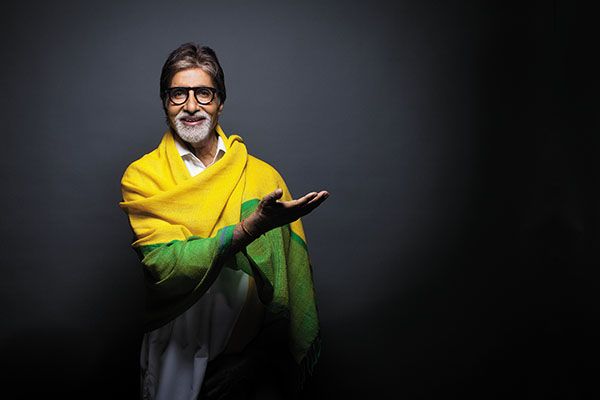
Adversity doesn’t spare even superheroes. But the dignity with which they overcome setbacks only adds to their aura. And that is what makes Amitabh Bachchan’s longevity and enduring appeal the stuff of legends

Forever Big B

by Sourav Majumdar, Ashish K Mishra | Dec 23, 2013

topimg_23121_amitabh_600x400 Amitabh Bachchan_FINAL.indd

Adversity doesn’t spare even superheroes. But the dignity with which they overcome setbacks only adds to their aura. And that is what makes Amitabh Bachchan’s longevity and enduring appeal the stuff of legends

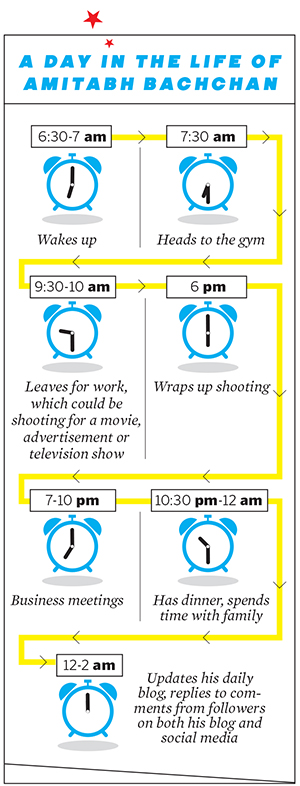
It is 8.15 pm and we are ushered into a study on the first floor at Janak, Amitabh Bachchan’s office bungalow in the upscale Juhu suburb of Mumbai. Janak is a couple of houses away from his residence, Jalsa, where, every Sunday, hundreds throng to get a glimpse of the 71-year-old superstar who has straddled Indian cinema like a colossus for nearly half a century. Read more of this post

Why true leaders need ‘first’ followers: Di Bella

Why true leaders need ‘first’ followers: Di Bella

Published 17 December 2013 09:38, Updated 18 December 2013 08:38

Phil Di Bella

I believe that many of the leaders of today are self-appointed leaders. You only become a true leader once people choose to follow and support you. In today’s society, we are constantly being told, particularly the younger generations, to become leaders and to establish ourselves. But the truth is leadership and becoming a leader is not all it’s cracked up to be – especially business leadership. Read more of this post

Find the Coaching in Criticism

Find the Coaching in Criticism

by Sheila Heen and Douglas Stone

Feedback is crucial. That’s obvious: It improves performance, develops talent, aligns expectations, solves problems, guides promotion and pay, and boosts the bottom line. Read more of this post

Building a Game-Changing Talent Strategy

Building a Game-Changing Talent Strategy

by Douglas A. Ready, Linda A. Hill, and Robert J. Thomas

Founded 25 years ago by eight partners, BlackRock, the world’s largest asset management firm, rewrote the playbook in financial services. While many of its peers were stumbling and retrenching in the aftermath of the 2008 recession, BlackRock was charting a course for growth. Its revenue, profits, and stock price all performed consistently during that tumultuous period. Read more of this post

Seeking the Why of Giving; People have internal and/or external reasons for behaving charitably. For many a nonprofit organization, research into those motivations can be valuable

December 21, 2013

Seeking the Why of Giving

By PHYLLIS KORKKI

Beyond the tax deduction, what motivates people to give money to charity? With Americans donating hundreds of billions of dollars to causes every year, it’s a question that directly affects nonprofits, and new academic research is trying to offer a clearer answer. Read more of this post

From Superstorms to Factory Fires: Managing Unpredictable Supply-Chain Disruptions

From Superstorms to Factory Fires: Managing Unpredictable Supply-Chain Disruptions

by David Simchi-Levi, William Schmidt, and Yehua Wei

Traditional methods for managing supply chain risk rely on knowing the likelihood of occurrence and the magnitude of impact for every potential event that could materially disrupt a firm’s operations. For common supply-chain disruptions—poor supplier performance, forecast errors, transportation breakdowns, and so on—those methods work very well, using historical data to quantify the level of risk. Read more of this post

IDEO’s Culture of Helping

IDEO’s Culture of Helping

by Teresa Amabile, Colin M. Fisher, and Julianna Pillemer

Few things leaders can do are more important than encouraging helping behavior within their organizations. In the top-performing companies it is a norm that colleagues support one another’s efforts to do the best work possible. That has always been true for pragmatic reasons: If companies were to operate at peak efficiency without what organizational scholars call “citizenship behavior,” tasks would have to be optimally assigned 100% of the time, projects could not take any unexpected turns, and no part of any project could go faster or slower than anticipated. But mutual helping is even more vital in an era of knowledge work, when positive business outcomes depend on creativity in often very complex projects. Beyond simple workload sharing, collaborative helpcomes to the fore—lending perspective, experience, and expertise that improve the quality and execution of ideas. Read more of this post

The Top 7 Management Tips From Harvard Business Review

The Top 7 Management Tips From Harvard Business Review

ERIC BARKERBARKING UP THE WRONG TREE
DEC. 21, 2013, 6:24 AM 3,350

Harvard Business Review recently released a book of their top Management Tips. Here are the ones I felt were the most insightful and actionable.

Get Through Your To-Do List

Via Management Tips From Harvard Business Review:

“Self-discipline is hard. Try these three tips to make your work more efficient every day:

Get three things done before noon. Statistics show that the team ahead at halftime is more likely to win the game. Enjoy your lunch knowing that you accomplished at least three tasks in the morning. Read more of this post

The New Patterns of Innovation

The New Patterns of Innovation

by Rashik Parmar, Ian Mackenzie, David Cohn, and David Gann

The search for new business ideas and new business models is hit-or-miss in most corporations, despite the extraordinary pressure on executives to grow their businesses. Management scholars have considered various reasons for this failure. One well-documented explanation: Managers who are skilled at executing clearly defined strategies are ill equipped for out-of-the-box thinking. In addition, when good ideas do emerge, they’re often doomed because the company is organized to support one way of doing business and doesn’t have the processes or metrics to support a new one. That explanation, too, is well supported. Without a doubt, if you tackle business innovation systematically—rather than hoping people will get creative during an “innovation jam” or a special offsite—you improve the odds of success (and decrease the chances you’ll be left staring at a blank sheet of paper). Traditional, tested ways of framing the search for ideas exist, of course. One is competency based: It asks, How can we build on the capabilities and assets that already make us distinctive to enter new businesses and markets? Another is customer focused:What does a close study of customers’ behavior tell us about their tacit, unmet needs? A third addresses changes in the business environment: If we follow “megatrends” or other shifts to their logical conclusion, what future business opportunities will become clear? Read more of this post

Why ‘fungineering’ your workplace won’t work

Why ‘fungineering’ your workplace won’t work

Published 13 December 2013 10:16, Updated 16 December 2013 08:44

Oliver Burkeman

Workers at an Australian call centre where ‘fun’ was a core value were found to consider the party atmosphere a burden.  “One of our core values is to inject fun and quirkiness into everything we do,” Neil Blumenthal, a founder of the online eyeglass retailer Warby Parker, recently told The New York Times. This is a philosophy currently enjoying a resurgence in the tech and retail industries, among others. As we enter the season of office holiday parties, it’s a safe assumption that the workplace quirkiness quotient will skyrocket. Which means it’s also the season for the curmudgeons among us to renew our passionate entreaty: Please – no, really, please – can we stop trying to “make work fun”? Read more of this post