The Big Lie of Strategic Planning: A detailed plan may be comforting, but it’s not a strategy

The Big Lie of Strategic Planning

by Roger L. Martin

All executives know that strategy is important. But almost all also find it scary, because it forces them to confront a future they can only guess at. Worse, actually choosing a strategy entails making decisions that explicitly cut off possibilities and options. An executive may well fear that getting those decisions wrong will wreck his or her career. Read more of this post


How Google came to accept managers…and found the 8 things the best managers do

How Google came to accept managers…and found the 8 things the best managers do

Published 08 December 2013 17:56, Updated 10 December 2013 09:36

David A. Garvin

Since the early days of Google, people throughout the company have questioned the value of managers. As one software engineer, Eric Flatt, puts it, “We are a company built by engineers for engineers.” And most engineers want to spend their time designing and debugging, not communicating with bosses or supervising other workers’ progress. Read more of this post

Million-dollar Picasso sold at charity raffle for $170

Million-dollar Picasso sold at charity raffle for $170

picasso_reuters

Sunday, December 22, 2013 – 15:31

Reuters

PARIS – A million-dollar drawing by Pablo Picasso was snapped up on Wednesday by a 25 year-old American art lover at a online charity raffle for a mere 100 euros (S$170). Jeffrey Gonano said he had been looking for a picture to hang on his living room wall when he read a news article about “L’Homme au Gibus” (“Man with Opera Hat”), raffled by Sotheby’s in Paris. Read more of this post

Edgar M. Bronfman, Billionaire Who Expanded Seagram, Dies at 84

Edgar M. Bronfman, Billionaire Who Expanded Seagram, Dies at 84

Edgar M. Bronfman, the second-generation heir who expanded the Seagram (VIV) Co. empire with profitable oil and gas and chemical investments, has died. He was 84.

Canadian-born Bronfman, a long-serving president of the World Jewish Congress, died yesterday at his home in New York surrounded by his family, the Samuel Bronfman Foundation said in a statement on its website. Read more of this post

For craftsman, making porcelain for Mao a lifetime glory

For craftsman, making porcelain for Mao a lifetime glory

(Xinhua)    14:07, December 23, 2013 Read more of this post

Universities face an identity crisis

Universities face an identity crisis

Monday, December 23, 2013 – 09:00

Victor Perez-diaz

The Straits Times

Higher education in Europe today finds itself in a state of profound uncertainty. What should universities’ primary focus be – research, professional training, or social inclusion? Should governments invest more in higher education to underpin long-term economic growth? Read more of this post

Mayor Bloomberg leaves his mark on New York

Mayor Bloomberg leaves his mark on New York 

Sunday, December 22, 2013 – 15:26

Reuters

NEW YORK – Love him or hate him, one thing is for sure: New Yorkers will not forget outgoing Mayor Michael Bloomberg anytime soon. As the independent billionaire politician bids farewell to City Hall by touting his accomplishments during 12 years in office, academics, urban planning experts and political pundits say the mark he made on New York is indelible and strong. Read more of this post

After decade in jail, freed tycoon leaves different Russia

After decade in jail, freed tycoon leaves different Russia

55508881e48ddcd613fcf61ee3c04fd5449ee2a8

Monday, December 23, 2013 – 10:10

AFP

MOSCOW- Mikhail Khodorkovsky may have trouble recognising Russia should he ever decide to return after a decade in prison that saw his oil empire dismantled and political ambitions smothered by arch foe Vladimir Putin. Read more of this post

Remembering Abe Briloff: A giant of the accounting profession, Briloff exposed the funny math that many companies relied on to look a lot healthier than they were. How the “Briloff effect” became the “Barron’s effect.”

SATURDAY, DECEMBER 21, 2013

Remembering Abe Briloff

By BILL ALPERT | MORE ARTICLES BY AUTHOR

A giant of the accounting profession and treasured Barron’s contributor, Briloff exposed the funny math that many companies relied on to look a lot healthier than they were. How the “Briloff effect” became the “Barron’s effect.”

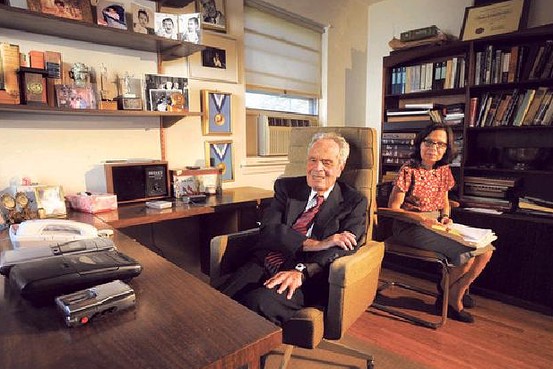
ON-BD158_BA_Bri_G_20131220213127Abe Briloff and his daughter Leonore.

Almost every tale of Abraham Briloff’s heroic feats exposing the dirty tricks hidden in corporate America’s financial statements leaves ’til last the revelation that Abe showed us what we were all missing while he was legally blind. We never bury the lead here. Right up until about a month before his death on Dec. 12 at age 96, Abe regularly called Barron’sto alert editors to the sleight-of-hand he had found in, say, Footnote 18 in some large company’s annual report, having memorized pages of the company’s financials that had been read to him by his daughter Leonore or his grad students at City University of New York’s Baruch College, where he was the Emanuel Saxe Distinguished Professor of Accountancy. Read more of this post

Abe Briloff, an Accountant Who Saw Through the Games

DECEMBER 13, 2013, 5:49 PM

Abe Briloff, an Accountant Who Saw Through the Games

By FLOYD NORRIS

Abe Briloff has died at the age of 96. I will miss him more than I can say.

Mr. Briloff was an accountant and accounting professor who cared deeply about, and was outraged by, the games accountants play. In the 1960s, he wrote an article in The Financial Analysts Journal detailing how companies could use “pooling of interest accounting” when they made acquisitions to hide costs and later create completely fraudulent profits. Few read it, I suspect, but one who did was Bob Bleiberg, the editor of Barron’s. Steve Anreder, who was Abe’s first editor at Barron’s, says Mr. Bleiberg contacted Abe and asked him to write a piece for Barron’s. Read more of this post

Abraham Briloff An Accounting Hero for the Ages

Abraham Briloff An Accounting Hero for the Ages
Grumpy Old Accountants
Op/Ed
By: Anthony H. Catanach Jr. and J. Edward Ketz
July 2012 — This year marks the 40th anniversary of
“Unaccountable Accounting,” a tart polemic by Abraham
Briloff. In this love-it-or-hate-it text Briloff debunked many
accounting myths, pointed out the shortcomings of corporate
financial reporting, discussed the fragility of GAAP in the
hands of accounting marauders, described the ineptitude or
conspiratorial nature of auditing firms, warned investors that
the worst was yet to come, wondered why academics
abandoned accounting for financial economics, and asked
whether society would ever create institutions and provide
incentives to improve financial accounting. To our chagrin,
the business community and government officials ignored the
warnings of this accounting prophet and we have paid the
price as 10-Ks, 10-Qs, proxy statements, and other SEC filings
increasingly are filled more with confetti than facts and
figures. Indeed, the worst has come! Read more of this post

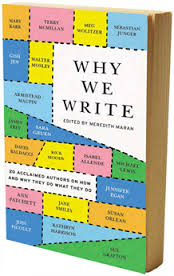
Why We Write: 20 Acclaimed Authors on How and Why They Do What They Do

Why We Write: 20 Acclaimed Authors on How and Why They Do What They Do Paperback

by Meredith Maran (Editor)

download (36)

Twenty of America’s bestselling authors share tricks, tips, and secrets of the successful writing life.
Anyone who’s ever sat down to write a novel or even a story knows how exhilarating and heartbreaking writing can be. So what makes writers stick with it? In Why We Write, twenty well-known authors candidly share what keeps them going and what they love most—and least—about their vocation. Read more of this post

Wellington: The Path to Victory; Wellington had courage, luck, an eye for battleground—and a sensitivity to the ‘butcher’s bills.’

Book Review: ‘Welllington’ by Rory Muir

Wellington had courage, luck, an eye for battleground—and a sensitivity to the ‘butcher’s bills.’ Max Hastings reviews Rory Muir’s “Wellington.”

MAX HASTINGS

Dec. 20, 2013 3:04 p.m. ET

The Duke of Wellington occupies the same place in British iconography as do George Washington and Robert E. Lee in that of the United States. His greatness on the battlefield is hard to dispute. Read more of this post

How To Waste Time Properly; The right distractions can boost creativity

How To Waste Time Properly

The right distractions can boost creativity.

BY GREG BEATOILLUSTRATION BY FRANCESCO IZZONOVEMBER 14, 2013

Ever since Frederick Winslow Taylor timed the exact number of seconds that Bethlehem Steel workers took to push shovels into a load of iron ore and then draw them out, maximizing time efficiency has been a holy grail of the American workplace. But psychologists and neuroscientists are showing us the limits of this attitude: Wasting time, they say, can make you more creative. Even seemingly meaningless activities such as watching cat videos on YouTube may help you solve math problems. Read more of this post

The 25 Greatest Business Innovations Of All Time

The 25 Greatest Business Innovations Of All Time

GEOFFREY JAMESINC.
DEC. 20, 2013, 5:08 PM 1,485 2

Human beings have been selling stuff since, well, since there have been human beings.  In the olden days, doing business meant swapping a flint ax for a bearskin coat. That would still define business today if it weren’t for these world-shaking innovations.

3000 B.C.: Money

For the first million years of business, selling meant barter, which meant the traded good had to be physically transported and traded. Money, on the other hand, allowed the value of goods to be traded rather than the goods themselves, thereby making it possible to sell mass quantities.

Fun fact: The largest coins ever “minted” are made of stone and weigh over four tons. Read more of this post

ModCloth CFO: Four Metrics That Mean More Than Money

December 20, 2013, 12:41 AM ET

ModCloth CFO: Four Metrics That Mean More Than Money

By Jeff Shotts

People think the job of a CFO is to obsess over a company’s money matters. Financial reporting, budgets, and compliance are our stock in trade. But across a career at companies like eBayEBAY +2.21% and fashion e-tailer ModCloth, I’ve grown to appreciate the critical importance of a handful of non-financial measures that can be more important indicators of the health of a business than financial metrics. Here are four indicators that power a high return on investment on the time a CFO spends to understand them: Read more of this post

10 ways you’ll probably f**k up your startup

10 ways you’ll probably f**k up your startup

Here I highlight some common early-stage mistakes I come across working closely with startup teams (and how you can avoid them)

Laurence McCahill in Spook Studio

1. No clear vision or purpose

This should be the starting point for any startup founder, but it’s often overlooked. Too often people dive straight into their shiny solution ideas without thinking about why they’re doing what they’re doing or considering the change they want to see in the world. Read more of this post

An Introvert’s Guide to Better Presentations; Improving your public speaking despite hating crowds

An Introvert’s Guide to Better Presentations

Improving your public speaking despite hating crowds

Matt Haughey in What I’m Reading on Medium

I am an introvert and I have always feared public speaking, and despite having given an industry conference presentation every year for the last fourteen years, it’s only gotten marginally easier for me. As I’ve gotten older and learned more about myself, I’ve noticed a few things that have helped me greatly and I wanted to share some of those here. Equip yourself with some knowledge Read more of this post

The Organization of Your Dreams: (1) Difference, (2) Radical honesty, (3) Extra value, (4) Authenticity, (5) Meaning, (6) Simple rules

The Organization of Your Dreams

by Rob Goffee and Gareth Jones  |   1:00 PM December 20, 2013

We have known for about 150 years that people who enjoy their work are more productive.  That is to say high satisfaction is correlated with high performance. And yet many organizations seem to go out of their way to make work alienating, frustrating, and unpleasant.  This is evidenced in the depressingly low rates of employee engagement around the world.  According to a recent AON Hewitt survey, four in 10 workers on average report being disengaged worldwide (three out of 10 in Latin America, four in ten in the U.S., and five in 10 Europe). Read more of this post

Kishore Mahbubani: Many drops can create an ocean of giving

Many drops can create an ocean of giving

The question is: Will you set aside 5 per cent of your Christmas shopping budget for charity?

By Kishore Mahbubani, For The Straits Times

All of us have vivid childhood memories.

One of mine involves walking home happily with my mum after we had picked up a welfare cheque for $45 from the Joo Chiat Road welfare office. If my memory is not playing tricks on me, I distinctly remember that the welfare office was next to the assembly point for the rubbish trucks. Despite this unsavoury location, visits to the welfare office were happy occasions. Read more of this post

Tatcha Founder Victoria Tsai’s Beauty Secrets; The Tatcha product line is inspired by information from a 200-year-old Japanese manuscript detailing beauty practices, though it draws on modern technology as well

Tatcha Founder Victoria Tsai’s Beauty Secrets

The founder of the Japan-inspired brand on her new Smurf-blue balm and the joys of blotting paper

Dec. 20, 2013 1:00 p.m. ET

SKIN SAVVY | Victoria Tsai in San Francisco Annie Tritt for The Wall Street Journal

OD-BA247_VANITY_OZ_20131219153827 BN-AV744_vanity_J_20131219155757

WHEN YOU HEAR that Victoria Tsai based her four-year-old beauty company, Tatcha, on Japanese geisha practices, it’s easy to assume: gimmick. But Ms. Tsai, 35, a Harvard Business School alum and ex-financier, isn’t spinning marketing fiction. In 2009, while in Japan for work, she met a geisha at a beauty store where many of them shop. “She didn’t have any makeup on,” recalled Ms. Tsai. Yet the woman’s skin was flawless. “I asked her what she uses.” The geisha showed her “jars of powders and waxes,” which Ms. Tsai bought and took home to Seattle. After eight weeks of applying the products, her complexion had greatly improved. She returned to Japan to investigate, and launched Tatcha later that year. Read more of this post

The Late, Great American WASP: The old U.S. ruling class had plenty of problems. But are we really better off with a country run by the self-involved, over-schooled products of modern meritocracy

The Late, Great American WASP

The old U.S. ruling class had plenty of problems. But are we really better off with a country run by the self-involved, over-schooled products of modern meritocracy?

JOSEPH EPSTEIN

Dec. 20, 2013 7:44 p.m. ET

RV-AM365C_WASP__G_20131220203116

The U.S. once had an unofficial but nonetheless genuine ruling class, drawn from what came to be known as the WASP establishment. Members of this establishment dominated politics, economics and education, but they do so no longer. The WASPocracy, as I think of it, lost its confidence and, with it, the power and interest to lead. We are now without a ruling class, unless one includes the entity that has come to be known as the meritocracy—presumably an aristocracy of sheer intelligence, men and women trained in the nation’s most prestigious schools. Read more of this post

Up Close and Personal with Robert Swan. the the first man in history to walk to both the North and South Poles

Published: Saturday December 21, 2013 MYT 12:00:00 AM
Updated: Saturday December 21, 2013 MYT 12:53:04 PM

Up Close and Personal with Robert Swan

BY WONG WEI-SHEN

“YOU’RE going to fail” and “You’re going to die” was the reaction Robert Swan OBE often received when he spoke of his dream to walk to the South Pole. Everyone knows the power words possess, in encouraging or discouraging a person. If Swan had listened to them, he probably would have never realised his dream. Read more of this post

The Incredibly Clever Way Thieves Stole 40 Million Credit Cards From 2,000 Target Stores In A ‘Black Friday’ Sting

The Incredibly Clever Way Thieves Stole 40 Million Credit Cards From 2,000 Target Stores In A ‘Black Friday’ Sting

JIM EDWARDS

Forty-million people who used credit or debit cards at Target stores between Thanksgiving and Dec. 15 must now change their PINs or passwords, or get new cards, following a nationwide hack of the retailer’s checkout systems. You may not like the fact that these hackers pulled off such a massive — and massively inconvenient — sting. But you’ve got to admire their ingenuity. Read more of this post

Ancient Martian Lake May Have Supported Life

December 9, 2013

Ancient Martian Lake May Have Supported Life

By KENNETH CHANG

About 3.5 billion years ago — around the time life is thought to have first arisen on Earth — Mars had a large freshwater lake that might well have been hospitable to life, scientists reported Monday. The lake lay in the same crater where NASA’s Mars rover Curiosity landed last year and has been exploring ever since. It lasted for hundreds or thousands of years, and possibly much longer. Read more of this post

The Man Who Would Teach Machines to Think

The Man Who Would Teach Machines to Think

DOUGLAS HOFSTADTER, THE PULITZER PRIZE–WINNING AUTHOR OF GÖDEL, ESCHER, BACH, THINKS WE’VE LOST SIGHT OF WHAT ARTIFICIAL INTELLIGENCE REALLY MEANS. HIS STUBBORN QUEST TO REPLICATE THE HUMAN MIND.

By James Somers

mag-article-large

“It depends on what you mean by artificial intelligence.” Douglas Hofstadter is in a grocery store in Bloomington, Indiana, picking out salad ingredients. “If somebody meant by artificial intelligence the attempt to understand the mind, or to create something human-like, they might say—maybe they wouldn’t go this far—but they might say this is some of the only good work that’s ever been done.” Read more of this post

How To Build A Consumer Internet Unicorn; The 11 ingredients of billion dollar consumer web products

How To Build A Consumer Internet Unicorn

The 11 ingredients of billion dollar consumer web products.

Niko Bonatsos in Question Everything

Aileen Lee and her team recently authored a great blog post about the key characteristics of unicorn IT companies (Unicorn = U.S. based software companies that are valued at over $1 billion by public or private investors). Evan Williams, who co-founded Blogger, Twitter and the venerable Medium,revealed his secret formula for getting rich online as such: “Take a human desire, preferably one that has been around for a really long time… Identify that desire and use modern technology to take out steps.” Building on Aileen’s and Evan’s thoughts (hard acts to follow), I would like to propose a simple framework for the shared characteristics of billion dollar+ consumer web products. The ingredients, if you will. Read more of this post

The Open-Sorcerers: Some magicians are embracing the open-source ethos—but that doesn’t mean spilling every secret.

The Open-Sorcerers: Some magicians are embracing the open-source ethos—but that doesn’t mean spilling every secret.

By Linda Rodriguez McRobbie

Amagician, it is said, never reveals his (or, in very rare cases, her) secrets. Unless he’s involved with open-source magic—in which case he will happily risk running afoul of the Alliance of Magicians. Read more of this post

Let’s Bring The Polymath — and the Dabblers — Back

Let’s Bring The Polymath — and the Dabblers — Back

BY SAMUEL ARBESMAN

12.13.13

I noticed recently that books with the phrase “The Last Man Who Knew Everything” all share in common that their subjects lived during the period close to the Scientific Revolution, roughly between 1550 to 1700. (The examples I own are about Athanasius Kircher, a Jesuit priest born in 1602; Thomas Young, who studied topics such as optics and philology and was born in 1773; and Philadelphia area professor Joseph Leidy, who was born in 1823.) Read more of this post

Thinning the Ph.D. Herd: How to ease the miseries of grad school? Make sure there are fewer grad students.

Thinning the Ph.D. Herd: How to ease the miseries of grad school? Make sure there are fewer grad students.

By Rebecca Schuman

Faculty and graduate students at Johns Hopkins University, an elite privateresearch institution that costs undergrads $61,000 per year, are up in armsabout a new strategic plan that proposes sweeping changes (and cuts) to its Ph.D. programs. Some 275 graduate students, concerned about the viability of their departments, have petitioned the university to reconsider, arguing to Inside Higher Ed that such downsizing could be emulated around the country if it takes effect. But these grad students should be more concerned about their viability after the Ph.D.—which is grim. Johns Hopkins knows this, and is taking drastic but needed measures. I’m all for it, and I’d be delighted, not dismayed, if other universities emulated this strategy. Read more of this post