“Time is a powerful force. It transforms our preferences. It reshapes our values. It alters our personalities. We seem to appreciate this fact but only in retrospect.”

Dan Gilbert: ‘The one constant in our life is change’

By Matt McFarland Updated: June 4 at 8:35 am

How much would you pay to see your favorite artist play in 10 years? Psychologist Dan Gilbert found that the average person would pay $129. But what would you pay to see your favorite artist from 10 years ago play today? According to Gilbert, it’s only $80. Read more of this post

How cities build resilience; It is a city with residents of 85 ethnicities, but NZ’s capital, Wellington, has managed to build social capital by avoiding ethnic enclaves and huge income gaps among suburbs, and by investing in facilities and gardens

How cities build resilience

SINGAPORE — It is a city with residents of 85 ethnicities, but New Zealand’s capital, Wellington, has managed to build social capital by avoiding ethnic enclaves and huge income gaps among suburbs, and by investing in facilities and community gardens.

BY NEO CHAI CHIN –

JUNE 5

SINGAPORE — It is a city with residents of 85 ethnicities, but New Zealand’s capital, Wellington, has managed to build social capital by avoiding ethnic enclaves and huge income gaps among suburbs, and by investing in facilities and community gardens. Read more of this post

Ben Graham: Should Rich but Losing Corporations Be Liquidated?

Benjamin Graham

12/27/1999 @ 12:00AM

Should Rich but Losing Corporations Be Liquidated?

THE unprecedented spectacle confronts us of more than one industrial company in three selling for less than its net current assets, with a large number quotd at less than their unencumbered cash. For this situation we have pointed out, in our previous articles, three possible causes: (a) Ignorance of the facts; (b) Compulsion to sell and inability to buy; (c) Unwillingness to buy from fear that the present liquid assets will be dissipated. Read more of this post

TED Talks About Human Connections; Mark E. Sackett, said he doesn’t care what people do for a living, but, “I care about your passionate purpose.”

June 10, 2014, 5:52 PM ET

TED Talks About Human Connections

MICHAEL HICKINS

NEW YORK — So I finally got to go to one of those TED talks everyone’s so smart and smug about when referencing. Not the actual TED conference, but TEDx – a series of independent events patterned after and licensed by the original TED organization.

Actually, most of us have gotten to know TED through the YouTube channel (over one billion views and counting). Read more of this post

The Nasty, Brutish Life of the Modern Mutual Fund Manager

The Nasty, Brutish Life of the Modern Mutual Fund Manager

It’s become one of the toughest sells of a fund manager: pay a fee to underperform the rest of the market.

Over the last three years, S&P calculates almost four in five domestic stock fund managers failed to beat broader indexes. Outdoing the market’s never been easy, especially after trading costs and fees. Now, more individual and institutional investors are concluding that active managers aren’t worth those extra fees. Last year, according to Cerulli Associates, $3.4 billion flowed into active funds, while index-based strategies pulled in more than $60 billion.

Read more of this post

When things go wrong, the natural reaction is to hide from investors. Don’t, says Neil Williams, CFO of accounting software developer Intuit

June 4, 2014

CFO.com | US

Intuit CFO: A Difficult Message Calls for Special Delivery

When things go wrong, the natural reaction is to hide from investors. Don’t, says Neil Williams, CFO of accounting software developer Intuit.

Neil Williams

In the world of corporate finance, bad news can hit at any time. As much as we are trained to prepare, there will always be difficult situations that need to be addressed, and as CFO, it’s usually my job to be the bearer of bad news to the CEO, the board of directors and investors. While it’s never fun to deliver bad news, especially to the disappointment of investors, I learned early in my career that facing issues head-on is the best way to manage them, and that proactive communications about financial issues builds credibility and successful long-term relationships. Read more of this post

The hidden cost of Gangnam Style: What humanity could achieve if it weren’t galloping in front of computer screens

The hidden cost of Gangnam Style

Jun 3rd 2014, 13:23 by by G.S. and G.D.

What humanity could achieve if it weren’t galloping in front of computer screens

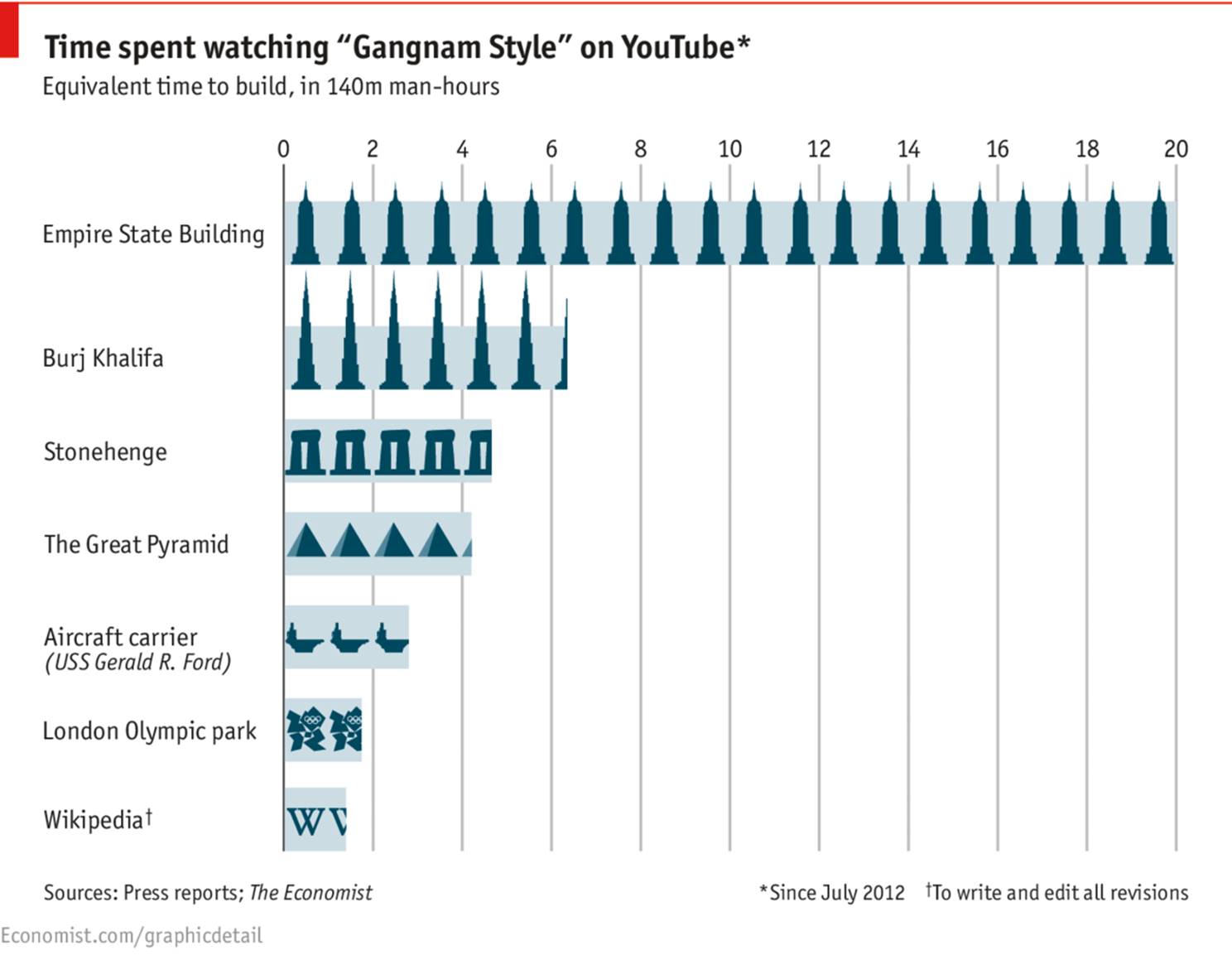
THE loony music video “Gangnam Style” surpassed two billion views on YouTube this week, making it the most watched clip of all time. At 4:12 minutes, that equates to more than 140m hours, or more than 16,000 years. What other achievements were forgone in the time spent watching a sideways shuffle and air lasso? It took 50m man-hours to complete the “supercarrier” USS Gerald Ford last year. Had people not been watching PSY—the South Korean pop star who released the song in July 2012—they could have constructed three such ships. Alternatively they could have built more than four Great Pyramids of Giza, or another Wikipedia, or six Burj Khalifas in Dubai (the world’s tallest building). The song’s nearest rival is Justin Bieber’s “Baby”, at a paltry one billion views. The opportunity cost of watching PSY’s frivolity is huge, but humanity has at least been entertained.


image001

7 Highlights From Malcolm Gladwell’s Reddit ‘Ask Me Anything’

7 Highlights From Malcolm Gladwell’s Reddit ‘Ask Me Anything’

RICHARD FELONI STRATEGY  JUN. 4, 2014, 5:47 AM

Just about anything author and journalist Malcolm Gladwell has to say is interesting, even if you disagree with him.

He went on Reddit on Monday for anAsk Me Anything session to answer users’ questions, respond to critics, and offer insight into the way he thinks.

Here’s a look at the highlights:

On the “10,000 Rule,” which, as defined in “Outliers,” states that 10,000 hours of practice is required to achieve mastery: Read more of this post

Here’s How You Negotiate With The Chinese

Here’s How You Negotiate With The Chinese

CONTRIBUTOR YOUR SAY  JUN. 4, 2014, 4:14 PM

It doesn’t take an economics expert to know that China is one of the global powerhouses for conducting business in.

This post is built on top of a previous article, How To Improve Your Negotiation Skills And Get Better Deals Off Suppliers. While that post offers basic negotiation skills, this article explores in-depth and detailed ‘rules’ to take note of when you negotiate with business owners in China.    Read more of this post

15 Quotes From The Founding Fathers About Economics, Capitalism And Banking

15 Quotes From The Founding Fathers About Economics, Capitalism And Banking

Tyler Durden on 06/10/2014 20:35 -0400

Submitted by Michael Snyder of The Economic Collapse blog,

Why have we turned our backs on the principles that this nation was founded upon?  Many of those that founded this nation bled and died so that we could experience “life, liberty and the pursuit of happiness”.  And yet we have tossed their ideals aside as if they were so much rubbish.  Our founders had experienced the tyranny of big government (the monarchy) and the tyranny of the big banks and feudal lords, and they wanted something very different for the citizens of the new republic that they were forming.  They wanted a country where private property was respected and hard work was rewarded.  They wanted a country where the individual was empowered, and where everyone could own land and start businesses.  They wanted a country where there were severe restrictions on all large collections of power (government, banks and corporations all included).  They wanted a country where freedom and liberty were maximized and where ordinary people had the power to pursue their dreams and build better lives for their families.  And you know what?  While no system is ever perfect, the experiment that our founders originally set up worked beyond their wildest dreams.  But now we are killing it.  Why in the world would we want to do that? Read more of this post
Everything Science Knows About Hangovers-And How to Cure Them

Everything Science Knows About Hangovers—And How to Cure Them

BY ADAM ROGERS

05.20.14  |

Good morning, sunshine! You are so screwed.

The light coming in through the window is so … there. You’d kill for a glass of water but die if it came with food. Your guts are in full rebellion; whatever happens next is going to happen in the bathroom. You have at least a couple of the following symptoms: headache, malaise, diarrhea, loss of appetite, fatigue, nausea, the shakes. You might also be dehydrated and feel generally slow—a little stupider, a little less coordinated. Read more of this post

Does ‘Could’ Lead to Good? Toward a Theory of Moral Insight

Does ‘Could’ Lead to Good? Toward a Theory of Moral Insight

Ting Zhang 

Harvard Business School

Francesca Gino 

Harvard University – Harvard Business School

Joshua D. Margolis 

Harvard University
June 2, 2014
Harvard Business School NOM Unit Working Paper No. 14-118
Harvard Business School Organizational Behavior Unit Working Paper No. 14-118

Abstract: 
We introduce the construct of moral insight and study how it can be elicited when people face ethical dilemmas – challenging decisions that feature tradeoffs between competing and seemingly incompatible values. Moral insight consists of discovering solutions that move beyond selecting one conflicting ethical option over another. Moral insight encompasses both a cognitive process and a discernible output: it involves the realization that an ethical dilemma might be addressed other than by conceding one set of moral imperatives to meet another, and it involves the generation of solutions that allow competing objectives to be met. Across four studies, we find that moral insight is generated when individuals are prompted to consider the question “What could I do?” in place of their intuitive approach of considering “What should I do?” Together, these studies point toward a theory of moral insight and important practical implications.

Nearly 10,000 descendants of Song general Yue Fei in Anhui

Nearly 10,000 descendants of Song general Yue Fei in Anhui

Staff Reporter

image001-1

2014-06-10

Around 200 descendants of Yue Fei pay their respects to the Song general in Jiujiang, Jiangxi province. (Photo/CNS)

Nearly 10,000 descendants of Yue Fei, a famous military general during the Southern Song dynasty (1127-1279 CE), are reportedly still living in Anhui province, reports the local Anhui News. Read more of this post

These questions from the 2014 Chinese college entrance exam will melt your mind! “The world belongs to you only after you stand up.” Please choose your own angle and write about your thoughts on this sentence

These questions from the 2014 Chinese college entrance exam will melt your mind!

Last Saturday marked first time ever that the Chinese college entrance examination, Gaokao (高考) was hosted at the same time as its US counterpart, the SAT (Scholastic Assessment Test). Although two tests are in completely different formats, they both have one section in common, the essay/composition. We’ve compiled a list of Gaokao composition topics from different regions in China this year and translated them into English to give you a sense of just how damn cryptic they are. Read more of this post

Inside Buffett’s Brain; Math-minded researchers are attempting to distill the mind of the world’s greatest investor. Even if they fall short of replicating Warren Buffett’s craft—and they will—there are good lessons here about what it takes to beat

Inside Buffett’s Brain

image001-2 image002-2 image003

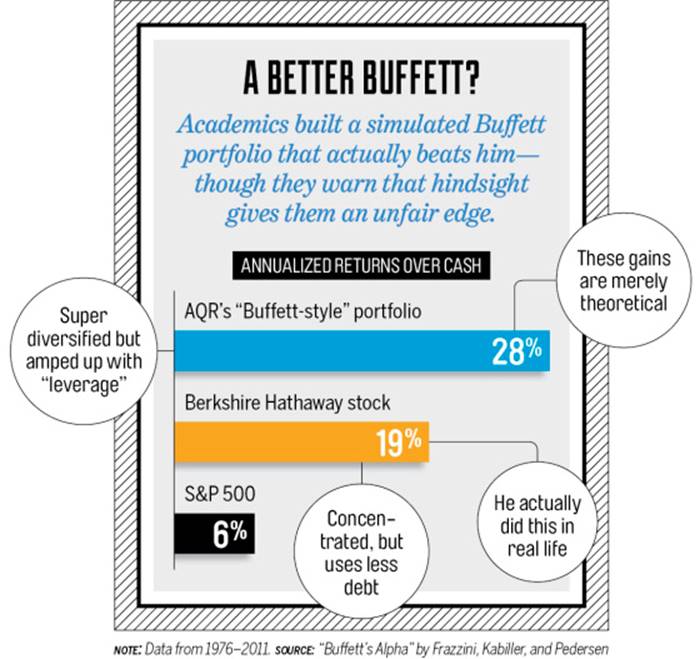
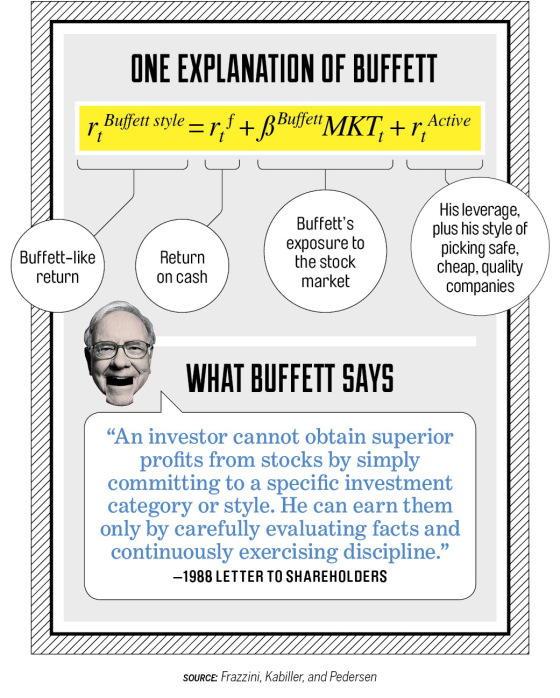
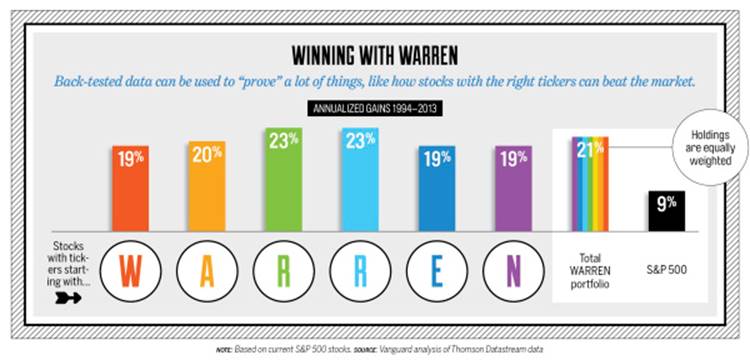
 Math-minded researchers are attempting to distill the mind of the world’s greatest investor. Even if they fall short of replicating Warren Buffett’s craft—and they will—there are good lessons here about what it takes to beat the market.

Warren Buffett isn’t merely a great investor. He’s also the great investor you think you can learn from, and maybe even copy (at least a little). Read more of this post

Why Having Too Many Choices Is Making You Unhappy

WHY HAVING TOO MANY CHOICES IS MAKING YOU UNHAPPY

MORE OPTIONS MEANS MORE POSSIBILITIES TO BE PERFECTLY CONTENT–RIGHT? HERE’S WHY DECISION FATIGUE IS SAPPING US OF HAPPINESS AND MAKING US REGRET THE CHOICES WE MAKE.

BY JANE PORTER

Amazon sells 1,161 kinds of toilet brushes. I know this because I recently spent an evening trying to choose one of them for the bathroom in my new apartment. Nearly an hour later, after having read countless contradictory reviews and pondering far too many choices, I felt grumpy and tired and simply gave up. The next day, I happily bought the only toilet brush the local dollar store offered. Read more of this post

To Celebrate Immigration, A Reminder About Who Built America

TO CELEBRATE IMMIGRATION, A REMINDER ABOUT WHO BUILT AMERICA

BY RAE ANN FERA

To mark Immigration Heritage Month, Welcome.US creates a message of unity, and a reminder that almost all Americans came from somewhere else.

Immigration reform is a hot-button topic, one that’s complicated, far-reaching and divisive. Unfortunately, the conversation about immigration often gets rendered down to a simplistic “us and them” continuum. But pulling back focus on the topic reminds us that almost all Americans are descended from immigrants; that in its early days, the country was built by the dreams and hard work of people who came from somewhere else. Read more of this post

World Entrepreneur of the Year: the judging process

June 3, 2014 7:58 pm

Methodology and judging process

By Maria Pinelli

World Entrepreneur of the Year: the judging process

EY Entrepreneur of the Year (EOY) was founded in 1986. Since then it has expanded to 150 cities in 60 countries with awards presented each year to a thousand of the world’s leading entrepreneurs.

The awards are judged by entrepreneurs, including many former EOY winners. It is a celebration of entrepreneurial spirit and recognition for some of the world’s most inspiring entrepreneurs – whose innovation, new products, services and job creation are so critical to the health of the global economy. Read more of this post

Disruptive influences in class; US technologists believe they are on the brink of an educational revolution

June 3, 2014 3:44 pm

Disruptive influences in class

By Sarah Mishkin

As an engineer at Google, Max Ventilla built products used by millions every day. Now he wants to use the lessons he learnt there to revolutionise one of the few fields technology has yet to disrupt: primary school.

He and his team of technologists and teachers at the start-up, AltSchool, are trying out their theories on how to use modern tech to improve schools and encourage new ones, in a one-room schoolhouse tuck­ed away in San Francisco’s relatively unfashionable Dogpatch neighbourhood. Read more of this post

Should business people go to university? People who want to found and run companies should not feel obliged to study financial subjects

June 3, 2014 3:19 pm

Should business people go to university?

By Luke Johnson

People who want to found and run companies should not feel obliged to study financial subjects

Afriend and her 17-year-old daughter asked me for advice recently. The daughter wants to run a business, and isn’t sure if she should bother with university – and if she does, what subject should she study? Read more of this post

Schools must enthuse the coders of tomorrow

June 3, 2014 4:41 pm

Schools must enthuse the coders of tomorrow

By Kenneth Baker

Gadgets make up global businesses yet schools barely teach practical skills, says Kenneth Baker

The most inventive period in our history was from 1700 to 1850, when the Industrial Revolution changed the economy of the world and made Britain, for a time, its richest country. Read more of this post

“The more fun we have, the less we’ll feel the need to compensate for the effort” with food. Volunteers who were told to exercise by walking a mile consumed more calories afterward than those who were told to have fun while completing the same work

Losing Weight May Require Some Serious Fun

By GRETCHEN REYNOLDS

JUNE 4, 2014 12:01 AM 1 Comments

If you are aiming to lose weight by revving up your exercise routine, it may be wise to think of your workouts not as exercise, but as playtime. An unconventional new study suggests that people’s attitudes toward physical activity can influence what they eat afterward and, ultimately, whether they drop pounds. Read more of this post

Living on Purpose: A sense of purpose helps sustain people in old age, new studies show

Living on Purpose

By PAULA SPAN

JUNE 3, 2014 5:00 AM 29 Comments

My late father had a longtime friend, a retired kosher butcher, who lived down the hall in their South Jersey apartment building. Past 90, Manny was older and frailer than my father; he leaned on a cane and could barely see well enough to recognize faces. But every morning, and again in late afternoon, he walked through my dad’s unlocked front door to be sure he was all right and to kibitz a bit. Read more of this post

“I got all my priorities wrong,” says prolific criminal lawyer Subhas Anandan, now 66. “I spent too much time in my life chasing after fame and recognition”

Confession of a lawyer who went from hero to speed zero

Wednesday, June 4, 2014 – 08:57

Jalelah Abu Baker

MyPaper

SINGAPORE -The man that rivals feared and clients pinned their hopes on has a confession to make.

“I got all my priorities wrong,” says prolific criminal lawyer Subhas Anandan, now 66 and looking gaunt, at his Leonie Hill home. Read more of this post

Bamboo that survived the atomic disaster, now at Nagasaki Museum

mms_img675425652

How United Technologies became a top gun

How United Technologies became a top gun

Shawn Tully

@FortuneMagazine

JUNE 2, 2014, 8:34 AM EDT

image001-2 image002-2 image003

United Technologies CEO Louis Chenevert, here in Pratt & Whitney’s customer-training facility in East Hartford, Conn., has guided his conglomerate back to prominence in jet engines. — Photograph by Stephen Wilkes for Fortune

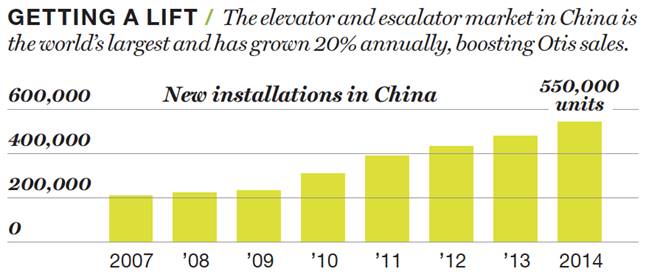
The ultra-profitable industrial giant has made a bundle outfitting skyscrapers in China. Now it’s shaking up the world of aviation. Read more of this post

8 family-owned Fortune 500 companies

8 family-owned Fortune 500 companies

Claire Zillman

@clairezillman

JUNE 2, 2014, 9:04 AM EDT

The phrase “family-owned business” conjures up images of mom-and-pop shops and friendly neighborhood restaurants. But some of America’s largest-grossing public companies started as – and remain – family-owned operations.

Wal-Mart

Sam Walton opened the very first Wal-Mart  WMT -0.07% in 1962 in Rogers, Arkansas. The Walton family, said to be worth $150 billion, still controls more than 50% of Wal-Mart. Sam Walton’s son Rob serves as company chairman. Read more of this post

The fascinating life of Penny Pritzker (so far): From a tragedy-filled youth to a contentious family battle, the Hyatt hotel heiress has always shown remarkable resilience. She’ll need it as President Obama’s newest Commerce Secretary.

The fascinating life of Penny Pritzker (so far)

Nina Easton

@FortuneMagazine

JUNE 2, 2014, 8:49 AM EDT

From a tragedy-filled youth to a contentious family battle, the Hyatt hotel heiress has always shown remarkable resilience. She’ll need it as President Obama’s newest Commerce Secretary.

As she makes the rounds on her first official visit to Silicon Valley earlier this year, Commerce Secretary Penny Pritzker takes special note of the airy, open-plan offices at Facebook’s Menlo Park, Calif., campus, including the glass-enclosed conference room where CEO Mark Zuckerberg regularly camps out. By contrast, her own headquarters, the Herbert C. Hoover Building, built in 1932, “is like a rabbit warren,” she complains to me. The Commerce Department’s offices are “very closed,” she says. “If information is the coin of the realm, I don’t want to have to go seeking it.” Read more of this post

How caring for my sick dad helped me reinvent my career

How caring for my sick dad helped me reinvent my career

Face Your Fears podcast: When corporate high flier Anna James’s father was diagnosed with Parkinsons’ Disease, she learned to re-evaluate her priorities and find out what’s important in life. Louisa Peacock reports

By Louisa Peacock

8:00AM BST 03 Jun 2014

What happens when everything you’ve ever worked for in the corporate world suddenly isn’t what you want anymore? Read more of this post

Beyond the Power Years: The Second Lives of Global Leaders

Beyond the Power Years: The Second Lives of Global Leaders

by Kathakali Chanda | Jun 4, 2014

After his tenure as PM, will Manmohan Singh retire to a quiet life or draft a role for himself, building on his many successes? We look at some public figures who quit office only to start afresh

image001-5

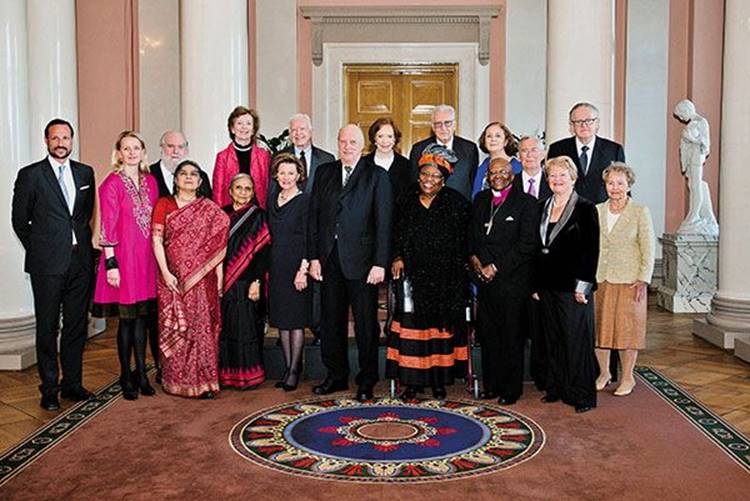
The Elders in Oslo, in 2012

1. Nelson Mandela 
The man who led the anti-apartheid movement in South Africa, turned his post-presidential office at the Nelson Mandela Foundation into a base for charity work. Mandela was also at the forefront of the battle against HIV/AIDS, pushing governments to dub it a global emergency. In 2007, he founded The Elders, an organisation of world leaders working for peace and human rights.     Read more of this post