What’s Behind the Green Juice Fad? Carrying a bottle of vegetable juice has become a status symbol

What’s Behind the Green Juice Fad?

Carrying a bottle of vegetable juice has become a status symbol

Suja’s Annie Lawless, co-founder, and Jeff Church, CEO, at the cold-pressed juice company’s San Diego operation Sandy Huffaker for The Wall Street Journal

KATHERINE ROSMAN

Nov. 11, 2013 7:23 p.m. ET

OG-AA388_Juice2_G_20131111210402PJ-BR578_JUICEj_G_20131111172601

The price of vegetable, fruit and superfood juice is beginning to approach that of expensive liquor. Katie Rosman joins Lunch Break with a look at the growing market for premium juice, and whether the health claims hold up. Photo: BluePrint.

How much will consumers pay for healthy-in-a-bottle? As much as $10 and sometimes more. At least that’s the belief of high-end grocers likeWhole Foods Market WFM -1.28% and a spurt of small juice companies trying to move the cold-pressed-juice craze from small-batch to mass-produced. A 16-ounce bottle of BluePrint Red, containing beets, carrots and ginger, among other ingredients, goes for $10 at some retailers. And Whole Foods customers are paying $9 for a bottle of celery-based Twelve Essentials vegetable juice, one of the top-sellers from Suja, an 18-month-old juice brand based in San Diego. Suja co-founder Annie Lawless says customers understand the high cost of what goes into the bottle, including organic produce that is cold pressed and then preserved using a process that leaves most of the nutrients intact. “When you buy a bottle, you’re getting all the goodness without any of the effort,” says Ms. Lawless, a 26-year-old former law student and yoga instructor. The company says it generated $20 million in revenue in its first year. Read more of this post

Dairy Compounders Ignore Macro Noises: Bega Cheese +130%, PT Ultrajaya Milk +230% YTD (Bamboo Innovator Insight)

The following article is extracted from the Bamboo Innovator Insight weekly column blog related to the context and thought leadership behind the stock idea generation process of Asian wide-moat businesses that are featured in the monthly entitled The Moat Report Asia. Fellow value investors get to go behind the scene to learn thought-provoking timely insights on key macro and industry trends in Asia, as well as benefit from the occasional discussion of potential red flags, misgovernance or fraud-detection trails ahead of time to enhance the critical-thinking skill about the myriad pitfalls of investing in Asia at the microstructure- and firm-level.

The weekly Bamboo Innovator Insight series brings to you:

Cheese

Dear Friends and All,

Dairy Compounders Ignore Macro QE Noises: Bega Cheese +130%, PT Ultrajaya Milk +230% YTD

At the Singapore Cricket Club last Thursday, the Bamboo Innovator had lunch with one of our subscribers, Mr Hemant Amin, a highly accomplished and astute Indian value investor who runs a global industrial raw material procurement house and his own multi-million family office with concentrated bets in stocks such as Infosys which delivered over 60 times in handsome returns. Hemant also heads a value investor group called BRKets (www.brkets.com) with 11 other members. The name BRKets (pronounced as ‘brickets’) is a fusion of Berkshire Hathaway’s ticker code BRK and the Cricket Club where they meet. 6 of the BRKets members joined us for an interesting lunch discussion on value investing in Asia where we share our investment outlook, wide-moat business model analysis and stock ideas.

When Hemant ordered cheese platter for his desert, it triggered me to think about the inspiring stories of another outstanding Indian entrepreneur Devendra Shah and Barry Irvin of Bega Cheese. Shah turned the smallish Pune-based Parag Milk Foods into a high value dairy powerhouse with his bold decision in early 2008 to invest in the untapped opportunity in processed cheese in India, doubling by end 2008 the entire country’s cheese-making capacity from 40 tonnes to 80 tonnes. Interestingly, while the world is fixated on the QE tapering macro challenges, Warrnambool Cheese & Butter Factory (ASX: WCB AU, MV A$467m) is up 90% in less than three months since Sept. This was despite WCB posting its lowest profit since 2009 with FY13 (year end Jun) net profit down over 50% as it was the subject of a three-way bidding war by Canadian giant Saputo (TSX: SAP, MV C$9.6bn), Japan’s Kirin, and Bega Cheese (ASX: BGA AU, MV A$704m). Bega is a wide-moat company in our Bamboo Innovator Index since its listing in Aug 2011 with a market value of A$240m. NZ dairy giant Fonterra (FCG NZ, MV NZ$10.9bn), after its own contamination scare in Aug, joined in the industry consolidation battle by acquiring a 6% stake in Bega on Nov 2, adding on to Bega’s spectacular share price returns of 130% year-to-date. Ongoing competition in the raw milk market with supply affected by droughts in NZ and Australia and unseasonably cold weather conditions in Europe has kept upward pressure in prices paid to milk suppliers; the surge in the GDT (global dairy trade) price index from 800 to over 1,400 in the last year-and-a-half has hurt the profitability of processor such as WCB. Yet, despite both WCB and Bega being cheese processor companies, Bega has been able to achieve FY13 EBITDA and net profit growth of 13% and 25% respectively as compared to the FY13 decline of 28% and 51% for WCB. Meanwhile, the share price performance of dairy giants Saputo and Fonterra are flat YTD.

So why are Parag and Bega outperforming Bamboo Innovators in a cyclical commodity industry, especially when they are supposedly price-taking minnows in the midst of oligopolistic giants Fonterra, Murray Goulburn, Saputo, Amul (India), Royal Friesland Campina, Arla etc? What are the lessons for value investors when investing in companies related to the volatile commodities cycle? I admit that I was also surprised by the sharp jump in share price of well-managed boring consumer food companies such as Bega. But it once again proves the wisdom of one of our subscribers, Mr K, an intelligent value investor who has nearly doubled his returns from his investment since Mar this year in DKSH Malaysia (DKSH MK) after it was highlighted as a Bamboo Innovator; his thoughtful comments:

“I’d love money making ideas, but I also very excited about education, and understanding/ navigating Asian markets. If I can avoid stupid (frauds) mistakes, I think the upside will work out.”

By avoiding the “set-up” fraudulent companies which are promoted with that alluring sexy growth theme by a whole gamut of syndicates, insiders and brokers/dealmakers, and by staying long-term in undervalued wide-moat businesses – even if they are boring like cheese! – the short-term returns may be unexciting or even frustrating but the longer-term upside will eventually work out for the value investor.

How did Barry Irvin grow Bega Cheese from a single-site regional dairy processor in southern New South Wales (NSW) town of Bega, with 80 employees and selling only into the domestic market, to its position today as the southern hemisphere’s largest cheese-packing and processing business, with sales nudging to over A$1 billion a year, exporting to more than 40 countries and employing over 1,600 people? What caught the Bamboo Innovator’s attention in Bega before its Aug 2011 listing was an article in May 2011 in Sydney Morning Herald about how Irvin was the parent and caregiver of his autistic child Matthew, now 22. For two decades, the 51-year-old Irvin has juggled the responsibilities of caring for a disabled child, running the family farm and steering the ambitious former dairy co-operative through deregulation, acquisition, a public float..

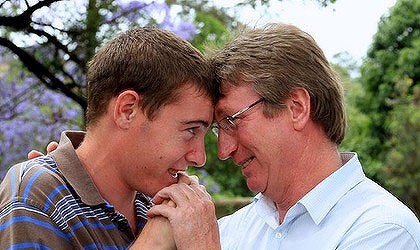
helpLead-420x0Barry Irvin pictured with his son Matthew.

The role of a caregiver is special: they need to have that intangible quality of inner courage at its “core” to give strength to its “periphery”, much like the empty hollow center of a bamboo in which the nutrients and moisture that would have been exhausted making and maintaining this empty center can be utilized for growth of the periphery bamboo culm/stem. The architecture of the bamboo culm presents a powerful configuration: fibers of greatest strength occur in increasing concentration toward the periphery of the plant. With Irvin helming Bega, it is likely that the company will invest in the intangibles, in people and building long-term relationships..

Also, what are the lessons for value investors from the story of Indonesia’s PT Ultrajaya Milk (+230% YTD), controlled by the family of the late Ahmad Prawirawidjaja who established the business in 1958 from his house in Bandung? What are the 4 key Bamboo Innovator takeaways?

Why Focusing Too Narrowly in College Could Backfire; Students are told learn the subjects that will best land them a job when they graduate. But that could be the worst thing they could do

Why Focusing Too Narrowly in College Could Backfire

Students are told learn the subjects that will best land them a job when they graduate. But that could be the worst thing they could do.

PETER CAPPELLI

Updated Nov. 10, 2013 4:19 p.m. ET

WE-AA547_WECOVE_G_20131106122850WE-AA554B_VOCAT_G_20131106125407 WE-AA557_VOCATI_G_20131106125413

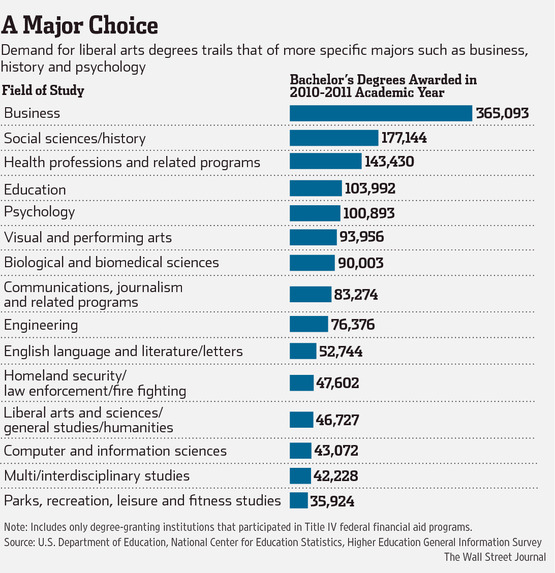
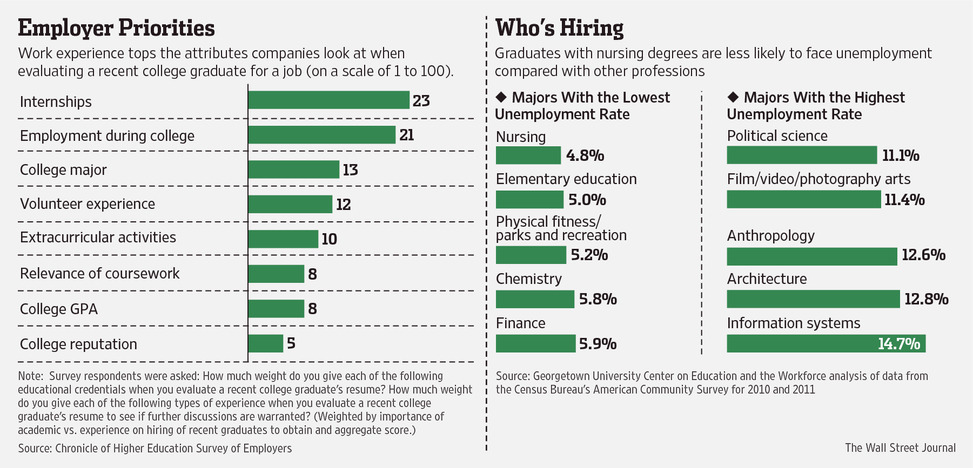
A job after graduation. It’s what all parents want for their kids. So, what’s the smartest way to invest tuition dollars to make that happen? The question is more complicated, and more pressing, than ever. The economy is still shaky, and many graduating students are unable to find jobs that pay well, if they can find jobs at all. The result is that parents guiding their children through the college-application process—and college itself—have to be something like venture capitalists. They have to think through the potential returns from different paths, and pick the one that has the best chance of paying off. For many parents and students, the most-lucrative path seems obvious: be practical. The public and private sectors are urging kids to abandon the liberal arts, and study fields where the job market is hot right now. Schools, in turn, are responding with new, specialized courses that promise to teach skills that students will need on the job. A degree in hospital financing? Casino management? Pharmaceutical marketing? Little wonder that business majors outnumber liberal-arts majors in the U.S. by two-to-one, and the trend is for even more focused programs targeted to niches in the labor market.

Read more of this post

35 Years After Inventing The CD, Philips Is Doing Everything Right

35 Years After Inventing The CD, Philips Is Doing Everything Right

JAN HENNOPAGENCE FRANCE PRESSE NOV. 10, 2013, 6:02 AM 9,504 7

Back in 1978 in a boardroom near Lake Geneva, a bunch of nervous Philips inventors demonstrated a device that was to revolutionise the entertainment industry for the next three decades. Called the “Pinkeltje” after a small Dutch gnome in a children’s story, the device performed flawlessly — and so the world’s first Compact Disc (CD) player was born. Thirty-five years later the Netherlands’ Philips, once one of Europe’s best-known brands for radios and televisions, is ditching the consumer electronics business that used to be its bread and butter, and is thriving. The Philips story is a business case of how a leading global industrial group, with leading technology, went through several rocky years of restructuring, and found a successful strategy to re-invent itself in time. Read more of this post

Should a non-technical founder hedge against failure?

Should a non-technical founder hedge against failure?

BY HAYDEN WILLIAMS 
ON NOVEMBER 10, 2013

Recently I grabbed coffee with a founder whose startup is in a similar stage to mine. I reached out to him after he signed up for our networking platform. Because he had also started his career in finance I was interested to speak with him. We shared the challenges we were dealing with, our product roadmap and plans to monetize our products. Towards the end of our conversation, we veered into the personal dilemmas early-stage founders face. He asked me, “What’s your plan if, worst case scenario, Treatings fails? Would you go back to finance, start another company or join an existing startup?” Read more of this post

Why it is very clever to pretend to be stupid; Disarm others, make them forget you are scarily powerful and lull them into liking you

November 10, 2013 1:48 pm

Why it is very clever to pretend to be stupid

By Lucy Kellaway

Disarm others, make them forget you are scarily powerful and lull them into liking you

Last week I had a drink with a woman who has just landed one of the biggest jobs in her industry. Over a couple of grapefruit negronis she told me she had no idea why she had been promoted and that she was not even sure if she wanted the job. In return I told her that I was bumbling along more or less OK, though keeping the show on the road was getting increasingly tricky. Read more of this post

It’s Ryanair’s Michael O’Leary’s biggest PR gaffe – he wants us to like him

It’s Michael O’Leary’s biggest PR gaffe – he wants us to like him

The self-loathing British public respond more to companies that show them disdain than those who suck up to them

David Mitchell

The Observer, Sunday 10 November 2013

As a big fan of Ryanair‘s marketing strategy, I was shocked to hear that it’s being abandoned. The villainous airline is trying to change its image. It’s going to spend money improving its website, it’s slashing charges for not printing your boarding card, it’s even allowing people to reserve seats. As chief executive Michael O’Learyput it: “I want to be loved by my customers as much as I love them… Boy, are we listening and responding.” It was as if JR Ewing was making the case for renewable energy – I was devastated. Read more of this post

B-school remorse: When the degree is just not worth it

B-school remorse: When the degree is just not worth it

November 8, 2013: 12:13 PM ET

It took Marianna Zanetti a full year after graduation before landing a job at exactly the same salary she was earning three years earlier without an MBA.

By John A. Byrne

(Poets&Quants) — Mariana Zanetti had been working as a product manager for Shell (RDSA) in Buenos Aires when her husband got a promotion to a new job in Madrid. One of her colleagues, a Harvard Business School graduate, suggested that the Argentina native go to business school for her MBA while in Spain. She took his advice, enrolling in the one-year MBA program at Instituto de Empresa (IE) Business School In Madrid. Zanetti borrowed money from her family to pay for the degree. And when she graduated in 2003, it took her a full year to land a job as a product manager at a Spanish version of Home Depot, at exactly the same salary she was earning three years earlier, without the MBA. Read more of this post

Economics lecturers accused of clinging to pre-crash fallacies; Academic says courses changed little since 2008 and students taught ‘theories now known to be untrue’

Economics lecturers accused of clinging to pre-crash fallacies

Academic says courses changed little since 2008 and students taught ‘theories now known to be untrue’

Phillip Inman, economics correspondent

The Guardian, Sunday 10 November 2013 22.28 GMT

Economics teaching at Britain’s universities has come under fire from a leading academic who accused lecturers of presenting “things that are known to be untrue” to preserve theories that claim to show how the economy works. The Treasury is hosting a conference in London on Monday to discuss the crisis in economics teaching, which critics say has remained largely unchanged since the 2008 financial crash despite the failure of many in the profession to spot the looming credit crunch and worst recession for 100 years. Read more of this post

Big Finance’s hyper-focus on frequency creates a blindspot on magnitude; It doesn’t matter if your forecast is right 99 times if on the 100th time you are not only wrong, but catastrophically wrong

Big Finance’s hyper-focus on frequency creates a blindspot on magnitude

And what can be done to change that

By Shane Parrish | November 7, 2013

My main takeaway from Alan Greenspan’s latest book, The Map and the Territory: Risk, Human Nature, and the Future of Forecasting: Forecasters (and all those who rely on them) fail to realize that over the long run, even frequently accurate predictions mean little without taking into account the magnitude of relatively infrequent mistakes. Read more of this post

Ancient wisdom and new thinking on integrity … how to avoid financial crises

Ancient wisdom and new thinking on integrity … how to avoid financial crises

An inability to see actions and their consequences in the context of a broader system led to the financial crisis. Being-centred leadership can address this blindness, writes Ram Nidumolu

Ram Nidumolu

Guardian Professional, Monday 11 November 2013 00.07 GMT

The likely $13 bn (£8.9bn) fine imposed on JP Morgan by the US government has created a lot of buzz recently. The company was accused of passing off loans underlying mortgage-backed securities as low risk to one set of investors, while simultaneously betting with other investors that they were highly risky. Many other banks are also likely to be implicated in a system so complex that individual actors could not comprehend the global impacts of their risky actions. As a recent Guardian Sustainable Business article points out, the resulting loss of credibility for banks is so severe that trust has now become a vital but scarce capital for modern banking. Read more of this post

What Israel’s uncrowned king of medical cosmetics is planning next; Serial entrepreneur Shimon Eckhouse has founded close to 20 companies in 20 years. Now he is consolidating his efforts into a medical technology incubator

What Israel’s uncrowned king of medical cosmetics is planning next

Serial entrepreneur Shimon Eckhouse has founded close to 20 companies in 20 years. Now he is consolidating his efforts into a medical technology incubator

By Amir Teig and Inbal Orpaz | Nov. 11, 2013 | 2:48 AM

Looking your best is one of the safest drugs there is, with zero side effects, says Shimon Eckhouse, whose two decades as a serial entrepreneur in the field of medical aesthetics and equipment makes him Israel’s uncrowned king of high-tech beauty. “What can make us feel better than waking up in the morning and being pleased with what we see in the mirror? This is one of the most important things in terms of health. The overall feeling makes us healthier.” Read more of this post

Fiat Capitalism

FIAT CAPITALISM

ARTICLE | 6 NOVEMBER, 2013 04:23 PM | BY DAVID BAIN

John Elkann is on a mission. The fifth-generation owner and manager of one of the biggest industrial groups in the world wants capitalism to change. With his boyish face, soft voice, reserved – even diffident – style he might make an unlikely evangelist, but he is deadly serious. In a nutshell, what he wants to do is to move capitalism’s emphasis away from shareholder value and reduce the role financial markets play in propping up the whole system of shareholder value, or at least the more extreme version of it. It’s a radical vision – especially from a man in his position. Read more of this post

Of chess and men: Why human contests still beat those with computers

November 8, 2013 6:43 pm

Of chess and men

Why human contests still beat those with computers

The world chess championship begins this weekend in the Indian city of Chennai, pitting veteran title-holder Viswanathan Anand against Norwegian wunderkindMagnus Carlsen. Their duel is the most anticipated chess match for a decade, yet it hides an oddity. Neither man is the world’s best player. That title belongs to a computer programme. Read more of this post

Atheist Mega Churches Are Taking Root All Over The World

Atheist Mega Churches Are Taking Root All Over The World

GILLIAN FLACCUSASSOCIATED PRESS
NOV. 10, 2013, 5:14 PM 4,945 47

LOS ANGELES (AP) — It looked like a typical Sunday morning at any mega-church. Hundreds packed in for more than an hour of rousing music, an inspirational sermon, a reading and some quiet reflection. The only thing missing was God. Dozens of gatherings dubbed “atheist mega-churches” by supporters and detractors are springing up around the U.S. after finding success in Great Britain earlier this year. The movement fueled by social media and spearheaded by two prominent British comedians is no joke. Read more of this post

Loki Is The Only Good Villain In Marvel Movies—And That’s A Big Problem

Loki Is The Only Good Villain In Marvel Movies—And That’s A Big Problem

KATEY RICHCINEMABLEND
NOV. 10, 2013, 7:19 PM 4,749 5

At San Diego Comic Con this summer, there was no Q&A panel with the cast of Thor: The Dark World. There was only Loki, as Tom Hiddleston took the stage in full costume, demanded that the crowd “Say my name” and earn the kind of screams we associate with rock concerts that devolve into riots. It wasn’t that they were trying to hide the Thor cast or shrug off the Comic Con crowd; it was that no combination of director Alan Taylor, star Chris Hemsworth or new footage could match the electric jolt of Loki on a rhetorical tear.  Read more of this post

FT: An exclusive interview with the Dalai Lama

November 7, 2013 11:03 pm

An exclusive interview with the Dalai Lama

By Amy Kazmin

‘I always pray the Chinese leadership should develop more common sense’

Iarrive in Dharamsala, the Indian home of Tibet’s exiled spiritual leader the Dalai Lama, groggy after an overnight train journey from New Delhi and a two-hour drive into the Himalayas. The weather is grey and drizzly but the mood is festive as crowds flock to Tsuglagkhang Temple, where the Dalai Lama is giving a three-day public teaching on a 14th-century Buddhist text about the path to enlightenment. Read more of this post

Strange Doings on the Sun; Scientists say that solar activity is odder than in a century or more, with the sun producing barely half the number of sunspots as expected and its magnetic poles out of sync

Strange Doings on the Sun

Sunspots, Which Can Harm Electronics on Earth, Are Half the Number Expected

The sun should be at the climax of its usual 11-year cycle of activity, but solar physicists are puzzled by its mellow solar maximum. WSJ’s Robert Lee Hotz reports.

ROBERT LEE HOTZ

Nov. 10, 2013 7:25 p.m. ET

NA-BY856_FLIP_G_20131110184816

Something is up with the sun. Scientists say that solar activity is stranger than in a century or more, with the sun producing barely half the number of sunspots as expected and its magnetic poles oddly out of sync. The sun generates immense magnetic fields as it spins. Sunspots—often broader in diameter than Earth—mark areas of intense magnetic force that brew disruptive solar storms. These storms may abruptly lash their charged particles across millions of miles of space toward Earth, where they can short-circuit satellites, smother cellular signals or damage electrical systems.

Read more of this post

Will Jellyfish Take Over the World?

Will Jellyfish Take Over the World?

Are jellyfish massing against humankind? Not really; it just seems that way. They may be sending us a message, though.

Enormous aggregations of the diaphanous sea creatures have been wreaking havoc from shore to shore — clogging water intake valves on seaside power plants, destroying fish farms, crowding fishing nets and, yes, stinging people (sometimes fatally). It’s nothing personal. Jellyfish, lacking brains, do not wish us harm. They’re merely going about their lives as they have for more than half a billion years: swimming, eating and reproducing, lately in mind-boggling numbers. Read more of this post

The Prize is the Pleasure in Finding Things Out, the kick in the discovery, the observation that other people use it. Those are the real things

The Prize is the Pleasure in Finding Things Out

by SHANE PARRISH on NOVEMBER 3, 2013

Canadian filmmaker Reid Gower created the Feynman Series, a trilogy of physicist Richard Feynman’s penetrating insight into domains outside of physics. Consider the first, Richard Feynman on Beauty. Honours, the second part, shows Feynman’s healthy disrespect for authority. I don’t like honors. I’m appreciated for the work that I did, and for people who appreciate it, and I notice that other physicists use my work. I don’t need anything else. I don’t think there’s any sense to anything else. I don’t see that it makes any point that someone in the Swedish Academy decides that this work is noble enough to receive a prize. I’ve already got the prize. The prize is the pleasure of finding the thing out, the kick in the discovery, the observation that other people use it. Those are the real things. The honors are unreal to me. I don’t believe in honors. It bothers me, honors. Honors is epilets, honors is uniforms. My poppa brought me up this way. I can’t stand it, it hurts me. When I was in High School, one of the first honors I got was to be a member of the Arista, which is a group of kids who got good grades. Everybody wanted to be a member of the Arista. I discovered that what they did in their meetings was to sit around to discuss who else was worthy to join this wonderful group that we are. OK So we sat around trying to decide who would get to be allowed into this Arista. This kind of thing bothers me psychologically for one or another reason. I don’t understand myself. Honors, and from that day to this, always bothered me. I had trouble when I became a member of the National Academy of Science, and I had ultimately to resign. Because there was another organization, most of whose time was spent in choosing who was illustrious enough to be allowed to join us in our organization. Including such questions as: ‘we physicists have to stick together because there’s a very good chemist that they’re trying to get in and we haven’t got enough room…’. What’s the matter with chemists? The whole thing was rotten . Because the purpose was mostly to decide who could have this honor. OK? I don’t like honors.

20-Year-Old Hunter S. Thompson’s Superb Advice on How to Find Your Purpose and Live a Meaningful Life

20-Year-Old Hunter S. Thompson’s Superb Advice on How to Find Your Purpose and Live a Meaningful Life

As a hopeless lover of both letters and famous advice, I was delighted to discover a letter 20-year-old Hunter S. Thompsongonzo journalism godfather, pundit of media politics, dark philosopher – penned to his friend Hume Logan in 1958. Found in Letters of Note: Correspondence Deserving of a Wider Audience (public library) – the aptly titled, superb collection based on Shaun Usher’s indispensable website of the same name – the letter is an exquisite addition to luminaries’ reflections on the meaning of life, speaking to what it really means to find your purpose. Cautious that “all advice can only be a product of the man who gives it” – a caveat other literary legends have stressed with varying degrees of irreverence – Thompson begins with a necessary disclaimer about the very notion of advice-giving:

To give advice to a man who asks what to do with his life implies something very close to egomania. To presume to point a man to the right and ultimate goal – to point with a trembling finger in the RIGHT direction is something only a fool would take upon himself.

And yet he honors his friend’s request, turning to Shakespeare for an anchor of his own advice:

“To be, or not to be: that is the question: Whether ’tis nobler in the mind to suffer the slings and arrows of outrageous fortune, or to take arms against a sea of troubles…” And indeed, that IS the question: whether to float with the tide, or to swim for a goal. It is a choice we must all make consciously or unconsciously at one time in our lives. So few people understand this! Think of any decision you’ve ever made which had a bearing on your future: I may be wrong, but I don’t see how it could have been anything but a choice however indirect – between the two things I’ve mentioned: the floating or the swimming.

He acknowledges the obvious question of why not take the path of least resistance and float aimlessly, then counters it: Read more of this post

Fighting Your Business Battles: 6 Lasting Lessons From Sun Tzu’s Art Of War

FIGHTING YOUR BUSINESS BATTLES: 6 LASTING LESSONS FROM SUN TZU’S ART OF WAR

YOU’LL PROBABLY NEVER READ THE ENTIRE BOOK MANY CONSIDER A BUSINESS STRATEGY BIBLE. SO READ THIS INSTEAD.

BY MARK MCNEILLY

Business has always been tough, but it has gotten even more difficult as competition has become more global, faster-paced and increasingly technology-dependent. So why in the 21st century would it make sense to look to The Art of Warby Sun Tzu for business advice, a book on ancient warfare written centuries before the birth of Christ? Read more of this post

Reason is the Enemy of Greatness

Reason is the Enemy of Greatness

by SHANE PARRISH on NOVEMBER 5, 2013

“There can be no great genius without a touch of madness.”
— Seneca

This is a beautiful passage from Giacomo Leopardi’s Zibaldone on the conflict between reason and nature.

Reason is the enemy of all greatness: reason is the enemy of nature: nature is great, reason is small. I mean that it will be more or less difficult for a man to be great the more he is governed by reason, that few can be great (and in art and poetry perhaps no one) unless they are governed by illusions. Read more of this post

Organizational Complexity: The hidden killer

Organizational Complexity: The hidden killer

by Michael Wade | Nov 8, 2013

Four steps to reduce complexity

There’s no questioning the fact that companies today are faced with growing complexity. Environmental, political, and competitive changes conspire to create a challenging and complex operating environment. In response to these ever evolving pressures, companies often try to mirror external complexity in their internal environments. For example, they may respond to more sophisticated customer demands by creating tailored products and services. They may address the need for cost cutting and innovation by building matrix organizational structures. They may attempt to add new processes to address evolving market needs. In isolation, each of these responses makes sense, but in combination, they can significantly affect organizational performance.  Read more of this post

A Cure for the Allergy Epidemic? When we left farming life, we lost the microbes that kept our immune systems in check

November 9, 2013

A Cure for the Allergy Epidemic?

By MOISES VELASQUEZ-MANOFF

WILL the cure for allergies come from the cowshed? Allergies are often seen as an accident. Your immune system misinterprets a harmless protein like dust or peanuts as a threat, and when you encounter it, you pay the price with sneezingwheezing, and in the worst cases, death. What prompts some immune systems to err like this, while others never do? Some of the vulnerability is surely genetic. But comparative studies highlight the importance of environment, beginning, it seems, in the womb. Microbes are one intriguing protective factor. Certain ones seem to stimulate a mother’s immune system during pregnancy, preventing allergic disease in children. Read more of this post

Con Men Prey on Confusion Over Health Care Act

November 9, 2013

Con Men Prey on Confusion Over Health Care Act

By JESSICA SILVER-GREENBERG and SUSANNE CRAIG

To the list of problems plaguing President Obama’s health care law, add one more — fraud. With millions of Americans frustrated and bewildered by the trouble-prone federal website for health insurance, con men and unscrupulous marketers are seizing their chance. State and federal authorities report a rising number of consumer complaints, ranging from deceptive sales practices to identity theft, linked to the Affordable Care Act. Read more of this post

Ender’s Game, its controversial author, and a very personal history

November 1, 2013 12:00 AM ET
Stranger in a Strange Land

Ender’s Game, its controversial author, and a very personal history

By Rany Jazayerli
The Ender’s Game movie premieres today, nearly 30 years after Orson Scott Card’s science fiction classic was published. The film, in development for almost half that time, does not lack star power. The story is about a dystopian future in which pubescent boys and girls are recruited to lead armies against aliens who nearly destroyed humanity a generation earlier, and the film necessarily casts teenagers1 in the lead roles. Asa Butterfield, who plays the title role of Andrew “Ender” Wiggin, was last seen displaying his talents as the lead in Martin Scorsese’s beautifully rendered (albeit interminably boring) Hugo. Abigail Breslin, who plays Ender’s sister Valentine, and Hailee Steinfeld, who plays Ender’s Battle School mentor, both earned Oscar nominations before they were 15. The adult leads, Harrison Ford, Ben Kingsley, and Viola Davis, are even more decorated. If the movie flops, it won’t be because the actors can’t act. Read more of this post

New Interview: Buffett On What He Learned From Munger [VIDEO]

New Interview: Buffett On What He Learned From Munger [VIDEO]

by ValueWalk StaffNovember 7, 2013

Berkshire Hathaway CEO Warren Buffett talks about how his business partner Charlie Munger analyzes business more thoroughly than most investors.


Bill Gates: What I Learned in the Fight Against Polio; India’s success in eradicating polio offers lessons for solving other human welfare issues world-wide

Bill Gates: What I Learned in the Fight Against Polio

India’s success in eradicating polio offers lessons for solving other human welfare issues world-wide

BILL GATES

Nov. 8, 2013 8:01 p.m. ET

RV-AM010_GATES1_G_20131108195635

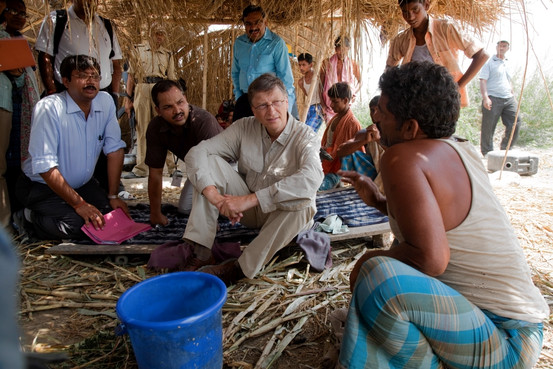
Bill Gates meets with a farmer in the Indian village of Guleria in May 2010 to talk about the country’s polio program. India has now been polio-free for more than two years. Bill & Melinda Gates Foundation

Our foundation began working in India a decade ago, at a time when many feared that the country would become a flashpoint for HIV/AIDS. Since then, we have expanded into other areas, including vaccines, family planning and agricultural development. In all of this work, Melinda and I have seen many examples of India’s poor making dramatic contributions. But nowhere has this power been demonstrated more clearly than in the fight to end polio. Indeed, India’s accomplishment in eradicating polio is the most impressive global health success I’ve ever seen. Read more of this post

he First Step to Being Powerful; Own your story, and you own your life. Talk to yourself as a friend, not an enemy. And remember, you cannot change anything unless you first see your own self as powerful enough to act. The way we talk of ourselves and to ourselves grants power – narrative power — to what happens next.

The First Step to Being Powerful

by Nilofer Merchant  |   9:00 AM November 8, 2013

“I am such a big failure. I can’t believe that I’ve made this mistake and it’s cost me months and months of time.  I might never recover…What an idiot to not see that one coming.” On and on, he went. In distress, my colleague was clearly suffering because of a recent fiasco. Seeking counsel, he had come to me supposedly to problem solve. But all he could focus on was how this incident made him a failure. I got frustrated listening to him. Not at his words, but at how vicious he was being to himself. In the end, my advice was not as cogent and articulate as I had intended — I used a popular vernacular term for bovine droppings — but I stand by it. Read more of this post