The photographs of Erwin Blumenfeld: A self-taught, self-made genius

The photographs of Erwin Blumenfeld: A self-taught, self-made genius

Nov 9th 2013 | PARIS |From the print edition

Strike a pose

20131109_BKP002_0

ERWIN BLUMENFELD arrived in New York in 1941 with a suitcase, little English and no professional training as a photographer. Aged 44 and undaunted, he went on to reinvent both himself and fashion photography. He created over a hundred start-lingly original magazine covers and countless fashion shots for the slick pages of Harper’s Bazaar andVogue. His images mirrored the energy and excitement of Manhattan in the 1940s and 1950s. Read more of this post

What if the world’s icecaps melted overnight?

What if the world’s icecaps melted overnight?

2013-11-08 02:00:50 GMT2013-11-08 10:00:50(Beijing Time)  SINA.com

U142P5029DT20131108095131 U142P5029DT20131108095130

China would be most affected in Asia, with an area home to 600million people being lost to the sea; Much of the USA would be unharmed, but Florida and the Eastern seaboard would all flood. New maps show how the world would change if the polar icecaps completely melted – rising sea levels would flood large parts of Britain, Europe and the US

It sounds like the plot of a Hollywood disaster film – what would happen if the polar icecaps completely melted in one go? But you could also see it as the eventual product of global warming – as levels of carbon build up in the atmosphere, temperatures will one day rise to the point where all ice on Earth has melted. Luckily for the millions of people whose homes would be flooded by this change, scientists estimate that melting all the ice in the Arctic, Antarctica and Greenland would take at least 5,000 years. The total volume of ice on Earth is currently estimated at between 5million and 7.5million cubic miles. Melting all of it would cause the sea level to rise by a minimum of 216 feet (66m). Read more of this post

Secretive art world let German hoarder hide in plain sight

Secretive art world let German hoarder hide in plain sight

10:48am EST

By Alexandra Hudson and Irene Preisinger

BERLIN/MUNICH (Reuters) – On the doorbell of the apartment in Munich’s bohemian Schwabing district is a name once distinguished for architecture and music but infamous since the Nazi era by association with the plundering of art works owned by Jews: Gurlitt. The discovery of hundreds of priceless paintings and drawings within has raised questions about how a man with such a red-flag surname – Cornelius Gurlitt – kept his secret for so long while selling works on the market. Read more of this post

Tash Aw on Malaysia’s Immigrant Dreams Shifting to China; Though he lives in London, Tash Aw has made a name for himself writing about Southeast Asia. The money is representative of something else, whether it’s self-respect or intimacy. Ironically, the more you pursue money, the less likely you are to achieve these things

June 12, 2013, 10:32 AM

Tash Aw on Malaysia’s Immigrant Dreams Shifting to China

By Kristiano Ang

Though he lives in London, Tash Aw has made a name for himself writing about Southeast Asia.The 41-year-old was born in Taiwan and spent most of his childhood in Malaysia. His debut novel, “The Harmony Silk Factory,” told the tale of a Chinese family in 1940s rural Malaya and was long-listed for the 2005 Man Booker Prize. His second novel, “Map of the Invisible World,” revolves about twin brothers who were adopted by families in Indonesia and Malaysia. For his most recent book, “Five Star Billionaire,” Mr. Aw turns his attention to a disparate group of Malaysian migrants—a washed-up pop star, the unwilling scion to a real-estate empire, a radical-turned-businesswoman, a spa manager and a dubious self-help author—seeking to get ahead in Shanghai. He spoke to the Journal about Southeast Asians chasing the Chinese dream, and why being an outsider makes for good literature. Edited excerpts follow. Read more of this post

Lego’s next big challenge: exporting its unshowy culture

Lego’s next big challenge: exporting its unshowy culture

By Leo Mirani @lmirani November 7, 2013

revenue-net-profit_chartbuilder

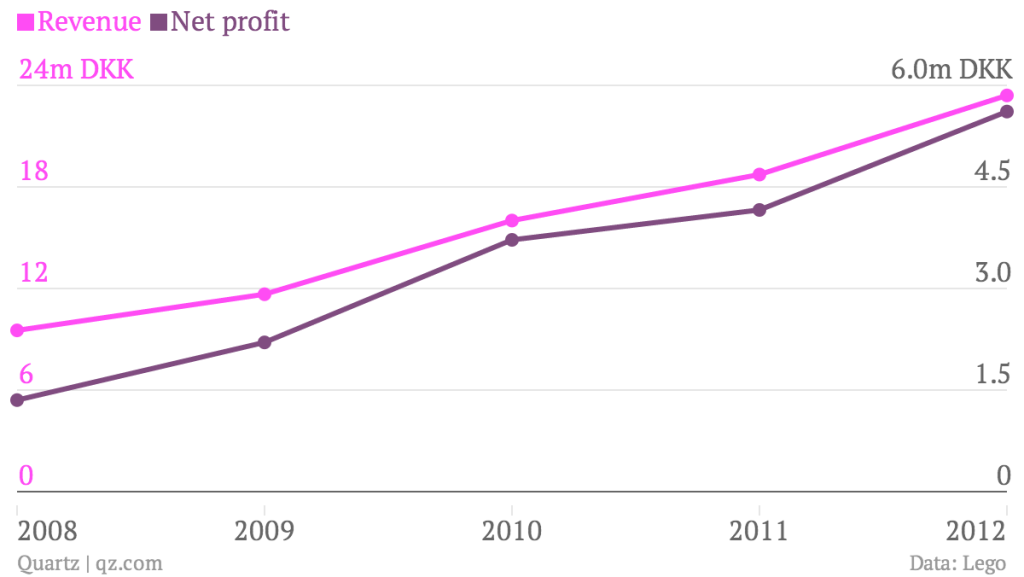
It’s already the second-biggest toy maker in the world, after Mattel. Now Lego wants more. In 2014, it will go from having one global headquarters, in Denmark, to five. The company is expanding its offices in London, Singapore, Shanghai and Enfield, Connecticut to form a network of global hubs. The reason is simple. Lego cannot hope to be a global company from its offices in Billund, says one Lego employee. With a population of just 6,155 and a journey of more than three hours on the train to Copenhagen, Billund is an unlikely base for a world-beating firm. Its claim to fame, apart from Denmark’s second-busiest airport (which really isn’t saying very much), is Legoland. Read more of this post

What can we learn from the Depression?

What can we learn from the Depression?

Nov 8th 2013, 11:40 by C.R. | LONDON

SINCE the start of what some now call the “Great Recession” in 2007, economists have been unable to avoid comparing it with the Depression of the early 1930s. For some, the comparisons are explicit. Economists like Paul Krugman and Barry Eichengreen have drawn parallels between the two slumps. Olivier Blanchard, chief economist of the International Monetary Fund (IMF), warned several times over the last few years that the world risked falling into a new “Great Depression”. Economic historians themselves have had an unprecedented role in policy making during the recent crisis. Ben Bernanke at the Federal Reserve and Obama-administration advisors like Christina Romer all have academic backgrounds in the discipline. Read more of this post

Legacy of Peter Munk, one of Canada’s most important entrepreneurs, hangs on solving Barrick Gold’s problems

Last updated: November 7, 2013 4:51 pm

Peter Munk’s legacy hangs on solving Barrick Gold’s problems

By James Wilson

Peter Munk’s long business career has brought him into plenty of difficulties as well as triumphs – but the Canadian entrepreneur marks his 86th birthday on Friday amid one of his toughest challenges yet. Barrick Gold, the mining group that Mr Munk has steered over three decades and turned into the world’s largest gold miner, is in the throes of one of Canada’s largest capital calls, raising at least $3bn of equity. It comes in the teeth of deep gloom about gold prices after a sharp sell-off this year, and after Barrick decided to suspend work on Pascua-Lama, its flagship new mine, admitting that the ballooning costs of the South American venture made it unviable for the foreseeable future. Barrick made a $5bn writedown on the mine this year. Read more of this post

Sylvester Stallone on Art, Movies and Playing Rocky Again; “There is nothing as gratifying as being one on one with a concept, with your thought and vision.”

Nov 7, 2013

Sylvester Stallone on Art, Movies and Playing Rocky Again

ALEXANDRA CHENEY

BN-AH961_sly13_DV_20131107160725

“Rambo Mind” 2012 by Sylvester Stallone

Sylvester Stallone has appeared in more than 60 films, but he’d give up his acting career if it interfered with his painting. “There is nothing as gratifying as being one on one with a concept, with your thought and vision. Movies are the work of a collective conscious. It takes 500-800 people on a movie to complete a vision. Painting is as close as a person can get to actually capturing the heat of the moment,” the actor told the Journal. For the first time, Stallone’s paintings are being exhibited in Russia in a kind of retrospective exhibition that spans 38 years. He calls Mark Rothko and Jean-Michel Basquiat influences, and has shifted in style from his early works, mostly created with a large palette knife and a spectrum of color, to his more recent canvases, which use more red, white and black, and are decidedly more abstract. The action hero phoned Speakeasy to talk about shifting from painting to sculpture, how his early film roles influenced his paintings, and confirmed to the Journal that he’s once again taking on the character of Rocky Balboa in Ryan Coogler’s “Creed.Read more of this post

Ajit Jain feeds Buffett’s hunger

Jain feeds Buffett’s hunger

Adam McNestrie

ii__1377681573_20-BH-transactions ii__1377681583_20-challenge-of-scale ii__1377681617_21-BH-underwriting-leverage

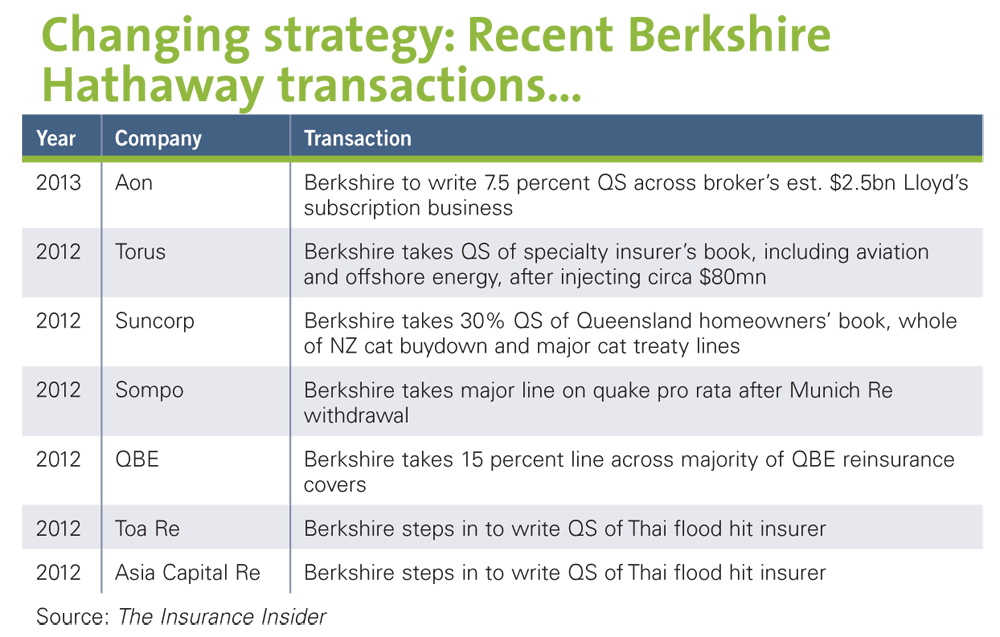
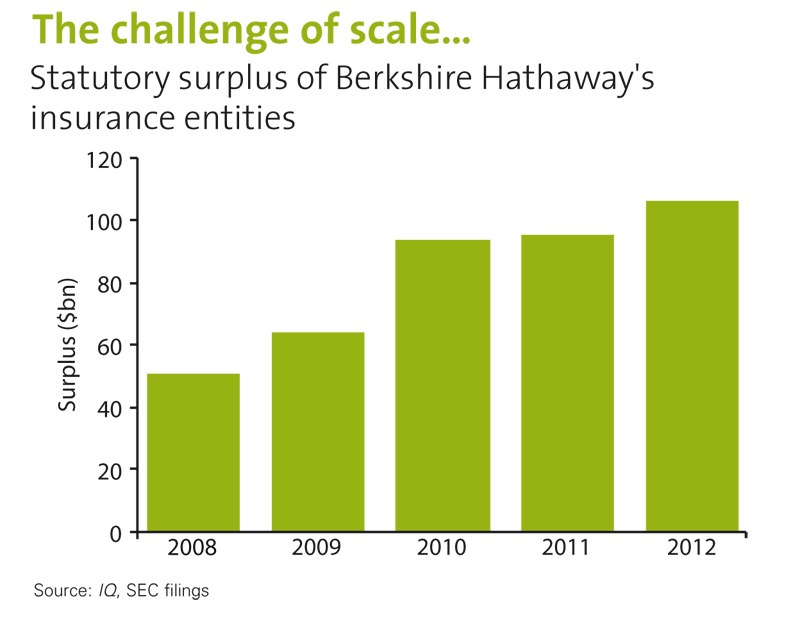
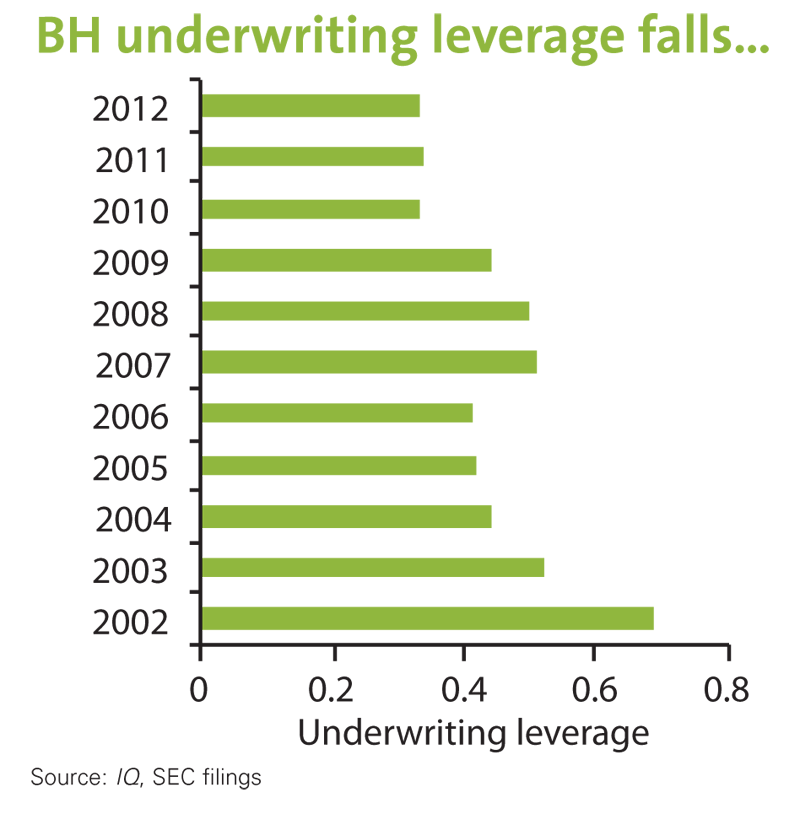
People are starting to worry about him. The changes in diet. The idiosyncratic decisions. The silence. He isn’t quite the man he used to be, isn’t quite himself. Everyone is talking about it: speculating about his motives, glossing his actions, promulgating theories, kvetching about its implications. Which is to say that Ajit Jain, the softly spoken, smiling carnivore par excellence of the reinsurance world has of late taken up omnivorous habits. Where Jain was previously notorious for holding aloof until he scented blood, then attacking ferociously and making off with hefty chunks of red meat in his mouth, the last two years have seen him extend his diet in surprisingly catholic ways. These days, Jain has started eating things that he used to turn his nose up at. He isn’t quite willing to shovel anything down that comes his way, but if it is presented by his chef of choice (Aon) then he’s almost sure to open wide. Read more of this post

‘He had to change’: How Diageo CEO Tim Salt became human and why his business is super-engaged

Fiona Smith Columnist

‘He had to change’: How Diageo CEO Tim Salt became human and why his business is super-engaged

Published 08 November 2013 07:39, Updated 08 November 2013 07:40

92884c34-47ec-11e3-bca4-8651e21e9e85_535208172--236x197_4_0_1762852563--646x363

Diageo chief executive Tim Salt had an ‘ugly way’ of operating during his years at Pepsico but says he has left it behind him. Photo: Michel O’Sullivan

When the managing director of drinks company Diageo says he used to be too competitive, he’s not kidding. In fact, it is the first thing his former boss at Lion Nathan, Gordon Cairns, recalls about Tim Salt. “He was very internally competitive,” says Cairns, a director of Westpac Banking Corporation and Origin Energy, and former CEO of Lion Nathan, where Salt worked in the 1990s. “He also didn’t take feedback very well,” Cairns says, raising his eyebrows for effect. “He had to change or he would never have been successful at Lion Nathan.” When Salt joined the beverage and food company (now known as Lion), he was a young gun who had absorbed the dog-eat-dog culture of Pepsico over six years in the US and Australia. Pepsico is a “very intensely competitive organisation”, says Salt, who had been marketing director of international cola. Read more of this post

Performance Reviews: Why Bother? “The best kind of performance review is no performance review”

Performance Reviews: Why Bother?

By Claire Suddath November 07, 2013

When Peter Gross, an editor in the financial services industry in Virginia, walked into his 2008 yearend performance review, he was feeling pretty good. “I knew I’d get dinged on some nebulous things like ‘initiative’ and ‘enthusiasm,’ ” he says. “But on the measurable stuff, I’d exceeded all my goals.” So he was taken aback when, on a scale from one to five, his manager gave him mostly twos and threes. “I remember there was one thing I was supposed to do 30 times over the course of year, and I’d done it 49 times, but I still only got ‘meets expectations,’ ” he recalls. Every year after that, Gross worried for weeks leading up to his annual review. “I was a mess,” he says. “I’d be up stress-eating until 2:30 in the morning, and of course the actual day was nerve-racking.” Read more of this post

Startups: Misadventures in Spending

Startups: Misadventures in Spending

A Look at Some of the Pitfalls of Allocating Capital

Nov. 6, 2013 3:42 p.m. ET

Raising capital is a challenge for most startups. But those who do so successfully then face the dilemma of figuring out how to best allocate the funds. With the temptations of plush office spaces, perks and high salaries, a startup’s so-called “seed” funds can quickly disappear. Founders have to decide which part of their business would benefit the most from added money. This week on The Accelerators, a Wall Street Journal blog on the challenges of starting and growing a business, a group of experienced entrepreneurs and venture capitalists shared their views on the pitfalls of poorly allocating startup capital. Edited excerpts: Read more of this post

A former television personality who founded a successful cosmetics brand, Yue-sai Kan deploys her sizable homes in Shanghai, Beijing and New York for large-scale entertaining

Yue-sai Kan’s Real-Estate Empire

The former television personality has homes in Shanghai, Beijing and New York

BN-AG952_1105yu_D_20131105174849

‘In Beijing, traffic is a disaster, so central location is a must,’ Ms. Kan says of selecting her three bedroom, 3,983-square-foot, Beijing apartment. She says she’s spent less than 10 nights here since its purchase and renovation.Mick Ryan for The Wall Street Journal

MINA CHOI

Nov. 7, 2013 7:43 p.m. ET

Owning multiple homes across several continents might be a challenge for many. Yue-sai Kan sees it as a necessity. Known in China as a bridge between the East and the West, Ms. Kan is a former television personality and a businesswoman who founded Yue-sai Cosmetics in China, now part of L’Oréal. As the owner of the Miss Universe China franchise, a popular contest, Ms. Kan is often in the spotlight, and she entertains her guests and friends frequently at home—whether it’s the one in Shanghai, Beijing or New York. She also has an apartment on Copacabana beach in Rio; one in Brisbane, Australia; one in Changsha, the capital of Hunan Province, and one she co-owns with her sister in Rome, near the Spanish Steps. Read more of this post

Chinese joke of the day: A young man went to seek for advice from a Zen master, complaining that he was rich but unhappy

Updated: Friday November 8, 2013 MYT 6:50:53 AM

Let’s phrase it, we all want riches

BY THO XIN YI

A new phrase which pokes fun at the Beverly Hillbillies of China has gone viral, but many actually yearn to befriend the wealthy.

THE Chinese Netizens are a creative lot. This is proven through a variety of Internet catchphrases and expressions that dominate the social media every now and then. When a new phrase is introduced, it goes viral overnight, and people would start using it to relate to their everyday experiences. The memes could have been inspired by a conversation in the television drama series, a quote in a news story, a line from a song or could be simply made up. Entertainment aside, the catchphrases are often used to poke fun at the current affairs in China. The latest phrase is tuhaoTu denotes earth or uncouth and hao means grandeur. The term tuhao can be interpreted as the “nouveau riche” or Beverly Hillbillies of China. Generally, it is used within a sarcastic context to describe the new rich people who are wealthy but lack sophisticated style. According to Baidu, the Chinese equivalent of Wikipedia, tuhao is not a new word. It has appeared in texts which date back to the Song and Qing Dynasties and used to describe the rich and the powerful or landlords who exploit the poor.

Tuhao recently became famous through a joke on the Internet: A young man went to seek for advice from a Zen master, complaining that he was rich but unhappy. The Zen master asked, “How do you define rich?” The man replied, “I have an eight-figure bank savings and three apartments in Wudaokou (a place in Beijing). Am I wealthy?” The master then extended his hand without uttering a word, and this gesture was interpreted by the young man as advice to be grateful and give back for what he has gained. But the master explained, “No, tuhao, let’s be friends.”

His response implies that even a Zen master, who is supposed to live a simple, non-materialistic life, is eager to be associated with the rich. The joke explains a social phenomenon in China, where people yearn to befriend the rich in the hope of benefiting from the relationship, even though they might secretly despise them out of jealousy. Read more of this post


Portfolios With Purpose: Stock Picking for a Cause

Nov 5, 2013

Portfolios With Purpose: Stock Picking for a Cause

STEVEN RUSSOLILLO

Stacey Asher has taken the art of stock-picking to a philanthropic level, with several of Wall Street’s heavy hitters backing her cause. Ms. Asher is founder and CEO of Portfolios With Purpose, a non-profit organization that runs an annual stock-picking competition where investors aim to raise money for their charities of choice. The contest has attracted hedge-fund titans such as David Einhorn, Leon Cooperman and Dan Loeb in past years as well as hundreds of so-called mom-and-pop investors. It raised $198,700 this year. Now, Ms. Asher has her sights set on doubling that amount for the 2014 competition. Participants must register and provide their picks by Dec. 31 to be eligible for next year’s competition. Read more of this post

Singapore Prime Minister’s Office Website Hacked After Lee Warns

Singapore Prime Minister’s Office Website Hacked After Lee Warns

Singapore authorities are investigating a breach of Prime Minister Lee Hsien Loong’s website last night, one day after he said he would track down a group that announced plans to hack government online portals. The page for searches on the website of the Prime Minister’s Office was “compromised” at 11:17 p.m. yesterday, the country’s phone and Internet regulator said in an e-mailed statement today. Read more of this post

Chaos is everywhere—here’s how to accept it

Chaos is everywhere—here’s how to accept it

By Vickie Elmer 5 hours ago

Count on chaos to wear you down until you make it your ally—or at least a comfortable companion in your work and life. That’s the message from Bob Miglani, author of the new book Embrace the Chaos, which is subtitled “How India Taught Me to Stop Overthinking and Start Living.” Miglani, who has worked at Pfizer for 20 years, has plenty of experience with chaos, much of it from trips back to India for business or to see family. Often, he was left feeling stressed by the country’s chaos, noise, poverty, and crowded streets as well as his own expectations. Yet major changes and frequent uncertainty show up in almost every corner of the world, including most offices. Read more of this post

Why Is Resilience So Hard?

Why Is Resilience So Hard?

by Steven Snyder  |   12:00 PM November 6, 2013

Resilience has long been touted as an essential capability for bouncing back from leadership setbacks. Earlier this year, Rosabeth Moss Kanter advanced the conversation with an excellent article on the topic. Yet despite the overwhelming consensus and supporting evidence that resilience is vital for success in today’s business environment, the truth remains: resilience is hard. It requires the courage to confront painful realities, the faith that there will be a solution when one isn’t immediately evident, and the tenacity to carry on despite a nagging gut feeling that the situation is hopeless. In an attempt to better understand the struggle-recover process in writing my book, Leadership and the Art of Struggle, I spoke with extraordinary leaders across sectors and industries, all of whom had faced an array of challenges, setbacks, and adversity. As I listened to their stories, I began to realize why so many executives struggle with resilience. Each of the leaders I interviewed has been thrown off balance, in one way or another, by his or her ordeal. This state of imbalance manifested in a variety of ways. Some experienced anger and even rage, projecting the blame outward. Others became depressed and filled with self-doubt. Still others suffered physical symptoms, like a disruption in sleep patterns. One female executive told me: “My hair started falling out. I didn’t realize it was stress. All I knew was I could see my scalp in the mirror when I brushed my teeth.” If left unchecked, this condition of imbalance can undermine a leader’s functioning at a crucial time, making a bad situation even worse, and all but eliminating the ability to act with resilience. Anger can turn into vengeful behavior further compounding the problem by destroying relationships critical for success. Self-doubt can inhibit the proactive behaviors necessary for renewal, recovery, and advance. This risk is compounded if the leader is not aware that he or she is out of balance, as is often the case. Read more of this post

How Ethical Bean Coffee is using technology to be even more ethical

How Ethical Bean is using technology to be even more ethical

Armina Ligaya | 04/11/13 | Last Updated: 01/11/13 8:52 AM ET

1101bean

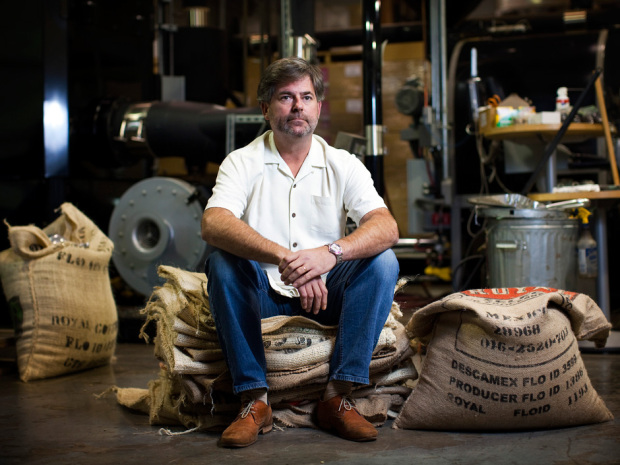
Lloyd Bernhardt, co-founder and chief executive of Vancouver-based Ethical Bean Coffee, says his company, now in its 10th year, is branching out. After establishing a loyal customer base on Canada’s West Coast, the organic, fair trade coffee roaster is setting its sights eastward, as well as south of the border, Mr. Bernhardt says. But it is also looking to technology — his first professional passion, before coffee — to connect its customers with the far-flung, hard-working farmers who grow the beans in places such as Nicaragua and Ethiopia. Mr. Bernhardt spoke with Armina Ligayaabout how Ethical Bean coffee is exploring new markets, with the help of scannable QR codes and mobile phone apps. The following is an edited version of their interview. Read more of this post

Australia’s surfing capital may soon teem with tiny, lethal jellyfish, thanks to warming seas

Australia’s surfing capital may soon teem with tiny, lethal jellyfish, thanks to warming seas

By Gwynn Guilford @sinoceros 6 hours ago

screen-shot-2013-11-05-at-2-40-44-pm screen-shot-2013-11-05-at-2-06-01-pm

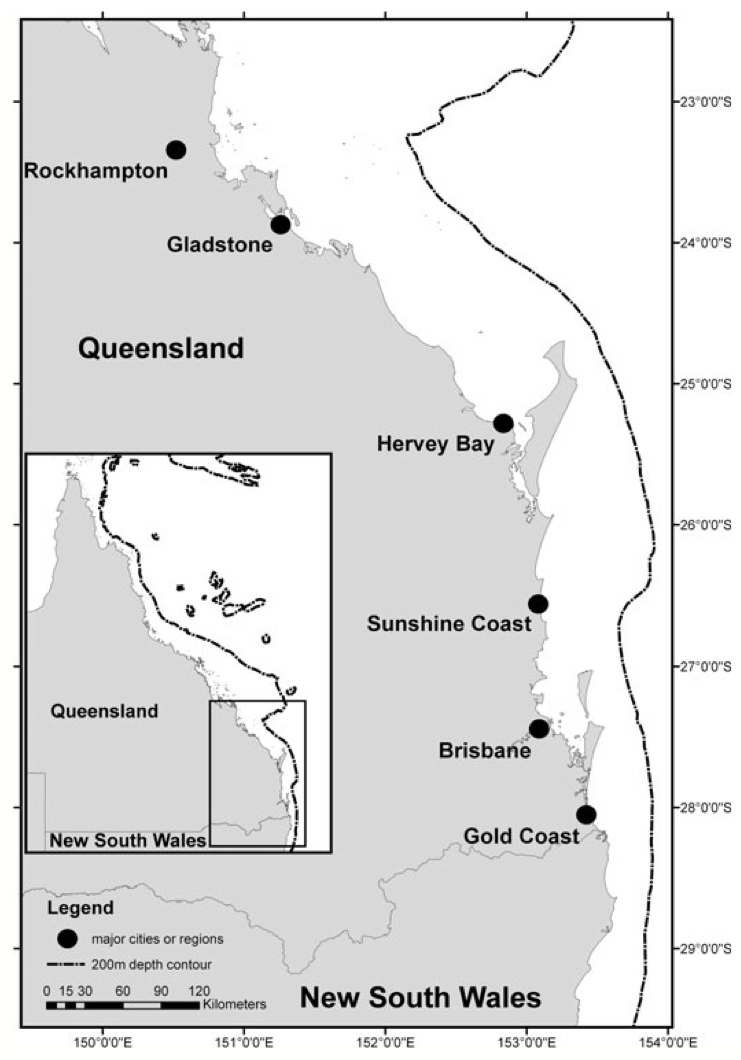
Of all the creatures in the world, the Irukandji is among the most fearsome. It’s about as easy to spot as a floating sliver of cellophane. But a mere human brush with these tiny creatures causes hearts to fail and blows out blood vessels in the brain. Even those that survive are racked with suffering so extreme that it’s been given its own name (“Irukandji syndrome”). Fortunately for most, these little guys don’t travel outside a shred of the ocean in northern Australia. Read more of this post

Japan’s Glico pits its popular Pocky against Lotte’s Pepero; Nov. 11 is now considered Pepero day in Korea, on which people exchange the popular snack to show good will or romantic intentions

Glico finds partner for Korean market

Japanese company pits its popular Pocky against Lotte’s Pepero

By PARK TAE-HEE [ojlee82@joongang.co.kr]

Nov 07,2013

download (28)

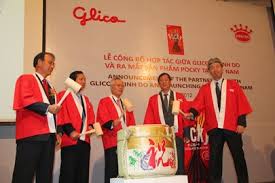
OSAKA, Japan – In the heart of Osaka, Dotonbori Street can be compared to New York City’s Times Square. One of its main landmarks is a 25-meter (82-foot) electronic display showing a runner coming across the finish line with his arms outstretched. Glico Man, as he is known, has been celebrating his victory in the same spot for nearly eight decades. Glico Man is the symbol of one of Japan’s most famous confectionery companies, which now has big plans to expand its presence in neighboring Korea. In an interview with the JoongAng Ilbo at the company’s headquarters in Osaka late last month, Glico CEO Katsuhisa Ezaki admitted it has taken a long time for the Japanese confectionery company to land in the Korean market despite its geographical closeness.  Read more of this post

Hezi Leibovich: Life is short, so focus and pull the right levers

Hezi Leibovich Contributor

Hezi Leibovich: Life is short, so focus and pull the right levers

Published 05 November 2013 09:50, Updated 07 November 2013 07:53

We’re on Earth for a very short time and there’s so much to achieve both personally and professionally. Since time is limited and the resources we have to accomplish these achievements are also limited, You need to ask yourself who and what deserves your precious time and resources. It’s important to focus on the people and things that matter and learn to remove the distractions in your life, the time-wasters and things that create noise and stress and add little value to your goals.

Bullseye versus scattergun

A scattergun approach, trying to be all things to all people, only makes you look like a bad shot. For all that effort, you may only get one or two hits and that cost of those hits is high compared to a bullseye approach where you set your sights on a target. Read more of this post

The Four “Cs” of Innovation: cost, convenience, caliber, and creative destruction

NOV 6, 2013

The Four “Cs” of Innovation

Sami Mahroum is Academic Director of Innovation and Policy at INSEAD.

PARIS – Innovation is now widely acknowledged to be a prerequisite for sustainable economic growth. Whether the changes are profoundly disruptive, or merely provide incremental improvements in products, services, or business models, the results boost an economy’s long-run productivity. And innovation is necessary not only for developed economies, but also for emerging markets, which are receiving diminishing returns from simply transposing advanced economies’ best practices. But, while every country needs to innovate, the tried and tested approaches do not work for all markets. Read more of this post

Everything You Think You Know About Thomas Edison Might Be Wrong

Everything You Think You Know About Thomas Edison Might Be Wrong

ALISON GRISWOLD NOV. 6, 2013, 12:53 PM 13,674 8

Thomas Edison did not try 10,000 times before inventing the light bulb, nor did he labor in a dusty workshop by himself. That’s according to David Burkus, author of “The Myths of Creativity,” who says America’s favorite innovation story may have been the result of a tremendous publicity push. In his book, Burkus debunks the popular tale of Edison and what he calls the “lone creator myth.” His claim? That we love the story of the solo-genius, the starving artist, the one brilliant man against the world — even if it’s not always true. Read more of this post

Outsource Your Way to Success: Want to get ahead in life? Pay others to do the boring stuff

November 5, 2013

Outsource Your Way to Success

By CATHERINE RAMPELL

Jon Steinsson and Emi Nakamura do not have enough time to do everything they need to do. They’re recently tenured, highly productive rising stars at Columbia University, as well as parents to an infant. But they have a secret weapon helping them prioritize: Econ 101. One of the oldest, if not entirely intuitive, principles in economics is comparative advantage, developed by the British economist David Ricardo in the early 19th century. As introductory econ students all learn, it explains why countries and companies ought to outsource the production of lower-value goods and services, even if they can produce them more efficiently themselves. Read more of this post

Gerald Ratner – the rise and fall of a rough diamond

November 1, 2013 7:19 pm

Gerald Ratner – the rise and fall of a rough diamond

By Natalie Graham

Gerald Ratner, 63, created a jewellery empire in the 1980s, with 1,500 stores in the UK and 1,000 in the US. Beside Ratners, The Ratners Group consisted of H Samuel, Ernest Jones, and Watches of Switzerland. The entrepreneur is best known for making aspeech at the Institute of Directors in 1991 in which he described one of his products as “total crap”. The remark cost him his business and his job. Before his exit at 43 the company was making profits of £125m a year. Today, he runs the web-based jewellery retail business geraldonline.com and is an after-dinner speaker. Read more of this post

15 Inspirational Books For Entrepreneurs

15 Inspirational Books For Entrepreneurs

NOV. 6, 2013, 5:38 PM 2,049

Every once in a while, you read a book that changes you — inspiring your career, clarifying your goals, challenging your thinking. The right book can give you the courage to start your business, the reality check that you’re not yet ready or the quiet affirmation that you’re not alone in your fears or ambitions. It can set you on your path to success. We asked our expert contributors to name the one book that most influenced and inspired their careers. Their responses ran the gamut from fiction to history to business to self-help books. Here’s a sampling of 15 of our experts on the books that most inspired them and why. Read more of this post

Here’s Why Only Children Are More Successful

Here’s Why Only Children Are More Successful

JENNA GOUDREAU NOV. 6, 2013, 11:32 AM 3,301 2

First-born children perform better in school, have higher IQs, and are more likely seen as high-achieving by their parents, according to a recent study. As the theories go, earlier-born children may be more successful because they get better genes, more parental attention, and more careful parenting. As someone who has no siblings myself, I couldn’t help but wonder: Are “only” children, who are by definition first-born and receive all parental attention, the highest achievers?  Read more of this post

The Rise and Rise of Yo-Yo Ma

The Rise and Rise of Yo-Yo Ma

11-06 15:53 Caijing

The world’s greatest cellist connects musical traditions from around the world

He has won 16 Grammy Awards,performed for puppets and presidents,and has worked with Bobby McFerrin and the Kalahari Bushmen. He has recorded bluegrass and Baroque, twinned Bach and Kabuki dancing, and saluted Brazil. If it can be done, Yo Yo Ma has done it – and with nothing left to prove, all he can do is break new ground.This month, the living legend comes to Beijing to premiere composer Zhao Lin’s Double Concerto for Cello and Sheng. Another first. Read more of this post

Rich list investing: The top Aussie small cap stocks of the Rich 200

Andrew Heathcote Rich Lists editor

Rich list investing: The top small cap stocks of the Rich 200

Published 06 November 2013 12:19, Updated 07 November 2013 07:53

The BRW Rich 200 are proven stock pickers and many of them have achieved strong gains from small-cap stocks over the past 12 months. In an attempt to provide further insight into the investment preferences of the country’s richest people, BRW has compiled a list of the best-performing small caps buried deep within the Rich 200’s investment portfolios. However, investors should beware before following their lead. The ultra-wealthy buy shares in small companies for many reasons. They may be helping out a friend, trying to learn about a new industry or simply taking a punt with some loose change. Only ASX-listed companies with a market capitalisation of $300 million or less were considered for this list. Many of the companies below have had tumultuous pasts but all are well placed to offer further growth opportunities. Read more of this post