Singapore’s Popular Bookshop blasted for “corrupting minors” and using gimmicks to attract customers after it used posters featuring topless models as part of a campaign to promote reading at its Nanjing bookstore

Nanjing bookstore attacked for ‘naked reading’ campaign

Staff Reporter

2013-10-26

nakedl1-090714_copy1nakedl2-090557_copy1

A nude model searches for a book on a high shelf in this promotional poster for the store. (Photo/CFP) A large cardboard cut-out at the Nanjing store. (Photo/CFP)

A bookstore in Nanjing, capital of eastern China’s Jiangsu province, has been accused of poor taste after it used posters featuring topless models as part of a campaign to promote reading, reports the state-run China News Service. The posters showed topless models standing in front of bookshelves or sitting on chairs reading with their chests strategically obscured by books. The store, a branch of Singapore-based Popular Holdings, was blasted for “corrupting minors” and using gimmicks to attract customers. The store said the posters were part of a campaign that the company was holding in both Nanjing and Shanghai entitled “Reading naked brings your soul closer to books” which aims to show that reading can take different forms. People should strip off all the ornamentation of daily life in order to read. “There is no limitations to reading, it penetrates into every area of life,” the company said. Read more of this post
Je regrette: Our forward-charging culture sees regret as a sign of weakness and failure. But how else can we learn from our past?

Je regrette: Our forward-charging culture sees regret as a sign of weakness and failure. But how else can we learn from our past?

by Carina Chocano 2,700 words

Carina Chocano is a freelance writer whose work has appeared in The New Yorker, The New York Times Magazine and Wired, among others. She is the author of Do You Love Me or Am I Just Paranoid? (2003).

I regret everything. Decades-old decisions, things I said, things I didn’t say, opportunities I missed, opportunities I took, recent purchases, non-purchases, returns. I turn all of these things over in my mind and examine them for clues — to what, I’m not sure. All I know is that very little of what I do or fail to do escapes the constant churn of revision. It’s just the way I process experience: sceptically, and in retrospect. It’s like being a time-traveller, only instead of going back to Ancient Rome or the French Revolution, I return again and again to the traumatic sites of my own fateful (or not so fateful) forks in the road. Some people see this as self‑flagellation; I tend to think of it as a lifelong effort to reconcile the possible with the actual — a getting to know the real me. After all, as they say, we’re defined by our choices. Read more of this post

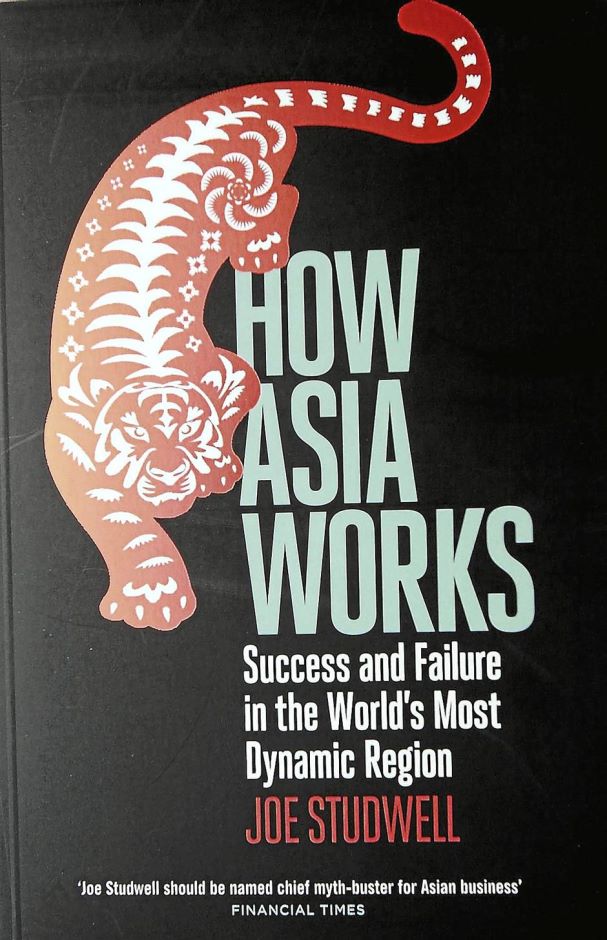
How Asia Works: Success and Failure in the World’s Most Dynamic Region

Updated: Saturday October 26, 2013 MYT 8:41:49 AM

Study on what drives Asian business

BY THEAN LEE CHENG

How Asia Works: Success and Failure in the World’s Most Dynamic Region
Author: Joe Studwell
Publisher: Profile Books Ltd

bizw_261013_kb_pg24b

JOE Studwell, author of How Asia Works: Success and Failures in the World’s Most Dynamic Region, does not mince his words. He analyses the Malaysian auto sector and draws comparison with South Korea’s international success in the car manufacturing sector. Studwell says although Perodua was set up subsequently after Malaysia’s first car project, Proton, which took off in the 1980s, Perodua was tasked with producing cars with smaller engine capacity. This means that Proton, which was producing cars with higher engine capacity, had no competition as both had their respective markets. Read more of this post

Abbott Lab chairman and CEO Miles White: The Reinvention Imperative

The Reinvention Imperative

by Miles D. White

“Failure isn’t fatal, but failure to change might be.” Those are the words of John Wooden, the legendary UCLA basketball coach, who won 10 NCAA national championships in just 12 seasons because of his ability to constantly adapt—to new players, new rivals, and new styles of play. In business, too, leaders are continually faced with complex changes: an aging population, the growth of the middle class in emerging economies, constant technological advancement. In a shifting environment, consistent business performance is not enough to perpetuate itself. To keep their organizations relevant, CEOs and other leaders must heed the reinvention imperative. Read more of this post

Dismantling the Sales Machine

Dismantling the Sales Machine

by Brent Adamson, Matthew Dixon, and Nicholas Toman

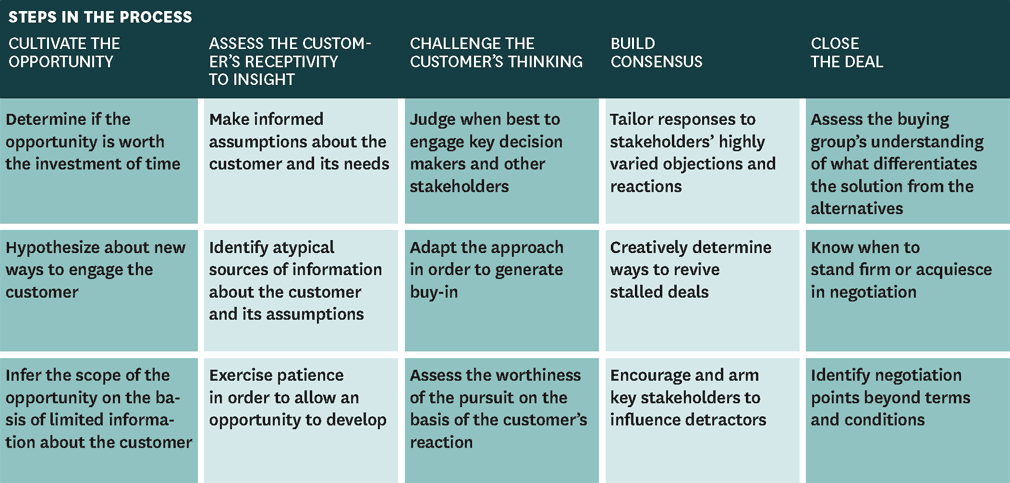
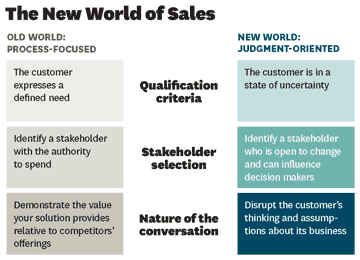
R1311H_A R1311H_B R1311H_C_LG

Sales leaders have long fixated on process discipline. They have created opportunity scorecards, qualification criteria, and activity metrics—all part of a formal sales process designed to help their team members replicate the approaches of star performers. This is the world of the sales machine, built to outsell less focused, less disciplined competitors through brute efficiency and world-class tools and training. Read more of this post

Eugene Fama, King of Predictable Markets

October 26, 2013

Eugene Fama, King of Predictable Markets

By JEFF SOMMER

Eugene F. Fama, 74, is one of the winners of this year’s Nobel Memorial Prize in Economic Science, along with Lars Peter Hansen, a fellow professor at the University of Chicago, and Robert J. Shiller, a professor at Yale. Often known as the father of the efficient-markets theory, Professor Fama, a former student of Milton Friedman, the University of Chicago Nobel laureate, is a careful empiricist and a genial, open conversationalist. But some of his opinions have set off controversies. He has come under criticism from Professor Shiller, for example, for minimizing the role of investor psychology and emotion in financial markets. And while Professor Fama doesn’t involve himself directly in politics, saying his “extreme libertarian” views are of no general interest, he isn’t reticent when asked about them. I interviewed Professor Shiller, a frequent contributor to Sunday Business, for an article last week. And on Tuesday, I talked by phone with Professor Fama for more than an hour. Here is an edited, condensed version of that conversation.  Read more of this post

How to raise a criminal successfully

How to raise a criminal successfully

BUSINESS MATTERS (Beyond the bottom line) By Francis J. Kong (The Philippine Star) | Updated October 27, 2013 – 12:00am

I give parenting seminars all over the country. I’ve been invited to give parenting seminars in other countries as well. I address faculty members, parents and students without charging fees or requiring an honorarium; it’s my ministry. Whenever I have them as my audience, I get inspired and fulfilled. And when I’m inspired, I do corporate trainings better. Thus, it’s an “all-win” situation. Read more of this post

In Yogyakarta, a Woman Sultan?

In Yogyakarta, a Woman Sultan?

By Johannes Nugroho on 12:53 pm October 25, 2013.

kirab-wedding-royal-boy_preview-1024x710

Javanese royal couple Gusti Kanjeng Ratu Hayu (L) and Kanjeng Pangeran Haryo Notonegoro (R) wave to the crowd during their wedding ceremony parade as part of the Royal Wedding in Yogyakarta, Indonesia, on Oct. 23, 2013. (JG Photo/Boy T Harjanto)

The wedding of Princess Gusti Kanjeng Ratu Hayu, fourth daughter of Yogyakarta’s monarch Hamengkubuwono X, has evidently captivated the imagination of many Indonesians as the royal event is widely broadcast in the media. And owing to the intense media interest, it is by far the most celebrated of Indonesian royal weddings to date. The figure of Princess Hayu herself has also raised questions about the changing role and status of women in Javanese royal courts.The image of the princes being lifted by her husband and uncle during the Pondhongan ceremony was one of the highlights of the royal wedding. The ceremony, according to sources within the Yogyakarta Palace, was meant to emphasize the “elevated” status of women in the Javanese tradition. The fact that the US-educated Princess Hayu is a modern, independent woman is further testimony that the formerly rigid royal protocols concerning women have been chipped away by changes. Read more of this post

Gang Rape in India, Routine and Invisible

October 26, 2013

Gang Rape in India, Routine and Invisible

By ELLEN BARRY and MANSI CHOKSI

MUMBAI, India — At 5:30 p.m. on that Thursday, four young men were playing cards, as usual, when Mohammed Kasim Sheikh’s cellphone rang and he announced that it was time to go hunting. Prey had been spotted, he told a friend. When the host asked what they were going to hunt, he said, “A beautiful deer.” s two men rushed out, the host smirked, figuring they did not like losing at cards. Two hours later, a 22-year-old photojournalist limped out of a ruined building. She had been raped repeatedly by five men, asked by one to re-enact pornographic acts displayed on a cellphone. After she left, the men dispersed to their wives or mothers, if they had them; it was dinnertime. None of their previous victims had gone to the police. Why should this one? Read more of this post

Finding out whether your broker has a conflict of interest can make the difference between a successful investment and a disastrous one

Oct 25, 2013

Pros and Conflicts: Whose Side Is Your Broker On?

JASON ZWEIG

Finding out whether your broker has a conflict of interest can make the difference between a successful investment and a disastrous one. A new report by securities regulators suggests how brokerage firms can mitigate their many conflicts. At the same time, the report’s findings could make one of the most important and difficult tasks for investors—knowing your broker—a little easier. Earlier this month, the Financial Industry Regulatory Authority, which oversees how brokers sell investments, released a 44-page study on conflicts of interest in the securities industry. Read more of this post

Are Smartphones Turning Us Into Bad Samaritans? Busy with our tablets and smartphones in public places, we may be losing our sense of duty to others

Are Smartphones Turning Us Into Bad Samaritans?

Busy with our tablets and smartphones in public places, we may be losing our sense of duty to others

CHRISTINE ROSEN

Oct. 25, 2013 8:55 p.m. ET

We can’t afford to be so preoccupied with our gadgets when we’re in public spaces, says writer Christine Rosen in a conversation with WSJ’s Gary Rosen. In late September, on a crowded commuter train in San Francisco, a man shot and killed 20-year-old student Justin Valdez. As security footage shows, before the gunman fired, he waved around his .45 caliber pistol and at one point even pointed it across the aisle. Yet no one on the crowded train noticed because they were so focused on their smartphones and tablets. “These weren’t concealed movements—the gun is very clear,” District Attorney George Gascon later told the Associated Press. “These people are in very close proximity with him, and nobody sees this. They’re just so engrossed, texting and reading and whatnot. They’re completely oblivious of their surroundings.” Read more of this post

Thanks to pioneering work of researcher-clinicians like Eugene Braunwald, heart attacks are no longer ‘bolts from the blue.’

Book Review: ‘Eugene Braunwald and the Rise of Modern Medicine’ by Thomas H. Lee

Thanks to pioneering work of researcher-clinicians like Eugene Braunwald, heart attacks are no longer ‘bolts from the blue.’

ABRAHAM VERGHESE

Oct. 25, 2013 3:53 p.m. ET

BN-AD561_bkrvbr_G_20131025100502

When I was a medical student in Africa, “Harrison’s Principles of Internal Medicine” was my bible. A multi-authored text, it was wildly popular all over the world. To us readers, the editors of “Harrison’s,” with their exotic titles (“Hersey Professor of the Theory and Practice of Physic,” for example), were like rock stars. “Harrison’s” separated itself from other textbooks of its day by the weight it gave to basic science and to the understanding of fundamental biological mechanisms, which the editors believed was key to understanding disease. Eugene Braunwald’s name was familiar to so many of us, not just because he was an editor of “Harrison’s” but also because many of the advances in cardiology described in the book came directly from his own research. Read more of this post

Scientists Turn Mind-Readers, More or Less; Working with epileptics, researchers at Stanford University managed to pinpoint certain brain activity as it was happening in real-life situations

Can’t Get You Out of My Mind

DANIEL AKST

Oct. 25, 2013 9:25 p.m. ET

At last, scientists have found a way to read people’s minds. Well, sort of. True mind-reading remains a long way off, especially in a real-world setting. But now, in a situation approaching normal life, scientists have correlated activity in a small part of the brain so closely with certain types of thinking that these thoughts can be spotted just by looking at the record of brain activity. Stanford University researchers managed this by recruiting three patients who were being evaluated for surgical treatment of epilepsy, and whose skulls had therefore been opened so that electrodes could be attached to the exposed surface of their brains for up to a week. The patients, who weren’t in pain, could talk with visitors, eat, watch TV and do other things approximating everyday life—in contrast with typical experimental conditions, in which a volunteer’s brain activity might be measured inside a magnetic resonance imaging tube. Read more of this post

How a millionaire became a billionaire by mass-marketing banality as ‘premium wine.’

Book Review: ‘A Man and His Mountain’ by Edward Humes

How a millionaire became a billionaire by mass-marketing banality as ‘premium wine.’

ROBERT DRAPER

Oct. 25, 2013 3:12 p.m. ET

RV-AL856_BKRV_j_D_20131025095842

Shortly after finishing “A Man and His Mountain,” Edward Humes’s biography of Kendall-Jackson winery founder Jess Stonestreet Jackson, I went to my local grocery store and, for $12.99, purchased a bottle of the winery’s signature product, the Vintner’s Reserve Chardonnay. It had been years since I’d had a glass of it. But the taste remains unforgettable: oaky and cloying, redolent of budget-hotel bars, a kind of polyester wine. This is the style of Chardonnay that Jackson stamped into the American palate three decades ago. Read more of this post

Lunch with the FT: Muhammad Yunus; The Nobel Peace Prize-winner and economist drinks a glass of $8 still water and talks about microcredit

October 25, 2013 5:44 pm

Lunch with the FT: Muhammad Yunus

By Martin Dickson

The Nobel Peace Prize-winner and economist drinks a glass of water and talks about microcredit

This is awkward: I am about to sit down to lunch with a man who has just told me he does not want to eat anything with me. Nothing personal, you understand. It is just that Muhammad Yunus, the Nobel Peace Prize-winning Bangladeshi economist famed for starting the global microcredit movement, has already eaten when he arrives for Lunch with the FT, an interview whose essential feature over its 20-year history has been the sharing of a meal. Read more of this post

How a poisonous toad became a Parisian fashion accessory; toad skins have become a much-prized luxury fashion material

How a poisonous toad became a Parisian fashion accessory

By Agence France-Presse
Tuesday, October 22, 2013 0:37 EDT

Polish-designer-Monika-Jarosz-poses-with-products-made-with-Australian-cane-toads-on-Oct.-9-2013-in-Paris.-AFP

Once upon a time a poisonous cane toad lived in the South Sea Islands, unloved and unwanted. Condemned as an ecological disaster, the Australian army was even deployed to get rid of it. Then one day a Polish fairy waved her wand and the plain old cane toad turned into a precious fashion accessory. That’s the story of Polish designer Monika Jarosz’s luxury Kobja brand inspired by the fairytale idea of the “toad that transforms itself into Prince Charming”. Introduced from South America decades ago to control the native cane beetle, the cane toad may have outstayed its welcome in the South Sea Islands, but today their skins have become a much-prized luxury fashion material. Read more of this post

Tiberius Used Quantitative Easing To Solve The Financial Crisis Of 33 AD

Tiberius Used Quantitative Easing To Solve The Financial Crisis Of 33 AD

BRYAN TAYLORGLOBAL FINANCIAL DATA OCT. 26, 2013, 7:10 AM 1,774 4

Although many people have hailed Ben Bernanke’s response to the current financial crisis for going outside of the box and using unorthodox policies to avoid a financial collapse, in reality, similar policies were used by Tiberius during the Financial Crisis of 33 AD, almost 2000 years ago. Tiberius ruled the Roman Empire from 14 AD to 37 AD.  He was frugal in his expenditures, and consequently, he never raised taxes during his reign. When Cappadocia became a province, Tiberius was even able to lower Roman taxes. His frugality also allowed him to be liberal in helping the provinces when, for example, a massive earthquake destroyed many of the famous cities of Asia, or when a financial panic struck the Roman Empire in 33 AD. Read more of this post

The Indian Motorcycle Returns in All Its Glory; The classic motorcycle, with troubled financial past, is back and it looks wonderful

The Indian Motorcycle Returns in All Its Glory

The classic motorcycle, with troubled financial past, is back and it looks wonderful

DAN NEIL

Updated Oct. 25, 2013 6:13 p.m. ET

OD-AZ382A_INDIA_G_20131024135814

2014 Indian Chief Dan Neil/The Wall Street Journal

WOULD YOU LIKE to hear some good news? After decades of sordid mismanagement and cyclical bankruptcy, the great Indian Motorcycle brand has been reborn in the American heartland (Spirit Lake, Iowa) with alluring retro-modern cruisers powered by beautiful/vulgar 111-inch V-twin engines. Imagine the velvety crumple and flap coming from the streamlined Deco exhaust pipes, the chirr of pushrod tappets ricocheting off canyon walls, the snapping pennants at full throttle. Get a load of this thing coming around a corner. You got a permit for this event? Read more of this post

Amazon’s Jeff Bezos Explains Why We Love Some Companies And Fear Others

Amazon’s Jeff Bezos Explains Why We Love Some Companies And Fear Others

MAX NISEN OCT. 24, 2013, 3:33 PM 1,953 1

Amazon has grown rapidly from e-commerce pioneer and bookseller to a behemoth that sells just about anything you can think of. And considering Amazon Web Services, which helps run everything from Netflix to DropBox, there are more services than most people would imagine. According to Brad Stone’s new book “The Everything Store,”  that omnipresence made its CEO Jeff Bezos wonder how Amazon could avoid becoming one of those companies that people hate for its size and power. The company had already been criticized for how it pays sales tax, eBook pricing, certain acquisitions, and ill-thought out marketing efforts, like an aggressive price comparison app. He wanted to know how the company could be “loved, not feared.” Bezos wrote a memo called “Amazon.love,” which Stone was able to obtain, that he distributed to his “S-team” of top executives. In it, he highlighted the fact that some multibillion-dollar companies have managed to remain beloved, or at least thought of as “cool” by customers. Think Apple, Whole Foods, Costco, Nike, and Google. Others get piled on, rather than defended, if things go badly. Think Microsoft, Goldman Sachs, ExxonMobil, and Wal-Mart. Both sets of companies do very well. But the core of Amazon’s ethos and culture is that the customer always comes first. Because the customer loses trust if they fear that you’re out to take advantage of them, Amazon’s sheer size makes that a worry. Bezos laid out the core differences between the two types of businesses in the memo. It’s a playbook for any business that aspires to be loved, instead of feared. Via “The Everything Store”:

  • Rudeness is not cool.
  • Defeating tiny guys is not cool.
  • Close-following is not cool.
  • Young is cool.
  • Risk taking is cool.
  • Winning is cool.
  • Polite is cool.
  • Defeating bigger, unsympathetic guys is cool.
  • Inventing is cool.
  • Explorers are cool.
  • Conquerors are not cool.
  • Obsessing over competitors is not cool.
  • Empowering others is cool.
  • Capturing all the value only for the company is not cool.
  • Leadership is cool.
  • Conviction is cool.
  • Straightforwardness is cool.
  • Pandering to the crowd is not cool.
  • Hypocrisy is not cool.
  • Authenticity is cool.
  • Thinking big is cool.
  • The unexpected is cool.
  • Missionaries are cool.
  • Mercenaries are not cool.

After ranking companies on those attributes, Bezos concluded that customer focus alone isn’t enough. Being inventive isn’t enough, either. Beloved companies manage to make what he describes as “that pioneering spirit” perceived and felt by their customers. When customers believe the company has a vision of the future that they want to be a part of and trust it can deliver on that vision, then they are more likely to support it.

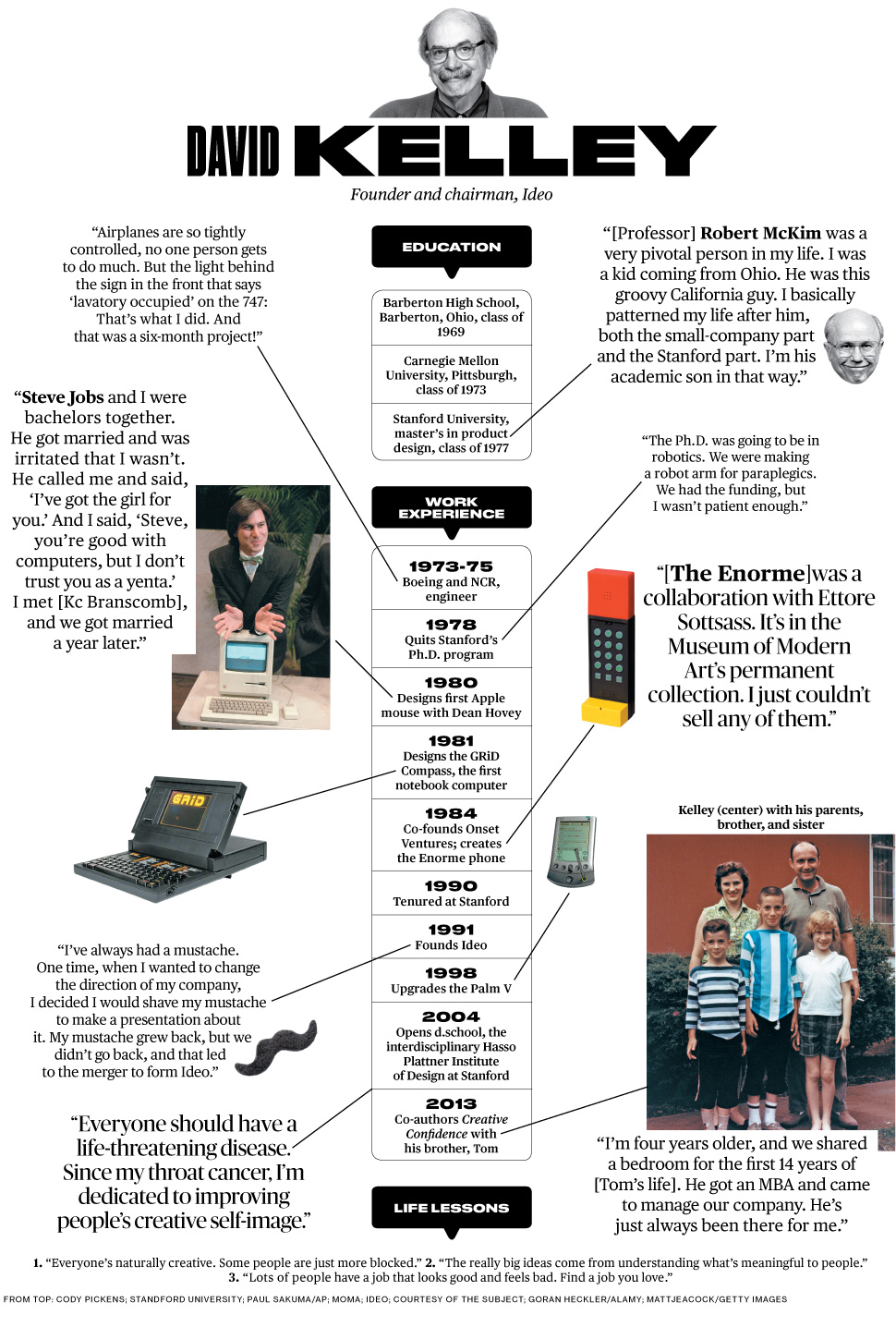
Ideo’s David Kelley: How Did I Get Here? The design guru on his contribution to Boeing’s 747, collaborating on the artistic Enorme phone, and other high points of his career

Ideo’s David Kelley: How Did I Get Here?

October 24, 2013

The design guru on his contribution to Boeing’s 747, collaborating on the artistic Enorme phone, and other high points of his career.

etc_backpage44_970


Marina Mahathir: The cost of telling the truth; It takes courage to stand one’s ground, but the greatest reward is the ability to sleep at night, knowing that one’s conscience is clear

Updated: Thursday October 24, 2013 MYT 9:07:53 AM

The cost of telling the truth

BY MARINA MAHATHIR

It takes courage to stand one’s ground, but the greatest reward is the ability to sleep at night, knowing that one’s conscience is clear.

WHEN parents try to teach their young children certain values and behaviours, consistency is the key. When you tell children that lying is wrong, then they must never catch you telling untruths. If you say there’s no money to buy some fancy new toy, then you can’t come home with a brand new car without them wondering how come you can afford that. Children have natural radar for hypocrisy. It is tuned to catch any inconsistencies, white lies or complete untruths that parents spout because these grate against the natural sense of fairness that kids have. And every time they catch their parents out, a small bit of parental authority erodes. This anti-hypocrisy radar is only maintained if the child doesn’t then learn that to be hypocritical is more rewarding than to be true to one’s own conscience. If they find that there is nothing to be gained from telling the truth, and everything to gain from fudging facts, then the children grow up with their moral compass askew. They learn not to take responsibility for their own misdeeds but to blame others for it. Thus you get stories, for example, about kids who blame their maids for not putting their homework in their schoolbags on the day they are meant to pass them up. Unfortunately there are more and more adults behaving in this way these days. Read more of this post

Getting Ph.D.s to Think Like Entrepreneurs; Hundreds of scientists have participated in business boot camps sponsored by the National Science Foundation.

Getting Ph.D.s to Think Like Entrepreneurs

By Nick Leiber October 24, 2013

In a crowded hotel conference room in downtown Brooklyn, N.Y., in October, Jerry Engel told dozens of earnest young scientists and engineers to cut the “scientific crap” and instead identify would-be customers who might care about their products. Frank Rimalovski piled on, urging attendees presenting research that they wanted to turn into businesses—from bone grafts to facial-recognition software—“to focus on the problem, not the solution.” Read more of this post

“It’s 1776 in Indonesia”: From Washington, Some Lessons for Jokowi; many Indonesians hope that Joko can do for Indonesia what Obama is perceived to have done for America. Obama finds himself frustrated by members of his own party weary of his leadership and increasingly willing to defy him”

From Washington, Some Lessons for Jokowi

By Stanley Weiss on 1:45 pm October 24, 2013.
In 1949, a young press attache was dispatched from Jakarta to New York, with the difficult task of convincing the American public to support young Indonesians in their fight against Dutch forces that had ruled Indonesia for more than a century. Realizing that Indonesia, like America before it, was seeking to create a sovereign nation by breaking the colonial ties that bound it to a single European power, he produced an eloquent paper that harkened back to the year America declared independence from Great Britain. Its provocative title? “It’s 1776 in Indonesia.” Read more of this post

Economy-class activist investor crashes the corporate party

Economy-class activist investor crashes the corporate party

ROSS KERBER, REUTERS OCT. 24, 2013, 6:12 AM 10,248 9

LOS ANGELES (Reuters) – Shareholder activists come in different flavors. One is the deep-pocketed investor, such as Carl Icahn or Dan Loeb, who takes big stakes in companies and forces management to change strategy. Another type is the persistent provocateur who buys a handful of shares and agitates on a shoestring. That’s John Chevedden. Now 67 years old, Chevedden launched his career as an activist – he rejects the term “gadfly” – after being laid off from the aerospace industry in the early 1990s. Since then, he has unleashed a relentless flow of shareholder proxy measures at some of the largest U.S. companies.

Read more of this post

Why Can People Live In Hiroshima And Nagasaki Now, But Not Chernobyl?

Why Can People Live In Hiroshima And Nagasaki Now, But Not Chernobyl?

MELISSATODAY I FOUND OUT OCT. 24, 2013, 9:50 AM 8,925 16

On August 6 and 9, 1945, U.S. airmen dropped the nuclear bombs Little Boy and Fat Man on the Japanese cities of Hiroshima and Nagasaki. On April 26, 1986, the number four reactor at the Chernobyl Nuclear Power Plant in the Ukraine exploded. Today, over 1.6 million people live and seem to be thriving in Hiroshima and Nagasaki, yet the Chernobyl exclusion zone, a 30 square kilometer area surrounding the plant, remains relatively uninhabited. Here’s why. Read more of this post

The making of Amsterdam: How the Dutch capital gave birth to the Enlightenment

The making of Amsterdam: How the Dutch capital gave birth to the Enlightenment

Oct 26th 2013 |From the print edition

Amsterdam: A History of the World’s Most Liberal City. By Russell Shorto.Doubleday; 368 pages; $28.95. Little, Brown; £25. Buy from Amazon.com,Amazon.co.uk

DURING its rise in the 17th century, Amsterdam was an important haven for religious dissidents. It was also the publishing centre for the racy philosophical tracts that were too hot to be printed in France or England. The city’s economic fortunes were born of its embrace of international trade and of financial innovation. And the highly profitable Dutch East India Company was the world’s first joint-stock company, leading in time to the world’s first stock and options markets. Read more of this post

Overcrowding, broken furniture and bed bugs: Foreign students complain about S’pore hostels

Overcrowding, broken furniture and bed bugs: Foreign students complain about S’pore hostels

hostel

Stomp
Thursday, Oct 24, 2013

A recent news report by a Taiwan media company highlighted the poor living conditions of foreign students who come to Singapore seeking work, and how this greatly differed from what they had been promised. In the video published by China Times which Stomp readers Derome and Steric alerted Stomp to, an 18-year-old Taiwanese student shares his experience about how he had come to Singapore to work and study English at the same time. Despite paying $280 for a room every month, he has to share the space with six to eight others. The tenants also have to take turns and wait to use a small bathroom. Read more of this post

This ‘Reverse Microwave’ Chills Beer In 45 Seconds

This ‘Reverse Microwave’ Chills Beer In 45 Seconds

CAMERON CIMCIKFOODBEAST
OCT. 24, 2013, 10:49 AM 5,699 6

Microwaves are handy little units when we want to heat food or drinks up quickly. However, never before has there been a gadget that does just the opposite — cooling without the long wait. That is, until now. A product of Enviro-Cool Limited, V-Tex is an environmentally-friendly, efficient system that cools beverages in a matter of seconds. From wine bottles to soda cans, the unit is able to chill drinks in all types of containers without disturbing carbonation. How? V-Tex uses a “start stop rotational sequence” to create a Rankine vortex, which essentially keeps a drink in its original state while quickly bringing down the temperature. The reverse microwave requires nearly 80% less energy than many standard drink chillers, allowing consumers to save money and keep things green. It also frees up standard refrigerator space, since most beverages can be stored at room temperature elsewhere until right before serving. Enviro-Cool plans to release both commercial and domestic versions of V-Tex, but until then, we’ll have to settle for poppin’ bottles in the fridge. See how it works below:

Every October, hundreds of South Korean teachers and professors are sequestered — like jurors in a mafia trial — in a secret, guarded compound: prisoners of their country’s obsession with education

High-security isolation for South Korea’s exam-setters

2013-10-24 13:12

by Jung Ha-Won

SEOUL, October 24, 2013 (AFP) – Every October, hundreds of South Korean teachers and professors are sequestered — like jurors in a mafia trial — in a secret, guarded compound: prisoners of their country’s obsession with education. For one month, they are kept in complete isolation under conditions that resemble house arrest, with everything down to their food waste subject to rigorous examination. Their sole task is to compile the annual college entrance exam — the importance of which in the minds of stressed-out students and their often equally stressed-out parents is almost impossible to exaggerate. Read more of this post

Best-selling author James Patterson reflects on success as the first author to achieve 10 million in ebook sales

Best-selling author Patterson reflects on success

12:59pm EDT

By Chris Michaud

NEW YORK (Reuters) – When it comes to bestselling authors James Patterson is hard to beat. He has been called the busiest man in publishing and is the first author to achieve 10 million in ebook sales. His thriller, “Mistress,” soared to the top of the Publishers Weekly bestseller list shortly after its August release, where it spent three weeks. Patterson, 66, spoke with Reuters about his unprecedented success, his characters and why he thinks his books are so popular.

Q: ‘Mistress’ was a recent No. 1 bestseller. Is that kind of benchmark getting old, or is it still a surprise?

A: I still get a kick out of it, but I’m not competitive. If it’s number one I like that. If it isn’t, I’m okay with it. So I can still be the first author and go, ‘Wow, I’m published, and there’s the book.’ And that still is fun. It has never gotten old for me. I can’t say it’s a surprise. It would be if it wasn’t even on the list, I’d go, ‘Whaaat? It’s not there, oh, we did something wrong.’

Q: Why do you think your books are so popular?

A: The three rules of this kind of fiction for me are story, story, story. I’m telling a story, and I sort of have the sense that I’m talking to one person and I don’t want them to get up until I’m finished. And the books are emotional. I think I’m pretty emotional. I think that’s one of my strengths and I think that comes through to people. There are a lot of thrillers that are exciting, but there isn’t much humanity to them. I do create characters that people are comfortable with and that they want to know what happened to them next. Even the villains, I think, there’s just a humanity to them as diabolical as they may be, there’s something recognizably human, which I think is one of the keys to creating villains that are interesting. Read more of this post