Nobel winner Robert Shiller talks about the forces that made him a questioning, data-driven economist

Robert Shiller: A Skeptic and a Nobel Winner

By JEFF SOMMER

OCT. 19, 2013

Robert J. Shiller, a professor at Yale, learned on Monday that he had wonthe Nobel Memorial Prize in Economic Science, along with Lars Peter Hansen and Eugene F. Fama of the University of Chicago. The Nobel committee described Professor Shiller as a founder of the field of behavioral finance, an innovator in incorporating psychology into economics and a pioneering analyst of speculative bubbles in the stock and real estate markets. He is also one of a group of eminent economists who write the Economic View column for Sunday Business, and has contributed 60 of those columns since August 2007. As the editor of that column, I have talked to him often about his work, and on Wednesday, he called me from the airport en route to a lecture at the Dutch central bank in Amsterdam. Here is an edited, condensed version of that conversation.  Read more of this post

Leslie Moonves turned CBS into the country’s No. 1 network and revolutionized the way broadcasters get paid for content. Why he believes the future of TV is still bright

SATURDAY, OCTOBER 19, 2013

The Hit Maker

By ROBIN GOLDWYN BLUMENTHAL | MORE ARTICLES BY AUTHOR

Leslie Moonves turned CBS into the country’s No. 1 network and revolutionized the way broadcasters get paid for content. Why he believes the future of TV is still bright.

BA-BD182_CEO_F1_G_20131018133308ON-BC461_SPOTLI_G_20131019023448

“The guy relaxes by working,” says superagent Ari Emanuel of Moonves.

There’s no business like show business, as the Irving Berlin song goes. Trouble is, too few in the trade understand the business as well as the show. Leslie Moonves, who has run CBS since its spinoff from Viacom in early 2006, is a notable exception, having restored the so-called Tiffany network to glory and profits with programming hits and savvy deal-making. Today, CBS is No. 1 among television networks, and a strong fall lineup of new shows, including The Crazy Ones with Robin Williams, seems likely to secure its coveted status.

Read more of this post

Jakarta Governor Joko Fires City Employee, But Not Agency Head, for Playing Video Games; “It’s actually alright to play games, but they should be able to process [permit applications] in five minutes”; Jokowi to wield axe in effort to slim down city’s bureaucracy

Joko Fires City Employee for Playing Video Games: Report

By SP/Deti Mega Purnamasari on 5:16 pm October 18, 2013.
Jakarta Governor Joko Widodo did not say a word to the employee caught playing video games during a surprise visit to the offices of the city’s small-and-medium enterprises agency. But on his way out of the building, Joko told his assistant to take down the employee’s name so that he could be fired. “It’s actually alright to play games, but they should be able to process [permit applications] in five minutes,” Joko said later, according to Indonesian news portal Merdeka.com. “But if they need two weeks to process [permits], how can they play games?” He visited the East Jakarta offices unannounced on Friday — the second time he has done so. Accompanied by East Jakarta Mayor H.R. Krisdianto and integrated services (PTSP) head Husnul Chotimah, Joko proceeded directly to the PTSP offices.

“How does one get a SIUP [business permit]?” he asked an employee. “How many days does it take? Where should I go after this?”

“Three days, sir,” the official reportedly replied,

But an applicant named Rofi Nata who was in line for a permit told the governor that the process takes two weeks. Joko went to the third floor, bringing with him a list of the companies and business that had registered for permits. He asked office staff there to teach him how to input the information so that he could do it himself.

“How do I input this?” he asked. “What’s the password?”

Office staff told him that agency head Johan Afandithe was the only one who knew the password, but he was nowhere to be found and no one knew where he was. At this point, Joko reportedly saw an employee trying to covertly close down a computer game he had been playing. The governor threw the papers he had been holding onto a table, asked for the names of all third floor staff, and while two officials tried to explain the situation, he walked to his car without speaking and slammed the door. PTSP is still a pilot project in Jakarta. The governor made his first unannounced visit there on July 16. Back at City Hall, Joko said the agency needed to become more efficient. “The speed should be faster,” he said. “Just type some sentences, input the information, fill in the form, type it, enter, sign it and issue it. It’s not difficult.” Read more of this post

A New Map of How We Think: Top Brain/Bottom Brain: Forget dated ideas about the left and right hemispheres. New research provides a more nuanced view of how we plan our lives and experience the world. Which cognitive mode best describes you?

A New Map of How We Think: Top Brain/Bottom Brain

Forget dated ideas about the left and right hemispheres. New research provides a more nuanced view of the brain

STEPHEN M. KOSSLYN and G. WAYNE MILLER

Oct. 18, 2013 7:57 p.m. ET

Who hasn’t heard that people are either left-brained or right-brained—either analytical and logical or artistic and intuitive, based on the relative “strengths” of the brain’s two hemispheres? How often do we hear someone remark about thinking with one side or the other? A flourishing industry of books, videos and self-help programs has been built on this dichotomy. You can purportedly “diagnose” your brain, “motivate” one or both sides, indulge in “essence therapy” to “restore balance” and much more. Everyone from babies to elders supposedly can benefit. The left brain/right brain difference seems to be a natural law. Read more of this post

Investing for the Fun of It: Many fans of stock indexing set a little money aside to bet on riskier investments. Here’s how to do it safely.

Investing for the Fun of It: Many fans of stock indexing set a little money aside to bet on riskier investments. Here’s how to do it safely.

LIAM PLEVEN

Oct. 18, 2013 6:06 p.m. ET

BF-AF991_19play_DV_20131018164108

Investors flock to index funds because they are simple, inexpensive and often likely to generate higher returns than taking a chance on hot stocks, highflying money managers or a brother-in-law’s tips. The hitch: Passive is dull, as even its fans admit. John Miller, a partner in a Fayetteville, Ga., law firm, set up an account several years ago with about 5% of his investments and started buying individual stocks. Most of his investments are in index funds. He placed a wager on Bank of AmericaBAC -0.20% stock when prices were near financial-crisis lows, and won big. He also purchased shares in a solar-energy firm that he says fell about 85% before he sold. Through it all, he enjoyed himself—without worrying that a disastrous bet would ruin his financial future. Read more of this post

Innovative dynamism is the key to economic success and personal satisfaction, Nobel-winner Edmund Phelps argues in ‘Mass Flourishing’

Book Review: ‘Mass Flourishing’ by Edmund Phelps

Innovative dynamism is the key to economic success and personal satisfaction, a Nobel-winner argues

EDWARD GLAESER

Oct. 18, 2013 5:22 p.m. ET

Edmund Phelps’s “Mass Flourishing” could easily be retitled “Contra-Corporatism,” for at its heart this fine book is an attack on that increasingly common “third way” between capitalism and socialism. Mr. Phelps cogently argues that America’s current economic woes reflect a reduction in the innovative dynamism that generates economic success and personal satisfaction. He places little hope in the Democratic Party, which “voices a new corporatism well beyond Franklin Roosevelt’s New Deal or Lyndon Johnson’s Great Society,” or in Republicans in the thrall of “traditional values,” who see “the good economy as mercantile capitalism plus social protection and social insurance.” He instead yearns for legislative solons who “could usefully ask of every bill and regulatory directive: How would it impact the dynamism of our economy?” Read more of this post

Hans Riegel, the eccentric billionaire confectioner who gave gummi bears their global bite

October 18, 2013 7:28 pm

Hans Riegel, confectioner who gave gummi bears their global bite

By Michael Steen

For nearly seven decades, Hans Riegel was the eccentric chief confectioner, autocratic business leader and one-man marketing machine who propelled Haribo, purveyor of colourful fruit-flavoured “gummi bears”, from a Bonn backstreet to an envied prominence in global confectionery. Riegel represented, in concentrated form, traits typical of Germany’s family-owned Mittelstand companies. As the business grew, he flew Willy Wonka-like in the face of modern corporate convention, eschewing everything from market research to bank loans and opportunities to take the group public. Read more of this post

Lego builds a solid business, even in the age of multimedia; Lego CEO doesn’t give out business cards when he goes to a meeting. Instead, he fishes out a tiny plastic Lego figurine bearing his likeness

PUBLISHED OCTOBER 19, 2013

Lego builds a solid business, even in the age of multimedia

World’s No 2 toymaker sets up regional headquarters in Singapore, remains confident of Lego’s lasting appeal

LEE U-WEN LEEUWEN@SPH.COM.SG

BT_20131019_UWLEGO19AAZJQ_802172

JORGEN Vig Knudstorp, president and CEO of Lego, doesn’t give out business cards when he goes to a meeting. Instead, the 44-year-old reaches into his pocket and fishes out a tiny plastic Lego figurine bearing his likeness – dark-rimmed spectacles and all – with his full name, telephone number and e-mail address printed on the toy’s clothes. It’s a small but telling sign of the level of creativity that goes on behind the scenes at the Danish company famous for making those colourful interlocking plastic bricks. Read more of this post

Rebooting our brains: ‘The next big scientific frontier lies not in a distant galaxy – but deep inside our minds’

October 18, 2013 4:25 pm

Rebooting our brains

By Gillian Tett

‘The next big scientific frontier lies not in a distant galaxy – but deep inside our minds’

Afew years ago John Donoghue, professor of neuroscience at Brown University in Providence, Rhode Island, met Cathy Hutchinson, a young woman who was suffering from locked-in syndrome following a stroke. Until recently, this would have condemned her to a life of helplessness and hopelessness: locked-in syndrome means that somebody cannot move their limbs, even if their brains are functioning normally (as Jean-Dominique Bauby described so movingly in The Diving Bell and the Butterfly).

But Hutchinson had a dream: she longed to drink a cup of coffee on her own, in one vestige of normality. And Donoghue was convinced he could help. Over the past few years, he has run a project called Braingate that combines the latest advances in computing science, engineering and mathematics with neuroscience, to map the connections inside the brain – and replicate them on a computer. Read more of this post

The Map and the Territory, by Alan Greenspan, Review by Lawrence Summers

October 18, 2013 7:09 pm

The Map and the Territory, by Alan Greenspan

Review by Lawrence Summers

The Map and the Territory: Risk, Human Nature, and the Future of Forecasting, by Alan Greenspan, Allen Lane RRP£25/Penguin Press RRP$36, 400 pages

It was my privilege to work closely with Alan Greenspan for the eight years I served at the Treasury during the Clinton administration. His new book, The Map and the Territory, brings me back to fond memories of our conversations over the years. I haven’t always agreed with my friend but he has always left me wiser and with something to ponder. Read more of this post

Researchers have been working with tiny robots based on cockroaches as well as with actual roaches—controlled by an embedded chip— to explore collapsed buildings and other dangerous, hard-to-penetrate environments where the GPS doesn’t work

Send In the Cockroach Squad

DANIEL AKST

Oct. 18, 2013 9:16 p.m. ET

Most people hate cockroaches, but in an earthquake, the bugs may someday prove to be lifesavers. Researchers have been working with tiny robots based on cockroaches as well as with actual roaches—controlled by an embedded chip—as a possible means of exploring collapsed buildings and other dangerous, hard-to-penetrate environments where the Global Positioning System doesn’t work. Read more of this post

How Did ‘Intangibles’ End Up in Sports-Speak? A concept starts out in Latin and ends up in the mouth of the Red Sox manager

I Can’t Say What It Is, but He’s Got It

BEN ZIMMER

Oct. 18, 2013 9:01 p.m. ET

When Boston Red Sox manager John Farrell made the decision to keep light-hitting left fielder Jonny Gomes in the lineup against the Detroit Tigers in the American League Championship Series this week, he acknowledged that his choice had nothing do with the numbers. “The one thing that we can’t fully measure is the intangibles that Jonny Gomes brings,” Mr. Farrell said.

Last week, another Red Sox outfielder was hailed in a similar way. Tampa Bay Rays manager Joe Maddon, whose team lost to the Red Sox in the first round of the playoffs, had this to say of Shane Victorino : “He just drips with intangibles.”

In The Dickson Baseball Dictionary, Paul Dickson defines “intangible” as “an unknown, indefinite or elusive aspect of baseball that is not initially perceived.” How did this mystical-sounding term end up becoming so fixed in manager-speak (and not just to describe Red Sox players)?

As an adjective meaning “unable to be touched or measured,” “intangible” entered English in the 17th century from Latin by way of French. It soon made the transition to a noun, just as “imponderable” came to mean “something that is difficult to assess.” As early as 1713, the Church of England clergyman Francis Squire wrote, “as there is a wide difference betwixt sense and reason; so, betwixt their objects, visibles and invisibles, tangibles and intangibles.”

In the business world, “intangibles” can refer to intangible assets: those hard-to-pin-down but nonetheless valuable qualities such as customer goodwill or brand recognition. In the mid-20th century, as baseball brass increasingly began thinking of their players as assets to manage, “intangibles” made an easy transition from finance to sports.

The first player who was routinely praised for his “intangibles” was the scrappy second baseman Eddie Stanky, nicknamed “The Brat.” In the words of Leo Durocher, who managed Stanky with the Brooklyn Dodgers and New York Giants, “He can’t hit, can’t run, can’t field… All the little S.O.B. can do is win.”

When Stanky joined the Giants in 1950, he was keenly aware that his value to the team was hard to measure. After the season was over, the New York chapter of the Baseball Writers’ Association named Stanky the outstanding player of the year. “I want to thank you for appreciating my intangibles on the field,” he said in accepting the award.

“Intangibles” have persisted in baseball despite the advent of complex statistical analyses that seek to capture all facets of a player’s on-field talents. For stat-heads, talk of “intangibles” is a fuzzy-minded refusal to grasp empirical data. But until baseball is taken over by robots, there will always be a need to label natural gifts that elude quantification.

—Mr. Zimmer, a lexicographer, is executive producer of the Visual Thesaurus andVocabulary.com.

Paywalls are creating a knowledge aristocracy, says teen cancer pioneer Jack Andraka

Paywalls are creating a knowledge aristocracy, says teen cancer pioneer Jack Andraka

By Paul Sawers, Yesterday

Jack Andraka isn’t your typical teenager. Last year, the then 15-year-old received prizes and plaudits for his pioneering work in the early detection of pancreatic cancer – work carried out under his own steam and in his own spare time. He’s now in talks with a number of pharmaceutical companies to ensure his handiwork is made available far and wide, and at the Wired 2013 conference in London earlier today, Jack gave an impassioned and inspiring speech regaling how he battled against the naysayers to see his work through to fruition. But there’s a problem in academia, says Jack. Paywalls. Read more of this post

Alan Greenspan: What Went Wrong; The former Fed chairman on where the economy went wrong, where he went wrong—and Ayn Rand.

Alan Greenspan: What Went Wrong

The former Fed chairman on where the economy went wrong, where he went wrong—and Ayn Rand.

ALEXANDRA WOLFE

Oct. 18, 2013 6:06 p.m. ET

Alan Greenspan, the former chairman of the Federal Reserve, goes to a lot of parties. He and his wife, the TV journalist Andrea Mitchell, “sort of get invited everywhere,” he says, sitting in front of the long bay window in his office on Connecticut Avenue in Washington, D.C. Lately, though, cocktails and dinners seem to have guest lists drawn almost exclusively from one political party or the other. “It used to be a ritualistic 50-50 at parties—the doyennes of culture and partying were very strict about bipartisanship,” he adds. “That doesn’t exist anymore.” In his new book “The Map and the Territory,” to be released on Tuesday, Mr. Greenspan, 87, goes on a hunt for what has gone wrong in American politics and in the U.S. economy. He doesn’t blame the current administration for today’s partisan divide. The culprit? “It’s the benefits,” he says, pointing to the disagreements between Republicans and Democrats over how to deal with the growth of entitlements. In the book, he also ponders why the Fed failed to predict the financial crisis, where he himself went wrong and how that discovery has completely changed his worldview. Read more of this post

The Nobel Prize Is No Crystal Ball

Oct 18, 2013

The Nobel Prize Is No Crystal Ball

JASON ZWEIG

For investors, the main lesson from this week’s announcement of the Nobel Prize in economics should be humility about anyone’s market-forecasting ability—especially your own. This past Monday, the economics prize went to three researchers whose work seems to have little in common: Eugene Fama, a leading advocate of the theory that stock prices are efficient; Lars Peter Hansen, who probes predictive models for statistical weaknesses; and Robert Shiller, who argues that markets are more irrational than efficient. The Nobel committee said these economists’ findings show that “it is quite possible to foresee the broad course of [stock and bond] prices over…the next three to five years.” If only it were that simple.

Read more of this post

Burned-out fund managers show reality of City life’s “easy option”

Burned-out fund managers show reality of City life’s “easy option”

8:57am EDT

By Sinead Cruise and Tom Bill

LONDON (Reuters) – When Sanjeev Shah quit his job last month, eyebrows were raised. This wasn’t another burned-out banker: The 43-year-old was a successful fund manager running 2.8 billion pounds ($4.5 billion) for Fidelity Worldwide Investment, reaping big returns. His reasons for leaving – “This is a role that demands 110 percent effort, focus and intensity. I don’t want that level of intensity” – shed rare light on an industry often dismissed as the easy option in the world of finance. “Do we have an easy life? If you went back 25 years ago, that may have been the case but people are working significantly longer hours and are rather more professional about what they do now,” said one senior fund manager, who asked not to be named because of the sensitivity of the subject. Read more of this post

Buffett’s Son Calls Junk Bonds Model for Charities

Buffett’s Son Calls Junk Bonds Model for Charities

Howard Buffett, who runs a foundation with money from his billionaire father Warren Buffett, said high-yield debt is an inspiration for the right approach to philanthropy. Promoting economic development in an area of conflict in the Democratic Republic of Congo “is a risky investment, but if that pays off, I would say it’s a little bit like we’re willing to go with junk bonds rather than AAA stocks because the payoff is big.” Howard Buffett, 58, told Bloomberg Television’s Betty Liu in an interview airing today. “We’re betting, we won’t just help people eat better, we will transform their lives.” The Howard G. Buffett Foundation works to improve the lives of the world’s most impoverished people, with a focus on providing access to food and water and ending conflicts. Warren Buffett, who has committed most of his wealth to philanthropy, including initiatives run by his three children, has also encouraged charities to take risks. “We don’t have to worry about making donors happy, we don’t have to worry about fundraising, we don’t have to worry about anything other than can we change something,” Howard Buffett said. “And to do that you absolutely have to be willing to fail. Your greatest lessons will come in failure.” Read more of this post

Scientists Have Found The First Concrete Reason Why We Need Sleep; The brain is bathed in a special clear liquid called cerebrospinal fluid, which doesn’t mix with the blood and lymph system of the rest of the body and this fluid travels through special channels and washes the brain out of toxic waste products

Scientists Have Found The First Concrete Reason Why We Need Sleep

JENNIFER WELSH OCT. 17, 2013, 2:00 PM 30,592 26

alzheimers-brain-cells-and-plaques

The buildup of toxic waste proteins causes brain cells to die in Alzheimer’s disease.

We know we need to sleep. We know our brains and bodies work better after sleep. But what we didn’t know, until now, was why. Scientists have just reported the first major mechanical reason our brains need to sleep — certain cleaning mechanisms in the brain work better when we shut the brain down. Just like how dump trucks take to the city streets during the pre-dawn hours because there’s less traffic, our brain’s cleaners also work best when there’s less going on. Read more of this post

Speculative art: Like all passion investments, art occupies a grey area between investment and lifestyle asset, so what role can it play in a family office’s portfolio?

SPECULATIVE ART

ARTICLE | 17 OCTOBER, 2013 11:14 AM | BY JESSICA TASMAN-JONES

This summer big brand artists continued to set records at the major auction houses. But like all passion investments, art occupies a grey area between investment and lifestyle asset, so what role can it play in a family office’s portfolio?  Read more of this post

Problems with scientific research: Scientific research has changed the world. Now it needs to change itself

Problems with scientific research: Scientific research has changed the world. Now it needs to change itself

Oct 19th 2013 |From the print edition

A SIMPLE idea underpins science: “trust, but verify”. Results should always be subject to challenge from experiment. That simple but powerful idea has generated a vast body of knowledge. Since its birth in the 17th century, modern science has changed the world beyond recognition, and overwhelmingly for the better. But success can breed complacency. Modern scientists are doing too much trusting and not enough verifying—to the detriment of the whole of science, and of humanity. Read more of this post

Bishop of bling: Episcopal extravagance fuels criticism of state-financed churches

Bishop of bling: Episcopal extravagance fuels criticism of state-financed churches

Oct 19th 2013 | BERLIN |From the print edition

20131019_EUP003_0

THE faithful of Limburg, a diocese in Hesse, have been protesting in front of their Romanesque cathedral, a few even affixing “95 theses” to its door to make their views of their bishop unmistakable. But the prelate, Franz-Peter Tebartz-van Elst, had already gone to Rome, where he awaits a meeting with Pope Francis that will determine his future. The extent of his excesses is such that it is hard to say which detail most rankles Germans, and not only Catholic ones. Read more of this post

In China, Alzheimer’s Care Nearly Forgotten; A global report cites a shortage of professional care for China’s 9 million Alzheimer’s sufferers

10.17.2013 15:18

In China, Alzheimer’s Care Nearly Forgotten

A global report cites a shortage of professional care for China’s 9 million Alzheimer’s sufferers

By staff reporter Lan Fang

Zhang Rong spent more than seven, torturous years caring for her elderly father while he mentally drifted away. Finally, late last year, her 85-year-old father fell into a deep coma and was hospitalized in intensive care. Zhang later agreed to let doctors remove the tubes that kept her father alive. Two days later, he passed away peacefully. Zhang had watched her father gradually grow more confused, even delusional. He talked about long-dead friends coming over for visits, and memories from decades past so entangled his thinking that he was unable to differentiate between former times and the present.

Read more of this post

Oshin, a poor girl who perseveres and triumphs against the odds, is said to be inspired by the story of the late Katsu Wada, the woman who founded Japanese departmental chain Yaohan, which is now defunct

Tears flow easily for new Oshin

ST_20131016_WYOSHIN_3881124e crop_0

Friday, October 18, 2013 – 09:27

Yip Wai Yee

The Straits Times

As soon as Japanese child actress Kokone Hamada appears on the webcam for her video interview with Life!, everyone in the room automatically starts cooing. The sweet-faced nine-year-old is fielding media questions over Skype about her movie Oshin, in which she plays the title role of a poor girl who perseveres and triumphs against the odds. Oshin, which openned in cinemas on thursday, is the movie remake of the iconic 1983 Japanese TV drama of the same name which was a global hit that aired in 59 countries, including Singapore. Here, it was so popular that it was dubbed in Mandarin, English and Malay. It is said to be inspired by the story of the late Katsu Wada, the woman who founded Japanese departmental chain Yaohan, which is now defunct. Read more of this post

Berkshire Adds Stocks in Pension Handoff to Buffett Lieutenants

Berkshire Adds Stocks in Pension Handoff to Buffett Lieutenants

Billionaire Warren Buffett is betting that his deputy investment managers can find value hiding in a corner of Berkshire Hathaway Inc. (BRK/A): its $10.4 billion in pension assets. Todd Combs, 42, and Ted Weschler, 52, have been building stock portfolios with funds they oversee for defined-benefit plans at Berkshire subsidiaries, including railroad Burlington Northern Santa Fe. The strategy saves Buffett’s company fees it would pay to outside asset managers and could reduce the need for contributions to the pensions. Read more of this post

Italy’s chocolate king faces succession questions; Ferrero denies report of bid from Nestle

Italy’s chocolate king faces succession questions

10:26am EDT

By Lisa Jucca and Giancarlo Navach

MILAN (Reuters) – Michele Ferrero, Italy’s richest man and the owner of a global chocolate and confectionery empire, has always resisted the temptation to allow outsiders to buy into his company. In a statement on Thursday, his son Giovanni, the Chief Executive of the Ferrero group, rejected suggestions the Italian company had been approached by larger Swiss competitor Nestle and said Ferrero was not for sale. But like other family-controlled Italian companies that flourished in the postwar boom, the ambassador of chocolate-hazelnut spread Nutella, now 88, may soon be discussing succession plans. His other son Pietro, the chosen heir to run the Piedmont-based empire, died of a heart attack in 2011 while riding a bicycle in South Africa. He was 47 and his death opened the way for the ascent of younger brother Giovanni, whom industry insiders consider less interested in running the business. Read more of this post

Malcolm Gladwell Dominates Airport Bookstores

Malcolm Gladwell Dominates Airport Bookstores

By Keenan Mayo October 17, 2013

Get ready to be stuck on a plane with Malcolm Gladwell. For all of October, the best-selling author’s new book, David and Goliath: Underdogs, Misfits, and the Art of Battling Giants, has occupied front-and-center displays in airport terminal bookstores, those tables where a single title is stacked like Jenga blocks. “David and Goliath is being featured at the front of every store possible—both Hudson News (DUFN:SW) and Hudson Booksellers standalone stores,” says Sara Hinckley, vice president for book buying and promotions at Hudson Booksellers, the country’s largest airport chain, with locations in nearly 60 airports. Read more of this post

Norway Debates Demolishing Modern Buildings Containing Picasso Murals in Oslo; Government panel recommended tearing down buildings damaged in 2011 attack; Picasso Administration calls idea “unbelievable”

Norway Debates Demolishing Modern Buildings Containing Picasso Murals in Oslo

Government panel recommended tearing down buildings damaged in 2011 attack; Picasso Administration calls idea “unbelievable”

BN-AA714_1018Pi_D_20131017135523

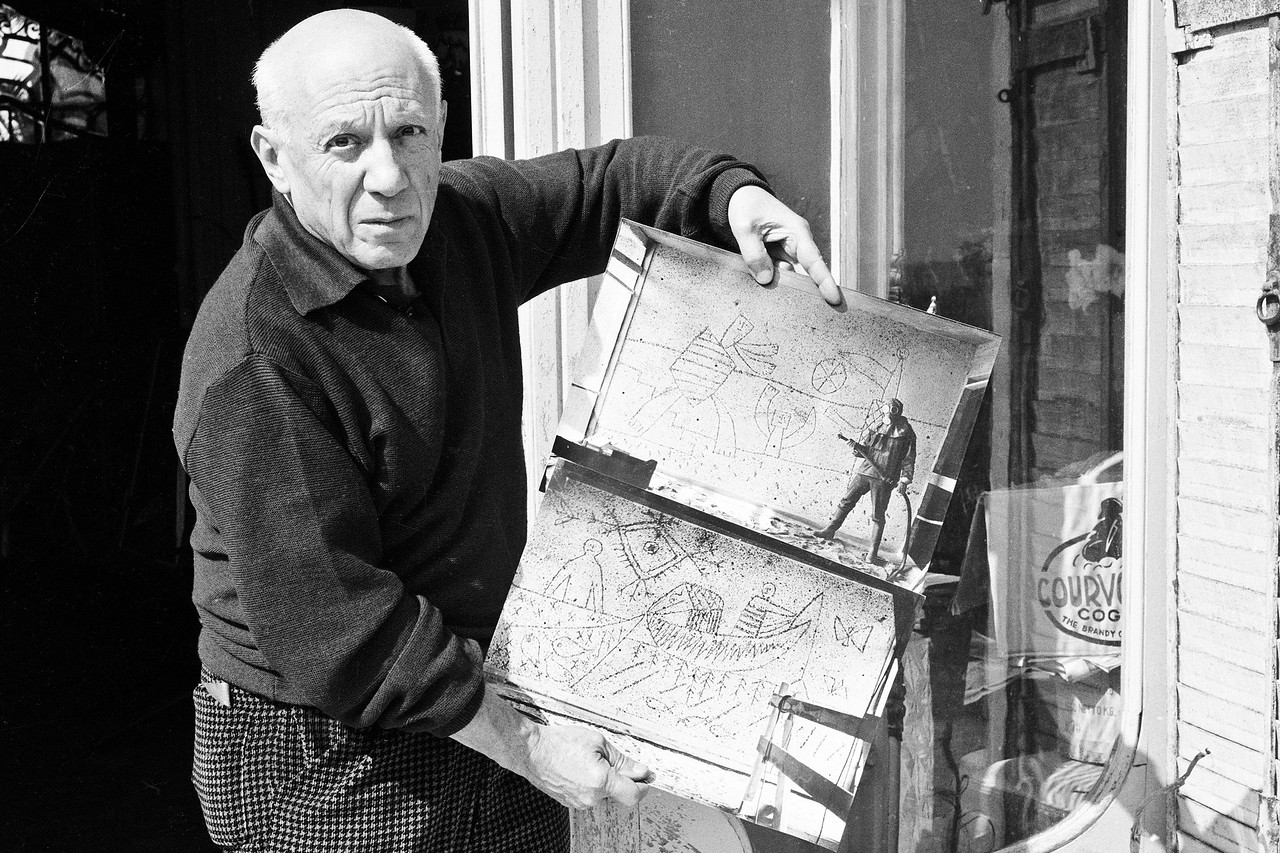
Pablo Picasso is shown here holding photographs of his works for Norwegian architect Erling Viksjo’s buildings in Oslow, Norway. See more images of the murals that might be destroyed. Andreas Harvik/Nasjonalmuseet

CLEMENS BOMSDORF

Oct. 17, 2013 5:32 p.m. ET

Many Norwegians never fully embraced the boxy fortresslike style of architecture known as “Brutalist” that came into vogue in the 1950s. Now, a fierce debate is under way here about whether to demolish two of this city’s signature Brutalist buildings, H and Y-block—which also happen to include four concrete murals by Pablo Picasso. Read more of this post

Why the World is Watching ‘Gravity’; The film has broken box office records by appealing to young and old, men and women, art-movie fans, sci-fi geeks and evangelical Christian reviewers. “We’re getting people out of the house who haven’t been to a movie for 10 years or more.”

Why the World is Watching ‘Gravity’

BEN FRITZ and DON STEINBERG

Oct. 17, 2013 7:43 p.m. ET

101713lunchgravity_640x360

Why “Gravity” is turning out to be the breakout hit of the year, appealing to a wide range of moviegoers. But conventional Hollywood wisdom almost kept the film from ever getting made. Don Steinberg joins Lunch Break. Photo: Warner Bros.

Against all odds, “Gravity” is defying it. The film has broken box office records by appealing to young and old, men and women, art-movie fans, sci-fi geeks and evangelical Christian reviewers. Now heading into its third weekend, “Gravity” is an increasingly rare phenomenon: a movie that draws audiences in droves, yet also wins joyous praise from critics. Exhibitors are thrilled that word is out the film should be seen not at home but in theaters, on a big screen, with high-quality sound. Comedian Albert Brooks slyly underscored the rewards of the immersive big-screen experience, tweeting “Just watched Gravity on an iPhone. Not that impressed.” Read more of this post

Finance scandal spurs German bishops to reveal secret funds; Limburg Bishop – dubbed “the luxury bishop” – has shocked the Church by admitting six-fold cost overruns on construction of his luxurious new residence, now priced at 31 million euros

Finance scandal spurs German bishops to reveal secret funds

Wed, Oct 16 2013

By Tom Heneghan, Religion Editor

PARIS (Reuters) – German Catholic bishops are scrapping centuries of secrecy and reporting the value of their private endowments as a scandal caused by a free-spending prelate puts pressure on them for more financial transparency. Limburg Bishop Franz-Peter Tebartz-van Elst – dubbed “the luxury bishop” – has shocked the Church by admitting six-fold cost overruns on construction of his luxurious new residence, which is now priced at 31 million euros, most of which will be paid from his ample reserves. Read more of this post

Toys ‘R’ Us is heading into the holidays with a new leader who has little experience with the U.S. market, owners who don’t always see eye to eye and a debt burden that tops $5 billion

No Joy in Toys ‘R’ Us Land

Management Void Is Finally Filled, but Debt and Ownership Structure Burden Retailer

SUZANNE KAPNER and JOANN S. LUBLIN

Updated Oct. 17, 2013 5:29 p.m. ET

MK-CH142_TOYS_G_20131017180429MK-CH140_TOYS_G_20131017183306

Toys ‘R’ Us hired an insider to be its CEO after external candidates turned down the job. Above, the retailer’s Times Square store in New York. Keith Bedford for The Wall Street Journal

With the holidays approaching, this should be the happiest time of year for a toy company. But Toys “R” Us Inc. is facing a season of uncertainty. The company that helped create the “category killer” retail model is headed into the crucial shopping period with a new leader who has little experience with the hyper-competitive U.S. market. Meanwhile, the company’s longer-term strategy is in flux, and people close to the company say it is hamstrung by owners who don’t always see eye to eye and a debt burden that tops $5 billion. Read more of this post