5 Powerful Tips For Getting More Done Every Day: Believe In What You Do. What happens when you see your work as a calling, not just a job that pays the bills? You are more thorough, engaged — and happier.

5 Powerful Tips For Getting More Done Every Day

ERIC BARKERBARKING UP THE WRONG TREE OCT. 16, 2013, 6:03 PM 2,440 2

Tomorrow (n.): A mystical land where 99% of all human productivity, motivation, and achievement is stored.

1) Know When You’re At Your Best

And plan accordingly. To be a productivity ninja focus less on time management, and more on managing your energy.  Charlie Munger, Vice-Chairman of Berkshire Hathaway, used a system like this to make sure he was always growing. He identified the hours when he was at his best — and then routinely stole one of those peak hours for learning.

Via The Idea Hunter: How to Find the Best Ideas and Make them Happen:

Charlie Munger hit upon one strategy when he was a young lawyer. He decided that whenever his legal work was not as intellectually stimulating as he’d like, “I would sell the best hour of the day to myself.” He would take otherwise billable time at the peak of his day and dedicate it to his own thinking and learning. “And only after improving my mind — only after I’d used my best hour improving myself — would I sell my time to my professional clients.” Are you a morning lark? A night owl? Tired after lunch? Best after a nap? Track Read more of this post

How the Precious Orchid Got So Cheap: Taiwan’s Efficient Growers, Who Copied Tech Industry, Bemoan Days When a Flower Fetched $100,000

How the Precious Orchid Got So Cheap

Taiwan’s Efficient Growers, Who Copied Tech Industry, Bemoan Days When a Flower Fetched $100,000

EVA DOU

Oct. 16, 2013 7:36 p.m. ET

MK-CH107_ORCHID_G_20131016183511

Taiwan has refined the breeding of orchids into a mass-production business. Most growers handle one step in the process, such as cloning orchids through tissue culture, pictured. Leanne Huang for The Wall Street Journal

WUSHU VILLAGE, Taiwan—A custard-yellow orchid dubbed P. Golden Emperor ‘Sweet’ changed hands between Taiwan breeders in 1978 for $100,000. Now, orchids roll out of greenhouses in Taiwan and onto the shelves of big-box retailers like Lowe’s for as little as $5.48. As with flat-panel televisions and laptop computers, the once-rare orchid has become a mass-market commodity. Orchids now are the best-selling potted flower in the U.S., with annual sales exceeding the poinsettia, according to the U.S. Department of Agriculture. Behind the shift are the entrepreneurs of Taiwan, who have brought to orchid-breeding the energy and methods applied to making consumer electronics. Read more of this post
National Geographic Asked Fans To Submit Their Best Travel Pictures And Got Some Amazing Results

National Geographic Asked Fans To Submit Their Best Travel Pictures And Got Some Amazing Results

MEGAN WILLETT OCT. 16, 2013, 5:53 PM 33,186 2

For 125 years, National Geographic has been photographing our sublime planet, bringing what few humans have witnessed into the average American living room. To celebrate its anniversary and encourage photographers to see the world through the lens, National Georgaphic launched a photo-sharing platform called Your Shot. Led by the magazine’s star photographer Cory Richards and his magazine photo editor Sadie Quarrier, the project asks photographers to submit three images “that convey how photography can help us explore our changing world.”  Richards and Quarrier will also provide tips and feedback for all those who participate, and their favorite photograph will be selected to appear in a future issue of the magazine. In order to participate, photogs must join the Your Shot community and submit photos by October 22nd. To learn more about submitting your photos and the competition, click here.

this-photograph-proves-patience-is-a-photographers-virtue-while-photographing-lilies-in-a-local-swamp-a-cloud-of-tadpoles-swam-by-numbering-in-the-thousands-all-following-along-in-a-trail

This photograph proves patience is a photographer’s virtue. “While photographing lilies in a local swamp, a cloud of tadpoles swam by numbering in the thousands, all following along in a trail.” Read more of this post
TED talks are lying to you. The creative class has never been more screwed. Books about creativity have never been more popular. What gives?

SUNDAY, OCT 13, 2013 07:00 PM MPST

TED talks are lying to you

The creative class has never been more screwed. Books about creativity have never been more popular. What gives?

BY THOMAS FRANK

The writer had a problem. Books he read and people he knew had been warning him that the nation and maybe mankind itself had wandered into a sort of creativity doldrums. Economic growth was slackening. The Internet revolution was less awesome than we had anticipated, and the forward march of innovation, once a cultural constant, had slowed to a crawl. One of the few fields in which we generated lots of novelties — financial engineering — had come back to bite us. And in other departments, we actually seemed to be going backward. You could no longer take a supersonic airliner across the Atlantic, for example, and sending astronauts to the moon had become either fiscally insupportable or just passé. Read more of this post
The 10 Best Pointy-Haired Boss Moments From ‘Dilbert’

The 10 Best Pointy-Haired Boss Moments From ‘Dilbert’

JENNA GOUDREAU OCT. 16, 2013, 9:59 AM 107,665 3

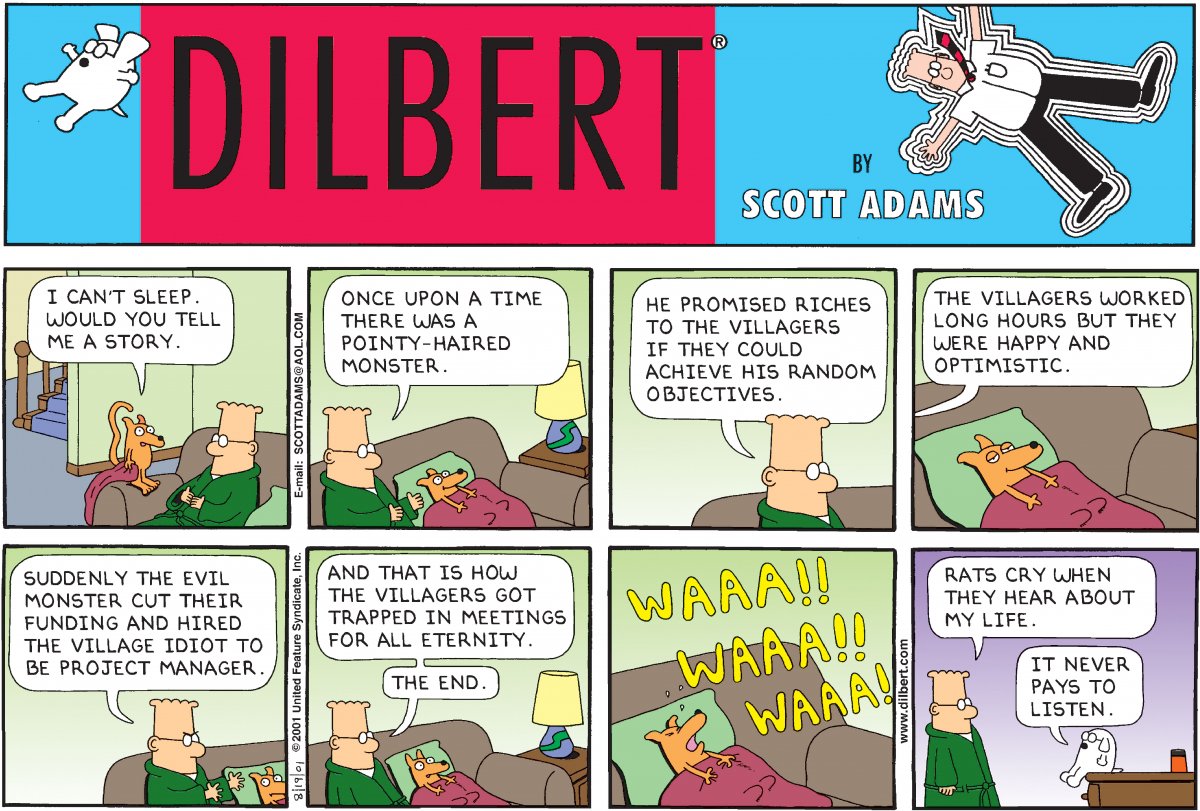
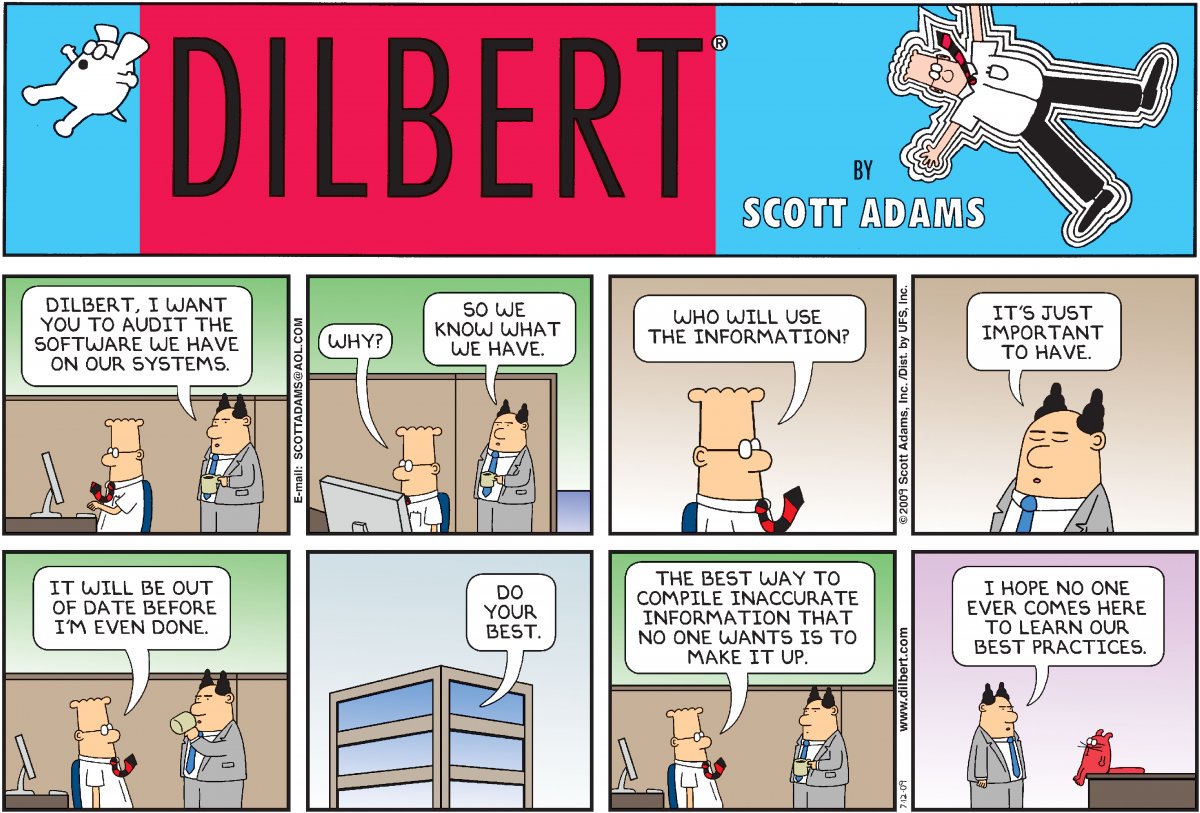
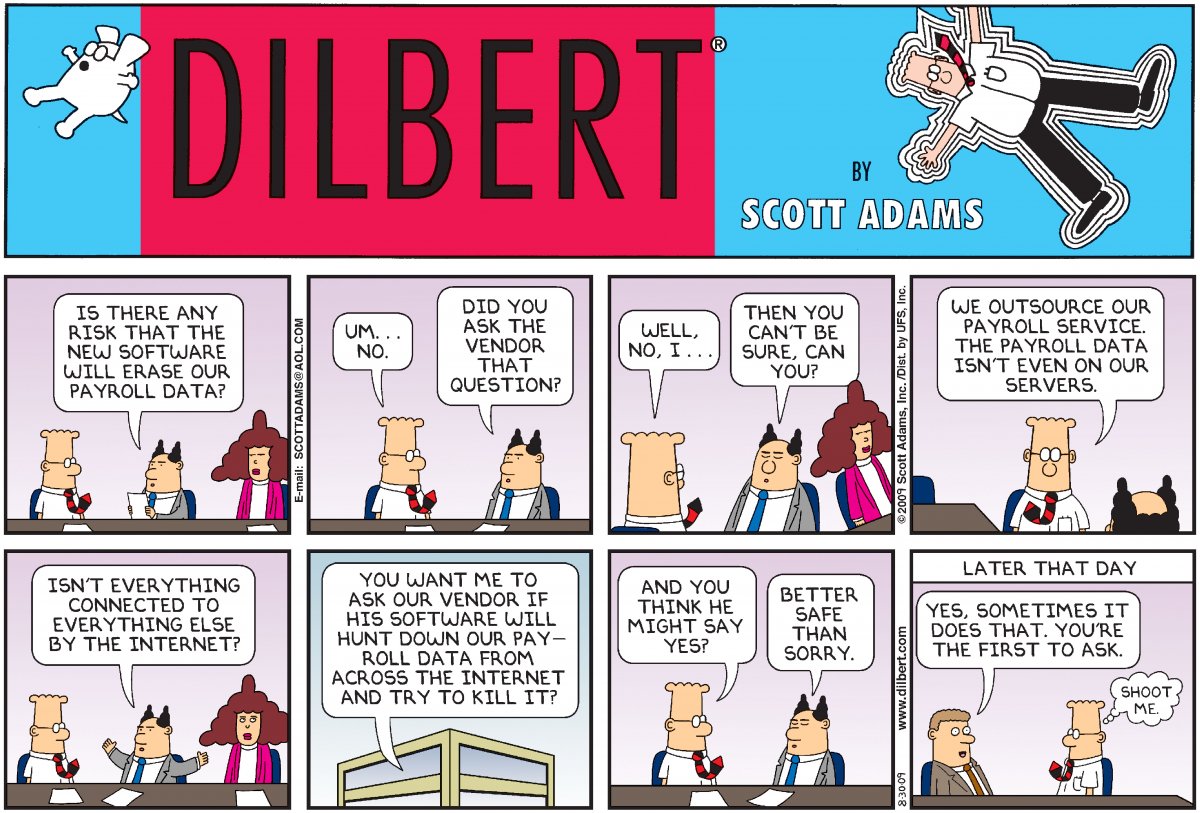
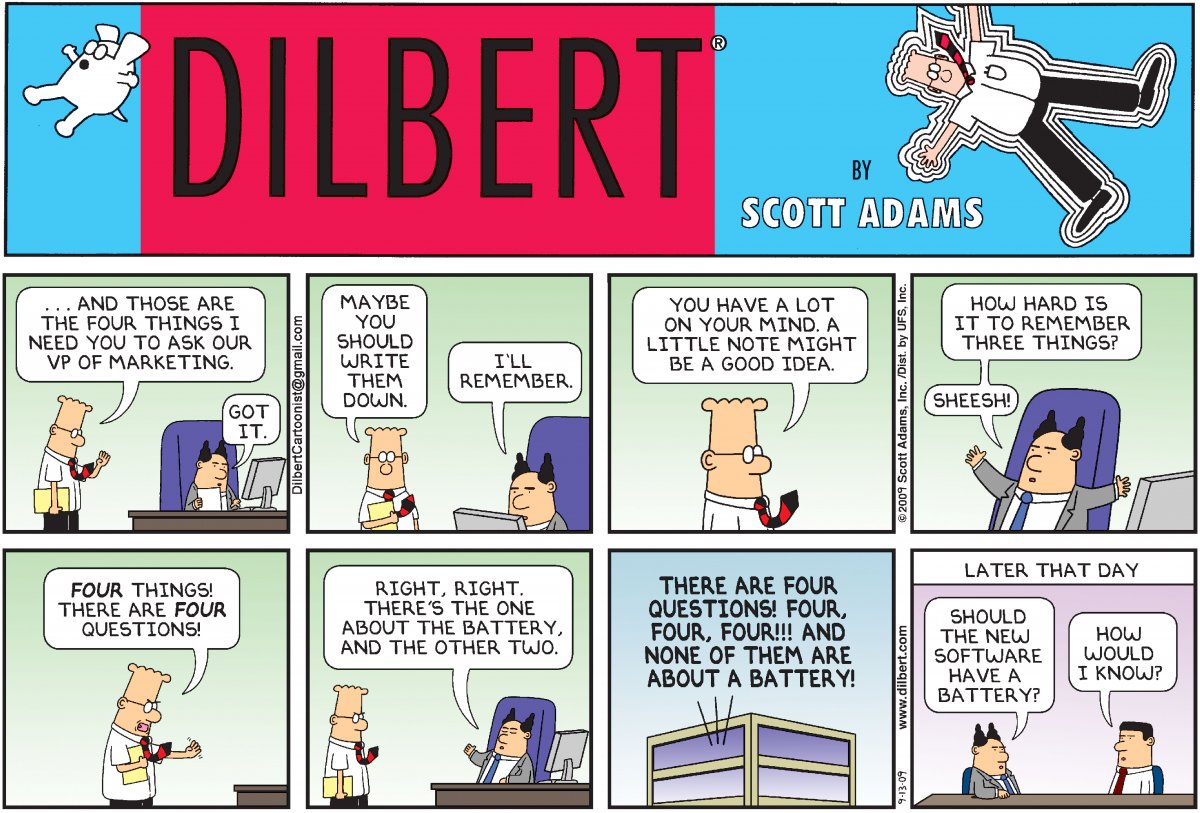
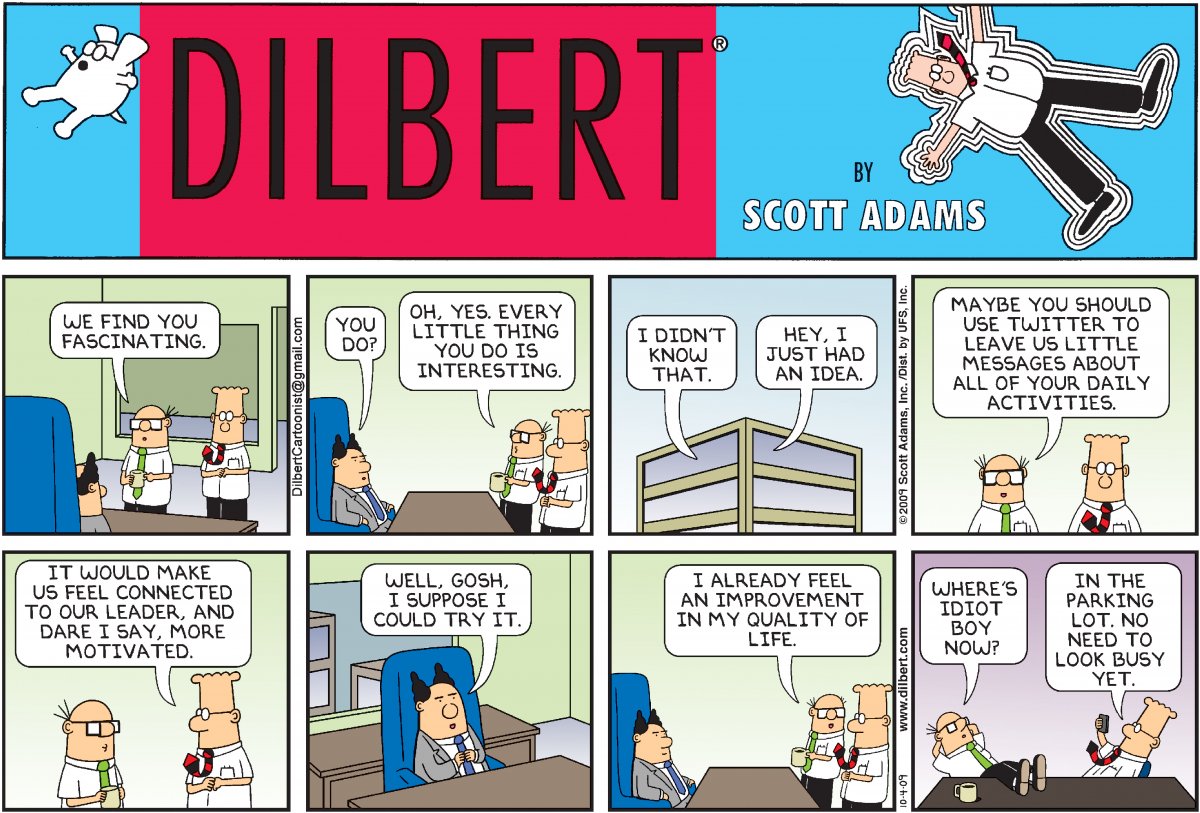
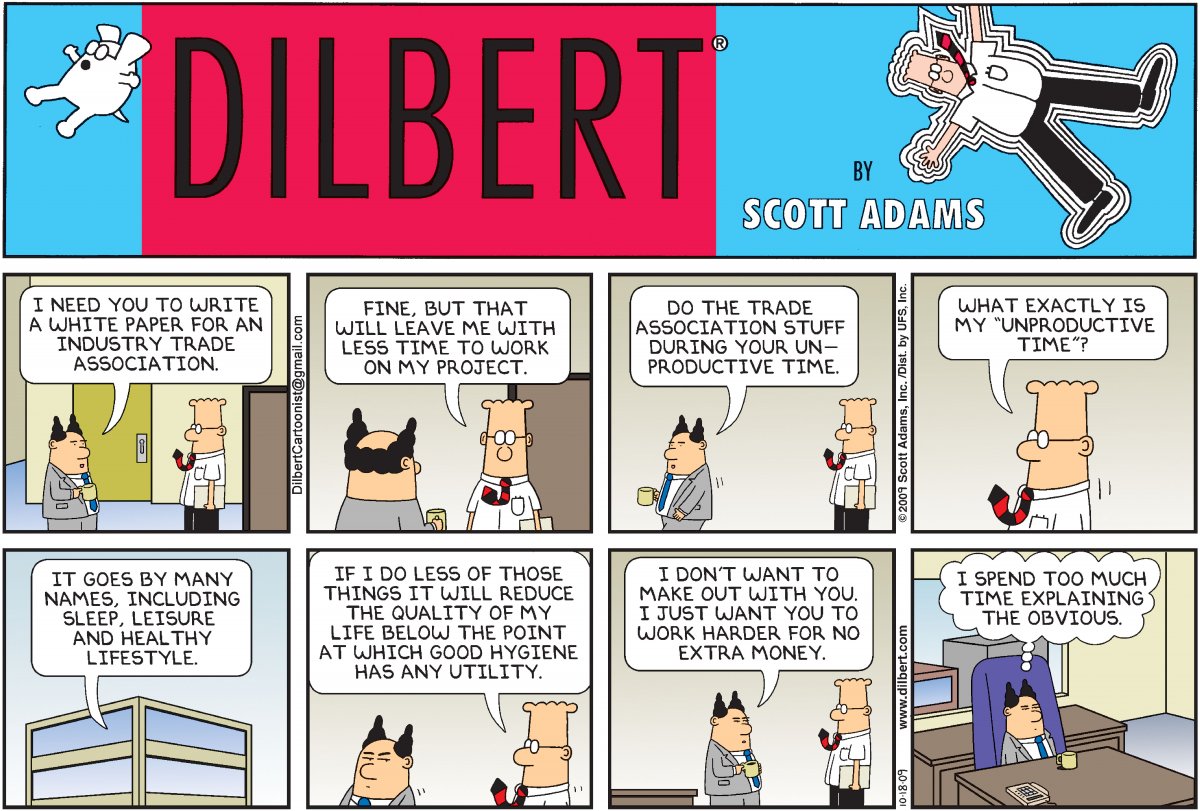
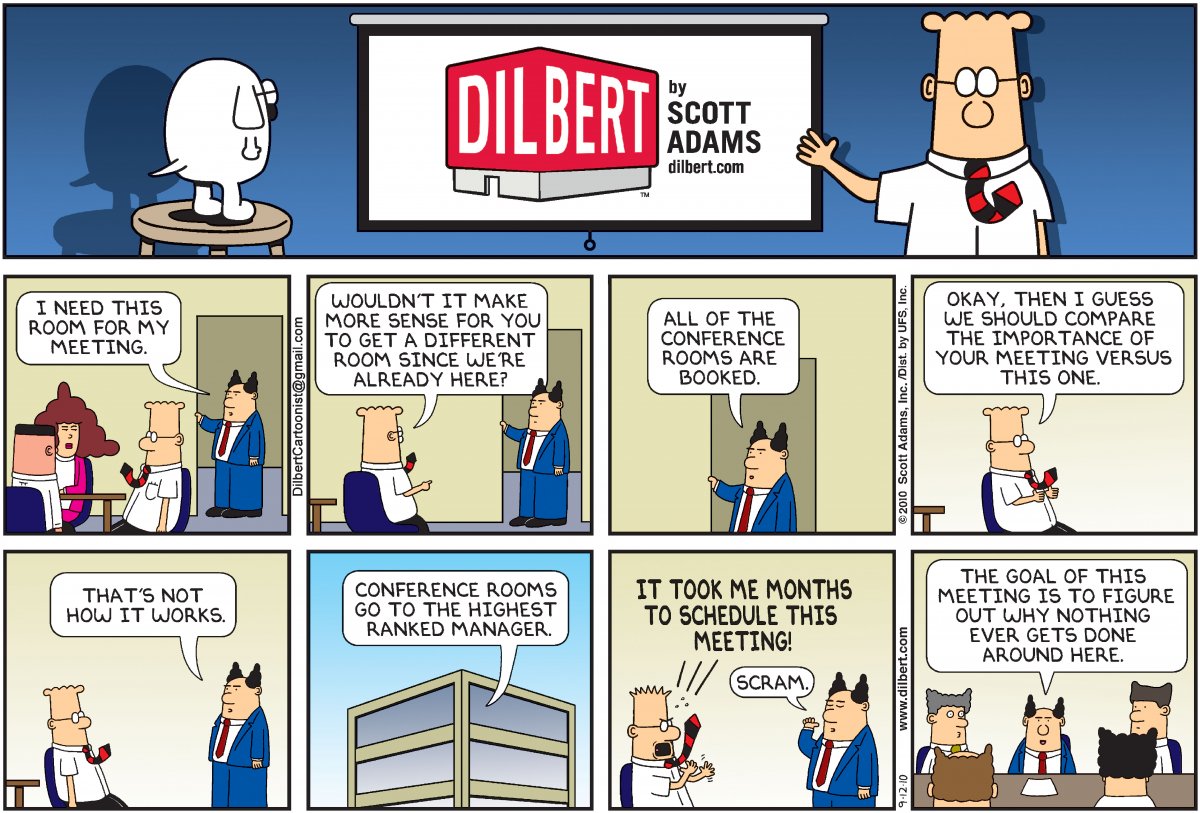
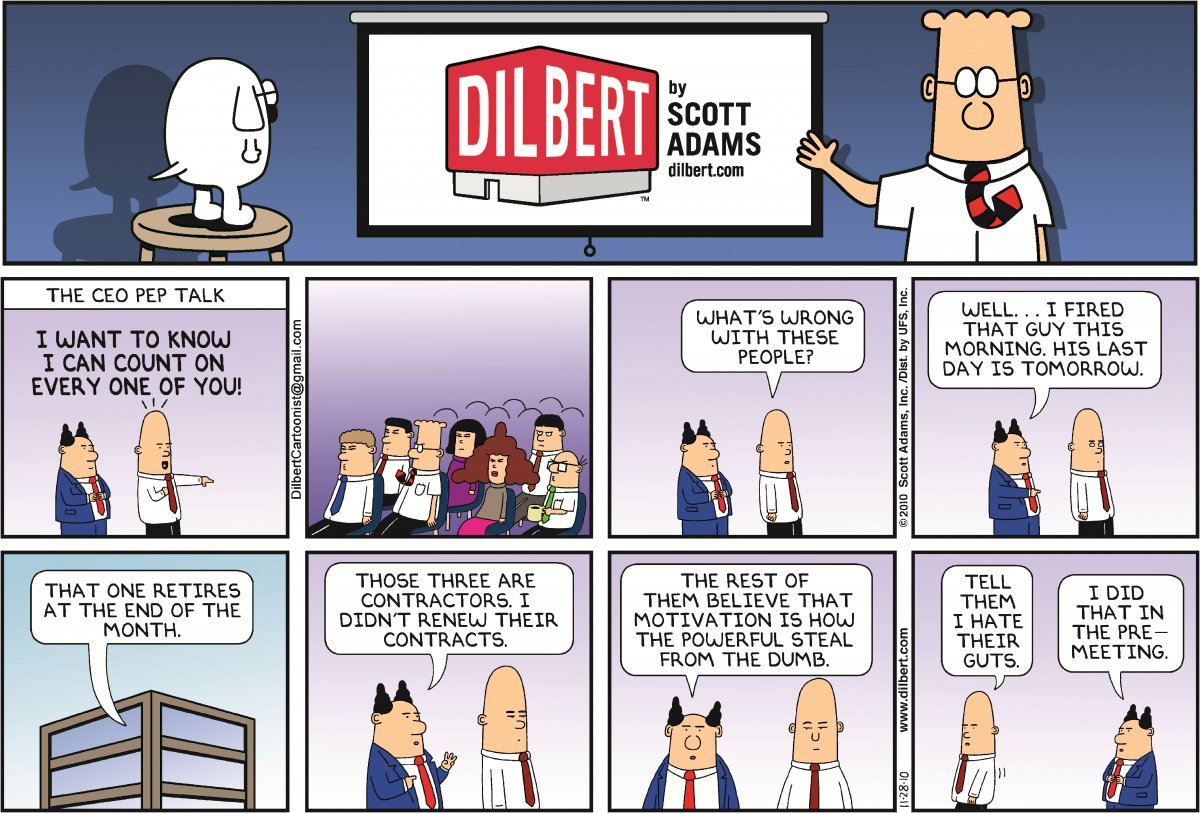
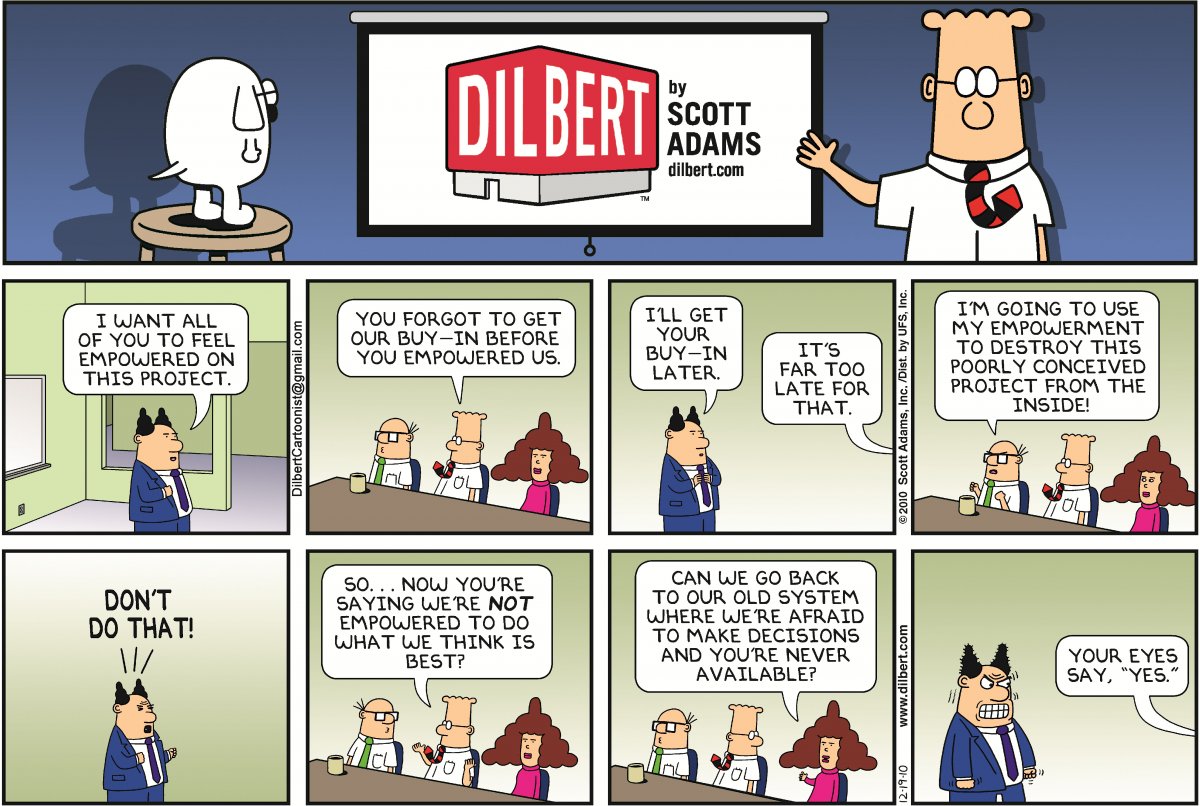
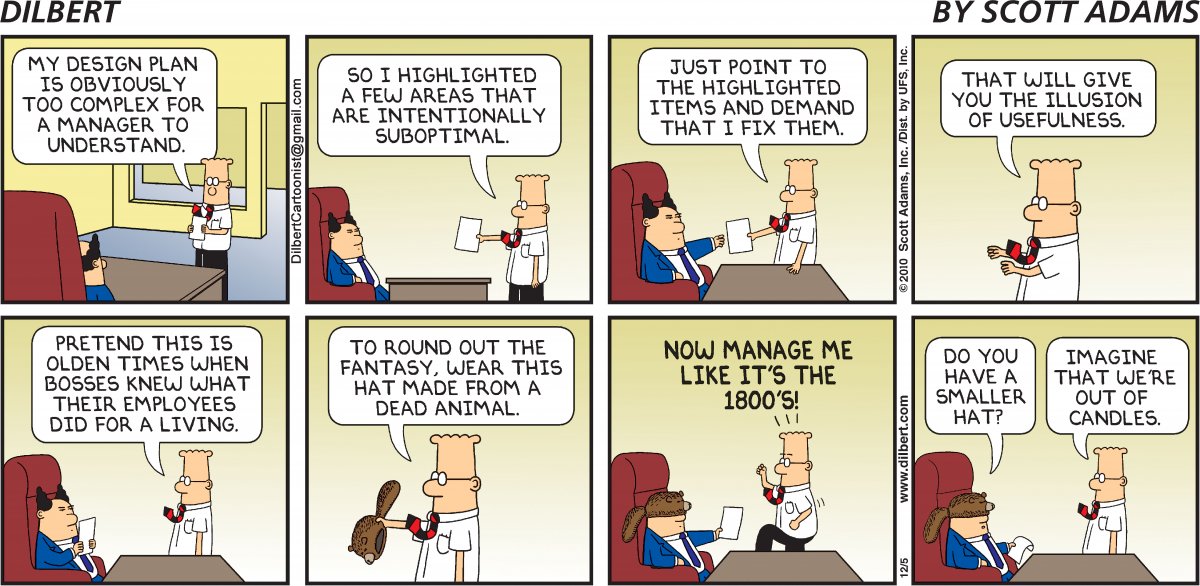
In over two decades of the popular office-centered comic strip Dilbert, the Pointy-Haired Boss has epitomized the idiocies of middle management. He manages by slogan, doesn’t understand what his employees do, and has meetings to discuss the productivity of meetings. The uselessness of management is one of the major themes of Dilbert, Scott Adams, the creator of Dilbert and author of new book “How to Fail at Almost Everything and Still Win Big,” tells Business Insider. “If you’ve ever had a boss, this probably hits home for you.”
For National Boss Day, Adams searched the archives of Dilbert.com and chose his 10 favorite Pointy-Haired Boss strips. Let this be a lesson in what not to do.

august-2001 july-2009 august-2009 september-2009 october-2009 october-2009 (1) september-2010 november-2010 december-2010 december-2010 (1)


Focus: The Hidden Driver of Excellence, by Daniel Goleman

October 16, 2013 6:41 pm

‘Focus: The Hidden Driver of Excellence’, by Daniel Goleman

Review by Adam Palin

Focus: The Hidden Driver of Excellence, by Daniel Goleman,HarperCollins/Bloomsbury, $28.99/£18.99

Please concentrate. Your ability to focus productively is being undermined by the daily bombardment of emails, text messages and audio-visual stimulation. This threat demands our at­tention, Daniel Goleman writes, because focus is the secret of success. A psychologist, former science journalist at The New York Times and author of bestselling book Emotional Intelligence, Goleman appears to have the measure of his readers. In Focus, he cleverly emp­loys short chapters littered with case studies to en­gage professionals swimming against a tide of electronic correspondence. Goleman’s prem­ise is that our ability to block out the massof digital distractions is diminished by the “cognitive exhaustion” they cause. Without finding ways to be focused, we cannot help but be distracted.

Mindlessness – when your thoughts are al­ways wandering – is potentially “the single biggest waster of attention in the workplace”, he says. Developing its opposite – the increasingly popular trait of mindfulness– by training the brain to pay complete attention to the current moment is crucial. Mindfulness al­lows us to concentrate on what is important, and not be distracted by the noise around us. Read more of this post
Innovation Requires More Than Systems and Tools

Innovation Requires More Than Systems and Tools

by Cyril Bouquet , Jean-Louis Barsoux and Julian Birkinshaw | Oct 14, 2013

Broad based engagement in innovation has to be carefully nurtured and actively monitored

Innovation ain’t what it used to be. Once the responsibility of a single department with a clear mission — new product development — today, it is everywhere and involves not just products and services, but processes, technologies, business models, pricing plans and performance management practices – the entire value chain.  As a result, innovation is now the responsibility of the entire organization.  Read more of this post

More Holes Than Cheese: Embracing the Growth Imperative

More Holes Than Cheese: Embracing the Growth Imperative

by Hans-Paul Bürkner, Kermit King, and Nor Azah Razali

OCTOBER 08, 2013

Corporate leaders can be forgiven for taking an increasingly cautious view of the future: growth in the developed markets remains slow while growth in the emerging markets is falling from a once-great height. But those who fail to pursue top-line growth and, instead, focus on cost cutting to improve the bottom line risk falling behind more enterprising competitors. Around the world, and in every industry, sector, and business, there are companies managing to grow fast and to build an enduring lead over their rivals.

BCG’s research (https://www.bcgperspectives.com/content/articles/corporate_strategy_portfolio_management_future_of_strategy_most_adaptive_companies_2012/) shows that the gap in operating margin between corporations in the top-performing quartile (companies achieving high growth and high operating margins) and those in the bottom quartile has widened dramatically as the global economy has become ever more volatile and unpredictable. In 1950, the gap was 13 percent. Sixty years later, it was 59 percent.

What is the secret of the fast-growing companies?

In essence, leaders at these organizations understand that there is a growth imperative. This drives them forward. They see opportunities everywhere, pursue them relentlessly, and never think that their job is done. For these leaders, there is always more commercial space to be conquered. There are always more holes than cheese. Read more of this post
Lessons on Technology and Growth from Small-Business Leaders: Ahead of the Curve

Lessons on Technology and Growth from Small-Business Leaders: Ahead of the Curve

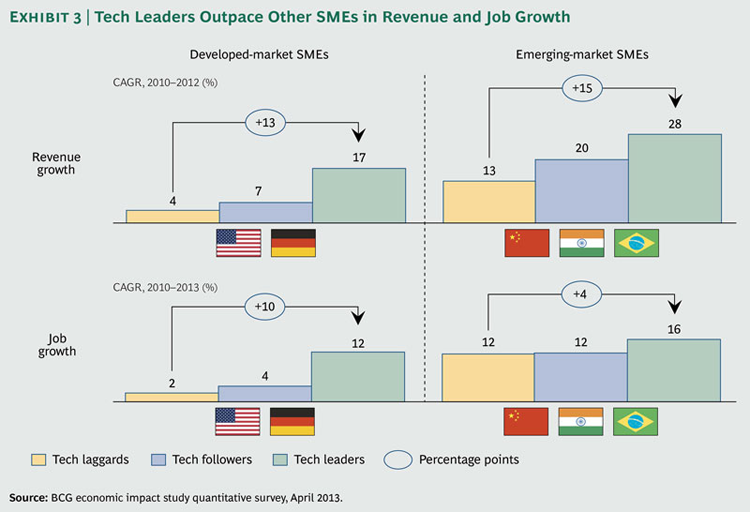
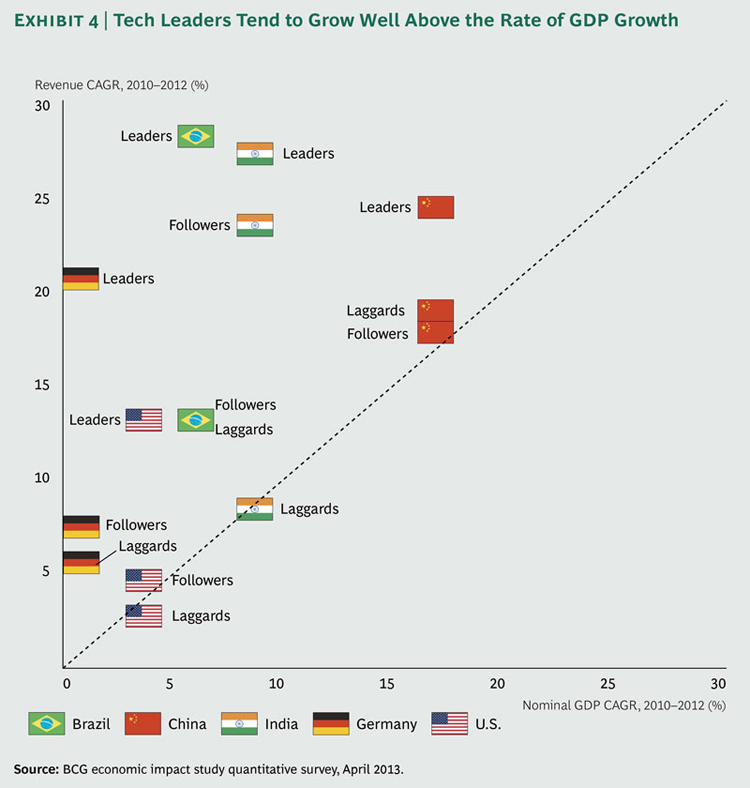
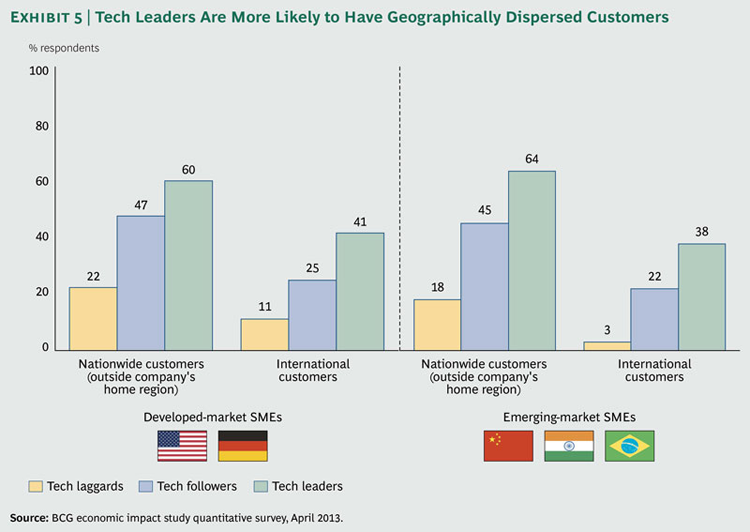
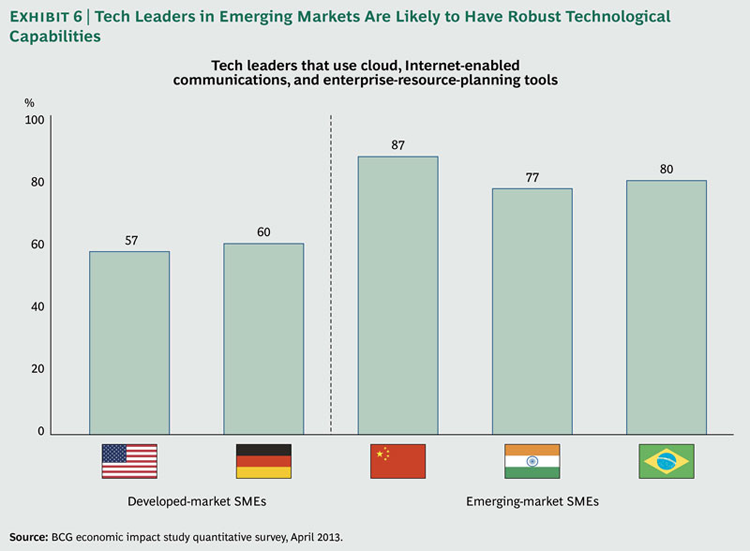
by David C. Michael, Neeraj Aggarwal, Derek Kennedy, John Wenstrup, Michael Rüssman, Ruba Borno, Julia Chen, and Julio Bezerra

OCTOBER 05, 2013

Ahead-of-the-Curve-NEW-ex1_large_tcm80-145777 Ahead-of-the-Curve-ex2_large_tcm80-145780 Ahead-of-the-Curve-ex3_large_tcm80-145783 Ahead-of-the-Curve-ex4_large_tcm80-145786 Ahead-of-the-Curve-ex5_large_tcm80-145789 Ahead-of-the-Curve-ex6_large_tcm80-145798 Ahead-of-the-Curve-ex7_large_tcm80-145792 Ahead-of-the-Curve-sidebar-ex_large_tcm80-145795

Overview

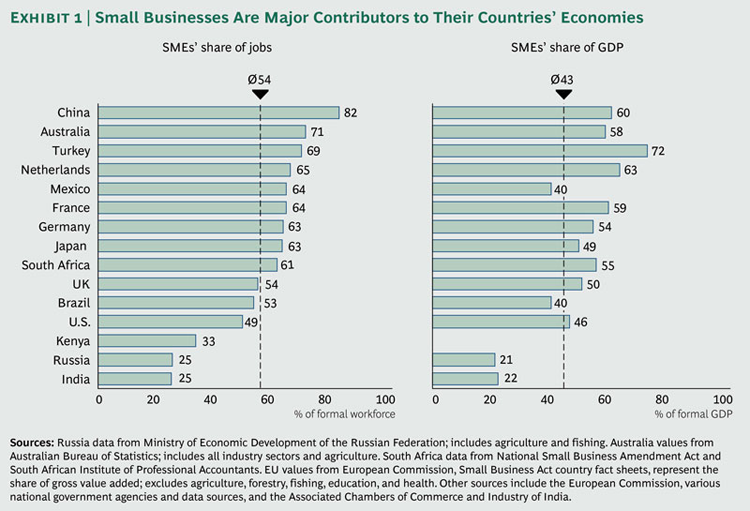
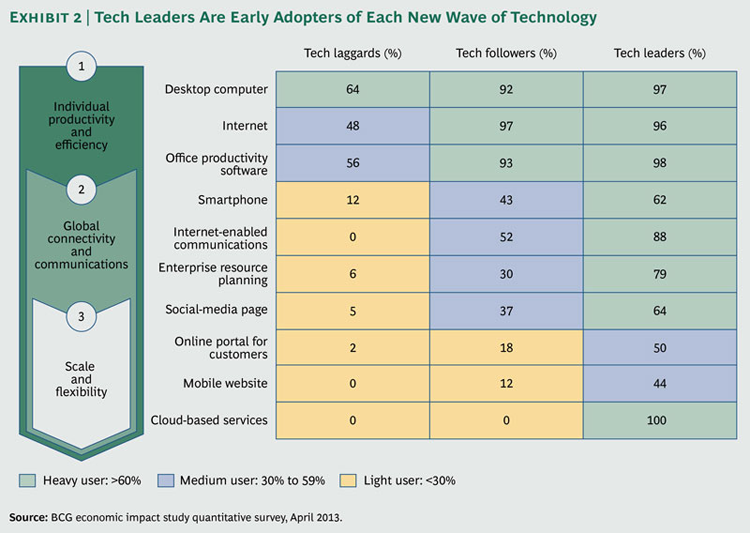
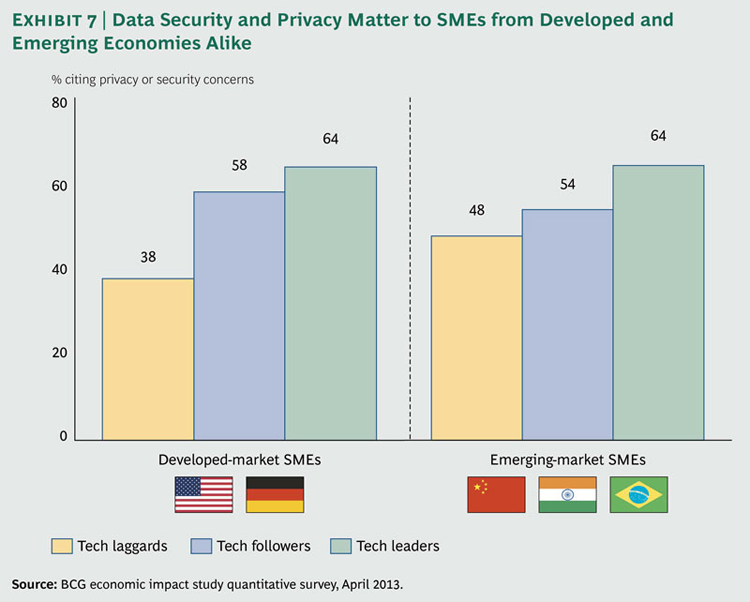
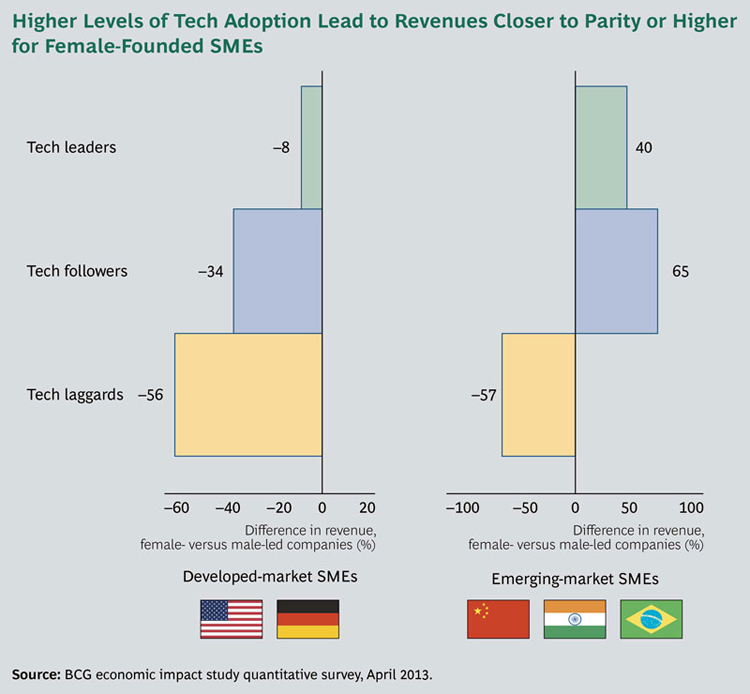
Small and midsize enterprises (SMEs) are critical to fueling economic growth and job creation around the world. Their success matters. As SMEs search for ways to grow, they have the opportunity to embrace a new wave of information technologies. With the advent of the cloud, SMEs can access many of the same technologies as giant multinational companies. Yet the adoption of the latest IT by smaller companies has been decidedly uneven. This new digital divide threatens to widen the performance gap of SMEs as the pace of innovation accelerates. Read more of this post
IKEA’s Path to Selling 150 Million Meatballs: The Swedish furniture giant’s IKEA Food division is a behemoth, rivaling Panera Bread and Arby’s

IKEA’s Path to Selling 150 Million Meatballs

Ordering Up a Simple Swedish-Influenced Menu to Fuel Shoppers

JENS HANSEGARD

Oct. 16, 2013 7:58 p.m. ET

PJ-BR130A_IKEA_G_20131016181835

Meatballs are on the menu at an IKEA in Stockholm, shown—and around the world. Ellen Emmerentze Jervell for The Wall Street Journal

When IKEA decided to sell food, it chose to do it in much the same way it sells furniture: a few standardized staples, sold in large quantities. The result: 150 million meatballs. That is the number IKEA estimates will be dished out in store cafeterias this year. Though the Swedish company is better known for its inexpensive, assembly-required furniture, its IKEA Food division is a behemoth, rivaling Panera Bread and Arby’s, with nearly $2 billion in annual revenue. The company estimates about 700 million people this year will eat in one of the cafeterias that are located in 300 IKEA stores world-wide. Read more of this post
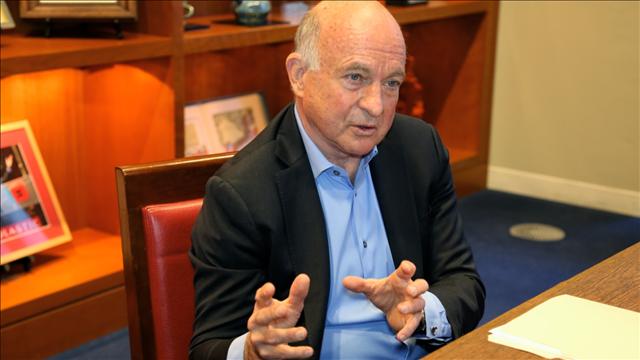
The wonderful world of Japanese law: Yōkoso to endless discovery

The wonderful world of Japanese law: Yōkoso to endless discovery

BY COLIN P.A. JONES

OCT 16, 2013

Having kindly published my intermittent ramblings on Japanese law and the occasional other subject over the years, The Japan Times has seen fit to give me a monthly column.

It seemed appropriate to welcome readers to the inaugural with a couple of headline slogans that the Japanese government has used to encourage tourism. I try to write for “tourists” — the general reader who may be sort of interested in law and the way it affects society but doesn’t do law for a living. Most of my readers are also probably non-Japanese, whose understanding of law is based primarily on what they have learned and experienced in their home country, a background that may make the Japanese system seem very quirky and different. Read more of this post
The push for transparency in CEO pay has pushed compensation even higher

OPEN SEASON

by James SurowieckiOCTOBER 21, 2013

In 1965, America’s big companies had a hell of a year. The stock market was booming. Sales were rising briskly, profit margins were fat, and corporate profits as a percentage of G.D.P. were at an all-time high. Almost half a century later, some things look much the same: big American companies have had a hell of a year, with the stock market soaring, margins strong, and profits hitting a new all-time high. But there’s one very noticeable difference. In 1965, C.E.O.s at big companies earned, on average, about twenty times as much as their typical employee. These days, C.E.O.s earn about two hundred and seventy times as much. Read more of this post
Amazon Has A Brutal System For Employees Trying To Get Promoted

Amazon Has A Brutal System For Employees Trying To Get Promoted

JAY YAROW OCT. 16, 2013, 8:56 AM 24,140 31

Getting a promotion at Amazon isn’t easy, Brad Stone of Bloomberg Businessweek reports. Here’s the way it works. To get ahead at Amazon, your boss has to debate why you deserve a promotion with other managers from the company. If he or she makes an effective case on your behalf, then you get the nod. If not, you wait another 12 months. These debates take place at two different meetings during the year. In the first meeting of the year, usually in February or March, according to a leaked presentation of how the system works, the senior staff talks about employees to see who’s doing well, and who isn’t, and who is getting a promotion. In the second meeting, which takes place in September or October, the leaders talk some more about who’s getting a promotion, and talk about who is doing well and who is doing poorly. Amazon’s managers group employees into three tiers: The top 20%, who are groomed for promotions, the next 70% who are kept happy, and the bottom 10%, who are either let go, or told to get it together. This system, which was created by Jeff Bezos, is supposed to cut down on politics and in-fighting. Unfortunately, Stone says it has the opposite effect. “Ambitious employees tend to spend months having lunch and coffee with their boss’s peers to ensure a positive outcome once the topic of their proposed promotion is raised in [the meetings],” says Stone. Stone also notes that promotions are very limited at Amazon, so if you fight for your employee to get a promotion, it means someone else’s employee gets snubbed. And anyone in the room can nuke someone else’s promotion.

A Kinder, Gentler Airport TSA Screening Checkpoint; Can Mood Lights, Nature Pictures and Piped-in Pandora Ease the Aggravation?

A Kinder, Gentler Airport TSA Screening Checkpoint

Can Mood Lights, Nature Pictures and Piped-in Pandora Ease the Aggravation?

SCOTT MCCARTNEY

Oct. 16, 2013 7:00 p.m. ET

Can a TSA airport checkpoint be made calmer and more hospitable? That’s what a few airports and a private company are now trying to do. Scott McCartney has a first look on the News Hub. A private company is working with airports to try to infuse calm and comfort into a very inhospitable place: the security checkpoint. SecurityPoint Media and Dallas-Fort Worth International Airport opened the first new checkpoint on Sunday, with the second to open at Charlotte-Douglas International Airport in North Carolina on Thursday. Read more of this post

Who owns English in a global market? Are the rules set by people who grew up speaking the language or those who learnt it later?

October 16, 2013 3:45 pm

Who owns English in a global market?

By Michael Skapinker

Are the rules set by people who grew up speaking the language or those who learnt it later? Asquabble – a civilised one, this being the Financial Times – occurred beneath one of my recent columns. It was about who sets the rules for English – those who grew up speaking the language or those who learnt it later? Reader Alan G wrote: “The challenge for native speakers is to keep up with the pace of change, not to promote the increasingly futile attempts to fossilise the language.” Read more of this post

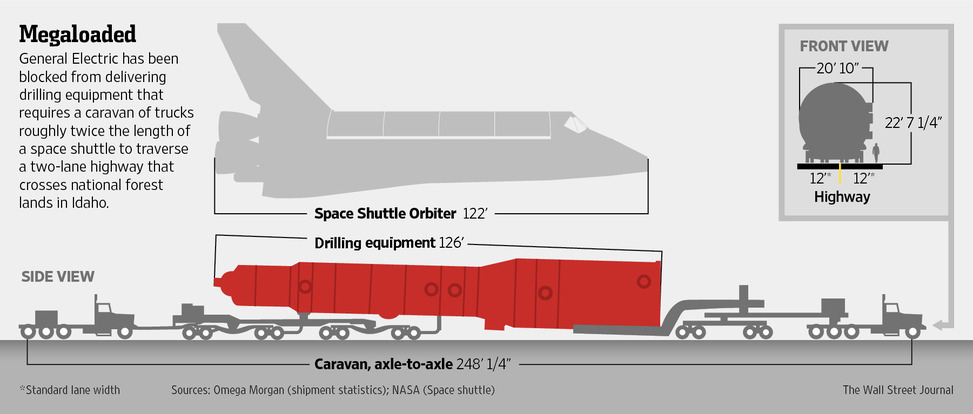
General Electric gambled it could move machinery the size of a Space Shuttle orbiter via an Idaho highway despite failed efforts by others to use the same road in what so far has been a costly miscalculation

Road Too Far: GE Strains to Deliver Energy Colossus

Conglomerate’s Effort to Use Scenic Road to Move Giant Machine Stalls

KATE LINEBAUGH

Oct. 16, 2013 6:27 p.m. ET

MK-CH101A_GEGIA_G_20131016183304

General Electric Co. GE +0.70% has a colossal problem. The industrial conglomerate makes a machine the size of a Space Shuttle orbiter that can extract crude oil from the depths of the Canadian oil sands. But first it has to get it there, and the only way is a road a federal judge says GE can’t use. Last week, GE lost an attempt to overrule a federal injunction preventing it from using a stretch of scenic Idaho highway to haul the giant piece of equipment, called a water evaporator. It has appealed the injunction. For now, though, the evaporator is stuck near the Port of Wilma in Clarkston, Wash., without a way to get to its destination hundreds of miles away in Alberta, Canada.

Read more of this post
Why Hospital CEOs Make So Much Money

Why Hospital CEOs Make So Much Money

RICHARD GUNDERMAN THE ATLANTIC
OCT. 16, 2013, 3:48 PM 1,536 4

Can you tell how good a job hospital CEOs are doing by the amount they are paid? A study by investigators at the Harvard School of Public Health this week suggests that the answer is no. Published in the Journal of the American Medical Association: Internal Medicine, the study found no link between nonprofit CEO pay and a number of important hospital quality indicators, including mortality rates, readmission rates, and the amount of charity care such institutions provide. Read more of this post

Water Spider From 520 Million Years Ago Solves Puzzle

Water Spider From 520 Million Years Ago Solves Puzzle

The fossil of an extinct marine spider, discovered in China 520 million years after it lived in the ocean, have helped scientists solve an ancestral puzzle on where the anthropod fits on the evolutionary map. Using comparisons of central nervous systems, scientists were able to prove that megacheirans, the name given to the extinct group, are related to chelicerates, which include spiders and scorpions, according to a study in the journal Nature today. The findings also show that the 3-centimeter-long (1.2-inch-long) spider’s ancestors branched off from the family tree of other arthropods, which include insects, crabs and millipedes, more than half a billion years ago. Read more of this post

Scholastic CEO Dick Robinson on running a family company and hiring employees who get classroom culture.

Scholastic Graduates to Educational Software

JEFFREY A. TRACHTENBERG

Oct. 15, 2013 10:07 p.m. ET

BN-AA003_SCHL10_G_20131015224202 101513scholastic_640x360

Scholastic CEO Dick Robinson on running a family company and hiring employees who get classroom culture.

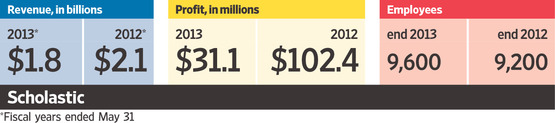
Children’s book publisher Scholastic Corp. SCHL +0.07% has long depended on its ability to generate blockbuster pop culture titles such as the “Harry Potter” and “Hunger Games” series. Now its chief executive, Richard Robinson, is counting on a different kind of wizardry to spur growth over the next few years: educational technology, particularly new software programs designed to sharpen reading and math skills. Scholastic this summer released four new software programs intended to help the publishing and distribution company capture a larger slice of the estimated $9.8 billion that will be spent in 2013 on K-12 textbooks and instructional materials. Read more of this post

Shiller’s Lesson: Housing Was Never a Great Investment

Shiller’s Lesson: Housing Was Never a Great Investment

You have probably heard it a million times: Buying housing is better than renting because renters forgo the opportunity to accumulate equity in real estate. There was even a time when people thought that it was worth promoting homeownership because it reduced crime, although more recent research has found that areas with high rates of homeownership have less flexible labor markets and lower rates of entrepreneurship. Yet the biggest problem with the conventional wisdom is that home equity just isn’t a great place to put your money — especially if the tax code ever gets fixed. This doesn’t mean that buying is inherently inferior to renting, but it does mean that many prospective buyers might be better off renting and accumulating wealth in other ways. Read more of this post

Two of the Nobel economics winners appear, on first glance, to be polar opposites; the ideas of the two winners are ultimately complementary

Clash of the Financial Titans

Oct 15, 2013

Financial market observers may have suffered a bit of cognitive whiplash with this week’s announcement of the joint winners of the Nobel Prize in economics. Two of the winners appear, on first glance, to be polar opposites. Eugene Fama is the father of the iconic efficient markets theory, and Robert Shiller suggests that markets are anything but efficient – often greatly overreacting or underreacting to new information. But Wharton finance professor Amir Yaron says that the ideas of the two winners are ultimately complementary. In this Knowledge@Wharton podcast, he explains why. Read more of this post

Forcing Yourself To Think Positively Can Actually Hurt Productivity

Forcing Yourself To Think Positively Can Actually Hurt Productivity

VIVIAN GIANG OCT. 15, 2013, 7:01 PM 1,104

If you’re naturally a pessimist, thinking positively will only hurt you professionally. In general, most people assume that happier people work better, outperforming their unhappier colleagues, writes Wharton professor Adam Grant in his LinkedIn post. “We think it’s a good idea to encourage people, but not so fast,” he writes.  Surprisingly, both pessimists and optimists perform at the same rate, but their strategies for attaining success are different. Optimistic people set high expectations and benefit from confidence, whereas pessimistic people set lower expectations but their anxiety and negative thinking push them to try harder, according to a series of studies published in the Journal of Personality and Social Psychology. The study says that “positive mood impairs the performance of defensive pessimists.” “The encouragement boosted their confidence, quelling their anxiety and interfering with their efforts to set low expectations,” Grant says. “When they’re in a good mood, they become complacent; they no longer have the anxiety that typically mobilizes their effort. If you want to sabotage defensive pessimists, just make them happy.”

Adam Grant

Wharton professor and author of GIVE AND TAKE

The Positive Power of Negative Thinking

If you want to achieve a major goal, conventional wisdom says to think positive. Picture yourself delivering the perfect presentation, and absorb the energy of the audience. Envision the ideal job interview, and imagine yourself on cloud nine when you get the offer. Although these strategies sound compelling, it turns out that they often backfire. Many of us are more successful when we focus on the reasons that we’re likely to fail. Read more of this post

How Silicon Valley limits your thinking

How Silicon Valley limits your thinking

BY FRANCISCO DAO 
ON OCTOBER 15, 2013

People often point out the “anything is possible” spirit of Silicon Valley, but there’s a downside to the constant talk. For those still searching for their true calling, or even just an opportunity that resonates with them, the entrepreneurial buzz is both distracting and surprisingly narrow. I saw this firsthand when my intern recently asked me, “How does a person find their professional path? Silicon Valley is a very confusing place to do that I’ve come to notice. I’m realizing how much more confusing Silicon Valley makes it with all the ‘do what you love’ …and incredible speed at which everything goes.” Read more of this post

King of the lock-up garage: Rodger Dudding has built an empire from unglamorous property

October 15, 2013 4:59 pm

King of the lock-up garage

By James Pickford

event_05

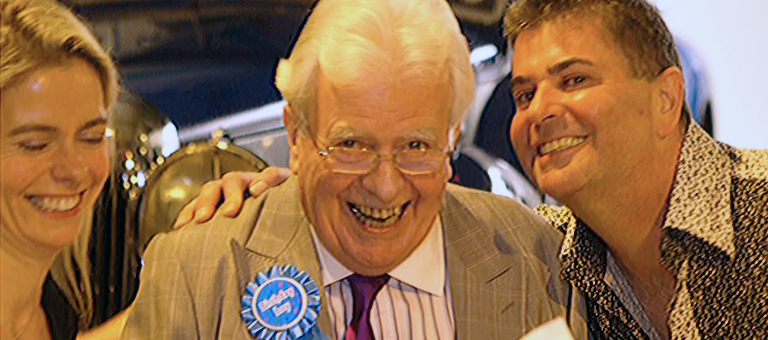
Rodger Dudding and his classic car collection, which was largely financed by his lucrative lock-up business

Rodger Dudding is pulling back from his business. “I’m winding down – I’m only working seven days a week,” he says. The hyperactive 75-year-old, dressed in a black pinstripe shirt with monogrammed cuffs, would have every justification to shift down a gear. Over a long career he has accumulated personal assets of £150m by building an empire in an unglamorous but increasingly valuable corner of the property market: lock-up garages. Read more of this post

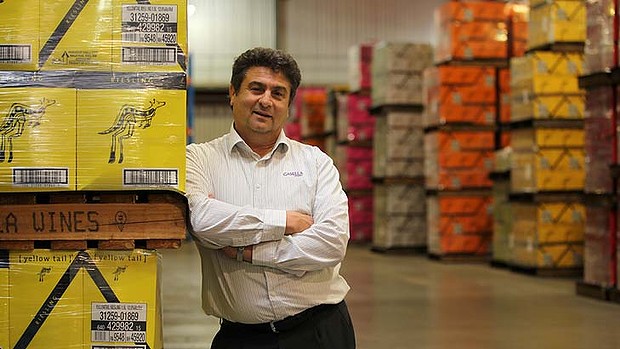
John Casella, the man behind Australia’s second biggest wine exporter, has urged the wine industry to focus on innovation as he slammed critics who blame his winery’s Yellow Tail label for undermining premium wine sales abroad. Casella toasts billionth Yellow Tail

John Casella slams critics of his cheap Yellow Tail wine

PUBLISHED: 15 OCT 2013 19:48:00 | UPDATED: 16 OCT 2013 08:29:32

JULIE-ANNE SPRAGUE

art-casella-620x349

John Casella, the man behind Australia’s second biggest wine exporter, has urged the wine industry to focus on innovation as he slammed critics who blame his winery’s Yellow Tail label for undermining premium wine sales abroad. Casella Wines, founded by Mr Casella’s parents Filippo and Maria in 1969, has bottled its one billionth bottle of Yellow Tail and is embarking on a fresh shake-up of the wine market to tap new profit streams through the release of products such as a pre-mixed Sangria and sparkling sauvginon blanc. It is also preparing to enter the fast growing cider market with its beer joint venture partner Coca-Cola Amatil, through a new cider called Pressman.

Read more of this post

Fast 100 lesson: Tyro has always been ‘culturally strong’, now it’s also profitable – it’s not a coincidence; “We have professionals here who are very talented and the worst thing you can do is deprive them of trust, autonomy and creativity”

Leo D’Angelo Fisher Columnist

Fast 100 lesson: Tyro has always been ‘culturally strong’, now it’s also profitable – it’s not a coincidence

Published 16 October 2013 11:55, Updated 16 October 2013 14:54


b917add2-35fd-11e3-94a7-1378f03bd3e7_530646979--318x212_6_0_3519890159--646x363

Jost Stollmann of Tyro. Photo: Steven Siewert

For years Jost Stollmann, the chief executive of eftpos services start-up Tyro Payments, considered success to be survival. A good year was breaking even. Amidst the intense pressure of taking on the major banks in their own back yard, Stollmann was determined to build a culture at Tyro that would ensure the company’s long-term success. “This is a culturally strong company,” he says. His proudest boast is that Tyro is a “very hierarchy-averse” business that “fosters enduring creativity and productivity”. “Where does hierarchy help you? It doesn’t. The opposite is true. Hierarchy is a system based on distrust, it is averse to learning,” Stollmann tells BRW. “Peer culture is conducive to learning; hierarchy is not.” Read more of this post

Regrets, they’ve had a few: what the Fast 100 would have done differently

Ben Hurley Reporter

Regrets, they’ve had a few: what the Fast 100 would have done differently

Published 16 October 2013 11:31, Updated 16 October 2013 12:28

Every entrepreneur has regrets. And, like failure on the course to success, regrets should be celebrated as wisdom is gained. So here are some gems from this year’s BRW list of Fast 100 companies, which will be announced in full at an event in Melbourne this evening. Common themes are that companies wish they had been more strategic from the start rather than bogged down in the minutiae of running the business, invested more of their scarce funds in marketing and hiring great staff, outsourced more functions to allow them to focus on their core skills, and taken more external money and advice. Easily said of course, but food for thought. This last theme of taking more money early is pertinent, because 60 per cent of the Fast 100 say they were founded with less than $50,000, most of it from savings. And three-quarters have not raised additional rounds of capital. Would they be bigger today if they had?

Read more of this post

How An 11-Year-Old Convinced Abraham Lincoln To Grow A Beard; There are more portraits of Lincoln’s face in existence than any other face in the world

How An 11-Year-Old Convinced Abraham Lincoln To Grow A Beard

PAMELA ENGEL OCT. 15, 2013, 9:47 AM 1,466 1

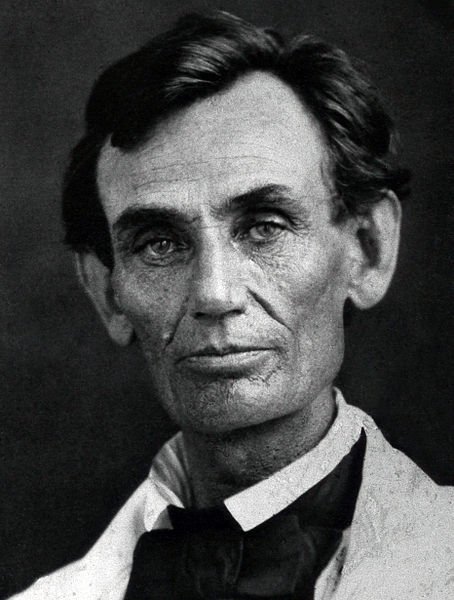
On Oct. 15, 1860 — 153 years ago today — 11-year-old Grace Bedell wrote a letter to Abraham Lincoln suggesting he grow a beard for the presidential election. Bedell said in her letter that Lincoln may be more attractive to ladies if he had a beard: “I have got 4 brothers and part of them will vote for you any way and if you let your whiskers grow I will try and get the rest of them to vote for you. you would look a great deal better for your face is so thin. All the ladies like whiskers and they would tease their husbands to vote for you and then you would be President.” Lincoln wrote her back, and days after the election, he decided to grow a beard, according to The New York Times. His response, according to records in the Library of Congress: “As to the whiskers, having never worn any, do you not think people would call it a piece of silly affectation if I were to begin it now?” Although Lincoln seemed unsure of Bedell’s advice initially, he eventually orchestrated a meeting with her after he was elected and told her he had taken her advice. There are more portraits of Lincoln’s face in existence than any other face in the world, according to the Times.

screen shot 2013-09-16 at 9.23.38 am abraham lincoln no beard

LeBron’s Brilliant Response To The Idea That He Doesn’t Have A ‘Killer Instinct’ Like Michael Jordan

LeBron’s Brilliant Response To The Idea That He Doesn’t Have A ‘Killer Instinct’ Like Michael Jordan

TONY MANFRED OCT. 15, 2013, 3:43 PM 9,341 3

There’s a great interview with LeBron James in the newest ESPN The Magazine. He talks a lot about Michael Jordan. At one point, ESPN’s Chris Broussard asks him about the popular notion that he doesn’t have a Jordan-like “killer instinct.” The consensus among some NBA fans is that MJ was one of the most maniacally competitive people ever, whereas LeBron is a weaker personality. LeBron’s response to that is absolutely brilliant and self-aware. He makes an analogy to wild predatory animals — saying there’s more than one way to kill. Here’s what he told ESPN: Read more of this post

What makes a perfect employee

Updated: Tuesday October 15, 2013 MYT 12:44:50 PM

What makes a perfect employee

BY ELISA DASS

Branson: ‘The idea perceived as most profitable should be given an opportunity to be seeded, watered and grown!’

I HAVE a group of friends who often joke about what makes the perfect “employee” – the yes-man; the one who doesn’t fight very hard for promotions or remunerations, takes on extra work based on empty promises and is afraid to venture out of the company in fear that no one would “appreciate” them as much elsewhere. These remarks were, of course, made with the underlying message that our perfect employee friends should be more courageous to venture into something on their own. Needless to say, these jokes are made by the entrepreneurs in our midst who have it set in their minds that they would not work for another entrepreneur again. These courageous friends of ours have definitely braved the seemingly scary world of not having a constant stream of income, having an endless stream of profitable ideas, and absolutely enjoy not having any anxiety about year-end appraisals! Read more of this post