Banks Said to Snitch on FX Competitors in Race to Avoid EU Fines

Banks Said to Snitch on FX Competitors in Race to Avoid EU Fines

Banks are racing to betray their competitors to avoid possible European Union fines for rigging foreign-exchange markets, according to a person with knowledge of the EU’s preliminary investigation. Read more of this post

As stocks hit record highs, so do profit warnings; There are 10 companies warning of a profit shortfall per each positive call

As stocks hit record highs, so do profit warnings

Adam Shell, USA TODAY7:54 a.m. EST December 12, 2013

Even though CEOs are warning of profit misses at a pace not seen since 2001, Wall Street pros say cautious CEO guidance won’t derail the mighty bull.

STORY HIGHLIGHTS

Profit warnings spike; on track for worst showing since 2001

There are 10 companies warning of a profit shortfall per each positive call

Wall Street takes note, but says market won’t be derailed by CEO profit confessions Read more of this post

A bull market without buyers

A bull market without buyers

Dan McCrum

| Dec 16 13:34 | 1 comment | Share

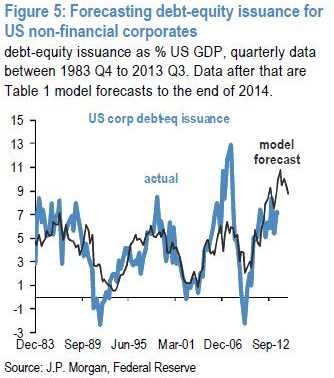
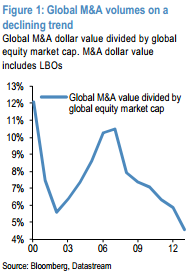
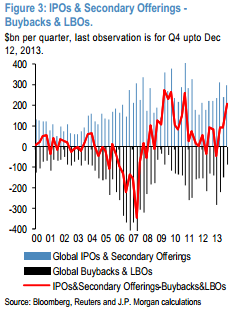
A particular kind of buyer, at any rate. Talk of corporate cash piles has become cliché, while private equity has been turning a corner for so long it has entered some sort of fee-paying mobius strip. But it remains the case that stock markets have gone up without many purchases of companies in their entirety.

2013-12-16-09.16.31-am 2013-12-16-09.20.29-am ScreenShot027

Read more of this post

Index Effect Raises New Concerns

Index Effect Raises New Concerns

Paul Amery

December 05, 2013

In the 1970s an economic advisor to the Bank of England defined a rule that is still used. According to Charles Goodhart, “when a measure becomes a target, it ceases to be a good measure”. Read more of this post

How Turkey’s Troubles Could Spread in Emerging Markets

DECEMBER 20, 2013, 7:32 PM

How Turkey’s Troubles Could Spread in Emerging Markets

By LANDON THOMAS JR.

As Turkey struggles to contain its latest political crisis, fears of a run on its currency — dormant since the summer — have quickly re-emerged. After arrests this week of Prime Minister Recep Tayyip Erdogan’s political and economic allies, the Turkish lira has plunged. The dollar reached a high of 2.092 against the lira, as foreign investors sold Turkish stocks and bonds and Turks shifted their savings into dollars. Read more of this post

Fidelity’s feverish fee cuts a bid to cure market share woes; How low will it go? Battle against Vanguard becomes a war of basis points

Fidelity’s feverish fee cuts a bid to cure market share woes

How low will it go? Battle against Vanguard becomes a war of basis points

By Jason Kephart   |  December 6, 2013 – 11:54 am EST

“Vanguarditis,” the asset manager infection that leads to fee cuts and happier advisers, has worked its way into the heart of the Boston Behemoth. Over the past few weeks, Fidelity Investments has made strategic fee cuts and launched new products to ensure that its products are the cheapest in two categories in which the Vanguard Group Inc. has been eating their lunch for a decade. Read more of this post

Christmas trees are a small but highly profitable part of the timber industry, where profit can be decades in coming

December 20, 2013

How Lucrative Thy Branches

By PAUL SULLIVAN

Chris Botek, a tree grower in Leighton, Pa., is used to people being shocked by how much his Christmas trees cost. “People come from the city and they’re used to paying $150 to $200 a tree,” he said. They look at you and say, ‘Are you kidding me?’ ” Mr. Botek gets $6.25 a foot — that’s $50 for a fresher version of that eight-foot tree sitting on an urban sidewalk. Read more of this post

Investment Fads and Themes, 1996-2013

Investment Fads and Themes, 1996-2013

Joshua M Brown

December 12th, 2013

investment-fads-themes

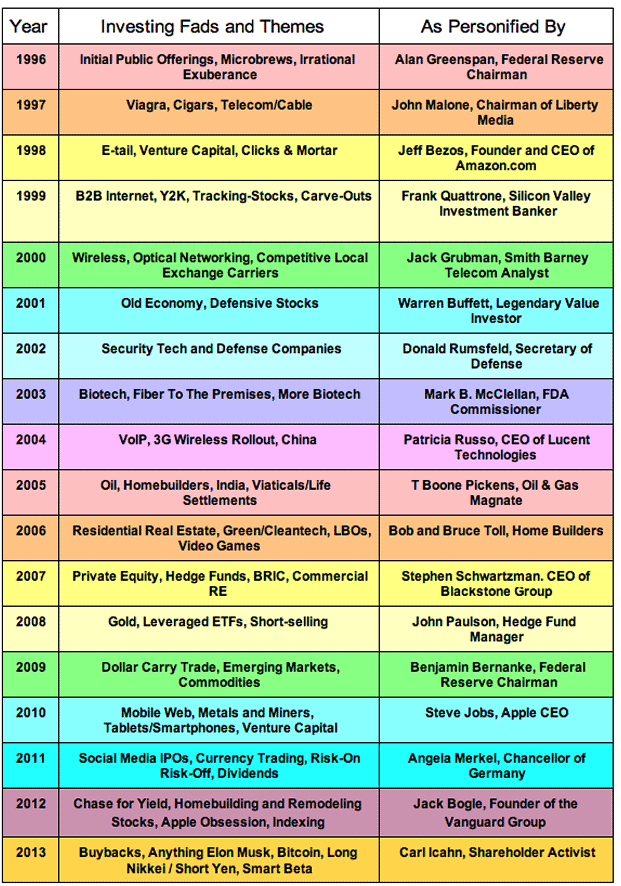
Another year in the books and I’ve updated my Investing Fads and Themes by Year guide accordingly. It begins with 1996 because that was my first summer working on The Street and my earliest exposure to the market. I do this every December because I agree with the eminent philosopher Bob Marley when he reminds us “If you know your history, then you would know where you’re coming from.” If we don’t keep tabs and learn from the lunacy that grips us from year to year, then how can we truly say that we’ve grown as investors? Read more of this post

Death of the contrarian

Death of the contrarian

Dan McCrum

| Dec 19 16:30 | 3 comments | Share

ScreenShot035-590x403

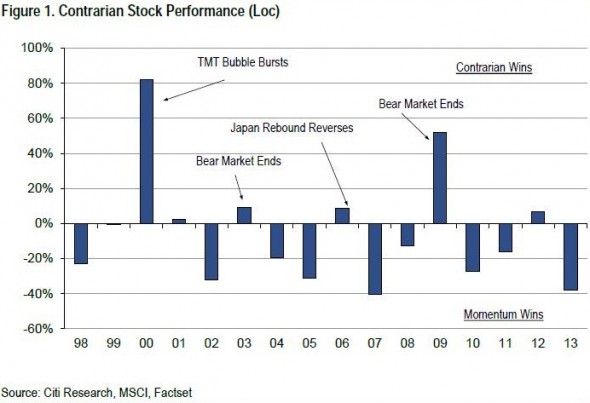
It has been a year to jump on a bandwagon sailing with the wind at the heart of the pack. Momentum, baby. Let Citi paint you a picture: A two-year, 40 per cent rally in global equities is not the time to be a contrarian (unless you were the bold type calling for it back in the dog days of 2012). Still, Citi warns that the contrarians do tend to do well in January, and they won’t give up: Read more of this post

Bursting the Stock-Market-Bubble Bubble

Bursting the Stock-Market-Bubble Bubble

JUSTIN LAHART

Dec. 15, 2013 1:46 p.m. ET

MI-CA230_BUBBLE_G_20131215203605

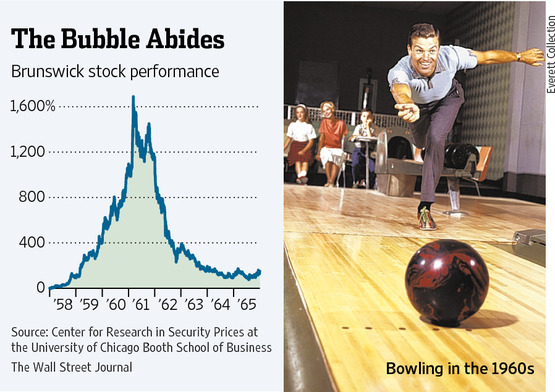
No, stocks are not in a bubble. But that doesn’t mean investors must like them. With the S&P 500 up a blistering 25% this year, and with stocks like Tesla MotorsTSLA +1.79% sporting valuations that strain belief, the word “bubble” has been getting batted around a lot lately. Case in point: Over the past three months, a Factiva search returns 391 news articles with “bubble” in close proximity to “stock market”, up from 130 over the same period last year. Read more of this post

Is the stock market still a playground for the rich? Everyday investors are wary of stock investing

Dec. 13, 2013, 6:15 a.m. EST

Is the stock market still a playground for the rich?

Opinion: Everyday investors are wary of stock investing

By Howard Gold

As stocks keep hitting new milestones, more and more pundits worry we’re in another stock market bubble.

They cite record margin debt, euphoria over initial public offerings like that of Twitter (NYSE:TWTR)  , and, of course, the big run we’ve already seen in the major indices. Read more of this post

How Government Policies and Processes Are Hurting Innovation in China

How Government Policies and Processes Are Hurting Innovation in China

Dec 20, 2013 Strategic Management Asia-Pacific China

While China’s development over the last 30 years has been widely characterized as catching up to other, more advanced economies, some observers suggest that continued growth going forward will depend on the country’s capacity to innovate. According to Ernst & Young’s 2012 report, China’s Productivity Imperative, China’s total factory productivity fell from 4.7% during 2001-2007 to 2.8% during 2008-2010. As the opportunities for increased employment of capital and labor decrease — according to China’s National Bureau of Statistics, the size of the country’s labor force shrank for the first time in 2012 — economic theory suggests that sustained growth rates can be achieved only through increased productivity or a higher value produced per unit of input. Read more of this post

The journey of an Indian onion: Walmart, Carrefour and Tesco have been knocking on India’s door, without much luck. The route of an onion from field to shopping bag shows why they are needed

The journey of an Indian onion: Walmart, Carrefour and Tesco have been knocking on India’s door, without much luck. The route of an onion from field to shopping bag shows why they are needed

Dec 14th 2013 | LASALGAON, MAHARASHTRA | From the print edition

NITIN JAIN is the big man in Lasalgaon, a dusty town a day’s drive from Mumbai that boasts it has Asia’s biggest onion market. With a trim moustache and a smartphone stuck to his ear he struts past a thousand-odd tractors and trucks laden with red onions. Farmers hurl armfuls at his feet to prove their quality. A gaggle of auctioneers, rival traders and scribes follow him, squabbling and yanking each other’s hair. Asked why onion prices have risen so much, Mr Jain relays the question to the market. “Why?” he bellows. His entourage laughs. He says that the price of India’s favourite vegetable is a mystery that no calculation can explain. Read more of this post

From Jugaad to Justice: Endemic Corruption and the Possibility of an Indian Spring

From Jugaad to Justice: Endemic Corruption and the Possibility of an Indian Spring

Dec 20, 2013 Law and Public Policy Latin America

Jugaad is a term that needs no introduction in common Indian parlance. It literally means an improvised arrangement or work-around used to overcome a lack of resources. “For decades India has survived, and sometimes thrived, by turning muddle and adversity into success,” observed the columnist John Elliott in The Independent’s blogs section. Indian ingenuity has certainly led to economic dynamism, but there also is a less appealing side to jugaad which has to do with the innovations devised by the common citizen to work around the everyday obstacles the government puts in place. Read more of this post

Not Exactly Silicon Valley: China’s Distinct Brand of Entrepreneurship

Not Exactly Silicon Valley: China’s Distinct Brand of Entrepreneurship

Dec 20, 2013 Asia-Pacific China

Most observers believe that China’s remarkable economic performance over the past three decades is due primarily to large, state-owned companies. While those organizations are, indeed, key players, the country’s entrepreneurs have long been overlooked. According to the Global Entrepreneurship Monitor, nearly 25% of the adult population are entrepreneurs, twice as many as in the U.S. Working with limited resources and against intense competition, these individuals have played a major role in the country’s unprecedented growth. Read more of this post

Asia or Bust: Why Japanese Firms Must Succeed in Asia to Survive

Asia or Bust: Why Japanese Firms Must Succeed in Asia to Survive

Dec 20, 2013 Strategic Management Asia-Pacific

As Japan’s economy grew significantly from the 1960s through the 1980s, Japanese firms across all industries relied heavily on increasing domestic consumer spending and exports to the U.S. and Europe. Following the collapse of the economic bubble in the early 1990s and the lost decade (some would argue two decades) that ensued, it has become clear that these firms must increase sales in Asia’s developing markets if they are to survive, let alone thrive. Read more of this post

Help Wanted: New Strategies Are Necessary to Increase Entrepreneurship in France

Help Wanted: New Strategies Are Necessary to Increase Entrepreneurship in France

Dec 20, 2013 Europe

The past few years have been challenging for the global economy. Instability has been high, economic growth has stagnated, and employment opportunities for youth in particular have suffered. Global economic players such as the U.S., the U.K., China, and Germany have been mastering the challenges of the economic downturn resiliently. With an ongoing fragility in the economic markets and stagnating growth rates, however, even historically strong global players such as France are facing increasingly serious structural problems, raising questions about whether one of the continent’s largest and most sophisticated economies may become the next sick man of Europe. Read more of this post

Private Sector Innovation? Think South Carolina, Not Silicon Valley

Private Sector Innovation? Think South Carolina, Not Silicon Valley

Dec 20, 2013 Strategic Management North America

In the U.S. innovation is synonymous with Silicon Valley, not South   Carolina, and is driven by the private sector, not the government. The South Carolina Research Authority (SCRA) confounds both perceptions. It is an independent, not-for-profit public entity that is run as a private organization. It focuses on providing R&D services to public and private clients in sectors ranging from national security and automotive to biotechnology and healthcare. It also provides venture funding for startups in these areas. In just 30 years, an initial infusion of US$0.5 million and 1,400 acres of land has yielded US$15.3 billion of impact on South Carolina’s economy, attracting investment from all over the world. Read more of this post

Berlin: A Window into Germany’s Future?

Berlin: A Window into Germany’s Future?

Dec 20, 2013 Law and Public Policy Real Estate Europe

Sixty years ago, the great philosopher Martin Heidegger published his landmark “Bauen, Wohnen, Denken” (“Building, Inhabiting, Thinking”). In this pivotal essay he stressed the central role of housing for speakers of German, a language in which even the words for “being” and “freedom” are intrinsically intertwined with “dwelling” and “building.” For Germanophones, even the terms for the “poor” and “vagrants” are closely related to the lack of a roof under which to take shelter. Housing’s central role is even present in the original German constitutional rights and is, to this day, explicit in the city of Berlin’s constitution, which goes so far as to put the burden on the state to provide “living space.” Read more of this post
An Interview with Pete Miller, CEO of National Oilwell Varco

An Interview with Pete Miller, CEO of National Oilwell Varco

By Taylor Muckerman | More Articles | Save For Later
December 13, 2013 | Comments (9)

With operations in over 1,160 locations worldwide, National Oilwell Varco (NYSE: NOV  )  is a leading provider of equipment and services to the oil and gas industry through its three segments; Rig Technology, Petroleum Services & Supplies, and Distribution & Transmission. CEO Merrill “Pete” Miller has held a number of senior executive positions with NOV, beginning in 1996. Miller also serves on the boards of Chesapeake Energy Corporation (NYSE: CHK  ) , Offshore Energy Center, Petroleum Equipment Suppliers Association, and Spindletop International. Read more of this post

Status Quo Revisited: The Evolving Ties Between China and Myanmar

Status Quo Revisited: The Evolving Ties Between China and Myanmar

Dec 20, 2013 Law and Public Policy Asia-Pacific China

In Burmese, pauk phaw means “fraternal” or “kinsfolk.” Historically, this is how China and Myanmar have referred to their relationship. However, they remain an unequal pair, with China’s overall GDP nearly 160 times that of Myanmar’s, a per capita GDP roughly five times as large, and a population nearly 26 times greater than that of its neighbor. On top of these imbalances, the recent political and economic reforms following Myanmar’s general elections in 2010 have further challenged bilateral relations, forcing the countries to re-evaluate the status quo of their relationship. Read more of this post

E-cigarettes: Lighting Up in France and Beyond

E-cigarettes: Lighting Up in France and Beyond

Dec 20, 2013 Health Economics Europe

The popularity of electronic cigarettes (e-cigarettes) has exploded internationally, particularly in France, where smoking has long been part of the social fabric and culture. Both longtime and new smokers have gravitated toward this innovative device-drug combination, which costs significantly less than traditional cigarettes and benefits from a smokeless and odorless technology. Many claim that e-cigarettes’ noncarcinogenic liquid-vapor-based formula demonstrates a health profile superior to that of conventional cigarettes. Read more of this post

Big Bottleneck: A Weak Transportation Network Is Hurting Brazil’s Once-hot Economy

Big Bottleneck: A Weak Transportation Network Is Hurting Brazil’s Once-hot Economy

Dec 20, 2013 Law and Public Policy Latin America

On the highway that leads to Brazil’s Port of Santos,Latin America’s largest port, a line of trucks sits on the shoulder. The motorists set up lawn chairs at the side of the road, re-entering their trucks every few hours to inch forward in the line. They may spend a week or more waiting to unload their cargo in the port. In April 2013, Bloomberg reported that this line of trucks, most of which were carrying Brazil’s record soybean crop, quadrupled from its normal length of around five miles to more than 20 miles. Read more of this post

Starting a Company in Brazil: Not for the Faint of Heart

Starting a Company in Brazil: Not for the Faint of Heart

Dec 20, 2013 Latin America

In the winter of 2011, Davis Smith was cruising at 35,000 feet. His spirits should have been even higher. He had just obtained US$23 million in funding to secure the first stage of growth for his promising new start-up in Brazil, baby.com.br. As with any start-up, there would be a multitude of challenges to overcome before his fledgling company could fulfill its sky-high potential. However, instead of celebrating his recent victories and focusing on building his company, Smith was on a flight back to the U.S. to resolve Brazilian work-visa issues that had arisen during the final stages of putting everything in order. Read more of this post

Jim Chanos, bad news bear, urges market prudence

Jim Chanos, bad news bear, urges market prudence

December 9, 2013 @ 12:58 pm

By Jennifer Ablan

 [1]Prominent short-seller Jim Chanos is probably one of the last true “bad news bears” you will find on Wall Street these days, save for Jim Grant and Nouriel Roubini. Almost everywhere you turn, money managers still are bullish on U.S. equities going into 2014 even after the Standard & Poor’s 500’s 27 percent returns year-to-date and the Nasdaq is back to levels not seen since the height of the dot-com bubble in 1999. Read more of this post

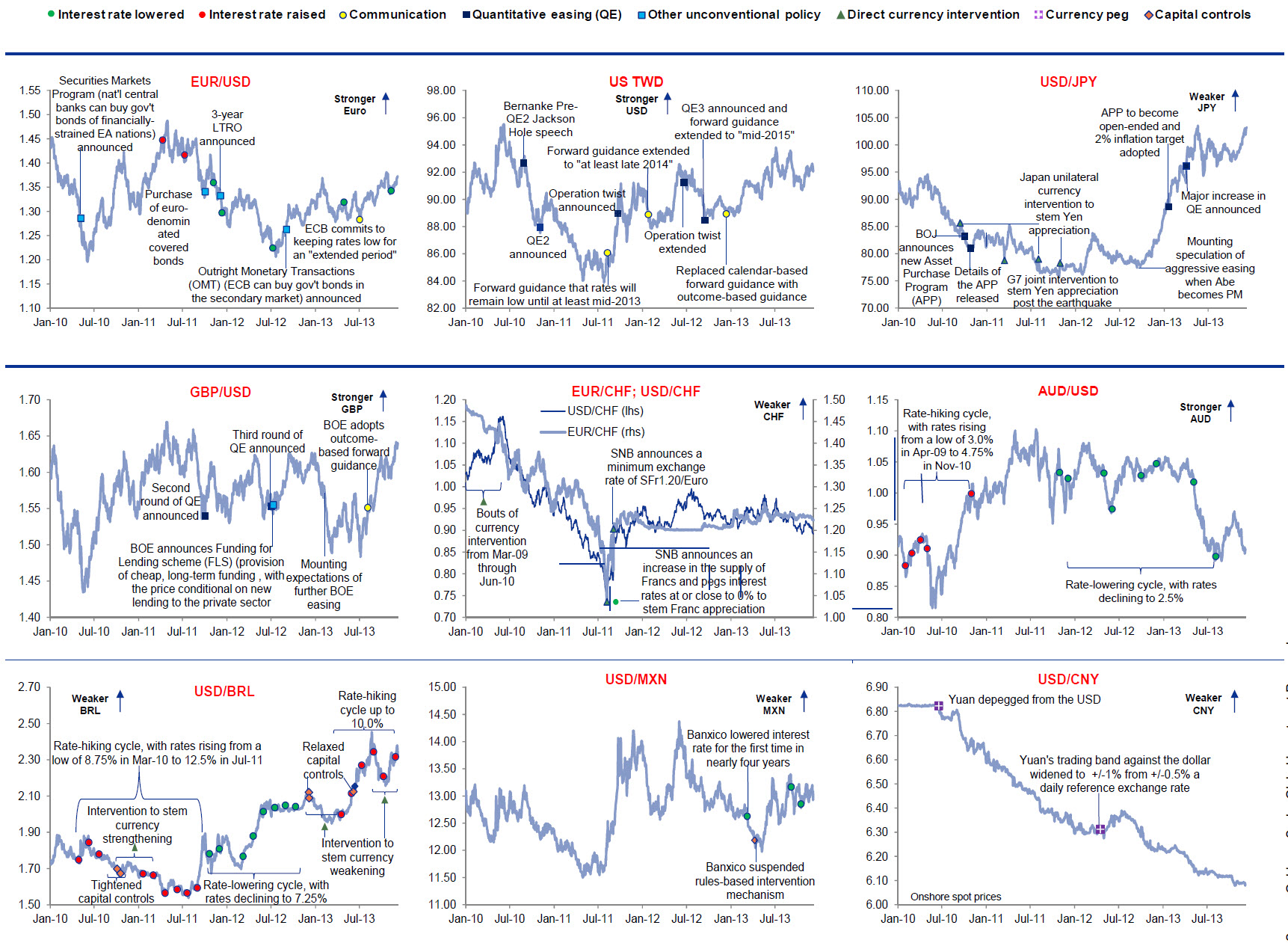
The Illustrated Guide To 4 Years Of Currency Wars

The Illustrated Guide To 4 Years Of Currency Wars

Tyler Durden on 12/20/2013 17:03 -0500

While central bank intervention in the foreign exchange markets is nothing new, the last 4 years have seen unprecedented use of direct and indirect (jawboning) manipulation of exchange rates. As Goldman Sachs notes non-cooperative exchange-rate mechanics (i.e. currency wars) remains the new normal dynamic in world markets; and while some of the moves are generally consistent with cyclical (or structural conditions), efforts by central banks to ‘manage’ developed market rates in a low volatility range may come under further pressure with the Fed “tapering” as emerging market nations face money flow crises.

20131220_FX

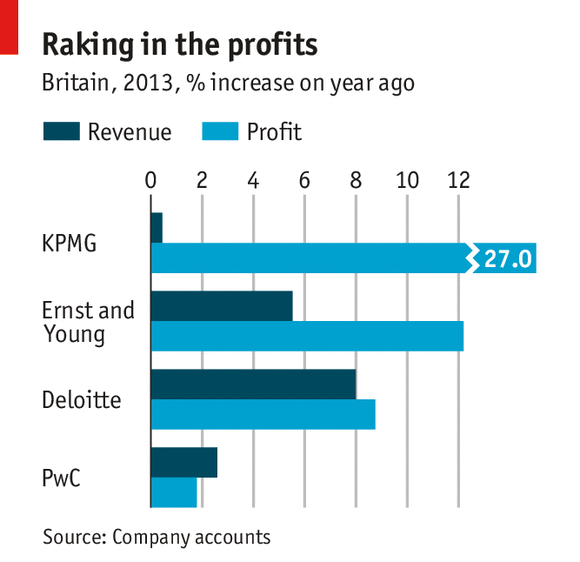
The “Big Four” accountants in Britain: When bean counting pays off

The “Big Four” accountants in Britain

When bean counting pays off

Dec 18th 2013, 12:25 by C.R.

20131221_woc062

LAST December, the outlook seemed grim for the “Big Four” accountancy firms in Britain. Three out of the four, Ernst & Young, PwC and KPMG, announced they had cut pay for their British equity partners. KPMG was particularly badly hit—announcing job cuts at all pay levels. Neither had Deloitte, the fourth, completely escaped the slowdown in the audit and advisory business. The previous year it was forced to cut partner pay as well.   Read more of this post

Ties that bind: The market for smart people is clogged up by all manner of dubious legal restrictions

Ties that bind: The market for smart people is clogged up by all manner of dubious legal restrictions

Dec 14th 2013 | From the print edition

THE business press is full of heartwarming stories about the “talent wars”. It reports that eBay pays its lead technologist twice as much as its chief executive. Apple recently slipped a high-flyer $8m to prevent him from jumping ship. Tech firms regularly spend lavishly on startups in order to “acqui-hire” their employees. They also compete furiously to provide workers with the best food and the most fashionable yoga instructors. Read more of this post

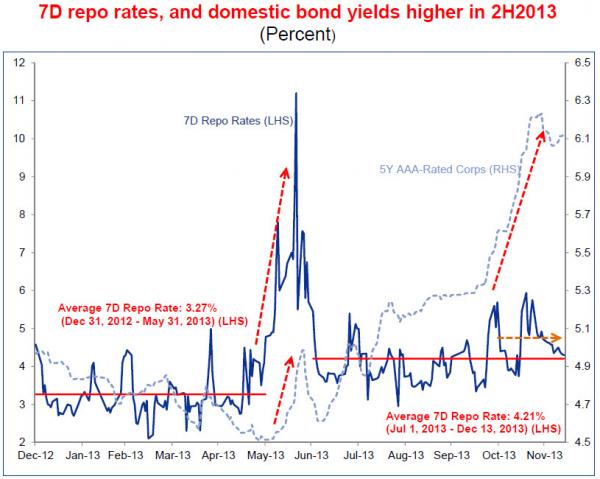
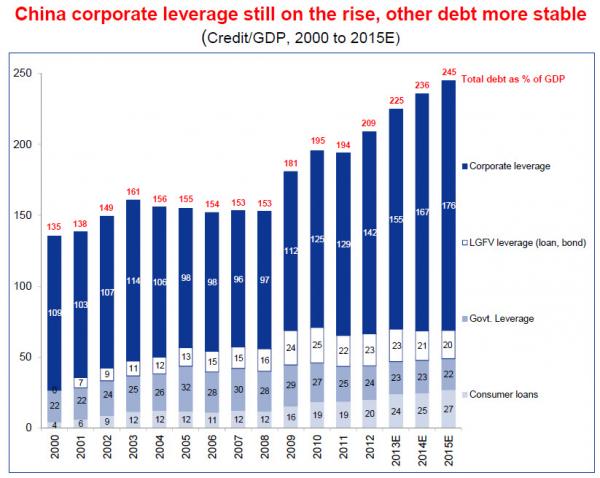
China Also Tapers, Forced To Promptly Bail Out Money Markets

China Also Tapers, Forced To Promptly Bail Out Money Markets

Tyler Durden on 12/19/2013 10:56 -0500

20131219_china1_0 20131219_china_0

Overnight we warned that short-to-medium-term money market rates had spiked to record highs (1-Year rate-swaps over 5.06%) and that the PBOC was bravely standing firm on its (lack of) liquidity injections… that didn’t last long. Despite the PBOC’s veiled ongoing attempts to ‘taper’ its own liquidity provisions, as MNI notedechoes of the June liquidity crunch were heard again in the Chinese money market Thursday and authorities moved to extend trading amid a surge in rates which quiet injections of funding by the People’s Bank of China failed to stem. Jitters in the Chinese interbank market since the PBOC tried to force deleveraging in June highlights the nervousness of an overstretched banking system that is reliant on the central bank’s largesse to ensure stable operations.  Read more of this post

From street stalls to bourses, South East Asia’s traditional medicine makers promise panacea

From street stalls to bourses, South East Asia’s traditional medicine makers promise panacea

7:36am EST

By Eveline Danubrata and Anshuman Daga

JAKARTA/SINGAPORE (Reuters) – On rainy days in Jakarta, a canny street merchant like Emi can sell two dozen sachets of herbal cold cure Tolak Angin to office workers and labourers sniffling by her roadside stall. Read more of this post