Mankiw: In Fed Policy, the Exit Music May Be Hard to Hear

November 23, 2013

In Fed Policy, the Exit Music May Be Hard to Hear

By N. GREGORY MANKIW

Is it time for the Federal Reserve to start its exit from the extraordinary set of policies it has pursued over the past few years? That crucial question is on the minds of the nation’s central bankers, as well as the stock and bond traders who follow the Fed’s every move. When Ben S. Bernanke and his Fed colleagues embarked on their policy of near-zero interest rates and large-scale asset purchases, they hoped that things would be back to normal by now. Unfortunately, events haven’t gone as predicted. Even though the recovery began more than four years ago, it has been so meager that the economy, by some metrics, is still very sick. The slowness of the healing has delayed the Fed’s exit — although minutes of last month’s policy-making meeting indicate that it is considering some changes. Read more of this post
France: The people see red; The scarlet hat has become the symbol of protest against François Hollande’s tax rises

November 22, 2013 5:40 pm

France: The people see red

By Hugh Carnegy

The scarlet hat has become the symbol of protest against François Hollande’s tax rises

Red alert: farmers have been at the forefront of protests against the Hollande government

In 1675 a popular revolt exploded in Brittany, the rugged north western region of France that juts into the Atlantic Ocean. It was against taxes imposed by Louis XIV, the Sun King, to finance war against the Dutch. The red-capped protesters were known as Les Bonnets Rouges. Nearly 440 years after the uprising was bloodily suppressed, people in Brittany have donned their bonnets rouges once more. This time they are fighting a wave of taxes imposed not by a king, but by President François Hollande and his socialist government. Read more of this post

Do You Dare Buy Stocks at Record Highs? Some say the market looks overpriced. Others disagree. But that’s not the question investors should be asking

Do You Dare Buy Stocks at Record Highs?

Some say the market looks overpriced. Others disagree. But that’s not the question investors should be asking.

JASON ZWEIG

Nov. 22, 2013 7:21 p.m. ET

Hedge-fund manager Carl Icahn says he is “very cautious” on U.S. stocks, which “could easily have a big drop” from their new record highs. Ben Inker, a director at asset manager GMO, forecasts that overall, U.S. stocks will suffer losses of 2% annually, counting dividends and inflation, through 2020. Yet billionaire investor extraordinaire Warren Buffettsays the U.S. stock market is valued “in a zone of reasonableness.” So who is right? In fact, whether stocks are overvalued or fairly priced isn’t the question that investors should be asking. Instead, what you need to answer is this: How much can I stand to lose before I will bail out? Experts can’t tell you that, but history and what’s in your own head can. Read more of this post

Asset price ‘security alerts’ mask real risks; Defining value is hamstrung by assumptions and expectations

Last updated: November 22, 2013 9:44 am

Asset price ‘security alerts’ mask real risks

By Tracy Alloway in New York

Defining value is hamstrung by assumptions and expectations

Any reader who has flown commercially in the US during the past dozen years will no doubt have a passing awareness of the Homeland Security Advisory System. The now defunct terrorism threat scale was rolled out to indicate the threat level faced by the nation, from green – for a “low” risk of an attack – to red for “severe”. I was this week reminded of the now-moribund warning system thanks to a flight to Florida and a new research report by Fitch Ratings that draws an unusual parallel between the nation’s old colour-coded scale and US accounting rules. There is something undoubtedly alluring about a process that classifies a complicated concept – be it the threat of a terrorist attack or the value of a security – into an easily digestible label. But there are unquestionable trade-offs in doing so. For much of its lifespan, the Homeland Security system was stuck at “yellow” or “orange” – indicating a significant or high risk of terrorist attacks. So omnipresent were the yellow and orange indicators that many critics of the system pointed out that the colours should simply become the baseline for the entire scale. When the warning system was eventually phased out in 2011, public officials noted that it had provided “little practical information”. About five years ago, a new “mark to market” regime came into effect to govern how US banks value the assets on their balance sheets at market prices, known as “fair value”. The rule – FAS 157 – created three categories financial institutions could use to classify the securities on their balance sheets. Read more of this post

Why Does It Cost $18 To Make A Call From Prison? It’s a monopoly, fueled by government kickbacks.The FCC says it’s fixing the problem, but things still look bleak

Why Does It Cost $18 To Make A Call From Prison?

It’s a monopoly, fueled by government kickbacks.The FCC says it’s fixing the problem, but things still look bleak.

posted on November 19, 2013 at 11:39am EST

Justine SharrockBuzzFeed Staff

bizw_anr_2311_divident_ratesPDF

For more than 15 years, the cost of a prison phone call has been as high as $18 for just 15 minutes of talk time. While it has varied over time and state by state, in Georgia, for example, rates can reach 89 cents per minute, with an additional per-call charge as high as $3.95. And that doesn’t even include the many extra costs for using the phone system. There are flat fees every time you add money to your prepaid account. There are high connection fees. Often calls are dropped — if you pause in conversation, for example, the connection may cut off — and the user has to pay another fee to call back. Read more of this post

The mystery of Bitcoin is how it keeps users’ trust; Europeans took a leap of faith when they embraced the euro and look where it got them

November 22, 2013 5:48 pm

The mystery of Bitcoin is how it keeps users’ trust

By Christopher Caldwell

Europeans took a leap of faith when they embraced the euro and look where it got them

Each generation has its own technological superstitions. Country folk used to vault off the bottom steps of escalators. Tribal peoples feared cameras. Until relatively recently, certain impressionable readers of the book of Revelation feared the government was using monetary and credit instruments to spy on them. Turns out they had a point. After September 11 2001, airport security authorities started paying close attention to anyone who bought an air ticket in cash. There are indeed a lot of private transactions for which government expects a public record. Read more of this post

Why the Swiss Scorn the Superrich

November 22, 2013

Why the Swiss Scorn the Superrich

By PETER STAMM

WINTERTHUR, Switzerland — Abroad, Switzerland may be best known for its smart ski resorts and discreet banking services for the superrich, but the Swiss themselves are remarkably allergic to the trappings of conspicuous wealth. It was not quite another Occupy moment perhaps, but in a referendum held in March of this year, the Swiss electorate voted by a two-thirds majority to ban bonuses and golden handshakes and force companies to consult shareholders on executives’ remuneration. It’s not easy for ballot initiatives like this to succeed in Switzerland: Of the 110 that have made it to a vote in the last 32 years, only 20 have passed. Many observers agreed that Daniel Vasella, the C.E.O. and chairman of the pharmaceutical giant Novartis, played a decisive role in the plebiscite’s success. Read more of this post

Nationwide property tax for China

Nationwide property tax for China

Saturday, Nov 23, 2013

Grace Ng

The Straits Times

To achieve its twin priorities of urbanisation and reducing social unrest, the top Chinese leadership has for the first time endorsed a nationwide property tax in a key policy document. Beijing has pledged to “accelerate legislation on the property tax”, among a host of other fiscal reforms described by analysts like government think-tank researcher Gao Peiyong as “critically important” to the next phase of China’s development. Read more of this post

Urbanites Flee China’s Smog for Blue Skies

November 22, 2013

Urbanites Flee China’s Smog for Blue Skies

By EDWARD WONG

DALI, China — A typical morning for Lin Liya, a native of Shanghai transplanted to this ancient town in southwest China, goes like this: See her 3-year-old son off to school near the mountains; go for a half-hour run on the shores of Erhai Lake; and browse the local market for fresh vegetables and meat. She finished her run one morning beneath cloudless blue skies and sat down with a visitor from Beijing in the lakeside boutique hotel started by her and her husband. “I think luxury is sunshine, good air and good water,” she said. “But in the big city, you can’t get those things.” Read more of this post

Teen idols, apps: New York store windows want to ‘retailtain’ you

Teen idols, apps: New York store windows want to ‘retailtain’ you

8:35am EST

By Marina Lopes

NEW YORK (Reuters) – Frosted fairies swoop between snow-covered trees as they guide a young boy from his bed to a whimsical forest with reindeer, angels and holiday magic. It’s not a trailer for a Disney release. It’s the Macy’s flagship store in New York City, where six display windows have been transformed into an animated story. Paul Olszewski works year-round with a team of 100 full- and part-time animators, hair stylists, makeup artists, composers, musicians and copywriters to create the mechanical scenes. Read more of this post

Solar May Power Smartwatches and Smoke Alarms, Alta Says

Solar May Power Smartwatches and Smoke Alarms, Alta Says

Alta Devices Inc., a supplier of solar cells for military applications, is in talks to provide its products for consumer electronics including mobile phones, smoke detectors and security systems. Solar cells can power wireless devices and systems that operate remotely, Rich Kapusta, vice president of marketing for Sunnyvale, California-based Alta, said yesterday in an interview. Read more of this post

South Korea’s financial firms will face severe punishments if they are found to be engaged in incomplete sales of financial products, which cause multiple victims

Financial firms to face suspension of operations over incomplete sales

Lee Eun-ah, Park Yong-beom

2013.11.21 17:48:39

South Korea’s financial firms will face severe punishments if they are found to be engaged in incomplete sales of financial products, which cause multiple victims. These punishments include suspension of operation and cancelation of business approval. When it comes to 10 malpractices including financial firms’ undue support for their majority shareholders or affiliates, the authorities will impose the strictest penalty stipulated by the relevant law.  Read more of this post

South Korea’s financial firms are pruning their workforces in the face of challenges such as deteriorating margins and bleak outlook for next year

Financial firms slimming down

Kim Gyu-sik, Lee Duk-joo, Lee Yoo-sup

2013.11.22 16:45:58

South Korea’s financial firms are pruning their workforces in the face of challenges such as deteriorating margins and bleak outlook for next year. At a time when insurers, securities firms and credit card issuers have announced a series of job-cutting plans, foreign banks are trimming down in size through branch shut-downs.
Samsung Life Insurance, a top life insurer in South Korea, has embarked on pruning workforces under the name of “support for executives and employees transitioning to new career.”  Read more of this post

South Korea’s conglomerates and small and mid-sized wholesalers are battling in the country’s 40 trillion won ($37.7 billion) wholesale food product market

SMBs, conglomerates clash in $38bn wholesale food product market

Seo Chan-dong, Kim Tae-sung

2013.11.22 16:53:56

South Korea’s conglomerates and small and mid-sized wholesalers are battling in the country’s 40 trillion won ($37.7 billion) wholesale food product market. The national retailer association submitted petition to National Commission for Corporate Partnership (NCCP) Thursday to legally categorize the wholesale food product sector as industry suitable for small and mid-sized businesses (SMBs), arguing conglomerates that supply food products are increasingly hurting SMBs, said sources in the relevant sector Friday.  Read more of this post

FTC chief asks department stores to cut fees for suppliers during discount sales

FTC chief asks department stores to cut fees for suppliers during discount sales

Chun Beom-joo

2013.11.21 18:09:08

Fair Trade Commission Chairman Noh Dae-rae has suggested that local department stores should slash merchant fees for its suppliers in line with their discounted supply of goods in time of discount sales. Large retailers are on alert, while the anti-trust watchdog agency has opened its first probe into them after the implementation of a law to emphasize fair transactions. During the FTC’s full-member meeting held Wednesday, Noh said, “I do not see a problem with department stores lowering merchant fees since suppliers also supply goods at a lower price during discount sales.” A vice president of a department store who was attending reportedly said he would take the matter back for discussion. The suggestion, if accepted, would force department stores to lower the merchant fee rate from 30% to 21% if a supplier provided a product with a price tag of KRW100,000 at KRW70,000 during the sale event. In this case, the department store would see a slash in its profit from KRW21,000 to KRW14,700. Noh’s suggestion is seen as a compromise after the commission’s failed attempt to fine large retailors for burdening suppliers to pay excessive expenses during a discount sale. The FTC tried to fine them 21.7 billion won but the commission’s full-member meeting ordered re-examination of the case due to lack of evidence.


Indian Banks’ Rising Bad Debt Is ‘Major Challenge,’ RBI Says

Indian Banks’ Rising Bad Debt Is ‘Major Challenge,’ RBI Says

Rising bad loans at Indian lenders remain “a major challenge” amid a slowdown in Asia’s third-largest economy, the nation’s central bank said. Nonperforming loans rose to 986 billion rupees ($15.7 billion) at the end of March from 652 billion rupees a year earlier, the Reserve Bank of India said in a report yesterday on the country’s banking industry. The ratio of sour debt to total lending swelled to 3.6 percent from 3.1 percent. Read more of this post

Toxic Lakes From Tar-Sand Projects Planned for Alberta; Canada is blessed with 3 million lakes, more than any country on Earth

Toxic Lakes From Tar-Sand Projects Planned for Alberta

Canada is blessed with 3 million lakes, more than any country on Earth — and it may soon start manufacturing new ones. They’re just not the kind that will attract anglers or tourists. The oil sands industry is in the throes of a major expansion, powered by C$20 billion ($19 billion) a year in investments. Companies including Syncrude Canada Ltd., Royal Dutch Shell Plc and Exxon Mobil Corp. affiliate Imperial Oil Ltd. are running out of room to store the contaminated water that is a byproduct of the process used to turn bitumen — a highly viscous form of petroleum — into diesel and other fuels. Read more of this post

Shale Boom in the U.S. Is Bridge to Future Cleaner-Burning Fuels

Shale Boom in the U.S. Is Bridge to Future Cleaner-Burning Fuels

A shale boom in the U.S. that’s led to lower natural gas prices and higher energy efficiency will act as a bridge to cleaner burning fuels, Carol Browner, a former Environmental Protection Agency head, said today. “Right now there are a lot of reasons” to favor using natural gas, said Browner, a senior counselor at Albright Stonebridge Group, a Washington-based global strategy organization. She spoke at “The Year Ahead: 2014,” a two-day conference sponsored by Bloomberg LP in Chicago. Read more of this post

Singapore Operator Plans to Buy Rio Airport for $8.3 Billion

Singapore Operator Plans to Buy Rio Airport for $8.3 Billion

Brazil sold the country’s second-busiest airport for almost four times the minimum bid as part of President Dilma Rousseff’s program to modernize infrastructure and shore up investor confidence. The Aeroportos do Futuro group led by Odebrecht SA, and including Singapore airport operator Changi Airport Group, offered 19 billion reais ($8.3 billion) and won the right to run Galeao airport in Rio de Janeiro, which will host tourists for the soccer World Cup next year and the 2016 Olympic Games, for 25 years. The offer compares with the minimum required bid of 4.83 billion reais. Read more of this post

Straits Trading seeks to emulate Blackstone for property funds

Straits Trading seeks to emulate Blackstone for property funds

SINGAPORE — Straits Trading, an investor in Singapore’s biggest publicly traded property trust manager, is planning “Blackstone-like” funds as Asia’s appetite for real estate investments increases.

BY –

6 HOURS 13 MIN AGO

SINGAPORE — Straits Trading, an investor in Singapore’s biggest publicly traded property trust manager, is planning “Blackstone-like” funds as Asia’s appetite for real estate investments increases. Straits Trading last month invested in Singapore-listed ARA Asset Management, the property trust manager partly owned by billionaire Li Ka-shing, and set up a joint venture with ARA’s CEO John Lim to invest in property funds. Read more of this post

A Record Market Is Not All That It Seems

November 22, 2013

A Record Market Is Not All That It Seems

By FLOYD NORRIS

THE stock market flirted with historical highs this week, with the Dow Jones industrial average trading over 16,000 and the Standard & Poor’s 500 exceeding 1,800 for a time. But are stock prices really at record levels? Adjusted for inflation, the answer would seem to be that they are not. On Monday, the first day the S.&P. 500-stock index traded above 1,800, it closed at 1,791.53. That was 17 percent higher than the peak reached in the spring of 2000, when the country was in the midst of a love affair with technology stocks. Adjusted for inflation, however, it is 14 percent lower than the 2000 close, as can be seen in the accompanying chart. Read more of this post

Activist investor Bill Ackman said he will take his bet against Herbalife Ltd. (HLF) “to the end of the earth” even after losing as much as $500 million on the investment

Ackman Says He’ll Take Herbalife Bet to End of the Earth

Activist investor Bill Ackman said he will take his bet against Herbalife Ltd. (HLF) “to the end of the earth” even after losing as much as $500 million on the investment. Ackman, whose Pershing Square Capital Management LP sold short at least 20 million Herbalife shares last year, was unapologetic about recently reducing the position. He stuck with claims that the company swindles unsophisticated consumers with false get-rich promises using overpriced products, such as vitamins, skin creams and meal-replacement shakes, that hide a pyramid scheme. He said he still is urging U.S. regulators, elected officials and community activists to help shut it down. Read more of this post

Why to Buy Large-Cap Stocks Now; Large-Cap Stocks Tend to Lead the Market Over the Last Several Weeks of the Year

Why to Buy Large-Cap Stocks Now

Large-Cap Stocks Tend to Lead the Market Over the Last Several Weeks of the Year

MARK HULBERT

Nov. 22, 2013 6:13 p.m. ET

BF-AG255_HULBUR_D_20131122143307

Many investors are already familiar with the so-called January effect—the tendency for the stocks of the smallest companies to perform particularly well at the beginning of the year. Less well known, but equally pronounced, is another seasonal pattern, though this one occurs before the end of the year rather than after: Until Dec. 31, it’s the stocks with the largest capitalization that tend to lead the market. To exploit these tendencies, you should more heavily weight your equity portfolio toward large-cap stocks from now until the end of the year, at which point you would tilt toward small caps. Read more of this post

Spaniards Abandon Porsche Dreams in Post-Crisis Reality

Spaniards Abandon Porsche Dreams in Post-Crisis Reality

When Hugo Ramos was a teenager in La Coruna in northwest Spain, he dreamed of a good job, his own apartment and a flashy car. After a two-year recession in the country, those goals have been scaled back. “I wish I could buy a Porsche, but for that I would need a full-time job and that’s not going to happen anytime soon,” said Ramos, a 21-year-old unemployed mechanic who works odd jobs like delivering pizzas, lives with his parents and drives a two-decade-old Seat Cordoba sedan. Read more of this post

No, Bitcoin isn’t the Segway of currencies

No, Bitcoin isn’t the Segway of currencies

By Timothy B. Lee, Updated: November 22 at 9:59 am

The Atlantic’s Matthew O’Brien is one of the Internet’s smartest commentators on economic policy. But like a lot of economics writers, he’s been slow to appreciate the disruptive potential of Bitcoin, the Internet’s first completely open payment network. O’Brien says that Bitcoin is the new Segway: a technological marvel that dazzles nerds but will fail to catch on with ordinary consumers. Bitcoin is comically impractical, he suggests: “The people who have bitcoins have no reason to spend them, and the people who don’t have no reason to get them. They don’t want a currency whose value you can’t predict from one hour to the next. They don’t want to buy things anonymously. And they don’t want transactions to be irreversible.” Read more of this post

Some Stock Bulls Tread Lightly Into 2014; Strategists Take Cautious Approach on How Far S&P 500 Can Climb

Some Stock Bulls Tread Lightly Into 2014

Strategists Take Cautious Approach on How Far S&P 500 Can Climb

STEVEN RUSSOLILLO and ALEXANDRA SCAGGS 

Nov. 22, 2013 6:51 p.m. ET

BF-AG265_STRATE_G_20131122140552

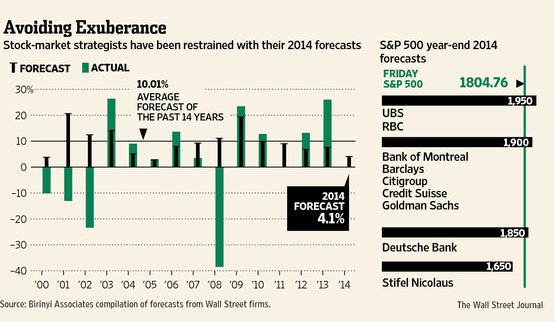
Stock-market strategists, typically a bullish bunch, are taking a cautious approach to 2014. The S&P 500-stock index is heading into the final weeks of 2013 with a 27% gain despite a sluggish global economy, stalling corporate earnings growth and worries about a pullback by the Federal Reserve in its efforts to support the U.S. economy. But even as many strategists expect an improved backdrop next year, and for interest rates to stay low, they are expecting the stock rally to cool significantly. Forecasts center on gains in the mid-to-high single-digit percentages for the S&P 500 in 2014. Read more of this post

Dealer Fees for Arranging Car Loans Are Drawing Scrutiny From U.S.

NOVEMBER 22, 2013, 11:08 AM

Dealer Fees for Arranging Car Loans Are Drawing Scrutiny From U.S.

By RACHEL ABRAMS

Updated, 3:13 p.m. | When Pedro Lantigua, a 32-year-old truck driver from Oklahoma City, decided to trade in his vehicle last summer, he walked into his local dealership and drove off with a brand-new Chevrolet Silverado. Like millions of Americans, he agreed to a loan arranged by the dealer. Unlike most buyers, Mr. Lantigua actually knows how much he spent on that service, but only because the details came out when he sued the dealer for breach of contract related to his trade-in. Read more of this post

Curious tale of the central Asian oligarchs and the City of London

Curious tale of the central Asian oligarchs and the City of London

Mining firm ENRC bids farewell to the Stock Exchange but its Uzbek and Kyrgyz creators are here to stay

Simon Goodley and Mark Hollingsworth

The Guardian, Friday 22 November 2013 23.34 GMT

It is May 2010 at Monaco’s vast Le Sporting banquet hall, where 800 guests have responded to an invitation from one of central Asia’s most powerful, and secretive, oligarchs. The host has packed the venue’s gardens with white roses and arranged for entertainment from the singer Jennifer Lopez and French DJ David Guetta. Several guests execute an impromptu lezginka, a traditional dance from the Caucasus, and a crowd forms to shower them with $100 and €100 bills, a sign of the donors’ respect, which is then paid to the musicians. Read more of this post

Counting the cost of currency risk in emerging bond markets

Counting the cost of currency risk in emerging bond markets

Fri, Nov 22 2013

By Sujata Rao

LONDON (Reuters) – Once a source of rich returns for yield-hungry investors, emerging markets are hammering home a long-ignored truism: banking on currency strength to enhance returns on stocks and bonds is not a one-way ticket to profits. Currencies such as the rupiah and lira have slumped 10-20 percent this year as a seismic shift in global capital flows rattles even relatively robust markets, exacerbating international investors’ losses on the underlying assets. Read more of this post

Bubble or not, maybe the all-powerful Federal Reserve isn’t so all-powerful after all

Bubble or not, maybe the all-powerful Federal Reserve isn’t so all-powerful after all

By Zachary Karabell, Saturday, November 23, 10:24 AM

Toward the end of her Nov. 14 confirmation hearing to be the next chair of the Federal Reserve, Janet Yellen faced a question from Sen. Mike Johanns (R-Neb.) about the effect of years of easy-money policies at the Fed: “Here’s what I’m saying. . . . I think the economy has gotten used to the sugar you’ve put out there. And I just worry you’re on a sugar high.” Yellen, who has been vice chair of the central bank since 2010, was not given time to address the charge, but her prominent role in supporting such policies gives us a strong sense of her answer. Read more of this post