Apple Now Holds 10% of All Corporate Cash: Moody’s

October 1, 2013, 4:43 PM ET

Apple Now Holds 10% of All Corporate Cash: Moody’s

By Emily Chasan

Senior Editor

Apple Inc.’s $147 billion cash hoard now counts for nearly 10% of all corporate cash held by nonfinancial companies, according to an analysis by Moody’s. U.S. nonfinancial companies held $1.48 trillion in cash as of June 30, according to Moody’s review of the more than 1,000 companies it rates. Cash stockpiles have grown by about 2% from $1.45 trillion at the end of last year, and up 81% from $820 billion at the end of 2006. Read more of this post
Bitcoin buzz grows among venture investors, despite risks

Bitcoin buzz grows among venture investors, despite risks

7:47pm EDT

By Wanfeng Zhou and Nick Olivari

NEW YORK (Reuters) – Venture capitalists show no sign of shying away from investing in startups related to Bitcoin even as authorities step up their scrutiny of the virtual currency and its possible connection to money laundering and other illegal activities. Investment has jumped in recent months as Bitcoin, the prominent digital currency not backed by a government or central bank, has begun to gain a footing among businesses and consumers, a key step for it to go mainstream. Read more of this post

Investors have lost billions on Australian toll roads and tunnels but that isn’t stopping others from following in their path

Oct 1, 2013

Australian Toll Roads, Tunnels Offer Divergent Paths for Investors

GILLIAN TAN

AM-BA488_AMONEY_G_20131001064507

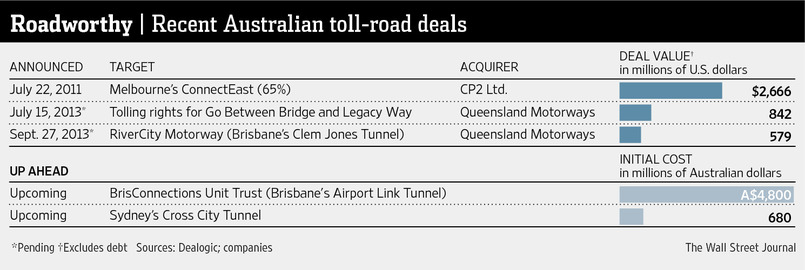
SYDNEY—While some investors have found that Australian toll roads amount to expensive wrong turns, others are choosing to follow them. Investors have collectively lost billions of dollars on the toll roads and tunnels in recent years because of too much debt and overestimates on traffic volume. Now, sharply lower prices for those assets and more-realistic traffic assessments are adding up to opportunities for others. Read more of this post

The Myth of Indonesia’s Resource Nationalism; Jakarta’s new mining and oil regulations are really about rent-seeking and corruption

October 1, 2013, 12:58 p.m. ET

The Myth of Indonesia’s Resource Nationalism

Jakarta’s new mining and oil regulations are really about rent-seeking and corruption.

JOHN KURTZ AND JAMES VAN ZORGE

Lately, the Indonesian government has unleashed an array of policies that are keeping mining and oil executives awake at night across this vast and geologically rich archipelago. The unpopular new regulations, aimed at reforming the mining and oil industries, are promoted in the name of “national interest.” Yet left uncorrected, they will inevitably lead to a dramatic decline of output in Indonesia’s extractive industries, damaging foreign investment and economic growth. Read more of this post

Luxury Yachts Find Rich Asian Buyers as Ranks of Wealthy Swell

Luxury Yachts Find Rich Asian Buyers as Ranks of Wealthy Swell

Singapore businessman Adrian Lee Chye Cheng, 33, is the super-yacht industry’s dream come true. Young, wealthy and passionate about boats, he embodies an emerging market that shipyards and brokers see looming large on the horizon. “The new market is in Asia,” Lee said in an interview on one of the panoramic decks of the Ocean Paradise, a 55-meter luxury yacht he and his brother Lionel acquired two months ago. Read more of this post

Asia Technology Investors Help Boost Israel Venture-Capital Fund

Asia Technology Investors Help Boost Israel Venture-Capital Fund

Pitango Venture Capital, which manages more than $1.6 billion, filled a $270 million fund with new investors from China, India, Taiwan and Korea amid increased Asian interest in Israeli technology. “The strategic relationship between Asia-Pacific and Israel in the field of technology is really starting to grow,” Chemi Peres, Pitango’s managing general partner and co-founder, said in an telephone interview. Read more of this post

Unilever’s Emerging Market Pain Heralds Forecast Cuts; Asia and Latin America were the salvation for many European companies during the height of the debt crisis. Now, they’re eating into earnings

Unilever’s Emerging Market Pain Heralds Forecast Cuts

Asia and Latin America were the salvation for many European companies during the height of the debt crisis. Now, they’re eating into earnings. Unilever on Sept. 30 blamed weakening currencies in Indonesia, Brazil, South Africa and India for a sales slowdown, following Adidas AG (ADS) and Prada SpA in saying that the euro’s strength is eroding profit. Schneider Electric SA, Heineken (HEIA) NV and Danone (BN) are among companies most vulnerable to a profit reduction from emerging markets, analysts and investors estimate. Read more of this post

Nestle Draws Up Divestment Shortlist After Laggards Identified; “We have allowed underperformers to underperform for too long. We want to be in business, not agony.”

Nestle Draws Up Divestment Shortlist After Laggards Identified

Nestle SA, (NESN) the world’s biggest food company, has a shortlist of businesses it is looking to sell after identifying laggards that it cannot fix, Chief Executive Officer Paul Bulcke told investors today. The maker of Nescafe coffee has completed a review of 97 percent of its 1,800 distinct business units, Bulcke said at an investor seminar at Nestle headquarters in Vevey, Switzerland. There is a “slightly longer list” of units that the company will try to improve, he said, as it seeks to rebound after posting its weakest quarterly revenue growth in four years. Read more of this post

Japan Awaits Abe’s Third Arrow as Companies Urged to Invest

Japan Awaits Abe’s Third Arrow as Companies Urged to Invest

Japanese Prime Minister Shinzo Abe’s reflation campaign shifted to structural domestic reforms after he unveiled a stimulus package offering a short-term cushion for the first sales-tax rise since 1997. Abe’s administration is honing legislation for its “growth strategy” for the year’s final parliamentary session, an initiative companies will scrutinize for fresh reasons to invest in a domestic market burdened by a shrinking and aging population. For now, they get a slew of tax breaks unveiled with yesterday’s 5 trillion yen ($51 billion) program. Read more of this post

The Threat of ‘Abegeddon’ From Taxes in Japan; Abe Orders Japan’s First Sales-Tax Increase Since ’97

The Threat of ‘Abegeddon’ From Taxes in Japan

Posterity is watching carefully as Shinzo Abe goes ahead with a sales-tax increase aimed at getting a handle on Japan’s huge debt burden, the world’s largest. Unfortunately history may judge him no better than Ryutaro Hashimoto, the last Japanese prime minister to kill an economic recovery with ill-timed fiscal tightening. That’s not the conventional wisdom of the moment. Markets are euphoric over surging confidence among large Japanese manufacturers. September’s jump in the quarterly Tankan (JNTSMFG) index — to the highest levels since before the Lehman Brothers Holdings Inc. collapse in 2008 — gave Abe just the tail wind he needed to raise the consumption tax to 8 percent from 5 percent starting in April 2014, with a further 2 percent increase in the cards for 2015. Read more of this post

GTL Tradeup, a Sydney derivatives broker whose director has been linked to a multimillion-dollar Italian fraud case, has collapsed, owing clients more than $3 million

Clients owed millions after derivatives broker GTL Tradeup collapses

October 2, 2013

Gareth Hutchens

GTL Tradeup, a Sydney derivatives broker whose director has been linked to a multimillion-dollar Italian fraud case, has collapsed, owing clients more than $3 million. About 300 clients in Australia, New Zealand and China are believed to be affected. The clients were informed via email last week of the decision to go into liquidation. Corporate insolvency firm CRS Warner Kugel has been appointed liquidator. The GTL director who has allegedly been linked by Italian media to a $36 million fraud case – Mahmood Riaz – is in Australia and has been working with liquidators. Read more of this post

Spain’s Time Travel Won’t Make People Work Harder

Spain’s Time Travel Won’t Make People Work Harder

Spain’s political leaders, in their infinite wisdom, have decided that moving to a new time zone will make the country’s people more productive. They might want to consider Russia’s disappointing experiment in chronological manipulation. The Spaniards are concerned that the sun rises later in their country than in other longitudinally similar places, such as the U.K. Specifically, on October, 26, the last day of daylight saving time, the sun will rise at 8 a.m. sharp in Liverpool and at 8:39 in Madrid, though the two cities are almost on the same meridian, 3 degrees west of Greenwich. Read more of this post

Siemens CEO promises workers an end to restructuring

Siemens CEO promises workers an end to restructuring

1:03pm EDT

MUNICH (Reuters) – Germany’s Siemens has no plans for further restructuring measures after the engineering group’s massive 6 billion euro ($8.1 billion) savings program ends next year, its new Chief Executive Joe Kaeser said. In a letter sent to Siemens employees on Tuesday, Kaeser sought to reassure workers following news that the savings program would cost 15,000 jobs. “All measures have been discussed with the affected units. Beyond that, there are no further plans or measures,” Kaeser said in the letter, which was obtained by Reuters. Read more of this post

Norway to Fight Record Household Debt Load as Government Formed

Norway to Fight Record Household Debt Load as Government Formed

Norway’s new government, formed yesterday after two weeks of talks, plans to offer tax breaks to encourage consumers to set aside savings in an effort to help the nation deal with its record household debt burden. “I don’t think that we have too large of a private debt problem in Norway but we will create tax relief on savings,” Erna Solberg, leader of the Conservative Party and incoming prime minister after winning the Sept. 9 election, said yesterday in an interview after agreeing to form a minority coalition with the anti-tax Progress Party. “The policy will be to get more people saving for the future.” Read more of this post

Miami Beach Banker Party Shows Why Hotel Debt Fills Bonds

Miami Beach Banker Party Shows Why Hotel Debt Fills Bonds

The Fontainebleau Miami Beach is booked solid next week as bankers prepare to crowd the iconic lobby for cocktails at an annual bond-market convention. For owner Jeffrey Soffer, the conference helps justify a $1 billion makeover that almost cost him the property three years ago. Soffer is seeking a roughly $850 million mortgage on the 1,504-room resort from some of the same bankers gathering at the ABS East conference, according to people briefed on the details of the financing who asked not to be identified because the talks are private. The loan, intended to refinance debt and buy out Dubai World’s 50 percent stake in the hotel, will be packaged into commercial mortgage-backed securities as investors snap up the deals at the fastest pace in five years, according to the people. Read more of this post

Hollande Giving Workers Say in M&A Deepens Fortress-France Image

Hollande Giving Workers Say in M&A Deepens Fortress-France Image

Takeovers of French companies, already among Europe’s least targeted, are about to become even less desirable. Seeking to fend off hostile takeovers and limit plant closings, the French National Assembly yesterday adopted rules that would give employees a bigger say over bids. The bill, which also forces companies with more than 1,000 employees in France to document attempts to find a suitable buyer before shuttering a plant with more than 50 workers, is expected to become law once it has been discussed and voted in the Senate and then passed by parliament. Read more of this post

Wanted by the taxman: Indonesia’s $5 billion of lost coal

Wanted by the taxman: Indonesia’s $5 billion of lost coal

5:05pm EDT

By Fergus Jensen

JAKARTA (Reuters) – Indonesia may be the world’s top exporter of thermal coal, but that masks an embarrassing fact for a government scrambling to raise revenue – more than $5 billion worth of the fuel is mined illegally and goes untaxed each year. Export and consumption data shows Indonesia produces around 12-15 percent more coal annually than the ministry of energy and mineral resources reports. That’s enough to supply Taiwan, the world’s fifth-largest coal importer, for a year. Read more of this post

Only 30% of Myanmar has access to electricity

Only 30% of Myanmar has access to electricity

Tuesday, October 1, 2013 – 10:12

Eleven Myanmar/Asia News Network

Myanmar currently provides electricity to 30 percent of the population according to the Minister Electric Power, Khin Maung Soe. “Only 30 percent of the population now has access to power. To supply 50 percent, power lines will have to be constructed. The whole of Rakhine State will enjoy electricity at the end of 2014,” said the minister. Power lines are being constructed in Chin State and electricity will be supplied through the national grid by the end of 2014. The power lines have been completed in Kachin State and it will also be supplied electricity, added the minister. In Mon State, power lines are being set up from Mawlamyine to Ye. In the coming year, they will be extended to Dawei. In Shan State, the whole Inn region has access to power, but many villages are still not connected. Most of Naga region is still in the dark and the government says it is planning to build three small-scale hydropower plants next year. The government has also promised to provide 70 percent of Kayah State with electricity where Lawpita Hydropower Plant is situated by the end of 2014.


Riches to rags story shows need for business reforms in China

Riches to rags story shows need for business reforms in China

Staff Reporter

2013-10-01

201309211547516761-155206_copy1

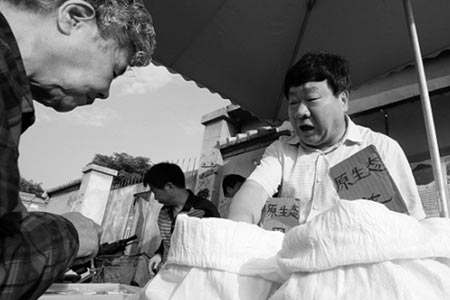
Liu Chunxi lost his fortune after being beaten out by corrupt competitors. (Internet photo)

Liu Chunxi, originally a billionaire in he city of Xinmi in central China’s Henan province, has now become a vendor selling all kinds of local products after he spent 216 million yuan (US$35 million) over the past years in a failed bid to build a cigarette plant in the province, says Chinese Entrepreneur magazine. The magazine found that 10 enterprises with a history of bribery and which were unqualified for the project, were miraculously successful in their bids. Liu’s story reflects the harsh realities of doing business in China: the fate of many private enterprises relies on the government and state-owned enterprises which monopolize the market. Read more of this post

S. Korea’s top 30 conglomerates owe nearly $557bn; amount excludes debts owed by their financial affiliates.

S. Korea’s top 30 conglomerates owe nearly $557bn

2013.10.01 15:02:33

Aggregate debt of South Korea’s top 30 conglomerates almost doubled from the pre-crisis level to around 600 trillion won ($557 billion), data showed. About half of the 30 large business groups saw their debt to equity ratio rise and their ability to repay debt worsen from five years ago. This prompts calls for them to improve financial stability to avert the spread of liquidity crisis. The nation’s top 30 groups by assets owed a total of 574 trillion won late last year, up 313.8 trillion won or 261.1 trillion from 313.8 trillion won in late 2007, according to an online business data provider Chaebol.com Tuesday. The amount is based on groups’ audit report and excludes debts owed by their financial affiliates.
Debt held by top 30 groups was far higher than that of the government. The government’s debt came in at 443.1 trillion won last year and is expected to reach 480.3 trillion won this year and 515.2 trillion won next year. Debt to equity ratio of top 30 groups declined from 95.3 percent late 2007 to 88.7 percent late last year. Debt to equity ratio measures the degree of soundness of the company. The higher the ratio is, the weaker a company’s financial structure. The problem is excluding some top-ranking groups, most of their financial stability has worsened although the debt to equity ratio went down as a whole.

In historic step, Japan PM hikes tax; will cushion blow to economy

In historic step, Japan PM hikes tax; will cushion blow to economy

1:42am EDT

By Tetsushi Kajimoto and Stanley White

TOKYO (Reuters) – Japan’s Prime Minister Shinzo Abe took a step on Tuesday that none of his predecessors had managed in more than 15 years – making a dent in the government’s runaway debt. Abe, riding a wave of popularity with economic policies that have begun to stir the world’s third-biggest economy out of years of lethargy, said the government will raise the national sales tax to 8 percent in April from 5 percent. Read more of this post

JGB Bubble Seen Growing by Bank of America on BOJ: Japan Credit

JGB Bubble Seen Growing by Bank of America on BOJ: Japan Credit

A bubble forming in the Japanese government bond market risks further expansion as central bank purchases shield the notes from a global rout, according to Bank of America Merrill Lynch and Mizuho Securities Co. The Bloomberg Japan Sovereign Bond Index (BJPN) climbed 1.45 percent in the quarter ended Sept. 30, the biggest gain among Group of 10 countries after the 1.54 percent increase in Italy’s debt. Benchmark 10-year JGB yields were the lowest in the world at 0.67 percent today and compared with 2.65 percent for similar-maturity U.S. Treasuries. Read more of this post

Politics in Malaysia: Bumi, not booming; The ruling party returns to its old habits of race-based handouts

Politics in Malaysia: Bumi, not booming; The ruling party returns to its old habits of race-based handouts

Sep 28th 2013 | KUALA LUMPUR |From the print edition

THE United Malays National Organisation (UMNO) is the dominant party in the coalition that has ruled Malaysia since independence in 1957. Only now, however, is it parading its democratic credentials, so far as its internal appointments go. Nominations have just closed for elections to a broad range of party posts, to be decided in the middle of October by 146,000-odd party delegates at local level. Previously, a mere 2,600 members, those who attended the party’s convention, had a say. UMNO’s boosters claim that these new elections will restore vim to an ageing organisation. They say it will make it the most genuinely democratic party in the country. Not bad for an outfit with a past reputation as a ruthless political machine. Read more of this post

India’s informal economy: Hidden value; Activities out in the sticks may add more to GDP than was thought

India’s informal economy: Hidden value; Activities out in the sticks may add more to GDP than was thought

Sep 28th 2013 | MUMBAI |From the print edition

THE chief architect of India’s constitution, B.R. Ambedkar, once said its villages were “a den of ignorance, narrow-mindedness and communalism”. Now some think they are the strongest bit of the economy. Neelkanth Mishra, an analyst at Credit Suisse, reckons that, if activity in informal industries and rural areas were properly measured, India’s GDP would look bigger and more stable and the present slump less severe. This is a source of comfort at a time when India is fighting a financial panic. Read more of this post

The Economist explains: Why is Brazil so expensive?

The Economist explains: Why is Brazil so expensive?

Sep 30th 2013, 23:50 by H.J. | SÃO PAULO

TRAVELLERS have long known that the richer a country, the more likely a visit is to burn a hole in their wallets. A recent survey by Tripadvisor, a travel website, put Oslo, the capital of super-rich Norway, as the world’s priciest destination, with a one-night stay in a four-star hotel with dinner and drinks for two costing more than $600. But near the top of the sticker-shock rankings is a surprise entry: upper-middle-income Brazil. Hotels in São Paulo, the business capital, or beachside Rio de Janeiro, cost more than in London or Zurich. Visitors who go window-shopping will find the high prices hit locals too. Clothes, cosmetics, electronics and cars are all more expensive, sometimes much more, than in most other places. The Economist’sBig Mac Index finds Brazilian burgers are dearer than everywhere else except in three much richer countries, (Norway, Sweden, Switzerland) and one dysfunctional one (Venezuela). So why is Brazil so pricey? Read more of this post

Japan’s luxury fruit masters grow money on trees

Japan’s luxury fruit masters grow money on trees

grapes_afp2

Monday, September 30, 2013 – 12:03

AFP

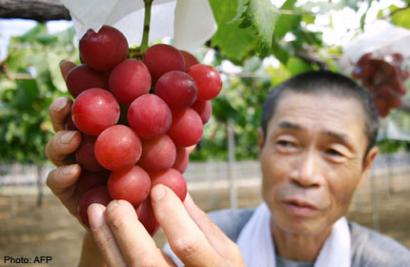
TOKYO – With melons that sell for the price of a new car and grapes that go for more than US$100 (S$125) a pop, Japan is a country where perfectly-formed fruit can fetch a fortune. An industry of fruit boutiques has defied Japan’s sluggish economy to consistently offer luscious and lavishly tended produce for hefty prices – and it is always in demand. In July, a single bunch of “Ruby Roman” grapes reportedly sold for 400,000 yen (S$5,100), making the plump, crimson berries worth a staggering 11,000 yen each. Every May, a pair of canteloupe melons grown in the north of Hokkaido is auctioned off. They regularly fetch the price of a modest new car. The hammer fell on this year’s pair at a cool 1.6 million yen. Read more of this post

Vinamilk Sees Revenue Doubling in Overseas Expansion Push

Vinamilk Sees Revenue Doubling in Overseas Expansion Push

Vietnam Dairy Products Joint-Stock Co., the nation’s largest dairy producer, is building a milk factory in Cambodia as it plans a global expansion to more than double annual revenue to $3 billion by 2017. The company known as Vinamilk is opening a plant in the capital of Phnom Penh and will expand into other overseas markets over the next five years, Chairwoman and General Director Mai Kieu Lien said in an e-mailed statement yesterday. Read more of this post

A New Challenge for Multinationals in China: Mao-era Politics

September 30, 2013, 1:53 p.m. ET

A New Challenge for Multinationals in China: Mao-era Politics

The ambitions of some of the world’s largest consumer brands in China are colliding with an unexpected new reality: hardball Mao-era politics.

ANDREW BROWNE

The ambitions of some of the world’s largest consumer brands in China are colliding with an unexpected new reality: hardball Mao-era politics. Increasingly, say China-based Western business executives, lawyers and consultants, a drive against alleged corporate price-fixing and corruption that has ensnared some of the biggest names in the global dairy and pharmaceutical industries has taken on a harsh political—and antiforeign—edge. Read more of this post

KKR to buy a 10 percent stake in appliance maker Qingdao Haier for 3.38 billion yuan ($552 million)

KKR Buys Stake in China Appliance Maker for $552 Million

KKR & Co. (KKR) agreed to buy a 10 percent stake in appliance maker Qingdao Haier Co. for 3.38 billion yuan ($552 million), the New York-based private-equity firm’s biggest investment in China. The Shanghai-listed unit of China’s largest appliance maker is selling 299.5 million shares at 11.29 yuan each to KKR in a private placement, the company said in a statement posted to the Shanghai Stock Exchange yesterday. That’s a 15 percent discount to the price on Sept. 12, the last day before Qingdao Haier suspended share trading pending an announcement. Read more of this post

Germans Think Small in China; Audi, BMW and Mercedes Are Speeding Up Plans to Offer Small Cars to Expand Sales

September 30, 2013, 4:17 p.m. ET

Germans Think Small in China

Audi, BMW and Mercedes Are Speeding Up Plans to Offer Small Cars to Expand Sales

COLUM MURPHY

MK-CG583_CSMALL_NS_20130930130307

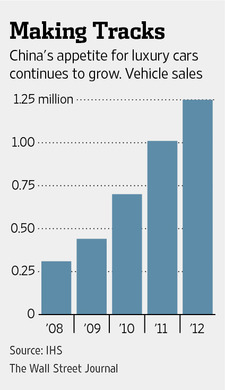
SHANGHAI—German luxury auto makers are speeding up plans to offer a wider selection of small cars and sport-utility vehicles in China, hoping to lure Chinese consumers unable to afford a larger luxury car, or affluent buyers who want a less-expensive second car. Small luxury cars are still an oxymoron to many wealthy Chinese, but industry executives say the risks—including lower profit margins—are worth it because of the growth expected in compact, premium-brand vehicles. Read more of this post