BLACKSTONE: ‘We Are In The Middle Of An Epic Credit Bubble’

BLACKSTONE: ‘We Are In The Middle Of An Epic Credit Bubble’

LAWRENCE DELEVINGNECNBC SEP. 29, 2013, 5:49 AM 10,428 8

One of the world’s largest investment firms believes the financial system is overly leveraged. “We are in the middle of an epic credit bubble, in my opinion, the likes of which I haven’t seen in my career in private equity,” Joseph Baratta, The Blackstone Group‘s global head of private equity, said Thursday night at the Dow Jones Private Equity Analyst Conference in New York City. “The cost of a high yield bond on an absolute coupon basis is as low as it’s ever been.” Read more of this post

As many as 7,000 Swiss private banking jobs could be culled if European regulation aimed at improving market infrastructure goes ahead as planned

September 29, 2013 6:12 am

Swiss private banks face 7,000 job cull

By Madison Marriage

As many as 7,000 Swiss private banking jobs could be culled if European regulation aimed at improving market infrastructure goes ahead as planned. The Swiss Bankers Association has warned that heavy job losses are inevitable if the proposals, which would force Swiss banks to set up branches or subsidiaries in the EU to access onshore clients, are approved. The proposals form part of the revised Markets in Financial Instruments Directive, which aims to improve investor protection and competition across Europe. Read more of this post

Siemens CEO Kaeser Cuts 15,000 Jobs to Catch Up With GE

Siemens CEO Kaeser Cuts 15,000 Jobs to Catch Up With GE

Siemens AG (SIE)’s new Chief Executive Officer Joe Kaeser will cut more jobs than initially planned to boost earnings after the failure to catch up with rivals General Electric Co. (GE) and ABB Ltd. (ABB) cost his predecessor the job. The company will eliminate 15,000 jobs, representing 4 percent of its 370,000 workers worldwide, and a third of the cuts will come in the German home market, Siemens spokesman Oliver Santen said by phone yesterday. He declined to give more regional details. Siemens, Europe’s largest engineering company, had initially planned some 8,000 job cuts globally, a person familiar with the program told Bloomberg in October. Read more of this post

Playing to Win in Emerging Markets: Multinational Executive Survey Reveals Gap Between Ambition and Execution

Playing to Win in Emerging Markets
Multinational Executive Survey Reveals Gap Between Ambition and Execution
by Amitabh Mall, David C. Michael, Lori Spivey, Andrew Tratz, Bernd Waltermann, and Jeff Walters

SEPTEMBER 13, 2013

Overview

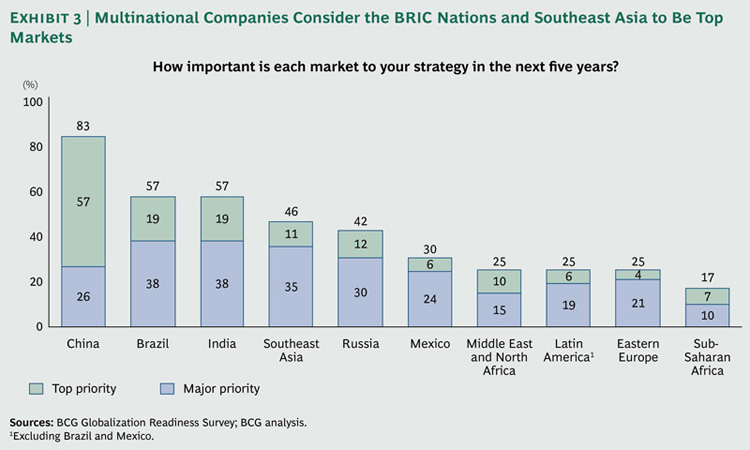
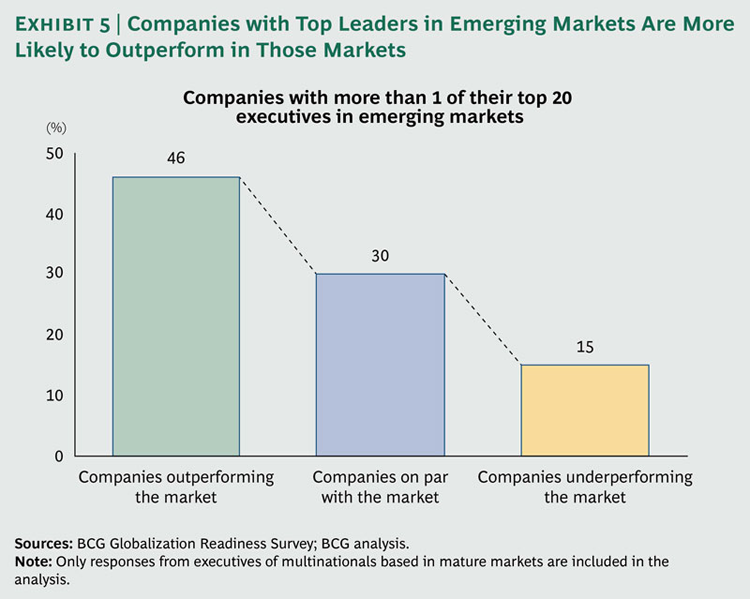
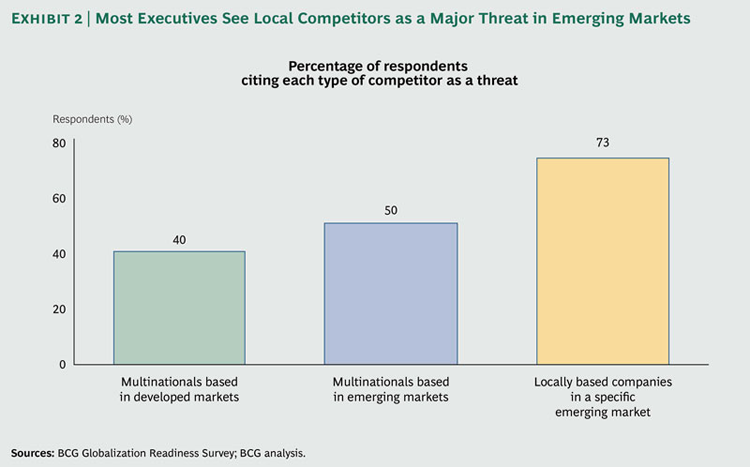
Emerging markets are more important than ever, and they make up a large share of many multinational companies’ revenues and growth. Yet even so, multinationals have not mastered these markets. That’s because they are not playing to win. The BCG Globalization Readiness Survey, a recent poll of more than 150 top executives in multinational companies, revealed a large gap between the aspirations of these companies in emerging markets and their performance on key capabilities—especially when it comes to attracting and retaining local talent.

Playing-Win-Emerging-Markets-ex1_large_tcm80-143203 Playing-Win-Emerging-Markets-ex2_large_tcm80-143191 Playing-Win-Emerging-Markets-ex3_large_tcm80-143194 Playing-Win-Emerging-Markets-ex4_large_tcm80-143197 Playing-Win-Emerging-Markets-ex5_large_tcm80-143200

Read more of this post

Shortages send milk prices in China to 2nd highest in world

Shortages send milk prices in China to 2nd highest in world

Yeh Wen-yi and Staff Reporter

2013-09-29

The price of raw milk in China has increased since July due to shortages in supply, as the price of the commodity in the country has become the second most expensive in the world behind only Sweden, according to media reports. China Mengniu Dairy Company reported that the price of raw milk has increased 12% on average and domestic dairy companies including Mengniu, Bright Dairy and Sanyuan have given notice to supermarkets about potential price increases. Read more of this post

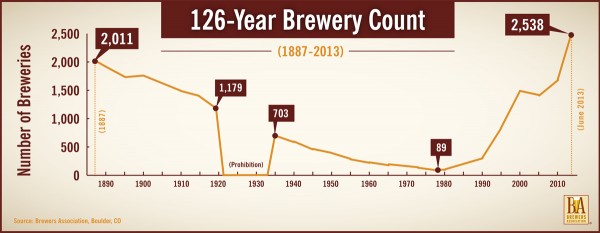
Chart of the day: US breweries have exploded, from 89 in the late 1970s to more than 2,500 today, a 2,750% increase!

Chart of the day: US breweries have exploded, from 89 in the late 1970s to more than 2,500 today, a 2,750% increase!

Mark J. Perry | September 22, 2013, 10:45 am
beer-600x233

Beer drinkers rejoice: There are now more breweries in the US than ever before – 2,538 as of June 2013 (including 2,483 craft breweries) – according to the Brewers Association (“A Passionate Voice for Craft Brewers”), see chart above. Compared to the low of only 89 US breweries in the late 1970s, there’s been a 2,750% increase in US breweries, primarily because of an explosion of new craft breweries. Great Stagnation? Not for US beer drinkers – there’s never been a better time to be alive than today, and it keeps getting better all the time.

7 Signs That the Craft-Beer Craze Has Gone Totally Mainstream

By Brad Tuttle @bradrtuttleSept. 22, 20133 Comments

From Hollywood to Costco to your state senator, everyone seems to want to be associated with craft beer lately. Here are a few indications that craft beer can no longer be classified as a niche category with limited appeal to the masses.

There’s a Craft-Beer Billionaire
Amid the soaring popularity of craft beer, hundreds of new breweries launch annually and sales have been rising 15% or so per year. The phenomenon has allowed thousands of entrepreneurs to make decent livings, and it’s made a few craft-beer pioneers extremely rich. Most obviously, Jim Koch, the high-profile founder of the Boston Beer Co. (maker of Samuel Adams), became a billionaire after shares of company hit new highs last week, Bloomberg News reported. The Boston Beer Co. accounts for 1.3% of all beer sold in the U.S., making it America’s largest craft brewer and the fifth largest brewer overall, according to the Brewers Association. The company’s stock price has increased tenfold since the middle of 2009. Read more of this post

Tangled web of deceit, debt and lawsuits: An alleged fraud ring in Australia seems to have run a sophisticated scheme

Tangled web of deceit, debt and lawsuits

September 28, 2013

Ben Butler

An alleged fraud ring seems to have run a sophisticated scheme, writes Ben Butler.

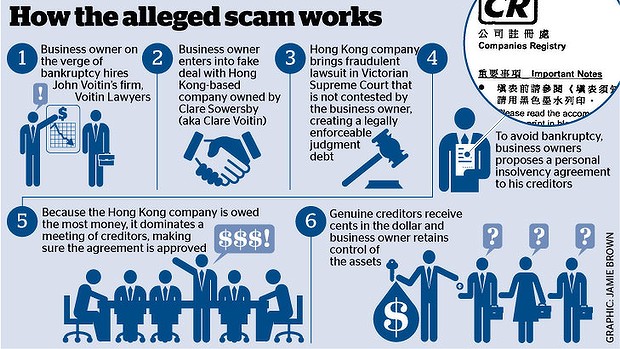
2809scam_729px-620x349

They were the scammers so slick they ripped off a fraudster, if the allegations against them are correct. Stephen George Snowden is a convicted criminal who built part of his nursing home empire using $7 million he admits taking from Westpac by exploiting a flaw in the bank’s systems. But he appears to have met his match when he ran up against an alleged fraud ring connected to Melbourne solicitor John Voitin. It is alleged that a sham loan made in September last year by a company controlled by Clare Sowersby, Mr Voitin’s wife, was part of a scheme to wrest control of six nursing homes from Mr Snowden. Read more of this post

Heavy Metal-Loving Governor Tipped for Indonesian Presidency

Heavy Metal-Loving Governor Tipped for Indonesian Presidency

By Olivia Rondonuwu on 12:05 pm September 29, 2013.

TICS-WIDODO-854690-01-02_preview-1024x728

In this photograph taken on August 25, 2013, Jakarta Governor Joko Widodo (C), is mobbed by rock fans as he arrived to watch the concert of Metallica rock band at the Bung Karno stadium in Jakarta. (AFP Photo/Olivia Rondonuwu)

Wearing a black T-shirt and leather jacket, the governor of Jakarta thrusts his fist into the air among a sweat-soaked, headbanging crowd at a concert by rock band Metallica. If being among the people is unusual for an Indonesian politician, doing so at a heavy metal gig is one of the reasons 52 year-old Joko Widodo has quickly risen to the top of opinion polls as a figure regarded as outside the establishment. “I listen to loud metal songs, from Metallica to Led Zeppelin, to Napalm Death… because rock is my passion,” the skinny governor of the Indonesian, told AFP ahead of the concert.The city chief’s laid-back demeanor hides a potent political force and is part of the down-to-earth charm that has captivated the nation and shaken up a political arena dominated by aloof figures from the era of dictator Suharto. Read more of this post

New Warning Issued on China Local Government Debt

September 27, 2013, 2:04 p.m. ET

New Warning Issued on China Local Government Debt

WILLIAM KAZER

BEIJING—China’s local government debt has nearly doubled since 2010, an official newspaper reported Friday, raising fresh concerns about potential repayment problems and the health of the banking system. The state-run Economic Information Daily, quoting the results of a government audit, didn’t give a figure for the new level of local debt. But a doubling of the total found in the last audit in 2010 would put the tally at around 20 trillion yuan ($3.28 trillion)—or almost 39% of the nation’s gross domestic product last year. China has been concerned that local-government debt levels were rising quickly as economic growth slowed and local administrations and the companies they hold stepped up borrowing to give the economy a helping hand. Most of China’s local governments are forbidden from borrowing money directly, so they have created local-financing vehicles to skirt the restrictions and raise funds for infrastructure and other projects. Those vehicles racked up massive debt levels in 2009 and 2010 as China rolled out a giant infrastructure-based stimulus program in the wake of the financial crisis. Read more of this post

Have-Nots Squeezed and Stacked in Hong Kong

September 27, 2013

Have-Nots Squeezed and Stacked in Hong Kong

By BETTINA WASSENER and GRACE TSOI

XXhousing-slide-VY7W-articleLarge

In Hong Kong, a Cubicle to Call Home: One of Asia’s premier banking, trading and logistics centers is a difficult place for low-income residents to live.

HONG KONG — On the first floor of a hulking residential building, at the end of a dimly lighted corridor, a narrow door opens up into Hong Kong’s economic underbelly. Twenty-two men live in this particular 450-square-foot apartment in the neighborhood of Mong Kok, in cubicles each hardly larger than a single bed, stacked above one another along two narrow passageways that end in a dank toilet and shower room. Each cupboardlike cubicle has a sliding door, a small television, some shelves and a thin mattress. Most of the men have lived here for months, some for years. “Luckily there is air-conditioning. If not, sleeping would be impossible,” said Ng Chi-hung, 55, who is unemployed and occupies one of the bottom bunks. “If you live in such environment, you have to adapt to everything.” Read more of this post

Kelcy Warren, the billionaire running the third-largest U.S. natural gas pipeline company, says the days of deal making are returning

Pipeline Billionaire Ready for Next Round of Deal Making: Energy

Kelcy Warren, the billionaire running the third-largest U.S. natural gas pipeline company, says the days of deal making are returning. Railroads and competing pipeline operators are taking market share, leaving networks with smaller regions and struggling to find business. To survive, companies need a geographically diverse portfolio of assets across an array of oil and gas products that can weather slowdowns in individual sectors or regions, Warren, chairman and chief executive officer of Energy Transfer Partners LP (ETP), said in an interview. Read more of this post

Rethinking equity after Alibaba

September 27, 2013 6:57 pm

Rethinking equity after Alibaba

There may be a place for differential voting shares

The idea that voting power should go hand in hand with share ownership has become so entrenched a principle of corporate governance that it is rarely questioned. This week Alibaba, the Chinese internet group, opted to float in the US because the Hong Kong stock exchange would not bend its rules to allow the company’s owners to control the equity, despite owning only a minority of the shares. Most observers sided with the HK authorities while condemning the US for engaging in a regulatory race to the bottom. Read more of this post

China outlined a plan to allow foreign firms to offer some Internet services in the country and ended a more than decade long ban on the sale of videogame consoles

Updated September 27, 2013, 1:22 p.m. ET

China to Open Door Wider for Foreign Tech Firms

PAUL MOZUR

BEIJING—China outlined a plan to allow foreign firms to offer some Internet services in the country and ended a more than decadelong ban on the sale of videogame consoles as part of new rules issued Friday for a free-trade zone in Shanghai. According to a statement from the State Council, foreign companies operating within the trade zone will be able to offer so-far unspecified information technology services, including Internet, software, data processing and storage services. The Ministry of Industry and Information Technology is expected to release more specific guidelines in the coming months, according to lawyers. Read more of this post

Auction houses in China: Christie’s v the people’s army; Foreign auctioneers have begun to enter China’s huge but unruly art market. They will not find it easy

Auction houses in China: Christie’s v the people’s army; Foreign auctioneers have begun to enter China’s huge but unruly art market. They will not find it easy

Sep 28th 2013 | SHANGHAI |From the print edition

IN 1779 the estate of Sir Robert Walpole, Britain’s first prime minister, sold an art collection to Catherine the Great. The private sale, which included pieces by Rubens and Rembrandt, was brokered by James Christie, a pioneering auctioneer. Though she placed most of these in St Petersburg’s Hermitage museum, the Russian empress traded a few items with the Qianlong emperor for some Chinese masterpieces. Read more of this post

Heineken sewn up in Chinese trademark tangle

September 27, 2013 3:11 pm

Heineken sewn up in Chinese trademark tangle

By Demetri Sevastopulo in Hong Kong

China became the world’s copycatting centre by faking everything from Louis Vuitton bags and PhD diplomas to Apple stores. Now Heineken has become the latest multinational to face an intellectual property challenge – from a tiny Chinese sewing machine company. The global brewer has accused Wujiang Xili Machinery Factory, a company from Jiangsu province with fewer than 50 employees, of pirating its name and logo, and using them at a Shanghai trade show this week. Read more of this post

China to allow banks to sell $49 billion of asset-backed securities: sources

China to allow banks to sell $49 billion of asset-backed securities: sources

Fri, Sep 27 2013

BEIJING (Reuters) – China will allow selected banks to issue asset-back securities (ABS) worth 300 billion yuan ($49 billion) by the end of June next year, expanding a pilot program to support the economy, three industry sources said. The People’s Bank of China (PBOC) asked 20 banks, including big state banks, to submit their ABS issuance plans at a recent meeting which also involved securities brokerages and trust companies, the sources familiar with the development said. Read more of this post

China private bank push sparks speculative stock frenzy

China private bank push sparks speculative stock frenzy

Fri, Sep 27 2013

* Policymakers express support for privately-owned banks

* Speculators feast on stocks linked to private banks

* Hope that private banks can boost financing to small firms

* But officials, bankers say no panacea for SME financing woes

By Heng Xie and Gabriel Wildau

SHANGHAI, Sept 26 (Reuters) – Signs that China is preparing to open its banking sector to privately-owned lenders has raised hopes that they can help ease financing difficulties afflicting smaller firms. A handful of listed companies have also seen their stock prices soar in recent weeks on rumours they are planning moves into banking. But bankers and policymakers say that hopes for private banks have been inflated. At least in the short term, private banks will provide neither big new profits to listed companies nor an easy solution to small- and medium-sized enterprises’ (SMEs) financing woes. Read more of this post

Korean cancer patient to save family from medical costs kills himself; The Park administration had earlier promised to fully cover medical expenses for four terminal diseases including cancer

2013-09-27 16:55

Cancer patient to save family from medical costs kills himself

By Chung Hyun-chae
A 71-year-old man suffering with cancer took his own life in the port city of Busan on Thursday, apparently to relieve his family of financial pressure, police said Friday. The man surnamed Kim was diagnosed with liver cancer earlier this month, and was scheduled to undergo surgery on Saturday. He was to enter hospital on Friday. Kim’s son, 38, discovered the body of his father who hanged himself from a gas pipe in his studio apartment. A suicide note was found taped to the victim’s chest. “Please forgive me. If I undergo a surgery, it would pose a financial burden on all of you. Even though it is a pittance, please keep the 130,000 won in my purse and what’s left in my bank account,” the note read. “It appears he took his own life in order to not impose a financial burden on his children,” said a police officer. Kim lost his wife about 10 years ago and lived alone. Along with his son he leaves behind a 40 year old daughter. Read more of this post

Park eats her words. Can, and will, South Korea’s president make more just, equal society?

2013-09-26 16:59

Park eats her words

Can, and will, president make more just, equal society?        
President Park Geun-hye Thursday expressed regrets about her failure to fully deliver campaign promises on key social welfare programs. “I will try my best to realize these pledges during my term of office,” Park said while presiding over a Cabinet meeting.
Koreans can neither understand why President Park is backtracking on the most important election pledges nor accept the way she is doing so. Park cited the slower-than-expected economic recovery and consequent hole in government revenue as the main reason. This means that she won the election on a pledge that can change by the fluctuations in the business cycle. Read more of this post

A Seoul appeals court handed down severe verdicts to the brothers who run SK Group, the country’s third-largest conglomerate

Appeals court jails 2 SK brothers

Tougher than original verdict, judges also shoot down new trials

Sept 28,2013

A Seoul appeals court yesterday handed down severe verdicts to the brothers who run SK Group, the country’s third-largest conglomerate.

Chairman Chey Tae-won was sentenced to four years in prison, and his younger brother, Chey Jae-won, SK’s vice chairman, was sentenced to three-and-a-half years.
The Seoul High Court yesterday upheld the four-year verdict given to the 52-year-old chairman by a lower court back in January for embezzling 45.1 billion won ($41.8 million) from two SK affiliates for personal investments.  Read more of this post

Hyosung, CJ E&M in tax hole; Cho Suck-rae, chairman of the country’s 26th largest conglomerate Hyosung Group, is likely to be prosecuted for evading hundreds of billions of won in tax

2013-09-27 17:00

Hyosung, CJ E&M in tax hole

By Na Jeong-ju
Cho Suck-rae, chairman of the country’s 26th largest conglomerate Hyosung Group, is likely to be prosecuted for evading hundreds of billions of won in tax.
Sources from the National Tax Service (NTS) said Friday it discovered Cho allegedly dodged paying tax by manipulating account books and setting up a slush fund.
“The case may be referred to the prosecution as early as next week,” an NTS official said on condition of anonymity. Read more of this post

The fate of the troubled Tongyang Group has been left to the market and its chances of getting back on its feet by itself are looking increasingly slim

2013-09-27 17:23

Fate of Tongyang tossed to market

By Kim Rahn
The fate of the troubled Tongyang Group has been left to the market and its chances of getting back on its feet by itself are looking increasingly slim. No fresh credit line is forthcoming with government regulators telling it to expect no help. The core of its problems is corporate bills and bonds it and its affiliates issued to keep afloat because banks turned its loan requests down. Tongyang International and Tongyang Leisure need fresh funds to repay maturing debts or face bankruptcy. Read more of this post

Beer, gambling and Mad Men lead stocks boom

September 27, 2013 3:25 pm

Beer, gambling and Mad Men lead stocks boom

By FT Reporters

When it comes to big stock market gains, investors should look to beer, gambling, the macho culture of Mad Men and box office hits such as The Hunger Games. While many have opted for safety as equities have rallied in the wake of the financial crisis – favouring big, reliable dividend-payers – an eclectic group of global small-caps are setting a blistering pace. The MSCI World Small Caps index has climbed almost 22 per cent already this year, touching a record high last week, thanks largely to growing confidence in the strength of the US economic recovery and hopes for growth in Europe and Japan. Meanwhile, the blue-chip World Index has lagged behind, gaining 16 per cent in 2013. Read more of this post

On the march, small-caps that punch above their weight

September 27, 2013 6:48 pm

On the march, small-caps that punch above their weight

By Jonathan Eley

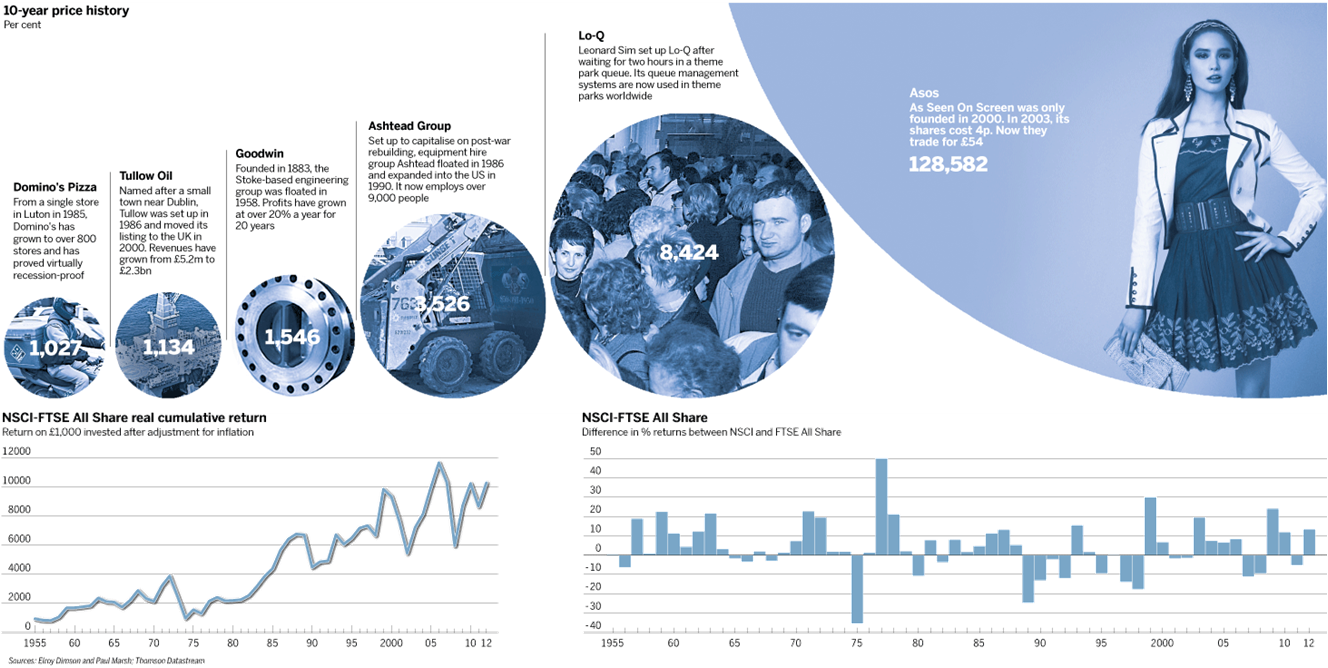
SmallCap

Small is beautiful. Elephants don’t gallop. A flea can jump 200 times its own height. There’s no shortage of appropriate metaphors for the tendency of small-cap shares to outperform their larger brethren – and in recent years, no shortage of examples of them doing so. Shares in companies outside the top echelon of the market have been on a tear this year. The FTSE Fledgling index is up 27 per cent this year to date, while the FTSE Small-cap is up 25 per cent and the Numis Smaller Companies index has risen 21 per cent – more if the investment trusts are stripped out. That compares with a gain of 11 per cent for the FTSE 100, which tracks the biggest companies. Read more of this post

Byron Wien is Wary of Market’s Optimism; Be defensive “when most others think almost everything is headed in the right direction”

SATURDAY, SEPTEMBER 28, 2013

Byron Wien is Wary of Market’s Optimism

By BYRON WIEN | MORE ARTICLES BY AUTHOR

Be defensive “when most others think almost everything is headed in the right direction,” writes the veteran Wall Street strategist.

We all had plenty to brood about over the Labor Day weekend. President Obama was contemplating sending missiles into Syria to punish President Bashar al Assad for using chemical weapons against his own people and to discourage him from using them again. The President also had to choose a successor to Federal Reserve Chairman Ben Bernanke and his preferred choice, Larry Summers, faced opposition in the Senate, threatening his confirmation. The Federal Reserve, by the way, had indicated in May that it might reduce its $85 billion bond-buying program in the fall, causing interest rates to rise and creating turbulence in the emerging markets. Everyone awaited the Fed’s decision on how much restraint they would implement. The nation’s debt ceiling loomed in October with the Republicans taking the position that unless the Affordable Care Act was deprived of funding, they would not agree to raising the borrowing limit. Finally, as if the political situation in the Middle East were not complicated enough, Iran proceeded with its nuclear weapons development program. Read more of this post

Thai central banker warns on subsidies largesse

September 27, 2013 10:00 am

Thai central banker warns on subsidies largesse

By Michael Peel in Bangkok

Thailand’s central bank chief on Friday fired a broadside against populist government policies, echoing wider fears that climbing consumer debt levels and more spending on commodity subsidies are underminingsoutheast Asia’s second-largest economy. Prasarn Trairatvorakul, governor, warned that Thai households could become “undisciplined” and “addicted to easy money”, amid a succession of handouts by government ranging from subsidies to rice farmers to tax breaks on first-time car buys. Thai household debt has risen to about 80 per cent of gross domestic product, from 55 per cent in 2008. Much of that growth has come from lending to subprime lenders, according to Fitch, the rating agency – a practice that helped unravel the US economy. Read more of this post

Trend-following funds head for third down year

Trend-following funds head for third down year

Fri, Sep 27 2013

NEW YORK (Reuters) – Long-term trend following funds are headed for a third straight year of losses unless the underlying commodity and financial markets they trade settle into a more predictable pattern, which does not seem likely given the Federal Reserve’s mixed signals on the U.S. economic stimulus. Many of the so-called Commodity Trading Advisors (CTAs) were whipsawed in the first half by market gyrations over whether the Fed would cut its bond buying this year. Further volatility seems likely after the Fed said last week it needed more time to decide on the stimulus. Some CTAs trading on shorter time horizons and focused on gold made money as bullion prices swung on speculation over the Fed. Other funds gained in the past two months by following a relatively steady rally in oil caused by Middle East tensions, and a run-up in cattle prices. Read more of this post

Latin America’s Middle-Class Mirage

Eduardo Levy Yeyati

Eduardo Levy Yeyati, former Chief Economist at the Central Bank of Argentina and Head of Emerging Markets Strategy at Barclays Capital, is Director of Elypsis Partners, Professor at Universidad Torcuato Di Tella, and President of the Center for Public Policy (CIPPEC).

Latin America’s Middle-Class Mirage

25 September 2013

BUENOS AIRES – Rising incomes across the developing world will bring some 400 million people into the middle class by 2020, up from 1.8 billion today. Their increasing spending power, especially on non-essential consumer goods and services, is being hailed as the great hope for the global economy. But closer examination of their economic circumstances suggests that these new consumers are neither as wealthy nor as secure as we may think. Read more of this post

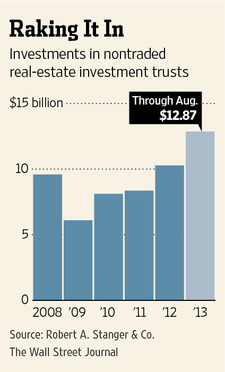
Investors are pouring money into nontraded real-estate investment trusts, despite repeated warnings from regulators

September 27, 2013, 6:48 p.m. ET

A REIT That Could Bite Back

A target of regulators, nontraded REITs are drawing record assets.

LIZ MOYER

BF-AF859_NOTREI_NS_20130927112105

Investors are pouring money into nontraded real-estate investment trusts, despite repeated warnings from regulators. The products, which often sport yields of more than 6%, have proved popular among income-hungry investors looking to diversify beyond bonds. Like their exchange-listed cousins, nontraded REITs pool investor money into income-generating properties, such as office buildings, hotels or shopping malls, and pay dividends. As their name implies, they aren’t publicly traded and can lock up investor money for a number of years. Critics contend that the products are hard to understand and that investors aren’t being adequately warned about the risks. Read more of this post

China puffer fish tower adding to GDP prompts a huff about state spending

China puffer fish tower prompts a huff about state spending

Viewing tower in the shape of a giant copper puffer fish is seen under construction on the banks of a river in Yangzhong county

7:18am EDT

BEIJING (Reuters) – A Chinese viewing tower in the shape of a giant, copper puffer fish has raised an online huff about the latest in a series of bizarre and extravagant targets of state investment. Encased in 8,920 copper plates and built at a cost of around 70 million yuan ($11.4 million), the tower on an island in Yangzhong county, eastern Jiangsu province, hovers 15 storeys above ground. The government has often been criticized for wasteful investment to power the world’s No. 2 economy. Beijing acknowledges the problem and wants consumption to overtake investment as a driver of growth. Residents who welcome the fish tower say it improves the county’s image. Less enthusiastic residents question whether such expensive and impractical buildings are needed. “To spend so much money on something so meaningless, I really admire these ‘wealthy’ people,” Mother988 said on Sina Weibo, China’s version of Twitter, with apparent heavy irony. The People’s Daily, the Chinese government’s main mouthpiece, acknowledged that the construction had polarized opinion. “Once this giant puffer made its appearance, it caused a heated debate online,” it said. Public records show Jiangsu’s local government bodies are the most indebted in the country. Jiangsu says its debt is manageable, but took steps this week to rein in risk by announcing plans to control land sales, becoming the first Chinese government to do so. Yangzhong aims to promote the tower as the world’s biggest metal construction in terms of volume, the People’s Daily said. Central Henan province drew controversy in 2011 when a state-backed charity tried to build an eight-storey sculpture of Song Qingling, second wife of modern China’s founding father Sun Yat Sen. Construction was scrapped half-way through. The eastern province of Zhejiang also came under the spotlight after it modeled one of its city court houses on Capitol Hill.($1 = 6.1 yuan)