Asustek unveils world’s first 5-in-1 laptop at Taipei Computex

Asustek unveils world’s first 5-in-1 laptop at Taipei Computex

CNA and Staff Reporter

image001-1

2014-06-03

Taiwan-based PC maker Asustek unveiled Monday a line of new products at this year’s Computex Taipei computer trade show, with a converged notebook that enables five modes across the Windows and Android platforms given pride of place.

The Transformer Book V is a 12.5-inch tablet combined with a detachable keyboard dock and a 5-inch smartphone. Based on different usage scenarios, the device, which supports dual operating systems, can transform into a Windows laptop, a Windows tablet, an Android laptop, an Android tablet, or an Android smartphone. Read more of this post

Urgent need for reforming Taobao’s judicial sales; The land use rights for a piece of national land in Kunshan has gone up for a starting price of 325 million yuan (US$52 million)

Urgent need for reforming Taobao’s judicial sales

Staff Reporter

2014-06-03

On May 23, the most expensive item on Taobao — Alibaba’s biggest website for online shopping — made its debut. The land use rights for a piece of national land in Kunshan, Jiangsu province, has gone up for a starting price of 325 million yuan (US$52 million). Read more of this post

China’s top express delivery service SF Express has stirred up the e-commerce market by setting up a chain of stores, where customers can place online orders or pick up the items they purchase online

SF Express chain stores stir up China’s e-commerce market

Li Tao-cheng and Staff Reporter

image001

2014-06-03

China’s top express delivery service SF Express has stirred up the e-commerce market by setting up a chain of stores, where customers can place online orders or pick up the items they purchase online.

Following the launch of its first Heike store in May, the chain has already opened a total of 18 outlets in Shanghai, with a target to increase the number to 400 by the end of this year. Read more of this post

China will replace Google’s Android and Apple’s iOS with its own localized smartphone operating system within the next three to five years?

China to develop localized smartphone OS in 3-5 years: academic

Staff Reporter

2014-06-02

China will replace Google’s Android and Apple’s iOS with its own localized smartphone operating system within the next three to five years, says a Chinese academic. Read more of this post

For Chinese Online Giants, All the Web’s a Stage: Baidu, Alibaba and Tencent have set sights on the entertainment industry as the Internet’s next frontier

06.02.2014 11:44

For Online Giants, All the Web’s a Stage

Baidu, Alibaba and Tencent have set sights on the entertainment industry as the Internet’s next frontier

By staff reporters Liu Ran and Qu Yunxu

When Tencent Holdings signed a contract with novelist and Nobel laureate Mo Yan in 2013, the Internet and messaging services provider raised the stakes in a race to dominate China’s online entertainment market. Read more of this post

Good news for Apple’s iWatch: Wearable technology poised for ‘hockey stick’ growth in Canada, report says

Good news for Apple’s iWatch: Wearable technology poised for ‘hockey stick’ growth in Canada, report says

Armina Ligaya | June 2, 2014 | Last Updated: Jun 2 10:32 AM ET
The Canadian market for wearable technology — whether that’s an Internet-enabled watch connected to your smartphone or a fitness-tracking wristband — is expected to be worth hundreds of millions of dollars in five years, according to a new report from IDC Canada. Read more of this post

The Luggage Tag With GPS: Fliers have long tried many ways to set similar bags apart. Now, some companies are developing digital alternatives

The Luggage Tag With GPS

By MARTHA C. WHITEJUNE 2, 2014

David Deeble opened his suitcase and realized that his machete was missing. So was the plunger, the stuffed rabbit and the juggling pins — not to mention his clothes.

A comedic juggler for a cruise line, Mr. Deeble discovered six hours before the ship’s departure from Singapore that he had grabbed the wrong black wheeled bag on his way out of the airport. Read more of this post

Nexon CEO eyes global start-ups; Kim Jung-ju, CEO and founder of NXC, the 20-year-old holding company for Korea’s No. 1 game company Nexon, says society needs to open up for economic success

Nexon CEO eyes global start-ups

Kim also says society needs to open up for economic success

image001

June 03,2014

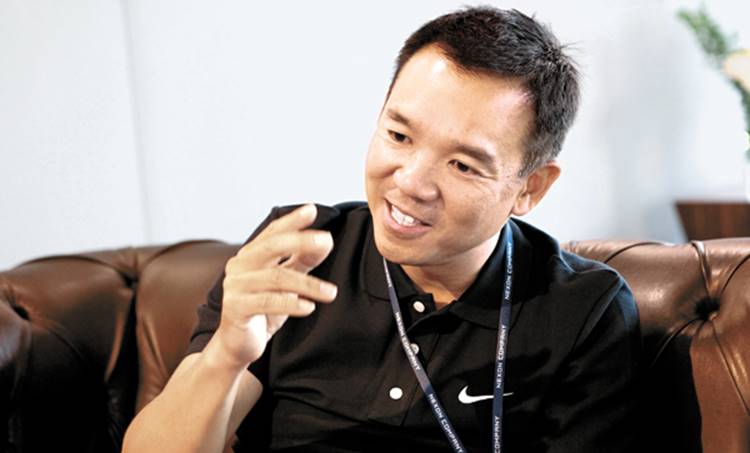
Kim Jung-ju, CEO and founder of NXC, the 20-year-old holding company of Korea’s No. 1 game company Nexon, speaks during an interview with the JoongAng Ilbo on Saturday. Provided by Nexon

The worldwide IT market is changing fast, with key players like Apple, Google and Amazon constantly acquiring promising start-ups.
Kim Jung-ju, CEO and founder of NXC, the 20-year-old holding company for Korea’s No. 1 game company Nexon, said he has also been eyeing start-ups across Europe, the United States and Korea since a few years ago.
Kim has often expressed his frustration over Korean society being too constrained and said in an interview with the JoongAng Ilbo at Nexon’s headquarters at Pangyo Techno Valley in Seongnam, southern Gyeonggi, on Saturday that he hopes the nation will become more flexible. Read more of this post

Falling Price of Shares Creates Risk at Salesforce

Falling Price of Shares Creates Risk at Salesforce

By PETER EAVIS

JUNE 2, 2014 5:50 PM Comment

Nearly everything about Salesforce.com is remarkable.

Marc Benioff, its chief executive, is a salesman nonpareil, and under him the company pioneered a fresh approach to distributing software that corporate America is adopting. Read more of this post

I, robot, am your collaborator

June 1, 2014 1:50 pm

I, robot, am your collaborator

By Tanya Powley and Chris Bryant

Now BMW is bringing robots out from behind their cages to work side-by-side with workers on the assembly line. Lightweight “collaborative” robots manufactured by Denmark’s Universal Robots help to fit doors with sound and moisture insulation, a task that previously required workers to use a manual roller that risked straining older workers’ wrists.

“Being able to reliably put a robot outside the “safety cage” and have it work with a human is a massive change for industry, and means you can have a strong precise robot help a weak dexterous human,” says Rich Walker of Shadow Robots, a UK robotics research company. Read more of this post

Apple’s Soft Launch for New Devices

Apple’s Soft Launch for New Devices

DAN GALLAGHER

June 2, 2014 5:27 p.m. ET

Apple‘s AAPL -0.69% faithful were predictably wowed at its developers’ conference kickoff. The bigger test comes this fall once customers get an actual look at Apple’s new products.

That matters because, for all the focus on software in Monday’s opening keynote, Apple remains a hardware firm, using software and content to push sales of high-end devices at high margins. And with new designs like a large-screen iPhone and maybe a smartwatch expected in coming months, the question is how to maintain those margins.

It won’t be easy. Apple may have pioneered touch screen smartphones, but competition from the likes of GoogleGOOGL -1.28% Microsoft MSFT -0.37% andSamsung Electronics 005930.SE +1.65% has forced it to raise the stakes to stay competitive. Read more of this post

The recent collapse of highflying technology and health-care stocks has stung buyers who paid steep prices for shares sold by the companies earlier this year in a surge of follow-on offerings

Secondary Sales Squeeze Investors

Slide in Technology, Health-Care Stocks Has Cooled Demand for Follow-On Sales

MATT JARZEMSKY

June 2, 2014 7:23 p.m. ET

A gold rush in public-company stock offerings has failed to pan out for many investors.

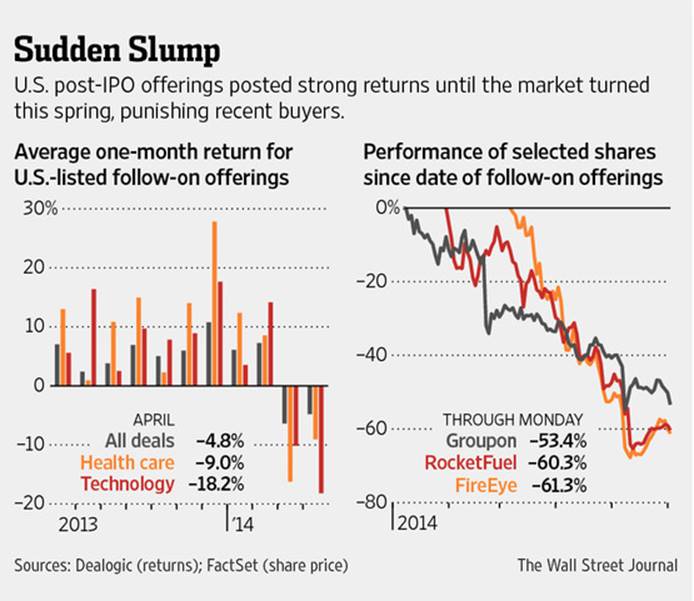
The recent collapse of highflying technology and health-care stocks has stung buyers who paid steep prices for shares sold by the companies earlier this year in a surge of deals known as follow-on offerings.

image001-1

That has cooled demand for the sales, meaning companies won’t see the same strong pricing that prevailed earlier in the year. At the same time, the stock prices of companies that completed offerings before the rout may come under pressure as investors use any rebounds to sell and reduce their losses.

When it comes to deals involving these once top-performing stocks, “Every purchase has been a bad purchase and every sale has been too small,” said Andrew Cupps, chief investment officer of Cupps Capital Management LLC. Read more of this post

Is this the new Lululemon? Twin entrepreneurs are heading to the US with their online activewear enterprise

Is this the new Lululemon?

June 2, 2014

Christine D’Mello

Twin entrepreneurs are heading to the US with their online activewear enterprise.

image001

Julie and Sali Stevanja have their eyes on one of the biggest markets in the world.

The growth of the fitness industry in Australia has spawned many associated businesses.

From 24-hour gyms and outdoor fitness facilities to sporting gear and activewear, various enterprises are tapping into the opportunities.

One sector to benefit is activewear. The local athletic apparel industry increased 8.3 per cent from 2006 to 2012, according to an industry outlook report by Ken Research.

Activewear boasts such glamorous names as adidas by Stella McCartney, Nike and Jodhi Meares’ The Upside, while Australian brands Vie Active, Running Bare and Lorna Jane are doing a roaring trade. In fact the Brisbane-based Lorna Jane will be put up for sale for a reported $500 million. Read more of this post

New Chip to Bring Holograms to Smartphones; Ostendo’s Tiny Projectors Are Designed to Display Crisp Video, Glasses-Free 3-D Images

New Chip to Bring Holograms to Smartphones

Ostendo’s Tiny Projectors Are Designed to Display Crisp Video, Glasses-Free 3-D Images

EVELYN M. RUSLI

June 2, 2014 7:49 p.m. ET

image001-5 image002-3

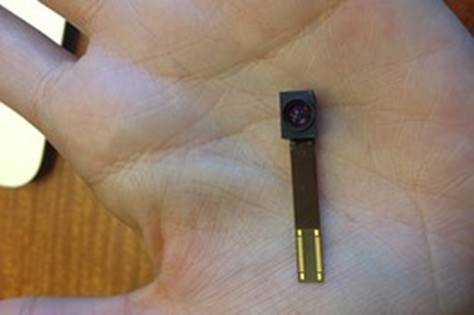
An Ostendo chip with an affixed lens sitting in the palm of a hand. Evelyn M. Rusli for The Wall Street Journal

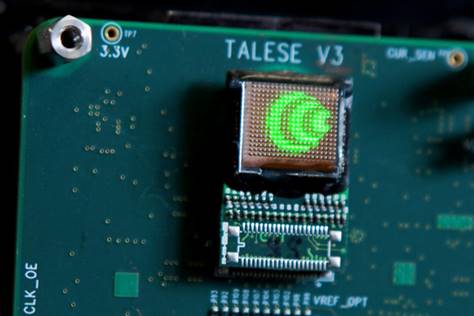
Ostendo’s CEO says that ‘display is the last frontier.’ Above, a company chip that can produce a hologram.Sam Hodgson for The Wall Street Journal

In the future, virtual reality won’t require strapping a bulky contraption to your head.

Instead, imagine stepping into an empty room and then suddenly seeing life-size, 3-D images of people and furniture. Or looking down at a smartwatch and seeing virtual objects float and bounce above the wrist, like the holographic Princess Leia beamed by R2-D2 in the movie “Star Wars.” Read more of this post

Away From the U.K.’s Tech Capital, a Challenger Emerges; Hut’s Offer of Shares, Promotions and Cheap Rent Has Bright Young Things Shunning London

Away From the U.K.’s Tech Capital, a Challenger Emerges

Hut’s Offer of Shares, Promotions and Cheap Rent Has Bright Young Things Shunning London

LISA FLEISHER

June 2, 2014 7:47 a.m. ET

NORTHWICH, ENGLAND—In the gentle hills of Cheshire, more than three hours northwest of London’s buzzing startup scene, hundreds of young software engineers, salespeople and analysts have come to work at an e-retailer tucked into a manicured office park here.

The lure? What every would-be startup founder wants: the chance to run a company.

“I run four separate businesses, four separate entities,” said Adam Knappy, a 25-year-old who oversees four brands for The Hut Group, a closely held online retailer that sells a variety of products such as protein supplements, makeup and videogames. Read more of this post

Apple unwraps ‘Healthkit’ alongside Mac, iPhone features

Apple unwraps ‘Healthkit’ alongside Mac, iPhone features

6:05pm EDT

By Christina Farr and Edwin Chan

SAN FRANCISCO (Reuters) – Apple Inc on Monday took the wraps off mobile applications that pool and analyze health and home data, kicking off an annual developers’ conference lacking in big surprises, despite hopes the iPhone maker would offer a glimpse into its secretive pipeline of products.

Apple Chief Executive Tim Cook and software-engineering boss Craig Federighi told several thousand developers about new features that come with the latest “Yosemite” Mac platform and iOS8, the software that powers the iPhone and iPad.

Apple shares slid 0.7 percent to close at $628.65.

Investors are waiting for Cook to keep a promise to create new product categories. Last week, Internet services chief Eddy Cue said the pipeline was the best he had seen in more than two decades.

“The Healthkit has the most potential for the future,” said Nils Kassube, a director of development at Newscope, a Germany-based consulting firm. “Those of us that are interested in health need a platform for sharing information.” Read more of this post

The Dark Side of the Internet of Things: Intruders for the Plugged-In Home, Coming In Through the Internet

Intruders for the Plugged-In Home, Coming In Through the Internet

By NICK BILTON

JUNE 1, 2014 11:00 AM 35 Comments

Home, connected home. The front door opens with a tap on aniPhone. The lights come up as if by magic. The oven sends a text: Dinner is ready.

You will probably be hearing a lot about these sorts of conveniences this week from the Apple Worldwide Developers Conference in San Francisco. Apple is expected to unveil software that promises to turn our homes into Wi-Fi-connected wonderlands, where locks, lights, appliances — you name it — can all be controlled via an iPhone or iPad. You can bet that before long, refrigerators will come with “Made for iPhone” stickers.

These initiatives are all part of what is known as the Internet of Things. That is a catchall term used to describe connectivity — specifically, how people connect with products, and how products connect with each other.

Sounds great. But I can’t shake the feeling that one day, maybe, just maybe, my entire apartment is going to get hacked. Read more of this post

Surviving and Thriving in the Cloud

Surviving and Thriving in the Cloud

Red Hat’s core Linux business remains strong, but increasing cloud adoption could provide upside.

By Norman Young | 06-02-14 | 06:00 AM | Email Article

The change in computing model from client-server to cloud-device presents opportunities and pitfalls for  Red Hat (RHT). The undisputed king of the Linux operating system faces possible disruptions to its business model, since end users may be insulated from OS decision-making in the public cloud. However, we think the core Red Hat Enterprise Linux business combined with its growing middleware and virtualization distribution will give the firm an edge in the data center, private cloud, and hybrid environments while it develops its open-source cloud infrastructure projects, OpenStack and OpenShift. Our $50 fair value estimate assumes continued growth in the core RHEL business, adoption and strong growth of middleware and virtualization services, and little near- to medium-term revenue contribution from OpenStack and OpenShift.

Sunny Forecast for Clouds
Improvements in hardware, software, and networking have combined with the secular trend toward outsourcing to usher in the era of cloud computing. The economies of scale offered by remote data centers managed by third parties allow enterprises to offload or outsource some or all of their computing and storage workloads. Cloud adoption is particularly cost-effective for smaller and midsize users that lack the capital, manpower, or expertise to build and maintain their own data centers. Read more of this post

Visions and Voices on Emerging Challenges in Digital Business Strategy

Visions and Voices on Emerging Challenges in Digital Business Strategy

Anandhi Bharadwaj 

Emory University

Omar A. El Sawy 

University of Southern California – Marshall School of Business

Paul A. Pavlou 

Temple University – Department of Management Information Systems; Temple University – Department of Strategic Management

N. Venkat Venkatraman 

Boston University – Department of Management Information Systems
June 1, 2013
MIS Quarterly Vol. 37 No. 2, pp. 1-XX/June 2013
Fox School of Business Research Paper No. 14-001

Abstract: 
This section is a collection of shorter “Issue and Opinions” pieces that address some of the critical challenges around the evolution of digital business strategy. These voices and visions are from thought leaders who, in addition to their scholarship, have a keen sense of practice. They outline 27 through their opinion pieces a series of issues that will need attention from both research and practice. These issues have been identified through their observation of practice with the 30 eye of a scholar. They provide fertile opportunities for scholars in information systems, strategic management, and organizational theory.


Apple’s newest product: Complexity

Apple’s newest product: Complexity

Adam Lashinsky

@adamlashinsky

JUNE 1, 2014, 6:54 AM EDT

Recently a friend I consider tech-savvy was trying to figure out how to share an audio file with his colleague. The file, an hour-long recording of a business meeting, was too large to attach to an email or text message, the only options his Apple iPhone presented to him. So he plugged his phone into his laptop, loaded up iTunes, and tried to drag and drop the file from his phone to his desktop. No dice. He right-clicked in search of a “Save to …” or “Export” function and came up empty-handed. After 10 minutes of ducking in and out of labyrinthine menus and byzantine screens in search of — well, anything of relevance — he finally gave up and searched the web. “iTunes automatically syncs voice memos to your iTunes library when you connect iPhone to your computer,” someone cheerily wrote on a message board. Not that anyone would be able to find them. “It was ridiculous,” my friend said. “I’ve been using iTunes for 10 years. It shouldn’t be this hard.”

Historically, Apple  AAPL -0.27%  products just worked. If you installed a printer, you didn’t need to worry about drivers to make it function. If you wanted to back up your files, you didn’t need to worry about when or how; Time Machine would automate the entire process. And perhaps most important, you didn’t need to read an instruction manual to use an Apple product. A seamless out-of-the-box experience was the company’s signature. Exhibit A: The “Get a Mac” ad campaign in the late 2000s. That simplicity allowed it to charge premiums for devices that largely used the same components as its peers. Apple’s late co-founder and chief executive, Steve Jobs, deserves credit for much of this uniformity. Without his singular vision and autocratic rule Apple might well have devolved into Microsoft-like internecine warfare.

Today Apple still doesn’t include an instruction manual with its devices, and its user interfaces have less clutter than the competition. But its products are beginning to show that they come from one of the largest technology companies in the world, one with 80,000 employees. iTunes, iPhoto, iCloud, and other Apple software and services have grown confusingly complex, woefully outdated, or both. If you try to add a device made by another company to the mix, things can get a little hairy. (Woe to the benighted customers of devices running Google’s Android mobile operating system hoping that their Apple and non-Apple products will happily commingle.) Even Apple’s corporate structures mirror the increased complexity on the user experience side. Though its tax havens in Ireland and treasury operations in Nevada are not new, they now have the sheen of opacity that formerly held the allure of mystery. Apple, once the epitome of simplicity, is becoming the unlikely poster child for complexity. Read more of this post


IBM: The future will be quantified; IBM’s Bridget van Kralingen on how she leads a team of more than 100,000 people with a data-driven strategy

IBM: The future will be quantified

Adam Lashinsky

@adamlashinsky

JUNE 2, 2014, 9:59 AM EDT

IBM’s Bridget van Kralingen on how she leads a team of more than 100,000 people with a data-driven strategy.

Fortune: You head IBM’s  IBM 0.99%  consulting and services business, which traditionally sells to information technology professionals. Now you are focused on what you call a front-office agenda.

Van Kralingen: We are seeing a big shift in how IT is purchased. It is becoming the priority of “CXOs”: corporate leaders, public officials, mayors, and people who lead big functions like finance and human resources. The purchase decision is moving from the technical part of the shop to front-office leaders. We believe 61% of IT spending will be made or shaped by lines of business, as opposed to the IT department.

This is where “big data” comes in, right?

Yes. The business agenda is being empowered while it’s also being challenged by the plethora of structured and unstructured data. Getting it right allows businesses to shift from automating processes to focusing much more on enabling them to do things. An example would be giving real-time data to retailers to better stock store shelves and to deliver that information to a mobile device. Read more of this post

How Xiaomi Beats Apple at Product Launches

How Xiaomi Beats Apple at Product Launches

by Karan Girotra and Serguei Netessine  |   9:00 AM June 2, 2014

The iPhone 6 is due in September.

The build-up to its launch will almost certainly follow the Steve Jobs M.O. Device specifications will remain a closely guarded secret until the launch date (unless an employee forgets his phone at a bar). There will be long lines at stores. We probably won’t be able to actually get the product for a couple of months after the launch. And, of course, users (we) will have no input into what we actually get; Steve Jobs’ dictum that “people don’t know what they want until you show it to them” is still an act of faith for Apple’s management.

But is this the only way to launch new products? Let’s think for a second about the risks inherent in this approach. Imagine that something goes wrong and a hardware glitch makes it necessary to recall and/or repair all products (remember the iPhone4 Antenna problem)? Or what if a certain feature or the device as a whole is a complete miss with consumers (think Apple Maps)? Read more of this post

Is Silicon Valley the Future of Finance?

Is Silicon Valley the Future of Finance?

By Kevin RooseFollow @kevinroose

Recently, after a long, drawn-out fight over an overdraft fee, I decided to break up with my bank. I withdrew my balance, closed my accounts, and began looking around. I wanted to find a ­disruptive bank, in the Silicon Valley parlance—one better than the opaque, fee-filled behemoths I’d dealt with in the past.

The problem, I quickly learned, is such a thing doesn’t yet exist. The big banks all offer basically the same bevy of services, and small banks and credit unions tend to skimp on the add-ons I need, like mobile-banking apps and spending trackers. All of them, big and small, run on the same outdated infrastructure—paper checks, debit cards that require punched-in pins, wire transfers that take days to clear. Despite Wall Street’s reputation for ruthless efficiency and staying ahead of the curve, the last truly important innovation in consumer banking might have been the ATM.

To listen to Silicon Valley tell it, that will change soon. “I am dying to fund a disruptive bank,” venture capitalist Marc Andreessen tweeted earlier this year. Financial start-ups—known collectively as “fintech”—are spreading like kudzu, each with a different idea about how to usurp the giants of Wall Street by offering better services, lower fees, or both. Bitcoin and other digital currencies are the tech scene’s infatuation du jour. But a number of other companies are finding success by innovating within the monetary system we already have. “When I go to Silicon Valley … they all want to eat our lunch,” lamented ­JPMorgan Chase CEO Jamie Dimon this year. Read more of this post

Samsung Is Working With Oculus On A ‘Shockingly Good’ Mobile Virtual Reality Product For Your Phone

Samsung Is Working With Oculus On A ‘Shockingly Good’ Mobile Virtual Reality Product For Your Phone

JIM EDWARDS TECH  MAY. 31, 2014, 12:57 AM

Samsung and Facebook’s Oculus VR unit are working together to create a virtual reality device powered by Samsung’s Galaxy S5 line of phones, Engadget reports. You literally plug your phone into the headset and you’re inside a “shockingly good” virtual world, the site reports.

Last week, a source familiar with Samsung’s plans confirmed the company is going to launch a virtual reality headset. However, the source warned, the gadget is mostly just a side project to test new display technologies.

The crazy thing — so crazy it just might work! — is that instead of having the phone attached to the Oculus headset through a jack and a cord, the phone slots directly into the headset and uses the phone’s cameras to over- or under-lay the real world and the virtual world. Here’s how Endgadget describes it:

Rather than having its own screen, Samsung’s VR headset uses your phone directly. It plugs in using an existing port on your phone (think: microUSB) and becomes the screen. The headset itself has built-in sensors — an accelerometer at very least — so any motion tracking functionality is offloaded from your phone’s processor. Read more of this post

Why Yahoo Keeps Killing Everything It Buys

Why Yahoo Keeps Killing Everything It Buys

BY ISSIE LAPOWSKY

05.14.14  |

Another one bites the dust.

Yahoo has just acquired Meh Labs, the startup behind a self-destruct messaging app called Blink and a location check-in app called Kismet. And, as with so many Yahoo acquisitions before it, the tech giant intends to shut down both apps in the coming weeks.

As with so many Yahoo acquisitions before it, the tech giant intends to shut down both apps in the coming weeks.

Blink, which launched about a year ago, is a direct competitor to other mobile messaging products like WhatsApp and Snapchat, and the buyout is a strong sign that Yahoo CEO Marissa Mayer refuses to be left behind in the heated mobile messaging war being waged by competitors like Facebook. Just as Facebook did with its $19 billion acquisition of WhatsApp and $3 billion bid for Snapchat, Yahoo has been on a buying spree recently, snapping up small startups that are working on trendy new technology. But there’s a big difference between Mayer’s strategy and the one espoused by Facebook CEO Mark Zuckerberg. Read more of this post

Amazon helps small publishers survive the giants; Groups that have grown fat in a market they have dominated are unhappy

June 1, 2014 4:18 pm

Amazon helps small publishers survive the giants

By Martin Shepard

Groups that have grown fat in a market they have dominated are unhappy

When Jeff Bezos founded the company that has become synonymous with online shopping he initially thought of calling it Relentless.com. In the end he opted for something more serene, but that has not stopped some from seeing an insidious tinge in the retailer’s unrelenting advance.

Amazon now offers everything from bicycles to breadmakers, but it is still in the book trade that it is mightiest – selling perhaps half of all the tomes bought in America and 60 per cent of all ebooks. It has clout that your neighbourhood bookstore (if you still have one) can only dream of. And a public spat with Hachette, the Lagardère Group subsidiary that is the smallest of the top five New York publishers, has prompted accusations that the online retailer is using its might to extract unfair terms – enriching itself and impoverishing a once thriving literary scene.

It is easy to wax nostalgic for an era when bookshops were cultural amenities rather than serious businesses – even if, when it came to making a purchase, most of us preferred chains that offered keener prices and a bigger range. But that era is gone – erased, in America at least, not by Amazon but Borders (now bankrupt) and Barnes & Noble (for ever on the ropes). Among retailers, these are the real victims of Amazon’s success. They have not been mourned. Read more of this post

GE Puts Sensors in Hard-to-Reach Places With 3-D Inking; Air Travel Could Be Made Safer With Tiny Monitoring Devices Inside Jet Engines

GE Puts Sensors in Hard-to-Reach Places With 3-D Inking

Air Travel Could Be Made Safer With Tiny Monitoring Devices Inside Jet Engines

DEBORAH GAGE

June 1, 2014 4:48 p.m. ET

Making jet engines communicate their vital signs while they’re in flight has the potential to make air travel safer. It could signal when a stressed engine part needs replacing, or give clues to how engines could be better designed.

But first, those parts have to be made smarter.

A team of manufacturing engineers, materials scientists and testing experts at a General Electric Co. GE +0.19%lab in upstate New York is trying to make that happen. They’re using a robotically driven stylus—like a needle, no thicker than a sheet of paper—to create tiny sensors on parts that make up jet engines and other complex structures. The sensors can measure the stress on parts that are inside harsh environments—places that are too hot or have too many gasses for more conventional sensors—and transmit that data to GE. Read more of this post

3-D Printing’s Promise-and Limits; So Far It’s Proving to Be Great for Prorotypes and Small Production Runs, but Not So Much for Bigger Jobs

3-D Printing’s Promise—and Limits

So Far It’s Proving to Be Great for Prorotypes and Small Production Runs, but Not So Much for Bigger Jobs

PETER S. GREEN

Updated June 1, 2014 4:49 p.m. ET

image001-18

Rest Devices used 3-D printing to make the “turtle” transmitter in its onesie monitor—until it got a big order and switched to injection molding. Mimo

Manufacturers are finding that a revolutionary technology has its limits.

According to enthusiasts, 3-D printing was supposed to rewrite the rules of how things get built. Forget building new factories, or outsourcing production to China. The compact devices would launch a manufacturing renaissance centered in people’s living rooms and garages.

It may yet do all that. But for now, here’s the reality: The technology works very well in some settings—but it doesn’t scale very well. Product designers and manufacturers say that 3-D printing beats traditional methods for jobs involving complex designs or limited production runs. But if companies need to crank out thousands of products in a short time, traditional methods are faster and more cost-effective. Read more of this post

Where New-Wave Manufacturing Is Headed; Carl Bass of Autodesk on How 3-D Printing Will Move Far Beyond Prototypes

Where New-Wave Manufacturing Is Headed

Carl Bass of Autodesk on How 3-D Printing Will Move Far Beyond Prototypes

DON CLARK

June 1, 2014 4:48 p.m. ET

Many people have now heard about 3-D printing. Carl Bass has been tracking it for 25 years.

As chief executive of Autodesk Inc., ADSK -0.61% a maker of design software for companies in manufacturing, construction, and media and entertainment, Mr. Bass pays close attention to manufacturing technology. So he waited eagerly during the long gestation of 3-D printing, which builds objects by depositing layers of plastic or other materials.

His company operates a workshop on San Francisco’s waterfront where 150 engineers and artists experiment with 3-D printers, milling machines and other tools. In May, Mr. Bass announced plans for Autodesk to sell its own printer—its first-ever hardware product—and related software. Read more of this post

How Robots Are Getting Smarter; New Models Bring Greater Skills to the Factory Floor, From Navigating on Their Own to Learning by Doing

How Robots Are Getting Smarter

New Models Bring Greater Skills to the Factory Floor, From Navigating on Their Own to Learning by Doing

June 1, 2014 4:48 p.m. ET

image001-17 image002-4 image003-3

ALL EYES | Baxter’s face shows his status (from left): on standby, confused and needing guidance, surprised, sad and awaiting instruction, and ready for training. Workers can train Baxter by moving his arms rather than writing digital prompts. HANDS ON | The KR Quantec can change its own tools to suit its tasks. THIS WAY | The Lynx maps the layout where it’s working and finds its way around obstacles it “sees” with a laser and ultrasonic detectors. It can also alert its fellow robots to any detours.  Read more of this post