Liberty Global CEO Says He Doesn’t Expect Apple to Sell a TV

Liberty Global CEO Says He Doesn’t Expect Apple to Sell a TV

Liberty Global Plc (LBTYA) Chief Executive Officer Mike Fries, who runs one of the world’s biggest cable companies, said he doesn’t expect Apple Inc. to sell its own television, disputing speculation among analysts. “I don’t think Apple is going to build a TV,” Fries said today at an investment conference in New York. Apple instead is talking to U.S. cable providers about revamping the interface for pay-TV services, he said. Analysts such as Gene Munster of Piper Jaffray Cos. and Brian White of Cantor Fitzgerald have predicted Apple will release a television set, vaulting the company into a new market. Until now, its TV efforts have been limited to a $100 Internet-connected set-top box that streams video from providers such as Netflix Inc., Google Inc.’s YouTube, Hulu LLC and Apple’s own iTunes. The company has been beefing up what is available via Apple TV in recent months by striking deals with Walt Disney Co. (DIS)’s ESPN and Time Warner Inc. (TWX)’s HBO. Apple also has been negotiating with Time Warner Cable Inc. to give subscribers of the cable service access to their channels via Apple TV, people familiar with the talks have said.

To contact the reporter on this story: Alex Sherman in New York at asherman6@bloomberg.net

Pantech founder, vice chairman submits resignation over the worsening performance of the company while competing with major players like Samsung Electronics and Apple in the smartphone market

Pantech founder, vice chairman submits resignation

Sept 25,2013

Park Byeong-yeop, vice chairman of Korea’s mobile phone manufacturer Pantech, turned in his resignation yesterday. It is believed Park has been under immense pressure over the worsening performance of the company while competing with major players like Samsung Electronics and Apple in the smartphone market. Pantech, which had enjoyed surpluses every quarter since 2007, recorded its first loss in the third quarter of 2012.Since then, it has posted an operating loss every quarter. Read more of this post

Why ‘The Voice’ Is China’s No. 1 TV Show; ‘The Voice’ Appeals to Viewers Because of Its Surprise Winners

September 19, 2013, 9:38 p.m. ET

Why ‘The Voice’ Is China’s No. 1 TV Show

‘The Voice’ Appeals to Viewers Because of Its Surprise Winners

LAURIE BURKITT

U.S. fans of the hit talent show “The Voice” may take for granted that its judges sit with their backs to performers, choosing winners purely on the basis of their voices. But in China, where television and much of society is frequently biased toward the well-connected, the backward chairs are an important clue about why “The Voice” has become China’s most popular show. When the Chinese version of “The Voice” appeared last year, many viewers expected it to be another typical Chinese variety show. TV networks in China are saturated with reality-show competitions, from dating to job hunting and cooking, which tend to be predetermined, often with the best-looking contestants destined to win. Read more of this post

BlackBerry Investor Prem Watsa Famous for Making Contrarian Bets; The Head of Canadian Firm Fairfax Financial Is Often Compared to Warren Buffett

September 23, 2013, 7:30 p.m. ET

BlackBerry Investor Prem Watsa Famous for Making Contrarian Bets

The Head of Canadian Firm Fairfax Financial Is Often Compared to Warren Buffett

BEN DUMMETT and PAUL VIEIRA

blackberryriseandfall

The Canadian investor leading an effort to take BlackBerry Ltd. BBRY -2.38% private is famous for making big contrarian bets that often work out. Prem Watsa, who runs Toronto-based insurance firm Fairfax Financial Holdings Ltd.FFH.T +0.49% and until last month served on BlackBerry’s board, is often compared with U.S. investment guru Warren Buffett. Mr. Watsa has over the years focused on beaten-up stocks—including at times, his own—and has long explained his choices in plainly written annual reports that are closely followed by many investors. Read more of this post

Is the Race for Smartphone Camera Megapixels Over?

Sep 23, 2013

Is the Race for Smartphone Camera Megapixels Over?

EVA DOU

The abbreviation µm (micron) is probably a lot more obscure to the average smartphone user than MP (megapixel). It may become more familiar, as some smartphone makers have been saying they no longer care so much about higher pixel count, or megapixels. Several high-end smartphone makers are focusing this year on different camera measures such as the size of the pixel, or µm. Apple Inc. and HTC Corp.2498.TW +0.72%both launched their premium phones this year with larger pixels, not more. While Apple kept the same pixel count as last year, HTC actually halved its pixel count on its flagship phone, arguing that having fewer pixels allows room for larger ones that capture more light. Read more of this post

US manufacturers ‘reshoring’ from China; The shift reflects China’s ebbing competitive advantage as a low-cost manufacturing centre after years of rapid wage inflation

September 24, 2013 12:25 am

US manufacturers ‘reshoring’ from China

By Ed Crooks in New York

American companies are increasingly “reshoring” manufacturing operations from China to the US, according to a survey of executives. The shift reflects China’s ebbing competitive advantage as a low-cost manufacturing centre after years of rapid wage inflation and points to rising employment in US manufacturing, even though official data have shown little growth over the past year. Recent examples of companies announcing plans to shift production from China to the US include K’Nex, the toy manufacturer, Trellis Earth Products, which makes bioplastic goods such as bags and utensils, and Handful, the bra manufacturer. Read more of this post

Alibaba Offers Instant-Messaging App to Compete Against Tencent

Alibaba Offers Instant-Messaging App to Compete Against Tencent

Alibaba Group Holding Ltd., the largest e-commerce company in China, is offering an instant-messaging app as it tries to compete against Tencent Holdings Ltd. in the world’s biggest smartphone market. The app, called Laiwang, allows users to form group chats with as many as 500 people and share maps, videos and stickers, according to Alizila, a website run by Alibaba. It has about 1 million existing users, and the company wants to boost that to 100 million, the company said in an e-mail today. Read more of this post

Chinese smartphone owners are heavy entertainment users, but only 27% actually pay for content

Chinese smartphone owners are heavy entertainment users, but only 27% actually pay for content

By Kaylene Hong, 17 hours ago

It’s already a well-established fact that China is the world’s largest smartphone market — but what exactly do Chinese consumers use their mobile devices for? A recent report from the China Internet Network Information Center (CNNIC) obtained by TNW sheds some light on how the Chinese spend a majority of the time on their mobile devices for entertainment purposes — playing games, reading, watching videos and listening to music. However, Chinese smartphone users are a difficult audience to cater to — with challenges such as monetization troubles and a short attention span. In the past half a year, only 26.9 percent of Chinese smartphone owners who access entertainment services on their devices have forked out money for what they use. About 39.3 percent of the respondents surveyed play a game for only two weeks, and then move on to something else. Read more of this post

Robots May Revolutionize China’s Electronics Manufacturing; Machines in Pipeline to Supplant Workers as Pay Soars and People Age

September 23, 2013, 8:07 p.m. ET

Robots May Revolutionize China’s Electronics Manufacturing

Machines in Pipeline to Supplant Workers as Pay Soars and People Age

PAUL MOZUR and EVA DOU

MK-CG515_CROBOT_G_20130923214542

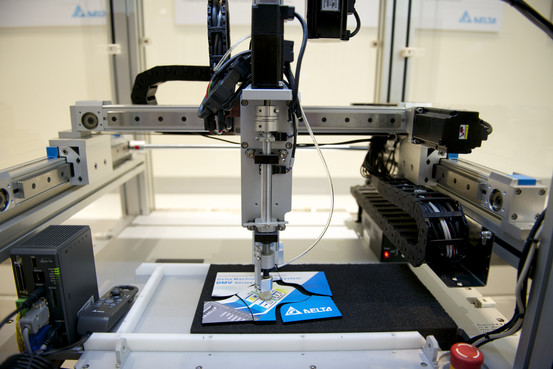
A new worker’s revolution is rising in China and it doesn’t involve humans. A concept robot by Delta Electronics, which is among developers in Asia seeking to build better, cheaper robots. With soaring wages and an aging population, electronics factory managers say the day is approaching when robotic workers will replace people on the Chinese factory floor. A new wave of industrial robots is in development, ranging from high-end humanoid machines with vision, touch and even learning capabilities, to low-cost robots vying to undercut China’s minimum wage. Over the next five years these technologies will transform China’s factories, executives say, and also fill a growing labor shortage as the country’s youth become increasingly unwilling to perform manual labor. How the transformation plays out will also go a long way in deciding how much of the electronics supply chain remains in China. Read more of this post

Google has launched a healthcare company to attack some of the most difficult scientific problems in diseases related to ageing, marking the biggest step yet beyond its core internet business

September 18, 2013 7:05 pm

Google launches healthcare company

By Richard Waters in San Francisco

Google has launched a healthcare company to attack some of the most difficult scientific problems in diseases related to ageing, marking the biggest step yet beyond its core internet business. Larry Page, chief executive, unveiled the venture, called Calico, with a characteristically ambitious and vague claim that “with some longer term, moonshot thinking around healthcare and biotechnology, I believe we can improve millions of lives”. Read more of this post

Using Big Data to amplify your customer experience

Using Big Data to amplify your customer experience

By: Keith Carter
Monday, 02 September 2013 11:04 | Be the first to comment

The profusion of smartphones and tablets in recent years has changed the retail landscape, contributing to an ongoing shift in the balance of power firmly towards the hands of the customer. Armed with a relatively inexpensive mobile device, shoppers have instant access to facts, opinions and reviews and can compare prices on just about anything they might be interested in buying – be it from their local corner store or an online retailer operating out of giant warehouses on the other side of the world.
The combination of mobile device and data plan effectively gives customers a “Big Data license”, bringing ready access to a wealth of product and retail information.
One survey in the US for example found that 59 per cent of consumers said they regularly use their smartphones while shopping in retail stores to compare prices for the same or similar products. But of course it’s not only prices that can influence purchase choices. Having a “Big Data license” also allows customers access to a broad swathe of other information, including: Read more of this post

Fingerprint Cards and Precise Biometrics slumped more than 30 percent in Stockholm trading because of concerns over the safety of biometrics amid claims the sensors on Apple latest iPhone can be hacked

Fingerprint Cards Slumps on Apple Hacker Claim: Stockholm Mover

Fingerprint Cards AB (FINGB) and Precise Biometrics AB (PREC) slumped more than 30 percent in Stockholm trading because of concerns over the safety of biometrics amid claims the sensors on Apple Inc.’s (AAPL) latest iPhone can be hacked. Fingerprint lost as much as 36 percent to 41.2 kronor, its steepest drop since July 10 2012. The stock fell 14 percent to 55.50 kronor as of 2:50 p.m. local time, with trading volume at more than five times the daily average in the past three months. Shares of Precise Biometrics declined as much as 34 percent to 2.28 kronor, their biggest drop since December 1999. The stock decreased 18 percent to 2.83 kronor at 2:50 p.m. Read more of this post

Chip Prices Reach Two-Year High After SK Hynix Fire in China

Chip Prices Reach Two-Year High After SK Hynix Fire in China

Computer and smartphone makers face higher costs for a key component as memory-chip prices surged 42 percent to the highest in more than two years following a fire at an SK Hynix Inc. plant in China. The price of the benchmark DDR3 2-gigabit dynamic random-access memory chip reached $2.27 today, compared with $1.60 on Sept. 4, the day a fire forced the closing of SK Hynix’s factory in Wuxi, according to DRAMeXchange, Asia’s largest market for the components. Icheon, South Korea-based SK Hynix expects to resume production on the fire-hit line next month. Read more of this post

‘Canadian Buffett’ may struggle to save BlackBerry; Value investor Prem Watsa may struggle to squeeze more value from BlackBerry.

‘Canadian Buffett’ may struggle to save BlackBerry

Alistair Barr and Scott Martin, USA TODAY7:33 p.m. EDT September 23, 2013

Value investor Prem Watsa may struggle to squeeze more value from BlackBerry.

STORY HIGHLIGHTS

Investor group led by Watsa’s Fairfax offers $4.7 billion in cash for BlackBerry

Going private may give struggling handset company freedom to reorganize

BlackBerry’s struggling handset business may tarnish rest of the company

BlackBerry shares edge higher but stay below $9 offer price

SAN FRANCISCO — Prem Watsa, a successful value investor known as the “Canadian Warren Buffett,” may struggle to squeeze any more value out of his investment in floundering mobile company BlackBerry. BlackBerry said Monday it is working on a deal to be acquired by a group of investors led by Fairfax Financial Holdings, the insurance business run by Watsa. The deal, which is subject to due diligence, further negotiation and regulatory approval, would pay BlackBerry shareholders $9 a share in cash for a total value of about $4.7 billion, the company added. Read more of this post

Asos’ market capitalisation of £4bn would rank it alongside the UK’s biggest 100 companies on the London stock market – up from £12m 12 years ago; All that the founders offered investors was an idea of selling a film star look via a website

September 22, 2013 2:39 pm

Asos board could size up blue-chip weight

By Kate Burgess

If you saw an elephant perched on a termite mound, you would ask why. So why are shares in Asos, the online retailer of cut-price designer labels and looky-likey glamour rags, still pretending it is a tiddler whose natural habitat is Aim? In an alternative world, Asos’ market capitalisation of £4bn would rank it alongside the UK’s biggest 100 companies on the London stock market – slightly ahead of rival retailer Sports Direct, which has just been promoted to the FTSE 100. Asos is by far the biggest stock on Aim and more than twice the size of its nearest neighbours, Indus Gas and Gulf Keystone Petroleum. GKP, whose market capitalisation is less than £2bn, says it is too big for the junior market. It heads a queue of Aim companies hoping that a full London Stock Exchange listing will bring investors flocking to their doors.  Read more of this post

F.D.A. to Regulate Some Health Apps

September 23, 2013

F.D.A. to Regulate Some Health Apps

By SABRINA TAVERNISE

The Food and Drug Administration said Monday that it would regulate only a small portion of the rapidly expanding universe of mobile health applications, software programs that run on smartphones and tablets and perform the same functions as medical devices. Agency officials said their goal is to oversee apps that function like medical devices, performing ultrasounds, for example, and that could potentially pose risks to patients. Tens of thousands of health apps have sprung up in recent years, including apps that count steps or calories for fitness and weight loss, but agency officials said they would not regulate those types of apps. Read more of this post

How IT creates a wealthy Australia

How IT creates a wealthy Australia

PUBLISHED: 23 SEP 2013 18:46:21 | UPDATED: 23 SEP 2013 20:12:34

HUGH DURRANT-WHYTE

Last week was a fairly typical week at National ICT Australia (NICTA). On Monday morning we hosted a parliamentary delegation on transport safety and in the afternoon welcomed a senior leadership group from the NSW Police. On Tuesday morning we scoped a data analytics project with a major telco and a large logistics company. That same afternoon we started an exciting new health informatics project with the Garvan Institute. On Wednesday we held an industry forum in Melbourne on environmental analytics. Read more of this post

China’s internet firms find new battle pitch in smart TV

China’s internet firms find new battle pitch in smart TV

Staff Reporter

2013-09-23

Internet television is set to explode this year. In China, internet companies such as Alibaba Group, Tencent Holdings, and Xiaomi Technology, as well as online video portal LeTV.com, all have jumped on the internet TV industry, but which one can eventually stand out remains to be seen, China Entrepreneur Magazine reports.

Internet TV, or online TV, is the digital distribution of TV programs via the internet. Earlier this month, Xiaomi simultaneously introduced its Xiaomi 3 handset and the Xiaomi TV, but the backbone of the company — the smartphone — has yet to be tested by the market, the report said. Xiaomi described its TV product as “equipped with 47-inch 3D Smart TV, the first TV for young people.” In the eyes of Xiaomi chairman Lei Jun, a smartphone is the TV remote control, while the TV is the phone’s display. Larger phone screens are still not satisfying to the video-viewing crowd, Lei said. The best solution to resolve the small-screen problem is to link the phone to the TV, hence the creation of Xiaomi TV. Read more of this post

WeChat monetization takes a celebrity twist; For a membership fee, WeChat users can now have their favorite movie stars wake them up in the morning, see unretouched celebrity photos, and read books published by famous writers

WeChat monetization takes a celebrity twist

BEIJING, Sept. 22 (Xinhua) — China’s most popular instant-messaging service now offers a more intimate way for fans to interact with celebrities — and it comes with a price. For a membership fee, WeChat users can now have their favorite movie stars wake them up in the morning, see unretouched celebrity photos, and read books published by famous writers. The official WeChat account of Chinese actor Chen Kun now asks users to pay 18 yuan (2.92 U.S. dollars) a month for exclusive content. Given Chen’s massive popularity and WeChat’s 400 million-plus users, analysts say the account could generate a substantial amount of revenue. Read more of this post

Brooks Brothers, national retailers analyze ‘big data’ from sales to adjust marketing

Brooks Brothers, national retailers analyze ‘big data’ from sales to adjust marketing

By Mohana Ravindranath, Monday, September 23, 3:07 AM

Like a lot of retailers, Brooks Brothers collects rivers of data about the sales it makes at its more than 500 physical and online clothing outlets around the world. And for a lot of retailers, the deluge of analytics can be overwhelming. “We couldn’t get to the answers fast enough,” said Cindy Lincks, Brooks Brothers’ analytics director. Her team was mired in spreadsheets, she said, trying to make sense of data about how many people viewed the online store and why, sometimes, they didn’t buy anything. So last year, the menswear giant turned to a firm to help it analyze which marketing campaigns work, which products to promote and where to invest more. Read more of this post

Twitter Pitches Itself to TV Networks

September 22, 2013, 5:55 p.m. ET

Twitter Pitches Itself to TV Networks

Ahead of IPO, Social-Media Site Rolls Out Wider Range of Ad Products

YOREE KOH And KEACH HAGEY

Ahead of its stock market debut, Twitter Inc. is hoping for a breakout role on TV this fall: moneymaker. As television networks crank up their marketing machines to promote new fall shows, Twitter wants to squeeze more dollars out of its ability to generate real-time online buzz. Twitter’s trend-tracking hashtags have already become common marketing tools on TV, but networks haven’t always paid for their benefits, often capitalizing on Twitter’s power as a free marketing tool. Read more of this post

Netflix Makes Some History With Showing at Emmys; Emmy win could boost Netflix’s prestige in Hollywood as an outlet for high-quality original series and further encourage writers, producers and actors to consider Netflix projects at a time when competition for talent among TV networks is as fierce as ever

Updated September 23, 2013, 12:18 a.m. ET

Netflix Makes Some History With Showing at Emmys

AMOL SHARMA And ALEXANDRA CHENEY

If Hollywood wasn’t already taking Netflix Inc. NFLX +2.73% seriously, it is now. The streaming video service scored a win at the TV industry’s Emmy Awards on Sunday night as David Fincher took the best director prize for political drama “House of Cards.” It marked the first victory in a major category for an online video distributor. The Emmy win could boost Netflix’s prestige in Hollywood as an outlet for high-quality original series and further encourage writers, producers and actors to consider Netflix projects at a time when competition for talent among TV networks is as fierce as ever. Read more of this post

Microsoft’s Ballmer Points to Its ‘Shoot-the-Moon’ Power; “I believe in the company as an investor. I’m Microsoft all over—it’s in my blood and in my heart.”

Updated September 19, 2013, 9:11 p.m. ET

Microsoft’s Ballmer Points to Its ‘Shoot-the-Moon’ Power

DON CLARK

Microsoft Corp. MSFT -2.52% Chief Executive Steve Ballmer, in what may be a final appeal to financial analysts, made an impassioned argument that the company is one of few that can shape technology in the years ahead. Noting that he will soon become just a shareholder in the company, Mr. Ballmer asserted that the company’s massive investments, financial resources and talent will allow Microsoft to anticipate and catch the next big wave in technology—whatever that may be. “I believe in the company as an investor,” said Mr. Ballmer, who holds about 4% of Microsoft’s shares. “I’m Microsoft all over—it’s in my blood and in my heart.” Read more of this post

Just as consumers are moving away from buying music and movies toward monthly subscriptions, corporate tech buyers are moving away from owning the technology outright and are instead asking others to do it for them in return for a monthly or annual fee

September 22, 2013

Cutting Through the Cloud

By QUENTIN HARDY

SAN FRANCISCO — Over the next few years, what happens to the several trillion dollars that businesses spend on technology will be decided by executives like Jeff Allen. As big business hitches its computer systems to the latest technology wave, Mr. Allen and others will have the tricky job of ensuring that old systems work with the many new systems finding their way into his company. “A lot of normal companies are struggling to stitch together lots of different software” from different technology providers, said Mr. Allen, a marketing vice president at Standard Register, a specialty publishing and communications company in Dayton, Ohio. Eventually, he said, he will have to choose from only three or four big suppliers. Read more of this post

DirecTV Upends Ad Model With Toyota Spots for Auto Geeks

DirecTV Upends Ad Model With Toyota Spots for Auto Geeks

To reach potential buyers of its all-electric RAV4, Toyota Motor Corp. is using an advertising strategy as experimental as the battery-powered crossover car it seeks to sell. The automaker is working with DirecTV to zero in on would-be customers identified as tech-savvy early adopters in Los Angeles, San Francisco and San Diego, where the $50,000 vehicle is sold. They’re using a new tool that combs satellite-TV subscriber data to help marketers like Toyota reach narrow slices of consumers, cutting wasted dollars and improving the effectiveness of ads. Read more of this post

Complex Media Raises $25 Million From The Powerhouse Behind Umbro And Rocawear, Iconix Brand Group; It used to be unusual for advertisers to invest in media companies. Sponsored content – even sponsored websites – are the new normal

Complex Media Raises $25 Million From The Powerhouse Behind Umbro And Rocawear, Iconix Brand Group

ALYSON SHONTELL SEP. 23, 2013, 9:01 AM 1,314

Complex Media, the style and entertainment network for men which owns Complex magazine, is more than a decade old. During that time, it has grown into a profitable web business with nearly 90 million monthly readers and 931 million monthly pageviews across its network of 100+ publishers. When traditional investors hear numbers like that, it’s not difficult to start funding conversations with them. But Complex Media just raised $25 million, and the money didn’t come from a venture capital firm, a hedge fund or a bank. Complex Media CEO Rich Antoniello says he only had top-level conversations with venture capitalists. Instead, Iconix Brand Group, the owner of Rocawear, Ecko Unlimited, Umbro and other brands, stepped up to the plate and offered to pay the entire amount Antoniello was seeking in full. Read more of this post

Acxiom, which tracks more than 700m consumers across the globe, to create ‘master profiles’ tying offline and online data

September 23, 2013 12:14 pm

Acxiom to create ‘master profiles’ tying offline and online data

By Emily Steel in New York

Marketers will soon have access to a system that will sweep up information on individuals to create profiles that link offline details such as income and political leanings to their online activities across multiple devices. The system, to be announced during the Advertising Week conference in New York on Monday by one of the largest data brokers, promises to suck in data about individuals from a wide range of sources, from in-store and online shopping habits to activities on websites and mobile apps. Read more of this post

Small Fry Feed Off Merger of Big Fish; Is big actually better or is small beautiful? Small is at least funnier, in the hands of rivals of the soon-to-merge Omnicom and Publicis

September 22, 2013

Small Fry Feed Off Merger of Big Fish

By STUART ELLIOTT

SOME people love collecting sayings that seemingly contradict each other, like “Many hands make light work” versus “Too many cooks spoil the broth.” In the advertising business, those who believe that “Bigger is better” find themselves at odds with those who believe that “Small is beautiful.” The debate has been intensifying as the bigger on Madison Avenue get bigger — most notably the planned merger, announced in July, of the Omnicom Group and the Publicis Groupe to form what would be the world’s largest agency holding group. Read more of this post

ESPN to Launch Ad Campaign for ‘SportsCenter’; Marketing Push Comes as ESPN Faces New Competition

Updated September 20, 2013, 7:40 p.m. ET

ESPN to Launch Ad Campaign for ‘SportsCenter’

Marketing Push Comes as ESPN Faces New Competition

SUZANNE VRANICA

Facing new competition in the sports-TV world, ESPN is about to go on a marketing offensive. The U.S. sports-TV juggernaut is expected to begin airing a new advertising campaign Saturday for its flagship program “SportsCenter.” ESPN, which is majority owned by Walt Disney Co., DIS -1.08% has long promoted the show on its own network, but this is the first time in about a decade it will pay for SportsCenter ads to air on other media outlets. Read more of this post

Global lockmaker seeks key to future profits in the cloud; Electro-mechanical locks like key cards in hotels now account for almost half of Assa Abloy’s sales compared with 13 percent a decade ago

Global lockmaker seeks key to future profits in the cloud

6:18am EDT

By Alistair Scrutton

STOCKHOLM (Reuters) – Despite the rapid pace of technology that has overhauled many consumer goods, the front door lock and key is little changed since the 1800s. That is about to change – to virtual keys in data clouds, if the world’s biggest lockmaker gets its way. Assa Abloy, which makes one in ten locks worldwide, is the muscle behind brands such as Yale. But the lock technology it is now developing means consumers will be able to open doors with a tap of their mobile phones, visitors will be able to download a key online and business owners will be able to lock and unlock their premises remotely. “I think most people will go digital. People will rely more on a secure identity than a physical key, provided over the net into your mobile phone,” says Johan Molin, Assa Abloy’s lean 54-year-old chief executive. Electro-mechanical locks like key cards in hotels now account for almost half of Assa Abloy’s sales compared with 13 percent a decade ago, and the company believes this is just the start of growing demand from consumers for more flexible, high-tech locking mechanisms. Read more of this post