How Technology Wrecks the Middle Class?

AUGUST 24, 2013, 2:35 PM

How Technology Wrecks the Middle Class

By DAVID H. AUTOR AND DAVID DORN

In the four years since the Great Recession officially ended, the productivity of American workers — those lucky enough to have jobs — has risen smartly. But the United States still has two million fewer jobs than before the downturn, the unemployment rate is stuck at levels not seen since the early 1990s and the proportion of adults who are working is four percentage points off its peak in 2000. This job drought has spurred pundits to wonder whether a profound employment sickness has overtaken us. And from there, it’s only a short leap to ask whether that illness isn’t productivity itself. Have we mechanized and computerized ourselves into obsolescence? Read more of this post

A Dearth of Tech IPOs Could Expose Stock Rally

August 25, 2013, 6:01 p.m. ET

A Dearth of Tech IPOs Could Expose Stock Rally

Just 16% of New U.S. Listings This Year Have Been Technology or Internet Companies

TELIS DEMOS And MATT JARZEMSKY

Initial public offerings from technology-related companies and booming U.S. stock markets usually go together—such as Priceline.com PCLN +0.22% and 1999. Not this year. The Dow Jones Industrial Average has climbed 15% since Jan. 1, even after declining 3% this month largely on jitters about corporate earnings and expectations that the Federal Reserve will scale back stimulus measures in the coming months. At the current pace, the number of IPOs in the U.S. could hit 200, the most since 2007. Read more of this post

3-D Printing Stirs Copyright Clash on Homemade IPhone Gear

3-D Printing Stirs Copyright Clash on Homemade IPhone Gear: Tech

Fernando Sosa had no doubt his sword-covered iPhone dock inspired by the hit TV series “Game of Thrones” would become a top seller for his small manufacturing startup. Then he heard from HBO. Defending a copyright on electronics featuring its show, HBO in February demanded Sosa halt sales on his website. He did, and gave more than a dozen customers refunds for $49.99. Read more of this post

Wedding Gown in-a-Box Slump Risks Cutting Prices for IPOs

Wedding Gown in-a-Box Slump Risks Cutting Prices for IPOs

By Belinda Cao  Aug 26, 2013

The 48 percent slump in LightInTheBox Holding Co. (LITB), the Chinese online discount retailer that sold shares in the U.S. this year, risks reducing the price for the nation’s companies seeking to go public, IPOX Schuster LLC said. American depositary receipts of LightInTheBox plunged below their June 6 debut level last week, after the Beijing-based company said sales will decline. The ADRs posted the biggest slump on the Bloomberg China-US Equity Index of the most-traded Chinese stocks. The measure added 0.7 percent last week, led by NetEase Inc. (NTES) and Trina Solar Ltd. (TSL) China Telecom Corp. traded at the biggest premium to the Hong Kong shares in two weeks. Read more of this post

Lenovo, Taking Page From Apple, Chases Samsung in China

Lenovo, Taking Page From Apple, Chases Samsung in China

Taking a page from the playbook of Apple Inc. (AAPL), a company it’s already beaten in China smartphone sales, Lenovo Group Ltd. (992) is counting on a chain of retail stores to help it surpass leader Samsung Electronics Co. (005930) The outlets offer the gleaming glass and wide counters found at Apple shops, with phones and tablets sitting on tables for customers to try out. Lenovo’s Solution Center takes the place of the Genius Bar, and staff look trim and neat in black polo shirts instead of Apple’s blue Tees. Read more of this post

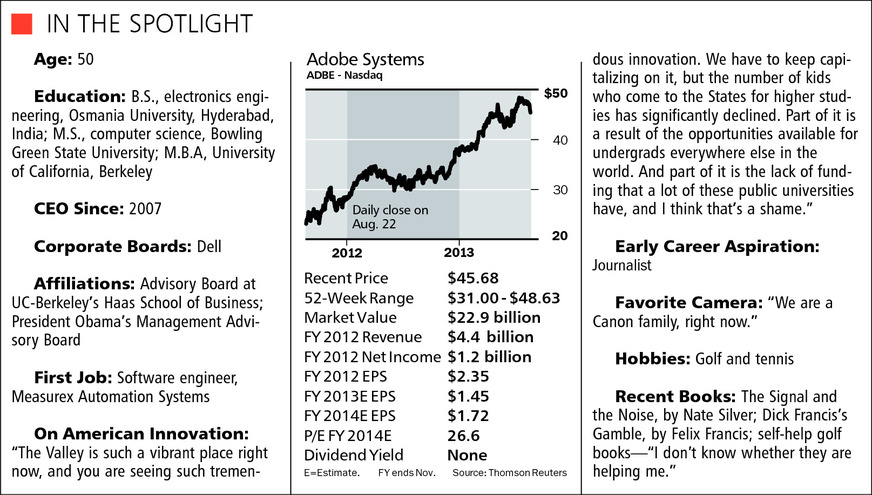
The Man Behind the Turnaround at Adobe; Shantanu Narayen has reshaped Adobe, helping to nearly double its stock price in two years, after a very public dispute with Apple’s Steve Jobs in 2010

SATURDAY, AUGUST 24, 2013

The Turnaround Artist

By ALEXANDER EULE | MORE ARTICLES BY AUTHOR

Shantanu Narayen has reshaped Adobe, helping to nearly double its stock price in two years, after a very public dispute with Apple’s Steve Jobs in 2010.

BA-BC734_ceospt_G_20130824014540 ON-BB929_SPOTLI_G_20130824013902

Shantanu Narayen tends to fly under the radar in Silicon Valley, so he was in uncharted waters when Steve Jobs dragged him and his company, Adobe Systems , into the headlines in 2010. The dispute centered around Flash, Adobe’s Web software standard for enabling video. In an open letter on Apple‘s website, Jobs blasted Flash as flawed technology. Narayen was left to defend his company, which once had a close partnership with Apple. Read more of this post

MediaTek has burst into the market for smartphone chips as the fourth biggest maker with around 10% market share; Domestic smartphone brands’ share in China has soared from 25% to 70% in the past two years, as the market has expanded more than fivefold

MediaTek has burst into the market for smartphone chips

Aug 24th 2013 | HSINCHU |From the print edition

E319HR02H_2010資料照片_copy1

TAIWAN has a paradoxical claim to fame. The island of 23m people is home to many leading information-technology companies—few of which are well known abroad. Most of the world’s personal computers are made by Quanta, Wistron or some other obscure Taiwanese firm, though they bear the names of Dell, HP or Lenovo. The processors in your smartphone or tablet may have been made by Taiwan Semiconductor Manufacturing Company (TSMC) and its touch-screen by TPK. And, especially if your device is Chinese, there is a good and growing chance that the chips were designed by MediaTek. Read more of this post

VMware Killed the Past. Can It Claim the Future? The company that helped bring in cloud computing could become a tired relic or lead big business customers to a whole new kind of computing

AUGUST 24, 2013, 9:00 AM

VMware Killed the Past. Can It Claim the Future?

By QUENTIN HARDY

VMware is a 15-year-old tech company with a market capitalization of $36 billion. Next week, it will host 21,000 customers in San Francisco and will start to find out if that means it is young or old. “It’s a statement of our success how quickly we’ve become mainstream,” said Pat Gelsinger, the company’s chief executive. Now, however, he says, “we’re at the crossroads.” As what he calls “the last great company of the client-server generation,” VMware is going through much of the same transition to the world of cloud computing, big data, and mobility, that bedevils so many giants of the old tech world. Uniquely, the company has a legitimate claim to have helped destroy the software world in which it started. VMware’s main product, virtualization software, allows one computer server to do the work of many, and for complex tasks to be shared across several machines. That disrupted the old computer server business, and helped usher in the current model of big data centers and cloud computing. But now, as other companies offer both proprietary and open source virtualization, VMware has to move on from the world it helped destroy. Read more of this post

Designer headphones: Dr Dre’s creation of a market for costly cans may herald the return of true hi-fi; In America the company now has almost half the market for premium-priced cans, compared with 21% for Bose, a longer-established maker

Designer headphones: The sound of music

Dr Dre’s creation of a market for costly cans may herald the return of true hi-fi

Aug 24th 2013 |From the print edition

20130824_WBP002_0

FOR decades the market for expensive headphones was mainly limited to hi-fi buffs. But now that the boxy stereo system in the corner of the bedroom is largely a thing of the past, and young music fans listen mostly on portable devices, headphones have become as much of a fashion statement as the music player itself. Among the first to spot the potential of this market was Dr Dre, an American rapper-cum-tycoon. In 2008 he and Jimmy Iovine, a record producer, launched their Beats range of headphones, to great success. They have all but created a new product category: premium-priced ($100-plus) cans whose sound quality is good enough, but which mainly sell on their brand image. Read more of this post

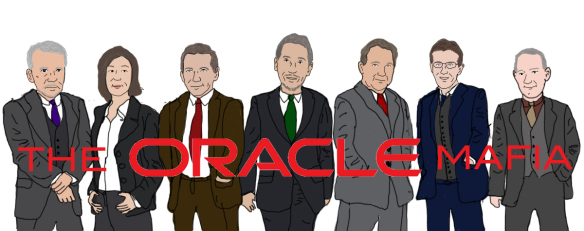
PandoMaps: An awesome interactive map of Larry Ellison and the Oracle mafia

http://s1.wp.com/wp-content/themes/vip/pandodaily2/post-assets/studio20/oracle.html

PandoMaps: An interactive map of Larry Ellison and the Oracle mafia

BY DAVID HOLMES
ON AUGUST 23, 2013

oracle-mafia

This is the second in a four-part series of startup visualizations built by the students of Jay Rosen’sStudio 20 journalism program at NYU. Read the first post in the series which introduces the tool and maps out Silicon Valley’s “first family,” the Fairchild Mafia.

(startup descriptions pulled from Crunchbase)

[Visualization built by Simran Khosla, Jesse Kipp, Nuha Abujaber, and Jonathan Soma]

Is your company or a company you know missing? Click here to submit your information and get on the map!

The history of Oracle

Many of you may know that Elon Musk served as the inspiration for Robert Downey Jr.’s portrayal of executive-turned-superhero Tony Stark. But did you know Oracle founder Larry Ellison helped shape the character, too? He even made a cameo in the second Iron Man movie alongside Musk. Maybe the reason Musk’s Starkness gets all the attention is that Ellison doesn’t build spaceships and sports cars. He makes database management systems. Computer hardware systems. Enterprise software. Sexy, right? But while Musk supplied the character’s immense intellect and love of futuristic gadgetry, Ellison supplied Stark’s yacht-rocking, mansion-collecting opulence, not to mention the “5 o’clock shadow plus blazer look.” Ellison is party in the front and business in the back, like a reverse mullet. And just as Ellison’s outsized personality runs counter to Oracle’s wonky product line, there’s more drama behind the company and the companies it helped spawn than any enterprise software company should have a right to claim. Read more of this post

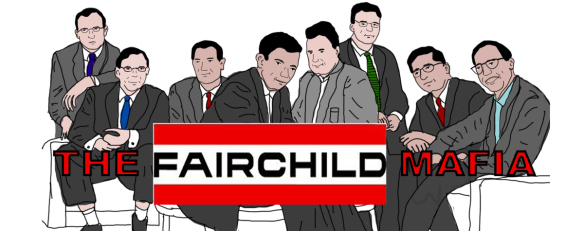
PandoMaps: An awesome interactive map of every startup that sprung out of the Fairchild Mafia

http://s1.wp.com/wp-content/themes/vip/pandodaily2/post-assets/studio20/fairchild.html

Introducing PandoMaps: A new interactive tool for mapping startup ecosystems

BY DAVID HOLMES 
ON AUGUST 21, 2013

fairchildmafia

When Sarah Lacy started PandoDaily, she used the metaphor of the Pando tree to describe what she loved about startups: Measuring 43 hectares and weighing 6,000 tons, they’re pretty impressive above ground. But what really matters is what is happening below. The interconnected root system is the oldest living organism in the world. No matter what happens above ground, that root system stays alive, and continually shoots up new trees. If each startup is the individual root in this metaphor, then the 6,000 ton tree trunks are the great families of Silicon Valley. Fairchild. Paypal. Oracle. Netscape. “Mafias” we call them today. The number of companies that have sprung out of these four giants and their founders, whether through acquisition or investment, is staggering. But how do you visualize this ecosystem? How do you display the hundreds of tangled startup roots yet make it comprehensive? To overcome these challenges we tapped students of Jay Rosen’s Studio 20 digital journalism class at NYU. During the Spring Semester, Rosen and his students embarked on a project called “The Networked Beat.” Rosen’s basic thesis is that journalists can more effectively cover their beat by identifying and giving voice to the smartest experts and observers in a given field. To do this, journalists should use whatever technology and techniques are available, whether that means crowdsourcing on Twitter or writing an algorithm that collects and sorts publicly-shared information. Read more of this post

Why IKEA Doesn’t Care If Its Delivery Service Is A Nightmare; “Amazon can disrupt anything that doesn’t have to be assembled or curated”

Why IKEA Doesn’t Care If Its Delivery Service Is A Nightmare

JESSICA WINTERSLATE AUG. 23, 2013, 10:54 AM 1,659 3

It all started because I wanted the Nelson Swag Leg Desk. Not a new, licensed reproduction—I wanted the scuffed-up, 1960-vintage Nelson Swag Leg Desk I found on eBay. It seemed to me mostly irrelevant that I could not afford the Nelson Swag Leg Desk. But my husband suggested a budgetary adjustment: Instead of pairing the Nelson Swag Leg Desk with pricey custom-built bookshelves as planned, we could economize with a jumbo set of Ikea’s Billy bookcases, which fit the appointed space almost to the centimeter. At first, I resisted this financially expedient arranged marriage of a modern-design icon to a prosaic dorm-room staple that I associated with beer pong and Gustav Klimt’s The Kiss. Eventually, though, I started talking myself into the compromise. I tried to think of it as a chic high-low flourish, like Anna Wintour pairing couture with jeans on her first Vogue cover, or Mike D plonking a Target pouf smack in the middle of his otherwise ultra-customized Brooklyn townhouse. Or something.

Read more of this post

In the past year, Chinese films have galloped ahead like a dark horse, beating Hollywood imports

Fast forward with film

Updated: 2013-08-23 23:54

By Raymond Zhou ( China Daily)

In the past year, Chinese films have galloped ahead like a dark horse, beating Hollywood imports.

It is hardly surprising that most of these domestic hits are comedies. Comedy is mostly local.When Hollywood sent scouts to recover the secret formula, many of them reported that theseChinese movies were not particularly funny. Of course not. When you translate every line intoEnglish, you have lost much of the fun, leaving only a few sight gags. You have to sit with a full-house local audience to gauge the effect of these movies. Read more of this post

Everything you need to know about the mobile market in Vietnam in 2013

Everything you need to know about the mobile market in Vietnam in 2013

August 23, 2013

by Anh-Minh Do

Some of you may already know Appota, one of Vietnam’s rising startup stars from Hanoi. It’s a mobile content platform that helps distribute apps, games, and general content to users while also doing the good work of getting developers paid. Well, every few months Appota compiles all the data it has on mobile in Vietnam. This time it’s got a comprehensive report of the latest figures and a nice slideshare you can check out at the bottom. The report frames the landscapes in three ways: the good, the bad, and the ugly. But before we get into the mobile insights, it’s worth noting some key stats on Vietnam. The majority of the population, about 70 percent, are under 35. That makes for a very young population, 30 percent of which live in the cities. More than 17 million people live in Hanoi and Ho Chi Minh city, Vietnam’s two biggest cities and places where more than 70 percent of the population have access to the internet.

Read more of this post

How to cut the cable cord and watch TV now

How to cut the cable cord and watch TV now

Fri, Aug 23 2013

By Mitch Lipka

(Reuters) – The monthly cable and Internet bill for the Adrienne Capollupo’s Roanoke, Virginia, family had reached $150 when they decided to cut the cord – the one that runs to the television set. Now Capollupo, 37, estimates that she saves $100 a month, and misses little of what she and her family of three care to watch. She and her husband, Chris Pohlad-Thomas, still get their “Downton Abbey” fix, though they wait a day after new episodes air before they can watch them. Daughter Sophia, 2, gets all the Sesame Street she can handle. Read more of this post

Wonder Material Ignites Scientific Gold Rush; Atom-Thin Graphene Beats Steel, Silicon; A Patent “Land Rush”

Updated August 23, 2013, 10:31 p.m. ET

Wonder Material Ignites Scientific Gold Rush

Atom-Thin Graphene Beats Steel, Silicon; A Patent “Land Rush”

GAUTAM NAIK

P1-BM838_GRAPHE_NS_20130823154803 P1-BM833_GRAPHE_G_20130823222901

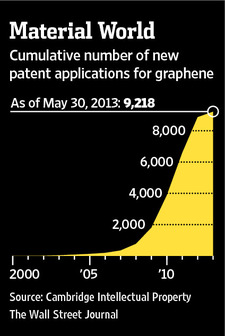
Graphene is an extremely thin, strong and flexible material derived from the graphite found in everyday pencils. Scientists are racing to exploit those attributes for an array of new applications. WSJ’s Gautam Naik reports. Photo: Daniella Zalcman. CAMBRIDGE, England—A substance 200 times stronger than steel yet as thin as an atom has ignited a global scientific gold rush, sending companies and universities racing to understand, patent and profit from the skinnier, more glamorous cousin of ordinary pencil lead. Read more of this post

Web-Based Apps Pose Tricky Problem for Saudi Monitors

Web-Based Apps Pose Tricky Problem for Saudi Monitors

By Matt Smith on 11:31 am August 23, 2013.
Dubai. Saudi Arabia is seeking to tighten control over web-based applications that offer a freedom to communicate that is impossible for most Saudis in the real world, and may even seek to ban such apps altogether. Saudi Arabia remains a relatively closed society; gender mixing is restricted to a tight circle of relatives and family friends, and direct criticism of the ruling family or powerful conservative clergy is frowned upon. Morality police patrol the kingdom’s few public spaces such as shopping malls to enforce rigid social rules. Cyberspace presents considerably more complicated challenges than a shopping center, however, and Saudi authorities are alarmed by the unfettered contact that the Internet allows, including for activists who spread news and information not covered by state media. Read more of this post

Pandora Should Watch the Throne; Company’s Spending Plans Betray Fears Over Apple

Updated August 23, 2013, 4:43 p.m. ET

Pandora Should Watch the Throne

Company’s Spending Plans Betray Fears Over Apple

MIRIAM GOTTFRIED

BF-AF628_PANDOR_NS_20130823173303

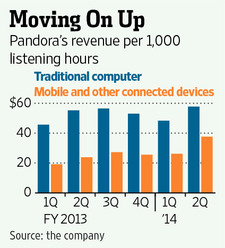
Pandora Media P -12.90% may be girding for a fight. Or at least investors seem to be reading it that way. The Internet-radio company reported quarterly earnings and revenue late Thursday that beat expectations. Mobile revenue almost doubled year over year. And content costs as a share of revenue fell. Even so, Pandora’s shares tumbled 13% Friday. A big reason: The company tightened the range of its third-quarter and full-year projections due to increasing investment. Pandora now expects full-year earnings to be between zero and five cents a share, compared with an earlier projection of a loss of two cents up to a profit of eight cents. Read more of this post

Is this what Tim Cook has reduced Apple to? A company run by fund managers? Breach of RegFD?

Is Tim Cook Certifiably Inane?

BY Rocco Pendola|08/23/13 – 10:59 AM EDT

NEW YORK (TheStreet) — Somebody please make some sense out of this for me.

Carl Icahn Tweets again:

icahn

In total and complete seriousness, what kind of crap is that? On several levels. First, is this what Tim Cook has reduced Apple (AAPL_) to? A company run by fund managers? First David Einhorn and now Carl Icahn. All Apple can do is satisfy fat cats with dividends and buybacks. Why would Tim Cook even give these people the time of day? Has it come to the point where he needs them, their perceived power, their support and their cash more than they and the rest of the world needs Apple? Read more of this post

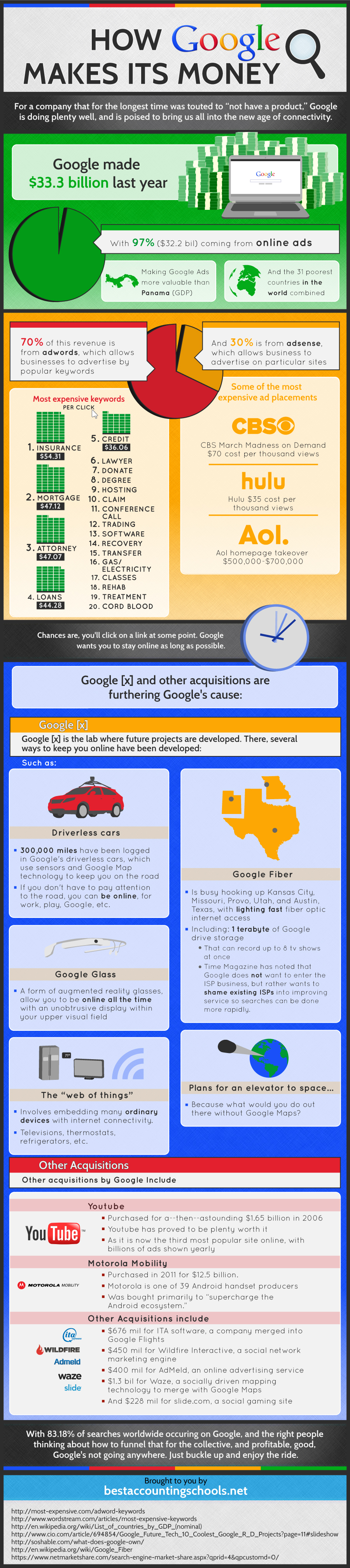
How Google Makes Money: 97% ($32.2B) coming from online ads

revenue

Google’s investment arm and TPG have led a $258m investment in Uber, the taxi-hailing app that has both delighted customers andenraged regulators around the world

August 23, 2013 11:58 pm

Google investment helps fuel Uber

By Tim Bradshaw and Richard Waters in San Francisco

Google’s investment arm and TPG, the private equity group, have led a $258m investment in Uber, the taxi-hailing app that has both delighted customers andenraged regulators around the world. The move values the three-year-old company at around $3.5bn, according to one person familiar with the deal, vaulting Uber into the ranks of the most valuable private tech companies alongside the likes of Airbnb, the travel company, Square, the mobile payments firm, and Spotify, the digital music service. Read more of this post

Newspapers and radio still on growth path in Malaysia

Updated: Saturday August 24, 2013 MYT 9:09:10 AM

Newspapers and radio still on growth path

BY M. HAFIDZ MAHPAR AND EUGENE MAHALINGAM
STARBIZ@THESTAR.COM.MY

adspendnielsen240813

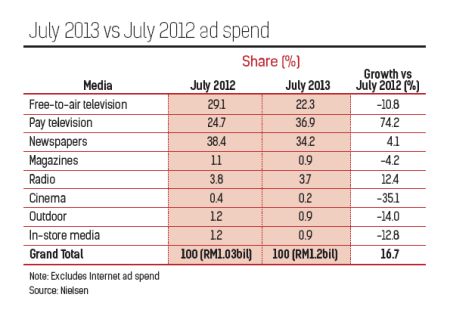
TRADITIONAL media, namely newspapers and radio, are still the advertisers’ preferred choice. They are the only media monitored by Nielsen − other than pay TV − to register advertising expenditure (adex) growth last month. According to Nielsen, newspaper and radio adex in July grew 4.1% and 12.4% respectively compared with a year earlier, while ad spend for pay TV surged 74.2%. The increase in share of voice for pay TV in 2013 was partly due to additional channels being monitored, according to Nielsen. Read more of this post

Netflix’s New ‘My Profile’ Feature Means Fewer Outrageously Bad Recommendations

Netflix’s New ‘My Profile’ Feature Means Fewer Outrageously Bad Recommendations

By Aaron Pressman | The Exchange – 14 hours ago

dc210cd9-cf6f-443a-8dfb-f582fa166386_1-MaxRow

Netflix (NFLX) subscribers get annoyed when their kids flip on the TV and see a suggested list of raunchy comedies alongside rows of more-appropriate fare. Or when the suggestions mix PBS’s pre-school cartoon “Caillou” with AMC’s drug-dealer saga “Breaking Bad.” But don’t worry – it drives Todd Yellin, Netflix’s vice president of product innovation, crazy, too. The mix-ups happen when Netflix’s automated algorithms attempt to analyze the viewing patterns of a whole household of people watching different kinds of shows through one account. Mom and Dad’s late-night “Scandal” binge gets thrown in with a tween’s “Cheetah Girls” fixation. The online programming service’s new profiles feature should help end the confusion, Yellin says. Starting this month, U.S. subscribers can set up different profiles for each viewer. Remember to hit the icon for the proper person before selecting a show, and the suggestions algorithms will suddenly seem much smarter. Read more of this post

Intel Media opens offices in LA, New York in TV push

Intel Media opens offices in LA, New York in TV push

3:22pm EDT

By Noel Randewich

SAN FRANCISCO (Reuters) – Intel Corp’s media arm is opening offices in New York and Los Angeles as the company pushes ahead with an Internet television service that it plans to launch later this year, an Intel spokesman said on Friday. Setting up shop in Los Angeles’ Santa Monica and New York’s Nolita brings Intel closer to the major TV networks and production studios that the world’s biggest chipmaker must strike deals with to gather content for its live and on-demand service, Intel spokesman Jon Carvill said. Read more of this post

Why Is the Golden Age of Television So Dark?

Why Is the Golden Age of Television So Dark?

By Megan McArdle – Aug 23, 2013

The Official Blog Spouse and I are nothing if not loyal members of our television-watching demographic. “The Wire” is our favorite show of all time. We watch “Boardwalk Empire,” “Game of Thrones” and “Homeland” together; I also watch “Mad Men” by myself, as Peter finds it too dull. We are working our way through “Breaking Bad.” I really do like all these shows, and yet, when I watch this list I have to ask myself: Why does almost everything we watch involve criminals and violence? No, not just involve them, but elevate them to the center of the story? Read more of this post

Inside Comcast’s $30 Billion TV Bet; NBCU’s Steve Burke Has Weeded Out Executives and Scrubbed the Culture

Updated August 23, 2013, 7:59 p.m. ET

Inside Comcast’s $30 Billion TV Bet

NBCU’s Steve Burke Has Weeded Out Executives and Scrubbed the Culture

MERISSA MARR and CHRISTOPHER S. STEWART

BF-AF634_BURKE_G_20130823161455

NBCU Chief Steve Burke, shown in Sun Valley, Idaho, last month, has purged senior executives and sought to scrub competing fiefdoms.

Cameras popped as celebrities stepped out of tinted-window vehicles at a Manhattan ballroom where E! cable network was hosting an event for advertisers. Kim Kardashian preened on the red carpet while Ryan Seacrest chatted with fans. But Steve Burke, the CEO of E’s parent, NBCUniversal, was decidedly not in a partying mood. “I want to kill myself,” he said before ducking into an elevator. “They tried to get me to do the red carpet, but I said ‘no’,” he laughed. When the doors opened, a woman asked him to pose for a picture with the Olympian swimmer Ryan Lochte. “You’re a good sport to put up with all of these suits,” he told Mr. Lochte, leaning in for the photo. In the two years since Comcast Corp.CMCSA -0.38% bought NBCUniversal, Mr. Burke has shown a zeal for shaking things up with little sentimentality, weeding out some of the company’s most well-known personalities in the process.

BF-AF641_BURKE_NS_20130823163306 BF-AF642A_BURKE_G_20130823192106 Read more of this post

ESPN President: Wage Stagnation, Not Technology, Is the Biggest Threat to the TV Business

ESPN President: Wage Stagnation, Not Technology, Is the Biggest Threat to the TV Business

By Derek Thompson

BRISTOL, CONN. – When John Skipper, the president of ESPN, wants to worry about the future of the most valuable media company in the world — not just think anxiously, but actively worry — he doesn’t focus on Google trying to buy exclusive rights to the NFL. He doesn’t think about Apple going head-to-head with the cable companies. He doesn’t think about CBS, or NBC, or FS1. If there’s any acronym that truly scares him, it’s CBO. Read more of this post

Cablevision Clock Ticking as Paulson Sees Sale: Real M&A

Cablevision Clock Ticking as Paulson Sees Sale: Real M&A

Time may be running out for Cablevision Systems Corp. (CVC) to find a buyer.

With its highest valuation in two years, the $4.8 billion cable operator founded four decades ago by Charles Dolan should take advantage of a surge in cable matchmaking to sell, according to Macquarie Group Ltd. Bethpage, New York-based Cablevision jumped 42 percent in just eight weeks as speculation heated up about deals in the industry and shareholders Paulson & Co. and Gamco Investors Inc. said a sale is likely. Read more of this post

Microsoft is fully acknowledging that the traditional software business model is dead with the rise of subscription-based cloud services; “The board is committed to the effective transformation of Microsoft to a successful devices and services company”

And Microsoft Is Giving Up On The Software Business!

HENRY BLODGET AUG. 23, 2013, 9:36 AM 2,357 7

Mario Tama/Getty

Yes, the headline news at Microsoft is that CEO Steve Ballmer is out. But a line lower down in the press release is also startling: “The board is committed to the effective transformation of Microsoft to a successful devices and services company,” one of the company’s board members said.

The effective transformation of Microsoft to a devices and services company.

In other words, Microsoft is fully acknowledging that the model that powered the company for more than 3 decades and made it one of the most powerful and richest companies in the world–sales of software–is effectively dead. That’s big news. Microsoft has used the “devices and services” language before–Steve Ballmer wrote about it in this year’s shareholder letter–but the challenge and magnitude of this transformation is much more profound than most people appreciate. And the idea of Microsoft as a “devices and services company,” especially one led by “devices,” would have been unthinkable only a few years ago. The traditional software model is, in fact, dead–or at least dying–but it’s only recently that Microsoft has acknowledged this so forthrightly. For more than a decade, Microsoft has been transitioning away from one-time sales of packaged software (Windows disks, for example) to multi-year services contracts. This has reduced the company’s dependence on one-time unit sales of personal computers and software licenses and allowed it to build a business in which more of its revenue is recurring. But the transformation of the tech industry from packaged software to services is now moving far beyond mere payment models. Cloud-based services are now supplanting local software installations and licenses across the industry, not just for consumers who use services like Google and Facebook but for massive corporations. And this is forcing Microsoft and other major IT vendors to retool their product architectures, as well as the way they plan, develop, and roll out new product features. Meanwhile, the trend recently re-established by Apple of selling integrated hardware and software devices has forced Microsoft to start building and selling its own integrated gadgets. This is a major transition, too. Continuing to “transform” Microsoft from being a company driven by massive releases of packaged software every few years to a “devices and services” company will not be easy. The company’s struggles in recent years will likely continue for many more years, regardless of who is CEO. But it’s encouraging to see that Microsoft now fully recognizes the challenge it faces. And it’s probably wise for the company to address this challenge with a change right at the top.

Here’s The Letter Steve Ballmer Wrote To Microsoft Employees Explaining Why He’s About To Retire Read more of this post

S. Korea’s traditional markets go high-tech

S. Korea’s traditional markets go high-tech

Friday, August 23, 2013 – 16:02

AFP

SEOUL – Seoul’s traditional markets – bustling, narrow streets of small vendors selling cheap, fresh produce – have largely opted out of the high-tech charge to make the South Korean capital one of the most wired cities on earth. But squeezed by big-box stores and dwindling custom, these mom-and-pop operations are slowly going digital, replacing well-thumbed ledgers with tablet computers, and cash pouches with sleek smartphones that can scan credit cards. Read more of this post