UCWeb becomes first Chinese Internet company to hit No. 1 in India, adds Jack Ma to board

UCWeb becomes first Chinese Internet company to hit No. 1 in India, adds Jack Ma to board

BY HAMISH MCKENZIE 
ON AUGUST 21, 2013

Historically, Chinese Internet companies haven’t had much luck when it comes to international expansion. Ecommerce giant Alibaba attempted to enter the US a few years ago, only to ultimately consolidate its operations back within the borders of the Middle Kingdom. More recently, China’s tech industry focus has switched to Tencent, the country’s largest Internet company, which is moving aggressively to push its WeChat messaging app into global market.

Read more of this post

With Only One Year, Qihoo Is about to Take over A Quarter of China’s Search Market

With Only One Year, Qihoo Is about to Take over A Quarter of China’s Search Market

By Tracey Xiang on August 6, 2013

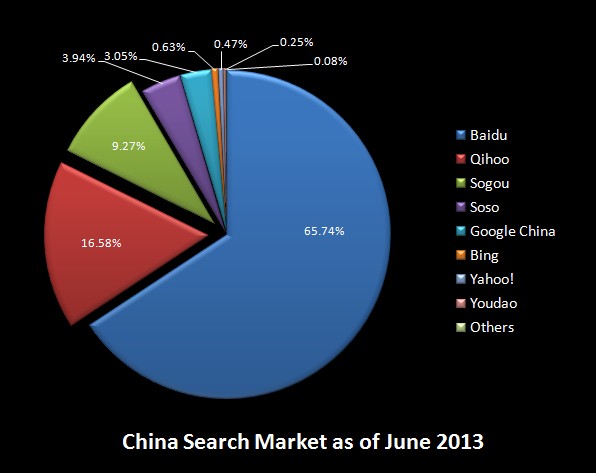
searchJune2013

Shortly after its launch in the same month of last year, Qihoo’s search service became the second largest in China. Later, unsurprisingly, it became a full-fledged search service with the launch of an independent search site, more vertical channels such as musicmedical & healthcareshopping, maps (powered by AutoNavi), and Weibo serach (powered by Yunyun), and a mobile version. One the mobile end it came up with Leidian.com, an app search that is complementary to its mobile app manager.

As of June 2013, it had pocketed 16.58% search market share and a 15.26% share in usage, according to CNZZ, a third-party online data service. (Update: August 7th when the company celebrated the first birthday, Qi Xiangdong, president of Qihoo claimed its market share had reached 20% citing a research report by iResearch) Considering it is in talks with Sogou, the third largest search engine with a 9% market share, on potential acquisition or a strategic investment and now is powering the search business of Netease’s, what it is involved is about a quarter of China’s search market. Earlier this year, Qi said that their goal for this year is a 20% market share and that for 2015 is 40%. Read more of this post

Since the late 1980s Gentrack has been creating specialist ERP software for utility companies and airports. Today, more than 150 customers in 25 countries use its products

SPECIALIST SOLUTIONS

20 August 2013

By James Docking, CEO of Gentrack

Gentrack

Since the late 1980s Gentrack has been creating specialist ERP (enterprise resource planning) software for utility companies and airports. Today, more than 150 customers in 25 countries use its products. CEO James Docking comments on the company’s successes and challenges and why it is vital to have people in market who understand the local ways of doing business. Most of our business comes from the specialised and growing niche of utility billing and CRM software for energy and water utilities. Having secured the business of about 30 local utility companies, we expanded into Australia in 1994. Gentrack is now the leading vendor in water and aeronautical billing in Australia, and our presence in the energy sector is growing. In 2012, for the first time in 25 years, Gentrack’s revenues from Australian airport and utility customers exceeded those from New Zealand. Read more of this post

Mobile app Fruit Ninja With 700 million downloads helps Taiwan’s farmers get an extra slice

Fruit Ninja helps Taiwan’s farmers get an extra slice

CNA

2013-08-22

C511X0107H_2012資料照片_N71_copy1

One of the developers of the popular app Fruit Ninja gives a speech at the Global Mobile Internet Conference held in Beijing on May 10, 2012. (Photo/Xinhua)

Players of mobile app Fruit Ninja are now just a click and tap away from boosting produce sales and farmers’ income in Taiwan, a local marketing company said on Wednesday. “Working with a world-renowned, popular and free game app, we would like to use a new approach to help market local produce,” the Taipei-based CrossMedia Group said in a statement. Players of Fruit Ninja, which has 700 million downloads worldwide, can now order all kinds of in-season produce directly from farmers in Taiwan while having fun slicing fruit in half, the company said. Read more of this post

Learning to Read, With the Help of a Tablet

August 21, 2013

Learning to Read, With the Help of a Tablet

By KIT EATON

I learned long ago that the iPad’s game and video apps cast a magical spell over my children, but this summer I’ve also been pleased by how much they have learned while using their tablets. This is important, as my 4-year-old is going to “real” school for the first time. His reading skills, in particular, have been helped by some great apps. These have helped him move from knowing shapes and sounds of letters to actually reading words. Read more of this post

Kraft’s Lunchables, the Lunchbox King, Faces a Rival Vowing Higher-Quality Fare to dislodge the leader whose sales accounting for 76 percent of the small but lucrative $1.35 billion niche product category

August 21, 2013

Lunchables, the Lunchbox King, Faces a Rival Vowing Higher-Quality Fare

By STEPHANIE STROM

Lunch1-articleLarge

Kristin Richmond, right, chief executive of Revolution Foods, and Kirsten Tobey, its chief impact officer, in a company kitchen.

Until now, there have been Lunchables and, well, Lunchables. The Kraft Food Group’s Oscar Mayer brand created the concept of prepackaged lunch meals for children in 1988 and has effectively owned that business ever since, with sales accounting for 76 percent of the small but lucrative $1.35 billion niche product category, according to IRI, a market research firm in Chicago. But starting this month, some grocery refrigerator cases will be adding a new competitor, Revolution Foods Meal Kits.

Read more of this post

Is Google’s Chromecast the future of television?

Is Google’s Chromecast the future of television?

Farhad Manjoo thinks Google’s £30 dongle transform the way you watch your favourite shows

WEDNESDAY 21 AUGUST 2013

Google’s Chromecast doesn’t do much. But what it does do, it does so consistently well, and so cheaply, that it’s quickly became a primary part of my media-watching routine. Chromecast, a little USB-stick-sized device, streams Netflix, YouTube and other sites to your TV. (But wait a second, aren’t Netflix and YouTube also websites? Yes, but there’s a technical distinction we’ll get to in a minute.) Also, Chromecast is fast, unbelievably easy to set up, and pretty much foolproof to use. And it’s £30, which makes it one of the best values in tech, ever. Combine all that and it’s irresistible. In the five days I’ve had it, Chromecast has become my go-to way for streaming shows to my TV. It’s expected to hit shops in the UK before Christmas. Read more of this post

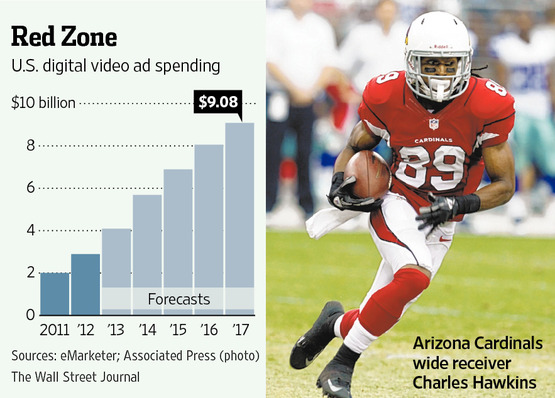
Google in early talks with NFL on ‘Sunday Ticket’ service; “These dynamics have the potential to exacerbate cord cutting and may create a vicious cycle as the cost of programming on traditional TV would move higher with each loss of a subscriber

August 21, 2013, 4:00 p.m. ET

Google Could Open a Hole in Pay TV’s Defense

Search Company Meets With NFL Executives

MIRIAM GOTTFRIED

MI-BY021_NFLHER_G_20130821164208

Google GOOG +0.45% may have found a path to the end zone for Internet TV. Top executives at the search giant met with representatives from the National Football League, according to a report Tuesday by All Things D. Among the topics of discussion: the Sunday Ticket package, which includes all NFL games not in the viewer’s local market and is offered exclusively by DirecTV DTV -1.88% . There is no indication that Google is anywhere near a deal to offer the package. But the news raises the possibility of a powerful partnership that could be the magic bullet for Google in its goal of luring traditional TV viewers, and associated advertising dollars, to the Internet. Live sporting events are among the primary reasons U.S. consumers pay for TV. Bringing them online as a separate subscription would allow many more people to stop paying for traditional TV. Read more of this post

Amazon Ramps Up $13.9 Billion Warehouse Building Spree

Amazon Ramps Up $13.9 Billion Warehouse Building Spree

(Corrects spending data in second paragraph of story that ran Aug. 20.)

Amazon.com Inc. (AMZN) is stepping up a warehouse building spree, signaling the urgency of getting products to customers more quickly amid rising competition from EBay Inc. (EBAY) and Wal-Mart Stores Inc.

Consider Amazon’s center in Chattanooga, Tennessee, which opened in 2011 after about 10 months, compared with as much as two years for older warehouses. Boasting more space and technology that makes it easier to find items, the building is part of Amazon’s almost $13.9 billion spending binge on fulfillment expenses — including 50 new facilities — since 2010. That’s more than the company spent on warehouses in its lifetime and brought the total to 89 at the end of 2012. Amazon has announced five more in the U.S. this year. Read more of this post

Online furniture retailer Milan Direct on track to reach $15m revenue as it eyes Asia for growth

Nassim Khadem Reporter

Milan Direct on track to reach $15m revenue as it eyes Asia for growth

Published 20 August 2013 11:45, Updated 21 August 2013 06:54

3fa270ee-093a-11e3-b098-c5e82a044e6f_640934690--646x363

“The bricks and mortar retailers don’t really understand online,” says Dean Ramler. Photo: Arsineh Houspian

Australia’s leading online furniture retailer Milan Direct is considering launching into Asia for its next phase of growth. Milan Direct, which in 2007 was co-founded by high school friends Dean Ramler and BRW Young Rich lister Ruslan Kogan, has sold more than 700,000 pieces to customers in more than 40 countries. Chief executive Ramler says the company is on track to reach $15 million in revenue this financial year, slightly lower than that predicted in a recent report by IBISWorld (the research house had tipped Milan Direct’s revenue would hit $18.5 million). But it’s still a remarkable growth rate – in the financial year 2012, the business achieved revenue of $12.6million, about double its financial year 2011 revenue of $6.7 million. Read more of this post

Why hyperlocal has (mostly) flopped: From Patch to EveryBlock, many community-focused sites have struggled or collapsed entirely. What are they getting wrong? Outside of news, the hyperlocal strategy has worked for Yelp, Uber

Why hyperlocal has (mostly) flopped

By JP Mangalindan, Writer August 21, 2013: 12:17 PM ET

From Patch to EveryBlock, many community-focused sites have struggled or collapsed entirely. What are they getting wrong?

Many so-called “hyperlocal” sites have tried and failed. Why is the space so challenging? Credit: Jaclyn LoRaso/Fortune.com

FORTUNE — Ever heard of EveryBlock or Village Soup? What about Backfence? Each community-focused venture launched, then folded. Many more so-called hyperlocal sites have also tried and failed. Even AOL’s Patch news sites have had trouble sticking. Their struggles beg the question: Why is hyperlocal so hard? It shouldn’t be in theory, at least where news is concerned. The ongoing decline of small, local newspapers presents what seems like a significant opportunity for ventures like Patch. (Arguably, many local residents still want to stay informed on nearby goings-on.) And yet the company that AOL (AOL) CEO Tim Armstrong acquired for an estimated $7 million back in 2009 has since struggled to reach profitability. In 2011, Patch made $20 million in revenues; a former employee told Fortune that just 12 of the 863 Patch sites then were profitable. Fast-forward two years: Armstrong announced this month that 400 of Patch’s 900 sites would either be shuttered or partnered off, resulting in 500 employees losing their jobs. Ouch.

Read more of this post

Smartphone boom a ‘rose with thorns’

Smartphone boom a ‘rose with thorns’

Updated: 2013-08-21 16:12

( Xinhua)

JINAN — Cao Kai finds it hard to fall asleep, and his eyesight is worsening. Cao blames it on his smartphone, which the 28-year-old white-collar worker feels compelled tocheck for updates on microblogs and other social networking applications. His solution? Cao has made it a rule to turn off his phone’s 3G network at 10 pm in order to cuthimself off from the virtual world. Cao lives in Jinan, capital of Shandong province, where he said life after work pales incomparison to the bustling nightlife in big cities, like Beijing or Shanghai. His smartphone, loaded with a few social networking apps, promises fun and spices up anotherwise uneventful night. Cao is among many smartphone owners across the country who find themselves glued to thescreens of their iOS, Android or WP-based handsets. More than 77 million smartphones were sold in the second quarter of this year, accounting for85.3 percent of total mobile phone sales, according to a report released Wednesday byAnalysys International. Read more of this post

Shifting Tech Scene Unsettles Big Players; some of the technology industry’s biggest names are finding out that once you fall behind, it is pretty hard to catch up

August 21, 2013

Shifting Tech Scene Unsettles Big Players

By QUENTIN HARDY

Outsiders often think of Silicon Valley as a constantly changing landscape, a place where fortunes rise and fall with the next great idea. Now some of the technology industry’s biggest names are finding out that once you fall behind, it is pretty hard to catch up.

On Wednesday, Hewlett-Packard announced several significant personnel changes, along with sharply lower revenue and narrower operating profit margins. It was the latest in a string of disappointing earnings news from big technology companies that has some asking if the industry, after at least five years of growth, is finally slowing down. Read more of this post

The Most Gorgeous Apple iWatch Concept We’ve Seen Yet

The Most Gorgeous Apple iWatch Concept We’ve Seen Yet

STEVE KOVACH AUG. 21, 2013, 8:57 AM 58,873 48

It’s all but confirmed that Apple’s next big product category will be a wearable wrist computer. The press has dubbed the mythical gadget the iWatch. Don’t get too excited though. It’s very likely the iWatch won’t launch until later in 2014 at the very earliest. But that hasn’t kept some designers from churning out a bunch of concept designs. The latest design comes to us from Federico Ciccarese, a designer who has come up with some great Apple gadget mockups in the past. Check them out here. Meanwhile, Apple’s biggest rival Samsung is going to announce its own smartwatch on September 4. That gizmo will be called the Galaxy Gear and will pair with your Samsung phone. Here’s a look at some of Ciccarese’s designs:

apple iwatch 04 apple iwatch 03 apple iwatch 02


Tesla CEO Weighs Europe, Asia Plants for Mass-Market Car

Tesla CEO Weighs Europe, Asia Plants for Mass-Market Car

Tesla Motors Inc. (TSLA) Chief Executive Officer Elon Musk said the electric-car maker intends to add factories in Europe and Asia, anticipating volume gains from a planned mass-market battery car. The company this year plans to make at least 21,000 of its $70,000 Model S premium sedans at its Fremont, California, plant, and double that in 2014. While the factory has capacity to produce as many as 500,000 vehicles a year, the addition of a smaller electric car priced about half that of Model S will require additional plants, Musk said.

“We’ll try to locate those close to where people are, close to where the customers are, to minimize the logistics costs of getting the car to them,” the Tesla co-founder said in an interview with Bloomberg Television’s Betty Liu. “I think long term you can see Tesla establishing factories in Europe, in other parts of the U.S. and in Asia.” Read more of this post

Technology revolutions have a habit of devouring their own children. Tech executives facing up to hard realities of the cloud

August 21, 2013 7:34 pm

Tech executives facing up to hard realities of the cloud

By Richard Waters

Staying ahead of this storm front is challenging even industry giants

Technology revolutions have a habit of devouring their own children. There has never been a clearer case in point than the coming of the cloud, the great deflationary force of modern business computing. The centralised infrastructure of cloud computing threatens to turn the once high-value hardware and software components of IT systems into standardised commodities. Staying ahead of this wave is a challenge, even for the industry’s giants. Read more of this post

Devices Lead the Way to a Smarter TV

August 21, 2013

Devices Lead the Way to a Smarter TV

By BRIAN STELTER

Someday, our televisions will be smart. With a flick of the wrist or a voice command, couch potatoes will be able to binge-view “Scandal” or children will watch any episode of the Disney series “Dog With a Blog.” Maybe just thinking about Walter White will bring up “Breaking Bad” on the big screen. But for now, most television sets are dumb. They do a good enough job handling the signals coming through an antenna or a set-top box, but to take advantage of the wealth of programming available through online services and apps, you generally need to attach a streaming device to the TV. Read more of this post

Disney’s ESPN Holds Preliminary Talks for Web-Based TV

Disney’s ESPN Holds Preliminary Talks for Web-Based TV

Walt Disney Co. (DIS)’s ESPN sports network has held preliminary talks to offer programming on a Web-based TV service like those proposed by Google Inc. (GOOG), Sony Corp. and Intel Corp. (INTC)

An Internet TV provider would have to pay as much or more than cable and satellite services, President John Skipper said today at ESPN’s campus in Bristol, Connecticut. He declined to specify the companies ESPN has spoken with. Read more of this post

Turner Classic Movies (TCM) Moves to Lure Film Buffs Out of Their Living Rooms

August 21, 2013

TCM Moves to Lure Film Buffs Out of Their Living Rooms

By STUART ELLIOTT

Adco2-popup

The Empire State Building, site of the climax of “King Kong” (1933), will be a stop on TCM’s movie-centric tour of New York.

THE Turner Classic Movies cable channel prides itself on running films that are, as it proclaims, “uncut and commercial-free.” But commercial-free does not mean free of commercial considerations, in the sense that TCM, like channels that accept ads and interrupt movies to show them, still has to make a buck. As a result, executives at TCM and its parent, the Turner Entertainment Networks division of Turner Broadcasting System, are increasing marketing efforts for the channel, which is available in more than 85 million American households. For instance, a redesign of TCM’s logo and graphics was introduced on Aug. 1 during the start of a monthlong programming block known as Summer Under the Stars. Read more of this post

Disney’s ABC TV Group to Lay Off About 175 People; “As technological advances continue to alter the competitive landscape and viewer habits, it’s incumbent upon us to stay ahead of the curve”

Updated August 21, 2013, 3:10 p.m. ET

Disney’s ABC TV Group to Lay Off About 175 People

Many of the Cuts Will Come From Operations Staff

KEACH HAGEY

Walt Disney Co. DIS -1.20% is planning to lay off about 175 people from its Disney/ABC Television Group, which includes the ABC network, local ABC stations and cable networks Disney Channel and ABC Family, according to a person familiar with the matter. Most of the cuts to Disney’s total staff of 7,600 will come from the company’s operations staff as well as the eight TV stations it owns, the person said. The stations, located primarily in major markets like New York, Los Angeles and Chicago, saw a 7% decrease in advertising revenue in the second quarter, Disney Chief Financial Officer Jay Rasulo told analysts on a conference call earlier this month. Read more of this post

NFL Bets on Fantasy Lounges as TV Sports Keeps Some Fans at Home

NFL Bets on Fantasy Lounges as TV Sports Keeps Some Fans at Home

The National Football League’s biggest partner is becoming a competitor. Television is becoming so adept at covering games that the NFL, which gets about half its $9.7 billion annual revenue from broadcast fees, wants to be sure that the comforts of home don’t become more attractive than the thrills of the stadium.

As teams try to entice fans with things like huge stadium video screens — the Houston Texans last week unveiled a pair that each cover one-third of an acre — the league is embracing fantasy football as one way to keep people paying to watch games in person. The Jacksonville Jaguars plan to open a fantasy football lounge at their EverBank Field this season to cater to fans as interested in highlights from other games as the action on the field. The San Francisco 49ers and Atlanta Falcons have plans for ones in their new buildings as well. Read more of this post

If iTunes Radio won’t be profitable, what’s the point? Apple’s move into Internet radio isn’t really about Internet radio at all. Instead, it’s about keeping its users from other Internet radio products

If iTunes Radio won’t be profitable, what’s the point?

Diane Bullock, Minyanville11:10 a.m. EDT August 21, 2013

Apple’s move into Internet radio isn’t really about Internet radio at all.

When Apple got into the music business in April 2003, the company didn’t actually expect to make money at it. The iTunes store launched with only “break-even” ambition as far as Cupertino was concerned, merely acting as a hook for the real profit center: The iPod. So much for self-fulfilling prophecies. Five years in, iTunes had unseated Wal-Mart as the country’s leading music vendor and assumed the top spot in the global market by 2010. Last year’s sales hit $13.5 billion, with Apple generating up to 15% operating margin on gross revenue while commanding 64% of the world’s online music sales. Read more of this post

Disney to Shutter 10-Year-Old Toontown Multiplayer Game to shifts resources toward the larger Club Penguin and to mobile games; The change leaves Club Penguin as the only so-called virtual world operated by Disney

Disney to Shutter 10-Year-Old Toontown Multiplayer Game

Walt Disney Co. (DIS) will close its Toontown Online video game for kids after 10 years, as the company’s interactive unit shifts resources toward the larger Club Penguin and to mobile games.

Toontown, in which monthly members form teams to fight evil robots, will stop operating on Sept. 19, according to its website. The game made its debut in June 2003 and Disney has said it was the first massively multiplayer online game designed for kids and families. Read more of this post

DeNA, Gree Slump as Gamemakers Team Up on Marketing; the alliance will allow the companies to bypass platforms such as DeNA’s Mobage and Gree

DeNA, Gree Slump as Gamemakers Team Up on Marketing: Tokyo Mover

DeNA Co. (2432) and Gree Inc. (3632), Japan’s biggest social-game operators, slumped in Tokyo trading after gamemakers led by Sega Sammy Holdings Inc. (6460) said they would team up to promote each other’s titles for smartphones. DeNA, operator of the Mobage network, plunged as much as 9.3 percent to 1,924 yen, headed for the biggest decline in more than three months. Gree dropped as much as 7.5 percent. Sega, creator of Sonic the Hedgehog, developed a system to allow makers including Capcom Co. (9697) and Taito Corp. to display advertising of mobile app games by other members, Koji Ueda, a Sega spokesman, said by phone today. The Nikkei newspaper earlier today reported the alliance will allow the companies to bypass platforms such as DeNA’s Mobage and Gree. Gamemakers pay a commission to companies such as Gree and DeNA for games accessed through their platforms. “Overall, we view this as negative” for Gree and DeNA, David Gibson, a Tokyo-based analyst at Macquarie Group Ltd., said in a note today. “Developers continue to shift their resources away and not use recently launched app marketing initiatives announced by Gree/DeNA.” DeNA traded at 1,949 yen, down by 8.1 percent, as of 1:14 p.m. in Tokyo, extending its drop this year to 31 percent. Gree traded at 838 yen and has lost 37 percent this year, compared with a 30 percent advance for the broader Topix index.

To contact the reporter on this story: Naoko Fujimura in Tokyo at nfujimura@bloomberg.net
Cheaper rivals eat into Apple’s China tablet share; A principal factor in the rise of Android tablets has been the falling price of components

August 21, 2013 11:09 am

Cheaper rivals eat into Apple’s China tablet share

By Kathrin Hille in Beijing and Sarah Mishkin in Hong Kong

Apple has lost more than 40 per cent of its share of the Chinese tablet market over the past year to cheaper rivals led by Samsung Electronics, as devices based on Google’s Android and other operating systems rapidly overtake the US company’s gadgets. In the second quarter, Apple shipped 1.48m iPads in China, 28 per cent of the tablets shipped in that market, according to research firm IDC. This was down from a 49 per cent market share a year ago. Samsung shipped 571,000, or 11 per cent of the total, in the second quarter of this year. The data echo statistics showing Apple is losing ground in the tablet market worldwide. Apple’s global tablet market share dropped to 32.4 per cent in the second quarter from 60.3 per cent a year earlier, IDC said earlier in August. Read more of this post

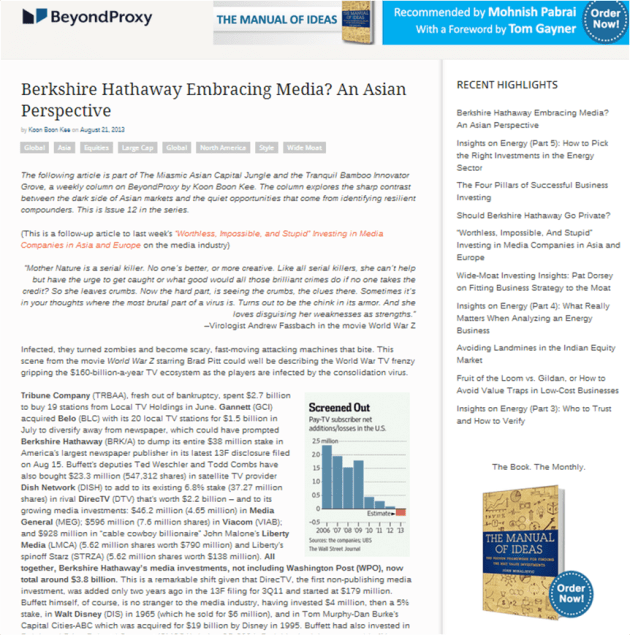
Berkshire Hathaway Embracing Media? An Asian Perspective. Bamboo Innovator is featured in BeyondProxy.com, where value investing lives

Bamboo Innovator is featured in BeyondProxy.com, where value investing lives:

  • Berkshire Hathaway Embracing Media? An Asian Perspective, Aug 21, 2013 (BeyondProxy)

Berkshire Media


How did a Japanese anime film set a Twitter record for the largest number of tweets per second?

How did a Japanese anime film set a Twitter record?

Aug 20th 2013, 23:50 by T.S. & E.S.

20130824_BLP504

STUDIO Ghibli is a Japanese animation studio renowned for its hugely successful anime films, the best known of which is “Spirited Away”, directed by Hayao Miyazaki, which won the Oscar for best animated feature in 2003. Earlier this month the studio won an accolade of a rather different kind, when the airing of another of its films, “Castle in the Sky” (pictured), set a new record for the largest number of tweets per second. How did the film set this record, and why is Twitter so keen to explain how it coped? Read more of this post

Sliced and diced, digitally: autopsy as a service; Malaysian entrepreneur Matt Chandran wants to revive the moribund post-mortem by replacing the scalpel with a scanner and the autopsy slab with a touchscreen computer

Sliced and diced, digitally: autopsy as a service

By Jeremy Wagstaff

SINGAPORE (Reuters) – Malaysian entrepreneur Matt Chandran wants to revive the moribund post-mortem by replacing the scalpel with a scanner and the autopsy slab with a touchscreen computer. He believes his so-called digital autopsy could largely displace the centuries-old traditional knife-bound one, speeding up investigations, reducing the stress on grieving families and placating religious sensibilities. Read more of this post

Now Vietnam wants to “manage” chat apps, and media says ban possible

Now Vietnam wants to “manage” chat apps, and media says ban possible

10:07am EDT

HANOI (Reuters) – Vietnam’s government is to decide policy in managing free internet-based telecom tools like Viber, Line and Whatsapp, Prime Minister Nguyen Tan Dung said on Friday, a move bound to increase concerns about Communist Party censorship. State media said the government might “ban” free messaging services because of the harm done to network providers. Vietnam has repeatedly come under fire for curbs on free speech and harsh treatment for bloggers who dare to criticize the one-party regime. Read more of this post

Twitter’s Video App Vine hits 40m users despite Instagram’s challenge

Vine hits 40m users despite Instagram’s challenge

August 20, 2013 11:02 pmby Tim Bradshaw

Many thought that Instagram’s addition of 15-second videos to its photo-sharing app would kill Vine, Twitter’s fledgling video app. Apparently not. Twitter on Tuesday said that 40m people have signed up to watch and share six-second videos on Vine. That’s up from 13m at the beginning of June, a figure announced as Vine launched on Android, a couple of weeks before Instagram launched its competitor. Read more of this post