Agonizing Choices for Lives Saved by Miracle Drugs

Agonizing Choices for Lives Saved by Miracle Drugs

GEETA ANAND

Updated Jan. 24, 2014 10:33 p.m. ET

image001-12

Megan’s mother, Aileen, lifts her into bed from her wheelchair after school. Lexey Swall for The Wall Street Journal;Seven months ago, Megan Crowley made a gutsy decision: to undergo a radical surgery to straighten out her spine, which has been crippled by Pompe disease. Photo: Lexey Swall

PRINCETON, N.J.—Sixteen-year-old Megan Crowley lay facedown on an operating table last June as her surgeon tried to straighten her spine, badly contorted by a genetic disease that nearly killed her as a little girl.

The doctor had warned Megan that she stood a 5% chance of dying from the risky surgery, but she eagerly chose it anyway. Her 15-year-old brother Patrick, stricken with the same rare disease, refused the procedure and awaited news of her at home.

In the operating room, an alarm suddenly blared: Megan’s nerve signals had flatlined, suggesting paralysis. “Megan, wiggle your toes!” her surgeon, David Roye, recalls yelling, waking her from anesthesia. She tried, to no effect.

Megan’s and Patrick’s choices are the kind of agonizing ones now confronting a generation of Americans like them whom biotech breakthroughs have kept alive—but haven’t fully cured.

The two have Pompe disease, which progressively weakens muscles. Until about a decade ago, heart failure killed most babies with Pompe within a few years.

The siblings’ fate turned in a remarkable family drama: Their father saved their lives by helping develop a drug that restored their hearts, a story told through several Wall Street Journal articles since 2001.

But the drug couldn’t stop Pompe (pronounced pom-pay) from degrading Megan’s muscles. By her freshman year at Princeton High School, she needed a respirator and wheelchair. She couldn’t speak clearly or smile. Her spine bent about 100 degrees.

Dr. Roye offered a risky and painful way to help Megan sit up like other kids. “I would drill screws into your vertebrae,” he told her, “and put rods in to anchor them to your ilium,” or hip bone.

Children like Megan and Patrick, having survived once-fatal rare diseases, often must decide again and again as they grow older whether to endure interventions for their diseases’ complications.

These procedures can bring a better or longer life. They also can be excruciating and, even when successful, can leave the patient waiting for breakthroughs for disabilities that remain.

Some patients decide intervention just isn’t worth the agony. Patrick also lives on a respirator with a bent back, and his muscles continue to degrade. But he refuses operations.

“No!” he screams when asked in an interview if he would consider spinal surgery.

“It’s been hard for us sometimes, and we’ve struggled with it,” says their father, John Crowley, of their choices. “But we’ve learned to accept that what makes sense for each kid is different,” he says. “We realize the risk-benefit for Patrick.”

Thousands with other once-fatal rare diseases confront lifetimes of such risk-benefit decisions. Hundreds in the U.S. with Fabry disease, which leaves patients with severe heart and kidney problems, are alive thanks to a treatment developed in 2003. But they face decisions about surgery for continued complications.

So do patients who previously would have died of Hurler-Scheie Syndrome and Hunter Syndrome. New treatments have saved lives, but patients often remain disfigured and suffer spinal compression. They confront difficult decisions about whether to undergo procedures such as spinal-fusion surgery.

People with Gaucher disease, which causes crippling bone pain, can live longer and with fewer symptoms thanks to biotech drugs first developed in 1991. But for some, the disease continues to turn their bones brittle, forcing them to decide whether to undergo painful joint surgery.

“They face an ongoing series of new challenges and unknowns that we never envisioned when we developed these therapies,” says Priya Kishnani, chief of medical genetics at Duke University Medical Center. “They’re alive and they want us to help them decide when enough is enough. Who am I to judge?”

Roughly 1,000 people are on a Pompe drug in the U.S. and face many of the choices Megan and Patrick do.

Megan, who turned 17 last month, was diagnosed with Pompe at age 1 in 1998. Tests revealed her body made a defective version of an enzyme that digests sugars in muscle cells. Those sugars built up, disrupting cell function.

Doctors diagnosed Patrick with Pompe a few months later. Mr. Crowley and his wife, Aileen, are healthy. But both carry a mutation in the same gene, giving their children a 25% chance of developing Pompe. Their eldest son, John Jr., 19, doesn’t have it.

In 1998, there was no treatment for Pompe. When doctors told Mr. Crowley the children had few years to live, he quit his job as a drug-company executive and started a biotech firm to seek a treatment.

He succeeded. In 2003, Megan and Patrick, then 6 and 5, began receiving the medicine their dad helped develop. It kept their hearts from failing.

But Pompe continued to weaken other muscles. During early elementary school, they were strong enough to sit up. Their spines started to sag by age 9. They “puddled” into their wheelchairs, Dr. Roye says.

As Megan’s body bent, her left lung compressed at age 11, making it harder to breathe and speak. Patrick suffered similar symptoms.

The siblings faced their disabilities differently. Despite her spine’s collapse, Megan whizzed around school in her hot-pink electric wheelchair. “She wants people to know she’s there,” says her homeroom teacher, Julie Dunham. “She bedazzles with her spirit and personality and her desire to achieve.”

Patrick, more sensitive to curious staring, shunned crowds and social events, retreating to his bedroom to play videogames when he could.

As the pair’s spines curved more, the risk of fracture increased. In 2011, doctors suggested surgery.

The parents balked at putting them through a procedure that wasn’t vital to survival. Anesthesia is risky for a child on a ventilator, and one with a degenerative muscle disease often doesn’t recover strength lost in surgery.

Megan changed their minds. Mr. Crowley in 2012 returned from a trip to find her room redone in pink-and-black wallpaper. He says he asked if she wanted to live with such garish colors.

“It doesn’t matter,” she replied. “In a couple of years I’m outta here.”

“Where are you going?”

“College, of course.”

It sank in: Megan, who wasn’t supposed to live to elementary-school age, might go to college. Mr. Crowley says he envisioned her bent way over, wheeling to class on a far-off campus.

“They’re alive and they want us to help them decide when enough is enough. Who am I to judge?”

—Priya Kishnani, chief of medical genetics at Duke University Medical Center

“Nothing else makes her look deformed except for her spine,” he told his wife. “Maybe we should start thinking about the surgery.”

When Megan heard there was an operation that might let her sit straight, “it was like Everest,” says Andrew Condouris, her learning aide. “Once she knew it was there, she just had to do it.”

Patrick had the opposite reaction. “No, no, no, I’m good!” his parents say he shouted when asked if he would consider surgery.

In the summer of 2012, Megan’s parents took her to Dr. Roye, a specialist in straightening children’s spines at Columbia University Medical Center. He told Megan he thought he could achieve “about a 50% correction,” he says. “Think of the operation as giving you an internal brace to keep you from collapsing into your chair.”

Then, the warning: “There is a small chance you won’t survive the procedure.”

Megan didn’t speak as they drove home, turning up Katy Perry on her headphones, she says, to drown out emotions that swung from excitement at the prospect of sitting straight to terror about possibly dying.

In October, Megan wheeled to her dad as Sunday-night football played. “I’ve made my decision,” she told him.

Mr. Crowley says his stomach tightened. The possibility of losing her terrified him.

“I want to have my operation,” Megan told him.

“Why?”

“I don’t like the way I look and I don’t like the way I feel.”

It was the first he’d heard Megan complain about her appearance. That night in the kitchen, Megan laid out a schedule. She wanted her sweet-16 birthday party in December and her surgery the next June. She would recover for junior year.

As Megan’s birthday neared, she reserved the Westin Hotel ballroom and invited 200 guests. “This might also be my wedding,” Megan told her parents—in hopes, she says, that reminding them that marriage might not be in her future would persuade them to spend liberally.

On Dec. 15, 2012, in a bright-pink sequined dress, Megan wheeled into the ballroom to Lady Gaga’s “Born this Way.” She called guests forward as candles were lighted: friends, cousins, nurses, researchers who had treated her.

She called up her dad’s colleagues from Amicus Therapeutics, the firm he heads that develops Pompe drugs. “Thank you for all that you have done for so many and for the work you continue to do to make a better medicine for me and Patrick.”

Patrick gave a short speech, saying, “I love you, Megan.” When dancing started, he grew agitated, then tearful, as he did in loud places, his parents say. A nurse sped him home to his bedroom.

In the next months, as attention turned toward planning Megan’s surgery, her parents say they asked Patrick whether he wanted the procedure, looking to make him feel included.

The repartee became a family joke. A parent would say, “Patrick, do you want…,” and they would laugh as he shouted, “no!” before the parent could finish.

On June 18, Megan’s parents checked her into the hospital with three pink suitcases. In the first of two planned surgeries, Dr. Roye drove screws into several vertebrae and cut into some of the most deformed to reshape them. He drove six screws into her forehead to attach a carbon halo to later apply traction to stretch her back.

In her room after the eight-hour surgery, Megan was unrecognizable. Her face was swollen, and her arms and legs bruised from intravenous tubes. Her parents stayed up, administering painkillers.

Later, doctors attached 10-pound sandbags on pulleys to her halo to stretch her spine. She lay faceup in traction, stitches running down her back underneath her, for two agonizing weeks, her parents taking turns holding up an iPad showing movies.

During the second surgery, Dr. Roye anesthetized her and cut her back open again, attaching metal rods to her spine. He was pulling her spine straight when the nervous impulses stopped.

The warning alarm evoked a recurring nightmare for Dr. Roye, a dream in which he takes a child’s spine apart and can’t get it together again.

He ran through a checklist he wrote for crises. Temperature? Normal. Blood pressure? Normal. Screws? None had moved into her spinal canal.

But when he woke her, nerve signals didn’t appear. He had to undo whatever damage he’d done.

He began taking out the rods. With the last out, her impulses had returned.

When Megan woke again, she knew something was wrong. Her halo was still on. With a tube in her throat, she looked at her dad and then up at the halo, demanding an explanation with her eyes.

“Megan, you did great,” he told her. “Everything went well.”

The next evening, Mr. Crowley says he finally told her the surgery hadn’t gone well. If her spine wasn’t permanently damaged, she would need a third surgery.

“You lied to me, daddy,” she repeated, crying. “You told me all my life you’d never lie to me.”

Scans showed no damage, and Dr. Roye decided to try again. “No matter what, safety must be No. 1,” Mr. Crowley says he told Dr. Roye. “If we could just have her back the way she was, we’d be happy.”

On July 12, Megan was wheeled into the operating room. At 4 p.m., Dr. Roye reported the surgery was successful, straitening her spine enough so she could appear to be sitting up.

For Patrick, though, seeing Megan in the hospital “sealed the deal” against surgery, Mr. Crowley says. He was horrified to see her in traction, wounds oozing where screws held the halo. Patrick didn’t ask to visit again.

“He doesn’t like the way he looks,” Mr. Crowley says. “But knowing what Megan went through, there’s no way he would ever consider that surgery now.”

When Megan returned home after 32 days, she set a goal: By Sept. 7, she would recover enough to go wedding-dress shopping with her engaged cousin.

That day, in a black-leather skirt and high heels—sitting up straight—Megan wheeled into a Manhattan bridal store. Gowns and mirrors were everywhere. For the first time since surgery, Megan says, she forgot she was in pain.

School started two days later. During English, Megan’s back pain grew unbearable. She left the room to cry in the hallway. “Honey, let’s just go home,” her nurse said.

“No,” Megan replied, wheeling to the classroom.

“She’s like a typical teenager in many ways,” says Mr. Condouris, her aide. “But you also see an individual who is pushing herself out there—ambitious, driven, with a real sense of who she is and what she wants to do.”

Megan and Patrick probably face lifelong complications and will need constant nursing care unless new treatments can reverse the disease. Pompe experts say they don’t yet know what life expectancy is for patients on the new drug.

Mrs. Crowley says she finds it unbearably sad knowing how frustrated Patrick is by his inability to move. But she says they take comfort that he isn’t in pain most of the time and enjoys many daily activities.

Megan has lost most leg movement. Her bones are brittle. She can move her arms enough to type on her iPhone and operate her wheelchair but is likely to lose more strength unless new treatments are found.

Still, her father says, “she thinks there’s more therapies coming for her down the road, so there’s hope.”

In the fall, he took her to buy SAT-prep books. He asked: “Are you ready yet to go to Notre Dame?” his alma mater. Megan responded that socializing was her priority.

“Notre Dame doesn’t have sororities,” her mom told her later. Megan replied: “So maybe I’ll just have to go out there and start some.”

She asked Mrs. Crowley to look at her new school photos. In years past, she approached picture day with resignation, slumped so far that her shoulder was almost at head’s level.

This time, Megan says, she rolled to the photographer excitedly.

Mrs. Crowley looked at the photos. Megan still couldn’t smile, but otherwise looked like other kids, holding up her head. “They’re really nice,” she said.

“Order some more,” Megan said. “They’re awesome.”
甘露与净瓶的对话

甘露与净瓶的对话

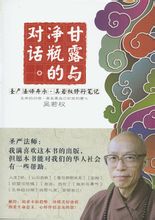
《甘露与净瓶的对话》一书是吴若权从师圣严法师修行的笔记。

image001-11

在这本书中,你会看到下列问题的答案:

爱就像洋葱,层层剥开,瓣瓣分明,如何可以不流泪?

婚姻到了濒临破裂时,该放弃吗?“不离婚”有何新解?

节制给予,也是一种付出?如何用“减法”提升亲密关系?

禅修的目的,不是为了能够得到什么,为何要禅修呢?

何谓“看破”?“看破”的真正意义,其实是很积极的吗?

“闭关”,就像婚姻?笼中之心,如何海阔天空?

“放下”和“放弃”,有何不同?

囚禁,也是一种自由?“自由”和“随心所欲”,有什么不一样?

极乐世界的入口,到底在哪里?

积善”和“还债”,两者有何关联?

伴侣相处,如何“结缘”而不“结怨”?

看似成功、光鲜的吴若权,为什么要到忧郁症门诊就医?

圣严法师:我与若权面对面的接触,就是这次的访谈了。我们谈的内容,不会涉及什么高深的佛理,而是一般人在生活上、心理上乃至生理上,可能会遭遇的阻碍、困顿、矛盾等各式各样的难题……

面对烦恼的处理,我的基本立场是“正面的解读,逆向的思考”。正面的解读,就是遇到任何问题,不要一来就视为负面的阻力,而要看成是一种砥砺的助缘。逆向的思考,是遇到顺心的事,不沾沾自喜、不得意忘形;遭逢挫折与不如意事,不气馁,也不垂头丧气;只要观念一转变,就能柳暗花明。

我满欢喜这本书的出版,但愿本书能对我们的华人社会有一些帮助。

吴若权:

圣严法师说:“很多的人都说,这一生太苦了,希望此生过完了,不要再来世间,因为实在太苦。但是,菩萨不怕苦,菩萨一次一次地再来,他宁可吃苦,愿意向众生学习。”初次在现场听到圣严法师说的这句话,令我非常动容。夜晚在耳机里重听录音设备播出这句话,一遍又一遍,我流下泪来。

回顾自己的前半生;也展望自己的后半生。如果可能,今夜或许会是个界线。曾经吃过很多苦的我,以为修行是为了解脱;如今我才知道,生命的归宿,其实是自己初发的愿心。

3图书目录编辑

圣严法师序:转念之后,柳暗花明

自序:净瓶常注甘露水

第1讲 认识自我

我是谁,我要往哪里去?

当“倾听自己心声”和“接受别人忠告”之间有落差时,如何找到智慧的力量?

找到自己之后,如何放下自己?从“自我”到“无我”,该如何转化?

第1课 成长,是往内在去探索自己,而不是向外去需索感官的满足第2课 努力朝向最适合自己的路去发展,但也需要天时、地利、人和的因缘具足

第3课 从探索兴趣开始发展自我,找出最适合自己的方向

第4课 接受天生的限制,改进自己的缺点,也是一种自信

第5课 大鸭、小鸭,各有各的发展,经过努力与磨练,小鸭也有变成大鸭的可能

第6课 以发展自我为目的,就能把“吃苦”当作“进补”

第7课 立定志向之后,就要坚定信念,绝不退转

第8课 志向愈大,挫折和诱惑就相对地变小

第9课 承担责任,完成使命,并非好大喜功,而是要分享梦想

第10课 找到生命的导师,效法成功的典范

第11课 善用危机感激发自我的力量,突破环境的障碍

第12课 利他的练习,可以从无我开始

第2讲 爱与亲密关系

“爱自己”和“爱他人”有冲突时该怎么办?

有时候,刻意吝惜,“不给”对方,也是一种“付出”?

爱, 必须是对等的付出吗?

第13课 慈悲,是爱的最高层次,足以跨越人心的藩篱,及于一切众生

第14课 真正的慈悲,是不分对象、没有条件的

第15课 亲密关系之中若含有控制的成分,就可能伤害彼此的爱

第16课 即使是亲情,也必须进化;父母学会放手,亲子之间的爱才能长久

第17课 教养子女之前,父母应该先教养自己

第18课 要解决欠缺安全感的问题,不是仰赖更多的亲密关系;而是建立信任

第19课 婚姻中的伴侣关系,不是嫁鸡随鸡,而是要照顾对方一辈子,彼此守护

第20课 爱不一定要有相对的回馈;真正的爱是无条件的、平等的付出

第21课 要尽力和自己建立最亲密的关系,有自信就不会恐惧不安

第22课 学会慈悲,松开心中的防线,拆除心中的城墙,才能得到真正的解脱

第23课 唯有慈悲,才能解决因为爱而引起的冲突

第24课 “放下”心中的包袱;但永远不“放弃”心中的理想和责任

第25课 善用“爱的减法”,让亲密关系更欢喜自在

第26课 真正的“看破”,并非彻底失望;而是体认世事都是虚幻的,不再执着

第27课 勇于承担别人惠予的付出,将来才有分享出去的能力

第3讲 孤独

如何尽情享受独处,“孤独”而不“孤僻”?

修行的路一定是孤独的吗?孤独,有助于修行?

如何善用孤独的处境,面对更真实的自己,活得更幸福?

第28课 善用孤独的力量,是成就自我很重要的修行

第29课 必须妥善处理内心的孤独,才能转化成为正面的力量

第30课 像潜水般跃入最深沉的孤独里,才能浮现出最真实的自我

第31课 有心、有愿,就会有定力,不会被外在环境干扰

第32课 与世隔绝,让自己孤独,对修行来说是必要的

第33课 随着因缘的路途前行,自己就是最好的知音

第34课 遭遇人际关系的挫折,要检讨自己;但不要否定自己

第35课 倘若自己的想法很先进、很独到,就必须多沟通,让别人充分了解

第36课 权势的孤独,并非因为位居高处,而是不当行使权力

第37课 用行动的热情,融化内心的孤独

第38课 共修,既可以鼓励自己,也可以约束自己

第39课 用慈悲的心,相互包容,双方才能得到共修的好处

第40课 每个人的生命价值判断不同,应该彼此尊重

第41课 化“被动的孤独”为“主动的孤独”,就不会感觉孤独了第42课 帮助孩子化解孤独的感受,是父母应尽的责任

第43课 修行自己,并非只是独善其身,而是以苍生为念,利益众生

第4讲 欲望与恐惧

内心所最渴求的,其实正是最害怕失去的吗?

“想要”和“需要”之间有标准界线吗?还是因人而异?

情欲,是可以驯服或提升的吗?

第44课 智者畏苦,但能够深刻体认别人的苦,却是慈悲心的开始

第45课 “害怕”与“讨厌”是一线之隔;去除“傲慢”,才能面对恐惧,展现自信

第46课 傻人有傻福,聪明的人也有聪明的好处,只要自己尽了自己的力量,就不必恐惧

第47课 满足私利的欲望,叫做“私欲”;成就公众的利益,叫做“愿心”

第48课 只要是为公共利益,不为私人,就不会患得患失

第49课 愿心,是来生来世、永生永世,都要继续再做下去的坚持

第50课 转念的时机,跟年龄没有绝对关系;而是要视个别的人生际遇或智慧开发而定

第51课 愈早转念愈幸福,因为转念之前,追求私欲的路程很辛苦

第52课 发愿心,要有自知之明,量力而为,才不会力不从心

第53课 只有“舍”,没有“得”的欲望,才能够连“烦恼”都舍下

第54课 “想要”,如果超过“需要”;“消费”,就会变成“浪费”

第55课 人之所以高贵,是气质、是品格,而不是珠光宝气的价值

第56课 性冲动,可以用心理来克服,也可以用生活来调剂

第57课 为公众利益而修行,以“愿”心而得“愿”力;但是,发了愿心,还需要正确的方法

第58课 用宽大与坚强,消除竞争的恐惧,唤醒更大的愿心

第59课 拿自己的专长,去服务别人,就会产生“利他”的思考

第5讲 自由;自在

修行,就是为了解脱吗?

“自由”和“随心所欲”又有什么差别?

在肩负重大“责任”或“使命”时,还有可能觉得自由、自在吗?

第60课 为了积极实践目标而分分秒秒把自己捆绑,是愚痴的事

第61课 要学会放轻松,不要做超过自己能力范围的工作

第62课 自由和放荡不同。前者,有目标;后者,没有目标

第63课 自由,并非不受规范;此刻若不受规范,将来可能更不自由

第64课 适时向别人说“不”,才能保住“自由”;不要为了迎合别人的期待而扭曲自己

第65课 自由的真谛是:所做的一切,都是出于本身自愿的选择

第66课 因为有自知之明,面对诱惑时,才能解脱

第67课 要先能够放下自我中心,才能得到更多自由

第68课 觉悟,来自前世累积的善根,也要靠后天努力修行

第69课 即使,修行没有开悟,还是可以对别人有所帮助

第70课 修行的目的,就是为了得到解脱

第71课 自由,是不受束缚;自在,则是自己做主,没有阻碍

第72课 利益众生积极的作为,不会因为行动受限而无法发挥

第73课 在家修行,不应该忽略对家庭应尽的本分

第74课 修行要持之以恒,最好的方式就是回到初发心

第75课 遵守戒律,出于自己的选择,就不会觉得苦,反而是一种快乐的解脱

第76课 世界和平,就是追求全体的自由自在

第6讲 挫折与勇气

如何面对生命中的困境与意外?

“放下”和“放弃”,有什么不同?

“坚强”、“逞强”、“顽强”有什么差异?第77课 多读书,多向专家请益,可以促使因缘成熟

第78课 落实“四它”:面对它、接受它、处理它、放下它,要从勇气开始

第79课 不要用因果论,去解释过去已经发生的事

第80课 坚持,是用理性去评估,而不是用意气或情绪

第81课 最大的勇气是放下自我,因此而得到开悟

第82课 不论碰到多大的困境,都要有耐性,相信时间都可以将它改变

第83课 忏悔是非常重要的修行方法,也是修行必备的条件

第84课 如果不知道要对谁忏悔,就对佛忏悔

第85课 忏悔最主要的作用,在于自我反省,因为改过而得到成长

第86课 忏悔以后,除了悔过之外,还要弥补对别人造成的伤害

第87课 犯错的人,需要忏悔;受伤的人,需要宽恕

第88课 宽恕,也是一种勇气的表现

第89课 受害者是菩萨,用肉身的痛苦教育社会大众

第90课 学会宽恕,才能真正打开心结

第91课 勇气,并非外在的剽悍或刚强,而是内在的强韧与坚毅

第92课 真正的勇气,并非蛮力;而是精进不懈的力量

第7讲 生命的归宿

人死后,去了哪里?向往西方极乐世界,会不会也是另一种贪欲?

“积善”和“还债”,两者有何关联?如何“结缘”而不“结怨”?

人生苦短,但不如意事又十常八九,如何安顿自己的心?

第93课 不追问过去,不妄想未来,只需把握当下

第94课 信仰,并非靠外在印证;而是内心的感应

第95课 神秘经验,跟个人的修行及缘分有关

第96课 极乐,是从烦恼中得解脱。每个解脱的人,都有机会成佛

第97课 相信往生的亲人,会继续他下一段的旅程,是安顿自己对生死牵挂最好的方式

第98课 超渡亡魂,是为了在往生路上助他一臂之力

第99课 消极还债;积极还愿。自己得解脱,奉献给别人

第100课 若想不到对方的“恩”,就用“愿”来替代。“愿”的力量,比“恩”更大

第101课 有宗教信仰的人,内心比较安定、知足

第102课 宗教的入门,是身体力行的实践,在努力实践的过程中,就能体会修行的好处

第103课 当亲友往生时,学习洞见生死的微妙,对自己而言,也是一个重生的开始

第104课 有宗教信仰,对生命的归宿才会有落实感。生离死别,虽然痛苦,却可以渐渐解脱

第105课 从积极面对死亡的态度中,可以重新审视自己生命的意义与价值

第106课 体认生命很脆弱,才能学会珍惜及尊重

第107课 真正的吃苦是勇于接受挑战,获得成长,而不是自寻烦恼

第108课 菩萨不怕苦,一次一次地重返人间,向众生学习

4编辑推荐编辑

适合你读,也适合送给您关怀的人,共同细细品味:

出版七十几本畅销作品的吴若权,数月来每周两次亲自访谈圣严法师,并以第一人称纪录对谈内容精华,汇整成为充满智慧与法喜的修行笔记。 一位常以文字滋润读者,一位总以佛法抚慰众生,两位艺术家在此交会,互相倾听。当作家透露自己因为父丧而倾向忧郁时,法师也道出自己的父亲是自杀离世。作家提出人生中避不开的迷惘与未知,法师则以一种法喜充满的慈悲心来轻轻解惑。书中并以两人各自的生命故事来串联,读来亲切,亦具深度。

全书涵括七大智慧讲义,分别是:“认识自己”“爱与亲密关系”“孤独”“恐惧与欲望”“自由、自在”“挫折与勇气”“生命的归宿”,你将感受如沐春风的心灵洗礼,更能从中获得期待已久的开示与答案。


1作者简介编辑

吴若权,血型AB型,水瓶座。政治大学企管系毕业。现任多家企业营销顾问。他是各大书店排行榜上的常胜军,同时也是形象清新的热门媒体主持人及广告活动代言人。有着水瓶座的活跃聪明、企管人的敏锐精准,和创作者的细腻善感。浪漫与理性、认真与随性、柔软真心和诚恳热情,在他身上总能圆满调和,展现出精准细致的独特风采。吴若权认为:所谓的“正面思考”,并非认定人生只有阳光、没有阴暗,而是在阳光处尽情舒展身心,碰到阴暗时懂得安顿自己。比较重要的是:无论身处阳光里或阴暗中,不要忽略这一生的任务,不要忘记所为何来。生命的机缘,何其巧妙,吴若权适时得到圣严法师的首肯,接受对谈的请求,让他以提问的方式记录圣严法师的开示。这些疑问,有些是他本身碰到而无法解答的,有些则来自四周朋友的遭遇,其实就是每个人一生都会碰到的问题。现在,就邀请你一起进来聆听这一段故事,这一份奇缘。


励志格言大全

励志格言大全

1、有些事情不是难以做到才失去信心,而是因为失去信心才难以做到。

——肖乾旭《生活画语》(2003年十大金句之六)

2、每个人都有某些缺点,被骂没关系,因为这是进步的过程。

——针对儿子参选以来每天都会遭到对手的恶意攻击,马英九的母亲秦厚修如此回答

3、人生自有其沉浮,每个人都应该学会忍受生活中属于自己的一份悲伤,只有这样,你才能体会到什么叫做成功,什么叫做真正的幸福。

——李嘉诚

4、当我们不幸的时候,不能再好生忍受生活的时候,一棵树会对我们说:平静,平静,瞧着我!

——诺贝尔文学奖获得者赫尔曼·黑塞

5、我除了要按照我内心自然产生的愿望去生活之外,别无它求。

——诺贝尔文学奖获得者赫尔曼·黑塞

6、有信心不一定会赢,没有信心一定会输;有行动不一定会成功,没有行动一定会失败。

——《智慧语典》

7、心若改变,你的态度跟着改变;态度改变,你的习惯跟着改变;习惯改变,你的性格跟着改变;性格改变,你的人生跟着改变。

——《智慧语典》

8、杀人的不是逆境,而是遇到逆境时那种消沉烦躁的心情。

——英国伦敦塔原是囚禁政治犯的监牢。在一间囚室的石墙上,有位犯人刻下了这句励志的话

9、情人不老,我就不老。

——自信是一种魅力

10、要有一颗很热的心,一双冷若冰霜的眼,一双很勤劳的手,两条很忙的腿和一种很自由的心情。

——作家刘墉的自由生活

11、我想Kiss她,结果她说No。我跟她说,你就告诉别人你被一个中国男孩吻了。她说,不,他们会笑话我。这句话让我心里特别难过……

——2005年度国家最高科技奖两位得主之一的叶笃正先生是一位非常杰出的气象科学家。1945年的一天傍晚,留学美国的叶笃正送一个关系非常好的美国女孩去参加晚会,在车站时,女孩如此拒绝他的示爱。还有一次,叶笃正陪同学去芝加哥一个旅馆预订房子,柜台服务员却说:“我们没有中国房间。”此后,倍感愤怒和屈辱的叶笃正通过执著的努力让生命开放出非同一般的灿烂,以自己的强大压倒对手的狂妄

12、那些把失败看成是结局而不是过程的人,很少能见到成功的曙光。

——走过失败,就是成功

13、高薪并不是吸引人才的最重要原因,最重要的是让员工感到工作快乐。

——在“哈佛商业评论中文版”2003亚洲最佳雇主评比中,靳羽西化妆品有限公司当选中国最佳雇主第四名,公司总裁雷荣发如是说

14、嫉妒心强烈的人,无法从自己所拥有的东西中得到乐趣,只能由他人的幸福中获得痛苦。

——佚名

15、心理变,态度亦变;态度变,行为亦变;行为变,习惯亦变;习惯变,人格亦变;人格变,命运亦变。

——心理改变命运

16、心小了,所以小事就变大了;心变大了,所有的大事都变小了。

——正所谓宰相肚里能撑船

17、低头要有勇气,抬头要有底气。

——有“气”,啥事都能办

、虚荣有两种作用:一种是夸耀别人来贬低自己,另一种是夸耀自己来贬低别人。

——认识虚荣

18、快乐不仅在生活的终极目标远大理想那里,也在生活具体而微小的各种事项与进程之中。快乐不仅在于达到目标,也在于为达到目标而走过的全过程。

——王蒙

19、独身的状态人人可以经历,独立的心态则需要艰苦而自觉的修炼才可能达到。

——深圳知名女培训师朱俐

20、顺与不顺,在我看来,更多的是一种心态。

——被坊间称为“中国最年轻的美女副省长”的江西省副省长谢茹

21、总统拾掇俄罗斯,我拾掇克里姆林宫。

——在克里姆林宫工作了40年的清洁工波利雅认为,她和总统的职业相似

22、生活不能改变,我就改变,谁都不能改变我的好心情。

——王朔

23、我们在痛苦中奔跑,又在奔跑中超越痛苦。

——奔奔族(1975年-1985年出生的人)的心声,他们喜欢追求新鲜事物,对生活充满激情,同时追求不断进步、不断超越自我

24、要争取人心,就必须有一个宽宏大量的气度和一个既往不咎的政策,哪怕是装也要装得像回事。

——易中天

25、这个猜想的完成是国际数学界同行你一步我一步,共同做出来的。只是比较幸运,由我和曹怀东完成了临门一脚。

——中山大学教授、数学家朱熹平联袂旅美数学家曹怀东证明了七大世纪数学难题之一的庞加莱猜想。面对如潮的赞赏声,他如此评价自己

26、穷人戴钻石,人家以为是玻璃;富人戴玻璃,人家以为是钻石。

——台湾作家吴若权谈自信的重要性

27、毛毛问邓小平:“长征的时候你在干什么?”邓小平说:“跟着走。”

——《我的父亲邓小平》一书中的对话。“跟着走”便是坚持下来不掉队,便是认准了方向走到底,体现了邓小平伟人的胸怀和平和的心态

28、这种工作实在不适合人做,只适合马做。

——被问及如何应付每天长达17小时的工作时,马英九幽默作答

29、今天的阳光是为我洒的。

——电视节目主持人汪涵

30、如果你看到面前的阴影,那是因为你的背后有阳光!

——一网友如此解释“阴影”

31、我从没穿过名牌,没必要——我自己就是名牌。

——2005年度胡润百富榜上最大的黑马、位列第二的太平洋董事会主席严介和这样表达他的自信

32、毛毛虫所谓的末日,恰恰就是蝴蝶破茧而出充满阳光的时刻。

——献给悲观者的话

33、用感情看待这个世界一定是个悲剧,用理智看待这个世界就是个喜剧。

——理智与情感新论

34、所谓乐观,就像炉灶上的茶壶,屁股烧得红红的,却仍心情特好地吹口哨。

——网友唐伯猪对乐观的看法(励志名言  www.lz13.cn

35、无论哪个行业,决定一个人是不是高手的根本因素都不是技术。技术到了一定的程度,大家都是一样的,能分出高下的是人的心——爱心、信心和责任心。

——整形外科博士陈焕然的美丽报告

36、使劲往上抛时,可以把球送上高处;狠狠往下砸时,同样可以把球送到高处。

——对别人的打击和取笑,应该正确对待

37、失之坦然,得之淡然,争其必然,顺其自然。

——对现在的人们很有教育意义的四个与“然”有关的词语

38、世界上没有快乐的地方,只有快乐的人。

——某网友的QQ签名,说明了一种好的心态远比所处的环境重要

39、什么是生活?生活就是一把锤子,把你的理想坛子一个个击碎。

——一项在线调查显示,71%的人认为“现实生活中充满了焦虑”

40、看着太阳你就把阴影甩在脑后了。

——父亲这样安慰高考落榜的儿子

41、看到别人愚蠢,就原谅自己愚蠢;看到自己愚蠢,就原谅别人愚蠢。

——法国学者布瑞南

42、一个人需要技巧和智慧,但最不能缺少的,是原则和信念

——陆勇强

43、在真正的道德理念面前,你无须堵住别人的嘴,而是要面对自己的内心。

——摘自一网友博客

44、多思是优点,但多心则是缺点;怀疑并非全无必要,但猜疑则是越少越好;敏感是需要称赞的,但过分敏感则会使人脆弱。

——袁志发《我看人生》

45、偏见可以说是思想的放假。它是没有思想的人的家常日用,而是有思想的人的星期日娱乐。假如我们不能怀揣偏见,随时随地必须得客观公正、正经严肃,那就像造屋只有客厅,没有卧室,又好比在浴室里照镜子还得做出摄影机镜头前的姿态。

——钱钟书说偏见

46、真正感动人的,从来不是思想,而是年轻的勇气。

——许知远在《那些忧伤的年轻人》里写道

47、既然在出现问题时,哭不能解决问题,那为什么不笑呢?

——一个大学生这样处理求学和家庭中的难题

48、相信别人,放弃自己,这就是许多人失败的开始。

——连自己都放弃,谁能拯救你

49、100%只有自己的生活,就像100%的柠檬汁,令人反胃。

——著名作家王文华认为,人生的很多烦恼都是源于自我意识太强

50、习惯了郁闷的,只能延续郁闷;习惯了卑琐的,只能保持卑琐。

——余秋雨

51、人间天堂人人可进,不要高墙,不要禁卫,不要门票,也不要通报。只要你愿意朝着它抬腿迈步,你就进了。

——余秋雨

52、去爱吧,像不曾爱过一样;跳舞吧,像没有人观看一样;唱歌吧,像没有人聆听一样;生活吧,像每天都是末日一样;赚钱吧,像不是为了钱一样。

——一首诗中如此写道

53、如果情况不如意,我们总可以想办法加以改变。

——美国前财政部长阿济·泰勒·摩尔顿

54、把希望寄托在别人身上,你会感到无助;把希望寄托在自己身上,不会心乱如麻。

——带妹妹求学的贫困大学生洪战辉,如此诠释支持自己生活的动力

55、筋疲力尽的,往往不是要做的事情本身,而是患得患失的心态。

——心累重于身累

56、不敢生气的是懦夫,而不去生气的才是智者。

——一位智者的生活感悟

57、其实人类没有真正自由,少年时我们坐在课室里动弹不得,稍后又步入办公室,无论外头阳光多好,还得超时加班,有几个人可以真正做自己想做的事?

——亦舒《别人的女郎》

58、每天我都不断地刷新一项世界纪录,那就是我在世界上已经生活的天数。

——凡人也可以“破纪录”

59、有些人像我一样,天生有点傻,更多人是后天变傻的。

——好莱坞经典影片《阿甘正传》的一句台词

60、心态要常常保持年轻,头脑要常常保持老练。

——现代社会所需求的人才应该是这样的

Debunking the Myth of the 10,000-Hours Rule: What It Actually Takes to Reach Genius-Level Excellence; Ideally that feedback comes from someone with an expert eye. If you practice without such feedback, you don’t get to the top ranks

Debunking the Myth of the 10,000-Hours Rule: What It Actually Takes to Reach Genius-Level Excellence

image002-6

The question of what it takes to excel – to reach genius-level acumen at a chosen endeavor – has occupied psychologists for decades and philosophers for centuries. Groundbreaking research has pointed to “grit” as a better predictor of success than IQ, while psychologists have admonished against the dangers of slipping into autopilot in the quest for skill improvement. In recent years, one of the most persistent pop-psychology claims has been the myth of the “10,000-hour rule” – the idea that this is the amount of time one must invest in practice in order to reach meaningful success in any field. But in Focus: The Hidden Driver of Excellence (public library), celebrated psychologist and journalist Daniel Goleman, best-known for his influential 1995 book Emotional Intelligence, debunks the 10,000-hour mythology to reveal the more complex truth beneath the popular rule of thumb:

The “10,000-hour rule” – that this level of practice holds the secret to great success in any field – has become sacrosanct gospel, echoed on websites and recited as litany in high-performance workshops. The problem: it’s only half true. If you are a duffer at golf, say, and make the same mistakes every time you try a certain swing or putt, 10,000 hours of practicing that error will not improve your game. You’ll still be a duffer, albeit an older one.

No less an expert than Anders Ericsson, the Florida State University psychologist whose research on expertise spawned the 10,000-hour rule of thumb, told me, “You don’t get benefits from mechanical repetition, but by adjusting your execution over and over to get closer to your goal.”

“You have to tweak the system by pushing,” he adds, “allowing for more errors at first as you increase your limits.”

The secret to continued improvement, it turns out, isn’t the amount of time invested but the quality of that time. It sounds simple and obvious enough, and yet so much of both our formal education and the informal ways in which we go about pursuing success in skill-based fields is built around the premise of sheer time investment. Instead, the factor Ericsson and other psychologists have identified as the main predictor of success is deliberate practice – persistent training to which you give your full concentration rather than just your time, often guided by a skilled expert, coach, or mentor. It’s a qualitative difference in how you pay attention, not a quantitative measure of clocking in the hours. Goleman writes:

Hours and hours of practice are necessary for great performance, but not sufficient. How experts in any domain pay attention while practicing makes a crucial difference. For instance, in his much-cited study of violinists – the one that showed the top tier had practiced more than 10,000 hours – Ericsson found the experts did so with full concentration on improving a particular aspect of their performance that a master teacher identified.

Goleman identifies a second necessary element: a feedback loop that allows you to spot errors as they occur and correct them, much like ballet dancers use mirrors during practice. He writes:

Ideally that feedback comes from someone with an expert eye and so every world-class sports champion has a coach. If you practice without such feedback, you don’t get to the top ranks.

The feedback matters and the concentration does, too – not just the hours.

Additionally, the optimal kind of attention requires top-down focus. While daydreaming may have its creative benefits, in the context of deliberate practice it only dilutes the efficiency of the process. Goleman writes:

Daydreaming defeats practice; those of us who browse TV while working out will never reach the top ranks. Paying full attention seems to boost the mind’s processing speed, strengthen synaptic connections, and expand or create neural networks for what we are practicing.

At least at first. But as you master how to execute the new routine, repeated practice transfers control of that skill from the top-down system for intentional focus to bottom-up circuits that eventually make its execution effortless. At that point you don’t need to think about it – you can do the routine well enough on automatic.

But this is where the amateurs and the experts diverge – too much automation, and you hit the “OK plateau,” ceasing to grow and stalling at proficiency level. If you’re going for genius, you need to continually shift away from autopilot and back into active, corrective attention:

Amateurs are content at some point to let their efforts become bottom-up operations. After about fifty hours of training – whether in skiing or driving – people get to that “good-enough” performance level, where they can go through the motions more or less effortlessly. They no longer feel the need for concentrated practice, but are content to coast on what they’ve learned. No matter how much more they practice in this bottom-up mode, their improvement will be negligible.

The experts, in contrast, keep paying attention top-down, intentionally counteracting the brain’s urge to automatize routines. They concentrate actively on those moves they have yet to perfect, on correcting what’s not working in their game, and on refining their mental models of how to play the game, or focusing on the particulars of feedback from a seasoned coach. Those at the top never stop learning: if at any point they start coasting and stop such smart practice, too much of their game becomes bottom-up and their skills plateau.

But even with the question of quality resolved, there’s still that of quantity: Just how much “deliberate practice” is enough? Focused attention, like willpower, is like a muscle and gets fatigued with exertion:

Ericsson finds world-class champions – whether weight-lifters, pianists, or a dog-sled team – tend to limit arduous practice to about four hours a day. Rest and restoring physical and mental energy get built into the training regimen. They seek to push themselves and their bodies to the max, but not so much that their focus gets diminished in the practice session. Optimal practice maintains optimal concentration.

In the rest of Focus, Goleman goes on to explore how concepts like attention-chunking, emotional empathy, and system blindness influence the pursuit of excellence. Complement it with how grit predicts achievement and the science of the “winner effect.”

Did it snow on the summit of Mount Kinabalu?

Did it snow on the summit of Mount Kinabalu?

image001-10

Saturday, January 25, 2014 – 09:59

The Star/Asia News Network

KOTA KINABALU – Did it snow at Mount Kinabalu just before dawn on Jan 17 when temperatures dipped to -3 deg C?

A report submitted to Sabah Parks by their head ranger Martin Mogurin indicated that there were signs of snow at the summit area of the 4,101m-high mountain along the Crocker Range around 4am.

Martin said guides at the mountain submitted a report but were unable to back it up with pictures as it was dark. Sabah Parks officials are trying to verify the report.

Sabah Parks chairman Tengku Zainal Adlin, who has climbed every face of Mount Kinabalu in the last five decades, is not surprised over the snow report.

Zainal said that ice on the mountain was common, especially in the early hours of the morning.

Sabah Parks director Paul Basintal said he was gathering information but he has his doubts about the snow.

Sabah meteorologists, however, are firm in dismissing any possibility of snow on Mount Kinabalu as it was too close to the Equator.

“Ice occurrence, yes, but snow? Not possible,” said Sabah Meteo­rological Department director Abdul Malik Tussin.

He said Sabah has been experiencing cold weather due to the annual Siberian winds coupled with high amount of rain due to the usually wet northeast monsoon season and a low atmospheric pressure over Sabah.

When Mao praised the beauty of Japan; while reformers and revolutionaries alike resented Japan’s defeat of their country, they could respect Japan’s economic and social achievements. Chen Duxiu and Li Dazhao both studied in Japan

When Mao praised the beauty of Japan

Sunday, January 26, 2014 – 09:00

John Gee For The Straits Times

The Straits Times

image001

A HUNDRED years ago, Japan was, to many Chinese intellectuals, a source of inspiration, a place of educational opportunities and a political refuge.

In the current climate of Sino-Japanese relations, that is easy to forget.

Japan’s victory in the Sino-Japanese war of 1894-5 emphasised to many Chinese how their country’s failure to modernise had weakened its ability to defend itself. China had been defeated and bullied by Western powers since the Opium Wars, but this was the first case in modern times that it had suffered defeat at the hands of another Asian country, long assumed to be no match for China.

The lesson drawn by many was that China needed to learn from how Japan had built itself into a powerful country. Within the Qing Court, there were modernisers who saw a need for administrative reform and a re-equipped, re-trained armed forces.

And they continued to hold this view even after the imperial army, then in the process of modernisation, was defeated by better trained foreign troops during the Boxer Rebellion of 1899-1901.

Elsewhere, there were those, such as Sun Yat Sen, who concluded that the Qing dynasty and the imperial institutions that upheld its rule were a fundamental obstacle to China’s modernisation. But while reformers and revolutionaries alike resented Japan’s defeat of their country, they could respect Japan’s economic and social achievements.

Attitudes towards Japan became much less ambivalent as a result of the Russo-Japanese War of 1904-05. It was largely fought on Chinese territory, in Manchuria, and Chinese civilians were inevitably killed and maimed during the conflict. Chinese property was one of the prizes at stake in the war: Japan aimed to wrest Port Arthur (Dalian) from Russia, as well as assert its interests in the resources of Manchuria.

Yet what mattered to most patriotic Chinese at the time was that an Asian country had defeated a European power. They could therefore overlook China’s own losses in the war, as well as the defeat of 1895.

Japan admitted a stream of Chinese students to its universities at this time. One of them was Lu Xun, later to become well-known as a writer. In 1902, he was given a government scholarship to study in Japan. He learnt Japanese, and much of his early acquaintance with European literature was made through books translated into Japanese.

He returned to China after eight years in Japan.

Years later, in 1926, he recalled with affection Mr Fujino, who taught anatomy in the medical college at Sendai. Lu Xun was the only Chinese student at the college. Mr Fujino asked to see Lu Xun’s notes of his lectures, and then patiently corrected them, which helped ensure that he passed the annual examination.

Lu Xun described him as, of all his teachers, “the one to whom I feel most grateful and who gave me the most encouragement”. He thought that Mr Fujino wanted China to have modern medical knowledge.

Chen Duxiu and Li Dazhao, founders of the Communist Party of China, both studied in Japan. Chen was there from 1900 to 1902, at Tokyo Normal School and then at Waseda University. This was where he first became involved in politics, joining the Chinese Youth Society, a group founded by one of Sun Yat Sen’s associates.

Chen returned to Japan briefly in 1906 and then again from 1913 to 1915, following the dissolution of China’s first Parliament by the ambitious former Qing general, Yuan Shih-kai.

Li studied political economy at Waseda University from 1913 to 1916 before returning to China.

Zhou Enlai also studied in Japan, though only for 18 months. He arrived in 1917 and went to classes at Waseda University, in Tokyo, and at Kyoto University. In 1936, he told American journalist Edgar Snow that he had met other “revolution-minded” Chinese students while there.

Another Chinese who studied in Japan taught Mao Zedong. Interviewed by Edgar Snow in his book, Red Star Over China, Mao recalled going to a new school when he was 16 years old. One of the teachers there was derided as the “False Foreign Devil” by students, who could see that his queue was false. He had studied in Japan, and Mao liked to hear him talk about what the country was like.

The teacher taught English and music. One of his songs was called The Battle Of The Yellow Sea. It celebrated Japan’s victory over Russia in 1905, and made such an impression on Mao that he could still remember part of it in 1936, when he spoke to Snow.

Mao said: “At that time I knew and felt the beauty of Japan, and felt something of her pride and might, in this song of her victory over Russia. I did not think there was also a barbarous Japan – the Japan we know today”.

Among the Chinese who went to Japan in the early 20th century were political dissidents who did not arrive, first of all, as students. The best known was Sun Yat Sen, who lived there for much of the period between the First Guangzhou Uprising in 1895 and the 1911 Revolution.

It was in Tokyo that the Tongmenghui (United League), forerunner of the Kuomintang, was formed, though it soon relocated its headquarters to Singapore.

If Chinese reformers and revolutionaries had a positive impression of Japan in the early years of the 20th century, it changed fairly quickly during World War I.

Japan’s leaders agreed that their country needed guaranteed access to Chinese resources.

But they disagreed over the best way to secure it – whether through cooperation with a Chinese government, albeit on terms favourable to Japan, or through more direct control. The issue was settled by World War I, when the European powers that had previously checked Japan’s ambitions in China were thoroughly preoccupied with fighting each other.

As an ally of Britain, Japan occupied the German base of Tsingtao (Qingdao) in 1914 and sought to retain it, as well as German economic interests in Shandong province.

In December 1914, Japan’s ambassador to China presented Yuan Shih-kai’s government with the Twenty-One Demands, which called for extensive economic concessions to Japan, including rights over a number of railways.

The government felt forced to agree to most of the demands, but the episode reflected badly on both Japan and Yuan Shih-kai in the eyes of patriotic Chinese. When Japan tried to solidify its gains in China at the Versailles Peace Conference in 1919, it provoked the May Fourth Movement. Sino-Japanese relations went from bad to worse, reaching their nadir with the war of 1937-45.

Today, it is all too easy for nationalists in China and Japan to incite hostility between their peoples and portray their modern histories in terms of unending conflict. That interpretation, however, is simply untrue.

The two nations grated against each other, and fought, as neighbours often do.

But there were also episodes when state-to-state relations were better, and, even more, when there were ties of friendship, respect and cooperation between citizens of the two countries.

stopinion@sph.com.sg

The writer is a freelance journalist who writes regularly on Asian affairs.

Indonesia must hold joint polls from 2019; Indonesia’s constitutional court ruled that holding separate polls for Parliament and president – as has been done in the past two elections – was against the spirit of the Constitution

Indonesia must hold joint polls from 2019

Sunday, January 26, 2014 – 09:00

Zakir Hussain

The Straits Times

INDONESIA’S constitutional court yesterday ruled that holding separate polls for Parliament and president – as has been done in the past two elections – was against the spirit of the Constitution.

But it said this year’s elections will carry on as scheduled to avoid disrupting a process that is already under way.

Simultaneous elections will start from 2019, the eight-man court ruled, in striking out sections of the presidential election law.

However, the court, led by Judge Hamdan Zoelva, stressed that this year’s elections will remain valid and constitutional.

The landmark decision reduces uncertainty over a possible delay to the April9 elections for Parliament, and drew support across the political spectrum as a middle way out that would prevent instability as some 190 million eligible voters head to the ballot box.

National Awakening Party (PKB) deputy secretary-general Abdul Malik Haramain told reporters: “I appreciate the ruling that weighed up the social and political aspects (to the matter), not just the judicial aspect.”

Changing the process this year, the court said, “could disrupt the conduct of the 2014 election and surface legal uncertainty, which is not desirable”.

The presidential election is scheduled for July, and set to be fiercely contested as President Susilo Bambang Yudhoyono is not allowed to stand for a third term.

National elections are held every five years.

Before 2004, there was one election for Parliament, and the president was then elected by Parliament.

The current arrangement, which saw voters elect MPs and a president three months apart in 2004 and 2009, came about as part of democratic reforms after the rule of strongman Suharto ended in 1998.

In its 92-page ruling, the court said the current practice fails to produce checks and balances that work, and does not strengthen the presidential system.

The court noted that presidential and vice-presidential candidates have to form tactical coalitions with political parties, which result in constant bargaining.

Having joint elections, it argued, would be more efficient, save costs and allow voters to vote more wisely.

But yesterday’s ruling drew criticism that it was politically motivated to safeguard the interests of major political parties.

“Why was it not read out much earlier? Why only now?” political communications academic Effendi Gazali, who filed the challenge to the presidential election law early last year, told reporters at the court.

Former constitutional court chief Mahfud MD said much of the deliberation on the case had been decided early last year.

Earlier this week, election commissioner Hadar Gumay also said whichever way the court ruled, the commission would have to work to ensure smooth elections.

The verdict comes two days after former law minister and state secretary Yusril Ihza Mahendra, who heads the Crescent Star Party (PBB), filed a separate challenge to the law.

Professor Yusril sought a decision on simultaneous elections, and also challenged the validity of the requirement for a presidential threshold which requires parties to have 25 per cent of the popular vote or 20 per cent of seats in Parliament before they can field a presidential candidate.

The court ruling yesterday did not address the issue of this requirement which, if struck out, could see a more crowded field of presidential contenders in July.

But Judge Maria Farida Indrati, in a dissenting opinion, said this criterion could still apply with simultaneous elections, but should be left to lawmakers to decide.


Hatred is not the only big worry in Thailand

Hatred is not the only big worry in Thailand

Saturday, January 25, 2014 – 15:23

The Nation/Asia News Network

THAILAND – The political crisis has become extremely dangerous not only because the hatred is feeding off itself, but also because law-enforcement officers are seen as biased in favour of the government.

Whether the police are intentionally partisan or are being pushed into a corner is debatable, but that doesn’t matter much now. The country is in serious trouble because, increasingly, anti-government protesters and the police are failing to see eye to eye.

In 2010 the police were accused of dragging their feet as the Democrat government struggled to contain the red shirts’ revolt. This time the police have been accused of being tools of the Pheu Thai government. The demonstrators have besieged key police headquarters several times, and outbreaks of violence have seen police firing tear gas and protesters hurling stones.

The situation is increasingly worrisome. The rift between a large section of society and the police is threatening to widen.

A demonstration by police recently confirmed their frustration, but they cannot blame it all on the anti-government protesters. Bangkok Police Chief Kamronwit Thoopkrajang showed off Thaksin Shinawatra’s photo in his office. His admiration of Thaksin is well publicised, not least because he wants it to be.

The anti-government campaign has targeted the police as the main pillar of the “Thaksin system”. Protest leader Suthep Thaugsuban has repeatedly said that, when he achieves victory, among the first items on the agenda would be a thorough reform of the police force. Suthep’s threat no doubt strikes fear into the police. All of a sudden, the force’s political stake in the crisis is firmly attached to who wins and who loses this showdown.

In fact, the stakes are getting higher and higher on both sides. The contrast with previous political crises is stark. This time, many more people have everything to gain from victory – and everything to lose from defeat. However, it is wrong for those who enforce the law to have any stake at all. Their duty demands that they remain completely neutral.

35-tonne truck rams into Taiwan President Ma Ying-jeou’s office

35-tonne truck rams into Taiwan President Ma Ying-jeou’s office

image001-9

Saturday, January 25, 2014 – 11:46

AFP

TAIPEI – Taiwan stepped up security measures Saturday after a driver rammed a huge truck through a bullet-proof screen and into the main gate of the presidential office, apparently intentionally, officials said.

A man identified only by his family name Chang drove the 35-ton truck through railings, the screen, and up a set of steps before coming stuck in the gate leading to the office’s main building, police said.

President Ma Ying-jeou was not in at the time as he is on a state visit to Sao Tome and Principe in Africa. He has been notified of the incident, his spokeswoman said.

She added that security measures had been beefed up at the Taipei site following the early morning incident and that police were investigating a cause and motive. She did not specify what the increased security measures were.

The impact from the crash knocked the driver unconscious and he was taken to a nearby hospital for treatment, police said. No one else was injured and the truck was towed from the scene.

“Chang has a criminal record and so far he has refused to answer any questions,” police spokesman Fang Yang-ning said, adding that they suspect he crashed “intentionally”.

Lessons from the past – when fear drove nations to war

Lessons from the past – when fear drove nations to war

Sunday, January 26, 2014 – 08:50

Andreas Herberg-rothe For The Straits Times

The Straits Times

WITH the 100th anniversary of World War I this year in mind, the overarching task of policy in a globalised, multipolar world is to manage the rise of the Global South by avoiding great wars and the cancer of mass violence.

During her last visit to Beijing in September 2012, former US secretary of state Hillary Clinton held a press conference in which she stated that the world would soon see, for the first time in history, that a rising power and an established power would not engage in a war. Of course her statement was related to China and the US.

Although I don’t think war between these nations is inevitable, I do think Mrs Clinton described the problem well.

No one wanted World War I to happen. Or, at least, no one wanted the kind of war that actually took place. The general assumption was that the conflict would be very limited. The Europeans who went to war assumed they would be home by Christmas 1914. We know now, of course, that World War I not only happened, but that it also resulted in the self-destruction of the European powers in two world wars.

For a long time Germany was blamed for the outbreak of World War I. The assumption was that the war was the result of the German desire to become a world power.

Without rejecting this approach completely, I think that the more disturbing interpretation has been given by Australian historian Christopher Clark in his characterisation of the European powers and their politicians before and during the war as “sleepwalkers”.

According to him, no one had any idea of the degree to which the violence would escalate.

World War II was different in that it was more deliberate – the result of the activities of Nazis in Germany. The outbreak of World War I, on the other hand, was the outcome of a traditional power struggle.

It included the rise of new great powers, an arms race, a pre-emptive strike by the Germans, perhaps even out of fear, and a policy of sleepwalking by the leading figures in Europe.

Above all, it showed how a failure to understand the seriousness of the chaotic, near-genocidal fighting in the Balkans would drag Europe into catastrophe.

Some theoreticians have implied that we are witnessing a return to the Middle Ages with respect to international security. But in fact we are returning to a development that is structurally much more comparable to the pre-World War I period, especially in Asia.

Mrs Clinton has already compared the competition between China and the US with that of the Peloponnesian War between Sparta and Athens – authoritarian Sparta against democratic Athens. Athens, the strongest city- state in Greece before the war, was reduced to a state of near- complete subjection, while Sparta became established as the leading power.

World War II is not a good comparison because there is no totalitarian ideology in sight which could be compared with that of the Nazis. The Cold War does not provide an illuminating model for comparison either. There are not just two superpowers.

In Asia we have several actors to take into account apart from the US and China. These include India, Russia and Japan.

Following Mr Clark, it could be said, that at the heart of the causes of World War I was a lack of understanding about the real situation. European leaders failed to understand the turmoil in the Balkans, or comprehend the implications of the conflict between established and rising powers. They also failed to comprehend the capabilities of the military forces that would be unleashed.

Thucydides, the chronicler of the Peloponnesian War and one of the ancient world’s most important historians, sees the initial cause of this war in the growth of Athenian power: “What made war inevitable was the growth of Athenian power and the fear which this caused in Sparta.”

Unlike Plato, though, Thucydides argues that it was not the striving for power in itself, but rather fear of loss of power and, in the long term, fear of being oppressed, robbed of one’s freedom, and enslaved that caused the escalation leading to war.

In Thucydides’ account, fear was the cause of war on both sides. Sparta was afraid of the growth of Athenian power, and Athens was afraid of what might happen if it gave in to an escalating series of demands and threats, the end result of which could not be foreseen.

There are many structural similarities here between the pre-1914 period in Europe as well as the current conflicts in Asia. I don’t think that history is repeating itself entirely. But the resemblance is striking.

stopinion@sph.com.sg

The writer is a lecturer at the faculty of social and cultural studies at the Fulda University of Applied Sciences, Germany.


Celebrating Seollal, the Lunar New Year, in old Korean fashion

Celebrating Seollal in old Korean fashion

Saturday, January 25, 2014 – 13:41

Julie Jackson

The Korea Herald/Asia News Network

SEOUL – Seollal, the Lunar New Year, is one of the most celebrated holidays in Korea: It is not only a time to pay respects to one’s elders and ancestors, but is also an opportunity to spend time with family and friends to celebrate the New Year immersed in tradition. With the colorful hanbok (traditional Korean costume) and the traditional food and folk games, Seollal gives people the chance to experience some real Korean culture.

Whether it be traveling to the countryside to reunite with extended family or staying in the city to relish the time off work or school, Seollal can be a great opportunity to immerse oneself in traditional Korean culture; and for those looking to get off the couch and usher in the Year of the Horse by doing something different from the usual weekend dinner and a movie, there is an endless number of events in Seoul and surrounding areas that offer visitors opportunities to celebrate the holiday.

Visitors dressed in a hanbok will receive free admission to the five major historical palaces (Gyeongbokgung, Changdeokgung, Changgyeonggung, Deoksugung and Gyeonghuigung), the royal shrine (Jongmyo) and royal tombs, as well as qualify for discounts at a number of museums throughout Korea.

As it does every year, Gyeongbokgung Palace – Seoul’s largest palace and the main palace of the Joseon Dynasty for more than 500 years – will organise a number of Seollal events during the holiday weekend for locals and foreigners, ranging from cultural performances to folk games. The most common folk games at the palace grounds include jegichagi (Korean hacky sack), tuho (arrow ring toss) and neoltwiggi (seesaw).

The National Folk Museum of Korea is currently holding an exhibition in tribute to the Year of the Horse. The “Horse, a Vigorous Gallop” exhibition features some 60 works of art including literature and various artifacts that depict horses in Korean culture and history. The exhibition will run until Feb. 17.

Aside from the regular programs of winter kite flying and learning to perform Korean traditional dance and music, the Namsangol Hanok Village located in central Seoul will be celebrating the New Year with fun for friends and family alike. During Seollal, international visitors can enjoy a lesson on the proper procedures of “charye” – a Korean New Year’s ceremony honoring the past four generations of ancestors of one’s family – as well as experiencing a presentation of charyesang (table setting for the ancestral worship ceremony). Visitors will also have opportunities to try out fortune writing and rice cake preparation, and to learn to sing Korean folk songs.

Seoul Namsan Traditional Theater, located in the hanok village, will also be offering special New Year hands-on activities, with hanbok costumes available for guests to try on.

The village will also provide traditional Korean kites. Flying a kite on Seollal is symbolic of wishing away bad fortunes and wishing for a prosperous new year. The special Seollal events will run from Jan. 30 to Feb. 2.

For those looking to venture a short distance outside Seoul city limits, the Korean Folk Village in Yongin, Gyeonggi Province, is a perfect place to wander around outdoors: The dirt paths cut through some 300 traditional houses in the large, sprawling village. While walking around, guests can view folk paintings, learn to fly traditional colorful kites and participate in talisman or fortune writing and hang the papers up for good luck.

The events take place every day until Feb. 2 with admission costing 15,000 won for adults and 10,000 won for children. All visitors wearing hanbok will get a 50 per cent discount off admission.

Is the SEC Going Easy on General Electric? KPMG has been GE’s auditor for more than 100 years. GE is a systemically important financial institution, because of its GE Capital finance arm. GE has paid the firm more than $1.3bn since 2000

Is the SEC Going Easy on General Electric?

The Securities and Exchange Commission unveiled a curious settlement today with KPMG LLP over violations of auditor-independence rules. And it looks like the agency went out of its way to protect the Big Four accounting firm and its longtime audit client, General Electric Co.

The settlement papers came in two parts. The first was an administrative order, under which the firm will pay $8.2 million in fines and disgorgement. The SEC said KPMG provided bookkeeping and other prohibited services to three audit clients. The SEC said some KPMG partners also owned stock in one of the clients, which is a no-no.

The SEC didn’t name the clients, which is odd, because the agency has in other auditor-independence cases. One that comes to mind was a 2010 settlement with a former vice chairman at Deloitte & Touche LLP, Thomas Flanagan, who was caught trading shares of Berkshire Hathaway Inc. and other Deloitte audit clients. Another was a 2002 case against KPMG, which was the auditor for AIM Funds at the same time it had invested $25 million in one of the mutual funds that AIM ran.

The second part of today’s settlement offers more intrigue. The SEC issued a separate report about an investigation into KPMG’s practice of lending tax professionals from its own staff to certain audit clients. Once again, the SEC didn’t name any of the companies. But it’s a safe bet that one of them was GE.

Francine McKenna, who writes about accounting and auditing for her website re: The Auditors, broke the story in March 2011 that KPMG was doing this at GE. Some of the KPMG employees working at GE even were given GE e-mail addresses, she reported.

The SEC spent much of its report explaining what sorts of staff-lending arrangements it had uncovered at KPMG and why they are prohibited. Audit firms’ employees aren’t allowed to act as employees of an audit client. “The legal consequence of an auditor lacking independence is that it violates, and causes its audit clients to violate, various provisions of the federal securities laws,” the report said. The commission said it issued the report “in order to address uncertainty regarding the commission’s interpretation” of its rules on the subject.

The report also said “the commission has determined not to pursue an enforcement action with regard to these loaned staff engagements.” However, it didn’t explain why. And given all of the secrecy, I can’t help but wonder.

KPMG has been GE’s auditor for more than 100 years. GE is a systemically important financial institution, because of its GE Capital finance arm. The company paid KPMG almost $100 million in fees for 2012. It has paid the firm more than $1.3 billion since 2000. Former SEC Chairman Mary Schapiro, who left the agency in December 2012, joined GE’s board last year. And you never know what a fresh pair of eyes might find on GE’s books if the SEC ever ordered it to get a new accounting firm.

Could any of those things have been an issue when the SEC decided not to name any audit clients? Or penalize KPMG for lending them its tax staff? Or disqualify KPMG as GE’s outside auditor? An SEC spokesman, John Nester, declined to comment.

(Jonathan Weil is a Bloomberg View columnist. Follow him on Twitter.)

To contact the writer of this column:
jweil6@bloomberg.net.

EBay to Alibaba Hurt by Russia New Rules on Express Parcels Delivered From Abroad as Local Rivals Gain

EBay to Alibaba Hurt by Russia Rules as Local Rivals Gain

Russia’s new rules on express parcels delivered from abroad are benefiting local online stores at the expense of global companies such as EBay Inc. (EBAY) and Alibaba Group Holding Ltd., Renaissance Capital said.

Strengthened document checks were introduced this month on imported goods intended for personal use, regardless of their value, Kommersant reported. Express-delivery operators including Deutsche Post AG (DPW)’s DHL unit and FedEx Corp. (FDX) reacted by stopping shipments to private individuals in the country, while others such as United Parcel Service Inc. said deliveries would suffer delays.

“The losers in this situation are global online stores including EBay and Alibaba, which have been increasing shipments to Russia,” David Ferguson, an analyst at Moscow-based investment bank Renaissance Capital, said by phone. “Local Internet stores including Ozon.ru and Lamoda may benefit in the short term.”

Cross-border e-commerce shipments in Russia probably doubled last year to almost $3 billion, while the domestic online retail market rose 26 percent to the equivalent of $15 billion, according to researcher Data Insight.

“A lot of those Russians who made online purchases in global online stores aren’t eager to switch to the local ones,” said Boris Ovchinnikov, co-founder of Data Insight. “They would rather make more purchases while traveling abroad.”

Tax Initiative

President Vladimir Putin said last month that e-commerce should be put “in order” with more tax collected from it. Subsequently, Russia’s Finance Ministry proposed to lower the threshold for tax-exempt online purchases to 150 euros ($206) from 1,000 euros. Meanwhile, Russia has introduced the additional paperwork for deliveries for personal use.

The decision by DHL and FedEx to stop shipments to private individuals in Russia won’t affect EBay as the share of parcels shipped through these operators is insignificant, EBay’s press office said by e-mail. Pamela Munoz, a spokeswoman for Alibaba in Hong Kong, declined to comment.

Maria Nazamutdinova, a spokeswoman for Ozon, and Yana Basaranovich, a spokeswoman for Lamoda, declined to comment.

The effect of Russia’s new rules for the delivery companies will be limited because more than 90 percent of international package and document shipping is business-to-business, said Satish Jindel, president of SJ Consulting Group, a logistics advisory company in Sewickley, Pennsylvania.

To contact the reporter on this story: Ilya Khrennikov in Moscow at ikhrennikov@bloomberg.net

Gold Mint Runs Overtime in Race to Meet World Coin Demand; “People who bought coins have lost value, but they are not looking at short-term gains, and hope springs eternal.”

Gold Mint Runs Overtime in Race to Meet World Coin Demand

Austria’s mint is running 24 hours a day to meet orders for gold coins, joining counterparts from the U.S. to the U.K. to Australia in reporting accelerating demand boosted by the bear market in bullion.

Austria’s Muenze Oesterreich AG mint hired extra employees and added a third eight-hour shift to the day in a bid to keep up with demand. Purchases of bullion coins at Australia’s Perth Mint rose 20 percent this year through Jan. 20 from a year earlier. Sales by the U.S. Mint are set for the best month since April, when the metal plunged into a bear market.

Global mints are manufacturing as fast as they can after a 28 percent drop in gold prices last year, the biggest slump since 1981, attracted buyers of physical metal. The demand gains helped bullion rally for five straight weeks, the longest streak since September 2012. That won’t be enough to stem the metal’s slump according to Morgan Stanley, while Goldman Sachs Group Inc. predicts bullion will “grind lower” over 2014.

“The long-term physical buyers see these price drops as opportunities to accumulate more assets,” said Michael Haynes, the chief executive officer of American Precious Metals Exchange, an online bullion dealer. “We have witnessed some top selling days in the past few weeks.”

Gold futures in New York climbed 5.2 percent this month to $1,264.50 an ounce, heading for the first gain since August. The Standard & Poor’s GSCI Spot Index of 24 raw materials slid 1.2 percent, while the MSCI All-Country World index of equities dropped 2.9 percent. The Bloomberg Dollar Spot Index, a gauge against 10 major trading partners, advanced 0.7 percent.

Prices Rebound

Prices rebounded 7.2 percent since reaching a 34-month low in June as physical buying rose. The Shanghai Gold Exchange, China’s largest bullion bourse, delivered 2,197 metric tons to customers in 2013, compared with 1,139 tons in 2012, it said Jan. 15. The Asian country topped India as the world’s top buyer last year as demand probably reached a record, the World Gold Council estimates.

The U.K.’s Royal Mint, which traces its history back more than 1,000 years, ran out of 2014 Sovereign gold coins because of “exceptional demand,” it said in a statement on Jan. 8. Coins weren’t available to customers until six days later when inventories were replenished. Sales by the Perth Mint, which also has workers producing coins in three shifts a day, will probably beat last year’s record, Ron Currie, the marketing director, said Jan. 20.

Goldman, Morgan

Bullion tumbled in 2013 after some investors lost faith in the metal as a store of value, snapping 12 straight years of gains. Holdings through exchange-traded products fell 33 percent in the past 12 months, erasing $69.1 billion from the value of the funds, data compiled by Bloomberg show. Prices also fell as U.S. equities rallied and inflation remained low.

Goldman expects bullion to fall to $1,050 in the next 12 months as the Federal Reserve reduces monetary stimulus, analysts led by Jeffrey Currie, the bank’s head of commodities research, said in a report Jan. 12. Precious metals are Morgan Stanley’s “least preferred” commodities, and physical demand won’t be enough to buoy prices, analysts Adam Longson, Bennett Meier and Peter Richardson said in a Jan. 17 report. The bank cut its 2014 target 12 percent to $1,160 on Jan. 22.

“Prices are likely to drop further as global economic conditions are stabilizing and tapering worries continue,” said Rob Haworth, a senior investment strategist in Seattle at U.S. Bank Wealth Management, which oversees about $110 billion of assets. “There is no doubt that physical demand has improved, but it will not be enough to support prices.”

Coin Sales

The U.S. Mint, the world’s largest, sold 89,500 ounces so far this month. The Austrian mint that makes Philharmonic coins, saw sales jump 36 percent last year and expects “good business” for the next couple of months, Andrea Lang, the marketing and sales director of Austria’s Muenze Oesterreich AG, said in an e-mail.

“The market is very busy,” Lang said. “We can’t meet the demand, even if we work overtime.”

The price for the Austrian mint’s 1-ounce Philharmonic gold coin slumped 27 percent last year, according to data from the Certified Coin Exchange.

“It’s been a very bad year for gold,” said Frank McGhee, the head dealer at Integrated Brokerage Services LLC in Chicago. “People who bought coins have lost value, but they are not looking at short-term gains, and hope springs eternal.”

To contact the reporter on this story: Debarati Roy in New York at droy5@bloomberg.net

BlackRock’s Fink Warns of ‘Too Much Optimism’ in Markets

BlackRock’s Fink Warns of ‘Too Much Optimism’ in Markets

BlackRock Inc. (BLK) Chief Executive Officer Laurence D. Fink warned there is “way too much optimism” in financial markets as he predicted repeats of the market turmoil that roiled investors this week.

“The experience of the marketplace this past week is going to be indicative of this entire year,” Fink, 61, told a panel at the World Economic Forum in Davos, Switzerland today. “We’re going to be in a world of much greater volatility.”

Fink, who runs the world’s largest asset manager, spoke after a selloff in emerging markets that was triggered by concern about China’s economic growth and the Federal Reserve’s tapering of its monetary stimulus later this year. The MSCI World Index slid the most this week in five months.

As Davos delegates fretted about the robustness of economies from Turkey to Argentina, central bankers from the euro area, the U.K. and Japan used the stage to signal that monetary stimulus will remain in place.

“Interest rates will stay at the present or lower level for an extended period of time,” European Central Bank President Mario Draghi said. Bank of England Governor Mark Carney added “there’s no immediate need” to raise rates.

Global Outlook

Fink’s outlook challenged the relatively upbeat tone struck by others during the four-day gathering in the Swiss Alps, which began after the International Monetary Fund predicted the strongest world economic expansion since 2011. The meetings of the past seven years were clouded by jitters about financial crisis in the U.S. and Europe.

‘We can be cautiously optimistic about the global outlook,’’ Bank of Japan Governor Haruhiko Kuroda told the panel.

While Fink agreed “the overall trend is going to be fine,” he predicted “quite a bit of disruption” and said the onus was now on governments to work to improve economies.

“That troubles me, as there has been great consistency of dragging their feet by politicians,” he said. “The marketplace has been rather encouraged by good, consistent monetary policy across the world.”

Fink spoke a day after Goldman Sachs Group Inc. CEO Lloyd Blankfein told Bloomberg Television that the week’s fall in markets wasn’t surprising because asset values had risen sharply.

‘Very Abnormal’

“It would be very abnormal if we didn’t have consolidating moves in the assets that have gone up so much,” he said.

Fink predicted the U.S. economy will grow more than 3 percent this year and said the world’s economy had benefited from a soft dollar. By contrast, Europe needs a weaker currency and the euro at $1.36 is “unsustainable,” he said.

Appearing on the same panel, IMF Managing Director Christine Lagarde said central banks should continue to keep monetary policy loose until growth becomes well-anchored and then communicate their exit strategies clearly. She warned the risk of global deflation may be between 15 and 20 percent.

Draghi rebuffed speculation the European economy faces the threat of a prolonged decline in consumer prices. He noted that inflation excluding energy and food prices had been as low now as in the wake of past financial strains and that much of its decrease the result of downward pressure on prices in crisis-hit Greece, Ireland, Spain and Portugal that may reverse.

“Our accommodative monetary policy will remain so,” Draghi said. If the economy or markets deteriorate “we are ready and willing to use all the instruments our treaty allows.”

As for the U.K., which has recently displayed signs of economic strength, Carney said “exceptional stimulus remains very relevant.” He cited headwinds including spare capacity, sluggish European demand and tighter monetary conditions, including a strengthened pound. Even when the Bank of England does raise rates “any such increase would be gradual,” he said.

To contact the reporters on this story: Catherine Bosley in Davos, Switzerland at cbosley1@bloomberg.net; Jana Randow in Davos, Switzerland at jrandow@bloomberg.net

A critical comment on The Economist’s special report on tech startups by Daniel Isenberg, who created the entrepreneurship ecosystem project at Babson Executive Education

A critical comment on The Economist’s special report on tech startups

Jan 23rd 2014, 14:20 by Daniel Isenberg

Daniel Isenberg, who created the entrepreneurship ecosystem project at Babson Executive Education, thinks that our special report on tech startups, “A Cambrian moment”, promulgates the misimpression that entrepreneurship is exclusively, or even largely, about small, accelerated, lean social media startups. We invited him to write a reply.

THE distinction between tech and non-tech entrepreneurship is false. Today, every business venture, entrepreneurial or otherwise, requires technology to be competitive, whether it is diamond trading, transportation, construction, or energy. There is nothing intrinsically more technological about Twitter and Facebook, say, than about Harley-Davidson or American Express. In fact, medical devices and alternative energy are arguably more technology-intensive, generically, than any of the report’s wide-eyed examples. Furthermore, for any business, anywhere, ignoring the opportunities and necessities presented by technology is backing light speed into oblivion, and no different than ignoring the existence of electricity or cars. And research is showing that as many, if not more, social and economic benefits of entrepreneurship accrue from non-tech entrepreneurship and that the new public policy focus on startups may be badly misplaced.

Entrepreneurship and startups are not one and the same. Many startups are not entrepreneurial and much entrepreneurship is not about startups. In 1999 Icelander Robert Wessman came home from Germany, took over a badly teetering generic pharmaceuticals company with one product in the market, poured his life savings and house into it (and a lot of outside cash) and within eight years grew it 100 times into a global leader with 11,000 employees, 650 products, operations in 40 countries, over $2 billion in sales, and fifth in the world (ACT, now number 3, market capitalisation of $30 billion, not too far from Facebook’s about a year ago). In 2001 Ron Zwanziger founded Inverness Medical (now Alere) out of the leftover assets from the $1.3 billion sale of his glucose-monitoring business (OneTouch) to Johnson & Johnson: today Alere is worth $3 billion.

There is a startup traffic jam. What seems to be clear is that there has been a sharp increase in the ranks of tech starts, a trend that may continue. What is less clear is whether this is generally beneficial to entrepreneurs or society, contrary to what the report strongly implies. Leaving aside whether iPhone-based lute-tuning is a market-maker (we’ll let the market sort that out), it is very likely that the on-ramp of startups has been jam packed, while the actual speed on the highway has not been impacted at all. In fact, the entire highway just may move more slowly as a result of the startup glut—that is, firms that have the wherewithal to scale into socially and economically valuable ventures, may just be slowed down by the on-ramp traffic build up, the hype, and the valuable resources startups tie up.

Scaling up is vastly harder than starting up. What is much more certain is that, as anyone who has tried, as I have, can tell you, starting up a venture is just the first baby step on a long hard trudge to scale up. But without the ability to scale way beyond start, all the blood, sweat and tears (and money) will be flushed right down the drain. The Economist does warn us that starting up a venture is back breaking, but that start is such a short leg of the journey: back-breaking during your first months is nothing compared to running the entire marathon with your startup-broken back. It typically takes a decade or longer, not months or a couple years, to build a venture of value, with any semblance of robustness and return. The few that pop through in a few years are by far the aberration. For that matter, Silicon Valley may be the aberration.

There is little fundamentally new in entrepreneurship just because some of it happens faster. Everything happens faster, all the time, and almost always has. Entrepreneurs, as long as there has been human society, have always raced to take advantage of inefficiencies and overlooked opportunities to do something that in prospect looks startlingly wonderful and in hindsight kind of obvious. Three millennia ago Phoenician entrepreneurs set sail to build global businesses base on innovations in stellar navigation, silver ore extraction, and marvellously fast Tyrian purple dye extracted from shellfish bile. Entrepreneurship is always surprising: in fact, if it’s predictable, it probably isn’t entrepreneurship.

There is nothing new about starting lean. That is how my grandfather and generations before and after launched their businesses—know your customer, take small incremental risks, adjust your products as you go, and be capital efficient. That’s what I learned in Israel in the early 1980s from Stef Wertheimer, who sold his wholly-owned Iscar to Warren Buffett in 2006 for $6 billion in cash: work hard to get one fantastic customer by knocking his socks off with your product, and don’t monkey around with fancy finances until you do. It is uncalled for to “discover” a “new” form of entrepreneurship just because of the venture capital excesses (known only with 20/20 hindsight) of the late 1990s. And most ventures that scale big fast need substantial capital in some form, anyway (bank debt as much as risky equity capital). Maybe in a few years someone will write a book about fat scale ups.

Platforms are all around us. Every city planner knows that one of the biggest economic development platforms is the metro system around which blossom huge ecosystems of work, life and play. Walmart is a platform for thousands of suppliers, as are the movie industry in Hollywood and fresh water in Wisconsin. Malls are platforms. Just because the platforms are digital doesn’t make the phenomenon fundamentally new.

Finally, entrepreneurship is extraordinary value creation and capture, which almost always entails a few people taking a scary personal risk on some assets (ideas, reputation, cash, or whatever) which the market undervalues. The entrepreneur is almost always swimming against the current. There is no explosion suddenly pushing him or her along, Cambrian or otherwise. The Silicon Valley “model” has been around for about a century, 541.999 million years after the Cambrian “explosion” that took 50 million years, give or take 30 million. If indeed it did happen at all.


Emerging markets: The perils of denial

Emerging markets: The perils of denial

Jan 24th 2014, 16:11 by Buttonwood

THE big sell-off in emerging market currencies yesterday is an odd example of “remembrance of things past”; one’s mind is drawn back to 1998, or even 1982 and the crises of old. Not that long ago, it was the developed economies that were causing all the problems and the emerging markets that seemed to offer hope; now the news out of the rich world is a lot more positive whereas the weaknesses of some developing countries are showing again.

Margaret Thatcher is not a popular heroine in Argentina but it is tempting to recall her aphorism that “you can’t buck the markets”. The country was running with an exchange rate that was (and still is) out of whack with the black market rate; its government was also quoting an inflation rate that was well below independent estimates of 23.4%. Defending the exchange rate required official intervention that was eating away at the country’s reserves. Yesterday, the authorities stopped intervening; today, they relaxed capital controls. While there was brave talk that a rate of 8 pesos to the dollar was fair value, the black market rate is more like 13. The scope for the official rate to fall dramatically is clear. The big question concerns the economic consequences of the devaluation; will this lead to a big rise in the cost of imported goods (pushing inflation up further and putting more downward pressure on the peso) or does the cost of private sector goods already reflect the black market rate?

The other case of denial was in Turkey, where it seems clear the central bank would have liked to raise rates this week, but was discouraged from doing so by the government. Turkey has a current account deficit of 7.5% of GDP and inflation of 7.5%; monetary tightening looks appropriate. (The central bank indicated that it may allow interbank rates to hit 9% on some days, but they are normally 7.75%, ie, barely positive in real terms). Again, a big fall in the lira will boost Turkish exporters but creates the peril of a further surge in the inflation rate. The Turks have intervened to support the lira but how long can they do that; at $33 billion, their reserves are only a little larger than Argentina’s.

The broader question is whether these sell-offs are just “little local difficulties” or are a herald of a 1997/1998-style collapse? It is worth remembering that most emerging economies are sounder than they were 16-17 years ago, in the sense that they tend to have smaller current account deficits and are less dependent on inflows of hot money. But they are not homogenous. The countries that are suffering now are those with the worst policies or the most obvious weaknesses. For the sector as a whole, China is the giant panda in the room; there are worries about an investment product that may default at the end of this month. By itself, this seems unlikely to provoke panic; its travails are down to a specific investment, rather than hinting at a more broad malaise, along the lines of subprime loans. The Economist’s man in HK is not too worried.

But the stories have certainly created a risk-off mood in the stockmarkets; they did enter 2014 in remarkably optimistic mood.


China loses its allure: Life is getting tougher for foreign companies. Those that want to stay will have to adjust

China loses its allure: Life is getting tougher for foreign companies. Those that want to stay will have to adjust

Jan 25th 2014 | From the print edition

image001-8

ACCORDING to the late Roberto Goizueta, a former boss of The Coca-Cola Company, April 15th 1981 was “one of the most important days…in the history of the world.” That date marked the opening of the first Coke bottling plant to be built in China since the Communist revolution.

The claim was over the top, but not absurd. Mao Zedong’s disastrous policies had left the economy in tatters. The height of popular aspiration was the “four things that go round”: bicycles, sewing machines, fans and watches. The welcome that Deng Xiaoping, China’s then leader, gave to foreign firms was part of a series of changes that turned China into one of the biggest and fastest-growing markets in the world.

For the past three decades, multinationals have poured in. After the financial crisis, many companies looked to China for salvation. Now it looks as though the gold rush may be over.

More pain, less gain

In some ways, China’s market is still the world’s most enticing. Although it accounts for only around 8% of private consumption in the world, it contributed more than any other country to the growth of consumption in 2011-13. Firms like GM and Apple have made fat profits there.

But for many foreign companies, things are getting harder. That is partly because growth is flagging (seearticle), while costs are rising. Talented young workers are getting harder to find, and pay is soaring.

China’s government has always made life difficult for firms in some sectors—it has restricted market access for foreign banks and brokerage houses and blocked internet firms, including Facebook and Twitter—but the tough treatment seems to be spreading. Hardware firms such as Cisco, IBM and Qualcomm are facing a post-Snowden backlash; GlaxoSmithKline, a drugmaker, is ensnared in a corruption probe; Apple was forced into a humiliating apology last year for offering inadequate warranties; and Starbucks has been accused by state media of price-gouging. A sweeping consumer-protection law will come into force in March, possibly providing a fresh line of attack on multinationals. And the government’s crackdown on extravagant spending by officials is hitting the foreign firms that peddle luxuries (seearticle).

Competition is heating up. China was already the world’s fiercest battleground for global brands but local firms, long laggards in quality, are joining the fray. Many now have overseas experience, and some are developing inventive products. Xiaomi and Huawei have come up with world-class smartphones, and Sany’s excellent diggers are taking on costlier ones made by Hitachi and Caterpillar. Consumers will no longer pay a hefty premium just because a brand is foreign. Their internet savvy and lack of brand loyalty makes them the world’s most demanding customers (see article).

Some companies are leaving. Revlon said in December that it was pulling out altogether. L’Oréal, the world’s largest cosmetics firm, said soon afterwards that it would stop selling one of its main brands, Garnier. Best Buy, an American electronics retailer, and Media Markt, a German rival, have already left, as has Yahoo, an internet giant. Tesco, a British food retailer, last year gave up trying to go it alone, and entered a joint venture with a state-owned firm.

Some of those who are staying are struggling. IBM this week said that revenues in China fell by 23% during the last quarter of 2013. Rémy Cointreau, a French drinks group, reported that sales of its Rémy Martin cognac fell by more than 30% during the first three quarters of last year because of a plunge in China. Yum Brands, an American fast-food firm, said in September last year that same-store sales in China had fallen by 16% in the year to date. Its problems were partly the result of a government investigation into alleged illegal antibiotic use by its chicken suppliers.

Investors no longer celebrate firms with big investments in China. Our Sinodependency Index weights American multinationals by their China revenues. Sino-dependent firms used to outperform their peers, but in the past two years their share prices have done worse than others’.

As Jeffrey Immelt, the boss of GE, puts it, “China is big, but it is hard…[other] places are equally big, but they are not quite as hard.” Companies that want to stay in China will have to put in even more effort. Many will have to change strategy.

One China is over

First, rising costs mean that bosses must shift from going for growth to enhancing productivity. This sounds obvious, but in China the mentality has long been “just throw more men at the problem”. One way to get a grip on costs is to invest in labour-substituting technology, not only in manufacturing but also in services. Also, multinationals are falling behind local firms like Alibaba and Tencent in exploiting a surge of big data coming from e-commerce and smartphones.

Second, tighter control is another must. GSK’s bosses in London admitted that its problems in China were partly the result of executives acting “outside of our processes and control”. Managers in headquarters must ensure that executives’ behaviour and safety standards are as high as anywhere else in the world. Chinese consumers are even more active on social media than those in the West, so any scandal is instantly broadcast nationally.

image002-5

Our interactive Sinodependency index gauges China’s influence on the fortunes of American multinationals

Lastly, a One China policy no longer makes sense. Most firms set up their local offices when China’s economy was smaller than $2 trillion. Although it will soon be five times that size, many still try to run their operations from Shanghai. That makes little sense when tastes in food, fashion and much else vary between provinces and mega-cities that have populations as big as European countries. Some 400m Chinese do not speak Mandarin. So even as CEOs need to keep a closer eye on standards and behaviour, they should localise marketing and perhaps product development.

China is still a rich prize. Firms that can boost productivity, improve governance and respond to local tastes can still prosper. But the golden years are over.


A tippler’s guide: What SABMiller’s lager sales say about the state of African economies

A tippler’s guide: What SABMiller’s lager sales say about the state of African economies

Jan 25th 2014 | JOHANNESBURG | From the print edition

FOR most people the letters BBC denote the British Broadcasting Corporation. For fans of Real Madrid, the world’s richest football club, they stand for Bale, Benzema and Cristiano (Ronaldo), the team’s goal-guzzling forward line. For investors in Africa’s stockmarkets, BBC means banks, breweries and cement. The biggest companies listed on African exchanges are typically BBC firms. And in places where official statistics are scarce or unreliable, their trading figures are often a good guide to how much lending, spending and building is taking place in African economies.

image001-3

SABMiller is a BBC behemoth. It is one of the world’s leading brewers, with chunky operations in 15 African countries and a presence in a further 20 markets on the continent through its alliance with Castel, a French company. Africa is now SAB’s fastest-growing market. Lager sales by volume rose by 6% in the year to the fourth quarter of 2013 compared with growth of just 1% in its operations worldwide. So its latest trading statement of January 21st is a useful barometer to the state of Africa’s economies.

In this section

Can he manipulate the West?

Deepening rifts

Too optimistic?

No proper end

Heads off

A tippler’s guide

Reprints

Related topics

Beverage manufacturing

Consumer non-cyclicals

Breweries

Alcoholic drinks

Food and drink companies

Some of the numbers are startling. A slowdown in the flow of dollars into Zimbabwe last year has squeezed the economy much harder than is generally understood. Lager sales there fell by a quarter (see chart), as big a slump as in South Sudan, where factions are fighting for control of the country. Mozambique has been one of the world’s fastest-growing economies, but its beer sales are weak. This suggests that sporadic attacks along the country’s north-south highway by the militia of Renamo, the main opposition party, now seem to be harming the economy.

Other African markets look healthier. Though lager sales fell in South Africa, SAB’s home market, revenue nonetheless rose, as consumers switched to pricier brews. Sales volumes rose by 12% in Zambia, though the figure is flattered by purchases by traders in advance of January’s increase in excise duties. Nigeria is a newish market for SABMiller in which it faces competition from Guinness and Nigerian Breweries. Yet the firm was still able to report volume growth approaching 20%. Ghana appears to be growing even faster.


La Salada: Inside South America’s largest informal market

La Salada: Inside South America’s largest informal market

Jan 25th 2014 | Buenos Aires | From the print edition

IT IS five o’clock in the morning, but shoppers in La Salada market in Buenos Aires are already going home. They drag rubbish sacks full of T-shirts, trainers and pirated DVDs across the car park to board waiting coaches. Some have come to stock their shops, others to fill their wardrobes. They started shopping when the market opened at 3am, and have travelled from as far as Neuquén, a Patagonian city 15 hours away.

La Salada is thought to be South America’s largest informal market. Around 30,000 wire-mesh stalls spill out of three warehouses in an unsavoury neighbourhood on the outskirts of the capital. Its administrators reckon that on Tuesdays, Thursdays and Sundays, when the market is open, more than 250,000 shoppers browse its stalls. Tens of thousands of people help keep La Salada running—selling, protecting, cleaning and supplying the market. At the Punta Mogote warehouse, where most stalls are underground, so many people faint that an ambulance is kept on site.

Hard numbers are impossible to come by but administrators estimate that vendors sell 150m-300m pesos ($22m-$44m) of goods every day La Salada is open. According to Jorge Castillo, who manages Punta Mogote, vendors pay up to $100,000 in cash for a stall measuring four square metres—more than they would for space in a former Hermès store on Avenida Alvear, the main shopping street in Buenos Aires.

La Salada has its murky side. In one bizarre case a man who bought a poodle puppy at La Salada claimed he was duped into bringing home a fluffy angora ferret on steroids. Nacho Girón, a journalist who has written a book on the market, insists that this story is itself one of La Salada’s fakes. Piracy is undeniably rife. Stalls in Punta Mogote sell copies of Tommy Hilfiger shirts for 110 pesos. At street level, vendors hawk Nike knock-offs and flimsy “Ray-Ban” sunglasses.

Mr Castillo is engagingly open about the dubious merchandise sold by some of his vendors. La Salada’s merchants, he acknowledges, may not follow the rules when it comes to intellectual property “but this is Argentina. Nothing is ever just black or white.”

Taxes are certainly a grey area. All shopping is done in cash, leaving ample room for fudging the accounts. Tax officials have trouble enforcing their writ: in one 2009 tax raid vendors from Punta Mogote lobbed thousands of eggs at agents until they fled. The police are reckoned to be more complicit, demanding bribes in exchange for ignoring contraband goods.

Given La Salada’s popularity among Argentina’s poor, the government has long understood that attacking it would be politically risky. According to Mr Girón’s book, Néstor Kirchner, a former president, privately described the market as “a social phenomenon of Argentina in crisis”. “Shoppers love us because we allow them to buy what they need and also have a little left over to treat themselves,” says Mr Castillo. “Vendors love us because we don’t take their hard-earned cash.”

That ethos stretches back to the market’s foundation in 1991 by a bunch of struggling Bolivian clothing producers. Sick of being exploited by factory bosses who paid them poorly and late, the manufacturers gathered enough money to buy the site of abandoned thermal baths. The market was an immediate hit. Mr Castillo, who had been a women’s shoemaker, began buying stands in La Salada’s second warehouse in 1994, before leading the way in opening Punta Mogote in 1999.

Ferreting out the bargains

Competition is at the heart of La Salada’s model. When the market was founded the Argentine peso had just been pegged to the dollar, making imported textiles far cheaper than Argentine-made fabrics. To succeed, vendors had to cut prices right back. Competing with imports is no longer a problem, thanks to currency controls and heavy taxes: the government’s latest wheeze is to require shoppers to pick up goods bought from foreign websites at customs offices so taxes can be collected. But with so many stalls next door to one another, competition at the market remains cut-throat. “The good and the bad of Argentina are embodied by La Salada,” Mr Girón reflects. “It is at once a display of Argentine creativity, intelligence, resilience and grit, and an exhibit of Argentine cunning and corruption.”


Political crisis in Thailand: You go your way, I’ll go mine; Thailand’s very unity is now under threat

Political crisis in Thailand: You go your way, I’ll go mine; Thailand’s very unity is now under threat

Jan 25th 2014 | CHIANG MAI | From the print edition

STOUT and loquacious, Khamsi Audomsi runs a roasted-banana stall in the covered market of San Kamphaeng, a small town just outside Chiang Mai, the main city of northern Thailand. In front of where she fries up, a greasy wall is festooned with posters and calendars devoted solely to the Shinawatra clan: Thaksin Shinawatra, the former prime minister deposed in a coup in 2006 and now in self-imposed exile, and Yingluck Shinawatra, the current prime minister, who takes orders from her older brother in Dubai.

Thanks to Mr Thaksin’s policies, Ms Khamsi says, her family’s prospects were transformed. A student-loan scheme allowed both her son and daughter to go to university, a family first. Now their relatively well-paid jobs help to pay for her health care. And for this, Ms Khamsi repays Mr Thaksin and his sister with her undying loyalty. She was a founder of the “red shirts”, Mr Thaksin’s grassroots political movement.

image001

It is the sort of story you hear time and again in northern and north-eastern Thailand: how Mr Thaksin’s social policies, dismissed as mere populism by his opponents, helped people to escape poverty. Chiang Mai and the 16 provinces around it are almost solid red-shirt territory; the 20 provinces of Thailand’s poor north-east, a region known as Isan, are even redder (see map). The flames of devotion burn brightest in San Kamphaeng, for this is where the Shinawatras come from and where they return to be buried.

Ms Khamsi and her fellow red shirts are looking forward to the general election on February 2nd. (Ms Yingluck called it in an attempt to break the political deadlock that has gripped the capital, Bangkok, since November.) They can renew their vows and demonstrate once again the strength of the red shirts and the supporters of the ruling Pheu Thai party. Parties run by Mr Thaksin have won every election since 2001, precisely by dominating the rural north and north-east.

For that very reason the anti-Thaksin forces are boycotting the election altogether. Led by a former MP, Suthep Thaugsuban, they have staged mass protests in Bangkok in hopes of ousting Ms Yingluck. Mr Suthep and the Democrat Party, the main opposition, argue that Mr Thaksin’s money has poisoned the electoral process and say they will only participate after the system has been cleaned up. Their disruptive tactics may yet cause the election to be postponed or even cancelled.

Mr Suthep launched his crusade three months ago, at the time of the government’s cack-handed attempt to force through a bill granting Mr Thaksin amnesty for convictions for corruption and abuse of power. In reality, Mr Suthep’s protests are just the latest round in an increasingly bitter struggle for the political soul of the country, between the northern red shirts and an ultraroyalist establishment that controls much of the capital and the southern provinces. The struggle is turning ugly again, and risks splitting the country in two. At least nine have died as men of violence creep on to the stage with sniper rifles and bombs. Each side blames the other for these shadowy provocateurs. On January 21st Ms Yingluck declared a state of emergency in Bangkok and its surrounding districts.

Although the red shirts will dutifully vote on February 2nd, they are mostly focused on how they might protect their government, and Ms Yingluck, from the coup that they are all expecting. A coup might be a military one, under the pretext of stopping violence escalating in Bangkok. Or it might be a judicial one, with the courts barring Pheu Thai politicians from taking office because of alleged offences against the constitution. Both have happened before, and the red shirts see both the army and the courts as tools of the Bangkok political establishment.

If Ms Yingluck, who was elected in a landslide in 2011, is forced out of Bangkok, she will be welcomed in Chiang Mai, where she will be encouraged to keep on governing as the legitimate rival to whoever takes over in the capital. That might trigger the split between north and south.

Indeed, many red shirts say Bangkok is already lost. Mr Suthep has nearly free rein there, closing down most government offices. The police have charged him with insurrection and seizing state property, but no attempt has been made to arrest him. The imposition of a state of emergency for 60 days may not make much difference.

Thus most red shirts in the north and north-east now contemplate—indeed they seem to be preparing for—a political separation from Bangkok and the south. Some can barely wait. In Chiang Mai a former classmate of Mr Thaksin’s says that in the event of a coup “the prime minister can come here and we will look after her. If…we have to fight, we will. We want our separate state and the majority of red shirts would welcome the division.” Be afraid for Thailand as the political system breaks down.


Why I Read: The Serious Pleasure of Books

The joy of reading

Literary voyeurism

An American critic dissects a lifelong satisfaction

Jan 18th 2014 | From the print edition

Why I Read: The Serious Pleasure of Books. By Wendy Lesser. Farrar, Straus and Giroux; 240 pages; $25 and £17.99. Buy from Amazon.comAmazon.co.uk

JAMES WOOD, a British critic, fell in love with Gustave Flaubert’s Emma Bovary when he imagined her fondling the satin slippers she wore at a great ball, “the soles of which were yellowed with wax from the dance floor”. Henry Miller, though born to Lutheran parents in New York, had a liking for Plutarch, Petronius, Marcel Proust and that dotty Russian theosophist, Madame Blavatsky, the original New Ager. How do people know this? Because both authors came clean about their literary passions.

Writers are made by their reading, which is why it is such fun to peer at their bookshelves and inspect the dog-eared pages, the turned-down corners. More than 50 years after Miller published “The Books in My Life”, Wendy Lesser has brought out an equally personal reading memoir. Founder and editor of the Threepenny Review, an American literary magazine, Ms Lesser is known for her non-fiction writing: her examination of Shostakovich’s quartets and a study of the subterranean in literature entitled “The Life Below the Ground”.

Her new book, “Why I Read”, is a model for the modern age, with a list of 100 books to read for pleasure and a notice at the back advertising an online guide for reading groups. But her instincts are those of her literary forebears. She recommends Henry James and Patricia Highsmith for plot, Charles Dickens for character and Javier Marías, a Spanish writer, for being so good at mining the “uncertain borderline between the dead and the living”. For novelty she prescribes Geoffrey Chaucer, Jonathan Swift and Miguel de Cervantes, and in modern times, David Foster Wallace. To Russia, for love, would be Ms Lesser’s advice. Only Fyodor Dostoyevsky can offer a double lesson on the love of God and the love of a good woman.

“Reading literature”, she says, “is a way of reaching back to something bigger and older and different.” How very consoling.


Why I Read: The Serious Pleasure of Books Hardcover

by Wendy Lesser  (Author)

“Wendy Lesser’s extraordinary alertness, intelligence, and curiosity have made her one of America’s most significant cultural critics,” writes Stephen Greenblatt. In Why I Read, Lesser draws on a lifetime of pleasure reading and decades of editing one of the most distinguished literary magazines in the country, The Threepenny Review, to describe her love of literature. As Lesser writes in her prologue, “Reading can result in boredom or transcendence, rage or enthusiasm, depression or hilarity, empathy or contempt, depending on who you are and what the book is and how your life is shaping up at the moment you encounter it.”

Here the reader will discover a definition of literature that is as broad as it is broad-minded. In addition to novels and stories, Lesser explores plays, poems, and essays along with mysteries, science fiction, and memoirs. As she examines these works from such perspectives as “Character and Plot,” “Novelty,” “Grandeur and Intimacy,” and “Authority,” Why I Read sparks an overwhelming desire to put aside quotidian tasks in favor of reading. Lesser’s passion for this pursuit resonates on every page, whether she is discussing the book as a physical object or a particular work’s influence. “Reading literature is a way of reaching back to something bigger and older and different,” she writes. “It can give you the feeling that you belong to the past as well as the present, and it can help you realize that your present will someday be someone else’s past. This may be disheartening, but it can also be strangely consoling at times.”

A book in the spirit of E. M. Forster’s Aspects of the Novel and Elizabeth Hardwick’s A View of My OwnWhy I Read is iconoclastic, conversational, and full of insight. It will delight those who are already avid readers as well as neophytes in search of sheer literary fun.


Editorial Reviews

From Bookforum

Lesser’s taste is eclectic, her range large. She offers insights into George Orwell and Henning Mankell, Emily Dickinson and Roberto Bolaño, J.R. Ackerley and Shakespeare, Henry James and Isaac Asimov—to name but a few. There is no claim to a comprehensive approach, nor even a sense that what is discussed is of greater importance that what is not. […] The effect is rather as if Lesser were writing to a friend about the most fabolous literary party of all time, where she’d been in conversation not with authors but with their works. […] Her book is […] thoughtful and intelligent, conversational without being “improving,” and it ultimately encourages us to formulate our own responses, to continue and enlarge the literary conversation. —Claire Messud

Review

“The rare and marvelous pleasure of meeting a fellow reader, the sort of person who, in childhood, automatically turned the cereal box so her eyes could rest on words at all times, is here given new form. Wendy Lesser is candid, democratic, brisk, passionate, stubborn, fiercely exact; as in all memorable conversations, I found myself sometimes wishing to debate, and often bursting into private festivals of concurrence. This is a book of rich provocations and rich delights. More than most contemporary critics, Lesser trusts her instinct: what a joy it is to listen, through these pages, to her bold assessments and charismatic opinions.” —Louise Glück, author of Poems 1962–2012

“Reading Why I Read delivers all the pleasure of discussing one’s favorite books with a marvelously articulate, intelligent, opinionated friend. It’s like joining the book club of your dreams, one in which you don’t have to do any of the work or think up intelligent things to say, but can simply enjoy reading about books you’ve read or want to read.” —Francine Prose, author of Reading Like a Writer

“Wendy Lesser has read just about everything, and proves a wonderfully companionable guide to books high and low. Rather than attempting anything ponderously encyclopedic, she follows her hunches, asking good, probing questions, voicing cultivated, intelligent opinions and surprising judgments, and doing it all with humor, dash, and skeptical humility. The result is a treat for all who love reading.” —Phillip Lopate, author of To Show and to Tell: The Craft of Literary Nonfiction

“Wendy Lesser’s extraordinary alertness, intelligence, and curiosity have made her one of America’s most significant cultural critics.” —Stephen Greenblatt

“An intellectual of unflinching dignity and gravitas, founder of The Threepenny Review and author of nine previous books—including literary memoir, cultural criticism, and an incandescent study of Shostakovich—Lesser talks within books as few now are able to do . . . We turn to a book like Lesser’s not only to help us unravel the DNA of literature (what Hazlitt named the gusto in the soul of literature) but to commune with a mind abler than our own, to augment our own appreciation and understanding. Everywhere in Why I Read lie ribbons of literary wisdom . . . Lesser’s voice is so congenial, measured, authoritative and sane, it seems downright impervious to quarrel. From Hopkins to Cervantes to Dickinson, from Herzen to Klemperer to Louise Gluck, she is equally discerning and deft . . . In Why I Read she has written a necessary addition to the canonical titles of appreciation. Wendy Lesser is a serious reader—a quality reader—and this book is a serious pleasure.” —William Giraldi, The New York Times Book Review

“Exuberantly digressive . . . The effect is rather as if Lesser were writing to a friend about the most fabulous literary party of all time, where she’d been in conversation not with authors but with their works . . . [Why I Read] is thoughtful and intelligent, conversational without being ‘improving,’ and it ultimately encourages us to formulate our own responses, to continue and enlarge the literary conversation.” —Claire Messud, Bookforum

“More than 50 years after [Henry] Miller published The Books in My Life, Wendy Lesser has brought out an equally personal reading memoir . . . Why I Read is a model for the modern age, with a list of 100 books to read for pleasure and a notice at the back advertising an online guide for reading groups. But her instincts are those of her literary forebears.” —The Economist

“I began Wendy Lesser’s Why I Read: The Serious Pleasure of Books with my usual yellow highlighter in hand, notepaper and pen at the ready, opening the reviewer’s copy as I would for any normal assignment. By the time I’d finished, the notepaper was still mostly blank, but the thing in my hand resembled a brightly painted fan—every page saturated in color, with so many corners folded down the book had trouble staying closed . . . Lesser, a longtime Berkeley resident, founded and edits the elegant literary journal the Threepenny Review. Author of nine prior books and contributor to various prominent literary venues, hers has been a no-holds-barred, art-loving life, and her dedication to that quest irradiates Why I Read.” —The San Francisco Chronicle

“Reading Wendy Lesser is like attending a book club where the leader is an Olympic champion reader. Think the Dana Torres of page-turning . . . [In] Why I Read: The Serious Pleasure of Books, Lesser tackles a deceptively simple question: Why does one read? The question might be impossible to answer, but it’s a pleasure to explore . . . Just like your favorite book club, the discussion is brainy, it’s personal, and it’s occasionally off topic.” —Christian Science Monitor

“A witty, wise, and buoyant book full of the sense of adventure and the capacity for surprise that Lesser values in literature itself . . . We finish reading Lesser enlarged by the delights and rewards of her prose, enriched by her insights, and with an expansive sense of possibility.” —The Boston Globe

“Plenty of surprises . . . wonderfully unpretentious.” —Columbus Dispatch

“In this elegantly meandering narrative, critic and editor Lesser (Music for Silenced Voices: Shostakovich and His Fifteen String Quartets), founder of the Threepenny Review, takes us through her expansive reading life. This is not so much a memoir of reading as it is about the craft of literature—the merits of both grandeur and intimacy, the double-edged sword of novelty, the ways character and plot are inextricably linked . . . Lesser’s idiosyncratic reading list and her wealth of insights will speak to booklovers of all types.” —Publishers Weekly (starred review)


Mapping China: A cartographer’s dream; Two books tell the fascinating tale of a rediscovered map of China

Mapping China: A cartographer’s dream; Two books tell the fascinating tale of a rediscovered map of China

Jan 18th 2014 | From the print edition

Mr Selden’s Map of China: Decoding the Secrets of a Vanished Cartographer. By Timothy Brook.Bloomsbury USA; 240 pages; $25. Profile Books; £18.99. Buy from Amazon.com,Amazon.co.uk

London: The Selden Map and the Making of a Global City, 1549-1689. By Robert Batchelor. University of Chicago Press; 344 pages; $45. Buy fromAmazon.com

MAPS can be tools for trade, but they can also be weapons of war; for centuries cartographers have embraced both aims. Nowhere has captivated the minds of Western mapmakers as much as fabled Cathay. Finding a sea route to China inspired many of the great explorers. European maps of the past 400 years tell the story of empire and the efforts to prise China open for trade. In the 19th century the navigators finally succeeded.

Chinese leaders are now flexing their own cartographic muscles. In November last year they issued a map showing a new Chinese “air defence identification zone” that includes the airspace around some disputed islands, owned by Japan which calls them the Senkakus and claimed by China which named them the Diaoyus.

The map of the Chinese defence zone may have raised some wry smiles in Oxford University’s Bodleian Library. For the Bodleian houses a special map of China, bequeathed in 1654 by an English lawyer, John Selden (pictured). The map was probably drawn by a Chinese cartographer in Java around 1610, when China was still the world’s biggest economy and Europeans longed to trade there. It came into Selden’s possession through an English sea captain. During the first half of the 17th century, it was the most accurate chart of Asia in the world; clearly marked upon it are some of the disputed islands.

Selden’s map is a work of art. It is also different from any that had come out of China before. Unlike imperial maps before it, and after, China itself is not in the middle. The map views Asia from the sea and not from the land, so the South China Sea is at the centre. It is a traders’ map and the merchant routes through Asia are marked with lines criss-crossing the seas. The disputed islands were not so much objects of desire as of danger. They were surrounded by reefs that could take any ship to the bottom and were to be avoided.

The map presents a different story from the one that is frequently told of 17th-century China—of a culture in isolation, cut off from the rest of the world. Even more surprising, then, that the map could have been put in a drawer in the Bodleian more than a century ago and not seen again until an American academic, Robert Batchelor, discovered it in 2008. One of those who saw it next was another historian, Timothy Brook. Now both men have written books about it.

Mr Brook is best known for his tale of early globalisation, “Vermeer’s Hat”. He calls the Selden map “the most important Chinese map of the last seven centuries”. His book, though, as he admits, is not really about the map itself, but about “the people whose stories intersected with it”. King James II is there, witnessing a food fight at the Bodleian in 1687. Ben Jonson appears. So, too, does Shen Fuzong, a Catholic convert and the first Chinese man to visit Oxford. The story is full of Chinese pirates and English adventurers.

Most fascinating of all, though, is Selden himself. The son of a Sussex farmer, he rose to become London’s foremost lawyer and his legal contributions still resonate. In 1619 he wrote a treatise called Mare Clausum (“The Closed Sea”), in which he argued that countries had jurisdiction over the sea close to their shore. The work was in response to a similar treatise, Mare Liberum (“The Open Sea”), written in 1609 by a Dutchman called Huig de Groot, which had argued the opposite, that the seas were open to anyone. The international law of the sea used today, including the concept of 12 miles of territorial waters (an extension of Selden’s original three miles) is based on the two men’s works.

Nowhere does the Selden map state that the disputed islands belong to China or Japan, and Mr Brook, wisely, does not try to use the map to solve the question of sovereignty. Instead, he weaves a wonderful tale of the interaction of peoples of a different age in lands where sovereignty was barely a concept. From Quanzhou and Java and Nagasaki back to Oxford and London, he describes people trying to understand each other before they had the intellectual and linguistic tools to do so.

Mr Batchelor’s book is more academic in research and in tone, but no less fascinating. In it he shows how the skein of shipping routes on the Selden map were connected with the rise of London as a global city. If there were a northern European city that might have aspired to be global in the 1540s, it would more probably have been Antwerp. And yet the hub of the English wool and cloth trade on the edge of Europe would, by the 1700s, become the centre of the world. Mr Batchelor argues that, even more than the much-documented Atlantic trade, it was interaction with Asia along the lines traced upon the Selden map that brought London into modernity. Now, after centuries of European dominance, the map has emerged from its hibernation into a world whose order is being reversed once again.


Learn ‘n’ go: How quickly can people learn new skills? The Second Machine Age: Work, Progress, and Prosperity in a Time of Brilliant Technologies

Learn ‘n’ go: How quickly can people learn new skills?

Jan 25th 2014 | From the print edition

The Second Machine Age: Work, Progress, and Prosperity in a Time of Brilliant Technologies. By Erik Brynjolfsson and Andrew McAfee. W.W. Norton; 320 pages; $26.95. Buy fromAmazon.com

IN 2012 Erik Brynjolfsson and Andrew McAfee took a ride in one of Google’s driverless cars. The car’s performance, they report, was flawless, boring and, above all, “weird”. Only a few years earlier, “We were sure that computers would not be able to drive cars.” Only humans, they thought, could make sense of the countless, shifting patterns of driving a car—with oncoming traffic, changing lights and wayward jaywalkers.

Machines have mastered driving. And not just driving. In ways that are only now becoming apparent, the authors argue, machines can forecast home prices, design beer bottles, teach at universities, grade exams and do countless other things better and more cheaply than humans.

Mr Brynjolfsson and Mr McAfee, an economist and scientist respectively at the Massachusetts Institute of Technology’s Centre for Digital Business, first described this in 2011 in their self-published e-book “Race Against the Machine”. “The Second Machine Age”, which grew out of that earlier work, is an ambitious, engaging and at times terrifying vision of where modern technology is taking the human race.

Innovation has always driven advances in mankind’s standard of living, from agriculture to electricity. Information technology, the authors argue, is quantitatively and qualitatively different. It is, thanks to Moore’s law, exponential: its effects, barely perceptible for the first few decades, are turning explosive. It is also digital. Formerly complex tasks can be mastered then reproduced and distributed at almost no cost. Finally, it is recombinant, merging separate, existing innovations and innovators through networks and crowdsourcing.

This will have one principal good consequence, and one bad. The good is bounty. Households will spend less on groceries, utilities and clothing; the deaf will be able to hear, the blind to see. The bad is spread. The gap is growing between the lucky few whose abilities and skills are enhanced by technology, and the far more numerous middle-skilled people competing for the remaining jobs that machines cannot do, such as folding towels and waiting at tables.

Economists believe innovation is always good for society because workers displaced in one industry will find jobs supplying new goods and services. The authors acknowledge this but ask, “What if this process takes a decade? What if, by then, the technology has changed again?” Some people, they gloomily predict, will have nothing that employers will want even at a salary of a few dollars per hour, citing the example of horses, put forward by Wassily Leontief, an economist; they were never able “to adjust to the invention of the tractor.”

This has a familiar ring. A few years ago there were credible estimates that a quarter of American jobs could be sent offshore. Those apocalyptic totals seem unlikely ever to be reached. Mr Brynjolfsson and Mr McAfee may be similarly right about the potential for machines to displace middle-class workers, but wrong about the magnitude.

In case they turn out to be right, they offer prescriptions. People should develop skills that complement, rather than compete with computers, such as idea generation and complex communication. Policymakers should improve basic education, pour money into infrastructure and basic research, admit more skilled immigrants, and shift the burden of taxes from wages to consumption. This is sensible, but unsatisfying: it may expand the circle of winners and reshuffle its membership, though it seems unlikely that it will fundamentally alter the growing gap between them and the losers. The authors may not have the solution to growing inequality, but their book marks one of the most effective explanations yet for the origins of the gap.


An uncomfortable account of how Hispanic immigrants shaped America

An uncomfortable account of how Hispanic immigrants shaped America

Jan 25th 2014 | From the print edition

Our America: A Hispanic History of the United States. By Felipe Fernández-Armesto. W.W. Norton; 416 pages; $27.95. Buy from Amazon.com

THERE was something a bit grudging about America’s conquest of Puerto Rico in 1898, after a short war with Spain. The “so-called white” inhabitants, the first American military governor sniffed, looked as if they had “Indian blood”. A commander of the defeated Spanish forces was just as contemptuous. Locals went from being “fervently Spanish” to “enthusiastically American” in 24 hours.

Both sides missed the import of the moment, argues a new Hispanic history of the United States, the very title of which, “Our America”, sounds like a challenge to a fight. The rising superpower had just seized a colony far older than any English settlement on the North American mainland. The island of Puerto Rico became Spanish in 1508, almost a century before English buccaneer-adventurers splashed ashore at Jamestown in Virginia. Not only that, but settlements like Jamestown—a fortified trading-post, built explicitly for profit—had been founded in conscious imitation of Spanish colonial practices in the Americas, says the author, Felipe Fernández-Armesto, a British academic based at Notre Dame University in Indiana.

The book takes aim at the founding myths of America that run exclusively from east to west. Those myths begin with ocean-crossings by pious, liberty-loving Englishmen. They dwell on the miracle of the Revolutionary War, in which bewigged patriots defeated vastly larger British forces. The myths end with wagon-trains rumbling across the Prairies and railways cutting through the Rockies, opening a continent to such Anglo-American virtues as rugged individualism and the plain- spoken certainties of the common law.

The book sets out to show how such tales ignore a parallel history of America that runs from south to north, embraces different values and has—for unbroken centuries—spoken Spanish. With startling facts and jaw-dropping tales of courage and depravity, the author triumphantly rescues Hispanic America from obscurity.

Spanish conquistadors brought horses to the Great Plains as early as 1540, showing native Americans in present-day Kansas how horsemen with spears could kill 500 buffalo in a fortnight. By 1630 a Franciscan mission in New Mexico claimed to have baptised 86,000 Indians in one summer. To repel French, British and Russian rivals, Spain built forts from Florida to the north-western coasts of what is today British Columbia. Catholic missions ran vast cattle ranches and planted California’s first citrus groves and vines. It was not just the French who helped George Washington’s armies defeat the British crown. Spanish forces harried the redcoats from Florida to Michigan, the book records, while Spanish gold bankrolled the siege at Yorktown (the newly founded town of Los Angeles, a continent away, sent $15 for the war effort).

Spanish rule was often pretty sketchy. One 18th-century frontier governor was a friendly Apache chief, while Spain’s agent in the Upper Missouri was a mystic from Wales, hunting for the Welsh-speaking descendants of a prince who, myth had it, crossed the Atlantic to escape the English 600 years earlier. Colonial bosses, soldiers and missionaries were not kindly men: Indians, in particular, died in large numbers from disease, exploitation and armed conflict. But the book makes a case that a rough-hewn paternalist pragmatism mostly prevailed in Hispanic America. Slavery was shunned (and in 1821 outlawed by newly-independent Mexico). Spanish officials treated slavery as a crime, and worse as a mistake: far easier to buy off natives with axes, copper kettles, food and dependence-inducing rum.

The author paints a harsher picture of English-speaking America, from the first moments after the revolution. A sort of madness for land and expansion gripped the Yankees and English-speakers of the South, buttressed by “scientific” race theories that placed white Anglo-Americans over supposedly brutish Indians, Spaniards and those of mixed race. American settlers flooded California and Texas, grabbing land with the help of corrupt lawyers, broken treaty-promises, “popular tribunals” that were little more than judicial lynch-mobs, and, when all else failed, force. The war of Texan independence involved much daring, but was also explicitly motivated by the desire to escape Mexico’s laws against slavery: Anglo settlers were anxious to import black slaves to pick cotton. The spectacle appalled such observers as John Quincy Adams, with the former president sorrowing that Texas joined the union tainted by two crimes, slavery and “robbery of Mexico”.

More than a century of unblushing, institutionalised racism followed, involving everything from segregated schools to guestworker schemes that left Mexicans at the mercy of exploitative bosses. Hard economic times triggered race riots and mass deportations.

Still Hispanics kept coming, most recently breaking out of urban and suburban strongholds to establish communities in small towns and rural counties in almost every state. A quarter of all American children are now from Spanish-speaking backgrounds. That prompts the book to two conclusions. The first—that a “second Hispanic colonisation” is under way—is essentially a bit of wordplay. The second—that “the United States is and has to be a Latin American country”—leads the author into a muddle. He offers a digression about the Protestant work ethic, and why that is a fiction behind which lurks anti-Catholic prejudice. He asks why, if the government in Washington is supposedly more democratic than the military dictatorships that blighted South America for so long, American troops have at times been used to break strikes or escort black children into Arkansas schools.

These final digressions are a shame: a quest for equivalence that is really an attempt to refute anti-Hispanic condescension. But the effort is not needed. The history of Hispanic North America is already fascinating, as the book shows. Yet—to be clear—it was also a story of the peripheries, not least for the Spanish empire itself. America is a country founded on a unique set of ideas, and most of them do not come from imperial Spain.

Hispanics will play an ever-larger role in shaping America. Centuries of proximity and shared history are bound to strengthen this. But modern America does not belong to any one race or culture: that is its genius.


Spam in the fridge: When the internet of things misbehaves

Spam in the fridge: When the internet of things misbehaves

Jan 25th 2014 | From the print edition

“THE internet of things” is one of the buzziest bits of jargon around in consumer electronics. The idea is to put computers in all kinds of products—televisions, washing machines, thermostats, refrigerators—that have not, traditionally, been computerised, and then connect those products to the internet.

If you are in marketing, this is a great idea. Being able to browse the internet from your television, switch on your washing machine from the office or have your fridge e-mail you to say that you are running out of orange juice is a good way to sell more televisions, washing machines and fridges. If you are a computer-security researcher, though, it is a little worrying. For, as owners of desktop computers are all too aware, the internet is a two-way street. Once a device is online, people other than its owners may be able to connect to it and persuade it to do their bidding.

On January 16th a computer-security company called Proofpoint said it had seen exactly that happening. It reported the existence of a group of compromised computers which was at least partly comprised of smart devices, including home routers, burglar alarms, webcams and a refrigerator. The devices were being used to send spam and “phishing” e-mails, which contain malware that tries to steal useful information such as passwords.

The network is not particularly big, as these things go. It contains around 100,000 devices and has sent about 750,000 e-mails. But it is a proof of concept, and may be a harbinger of worse to come—for the computers in smart devices make tempting targets for writers of malware. Security is often lax, or non-existent. Many of the computers identified by Proofpoint seem to have been hacked by trying the factory-set usernames and passwords that buyers are supposed to change. (Most never bother.) The computers in smart devices are based on a small selection of cheap off-the-shelf hardware and usually run standard software. This means that compromising one is likely to compromise many others at the same time. And smart devices lack many of the protections available to desktop computers, which can run antivirus programs and which receive regular security updates from software-makers.

Ross Anderson, a computer-security researcher at Cambridge University, has been worrying about the risks of smart devices for years. Spam e-mails are bad enough, but worse is possible. Smart devices are full-fledged computers. That means there is no reason why they could not do everything a compromised desktop can be persuaded to do—host child pornography, say, or hold websites hostage by flooding them with useless data. And it is possible to dream up even more serious security threats. “What happens if someone writes some malware that takes over air conditioners, and then turns them on and off remotely?” says Dr Anderson. “You could bring down a power grid if you wanted to.”

That may sound paranoid, but in computer security today’s paranoia is often tomorrow’s reality. For now, says Dr Anderson, the economics of the smart-device business mean that few sellers are taking security seriously. Proper security costs money, after all, and makes it harder to get products promptly to market. He would like legislation compelling sellers to ensure that any device which can be connected to the internet is secure. That would place liability for hacks squarely on the sellers’ shoulders. For now, he has had no luck. But Proofpoint’s discovery seems unlikely to be a one-off.


Acacia, ants and antibiotics: Protect and survive; Another twist in one of nature’s best-known partnerships

Acacia, ants and antibiotics: Protect and survive; Another twist in one of nature’s best-known partnerships

Jan 25th 2014 | From the print edition

THE symbiosis between bullhorn acacias and Pseudomyrmex ferruginea, the bullhorn acacia ant, is the stuff of biological legend. The acacias provide the ants with food, in the form of protein, fat and sugar secreted for their delectation by special organs called Beltian bodies, and also with homes, in the hollow thorns which give the plant its name. The ants reciprocate by stinging anything—from other insects to cattle—that dares try to eat the acacia’s leaves. The latest research, though, suggests that the ants do more than just drive away herbivores. They also act as a sort of immune system which protects acacias from infection.

This discovery, reported in New Phytologist by Marcia Gonzalez-Teuber of La Serena University, in Chile, dates back to an observation made a decade ago that macaranga trees, which have similar symbiotic relations with ants, seem immune to a particular fungus when ants are present, but not when they aren’t. Dr Gonzalez-Teuber wondered if something like this was true of acacias—and if it was, why.

To try to find out she chose ten wild acacia plants in the state of Oaxaca, in Mexico, and evicted the ants from one branch of each by plucking them off, removing the thorns, and stopping them returning by coating the base of the branch with a sticky substance that traps insects. As a control she sliced the thorns off a second branch, but left the ants free to roam over it.

After six weeks, she found that 45% of the leaves on the experimental branches showed signs of infection, compared with 14% of those (including the thornless controls) over which ants could roam freely. And when she tried culturing micro-organisms from leaves taken from the various branches she showed that those from branches without ants were more heavily infected with known plant pathogens.

The reason, she discovered, was on the ants’ legs. When she and her colleagues amputated some of these, washed them in methanol to see what they could extract, and applied the result to colonies of micro-organisms cultured from acacia leaves, they found that the extract eradicated many of those colonies. When they analysed the extract they discovered it contained several types of bacteria known to synthesise antibiotics. The ants, then, by acting as hosts to these bacteria, are protecting their own hosts from the attentions of other micro-organisms—and making the legend of their mutual relationship with acacias grow yet further in the telling.


An uncomfortable account of how Hispanic immigrants shaped America

An uncomfortable account of how Hispanic immigrants shaped America

Jan 25th 2014 | From the print edition

Our America: A Hispanic History of the United States. By Felipe Fernández-Armesto. W.W. Norton; 416 pages; $27.95. Buy from Amazon.com

THERE was something a bit grudging about America’s conquest of Puerto Rico in 1898, after a short war with Spain. The “so-called white” inhabitants, the first American military governor sniffed, looked as if they had “Indian blood”. A commander of the defeated Spanish forces was just as contemptuous. Locals went from being “fervently Spanish” to “enthusiastically American” in 24 hours.

Both sides missed the import of the moment, argues a new Hispanic history of the United States, the very title of which, “Our America”, sounds like a challenge to a fight. The rising superpower had just seized a colony far older than any English settlement on the North American mainland. The island of Puerto Rico became Spanish in 1508, almost a century before English buccaneer-adventurers splashed ashore at Jamestown in Virginia. Not only that, but settlements like Jamestown—a fortified trading-post, built explicitly for profit—had been founded in conscious imitation of Spanish colonial practices in the Americas, says the author, Felipe Fernández-Armesto, a British academic based at Notre Dame University in Indiana.

The book takes aim at the founding myths of America that run exclusively from east to west. Those myths begin with ocean-crossings by pious, liberty-loving Englishmen. They dwell on the miracle of the Revolutionary War, in which bewigged patriots defeated vastly larger British forces. The myths end with wagon-trains rumbling across the Prairies and railways cutting through the Rockies, opening a continent to such Anglo-American virtues as rugged individualism and the plain- spoken certainties of the common law.

The book sets out to show how such tales ignore a parallel history of America that runs from south to north, embraces different values and has—for unbroken centuries—spoken Spanish. With startling facts and jaw-dropping tales of courage and depravity, the author triumphantly rescues Hispanic America from obscurity.

Spanish conquistadors brought horses to the Great Plains as early as 1540, showing native Americans in present-day Kansas how horsemen with spears could kill 500 buffalo in a fortnight. By 1630 a Franciscan mission in New Mexico claimed to have baptised 86,000 Indians in one summer. To repel French, British and Russian rivals, Spain built forts from Florida to the north-western coasts of what is today British Columbia. Catholic missions ran vast cattle ranches and planted California’s first citrus groves and vines. It was not just the French who helped George Washington’s armies defeat the British crown. Spanish forces harried the redcoats from Florida to Michigan, the book records, while Spanish gold bankrolled the siege at Yorktown (the newly founded town of Los Angeles, a continent away, sent $15 for the war effort).

Spanish rule was often pretty sketchy. One 18th-century frontier governor was a friendly Apache chief, while Spain’s agent in the Upper Missouri was a mystic from Wales, hunting for the Welsh-speaking descendants of a prince who, myth had it, crossed the Atlantic to escape the English 600 years earlier. Colonial bosses, soldiers and missionaries were not kindly men: Indians, in particular, died in large numbers from disease, exploitation and armed conflict. But the book makes a case that a rough-hewn paternalist pragmatism mostly prevailed in Hispanic America. Slavery was shunned (and in 1821 outlawed by newly-independent Mexico). Spanish officials treated slavery as a crime, and worse as a mistake: far easier to buy off natives with axes, copper kettles, food and dependence-inducing rum.

The author paints a harsher picture of English-speaking America, from the first moments after the revolution. A sort of madness for land and expansion gripped the Yankees and English-speakers of the South, buttressed by “scientific” race theories that placed white Anglo-Americans over supposedly brutish Indians, Spaniards and those of mixed race. American settlers flooded California and Texas, grabbing land with the help of corrupt lawyers, broken treaty-promises, “popular tribunals” that were little more than judicial lynch-mobs, and, when all else failed, force. The war of Texan independence involved much daring, but was also explicitly motivated by the desire to escape Mexico’s laws against slavery: Anglo settlers were anxious to import black slaves to pick cotton. The spectacle appalled such observers as John Quincy Adams, with the former president sorrowing that Texas joined the union tainted by two crimes, slavery and “robbery of Mexico”.

More than a century of unblushing, institutionalised racism followed, involving everything from segregated schools to guestworker schemes that left Mexicans at the mercy of exploitative bosses. Hard economic times triggered race riots and mass deportations.

Still Hispanics kept coming, most recently breaking out of urban and suburban strongholds to establish communities in small towns and rural counties in almost every state. A quarter of all American children are now from Spanish-speaking backgrounds. That prompts the book to two conclusions. The first—that a “second Hispanic colonisation” is under way—is essentially a bit of wordplay. The second—that “the United States is and has to be a Latin American country”—leads the author into a muddle. He offers a digression about the Protestant work ethic, and why that is a fiction behind which lurks anti-Catholic prejudice. He asks why, if the government in Washington is supposedly more democratic than the military dictatorships that blighted South America for so long, American troops have at times been used to break strikes or escort black children into Arkansas schools.

These final digressions are a shame: a quest for equivalence that is really an attempt to refute anti-Hispanic condescension. But the effort is not needed. The history of Hispanic North America is already fascinating, as the book shows. Yet—to be clear—it was also a story of the peripheries, not least for the Spanish empire itself. America is a country founded on a unique set of ideas, and most of them do not come from imperial Spain.

Hispanics will play an ever-larger role in shaping America. Centuries of proximity and shared history are bound to strengthen this. But modern America does not belong to any one race or culture: that is its genius.


Malaria eradication: Cure all? A novel approach, using drugs instead of insecticides, may make it easier to eliminate malaria. But it is not without controversy

Malaria eradication: Cure all? A novel approach, using drugs instead of insecticides, may make it easier to eliminate malaria. But it is not without controversy

Jan 25th 2014 | Grande Comore | From the print edition

WHAT if it were possible to get rid of malaria? Not just bring it under control, but wipe it from the face of the Earth, saving 660,000 lives a year, stopping hitherto endless suffering, and abolishing a barrier to economic development reckoned by the World Bank to cost Africa $12 billion a year in lost production and opportunity? It is an alluring prize, and one that Li Guoqiao, of Guangzhou University of Chinese Medicine, thinks within reach.

Dr Li is one of the researchers who turned a Chinese herbal treatment for the disease into artemisinin, one of the most effective antimalarial drugs yet invented. Now he is supervising experiments in the Comoros, using a combination drug therapy based on artemisinin, to see if malaria can be eradicated from that island country. If it works, he hopes to move on to somewhere on the African mainland, and attempt to repeat the process there.

The current approach to dealing with malaria is to control the mosquitoes (one of which is pictured above) that spread it—either by killing them with chemical insecticides or by draining the bodies of stagnant water that their larvae live in. That has worked in many places. In Europe, for example, malaria once existed as far north as Murmansk, in Russia. Now it is rare-to-non-existent. But it was never the plague in Europe that it is in Africa, and on that continent mosquito-control programmes may need a helping hand.

Dr Li’s approach is to attack not the mosquito, but the disease-causing parasite itself. This parasite’s life cycle alternates between its insect host (the mosquito) and its vertebrate one (human beings). Crucially, as far as is known, humans are its only vertebrate host. Deny it them and it will, perforce, wither away—an approach that worked for the smallpox virus, which had a similarly picky appetite. In the case of smallpox, a vaccine was used to make humans hostile territory for the pathogen. Since there is no vaccine against malaria, Dr Li is instead using drugs.

A combined assault

The drugs in question are artemisinin and a second antimalarial called piperaquine—a combination made and sold under the brand name “Artequick” by Artepharm, a firm based in Guangdong which Dr Li helped found. Adding piperaquine to the mix reduces the risk of a strain of parasite resistant to artemisinin evolving, because the chance that an individual parasite will be immune to both forms of attack is negligible. (A similar approach is employed in the combination therapies used to treat HIV infection.)

To deny the parasites their human hosts long enough to exterminate them in a given area, the researchers administer three doses of Artequick, spaced a month apart. To add extra power, the first dose is accompanied by a third drug, primaquine. Dr Li and his colleagues call this approach Fast Elimination of Malaria through Source Eradication, or FEMSE.

And it works—almost. The Comoros has three islands: Moheli, Anjouan and Grande Comore. Before the experiment started, more than 90% of the inhabitants of some villages on these islands had malaria. Song Jianping, Dr Li’s lieutenant in the Comoros, blitzed Moheli with Artequick in 2007. The number of cases there fell by 95%, though reinfection from other islands caused a small subsequent rebound. In 2012 he did the same thing on Anjouan. There, the number of cases fell by 97%. In October 2013 the campaign moved to Grande Comore, the most populous island. When the process is complete there, nearly all of the 700,000 Comorans will have taken part in FEMSE.

Ninety-five percent, or even 97%, is not eradication. But it is an enormous improvement and creates a position from which eradication can be contemplated. To do that, though, means keeping an effective surveillance programme permanently in being so that those who become infected can be treated quickly, to stop them spreading the parasite.

That is especially important, in the view of Yao Kassankogno, the World Health Organisation’s representative in the Comoros, because eradicating malaria will stop people building up immunity to the disease as children. Almost everyone in a place like the Comoros gets infected as a child, and the immune systems of those who survive thus learn to combat the disease, meaning that for many people subsequent bouts are not much worse than catching a cold. If malaria did return after a longish period of absence, Dr Kassankogno fears it could wreak havoc.

Whether FEMSE, or something similar, could be made to work on the African mainland—or anywhere else that is not an isolated island—will also depend on this sort of long-term monitoring, for in that case leakage from the outside would mean even 100% local eradication would not be enough to eliminate the parasites. In the case of the Comoros, not everyone is convinced sufficient surveillance is happening. Dr Kassankogno says the government’s current surveillance for the disease is weak. Dr Song, however, says that his team has trained more than 200 Comorans to monitor rates of malaria, with a view to detecting and preventing its return.

Safe and sound?

A more immediate concern is the safety of the drugs. Artemisinin and piperaquine are pretty safe, but primaquine ruptures red blood cells in people with a deficiency of an enzyme called G6PD. That can kill. And a lot of Africans—in particular, 15% of Comorans—are G6PD-deficient.

Andrea Bosman, the head of the diagnosis, treatment and vaccines unit of the global malaria programme at the World Health Organisation, is critical of the experiment’s approach to looking for side-effects. He says neither the scientists running it nor the Comoran government have been monitoring side-effects from the drugs in a systematic way. That, in Dr Bosman’s view, not only risks harming participating Comorans, it is also a missed opportunity to learn lessons from the project that would be of help to other countries in the fight against malaria.

Dr Song does not, however, believe side-effects will be a problem, because the dose he uses is so low. He also says he has seen no evidence of side-effects, though one hospital in Grande Comore said that the number of patients it treated doubled in the week after the drug-administration programme began, with people reporting nausea, fever, stomach and back pain, headaches and chills. These are symptoms of red-blood-cell rupture, but some are also common side-effects of artemisinin, so would be expected anyway.

Four deaths that occurred shortly after people took the drugs have been reported. There is no evidence that these were any more than coincidence, but family members seem reluctant to talk about them with journalists. Fouad Mhadji, the country’s health minister, shows no similar reluctance. He says the four in question died of natural causes: “One of them had the problem of cancer. One had the problem of hepatitis B. The flu was not only in the Comoros. It was also in the region of the Indian Ocean.”

There is also the question of informed consent to the drugs. Smallpox vaccination permanently protected the person being vaccinated. There was thus an individual as well as a collective benefit to offset any possible side-effects. Prophylactic drug treatment protects only for as long as the drugs stay in the body—which is a few weeks (and explains the need for three rounds of treatment). Dr Song’s results suggest the benefit is real. But it is a collective benefit. That changes the moral calculus. On the one hand, there is the risk of healthy people being harmed by side-effects. On the other, there is the risk of their free-riding, by taking the collective benefits while not taking the drugs themselves.

To avoid such free-riding, a lot of official encouragement to participate has happened—encouragement some people regard as tipping over into pressure and propaganda. In a public meeting in Niumadzaha, a village in the south of Grande Comore, for example, the chief doctor of the local health centre shouted through a megaphone: “This drug is safe and effective. You are not being used as guinea pigs. The WHO would not allow this administration to happen if you were being used as guinea pigs.”

Certainly, there is a lot riding on the project. Dr Mhadji says FEMSE will save the Comoros $11m a year in direct and indirect costs (for comparison, its annual health-care budget is $7.6m), as well as preserving many lives that would otherwise have been lost and saving survivors from the brain damage malaria can cause. The eradication of malaria will also, he hopes, make the Comoros more attractive as a destination for tourists.

Others hope to profit, too. Artepharm has high expectations of Artequick and is using the drug’s success in the Comoros in its marketing campaigns in South America, South-East Asia and Africa. Moreover, the arm of the Chinese government that administers that country’s foreign aid, and is thus helping pay for the project, is the Ministry of Commerce—for Chinese largesse is more explicitly tied to the promotion of the country’s business than is aid from most Western countries.

Not that the West is a disinterested party, for Western firms, too, manufacture artemisinin-based malaria therapies. On that point Dr Mhadji has strong views. He dismisses criticism of the experiment as fuelled by competition between Western and Chinese pharmaceutical companies.

As Nick White, a malaria researcher at Oxford University’s School of Tropical Medicine who has been working for years on eradicating malaria, says, “This research is radical. It is controversial. It is led by a very famous Chinese physician and investigator. There are lots of very serious questions here and a lot of unknowns.” Or, as Oscar Wilde more succinctly put it, “The truth is rarely pure and never simple.”


Failure Modes; Every creative field – music, movies, books, art – follows a power law, and startups are no exception

Failure Modes

Posted 2 hours ago by Jon Evans, Columnist

This was a rich month for the deadpool.Prim shut down. So did CarWoo. And much-hyped Outbox. And even moot’sCanvas/DrawQuest, which had 1.4 million app downloads and 400,000 monthly users. All part of the game, right? The circle of startup life, or something.

It’s a truism that most startups fail. But in fact most startups don’t even get to fail, in the way the word is most commonly used in Silicon Valley. The “failures” listed above were, by any reasonable standard, astonishing successes; like athletes who almost-but-not-quite qualified for the Olympics. Most startups never get anywhere near as far as that. Most startups disappear without a trace.

I saw Inside Llewyn Davis last week, and it has haunted me since, mostly, I think, because it’s a brilliantly told tale of abject, anonymous failure, and you don’t encounter that much nowadays, especially in the Valley. Not that we ignore failure. No, the relationship is much more awkward than that. Instead we make a point of celebrating it…as long as it’s part of narrative of struggle which ultimately ends in success.

But the cold hard truth is that most people who fail don’t succeed in the end.

Every creative field — music, movies, books, art — follows a power law, and startups are no exception. (Of course startups are a creative field. They bring into the world richly valued things which did not exist before. That’s why they’ve become so culturally compelling; they’re perceived as combining the coolness of the arts with the filthy lucre of business.) And like every creative field, the startup ecosystem is hit-driven; a few massive successes balance out the vast teeming majority that nobody but a handful of people, or maybe, a few thousand, ever heard of.

For almost every artist/entrepreneur who succeeds — within or beyond their wildest dreams — there are 10 more who were just as smart and talented and worked just as hard but who got hit by bad luck, or were the victims of bad timing, or simply dug where there was no gold. What’s more, the super successes almost invariably got very lucky several times over. (Page and Brin would have sold Google for $750,000 back in the day. Drew Houston had higher ambitions; he would have taken $1 million after tax for Dropbox. They were lucky nobody took them up on that.)

The Valley says, “It’s OK to fail, you learn from it.” But what they really mean is, “it’s OK to fail once or twice, maybe thrice, after you’ve had your big break. But don’t push your luck much further than that.” (There are exceptions, of course, but by definition, they’re exceptional.) Again, just like any other hit-driven industry. Your big break is your first movie, your first book deal, your notice that you’ve been accepted to Y Combinator. After that you’re an insider, you’re part of the industry, looking out from within the walled garden, and you’re afforded two or three more kicks at the can before people start forgetting to return your emails.

The thing is, this is all totally fair.

Because the walled garden is too small for everyone; and if you fail repeatedly, while you learn from those failures, others are learning from their success. How to handle growth, how to cut deals, how to use media attention, how to hire good employees, how to acquire and be acquired, how to ride the fabled hockey stick, how to use each success as a springboard for the next. All lessons that you are not learning while doing your best to overcome the collapse of your latest dream.

Failure teaches you a whole lot of important stuff once, yes — never trust someone who’s never failed at anything, you don’t know if they’ll collapse or explode — but the second time? The third? You just keep falling further behind, while those who were lucky enough (and smart enough, and dogged enough) to succeed are avidly learning how to run faster.

Personally, I’ve always been horribly fascinated by failure; at the same time, I’ve had a weird knack of avoiding it. In the midst of the dot-com boom I quit a software consultancy heading for an IPO to go write novels, and it was universally understood that I was choosing failure over success — until that consultancy went from 110 employees on three continents to four evicted co-founders in the space of eight months, while I sold the book I wrote and spent six years as a full-time novelist. Now I write software for another (far more secure) development shop, effectively selling picks and shovels to would-be miners of this new gold rush.

Some of them have been quite successful. Some have not. Sometimes our clients drive me crazy, but I understand why. I always wanted to be a writer, to the extent that it used to be almost physically painful to walk into a bookstore. In the same way, today’s founders hunger for success. They’re starving for it. And they’re terrified of the prospect of failure.

But just like all other creative fields, most of the hungry hangers-on on the fringes of the tech-entrepreneur industry will never, ever have a real hit. The difference is that this industry is so big, so lucrative, and so fast-growing that they can stay semi-gainfully employed in it indefinitely. Is it better to always be hungry, and always be frustrated, or accept that failure was your lot, and move on? I’d say the former, but then I would, wouldn’t I?

I do believe, though, that those who have tried and failed to build their own dream make for the finest startup employees, the best sergeants and lieutenants, as long as you can make them feel that the enterprise they are joining can in some small way become their own. I would always choose someone who has failed repeatedly over someone who has never really tried to achieve anything. If nothing else, failing again and again teaches you how to keep fighting; and while helping to build someone else’s dream isn’t anywhere near as rewarding as bringing life to your own, it’s miles better than not dreaming at all.