The fears over the housing ‘transaction cliff’ are looming and jeonse crunch will likely deepen in S Korea as the government’s property-boosting measures of transfer and acquisition tax cuts are set to expire at the end of 2013

Fears over ‘housing transaction cliff’ reemerge

Ko Jae-man, Baek Sang-kyung

2013.12.25 17:51:05

The fears over the so-called housing ‘transaction cliff’ are looming and jeonse crunch will likely deepen in South Korea as the government’s property-boosting measures of transfer and acquisition tax cuts are set to expire at the end of this year. Jeonse is a house rental system unique to Korea, based on a lump sum deposit paid by a tenant to a landlord at the start of a rental contract.  Read more of this post

Startups Ratchet Up the Risk With Share Promises; “There will be a time when this bull market ends, and when it does these ratchets will be very painful”

Startups Ratchet Up the Risk With Share Promises

Some Early Investors Get Guaranteed Return on Money

TELIS DEMOS and DOUGLAS MACMILLAN

Dec. 25, 2013 5:24 p.m. ET

MI-CA424_RATCHE_NS_20131225172103

As the battle for financing heats up, some startups are making big promises to their early investors: a guaranteed return on their money when the company goes public. These small companies are pledging to investors that their shares will go public at a certain price, often much higher than their current value. If the price doesn’t meet the target, the companies will agree to give the investors more shares to make up the difference. Read more of this post

Inside The Sleazy World Of Reputation Management, Where People Pay To Control What You See On The Internet

Inside The Sleazy World Of Reputation Management, Where People Pay To Control What You See On The Internet

JULIE BORT

DEC. 25, 2013, 9:00 AM 9,456 5

There is an entire industry dedicated to making bad things on the Internet quietly disappear and making promotional, good things about a person or a company look totally legitimate, even when they’re just PR spin. It’s known as “reputation management” and those who are good at it can earn $5,000 – $20,000 per month per client. Read more of this post

Here comes the sun: Better times for the music industry

Here comes the sun: Better times for the music industry

Nov 18th 2013 | From The World In 2014 print edition

20140110_wbc001_l

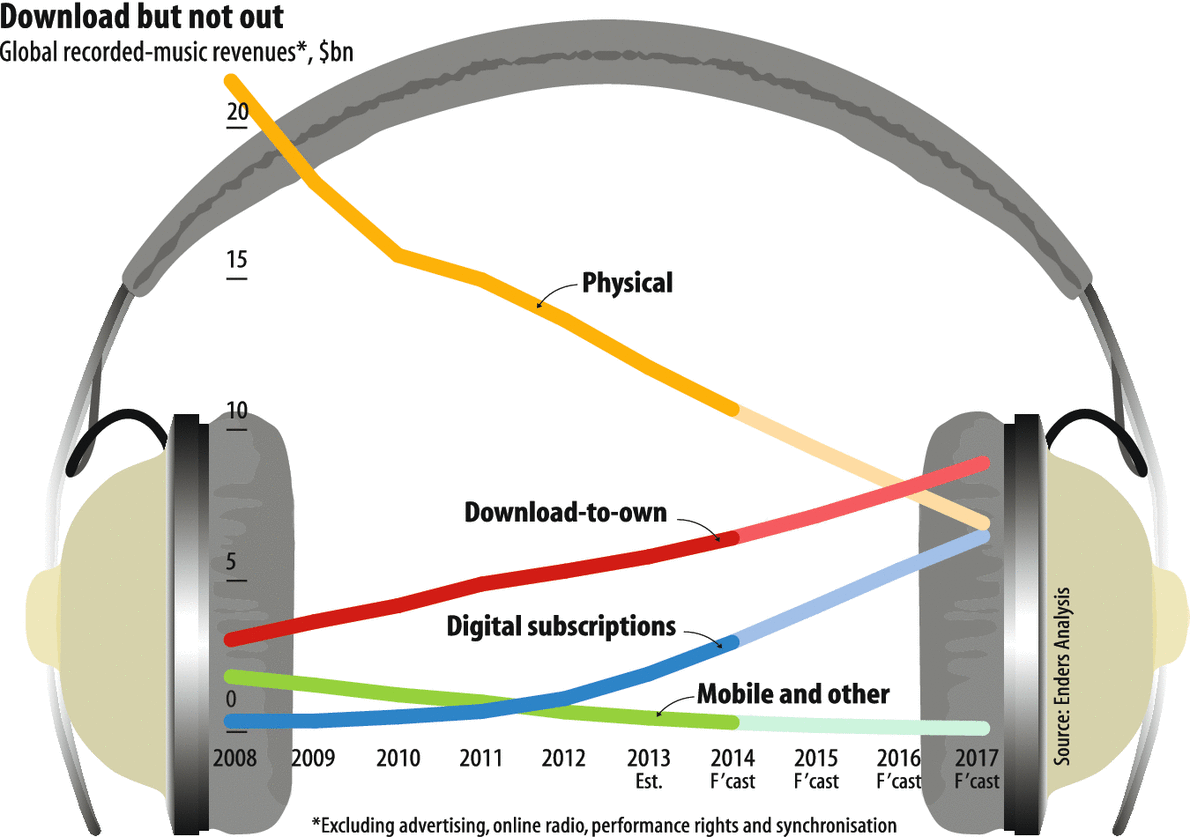
If someone were to compose a song to capture the music industry’s experience over the past decade, it would be a long, mournful ballad. In 2014 the tune is going to change. In the coming year the music industry will grow—modestly, but cheeringly. A turnaround is under way at last. Read more of this post

A new way of assembling things, called metamaterials

Updated: Thursday December 26, 2013 MYT 6:52:24 AM

A new way of assembling things, called metamaterials

matamaterialsnanyanglightlat

Nanyang Technological University (NTU) School of Physical and Mathematical Science researcher Zhang Baile shows how light passes through a set of carefully angled glass blocks to render an object invisible as he talks to the media about his research at NTU in Singapore November 7, 2013. REUTERS/Edgar Su/Files

SINGAPORE: A new way of assembling things, called metamaterials, may in the not too distant future help to protect a building from earthquakes by bending seismic waves around it. Similarly, tsunami waves could be bent around towns, and soundwaves bent around a room to make it soundproof. Read more of this post

New framework needed for trading Singapore corporate bonds; A good example is the 25 per cent plunge experienced by Olam perpetuals when the company was mauled by short-seller Muddy Waters in November last year

New framework needed for trading corporate bonds

Wednesday, Dec 25, 2013

Goh Eng Yeow

The Straits Times

Retail investors frustrated by bank deposit rates and the flatish stock market are often tempted by bonds but anomalies around some Genting issues show that it can be a perplexing game. The casino operator issued two tranches of perpetuals – a bond-like instrument that offers a fixed payout but no shareholder rights – last year. Read more of this post

It is important to prevent the Singapore housing bubble from getting out of hand, National Development Minister Khaw Boon Wan

Housing bubble must be kept in check: Khaw

Thursday, Dec 26, 2013

Rachel Au-Yong

The Straits Times

It is important to prevent the housing bubble from getting out of hand, National Development Minister Khaw Boon Wan said in a Facebook post on Monday. So despite the unhappiness which declining prices could lead to, cooling measures are needed, he added. “We cannot eliminate (the) property cycle but we can try to keep bubbles less bubbly. “This means taking away the punch bowl when the party is getting hot, much to the unhappiness of sellers and developers. But this is the right thing to do.” Sharing a link to a New York Times article on the housing slump in Ireland, where home prices have halved since its peak in 2007, he said “the bubble and its inevitable bust bring huge misery to many”. Read more of this post

Women Take on Philippine Rebels for Peace to Unlock $300 Billion

Women Take on Philippine Rebels for Peace to Unlock $300 Billion

Of the more than a dozen women Philippine President Benigno Aquino appointed to senior administration posts since gaining power in June 2010, one of the most diplomatically sensitive was Miriam Coronel-Ferrer. Read more of this post

Valuations at Extremes Making Winner of Losing Trade: Currencies

Valuations at Extremes Making Winner of Losing Trade: Currencies

Foreign-exchange managers who sold currencies as they became overvalued beat both trend-seekers and traders analyzing interest-rate differentials this year, the first time they’ve won out against these strategies since 2005. Read more of this post

The Gold Rush Spreads From China And India To Saudi Arabia

The Gold Rush Spreads From China And India To Saudi Arabia

Tyler Durden on 12/24/2013 19:59 -0500

In the “west”, the higher the price of gold rose, the more demand there seemingly was by momentum-chasing gamblersinvestors, if only for paper certificates claiming to represent gold, or GLD as the case may be. Conversely, once the momentum turned, the same investors couldn’t be bothered with gld (sic) even at 30% lower. At the same time, in the “east” the higher the price of gold rose, the lower the demand was for physical, which for that extinct breed of deranged gambler known as “value investor” is a familiar concept.”  And now that gold’s price is not only back to early 2011 levels, but is essentially below production costs, demand out of China is off the charts. Demand in India – traditionally the greatest in the world – continues to also at unprecedented levels, although now that official purchases of gold are regulated and limited through capital controls, it is forcing the local population to smuggle in gold through the most innovative of schemes. Read more of this post

Soaring compliance costs clip wings of Mideast, African banks

Soaring compliance costs clip wings of Mideast, African banks

2:07am EST

By David French

DUBAI (Reuters) – While it may be the most common given name in the world, the global banking system seemingly can’t cope with Mohammed and its various different spellings. Read more of this post

Islamic Banks, Stuffed With Cash, Explore Partnerships in West

DECEMBER 25, 2013, 7:11 PM

Islamic Banks, Stuffed With Cash, Explore Partnerships in West

By NATHANIEL POPPER

A noted Muslim law scholar, Yusuf DeLorenzo, recently pored through the books of Continental Rail, a business that runs freight trains up and down the East Coast. Along with examining the company’s financial health, Mr. DeLorenzo sought to make sure that the rail cars didn’t transport pork, tobacco or alcohol. He was brought in by American investment bankers who want to take rail cars bought by Continental Rail and package their leases into a security. The investment is being built for banks that are run according to Islamic law, which, among other things, prohibits investments in those three commodities. If the cars are acceptable, or halal, the deal will be one of the first in the United States to be completed in compliance with Islamic law. Read more of this post

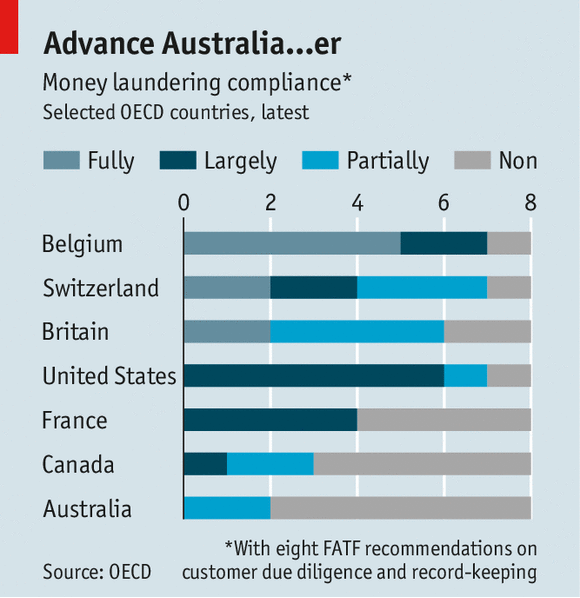
Dirty money: Rich smell; The forum for rich countries issues an overdue mea culpa

Dirty money: Rich smell; The forum for rich countries issues an overdue mea culpa

Dec 21st 2013 | From the print edition

20131221_IRC058

THE leakage of wealth from poor countries through tax evasion, money laundering and other misdeeds is becoming an ever bigger worry for those who want poor countries to get rich. Global Financial Integrity calculates that such “illicit financial flows” have increased sharply over the past decade and may now be $1 trillion a year or more. Even experts who question the campaigning group’s methodology accept that outflows probably exceed incoming aid and investment combined. Read more of this post

Five Lessons of 2013, Guaranteed to Be Forgotten

Five Lessons of 2013, Guaranteed to Be Forgotten

It’s that time of year when journalists let their creativity run rampant to produce 10-Best and 10-Worst lists, revisit the year’s biggest whoppers (look no further than the Oval Office), and offer prognostications for the coming year. With that in mind, I’ve gleaned the five most important lessons from 2013, which are all but guaranteed to be forgotten next year. Read more of this post

12 successful entrepreneurs share their best productivity hacks

12 successful entrepreneurs share their best productivity hacks

Max Nisen, Business Insider | December 22, 2013 7:16 AM ET
For most entrepreneurs and small-business owners, it seems like there are never enough hours in the day. The pressure to make sure everything’s running smoothly means days go quickly and the to-do list easily gets lost amid ever-changing priorities. How can you best use your time to be most effective? We spoke to several successful entrepreneurs about the tips, tricks, and hacks that keep them productive and efficient. Here is some of their best advice.

Hello Design CEO David Lai: Set yourself up for success in the morning.

“How you begin the day is really important,” says Lai, who is also a founder of the award-winning creative agency based in Culver City, California. “I try to get up early, which is hard for me, as I’m not really a morning person. The first thing I’ll do is go for a bike ride, and that really helps me clear my head, relieve some stress, and think about challenges I’m currently facing. It’s important to start each day fresh and energized with the right frame of mind if you’re going to be productive.” Read more of this post

Laksania’s uphill struggle against rising costs; Founder Sim Sin Sin has poured her life savings into Laksania. Now she fears that her staff – 60 per cent of whom have mental or physical disabilities – may soon be out of work. In March, she sold her family’s landed property in Upper Thomson to keep the ailing business afloat, bringing the amount that has gone into keeping Laksania alive to over $2 million.

Laksania’s uphill struggle against rising costs

20131223_laksa_ST

Madam Sim (left) and Ms Tay at the Bugis+ outlet of Laksania. They have offered Groupon promotions this month.

Wednesday, Dec 25, 2013

Nur Asyiqin Mohamad Salleh

The Straits Times

One of Singapore’s first food and beverage social enterprises may have to shut its kitchens for good after facing a host of financial troubles recently. Founder Sim Sin Sin has poured her life savings into Laksania. Now she fears that her staff – 60 per cent of whom have mental or physical disabilities – may soon be out of work. In March, she sold her family’s landed property in Upper Thomson to keep the ailing business afloat, bringing the amount that has gone into keeping Laksania alive to over $2 million. The 52-year-old now lives in a rented house with her family. Madam Sim also stepped down as chief executive officer of cafe chain Secret Recipe earlier this year to focus on her social enterprise. Read more of this post

The Emotional Power of Verbs: Form your characters in terms of actions that will reveal their interior lives

DECEMBER 23, 2013, 9:00 PM

The Emotional Power of Verbs

By KAREN E. BENDER

The characters in my students’ stories were not quite jumping off the page. The characters were clear and beautifully described, but sometimes I felt a bit impatient reading them. The problem was not with the descriptions — my students skillfully created characters with nouns and adjectives,  constructing the characters and their world so that I knew them. The issue was that everything seemed to be still and perfect as a photograph. Read more of this post

The Ideas that Shaped Management in 2013

The Ideas that Shaped Management in 2013

by Katherine Bell  |   12:15 PM December 24, 2013

It’s always tempting at this time of year to try to make a definitive list of the best ideas from the past 12 months. But then we end up debating what counts as best — important? useful? original? all three? — and compiling extremely long lists, struggling to shorten them, and over-thinking it all, when the point really is just to gather some really good reading for you for any free time you happen to find over the holiday. So this year, instead, we thought about the pieces that most surprised us or provoked us to think differently about an intractable problem or perennial question in management, we reviewed the whole year of data to remind ourselves what our readers found most compelling, and we looked for patterns in the subjects our authors raised most frequently and independently of our editorial urging.  The result, I think, is a set of ideas that together are important, useful, and original, and that feel like quite an accurate account of the management concerns many of us shared in 2013. Here’s the list.  See what you think: Read more of this post

In No One We Trust: Inequality is eroding our faith in institutions and our way of life

DECEMBER 21, 2013, 2:39 PM

In No One We Trust

By JOSEPH E. STIGLITZ

In America today, we are sometimes made to feel that it is naïve to be preoccupied with trust. Our songs advise against it, our TV shows tell stories showing its futility, and incessant reports of financial scandal remind us we’d be fools to give it to our bankers. That last point may be true, but that doesn’t mean we should stop striving for a bit more trust in our society and our economy. Trust is what makes contracts, plans and everyday transactions possible; it facilitates the democratic process, from voting to law creation, and is necessary for social stability. It is essential for our lives. It is trust, more than money, that makes the world go round. Read more of this post

A Wordnado of Words in 2013

December 21, 2013

A Wordnado of Words in 2013

By GRANT BARRETT

PRIVACY. Selfie. Geek. Science. Four dictionary publishers each selected one of those words as its word of the year for 2013. But it’s tough to catalog the preoccupations of the year in a single word. There were many flying around that seemed to capture a moment, an emotion, a thought, a new way of doing or describing things, or the larger zeitgeist. Some were new, some not so new, but they all seemed to say something about the times. Here are a few: Read more of this post

Learn from fraudsters to avoid scams

Learn from fraudsters to avoid scams

Wednesday, December 25, 2013 – 11:29

The Japan News/Asia News Network

JAPAN – With losses from various forms of fraud, including remittance fraud, expected to top the previous record of ¥40 billion (S$486 million) this year, police are trying to help people learn from “the enemy” by sharing some common techniques used by con artists. The Metropolitan Police Department seized papers in late September with the instructions: “Don’t interrupt while the other person is talking! First, carefully listen to what the target says.” The papers were found in a condominium in Shibuya Ward, Tokyo, suspected to be a base for a fraud group. Read more of this post

Building a Feedback-Rich Culture

Building a Feedback-Rich Culture

by Ed Batista  |   10:00 AM December 24, 2013

As an executive coach and an experiential educator, I’m a passionate believer in the value of interpersonal feedback. To become more effective and fulfilled at work, people need a keen understanding of their impact on others and the extent to which they’re achieving their goals in their working relationships. Direct feedback is the most efficient way for them to gather this information and learn from it. Read more of this post

Robert Wilson, hedge fund titan, giant of philanthropy leaps to his death after stroke

Hedge fund titan, giant of philanthropy leaps to his death after stroke

By Emily Smith and Dana Sauchelli

December 24, 2013 | 7:10am

Multimillionaire philanthropist Robert W. Wilson, 86, took his own life Monday by throwing himself from his luxury Upper West Side high-rise apartment, just a few months after suffering a debilitating stroke, sources said. The former Wall Street hedge fund titan — who donated hundreds of millions to charity — left a note before leaping at about 11 a.m. from the 16th floor of the famed San Remo, which overlooks Central Park West, cops said. “He was 86 and suffered a stroke a few months ago,” said Wilson’s friend, Stephen Viscusi. “He always said he didn’t want to suffer, and when the time came, he would be ready.” A Detroit native, Wilson rose from humble beginnings to becoming nearly a billionaire, after starting his firm, Wilson Associates, with just $15,000. He would eventually build a Wall Street fortune, which was estimated by Business Week in 2000 to be worth about $800 million. Read more of this post

The advertising industry has turned its greatest asset, people, into a commodity

The advertising industry has turned its greatest asset, people, into a commodity

By George Parker December 24, 2013

George Parker has spent 40 years on Madison Avenue. He’s won Lions, CLIOs, EFFIES, and the David Ogilvy Award. His latest book is “Confessions of a Mad Man.”

With the final series of AMC’s Mad Men being dragged out until 2015, you have to wonder about the stamina of the principal characters. It’s not just the drinking, smoking, and sexual shenanigans they seem to engage in 24/7, but also the impossible deadlines as they strive to come up with “The Big Idea.” Advertising has never been particularly innocuous. A few years ago, a woman working at a Madison Avenue agency was cut in half when the elevator she was stepping into broke loose. There was also a creative director of a major agency who threw himself out of the window of his 14th floor hotel room after he’d been fired. Read more of this post

5 High-Tech Fixes for Patients; Health advances more easily reveal causes of illness, cost of care faster

5 High-Tech Fixes for Patients

Health advances more easily reveal causes of illness, cost of care faster

LAURA LANDRO

Dec. 23, 2013 7:24 p.m. ET

From virtual doctor visits to online diagnoses, information technology is rapidly changing the way patients interact with the health system. Here are some innovations that are catching on more broadly and could improve care in 2014:

Monitor Long-Distance

An electronic intensive-care unit, or eICU, lets critical-care doctors and nurses check on patients in several hospitals from a remote command center with a bank of monitors displaying patients’ vital signs. They can alert bedside staff if they see a subtle change in a patient that could signal a worsening condition. Remote monitoring by specialists is also catching on for emergency rooms and surgical units to help evaluate patients with stroke, seizures and other conditions. Read more of this post

How Lobbyists Will Keep You Hooked on Vitamins

How Lobbyists Will Keep You Hooked on Vitamins

By Paul A. Offit

December 21st 20135:45 AM

No matter how many studies show you’re wasting money and possibly harming your health, dietary supplement makers are selling their own version of science—and reality. This week, the Annals of Internal Medicine—one of the world’s leading medical journals—published three studies evaluating the benefits of vitamins and dietary supplements. The first study determined whether healthy people who received daily multivitamins had a lesser incidence of cancer or heart disease and whether they lived longer. The study was quite large, involving about 400,000 adults. Study participants were randomly divided into two groups: One group received daily multivitamins; the other didn’t. The authors found no difference in any medical outcome. Read more of this post

China to keep controls on property market in 2014: minister

China to keep controls on property market in 2014: minister

5:14am EST

BEIJING (Reuters) – China will maintain controls on its property market in 2014 while increasing the land and housing supply in cities facing big home-price prices, the housing minister said, in a sign authorities will not relax efforts to stabilize housing costs. Home prices in big Chinese cities have repeatedly set records despite a four-year long government campaign to cool the market, adding to the threat of a price bubble and social unrest as housing becomes unaffordable. Read more of this post

China Confronts Workforce Drop With Retirement-Age Delay

China Confronts Workforce Drop With Retirement-Age Delay

China plans to raise the retirement age for the first time since the 1950s, as policy makers confront the prospect of a shrinking workforce that damps economic growth. The age will rise gradually, Hu Xiaoyi, a vice minister of human resources and social security, said this month. China’s compulsory retirement ages, now 50 for most women and 60 for men, are likely in 2020 to be about five years higher than they are now, according to economists surveyed by Bloomberg News. Read more of this post

Ulsan has been the richest city in Korea for four years in terms of personal income

Ulsan remains top city for per capita income

Dec 24,2013

BY SONG SU-HYUN [ssh@joongang.co.kr]

Ulsan has been the richest city in Korea for four years in terms of personal income, a government report said. According to Statistics Korea yesterday, per capita income of Ulsan citizens was 18.31 million won ($17,257) last year, 24 percent higher than the national average of 14.77 million won. Seoul was second (17.52 million won), followed by Busan (15.05 million won). South Jeolla was the poorest region with a per capita income of 12.49 million won, the report showed. In terms of private consumption, Seoul was on top at 17.51 million won, followed by Ulsan with 14.13 million won. The total personal income of 16 cities and provinces reached 739 trillion won, up 3.1 percent from 2011. Seoul achieved 289 trillion won, the largest regional gross domestic product. The total GDP of the 16 cities and provinces of the country stood at 1,275 trillion won last year, up 2.7 percent. However, adjusted for inflation, the total figure rose 1.9 percent, slowing from a 3.3 percent growth a year earlier.
Gyeonggi was second to Seoul in terms of GDP with 251 trillion won. Last-place Jeju produced about 12 trillion won. The total GDP of Seoul metropolitan areas stood at 600 million won, up 2.4 percent from 2011. The proportion of Seoul metropolitan areas to the total GDP declined 0.1 percentage point from a year earlier to 47.1 percent. By industry, agricultural and fisheries accounted for 16.5 percent of the regional economy of North Gyeongsang. Mining and manufacturing businesses prevailed in Gyeonggi, representing 23 percent of GDP.

The eco-friendly next-generation industrial zone in Deokjin-gu, Jeonju, also known as “carbon valley,” was witnessing the foundation of a string of carbon fiber material related companies

Fiber cities revive on industrial new material

2013.12.24 17:43:07

The eco-friendly next-generation industrial zone in Deokjin-gu, Jeonju, also known as “carbon valley,” was witnessing the foundation of a string of carbon fiber material related companies Monday. The industrial zone already houses 35 companies including DACC, which makes high-performance aircraft brake disks by using carbon fiber composites, and CNF, a specialist in carbon fiber production and related equipment design. Jeonju, which used to be the heart of Korea’s prominent textile companies such as Samyangsa and Taihan Textile in 1980s, found an opportunity in the crisis. The city audaciously walked away from the apparel textile business as it slid down the value chain and switched to industrial textile. Jeonju attracted many carbon fiber research and development facilities, an emerging material in the car and aerospace sectors for its high intensity and lightweight, and established pilot carbon fiber production facilities for the first time in the country in 2007. Industrial fiber as new material is also emerging as a next-generation growth driver of Daegu and Busan used to be conventional hubs of the textile industry. Daegu and North Gyeongsang province are searching for a breakthrough in the “super fiber.” The flagship example is Ukseong Chemical, a textile snow chain manufacturer based in Seongju-gun in the province. Ukseong Chemical used to make textile for shoes, but confronted with a huge challenge from Chinese competitors, the company turned to industrial textile products since 2007 and successfully developed textile-based snow chains. Meanwhile, the number of textile companies in Busan is projected to skyrocket from 3,704 in 2010 to 5,835 by 2020, said the Korea Institute for Industrial Economics & Trade.