How To Build A Consumer Internet Unicorn; The 11 ingredients of billion dollar consumer web products

How To Build A Consumer Internet Unicorn

The 11 ingredients of billion dollar consumer web products.

Niko Bonatsos in Question Everything

Aileen Lee and her team recently authored a great blog post about the key characteristics of unicorn IT companies (Unicorn = U.S. based software companies that are valued at over $1 billion by public or private investors). Evan Williams, who co-founded Blogger, Twitter and the venerable Medium,revealed his secret formula for getting rich online as such: “Take a human desire, preferably one that has been around for a really long time… Identify that desire and use modern technology to take out steps.” Building on Aileen’s and Evan’s thoughts (hard acts to follow), I would like to propose a simple framework for the shared characteristics of billion dollar+ consumer web products. The ingredients, if you will. Read more of this post

The Open-Sorcerers: Some magicians are embracing the open-source ethos—but that doesn’t mean spilling every secret.

The Open-Sorcerers: Some magicians are embracing the open-source ethos—but that doesn’t mean spilling every secret.

By Linda Rodriguez McRobbie

Amagician, it is said, never reveals his (or, in very rare cases, her) secrets. Unless he’s involved with open-source magic—in which case he will happily risk running afoul of the Alliance of Magicians. Read more of this post

Let’s Bring The Polymath — and the Dabblers — Back

Let’s Bring The Polymath — and the Dabblers — Back

BY SAMUEL ARBESMAN

12.13.13

I noticed recently that books with the phrase “The Last Man Who Knew Everything” all share in common that their subjects lived during the period close to the Scientific Revolution, roughly between 1550 to 1700. (The examples I own are about Athanasius Kircher, a Jesuit priest born in 1602; Thomas Young, who studied topics such as optics and philology and was born in 1773; and Philadelphia area professor Joseph Leidy, who was born in 1823.) Read more of this post

Thinning the Ph.D. Herd: How to ease the miseries of grad school? Make sure there are fewer grad students.

Thinning the Ph.D. Herd: How to ease the miseries of grad school? Make sure there are fewer grad students.

By Rebecca Schuman

Faculty and graduate students at Johns Hopkins University, an elite privateresearch institution that costs undergrads $61,000 per year, are up in armsabout a new strategic plan that proposes sweeping changes (and cuts) to its Ph.D. programs. Some 275 graduate students, concerned about the viability of their departments, have petitioned the university to reconsider, arguing to Inside Higher Ed that such downsizing could be emulated around the country if it takes effect. But these grad students should be more concerned about their viability after the Ph.D.—which is grim. Johns Hopkins knows this, and is taking drastic but needed measures. I’m all for it, and I’d be delighted, not dismayed, if other universities emulated this strategy. Read more of this post

Is Volatility for Misguided Geeks?

Is Volatility for Misguided Geeks?

Posted DEC 18 2013 by DAVID FOULKE in TURNKEY BEHAVIORAL FINANCEUNCATEGORIZED

Warren Buffett doesn’t like it when people use volatility to measure risk. He succinctly describes his criticism:

We bought The Washington Post Company at a valuation of $80 million back in 1974. If you’d asked any one of 100 analysts how much the company was worth when we were buying it, no one would have argued about the fact that it was worth $400 million. Now, under the whole theory of beta and modern portfolio theory, we would have been doing something riskier buying stock for $40 million than we were buying it for $80 million, even though it’s worth $400 million — because it would have had more volatility. With that, they’ve lost me. Read more of this post

Smart Beta And Tourist Investors

Smart Beta And Tourist Investors

December 16, 2013 By Rick Ferri

Wall Street is always coming up with cunning new marketing techniques to attract tourist investors. These are less-sophisticated individual investors and advisers who are easily wowed by glitzy industry trends, only to abandon them when the strategy falls short of expectations. Read more of this post

Adults Are Increasingly Reading Children’s Books

Adults Are Increasingly Reading Children’s Books

ALEXANDRA ALTER

Dec. 5, 2013 7:40 p.m. ET

R.J. Palacio’s best-selling novel “Wonder” was born in a moment of panic. She was getting milkshakes with her two sons in Brooklyn when she saw a little girl with a severe facial deformity. She rushed her sons away as her three-year-old began to cry. She instantly regretted it, and wished she’d stayed to talk to the girl. That night, she scribbled the first sentence of a novel on a Post-it Note: “My name is Ian. To me, I’m an ordinary kid.” Read more of this post

James Montier on Today’s Investment Fashions; Montier snaps at smart beta and risk parity

James Montier on Today’s Investment Fashions

Montier snaps at smart beta and risk parity.

By John Rekenthaler | 12-11-13 | 02:25 PM | Email Article

(Maxwell) Smart Betas
James Montier of GMO’s asset-allocation team (striking a blow against grade inflation, that appears to be his official title) is among the fund industry’s top writers. He tackles important subjects, glides past the distracting details without oversimplifying, and knows his material. His letters are on my short list. Read more of this post

A Noble Lie: Why it’s OK to sin a little and “market-time”–provided you do it in a contrarian fashion.

A Noble Lie: Why it’s OK to sin a little and “market-time”–provided you do it in a contrarian fashion.

By Samuel Lee | 12-10-13 | 06:00 AM | Email Article

A common nugget of wisdom passed down from on high to the masses is to “buy and hold,” which really means several things: Set fixed allocations to stocks, bonds, and cash; dollar-cost average into the portfolio with periodic purchases; and, above all, stay the course. I tell investors to do these things all the time, too, because on the whole it’s good advice. Read more of this post

Meet Sir William Petty, the man who invented economics

Meet Sir William Petty, the man who invented economics

Dec 21st 2013 | From the print edition

WILLIAM PETTY was an innovation machine. He designed an early form of catamaran, conceived of a mechanical grain planter, proposed attaching engines to boats and patented a “double-writing” instrument (it produced an extra copy of whatever a writer put down on paper). Petty, who died at Christmas in 1687, was also an innovator in the world of theories. By tinkering with data and simple models, this little-known Englishman came up with many of the ideas—how to measure GDP, why the money supply and banks matter, how lasting unemployment affects the economy—that form the bedrock of modern economics. Read more of this post

Scientific publication: A Nobel prize-winner attacks elite journals

Scientific publication: A Nobel prize-winner attacks elite journals

Dec 14th 2013 | From the print edition

BLUNT criticism is an essential part of science, for it is how bad ideas are winnowed from good ones. So when Randy Schekman, one of the 2013 crop of Nobel prize-winners (for physiology or medicine, in his case), decided to criticise the way scientific journals are run, he did not hold back. Read more of this post

Once treated with scorn, randomised control trials are coming of age

Once treated with scorn, randomised control trials are coming of age

Dec 14th 2013 | From the print edition

IT ALL began with a white envelope. Inside, a letter from the provost of the Massachusetts Institute of Technology offered three young economists at MIT $100,000 to spend as they wanted (those were the days). Two of them, Esther Duflo and Abhijit Banerjee, used the money to set up an organisation to run “randomised control trials” (RCTs), an experimental technique a bit like drugs trials, but for economics. To test if, say, boosting teachers’ pay improved educational outcomes, an RCT would take a collection of comparable schools, randomly assign higher wages to some teachers but not others, and see what happens. The organisation, called J-PAL (to give it its full title, the Abdul Latif Jameel Poverty Action Lab), has just celebrated its tenth anniversary. Its methods have transformed development economics. Read more of this post

Glorious revolutions and their discontents

Glorious revolutions and their discontents

Dec 4th 2013, 13:05 by C.R. | LONDON

IN THE past two decades, economists have become increasingly interested in how institutions contribute to economic growth. They are particularly enthused by the view that institutions guaranteeing a “credible commitment” to liberal limits on state action—and repayment of the national debt—caused the industrial revolution to get off the ground in 18th-century England. This may at first appear to be an academic debate of only esoteric interest. But such views have quickly become dominant within economics. And some related conclusions—such as an emphasis on democracy and property rights as necessary prerequisites for sustained economic growth—came to influence the so-called Washington consensus of global economic governance. Read more of this post

Temples of delight: Museums the world over are doing amazingly well, says Fiammetta Rocco. But can they keep the visitors coming?

Temples of delight: Museums the world over are doing amazingly well, says Fiammetta Rocco. But can they keep the visitors coming?

Dec 21st 2013 | From the print edition

20131221_SRC114

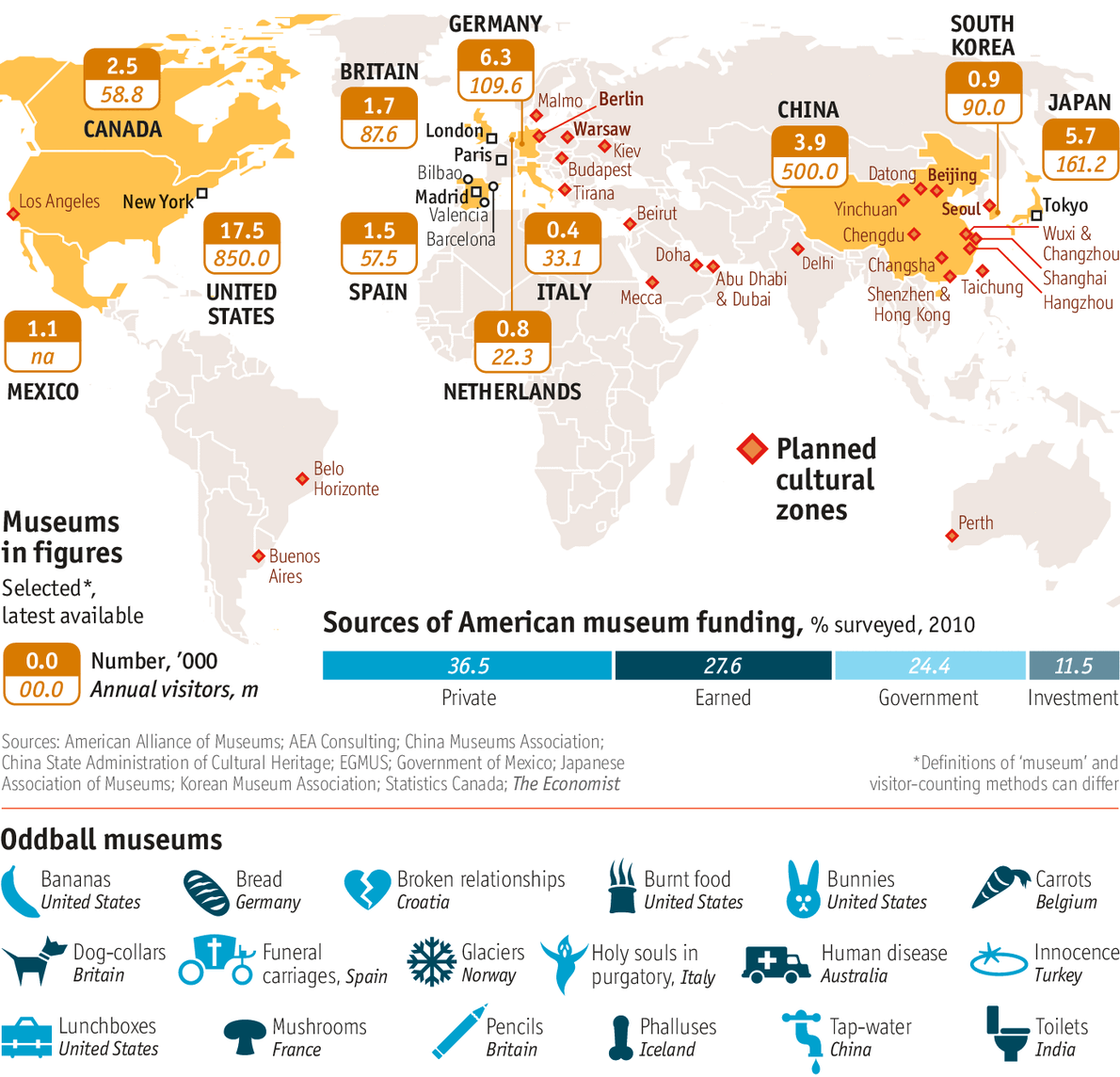
MUSEUMS USED TO stand for something old, dusty, boring and barely relevant to real life. Those kinds of places still exist, but there are far fewer of them, and the more successful ones have changed out of all recognition. The range they cover has broadened spectacularly and now goes well beyond traditional subjects such as art and artefacts, science and history (for a sample of oddball specialities, see chart). One of the biggest draws is contemporary art. Read more of this post

Solina Chau: the woman behind HK tycoon Li Ka-shing

Solina Chau: the woman behind HK tycoon Li Ka-shing

Staff Reporter

2013-12-18

An interview with Hong Kong property tycoon Sir Li Ka-shing by Guangzhou’s Southern Metropolis Daily has inadvertently thrown Solina Chau Hoi-shuen, a partner in Li’s Cheung Kong Group and director of the Li Ka Shing Foundation, into the spotlight. Read more of this post

Champagne was one of the first industries in the modern world that women shaped

Champagne was one of the first industries in the modern world that women shaped

How widows broke the glass ceiling

BY THOMAS ADAMSON

AP

DEC 15, 2013

REIMS, FRANCE – For Champagne to become the tipple it is today — popped at weddings, quaffed in casinos and smashed against ships — a few men had to die: young ones married to clever women. Read more of this post

Being auditor is about serving people’

013-12-20 19:32

‘Being auditor is about serving people’

Ko Dong-hwan
Shim Ho, director general at the Board of Audit and Inspection, firmly believes that auditors are to serve the nation and the people by conducting fair and objective audits. Read more of this post

First Malaysian to head to Harvard since 2010

First Malaysian to head to Harvard since 2010

Saturday, December 21, 2013 – 18:25

The Star/Asia News Network

20131221_eleasha_star

PETALING JAYA – Former St George’s Girls’ School student Eleasha Chew (pic) received the best Christmas present this year when she received an offer from Harvard University in her email. The 19-year-old from Penang ended the “drought” by being the first Malaysian to be accepted into the prestigious institution since 2010. Read more of this post

Who Says Laughter’s the Best Medicine? A new scholarly review from a British medical journal describes many harmful effects wrought by laughter

DECEMBER 20, 2013, 12:01 AM

Who Says Laughter’s the Best Medicine?

By JAN HOFFMAN

Just in time to protect patients from the dangers of holiday cheer, a new scholarly review from a British medical journal describes many harmful effects wrought by laughter. Read more of this post

Serendipity surrounds us in modern life, even though we don’t often think about the serendipity involved in so many inventions that changed the world

2013-12-06 17:08

Serendipity

Hyon O’Brien
The 18th century litterateur Horace Walpole was taken by a Persian fairy tale called “The Three Princesses of Serendip,” whose heroes, as he said, “were always making accidental discoveries of things they were not in quest of.”   Read more of this post

The Financial Crisis: Why Have No High-Level Executives Been Prosecuted?

The Financial Crisis: Why Have No High-Level Executives Been Prosecuted?

Jed S. Rakoff

January 9, 2014 issue

rakoff_1-010914_jpg_600x684_q85

Five years have passed since the onset of what is sometimes called the Great Recession. While the economy has slowly improved, there are still millions of Americans leading lives of quiet desperation: without jobs, without resources, without hope. Read more of this post

The Downfall of John Taylor and FX Concepts, the Largest FX Hedge Fund

Tuesday, December 10, 2013 2:57:48 PM

The Downfall of John Taylor

From aiCIO magazine’s December issue: Generations of hedge funds rose and fell; FX Concepts endured. Then, the unshakeable disintegrated. So how did John Taylor’s steady reign end in ruin? Leanna Orr reports.

The Champagne was flowing at the 21 Club in New York City. It had been a good year. FX Concepts employees, gathered at the 2006 holiday dinner party, quieted down as the firm’s founder, chairman, and CEO took to the front of the room for his address. He held up a brick. Did anyone know what it meant, John Taylor asked. Then he filled them in: On top of the performance and trading bonuses, which promised to be bountiful, FX Concepts was sending all 60 or so staff members and their partners to the BRIC country of their choosing—first class all the way. Read more of this post

Geography and American Destiny; How the American economy was built on smuggling.

SATURDAY, DECEMBER 21, 2013

Geography and American Destiny

By JOHN STEELE GORDON | MORE ARTICLES BY AUTHOR

How the American economy was built on smuggling.

BA-BD725_LongVi_G_20131220080718

Imagine that North America was somehow flipped, so that East was West and West was East. The continent’s West Coast, as we know it, would face the Atlantic and Europe. That would have greatly affected the history of this country. Read more of this post

U.S. Military Lingo: The (Almost) Definitive Guide; Oxygen Thief: A useless soldier, or one who loves to hear himself or herself talk

U.S. Military Lingo: The (Almost) Definitive Guide

by BEN BRODY Read more of this post

Confessions of an Institutional Investor

Confessions of an Institutional Investor

by Downtown Josh Brown – December 6th, 2013, 7:00am

Josh here – the other day I did a post about the amazing complexity and obsession with tail risk that’s caused so many professionally-managed investment pools to miss the market over the last few years (see: I don’t understand). Every general fights the last war, as they say, and a portfolio geared toward having a 2008-like event every year is a loser. Why invest at all if that’s your expectation? I was inundated with responses to this –  from professional investors to fiduciaries who sit on board and councils to my colleagues who advise these gargantuan pools of assets.  One incredible response I share with you below. I am leaving the author of this anonymous given their current position, but this is about as raw and honest a take from the inside as you will ever come across. No one working in the field would ever be able to say this out loud. The intent of this author is to (hopefully) influence the current investment management debate. At the institution the author works for, no one is interested in deviating from the status quo, no one wants the risk of picking their heads up and trying something new. The author believes that the consequences of these systemically failed investment policies will ultimately represent a tragedy of lost opportunity and perhaps even unfunded needs. Enjoy! – JB Read more of this post

Pharma Cost Cuts Could Be a Tonic for Quintiles

HELEN THOMAS

Dec. 20, 2013 12:44 p.m. ET

The pharmaceutical industry is getting into virtual reality. Investors wanting to play the game should consider U.S.-listed Quintiles Transnational HoldingsQ +0.58% Drug makers have in recent years turned to contract-research organizations to carry out large clinical trials needed to win approval for new medicines, an outsourcing trend known as “virtualization.” The global market for outsourced development is about $26 billion, estimates Jefferies. Read more of this post

Health care in America: Going public, and private; The fuss over Obamacare’s teething troubles is obscuring a bigger story for investors: American health care is gradually being both nationalised and privatised

Health care in America: Going public, and private; The fuss over Obamacare’s teething troubles is obscuring a bigger story for investors: American health care is gradually being both nationalised and privatised

Dec 21st 2013 | NEW YORK | From the print edition

20131221_WBC057 (1)

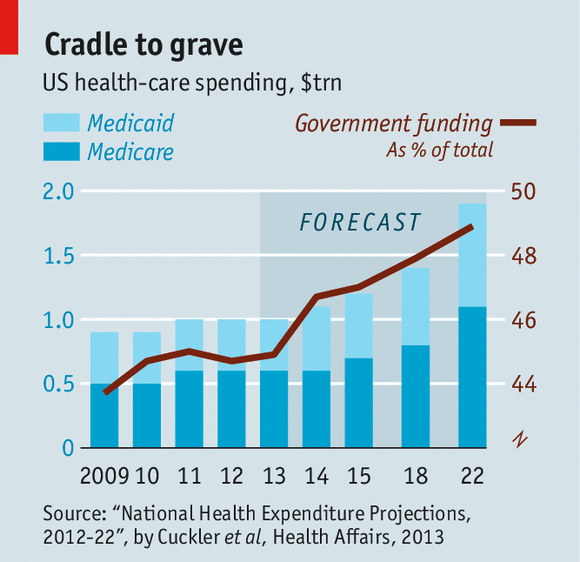
FOR the past three months American politicians have been rowing over the disastrous launch of Obamacare’s website, on which people can shop for health insurance. The new online “exchanges”, created under America’s health reforms to provide cheap private care for millions of uninsured people, are so far the most visible element of Obamacare. Once the software glitches are fixed, sellers of private health plans should gain new customers. But in the years ahead they have a far bigger opportunity: as more Americans come to depend on the government to pay for their treatments, more of them will have their publicly funded health care managed in some way by private insurers. Read more of this post

For the Mentally Ill, Finding Treatment Grows Harder

For the Mentally Ill, Finding Treatment Grows Harder

New health-care law may add to crunch for enough treatment

GARY FIELDS and JENNIFER CORBETT DOOREN

Updated Dec. 20, 2013 10:35 p.m. ET

WSJ reporter Gary Fields discusses his series about the shortage of treatment for the mentally ill and its impact on families, communities and the criminal justice system. Read more of this post

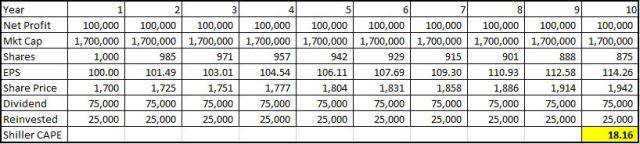
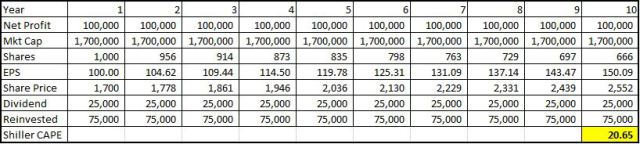
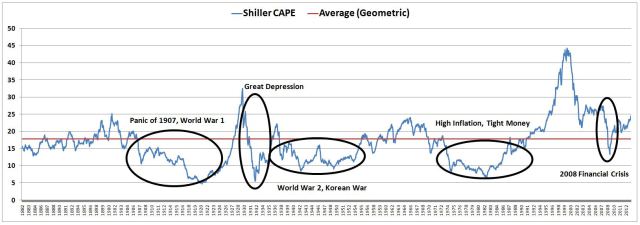
When a Good Indicator Goes Bad; Fixing the Shiller CAPE: Accounting, Dividends, and the Permanently High Plateau

When a Good Indicator Goes Bad

By John Rekenthaler | 12-17-13 | 02:45 PM | Email Article

newshiller31 reppf1 reppf2 correlcoeff8 cape-pf2 cape-pf futret shillerdiv2 shillerdiv1 shillercape pfshiller2

The New Normal
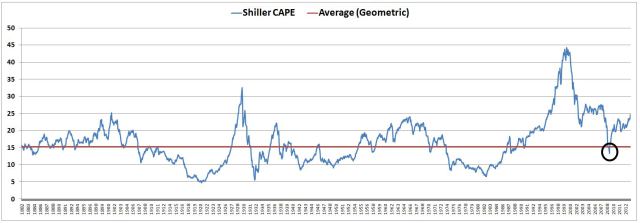
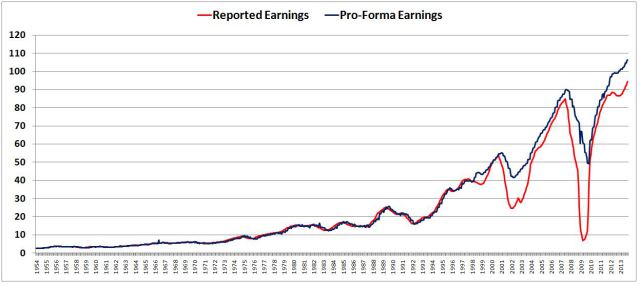
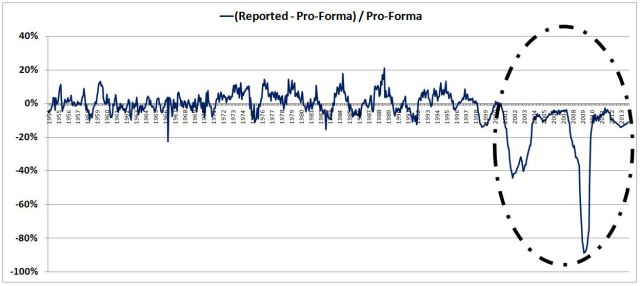
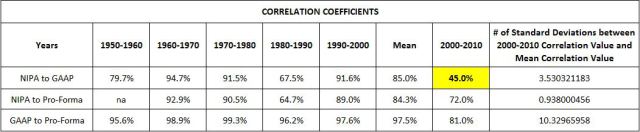
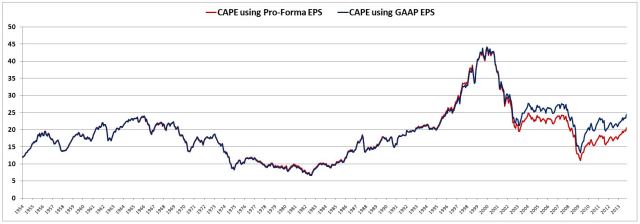
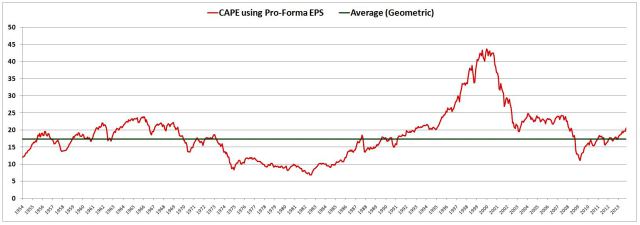
The vaunted cyclically adjusted price/earnings ratio, or CAPE, developed by Nobel Laureate Robert Shiller, is busted. The article “Fixing the Shiller CAPE: Accounting, Dividends, and the Permanently High Plateau” from Jesse Livermore’s blog “Philosophical Economics” is the best attempt yet at explaining why. Read more of this post

Japan Inc. builds mountain of cash

Japan Inc. builds mountain of cash

BY TORU FUJIOKA

BLOOMBERG

DEC 20, 2013

Japanese companies’ cash holdings rose to a record last quarter, highlighting Prime Minister Shinzo Abe’s struggle to spur the investment and wage increases needed to end a 15-year deflationary malaise. Corporate holdings of cash and deposits rose to ¥224 trillion, up 5.9 percent from a year earlier, according to a Bank of Japan report released Thursday. Read more of this post