China’s PayPal extends its tentacles into US with big travel partnership

China’s PayPal extends its tentacles into US with big travel partnership

BY HAMISH MCKENZIE 
ON NOVEMBER 5, 2013

Chinese Internet companies are getting busy in the US.

While Tencent, Alibaba, and UC Web are making big-dollar investments in US startups, successful IPOs for travel portal Qunar and classifieds site 58.com have further improved the prospects for Chinese tech companies going public in the US. Now, ecommerce giant Alibaba, which is itself expected to soon file to go public, is extending its payments platform, Alipay, in the US. Read more of this post


Cargill to change beef labeling in wake of ‘pink slime’ furor

Cargill to change beef labeling in wake of ‘pink slime’ furor

1:06pm EST

By P.J. Huffstutter

CHICAGO (Reuters) – Cargill Inc, one of the world’s largest beef processors, will begin labeling when its finely textured beef is used in the making of its U.S. ground beef products, the company told Reuters on Tuesday. The move by the U.S. meat manufacturer comes as consumers increasingly demand more transparency in how agribusiness companies make the food they eat and how these products are disclosed on the packaging. Read more of this post

China May Phase Out Sugar Stockpiling Program, NDRC Says

China May Phase Out Sugar Stockpiling Program, NDRC Says

China, the second-biggest sugar consumer, may phase out a stockpiling program that boosted inventories to a record while failing to lift domestic prices, according to an official at the country’s top planning agency. The effort cost the government almost $3 billion in the past two years, according to an estimate by Xinhu Futures Co. It may be partially replaced by direct subsidies to cane and beet farmers as early as the crop year beginning October 2014, said Zhao Lihua, a director at the economy and trade division of the National Development and Reform Commission. Read more of this post

Whitney Tilson: Observations From My Trip To China

Observations From My Trip To China

I got back on Friday afternoon from a fascinating 10-day trip to China – the first time I’ve been to mainland China in 21 years. I spent the first half of my trip in Shanghai, China’s most populous, modern, wealthy, capitalistic city, and the second half in Tengchong, in remote, rural, south-central China, bordering Burma, attending a conference of Teach for All, a growing network of Teach for America-like organizations in 32 countries (see this op ed in the NY Times, Meet the Makers, by Tom Friedman about it). I’ve posted pictures and comments from each part of my triphere and here.

I want to share a few observations about China – with the caveat that I am very emphatically not holding myself out as an expert on the country. I’m just endlessly fascinated by China on many levels, most importantly as an investor. Though I’m primarily U.S. focused, China has become such a large and rapidly growing part of the world economy that I can’t ignore it – if China sneezes, the world (and my portfolio) will catch a cold. Read more of this post

Internet Finance: A Brave New World in China

Internet Finance: A Brave New World

11-05 15:45 Caijing

Competition and cooperation between dotcom companies and financial institutions will help upgrade the financial industry and ultimately benefit individual investors.

By staff reporters You Xi, Liu Wenjun, and Zhao Jingting
Internet companies, given their massive user bases, have achieved great success upon expanding into the financial sector, especially in the areas of online payment and fund sales.
A case in point is Baifa. A wealth management product co-offered by search giant Baidu and domestic fund company ChinaAMC, Baifa raked in over 1 billion yuan in sales revenue in just a few hours when it debuted Oct. 28. Baifa easily broke the record set by competing product Yu’ebao in late June. Yu’ebao, a currency fund launched by e-commerce giant Alibaba Group, raised 50 million yuan on its debut day, which sent a shockwave across the industry.  Read more of this post

Insuring a Path to Chinese Reform; Deposit Insurance Would Be an Important First Step in China’s Big Financial Reforms

Insuring a Path to Chinese Reform

Deposit Insurance Would Be an Important First Step in China’s Big Financial Reforms

AARON BACK

Nov. 5, 2013 7:28 a.m. ET

China’s reformers are banking on deposit insurance. As Communist Party leaders meet this weekend for the secretive “third plenum,” there are high hopes the parley will lead to big bang changes to the financial system. Deposit insurance for savers would be an important first step. Investors should expect movement on this soon. The U.S. Federal Deposit Insurance Corp. recently extended a memorandum of understanding with China’s central bank, a signal that momentum is building. Read more of this post

Chinese Premier Warns over Money Printing as Deficit Enlarges

Chinese Premier Warns over Money Printing as Deficit Enlarges

11-05 16:08 Caijing

Short-term stimulus to prop up economic growth by enlarging fiscal deficits and money supply is not sustainable, Li said.

Chinese Premier Li Keqiang has recently warned that printing more money is likely to push up inflation in the world’s second largest economy as the government’s deficit accumulates fast. “M2, the broader measure of money supply in our country has exceeded CNY100trillion by the end of March, that is already twice of the GDP,” Li said in a speech at the 16th national congress of the All-China Federation of Trade Unions (ACFTU) on October 21st.   Read more of this post

China eyes adopting international law to spark life into trade zones

China eyes adopting international law to spark life into trade zones

4:09pm EST

By Saikat Chatterjee and Michelle Chen

HONG KONG (Reuters) – China is considering the use of international law in a big push to get free trade zones up and running to promote the use of the yuan in global trade, which could challenge Hong Kong longer term as the main offshore center for the currency. Sources said Chinese leaders have been discussing the adoption of an international legal system in the free trade zones (FTZs) for the first time to help lure foreign companies, although views are varied. Read more of this post

China army says roots out “illicit” apartments in graft fight

China army says roots out “illicit” apartments in graft fight

Tuesday, November 5, 2013 – 18:19

Ben Blanchard

Reuters

BEIJING – China’s People’s Liberation Army has discovered in a corruption probe that its troops “illicitly kept” more than 8,000 apartments and 25,000 vehicles, state media said on Tuesday. But those who benefitted will apparently escape punishment and only have to give them up. President Xi Jinping, who as chairman of the Central Military Commission is also China’s top military official, has called corruption a threat to the Communist Party’s very survival, and vowed pursue powerful “tigers” as well as lowly”flies”. Read more of this post

Aging China Draws Bets on Senior Housing

Aging China Draws Bets on Senior Housing

Global Property Firms Partnering With Chinese Developers

ESTHER FUNG

Nov. 5, 2013 7:17 p.m. ET

SHANGHAI—China has long doted on its elders. Now they are getting attention from another group: foreign investors. A number of global property firms are joining domestic developers in banking on a boom in elderly housing as China’s population ages. Merrill Gardens Related, a joint venture between real-estate developer Related Cos. and senior-housing operator Merrill Gardens of the U.S., is working with local developers to build facilities for the elderly in Shanghai, Harbin and Suzhou. The venture doesn’t have equity stakes in the projects but it plans to acquire majority stakes in several next year. Read more of this post

Privatization Raises Billions in Australia, New Zealand

Privatization Raises Billions in Australia, New Zealand

State Governments Join the Action in Australia

GILLIAN TAN

Nov. 5, 2013 8:10 a.m. ET

AM-BA948_AMONEY_G_20131105061812

Australia and New Zealand rank among the global leaders in privatizations this year, raising billions of dollars as lawmakers seek to cut debt and plug budget deficits. Their privatization sprees have injected needed cash into government coffers and freed the governments to focus on their core missions while injecting life into both nations’ markets. Last week’s listing of New Zealand’s Meridian Energy MELCA.NZ 0.00% , which raised US$1.56 billion in the country’s biggest-ever initial public offering, followed Z Energy’s US$678 million IPO in August and Mighty River Power‘s MYT.AU +1.05% US$1.4 billion offering in May. Read more of this post

Australian drug makers out-muscle miners in IPO surge

Australian drug makers out-muscle miners in IPO surge

4:07pm EST

By Maggie Lu Yueyang

SYDNEY (Reuters) – With a track record of funding junior miners, Australia’s IPO market is now warming up to something that might be just as risky as the diggers – drug makers. Mining stocks have come under pressure over the past year as Australia’s decade-long mining investment boom fades and top consumer China takes a slower lane to growth. Investors with an appetite for risk, who may previously have been lured by the promise of riches under Australia’s vast Outback, are now turning their attention to start-up drug makers. Read more of this post

Casinos have trumped noodle makers in Asia’s stock markets this year as investors become more concerned about buying into the Asian consumption story.; Bargains Harder to Find Among Consumer Stocks

In Asia, Consumer Discretionary Sector Outperforms

Bargains Harder to Find Among Consumer Stocks

DANIEL INMAN and JAKE MAXWELL WATTS

Nov. 5, 2013 5:59 a.m. ET

Casinos have trumped noodle makers in Asia’s stock markets this year as investors become more concerned about buying into the Asian consumption story. Buying stocks that stand to benefit from Asia’s rising affluence has proved popular for years, especially in rapidly expanding economies like China and Southeast Asian markets such as Thailand and the Philippines. But investors are now shifting their attention away from staple goods toward consumer-discretionary companies. Read more of this post

Underdog Indian politician speaks for common man

Underdog Indian politician speaks for common man

ArvindK-AFP

Wednesday, November 6, 2013 – 05:48

Nirmala Ganapathy

India Correspondent In New Delhi

The Straits Times

“Our most important agenda is a corruption-free Delhi,” said Indian politician Arvind Kejriwal, squinting into a webcam in his campaign office in Delhi. Watching him were about 50 Indians sitting miles away in a room in Singapore. They listened quietly as Mr Kejriwal – a newly minted politician of the Aam Admi or Common Man Party – talked about bringing in strict anti-corruption legislation and transparency in government – if he wins the Delhi assembly elections next month. Then he got down to the nuts and bolts. Read more of this post

Tariff dodging takes its toll on India’s highway developers

Tariff dodging takes its toll on India’s highway developers

4:12pm EST

By Matthias Williams

NEW DELHI (Reuters) – Flashing lights on the roof, tailgating politicians’ motorcades, smashing up toll booths, and beating up toll collectors. Welcome to India’s network of privately run highways, where endemic toll dodging is a drag on the finances of road operators such as GVK Power and Infrastructure (GVKP.NS: Quote, Profile, Research, Stock Buzz) and Reliance Infrastructure (RLIN.NS: Quote, Profile, Research,Stock Buzz), and a deterrent to private investment in a country where poor infrastructure shaves an estimated 2 percentage points from economic growth each year. Read more of this post

Glaxo to Lupin Fight Traders to Revive Margins: Corporate India

Drugmakers from GlaxoSmithKline Plc (GSK) to Lupin Ltd. (LPC) are grappling with Indian distributors, whose demand for maintaining commissions threatens to erode profits after the South Asian nation imposed price controls. Talks are under way after traders temporarily boycotted some treatments until their demands were met, Nilesh Gupta, managing director of Lupin, a maker of anti-tuberculosis medicines, said in an interview. Distributors want the terms of their commission to be restored after drugmakers slashed margins for traders following India’s move to cap prices of 348 essential remedies. Read more of this post

Hong Kong: Moving under to avoid dead end

Hong Kong: Moving under to avoid dead end

Wednesday, November 6, 2013 – 04:46

Li Xueying

Hong Kong Correspondent

The Straits Times

Gone underground: train tunnels, a garbage compact centre, a sewage treatment plant and an explosives depot. Heading down under: a data centre, a government archive and even sports halls. Burrow deeper into the minds of planning experts and one comes up with visions of an underwater city under Victoria Harbour – a pedestrian corridor with shops and entertainment facilities that connect Hong Kong Island and Kowloon. There is also a proposal for a subterranean road network under jam-packed Mongkok in Kowloon, so as to free up more ground-level space for shoppers and tourists. As Mr Samuel Ng, chief geotechnical engineer at the government’s Civil Engineering and Development Department, states categorically: “We have to move the city underground; otherwise it’s a dead end for Hong Kong.” Read more of this post

South Korea is stuck with Internet Explorer for online shopping because of security law

South Korea is stuck with Internet Explorer for online shopping because of security law

By Chico Harlan, Published: November 5

SEOUL — South Korea is renowned for its digital innovation, with coast-to-coast broadband and a 4G LTE network that reaches into Seoul’s subway system. But this tech-savvy country is stuck in a time warp in one way: its slavish dependence on Internet Explorer. For South Koreans who use other browsers such as Chrome or Safari, online shopping often begins with a pop-up notice warning that they might not be able to buy what they came for. Read more of this post

South Korea Markets Enjoy a Renaissance

South Korea Markets Enjoy a Renaissance

ANJANI TRIVEDI

Nov. 5, 2013 7:11 p.m. ET

MI-BZ512A_MKTLE_G_20131105174809

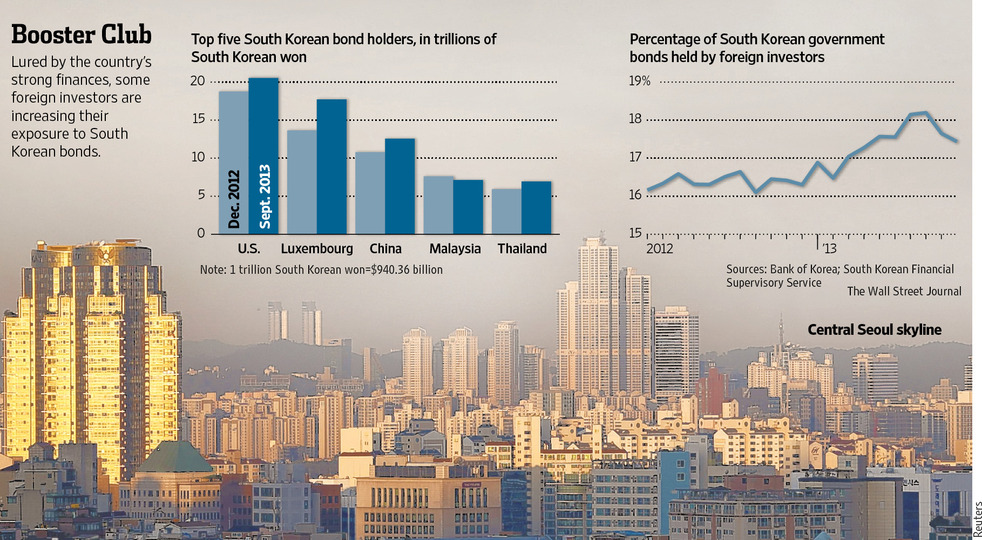
Investors are piling into South Korean stocks and bonds, lured by a trade surplus and a brightening growth outlook that makes the country a standout among emerging markets. South Korea’s Kospi Composite Index is near two-year highs, and in the year to date, the only Asian currency performing better than South Korea’s won against the U.S. dollar is the Chinese yuan. Furthermore, yields on the South Korea latest dollar bond, sold on Sept. 4, have dropped to 3.38% from 4.02% as of Tuesday, according to data provider Markit. Bond yields move in the opposite direction of prices. Read more of this post

Investors eye Samsung’s cash pile at rare strategy briefing

Investors eye Samsung’s cash pile at rare strategy briefing

4:02pm EST

By Miyoung Kim

SEOUL (Reuters) – Investors are likely to press Samsung Electronics Co on dividends and plans to sustain growth as the world’s biggest smartphone maker holds its first analysts’ briefing in eight years on Wednesday. Record-high profits have left Samsung sitting on a $50 billion cash pile, equivalent to more than a fifth of its market capitalization, but its shares trade at a deep discount to peers largely because of its investor-unfriendly returns. Read more of this post

Osaka dept stores locked in scrap for survival

Osaka dept stores locked in scrap for survival

Tuesday, November 5, 2013 – 10:42

Takeshi Nagata

Kentaro Takahashi

The Yomiuri Shimbun/Asia News Network

OSAKA – Competition among department stores has intensified in Osaka due to renovations and expansions in addition to the opening of a new department store. To survive, department stores have been thinking outside the box and offering new events-and even teaming up with their rivals. Meanwhile, department stores’ survival measures, such as creating new types of stores and cooperating with rivals, have also been spreading. Read more of this post

Japanese hospitality under scrutiny amid hotel food scandal

Japanese hospitality under scrutiny amid hotel food scandal

Tuesday, November 5, 2013 – 09:50

Kwan Weng Kin

The Straits Times

JAPAN – Thousands of Japanese diners could not tell the difference. Even inspectors for Michelin Guide, which awards its highly-coveted stars to only a select few restaurants, were apparently duped. There have been red faces across Japan since Osaka-based Hankyu Hanshin Hotels (HHH) admitted last month that eight directly-managed hotels in Osaka, Tokyo, Kyoto and Hyogo prefecture had been serving sub-par food for years. Read more of this post

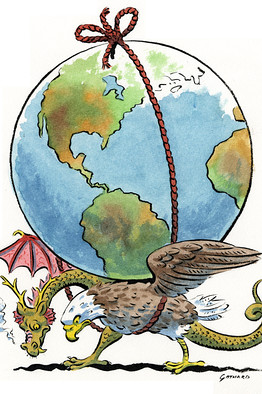
The U.S. and China Both Need Economic Rehab; ‘Chimerica’ has become addicted to ultra-loose financial conditions

The U.S. and China Both Need Economic Rehab

‘Chimerica’ has become addicted to ultra-loose financial conditions.

NIALL FERGUSON and MORITZ SCHULARICK

Nov. 5, 2013 6:49 p.m. ET

BN-AG185_fergus_DV_20131103141556

Nearly seven years have passed since we coined the word Chimerica in these pages to characterize the symbiotic relationship between China and America. Few today would dispute that op-ed’s original point: that the unbalanced economic relationship between China and America posed a threat to global financial stability. Without the flow of Chinese savings into U.S. dollars, as a result of Beijing’s large-scale currency intervention and reserve accumulation, American interest rates would surely have been higher and the housing bubble would have inflated less. Read more of this post

China’s Slower Growth Puts a Drag on Western Profits

China’s Slower Growth Puts a Drag on Western Profits

RUTH BENDER and KATE LINEBAUGH

Updated Nov. 5, 2013 7:10 p.m. ET

P1-BN867_CHINAD_G_20131105183007

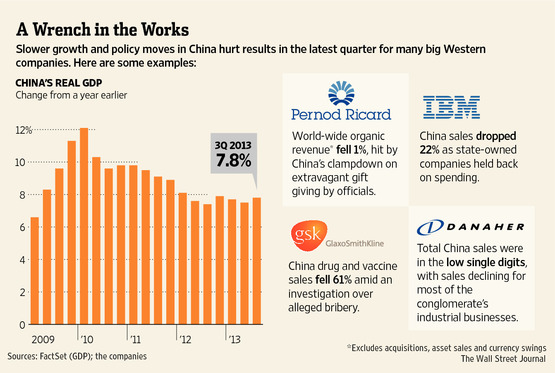
Just as European economies are showing signs of stabilizing and the U.S. economy is waking up, some companies are running into obstacles in a market long considered their brightest hope: China. U.S. and European companies invested heavily in recent years to expand in China, seeking to tap into its flourishing middle class and fast economic growth. Since the global recession, China has helped offset the free fall in sales and profits in the euro zone and stagnant revenue in the U.S. Read more of this post

Baby boom expected in Indonesia soon

Baby boom expected in Indonesia soon

Tuesday, November 5, 2013 – 10:33

Bagus Bt Saragih

The Jakarta Post/Asia News Network

The shortage of marriage registration books, which has hit some regions in the country, could point to a serious demographic problem that has resulted from the failure of the family planning programme. Sri Moertiningsih Adioetomo of the University of Indonesia’s Demographic Institute said that the government had been too slow to respond to changes in population trends, including an increase in the number of couples getting married at an early age. Read more of this post

Concern Over Bumi’s ‘Eroding’ Earnings as high interest expenses and weak coal prices are likely to affect the profits going forward at Indonesia’s largest coal company by output

Concern Over Bumi’s ‘Eroding’ Earnings

By Muhammad Al Azhari on 9:12 pm November 5, 2013.
The financial performance of Bumi Resources, Indonesia’s largest coal company by output, remains worrisome as high interest expenses and weak coal prices are likely to affect the company’s profits going forward, analysts say. In the first nine months of this year, Bumi — controlled by London-listed joint venture of Bumi Plc — saw its net loss reduced by 40 percent year-on-year to $377 billion. Read more of this post

Two of World’s Worst Polluted Places Are in Indonesia: Environmentalists

Two of World’s Worst Polluted Places Are in Indonesia: Environmentalists

By Nina Larson on 9:29 am November 5, 2013.

Hundreds of millions of people worldwide risk exposure to toxic pollution, environmental groups warned Monday, publishing a list of the world’s worst areas, which included Indonesia’s Kalimantan and Citarum River Basin. “We estimate that the health of more than 200 million people is at risk from pollution in the developing world,” said Richard Fuller, who heads the Blacksmith Institute, a US-based environment watchdog. Read more of this post

Thai Senators Block Amnesty Bill to Quell Unrest: Southeast Asia

Thai Senators Block Amnesty Bill to Quell Unrest: Southeast Asia

Thailand’s Senate is set to reject a proposed amnesty law for political offenses on Nov. 11 after weeklong street protests raised concerns its passage would reignite political violence. Opposition from the public, universities and business groups convinced a majority of Thailand’s 149 senators to block the legislation, Senate Speaker Nikom Wairatpanij said at a media briefing in Bangkok yesterday. More than 32,000 people joined demonstrations in the capital and 17 other provinces on Nov. 4, according to police estimates, with the push for the amnesty law weighing on Thai stocks and the baht. Read more of this post

50 per cent of airfryers in Taiwan are unqualified: study

50 per cent of airfryers in Taiwan are unqualified: study

Tuesday, November 5, 2013 – 09:33

The China Post/Asia News Network

TAIPEI, Taiwan – Five out of ten airfryer samples in the market fail to reach the electric equipment commodity standard, according to the sampling inspection conducted by the Consumer’s Foundation Chinese Taipei (CFCT) and the Bureau of Standard, Metrology & inspection (BSMI). Ten products were bought randomly from the Internet and appliance shops for the sampling inspection. The Foundation’s chairperson Chang Chi-gang pointed out that five of the products have issues relating to “important components and structural match” or “mislabel,” which means available products in the market are not the same design as the registered products. There was even one product which, bought from the Internet, did not pass the inspection procedure before import. Read more of this post

Support for new ESG Index in Malaysia

Updated: Wednesday November 6, 2013 MYT 8:03:17 AM

Support for new ESG Index

BY WONG WEI-SHEN

PETALING JAYA: Socially responsible investing in Malaysia is set to ge t a shot in the arm following the announcement that Valuecap Sdn Bhd will be investing RM1bil into companies that meet the stipulated criteria. Valuecap, a fund set up by the Government in 2002 to invest in undervalued stocks in the local bourse, is bullish about the prospects of such investments. Read more of this post