Wal-Mart Now Draws More Solar Power Than 38 U.S. States

Wal-Mart Now Draws More Solar Power Than 38 U.S. States

Solar power and keg stands have one thing in common: Wal-Mart wants to profit from them.

In the race for commercial solar power, Wal-Mart is killing it. The company now has almost twice as much capacity as second-place Costco. A better comparison: Wal-Mart is converting more sun into energy than 38 U.S. states. Read more of this post

NQ 54% Plunge Rebuilds Muddy Waters Shorts Credibility

NQ 54% Plunge Rebuilds Muddy Waters Shorts Credibility

NQ Mobile Inc. (NQ), a Chinese mobile services provider, spent six years preparing to go public. It took Muddy Waters LLC one hour to erase half of the company’s market capitalization. NQ Mobile started last week with a value of more than $1 billion and lost 57 percent of its value after Carson Block, the Muddy Waters founder whose short sales outside of China have borne little fruit, said on Oct. 24 that it fabricated revenue and lied about its cash. The shares of the Beijing-based company extended a two-day slump to 54 percent even as the company said the assertions were false. Read more of this post

BlackRock Buys as Global Investors Overrun Seoul: Korea Markets

BlackRock Buys as Global Investors Overrun Seoul: Korea Markets

The record flood of overseas cash into South Korea’s stock market looks set to swell further judging from the diaries of Seoul executives. YK Kang, head of investor relations at Seoul Semiconductor Co. (046890), a maker of light-emitting diodes, has met with 35 foreign money managers this month, up from three in January, as the stock surged 81 percent this year. Meetings with stock pickers that used to last 20 minutes now take an hour, Kang says. Read more of this post

Western Retailers See Online as Ticket to China

Western Retailers See Online as Ticket to China

KATHY CHU

Oct. 27, 2013 2:21 p.m. ET

A growing number of Western brands in China are creating online stores to reach more consumers, adopting a formula that Chinese e-commerce company Alibaba Group Holding Ltd. has exploited with much success. The promise of e-commerce in China has attracted foreign companies for years. Yet Western companies, such as eBay Inc., EBAY -1.35% Google Inc. GOOG -1.01% andGroupon Inc., GRPN +1.61% have struggled in China, partly because of competition from domestic giants. Western retailers also have had concerns about the difficulties of distribution in the country and its Web shoppers’ insistence on low prices. Read more of this post

Weak Dollar Saps Hopes for Year-End Nikkei Rally; Stocks Are Down 9.8% From a May 22 High, Largely Mirroring Currency Moves

Weak Dollar Saps Hopes for Year-End Nikkei Rally

Stocks Are Down 9.8% From a May 22 High, Largely Mirroring Currency Moves

BRAD FRISCHKORN

Updated Oct. 27, 2013 2:58 p.m. ET

TOKYO—A stubbornly strong yen appears to be vanquishing hopes among investors for a second rally in Japanese stocks this year. The sharp fall in Japan’s currency late last year had been a major factor in the 80% surge in the Nikkei Stock Average through May, as the dollar rose more than 30% to a high of ¥103.74. But stocks have been lackluster since falling into a bear market—defined as a 20% drop from a peak—in June. Stocks have recovered somewhat but the Nikkei is still down 9.8% from its May 22 high, largely mirroring the movement of the dollar against the yen. Read more of this post

U.S. Cities Grapple With Finances; American cities’ fiscal health is lagging behind other sectors of the economy as the recovery slowly takes hold

U.S. Cities Grapple With Finances

Urban Centers Are Struggling Even as Recovery Takes Shape, Data Show

JEANNETTE NEUMANN

Oct. 27, 2013 7:29 p.m. ET

NA-BY650_CITIES_G_20131027180304

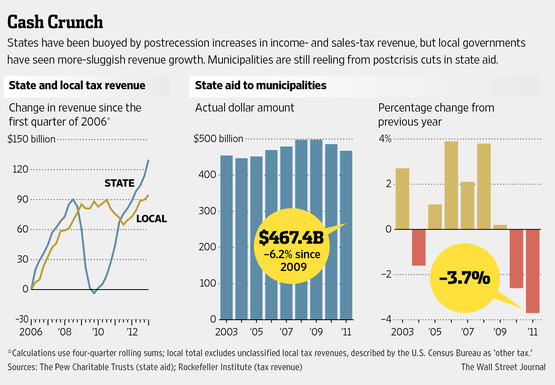
American cities’ fiscal health is lagging behind other sectors of the economy as the recovery slowly takes hold. Buffeted by steep drops in state aid, rising pension and health-care costs and sluggish property-tax revenue, many urban centers are struggling even several years after the financial crisis. “We think we saw the bottom, knock on wood,” said Robert Chisel, director of finance and administration for Reno, Nev. But, he said, “We’re not going back to the old days. We all know that.” Read more of this post

J.P. Morgan’s Subprime Troubles Ran Deep

J.P. Morgan’s Mortgage Troubles Ran Deep

Deals With Subprime Lenders at Heart of $5.1 Billion Settlement

AL YOON

Oct. 27, 2013 6:24 p.m. ET

MI-BZ332_JPM_NS_20131027171203

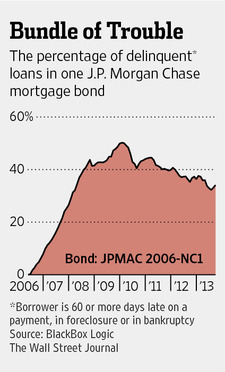
A 1,625-square-foot bungalow at 51 Perthshire Lane in Palm Coast, Fla., is among the thousands of homes at the heart of J.P. Morgan Chase JPM +0.55% & Co.’s $5.1 billion settlement with a federal housing regulator on Friday. In 2006, J.P. Morgan bought one of two mortgage loans on the home made by subprime lender New Century Financial Corp. J.P. Morgan then bundled the loan with 4,208 others from New Century into a mortgage-backed security it sold to investors including housing-finance giantFreddie Mac. FMCC +11.89% Read more of this post

Kering Looks a Smarter Bet Than LVMH; Luxury-Goods Maker Relies on Several Strong Brands

Kering Looks a Smarter Bet Than LVMH

Luxury-Goods Maker Relies on Several Strong Brands

JOHN JANNARONE

Oct. 27, 2013 1:50 p.m. ET

Some investors think of LVMH Moët Hennessy Louis Vuitton MC.FR -0.46% as a bouquet of brands that will eventually bloom into big money makers. They might save time by instead buying into rival Kering. KER.FR -3.04% Shares of Kering, formerly known as PPR, slipped 3% on Friday after it reported sales at its Gucci brand rose just 0.6% year on year in the three months through September. Gucci accounts for about 63% of Kering’s earnings before interest and taxes, or Ebit, estimates Mario Ortelli of Sanford C. Bernstein. Read more of this post

GM says China partnership with SAIC strong, eyes Indonesia tie-up

GM says China partnership with SAIC strong, eyes Indonesia tie-up

5:34pm EDT

By Norihiko Shirouzu and Samuel Shen

SHANGHAI (Reuters) – General Motors Co has dismissed speculation its ties with China’s SAIC Motor Corp are fraying, saying the partnership is thriving and the two car makers are discussing further collaboration in Indonesia. Recent independent moves by SAIC outside China had been seen by some industry insiders and experts as signaling the two companies might be drifting apart, but GM’s top China executive said it was merely a consequence of its state-owned partner’s growing maturity as an automaker. Read more of this post

Stockholm’s Homeless Accept Cards as Cash No Longer King

Stockholm’s Homeless Accept Cards as Cash No Longer King

Stockholm’s homeless magazine vendors no longer need to ask if you can spare any krona. They take cards. In the most cashless society on the planet, the sellers of Situation Stockholm, a culture magazine sold by homeless people, were last month equipped with card readers to accept donations from fellow Swedes. The move marks a world first, according to their employer. Read more of this post

Dearth of Farm Hands Spurs Demand for Tractors: Corporate India

Dearth of Farm Hands Spurs Demand for Tractors: Corporate India

Mahindra & Mahindra Ltd. (MM), India’s biggest tractor maker, forecasts it will outperform the industry this fiscal year as a shortage of farm hands, rising labor costs and the best monsoon rains in six years drives demand. The automaker’s tractor sales will exceed the industrywide growth forecast of as much as 12 percent, Rajesh Jejurikar, chief executive officer of Mumbai-based Mahindra’s farm equipment business, said in an interview by phone. Capacity utilization at the company, which operates seven tractor plants in India, is “very high,” he said, declining to give details. Read more of this post

Mongolia Premier Welcomes Foreign Investors as Boom Slows

Mongolia Premier Welcomes Foreign Investors as Boom Slows

Mongolia, locked in a dispute with Rio Tinto Group (RIO) that has stalled the expansion of a copper mine, understands that it needs to make the nation more welcoming to foreign investors, Prime Minister Norovyn Altankhuyag said. The country is open to all foreign companies and will allow them to invest in industries such as railways and power stations, in addition to mining, Altankhuyag said in an interview in Beijing during a five-day visit to China. Read more of this post

Singapore Exchange Seeks High-Frequency Traders as it grapples with lower volume

Singapore Exchange Seeks High-Frequency Traders: Southeast Asia

Singapore Exchange Ltd. (SGX), Southeast Asia’s biggest bourse operator, wants to lure more high-speed traders onto its stock market as it grapples with lower volume. Computerized trading firms, which execute transactions in fractions of a second, account for a negligible share of volume on Singapore Exchange’s cash equities market, according to bourse spokeswoman Loh Wei Ling, while they contribute 30 percent of revenue from derivatives. Singapore Exchange will seek to change that once it introduces safeguards, Chief Executive Officer Magnus Bocker said at a briefing this month. Read more of this post

Rising business costs in Singapore may be passed on to consumers

Rising business costs may be passed on to consumers

SINGAPORE — As business costs continue to rise, trade associations are warning that companies may be forced to increase prices to maintain their profitability.

BY LEE YEN NEE –

4 HOURS 43 MIN AGO

SINGAPORE — As business costs continue to rise, trade associations are warning that companies may be forced to increase prices to maintain their profitability. Singapore Business Federation Chief Executive Ho Meng Kit said pressure on the business community to maintain profitability in the face of higher costs is intensifying: “Even as Singapore expects economic growth for the full year in 2013, businesses continue to face cost adjustments … there are also small and medium enterprises (SMEs) that find it harder to borrow, due to their lower profitability amid the current tougher environment. “With this in mind, it is inevitable that consumers may expect to see some costs being passed on.” Read more of this post

Penang chief minister Lim Guan Eng: ‘Najib not doing enough to rein in spending. Najib has not taken any action against those responsible for the … wastage and financial mismanagement. The RM6.5 billion which was frittered away by the civil service will have a negative impact on the economy.’

‘Najib not doing enough to rein in spending’

KUALA LUMPUR — Penang Chief Minister Lim Guan Eng yesterday accused Malaysian Prime Minister Najib Razak of not doing enough to slash the country’s fiscal deficit, rein in government spending and tackle corruption, despite introducing measures such as a planned goods and services tax (GST) in the Budget unveiled on Friday.

4 HOURS 42 MIN AGO

KUALA LUMPUR — Penang Chief Minister Lim Guan Eng yesterday accused Malaysian Prime Minister Najib Razak of not doing enough to slash the country’s fiscal deficit, rein in government spending and tackle corruption, despite introducing measures such as a planned goods and services tax (GST) in the Budget unveiled on Friday. In a statement released yesterday, Mr Lim, the opposition Democratic Action Party’s Secretary-General, said such measures would be meaningless if the government did not hold those responsible for wastage and financial wrongdoings accountable. “The increase in the federal government debt to nearly 55 per cent of gross domestic product (GDP) at RM541 billion (S$211 billion) by end of this year from RM502 billion last year shows that the federal government is neither serious about reining in expenditure nor in fighting corruption,” Mr Lim said. “Furthermore, Mr Najib has not taken any action against those responsible for the … wastage and financial mismanagement highlighted in the 2012 Auditor-General Report. The RM6.5 billion which was frittered away by the civil service will have a negative impact on the economy,” he added. Read more of this post

India to Issue New Rules for Foreign Banks; Restrictions on Branch Openings Will Be Reduced If Lenders Set Up Local Units, Lend More in Rural Areas

India to Issue New Rules for Foreign Banks

Restrictions on Branch Openings Will Be Reduced If Lenders Set Up Local Units, Lend More in Rural Areas

NUPUR ACHARYA

Oct. 27, 2013 10:44 a.m. ET

MUMBAI—Indian regulators are expected to issue new rules governing the operation of foreign banks in coming days, in a step aimed at pressing them to set up local subsidiaries and lend more in poor, rural areas. More than 40 international banks now do business in India with significant government-imposed restrictions on the number of branches they can open each year and how they can raise funds. Read more of this post

Corruption claims hang over Australian construction giant Leighton

Corruption claims hang over Leighton

October 26, 2013

Adele Ferguson

When headlines ”Claims corruption rife at Leighton”, ”Bribe claims hit board”, ”Going rogue” and ”Ex Leighton exec quits as bribe scandal intensifies” were plastered over the front pages of Fairfax Media newspapers earlier this month they wiped 13 per cent off the construction giant’s share price and left the investment community jittery about bribery and corruption risks in other companies. Read more of this post

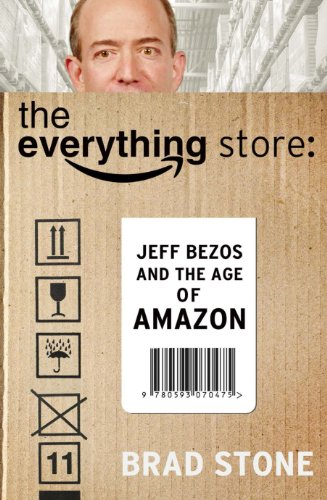
It’s Harder to be Kind than Clever: 10 Things I Learned Reading Brad Stone’s — The Everything Store: Jeff Bezos and the Age of Amazon

10 Things I Learned Reading Brad Stone’s — The Everything Store: Jeff Bezos and the Age of Amazon

by SHANE PARRISH on OCTOBER 24, 2013

510tRCeCMCL

I really enjoyed Brad Stone’s The Everything Store: Jeff Bezos and the Age of Amazon. Anyone who wants to better understand the dynamics of disruption or just gain a better understanding of the website we’ve come to love, must read this book. Here are ten things I found interesting. Read more of this post

The writing life requires courage, patience, persistence, empathy, openness, and the ability to deal with rejection. To look at the world without blinders on. To observe and withstand what one sees. To be disciplined and take risks

Dani Shapiro on the Pleasures and Perils of Writing and the Creative Life

“At its best, the sensation of writing is that of any unmerited grace,” Annie Dillard famously observed, adding the quintessential caveat, “It is handed to you, but only if you look for it. You search, you break your heart, your back, your brain, and then – and only then – it is handed to you.” And yet, Zadie Smith admonished in her 10 rules of writing, it’s perilous to romanticize the “vocation of writing”: “There is no ‘writer’s lifestyle.’ All that matters is what you leave on the page.”

Still, surely there must be more to it than that – whole worlds rise and fall, entire universes blossom and die daily in that enchanted space between the writer’s sensation of writing and the word’s destiny of being written on a page. For all that’s been mulled about the writing life and its perpetual osmosis of everyday triumphs and tragedies, its existential feats and failures, at its heart remains an immutable mystery – how can a calling be at once so transcendent and so soul-crushing, and what is it that enthralls so many souls into its paradoxical grip, into feeling compelled to write “not because they can but because they have to”? That, and oh so much more, is what Dani Shapiro explores in Still Writing: The Pleasures and Perils of a Creative Life (public library) – her magnificent memoir of the writing life, at once disarmingly personal and brimming with widely resonant wisdom on the most universal challenges and joys of writing. Read more of this post

Emotional Agility: How effective leaders manage their negative thoughts and feelings

Emotional Agility

by Susan David and Christina Congleton

R1311L_A

Sixteen thousand—that’s how many words we speak, on average, each day. So imagine how many unspoken ones course through our minds. Most of them are not facts but evaluations and judgments entwined with emotions—some positive and helpful (I’ve worked hard and I can ace this presentation; This issue is worth speaking up about; The new VP seems approachable), others negative and less so (He’s purposely ignoring me; I’m going to make a fool of myself; I’m a fake).

The prevailing wisdom says that difficult thoughts and feelings have no place at the office: Executives, and particularly leaders, should be either stoic or cheerful; they must project confidence and damp down any negativity bubbling up inside them. But that goes against basic biology. All healthy human beings have an inner stream of thoughts and feelings that include criticism, doubt, and fear. That’s just our minds doing the job they were designed to do: trying to anticipate and solve problems and avoid potential pitfalls. Read more of this post

You Can’t Be a Wimp—Make the Tough Calls; To make timely, high-quality decisions, you need to develop three key traits

You Can’t Be a Wimp—Make the Tough Calls

An Interview with Ram Charan by Melinda Merino

As one of the world’s preeminent advisers to CEOs and boards, Ram Charan has spent the past 35 years on the road, watching hundreds of executives deal with their toughest challenges. He regularly shares the insights from his experiences in speeches and the classroom and is the author of several best-selling books. (His latest books are Boards That Lead, which he cowrote with Dennis Carey and Michael Useem, and Global Tilt.) He has also published many popular articles, including the HBR classic“Conquering a Culture of Indecision” (April 2001), in which he addresses the problem of organizational paralysis. In this edited interview with HBR senior editor Melinda Merino, he returns to the topic of decisions and talks about what he’s learned in three decades of helping executives make them. Read more of this post

Make the Most of a Polarizing Brand; Having a group of customers who hate your brand can be a good thing

Make the Most of a Polarizing Brand

by Xueming Luo, Michael Wiles, and Sascha Raithel

F1311A_A

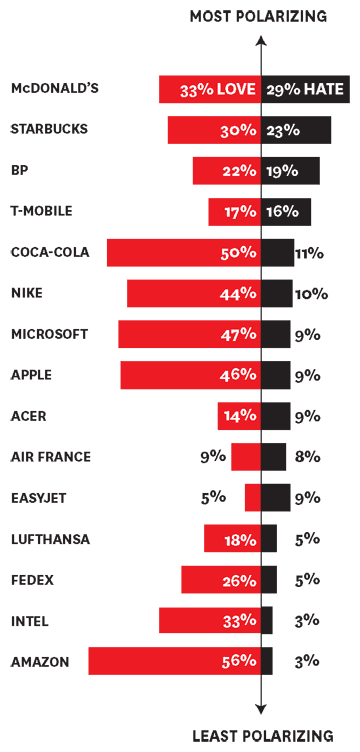
As conversation starters go, “What do you think of Miracle Whip?” probably seems unlikely—you wouldn’t think many people have strong opinions about the slightly-sweeter-than-mayonnaise sandwich spread. But when marketers at Kraft began researching shoppers’ attitudes toward the dressing, they found surprisingly deep emotions. It turns out that a substantial number of people love Miracle Whip, and many others detest it. In 2011 Kraft launched ads that sought to make a virtue of the schism. The campaign used love-’em-or-hate-’em celebrities, including Pauly D from Jersey Shore and the political pundit James Carville. Some people in the ads praised Miracle Whip’s yumminess, but one character said he’d break up with his girlfriend if he learned that she liked the dressing. Another said, “I’d rather lick your shoe” than try it. “Miracle Whip is a polarizing product,” the brand director, Sara Braun, explained at the time. “We’re trying to own up to this fact.” The strategy worked: During the campaign Miracle Whip experienced a 631% surge in social media postings and a 14% increase in sales. Read more of this post

Leaving a legacy: ‘You only die when you are forgotten’; Canadian billionaire Seymour Schulich has given away $350-million in his lifetime, partly, he acknowledges, to keep his memory alive

Leaving a legacy: ‘You only die when you are forgotten’

Garry Marr | 25/10/13 | Last Updated: 26/10/13 3:24 PM ET

 How We Die Now: “Death renders all equal,” wrote Claudian. How each one of us relates to death, however, is individual, and always changing — as we mature; as we contemplate life, and death, around us; and as society changes. In this special series in the National Post, we present stories and columns looking at the different ways we see, and prepare for, the Great Equalizer. To read the complete series, click here.

1024schulich

Seymour Schulich: I have two major objectives now. Number one is to be counted among the greatest Canadian philanthropists of my era and two to encourage other wealthy folks to step up He may have given away more money than anybody else in Canada, so Seymour Schulich probably has some insight into what drives the desire to have your name live on. “There are people out there who think their legacy is their company. Your company is not your legacy. Companies have a mortality rate,” says Mr. Schulich, 73, a billionaire who made his money in the gold sector. “Business is a means to an end. I don’t need to get any richer, thank you. I have two major objectives now. Number one is to be counted among the greatest Canadian philanthropists of my era and two to encourage other wealthy folks to step up.” Read more of this post

The bright side of sadness: Bad moods can have unappreciated mental upsides

The bright side of sadness: Bad moods can have unappreciated mental upsides

BY BRUCE BOWER

1:45PM, OCTOBER 18, 2013

sad_moodlist

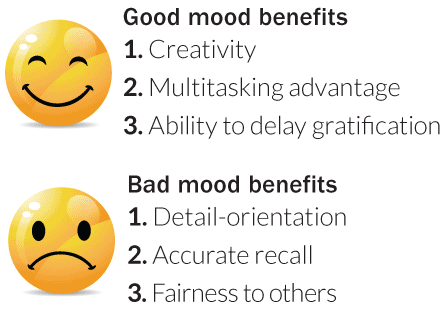
Thomas Jefferson defended the right to pursue happiness in the Declaration of Independence. But that’s so 237 years ago. Many modern societies champion everyone’s right to be happy pretty much all the time. Good luck with that, says psychologist Joseph Forgas of the University of New South Wales in Sydney. A lack of close friends, unfulfilled financial dreams and other harsh realities leave many people feeling lonely and forlorn a lot of the time. But there’s a mental and social upside to occasional downers that often goes unappreciated. “Bad moods are seen in our happiness-focused culture as representing a problem, but we need to be aware that temporary, mild negative feelings have important benefits,” Forgas says. Read more of this post

Rakuten’s CEO on Humanizing E-Commerce

Rakuten’s CEO on Humanizing E-Commerce

by Hiroshi Mikitani

R1311A_BR1311A_A

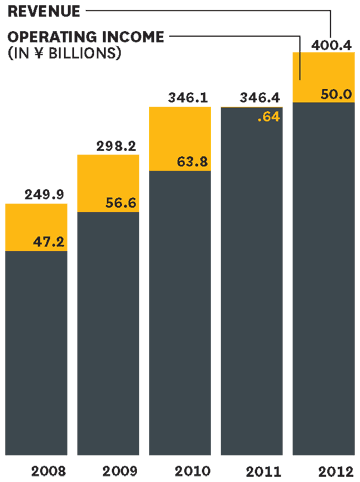
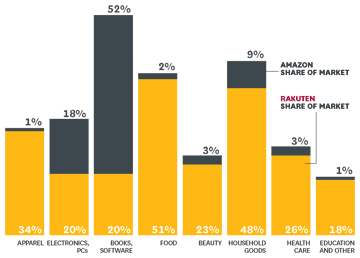
The Idea: Mikitani believes that human beings need communication and connection. So instead of emphasizing efficiency and convenience, Rakuten tries to create a personalized, bazaarlike shopping experience. I can still remember the first time I made an online purchase: It was in October 1996. I bought Japanese noodles from a small shop in Shikoku. The checkout process was primitive, but my order arrived in the mail, and it was as good as everyone had said it would be. I realized immediately that online shopping would be commonplace someday. At the time, I was already planning to launch Rakuten. Our website went live about six months later, in May 1997. My goal was simple: We would offer small and midsize merchants an opportunity to set up shop on the internet very easily. We would charge them a set monthly fee, and they could pay extra for advertisements and promotions. Read more of this post

The Decline of Wikipedia Due to Bureaucracy

The Decline of Wikipedia

By Tom Simonite on October 22, 2013

wiki.tablex519

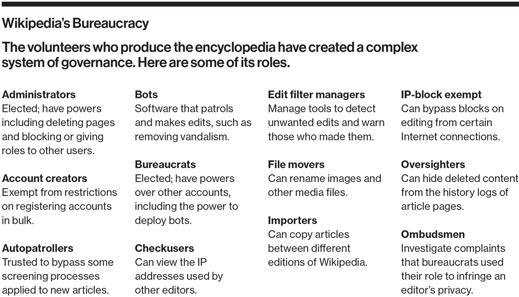
The sixth most widely used website in the world is not run anything like the others in the top 10. It is not operated by a sophisticated corporation but by a leaderless collection of volunteers who generally work under pseudonyms and habitually bicker with each other. It rarely tries new things in the hope of luring visitors; in fact, it has changed little in a decade. And yet every month 10 billion pages are viewed on the English version of Wikipedia alone. When a major news event takes place, such as the Boston Marathon bombings, complex, widely sourced entries spring up within hours and evolve by the minute. Because there is no other free information source like it, many online services rely on Wikipedia. Look something up on Google or ask Siri a question on your iPhone, and you’ll often get back tidbits of information pulled from the encyclopedia and delivered as straight-up facts. Read more of this post

Singapore’s Popular Bookshop blasted for “corrupting minors” and using gimmicks to attract customers after it used posters featuring topless models as part of a campaign to promote reading at its Nanjing bookstore

Nanjing bookstore attacked for ‘naked reading’ campaign

Staff Reporter

2013-10-26

nakedl1-090714_copy1nakedl2-090557_copy1

A nude model searches for a book on a high shelf in this promotional poster for the store. (Photo/CFP) A large cardboard cut-out at the Nanjing store. (Photo/CFP)

A bookstore in Nanjing, capital of eastern China’s Jiangsu province, has been accused of poor taste after it used posters featuring topless models as part of a campaign to promote reading, reports the state-run China News Service. The posters showed topless models standing in front of bookshelves or sitting on chairs reading with their chests strategically obscured by books. The store, a branch of Singapore-based Popular Holdings, was blasted for “corrupting minors” and using gimmicks to attract customers. The store said the posters were part of a campaign that the company was holding in both Nanjing and Shanghai entitled “Reading naked brings your soul closer to books” which aims to show that reading can take different forms. People should strip off all the ornamentation of daily life in order to read. “There is no limitations to reading, it penetrates into every area of life,” the company said. Read more of this post

Je regrette: Our forward-charging culture sees regret as a sign of weakness and failure. But how else can we learn from our past?

Je regrette: Our forward-charging culture sees regret as a sign of weakness and failure. But how else can we learn from our past?

by Carina Chocano 2,700 words

Carina Chocano is a freelance writer whose work has appeared in The New Yorker, The New York Times Magazine and Wired, among others. She is the author of Do You Love Me or Am I Just Paranoid? (2003).

I regret everything. Decades-old decisions, things I said, things I didn’t say, opportunities I missed, opportunities I took, recent purchases, non-purchases, returns. I turn all of these things over in my mind and examine them for clues — to what, I’m not sure. All I know is that very little of what I do or fail to do escapes the constant churn of revision. It’s just the way I process experience: sceptically, and in retrospect. It’s like being a time-traveller, only instead of going back to Ancient Rome or the French Revolution, I return again and again to the traumatic sites of my own fateful (or not so fateful) forks in the road. Some people see this as self‑flagellation; I tend to think of it as a lifelong effort to reconcile the possible with the actual — a getting to know the real me. After all, as they say, we’re defined by our choices. Read more of this post
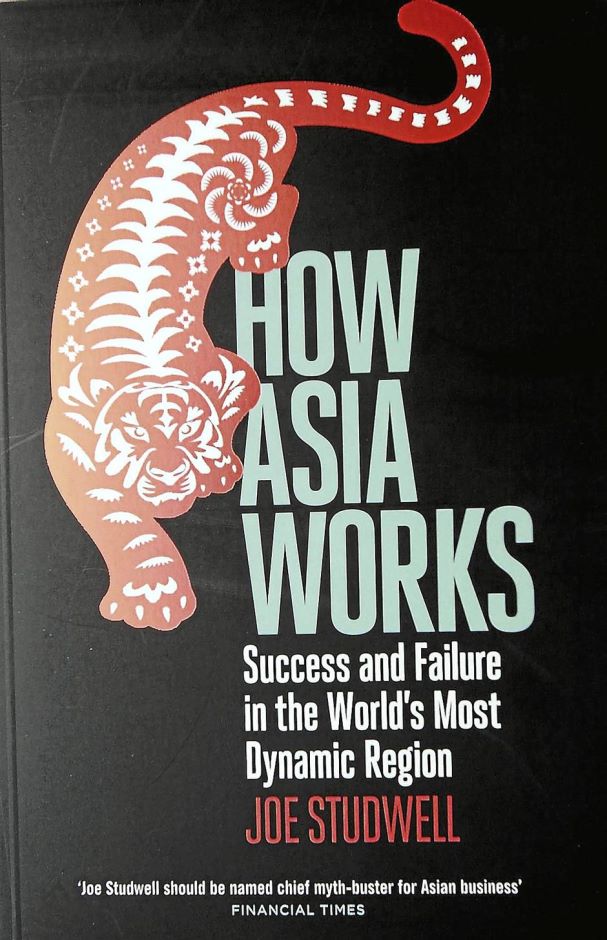
How Asia Works: Success and Failure in the World’s Most Dynamic Region

Updated: Saturday October 26, 2013 MYT 8:41:49 AM

Study on what drives Asian business

BY THEAN LEE CHENG

How Asia Works: Success and Failure in the World’s Most Dynamic Region
Author: Joe Studwell
Publisher: Profile Books Ltd

bizw_261013_kb_pg24b

JOE Studwell, author of How Asia Works: Success and Failures in the World’s Most Dynamic Region, does not mince his words. He analyses the Malaysian auto sector and draws comparison with South Korea’s international success in the car manufacturing sector. Studwell says although Perodua was set up subsequently after Malaysia’s first car project, Proton, which took off in the 1980s, Perodua was tasked with producing cars with smaller engine capacity. This means that Proton, which was producing cars with higher engine capacity, had no competition as both had their respective markets. Read more of this post

Abbott Lab chairman and CEO Miles White: The Reinvention Imperative

The Reinvention Imperative

by Miles D. White

“Failure isn’t fatal, but failure to change might be.” Those are the words of John Wooden, the legendary UCLA basketball coach, who won 10 NCAA national championships in just 12 seasons because of his ability to constantly adapt—to new players, new rivals, and new styles of play. In business, too, leaders are continually faced with complex changes: an aging population, the growth of the middle class in emerging economies, constant technological advancement. In a shifting environment, consistent business performance is not enough to perpetuate itself. To keep their organizations relevant, CEOs and other leaders must heed the reinvention imperative. Read more of this post