Electric Cars Are Getting Engine Sounds to Make Them Safer
January 12, 2014 Leave a comment
Electric Cars Are Getting Engine Sounds to Make Them Safer
By Dorothee Tschampa January 09, 2014
Christoph Meier, a sound engineer at Mercedes-Benz parent Daimler (DAI:GR), spends much of his time trying to reduce the noise emitted by car engines. But for the carmaker’s newer electric models, he’s had to do the opposite: create sound. “People expect some exterior noise from a vehicle, because we all grew up with the ‘vroom vroom’ of combustion engines,” says Meier, head of powertrain acoustics at the automaker.Electric-car technology has come a long way during the past decade, with advances in battery capacity and range. But the cars emit almost no sound at low speeds, potentially posing a threat to cyclists and pedestrians. “If a silent electric vehicle knocks over an elderly person or a child, it’s not worth the risk,” says Neil King, an analyst with Euromonitor International in London. “It happens often enough in urban areas that people are stepping into the road without looking.” Visually impaired people could be most at risk. They “could step right in front of a vehicle, and the driver would have no real chance to brake in time,” says Gerhard Renzel, a traffic expert for the German association for the visually impaired.
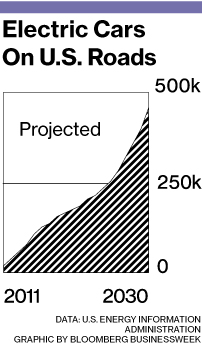
Electric vehicles, still niche products, are struggling to gain popularity, and a spate of accidents could further dampen demand, King says. In Germany, only 0.2 percent of the 2.95 million new cars registered in 2013 were electric. Adding synthetic motor sounds could help address the safety issue and protect carmakers’ investments in e-cars.
So far, Meier’s team has invented what it calls a “sonorous purring” for Daimler’s e-Smart city car—the pitch of the two-seater is higher than the engine in a conventional vehicle. Mercedes’s SLS AMG Coupé Electric Drive has been fitted with huskier tones to reflect its power. Renault (RNO:FP) offers three car tones—pure, glam, and sport—that customers can choose from for its electric Zoe hatchback. Nissan Motor’s (NSANY) Leaf , the best-selling electric car globally, also comes with artificial sound.
No formal data exist on injuries caused by electric vehicles, but the European Union takes the threat seriously enough that it has proposed legislation making acoustic warning sounds mandatory. A United Nations council on transport issues that has discussed common rules is expected to issue guidelines this year, according to Verband der Automobilindustrie, the German automotive association.
Electric vehicles are mainly silent at speeds slower than 30 kilometers (19 miles) per hour. Faster than that, tire and wind noises kick in. Although adding motor sounds at slow speeds may help avoid accidents, it also undercuts a unique selling point of electric vehicles. “One of the big competitive advantages of electric vehicles is their soundlessness,” says Stefan Bratzel, director of the Center of Automotive Management at the University of Applied Sciences in Bergisch Gladbach, Germany. “It’s a justified goal to have quieter cities.”
BMW (BMW:GR), maker of the i3 hatchback, and Volkswagen (VOW:GR), maker of the tiny e-Up!, want to keep the din of electric vehicles at a minimum and will add sound only if regulations are imposed requiring them. Elon Musk, chief executive officer of Tesla Motors (TSLA), said in June that electric cars should direct “a pleasant-sounding noise” as a gentle warning to nearby people rather than emitting sound all the time.
On Daimler’s Smart, the engine tone is standard in the U.S. and Japan but optional in Europe. In Germany the sound option costs an additional €180 ($245) on the €23,680 ($32,245) car. Unlike Renault, which equips its Zoe, Kangoo, and Twizy electric models with sound, the German company doesn’t allow customers to manually turn off the noise.
Smart’s sound mimics the noise of a combustion engine by getting louder as the driver presses down on the pedal and higher as the car accelerates. The automaker will equip electric Mercedes models, including a variant of the B-Class wagon expected to hit U.S. showrooms later this year, with a similar system.
For other manufacturers, the dilemma is still finding the right tone. “Simply imitating the sound of a combustion engine was not an option,” says Ralf Kunkel, head of acoustics at Volkswagen’s Audi (NSU:GR) unit, who developed a tone for the A3 E-tron plugin hybrid, which will be presented this month in Detroit. “We discarded ideas of giving electric vehicles sounds such as birds twittering or leaves rustling.”
The bottom line: Some electric-car makers favor the safety advantage of a dull rumble instead of the sound of silence.
 About bambooinnovator
 Bamboo Innovator