The tortured saga of Diageo’s attempt to convert India’s “whiskey” drinkers to the real stuff
January 19, 2014 Leave a comment
The tortured saga of Diageo’s attempt to convert India’s “whiskey” drinkers to the real stuff
By Mark Bergen January 17, 2014

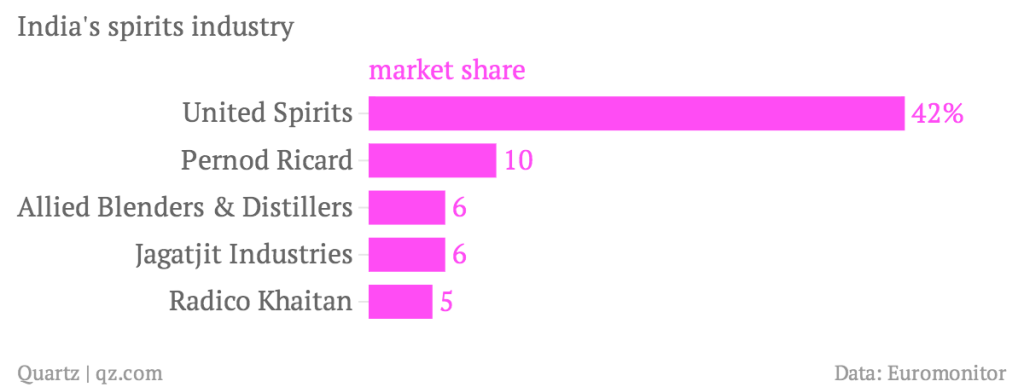
Suntory’s $16 billion acquisition of bourbon giant Beam Inc. has focused attention on the huge opportunities for growth in the rapidly consolidating global booze industry: Japanese have acquired a taste for bourbon, China is getting into fine wine, and Indians are increasingly thirsty for whiskey.In fact, India is already the world’s largest whiskey market—sort of. As Quartz has reported, Indians are also the world’s biggest rum drinkers, but what’s sold as whiskey there is really the same stuff, derived mostly from molasses. Either way, because of its huge population, India’s per capita consumption of spirits is actually pretty low, with plenty of headroom, although there are limits—devout followers of the country’s two largest religions, Hinduism and Islam, generally shun alcohol. Euromonitor expects Indian sales for Scotch whiskey to grow by 18% a year.
About a year ago, spirits giant Diageo thought it had sealed a grandiose plan to plunge into the Indian market by buying a majority stake in the country’s biggest liquor company, United Spirits. Not only would it own inexpensive home-grown Indian brands, but it would be able to sell its own high-grade brands of imported whiskey, like Johnnie Walker, which Indians love but often find expensive and difficult to obtain due to high customs duties.
In November, 2012, Diageo thought it had finalized a $2 billion deal for a 53% stake in United Spirits. Roughly half of the shares would come from the stock market; the remainder would come from owner Vijay Mallya. And then it all went horribly awry.
Mallya, an eccentric tycoon saddled with debt and on the verge of bankruptcy, had already pledged most of his stake to his creditors, whom he owed some $2.5 billion. The creditors moved to block the sale, and in December a state court in India ruled in their favor, ordering that Mallya’s sale of stock to Diageo was null and void. It was a significant blow to Diageo, which has maneuvered for three years to gain access to Indian drinkers.
Diageo is contesting the recent Indian court ruling, and a company spokesperson insisted the share deal was “genuine and bona fide.” To make matters worse, Diageo was also a potential bidder for Beam, but it came to naught because of concerns a deal wouldn’t get anti-trust approval.
Meanwhile, United Spirits is facing increasing competition at home from Diageo rival Pernod Ricard and homegrown Allied Blenders and Distillers. It is also looking to sell Whyte & Mackay, the British distiller that Mallya bought during better times. Even if Diageo triumphs in its legal battle and wins United Spirits, it may arrive in India with quite a hangover.
 About bambooinnovator
 Bamboo Innovator