‘Nobody’s bitch’: why growing up poor shaped Ruslan Kogan as an entrepreneur
January 22, 2014 Leave a comment
Caitlin Fitzsimmons Online editor
‘Nobody’s bitch’: why growing up poor shaped Ruslan Kogan as an entrepreneur
Published 20 January 2014 13:09, Updated 21 January 2014 09:05
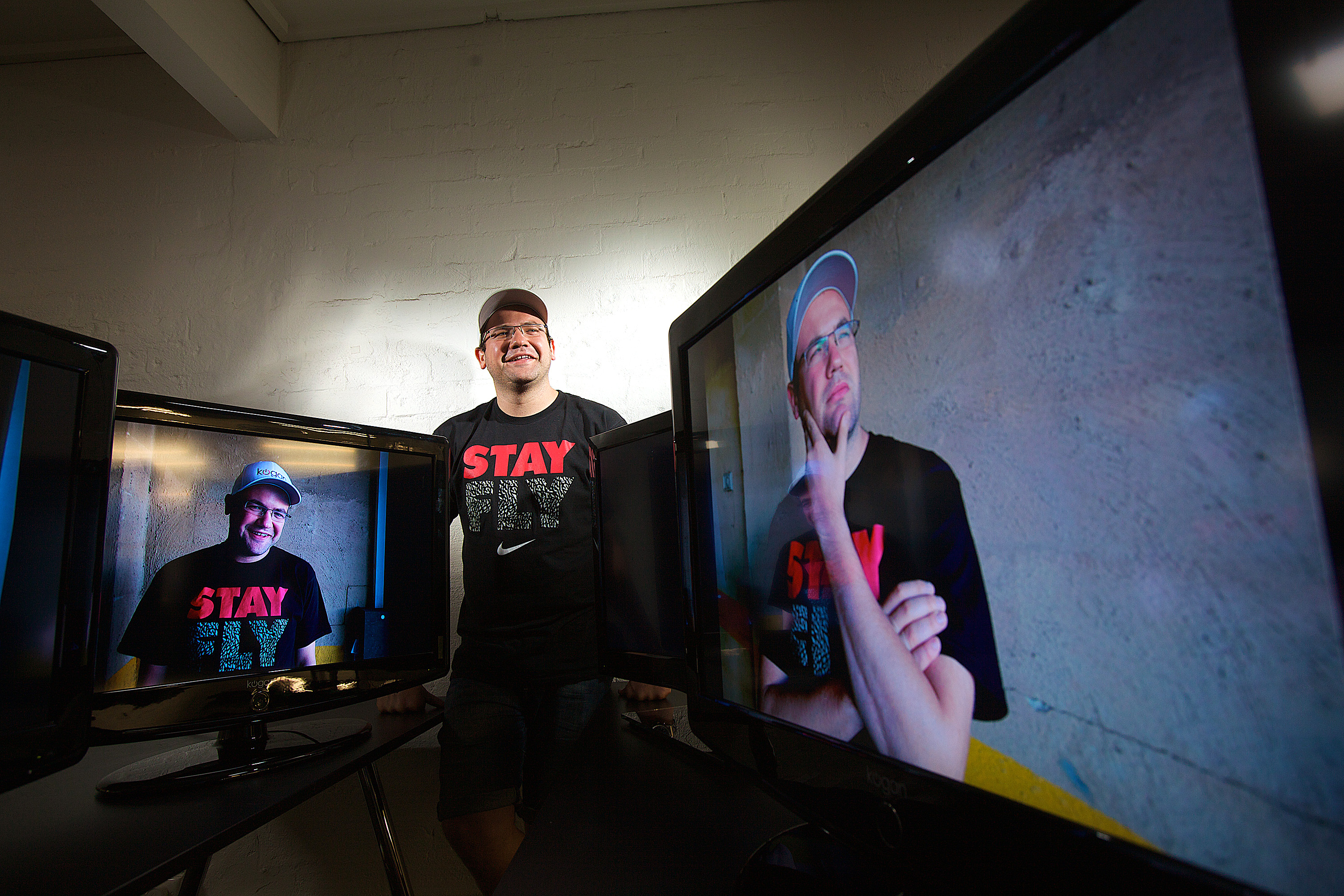
In 2013 maverick retailer Ruslan Kogan was ranked fourth on the BRWYoung Rich list, with an estimated fortune of $315 million, aged just 30. He still works 70 to 100 hours a week and says he isn’t much interested in spending his money, though he does own a BMW M6 and a nice apartment on St Kilda Road in Melbourne overlooking Albert Park Lake.But life was very different 20 years ago, growing up in the public housing commission flats of Elsternwick in Melbourne’s south-east. Kogan immigrated with his family from Belarus at the age of six and while his parents provided the basics, money was tight.
He has given an interesting interview to the Good Weekend, where he speaks about his childhood and how it shaped him as an entrepreneur.
On Twitter, Kogan describes it as his “most personal interview” ever.
Pimp of the milk bar
Firstly, Kogan and his sister didn’t get pocket money. “I knew that if I wanted stuff I’d have to earn it myself,” he told Good Weekend.
That may have provided an incentive to earn money but the other part of the equation was aptitude. Luckily Kogan had excellent powers of observation and a strong work ethic.
For example, when Kogan walked past the local golf course on his way to tennis training, he noticed the stray golf balls. He also noticed the pro shop was selling used balls for $2. So Kogan picked up the balls, took them home to wash them and put them in empty egg cartons. On the weekends, he returned and sold them to golfers for 50c a ball. The business generated $20 to $30 a week. He was, he says, “pimp of the milk bar”.
He also says he loved his childhood and fondly recalls playing outside with mates, jumping the canal and making his own fun. “I wouldn’t give up living in the commission flats for anything,” he says.
He recalls being a tearaway at school and being kicked out of classes – but the truth is a little more complex. He topped the state in the year 12 Victorian Certificate of Education, before heading to Monash University on a scholarship, for a double degree in business systems.
Kogan’s story is a typical “immigrant’s son made good” tale. His story echoes that of many of the entrepreneurs profiled in BRW’s cover story on the business contribution of refugees last year.
Nobody’s bitch
Kogan’s big idea came when he was 23 and discovered that the original cost of an LCD TV was a third of the retail price. He spotted the opportunity for a cut-price TV retailer.
He persuaded a Chinese manufacturer to accept a small order and then maxed out his credit cards, and those of his friends, to pay for it. There was no margin for error, so Kogan implemented what has been an essential philosophy: control what you can control. He travelled to Shenzhen in southern China to personally check on the TVs, turning on each set to make sure it worked. He watched the loading on to the trucks, and followed in a taxi to the wharves.
According to the article, Kogan’s fundamental business philosophy is “we’re nobody’s bitch”. Basically, it is an approach that cuts out the middle man. Interestingly, Kogan’s most public misstep occurred when he broke that principle with the launch of Kogan Mobile, which relied on Telstra reseller ispONE.
“The moment you start having relationships with these intermediaries, you become their bitch,” says Kogan.
There’s plenty more so I recommend you read the full article in Good Weekend or on The Age or SMH websites.
 About bambooinnovator
 Bamboo Innovator