Thaksin corruption claims stoke Thai protest outrage

Thaksin corruption claims stoke Thai protest outrage

Tuesday, January 21, 2014 – 23:21

AFP

Corruption allegations against former Thai premier Thaksin Shinawatra are at the centre of an anti-government campaign by protesters who say that while graft is endemic his billionaire family overstepped the mark. Read more of this post

Thailand Challenges Singapore to Hong Kong With Foreign IPO Plan

Thailand Challenges Singapore to Hong Kong With Foreign IPO Plan

Thailand will allow initial public offerings of foreign companies for the first time as Asia’s 11th-largest equity market seeks to compete with Hong Kong and Singapore as a regional hub for stock listings. Read more of this post

Sullen in Singapore: Its workers are the unhappiest in Asia

Sullen in Singapore: Its workers are the unhappiest in Asia

3:24am EST

By Brian Leonal

SINGAPORE (Reuters) – Workers in wealthy Singapore are the unhappiest in Asia and nearly two-thirds would like to quit their jobs in the next year, a regional survey by recruiting firm Randstad Group showed on Wednesday. Read more of this post

Singapore Exchange to Add Circuit Breakers Next Month

Singapore Exchange to Add Circuit Breakers Next Month

Singapore Exchange Ltd., Southeast Asia’s biggest bourse, will add circuit breakers next month that protect investors from excessive stock swings after a plunge in three commodity companies erased $6.9 billion in market value. Read more of this post

SGX Penny-Stock Rout Overshadows Derivative Gain: Southeast Asia

SGX Penny-Stock Rout Overshadows Derivative Gain: Southeast Asia

Singapore Exchange Ltd. (SGX)’s profit probably fell last quarter as a penny-stock rout that curbed equity trading volume on Southeast Asia’s biggest bourse overshadowed an increase in derivative transactions. Read more of this post

Businesses feel the heat of restructuring; Most businesses in Singapore are finding it hard to keep up with the pace of economic restructuring, citing rising costs, a tight labour market and raising productivity as their main concerns

Businesses feel the heat of restructuring

SINGAPORE — Most businesses in Singapore are finding it hard to keep up with the pace of economic restructuring, citing rising costs, a tight labour market and raising productivity as their main concerns, according to a survey by professional services firm KPMG in the run-up to Budget 2014.

5 HOURS 37 MIN AGO

SINGAPORE — Most businesses in Singapore are finding it hard to keep up with the pace of economic restructuring, citing rising costs, a tight labour market and raising productivity as their main concerns, according to a survey by professional services firm KPMG in the run-up to Budget 2014. Read more of this post

Lingering corruption in the Philippines

Lingering corruption in the Philippines

Tuesday, January 21, 2014 – 12:56

Philippine Daily Inquirer/Asia News Network

PHILIPPINES – Philippine President Benigno Aquino III rose to power on a strong anticorruption platform. In his first State of the Nation address in 2010, he talked about the virtuous path (or “daang matuwid”) of governance that his administration would take, and the people were thrilled by the promise. Now, more than halfway past his six-year term, the perception of corruption remains high. Read more of this post

Will Malaysia’s minority shareholders triumph in seeking higher value? Major insititutions have opportunity to challenge recent privatisation deals

Updated: Wednesday January 22, 2014 MYT 10:13:58 AM

Will minority shareholders triumph in seeking higher value?

BY GURMEET KAUR

Major insititutions have opportunity to challenge recent privatisation deals

TWO major local institutions now have the opportunity to challenge recent privatisation deals involving Bursa Malaysia-listed firms which are seemingly unfair to minority shareholders. Read more of this post

Robert Rubin Off in Accounting Wilderness

Robert Rubin Off in Accounting Wilderness

Robert Rubin, the former Treasury secretary and one-time chairman of Citigroup Inc.’s executive committee, has put forth an odd idea for new accounting standards. Speaking last week at a conference on climate change, he said that companies should be required to include environmental costs that they impose on the rest of society as expenses in their own earnings reports. Read more of this post

Ray Dalio: The US Is In The Boring Years, And China Is In A Bubble

Ray Dalio: The US Is In The Boring Years, And China Is In A Bubble

JOE WEISENTHAL

JAN. 22, 2014, 4:44 AM 313

Hedge funder Ray Dalio spoke on a panel at the World Economic Forum in Davos focusing on the current outlook for the economy. When asked by Tom Keene about the state of the economy, he characterized the US as being in the “boring years.” He likened the current state of the cycle to 2004 – 2006, years which hardly anyone remembers in the economy. Read more of this post

Nordic investor creates world’s biggest Bitcoin database

Nordic investor creates world’s biggest Bitcoin database

1:58pm EST

By Mia Shanley

STOCKHOLM (Reuters) – A Nordic venture capital firm says it has built the world’s largest database of businesses dealing in Bitcoins in an effort to shed light on a virtual currency which has seen its value rocket in the past year. Read more of this post

Netscape founder Marc Andreessen: Why Bitcoin Matters

JANUARY 21, 2014, 11:54 AM  31 Comments

Why Bitcoin Matters

By MARC ANDREESSEN

Editor’s note: Marc Andreessen’s venture capital firm, Andreessen Horowitz, has invested just under $50 million in Bitcoin-related start-ups. The firm is actively searching for more Bitcoin-based investment opportunities. He does not personally own more than a de minimis amount of Bitcoin.

A mysterious new technology emerges, seemingly out of nowhere, but actually the result of two decades of intense research and development by nearly anonymous researchers. Political idealists project visions of liberation and revolution onto it; establishment elites heap contempt and scorn on it. Read more of this post

Krone Turns Into Cudgel as Norway Businesses Seek Pay Curbs

Krone Turns Into Cudgel as Norway Businesses Seek Pay Curbs

Norwegian exporters need to focus on pay curbs rather than blaming the currency for lost competitiveness, according to the head of the nation’s biggest industry group. Unions and businesses are preparing to start collective bargaining talks for this year amid signs that western Europe’s largest oil exporter is losing competitiveness. Read more of this post

Investing in Illiquidity

January 21, 2014, 3:14 P.M. ET

Investing in Illiquidity

By Robert Milburn

The next big investment opportunity might not be stocks. Citi Private Bank

’s chief investment officer Steven Wieting says that post-financial crisis investors have accepted that the world isn’t ending but still crave investments that can be exited quickly. Patient investors with a longer time horizon can play this lingering anxiety by buying less liquid investment vehicles— like private equity firms and real estate— that are still sitting in the bargain bin. Among the opportunities are European corporate debt and investing in smaller North American energy firms. Read more of this post

In age of market scrutiny, who wants in on the gold “fix”?

In age of market scrutiny, who wants in on the gold “fix”?

1:39am EST

By Jan Harvey and Clara Denina

LONDON (Reuters) – Deutsche Bank’s decision to put its seat at the gold fixing table up for sale has raised questions about the future of the price benchmark. One stands out: who, after the Libor scandal, will want it? Gold price setting or ‘fixing’, determining the benchmark for the billions of dollars traded every day, is nearly a century old. The modern twice-daily system launched in 1968. Read more of this post

Huge cash pile puts recovery in hands of the few

January 21, 2014 7:03 pm

Huge cash pile puts recovery in hands of the few

By Anousha Sakoui, M&A Correspondent

The pile of unspent corporate cash that has built up since the start of the financial crisis is being held by an increasingly concentrated pool of companies that will be crucial to hopes of a pick-up in business investment to stimulate the world economy. Read more of this post

Hedge Funds’ Assets Increase 17% to Record $2.63 Trillion

Hedge Funds’ Assets Increase 17% to Record $2.63 Trillion

Hedge-fund assets increased by 17 percent last year, reaching a record $2.63 trillion, according to Hedge Fund Research Inc.

Global assets rose by $376 billion, including $63.7 billion in net inflows from investors and $312 billion in investment gains, the Chicago-based data provider said in a report today. The fourth quarter was the sixth in a row that the industry saw a growth in assets, it said. Read more of this post

Germany Can’t Bear $32 Billion-a-Year Green Costs, Minister Says

Germany Can’t Bear $32 Billion-a-Year Green Costs, Minister Says

Germany must reduce the cost of its switch from atomic energy toward renewables to protect growth, Economy and Energy Minister Sigmar Gabriel said.

German companies and consumers shoulder as much as 24 billion euros ($32 billion) a year for renewables because of subsidy payments, Gabriel told an energy conference in Berlin. Read more of this post

Bitcoin Turns Into Art as Sweden Rejects Creative Currency

Bitcoin Turns Into Art as Sweden Rejects Creative Currency

Bitcoin is making an art critic out of the Swedish taxman.

The largest Nordic economy is set to reject Bitcoin and its competitors as a currency and instead give the software the same tax treatment it would an antique Persian rug or a painting by Andy Warhol. Read more of this post

Banks Sit Out Riskier Deals; Regulatory Pressures Push Some Lenders to Let Lucrative Deals Go

Banks Sit Out Riskier Deals

Regulatory Pressures Push Some Lenders to Let Lucrative Deals Go

GILLIAN TAN

Updated Jan. 21, 2014 8:07 p.m. ET

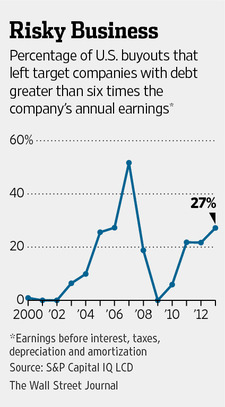
P1-BO838_LEVCAP_NS_20140121174803

Regulatory pressures are pushing many of the biggest banks to pass on financing lucrative deals, as Washington targets excessive borrowing. Bank of America Corp. BAC 0.00% , Citigroup Inc. C -0.80% and J.P. Morgan ChaseJPM +0.10%  & Co. are among lenders that have in recent months decided against financing some corporate takeovers partly out of concern the deals will run afoul of new guidelines. Those guidelines are designed to keep banks away from deals regulators feel are too laden with debt. Read more of this post

An Exclusive Investing Party You Might Want to Skip

An Exclusive Investing Party You Might Want to Skip

Did you hear about how the S&P 500 trounced hedge funds last year? And did you feel the tiniest bit of schadenfreude?

For a while there, it was hard not to feel jealous of hedge fund investors. Only certain classes of investors get the chance to pay fund managers their exorbitant fees, typically a 2 percent annual charge on top of 20 percent of any investment gains. The whole spectacle was a bit like watching a long line of clubgoers clamoring for the chance to pay a $20 cover and $1,000 for bottle service. To justify that, surely there must be some awesome stuff happening beyond the velvet rope? Read more of this post

Ami Kassar: The Perils of Borrowing Too Much, Too Soon; The reason for taking out a small-business loan should be to get your venture to the next level, not the next 10 levels

Ami Kassar: The Perils of Borrowing Too Much, Too Soon

The reason for taking out a small-business loan should be to get your venture to the next level, not the next 10 levels.

AMI KASSAR

Jan. 21, 2014 3:56 p.m. ET

Imagine a scenario where two entrepreneurs are sitting in a classroom planning similar ventures, but with different approaches. One is far sighted and has a picture of the equipment and factory he will need to build the widgets he wants to sell. This entrepreneur is building a forecast, projections and business plan. He is looking up prices for equipment and leases for buildings to figure out how much money he will need to borrow or raise. Read more of this post

IMF warns on emerging market exposure to capital flight

January 21, 2014 2:32 pm

IMF warns on emerging market exposure to capital flight

By Chris Giles in London and Robin Harding in Washington

Weaker emerging economies are exposed to sudden capital flight with the global economy staying on course to strengthen as expected this year, the International Monetary Fund said on Tuesday. Read more of this post

Emerging markets face tough year with no saviour; The Emerging-Market Comedown; Emerging Markets Get Ready for a Bumpy Ride

Updated: Wednesday January 22, 2014 MYT 12:21:13 PM

Emerging markets face tough year with no saviour

BY JAMES SAFT

Unlike previous recent crises, first in the US and then Europe, it is unclear what institution has both the will and the means to stand as a backstop if emerging markets as a group experience a crisis. Read more of this post

The Asian Superlative Horse for Value Investors: The Tale of Cosmax Vs L’Oreal

Dear Friends and All,

The Asian Superlative Horse for Value Investors: The Tale of Cosmax Vs L’Oreal

The Three Apples was on my mind in August 2007 when the Bamboo Innovator was in Seoul presenting to a group of about 50 Korean SME CEOs and the commerce minister at the KITIA-PwC conference. The first, “Eve’s apple,” the apple of morality. The second, the “Apple of Beauty,” the one which was given to Aphrodite by the Trojan prince. The third, “Newton’s apple of science”, the one that inspired Newton for the development of his theory of universal gravitation. The Three Apples is the corporate symbol of Korea’s Cosmax (Kospi: 044820 KS, MV $720 million), an ugly-duckling cosmetics company that the Bamboo Innovator decided to pay a visit amongst the over two thousand companies listed in Korea after the conference.

Cosmax was shunned by both foreign and local investors then because it doesn’t have its own brand – it does the contract manufacturing (ODM/OEM) for L’Oreal, Shu Uemura, Maybelline, J&J, Mary Kay, Amorepacific and so on. Companies with brands are the ones who command valuation premium, the veterans would sneer. The financial numbers of Cosmax was also ugly as it was undertaking a capex exercise to expand in China, depressing its profit margins while the plants are being constructed. KS (Kyung-soo) Lee (photo), founder and chairman of Cosmax, explained: “These three symbols hinged on the apple, explain the leaders, reflect exactly our industrial philosophy based on honesty, on our mission to contribute to a life more beautiful and finally on our goal for R&D.”

The Bamboo Innovator remembered the management sharing how Cosmax/KS were often advised by investors to go with the trend and venture downstream to building their own brand. Cosmax will not compete with its clients and adds value with new ODM products that are developed only after analyzing trends, KS Lee emphasized, stamping his integrity to stay independent to innovate with its own business model. The company highlighted its ability to create “formulas” and boasts that nearly all of its products are manufactured from them. One of the company’s most popular products is a gel eyeliner it devised for L’Oreal. KS had worked at Dong-A Pharmaceutical and Daewoong Pharmaceutical before starting Cosmax in 1992, then called Miroto Korea. President and CEO CH (Chul-hun) Song rose through the ranks of LG Household & Health Care’s cosmetics manufacturing division before joining Cosmax in 2004. At Cosmax’s R&D center, many heads of departments have joined Cosmax from Amorepacific, including company director Kim Joo-ho and directors Park Myeong-sam and Moon Seong-joon. Since August 2007 as the company expanded with a new factory in Shanghai (constructed in 2006 and the tipping point of commercialization in 2008) and Guangzhou, Cosmax has rose over 13-fold to a market value of $720 million from around W4,000 to W56,000, but not before enduring a gut-wrenching plunge to W1,410 in Oct 2008 during the Global Financial Crisis.

The recent exit of L’Oreal’s Garnier brand and Revlon from China and the continued success of Cosmax in China goes to highlight that beauty in Asia should not be judged skin-deep in chasing brands and pretty financial numbers. The porcelain beauty of Chinese women takes $35 billion to upkeep so exiting from such a seemingly attractive market speaks volume about the increasing difficulties faced by established western brands in China and emerging markets. L’Oreal made the surprising announcement less than two weeks ago that it is pulling its successful Garnier brand from the rapidly evolving Chinese market, which made up a little over 1% of L’Oreal’s $2 billion sales in China. The positioning of the Garnier line with relatively mass-market pricing has seen an initial promising start as the #1-selling brand in China since launching in 2006 with superstar Zhang Ziyi but it failed to gain traction as consumer grew wary of mass-market products and they no longer believe mass-market products are good for them. Revlon also said it was cutting its ailing operations in China, which account for about 2% of its total sales, and slashing more than 15% of its workforce, or 1,100 jobs, including those of 940 beauty advisers.

As hockey legend Waynes Gretzsky would say, skate to where the puck is going to be, not where it has been. The Bamboo Innovator was of the view that the profits and valuation premium in the value chain is possibly shifting to manufacturers with R&D/ODM capabilities to handle large batch orders as product lifecycle shortens and speed-to-market is crucial and there will only be a few of these companies, including Cosmax, who have the capability and capacity to handle these orders. Cosmax is capable of…

<Article snipped>

The story of Cosmax also reminded the Bamboo Innovator of an old Taoist tale of the Superlative Horse on how to find the neglected, the misunderstood opportunities, and its age-old wisdom is particularly apt as we approach the Chinese Lunar Year of the Horse at the month end of January:

Duke Mu of Chin said to Po Lo: ‘You are now advanced in years. Is there any member of your family whom I could employ to look for horses in your stead?’

Po Lo replied: ‘A good horse can be picked out by its general build and appearance. But the superlative horse – one that raises no dust and leaves no track – it is something evanescent and fleeting, elusive as thin air. The talents of my sons lie on a lower plane altogether; they can tell a good horse when they see one, but they cannot tell a Superlative Horse. I have a friend, however, one Chiu-fang Kao, a hawker of fuel and vegetables, who in things appertaining to horses is nowise my inferior. Pray see him.’

Duke Mu did so, and subsequently dispatched him on a quest for a steed. Three months later, he returned with the news that he had found one. ‘It is now in Shach’iu,’ he said.

‘What kind of a horse is it?’ asked the Duke.

‘Oh, it is a dun-coloured mare,’ was the reply.

However, the animal turned out to be a coal-black stallion. Much displeased, the Duke sent for Po Lo. ‘That friend of yours,’ he said, ‘whom I commissioned to look for a horse, has made a fine mess of it. Why, he cannot even distinguish a beast’s colour or sex. What on earth can he know about horses?’

Po Lo heaved a sigh of satisfaction. ‘Has he really got as far as that?’ he cried. ‘Ah, then he is worth ten thousand of me put together. There is no comparison between us. What Kao keeps in view is the spiritual mechanism. In making sure of the essential, he forgets the homely details; intent on the inward qualities, he loses sight of the external. ‘He sees what he wants to see, and not what he does not want to see. He looks at things he ought to look at, and neglects those that need not be looked at. So clever a judge of horses is Kao that he has it in him to judge something better than horses.’

And when the horse finally arrived, it turned out, indeed, to be a superlative animal.

his is a fabulous tale of Superlative Horses and of men who have the patience and the uncanny instinct to identify horses that raise no dust and leave no track. One cannot escape noticing the relationship among the three men – the underlying trust, the sense of self-worth, the respect for one another’s views and, of course, the obvious loyalty. In value investing, the payoff/returns might not be immediate, as in the case of Cosmax and Duke Mu’s judgment of Kao’s assessment of the Superlative Horse, and usually result in fray nerves, anxiety and unhappiness. Trust and support of one another is critical. At the Moat Report Asia and Bamboo Innovator community, which recently saw the addition of clients who raise no dust and leave no track – a secretive Singapore-based billionaire who’s a highly successful super value investor and a European-based multi-billion family office – we believe our value-add is in the authentic and independent sharing of investment opinions and views in order to get closer to the Truth – and this means that we need to take the social and business risk of being disagreeable at times. For value investing to be productive, there has to be a candid dialogue with a group of people who genuinely care for one another.

The more over-powering message, one that is relevant in our search for the resilient compounder, is that we should go beyond the external – the nice financial numbers, the certificates, the accolades, the family links and the PR – and seek out the intrinsic leadership qualities in individuals and the wide-moat of the companies.

To read the exclusive article in full to find out more about the story of Cosmax and Sa Sa (HKSE: 178 HK) and the value investing lessons from the old Taoist tale of the Superlative Horse, please visit:

Cosmax

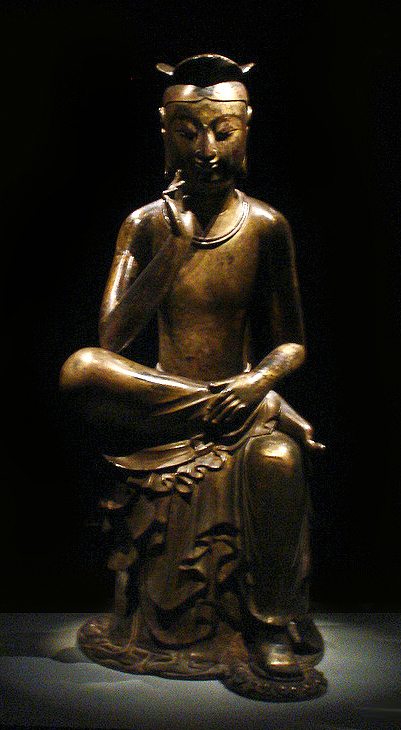
The Calm Smile of the Bodhisattva

Korea’s Gilt Bronze Maitreya Bodhisattva Bangasayusang

Bodhisattva_contemplativo_-_Museu_Nacional_da_CoréiaSilla-131101-1

014-01-19 16:36
The Calm Smile of the Bodhisattva
By Choe Chong-dae 
Although I am not a Buddhist but a member of Cheondo-gyo (Donghak, Eastern Learning), the most influential religion in Korea, I have visited countless ancient Buddhist temples at home and abroad over the decades because of my great interest in our Buddhist cultural heritage.
Whenever I visit a Buddhist temple, I always pay respect to the main Buddha statue first because the holy image is a symbol that represents the virtues of mercy, compassion, wisdom, generosity, philanthropy and enlightenment.
Despite differences of religion, ideology and nationality, many people in the world admire the significance and profound aesthetic value of Buddhist art and give respect to the basic tenets of Buddhist philosophy.  It is uncontestable that Buddhism has played a significant role in the spiritual development of modern civilization.
I am most inspired by the sublime tranquility of the Maitreya Bodhisattva in the Meditation statues in the Gyeongju National Museum and the National Museum of Korea.
It is encouraging that ancient Silla Dynasty artifacts have captivated the heart of many New Yorkers at the exhibition titled ”Silla: Korea’s Golden Kingdom” that is on display at the Metropolitan Museum of Art in New York through Feb. 23.
There are approximately 100 sophisticated ancient Silla cultural assets including Buddha statues, golden crowns and ornaments such as belts, rings and earrings on exhibit in New York.  I surmise that the highlight of the display at the Metropolitan Museum of Art is Korea’s National Treasure No. 83, the precious ”Geumdong Mireuk Bosal Banga-sang,” the gilt-bronze Pensive Maitreya Bodhisattva in Meditation.
This statue is regarded as one of the greatest masterpieces of all Korean Buddhist sculpture. It was discovered in the 1920s in Gyeongju, the ancient capital of Silla. It measures 93.9 cm tall and was made in the 7th century.
The Bodhisattva image is in profound contemplation and its facial features are not very happy. It seems to depict human anguish. However, when I look more closely, I see a mysterious smile on his indescribably peaceful face. In a sense, the figure shows a holiness that cannot be easily described in words.  The Pensive Maitreya Bodhisattva in Meditation statue reminds me of Rodin’s famous sculpture “The Thinker.”
Rodin’s “Thinker” is a solitary thinker, sitting all by himself. The nude figure sits in intense contemplation, twisting awkwardly, resting his right elbow on his left knee. Rodin’s statue is a powerful yet enigmatic figure in profound concentration. The pose of “The Thinker”, like the Pensive Buddha statue, leads us into thoughtful quiet and contemplation.
It is presumed that the Pensive Bodhisattva statue style originated in India because the statue suggests the way Shakyamuni is assumed to have lost himself in deep thought while reflecting on the evanescence of human life when he was the young Crown Prince “Siddhartha” prior to renouncing the world.
This gilt-bronze Maitreya Bodhisattva statue was almost excluded from the New York exhibit because of one administrator’s fear that the statue could be damaged in transit. However, after heated debates among cultural experts in Korea, the objection of the former head of the Cultural Heritage Administration of Korea was overridden.
I hope this revered statue will evoke peace, harmony, love, and good fortune for 2014 with its serious posture and graceful, calm smile. Our Korean Maitreya Bodhisattva looks vibrant and engaged in real life, almost like it is alive.
The smiling statue is the apex of historical, religious, artistic and aesthetic values. May 2014 be the year North and South Korea unite as one peaceful nation in the Maitreya’s (friendly) vision.
Choe Chong-dae is a guest columnist of The Korea Times and the president of Dae-kwang International Co., as well as a director of the Korean-Swedish Association. He can be reached at dkic98@chol.com

A Bodhisattva is the symbol of compassion who seeks enlightenment while also trying to save all sentient beings by spreading the Buddha’s teachings. The Maitreya Bodhisattva is also referred to as the Ilsaengpoch’ (一生補處; Eka-jati-prati-baddha) Bodhisattva, meaning that the Matireya Bodhisattva will be the next Buddha after the Shakyamuni Buddha. According to the Mirukhasaengkyong sutra(彌勒下生經) and the Kwanmirukposal Sangsaengtosolch’onkyong sutra(觀彌勒菩薩 上生兜率天經), the Maitreya Bodhisattva was born in Varanasi in southern India to a Brahman family. He received the teachings from the Shakyamuni Buddha who predicted that he would become the next Buddha. The Maitreya Bodhisattva then ascended to Tusita Heaven where he now teaches the Dharma to the Gods residing there. Tusita Heaven refers to a heaven of full knowledge and satisfaction, where no greed or worldly desires exist. The Gods there have perfect knowledge(吾唯知足)and do not need materials or external objects to be satisfied. According to tradition, the Matireya Bodhisattva will return to the Saba(secular) world 5 670 000 000 years after the death of the Shakyamuni Buddha. He will attain Buddhahood under the Naga-puspa(dragon-flower) tree in a lotus garden(華林園) and will save all sentient beings with 3 Dharma Talks. The Maitreya Bodhisattva is the epitomy of compassion in Mahayana Buddhism and was the one predicted to be the future Buddha by the Shakyamuni Buddha himself. The Maitreya Bodhisattva represents a very important figure in Buddhism. It is believed that if one dilligently cultivates one’s virtues in this lifetime, one will be reborn into Tusita Heaven where he/she will meet the Maitreya Bodhisattva. Furthermore he/she will also be present at the Maitreya Bodhisattva’s first Dharma Talk after his enlightenment and attain enlightenment himself. Hence the tradition of worshipping the Maitreya, Amitab ha and Avalokitesvara Bodhisattvas remains strong among the Buddhist populace even today.

Are you cut out to be successful? Many people say they want to be successful, however, only a handful are truly willing to walk through fire to achieve it

Updated: Tuesday January 21, 2014 MYT 10:49:40 AM

Are you cut out to be successful?

BY PAM SIOW

While many say they want success, few are willing to walk through fire to achieve it. – AFPpic

YOU ARE not alone if you want to be a success. And while success means different things to different people, financial independence, more time to enjoy friends and family, and a low-stress lifestyle definitely help to create a fulfilled life. Read more of this post

Working Together: Why Great Partnerships Succeed

Working Together: Why Great Partnerships Succeed

by SHANE PARRISH on JANUARY 14, 2014

partner

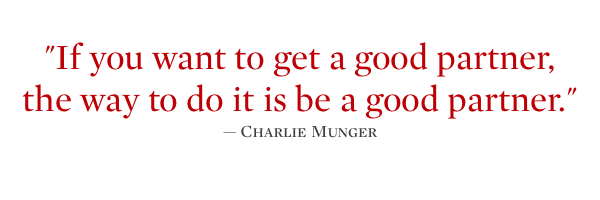
Why do partnerships work well? That’s the question Michael Eisner explores inWorking Together: Why Great Partnerships Succeed. Some of the most successful and accomplished people are really teams: Warren Buffett and Charlie Munger, Bill and Melinda Gates, Brian Grazer and Ron Howard (who’ve won multiple Academy Awards), Bernie Marcus and Arthur Blank (who started Home Depot), Joe Torre and Don Zimmer… the list could go on forever. Read more of this post

Ben Franklin’s 13 Virtues and the systematic way he approached them

The Thirteen Virtues

by SHANE PARRISH on JANUARY 15, 2014

In The Autobiography of Benjamin Franklin, we find a list of thirteen virtues “all that at that time occurr’d to me as necessary or desirable.”

These names of virtues, with their precepts, were:

1. TEMPERANCE. Eat not to dullness; drink not to elevation.
2. SILENCE. Speak not but what may benefit others or yourself; avoid trifling conversation.
3. ORDER. Let all your things have their places; let each part of your business have its time.
4. RESOLUTION. Resolve to perform what you ought; perform without fail what you resolve.
5. FRUGALITY. Make no expense but to do good to others or yourself; i.e., waste nothing.
6. INDUSTRY. Lose no time; be always employ’d in something useful; cut off all unnecessary actions.
7. SINCERITY. Use no hurtful deceit; think innocently and justly, and, if you speak, speak accordingly.
8. JUSTICE. Wrong none by doing injuries, or omitting the benefits that are your duty.
9. MODERATION. Avoid extreams; forbear resenting injuries so much as you think they deserve.
10. CLEANLINESS. Tolerate no uncleanliness in body, cloaths, or habitation.
11. TRANQUILLITY. Be not disturbed at trifles, or at accidents common or unavoidable.
12. CHASTITY. Rarely use venery but for health or offspring, never to dulness, weakness, or the injury of your own or another’s peace or reputation.
13. HUMILITY. Imitate Jesus and Socrates.

As for how to acquire these virtues, Franklin advised:

My intention being to acquire the habitude of all these virtues, I judg’d it would be well not to distract my attention by attempting the whole at once, but to fix it on one of them at a time; and, when I should be master of that, then to proceed to another, and so on, till I should have gone thro’ the thirteen; and, as the previous acquisition of some might facilitate the acquisition of certain others, I arrang’d them with that view, as they stand above. Temperance first, as it tends to procure that coolness and clearness of head, which is so necessary where constant vigilance was to be kept up, and guard maintained against the unremitting attraction of ancient habits, and the force of perpetual temptations. This being acquir’d and establish’d, Silence would be more easy; and my desire being to gain knowledge at the same time that I improv’d in virtue, and considering that in conversation it was obtain’d rather by the use of the ears than of the tongue, and therefore wishing to break a habit I was getting into of prattling, punning, and joking, which only made me acceptable to trifling company, I gave Silence the second place.

What wisdom would you pass along to the world if you knew you were going to die soon

Achieving Your Childhood Dreams

by SHANE PARRISH on JANUARY 16, 2014

The “last lecture” is common with a lot of professors on college campuses. Professors are asked to consider what matters most to them. If you’ve ever sat in the audience for one of these lectures you can’t help but wonder what wisdom you’d want to impart to the world if it was your last chance? Read more of this post