Storms gather over emerging markets; Fear of taper turmoil should lead to structural reforms

January 16, 2014 6:31 pm

Storms gather over emerging markets

Fear of taper turmoil should lead to structural reforms

Since the financial crisis, emerging markets have enjoyed some indirect benefit from the sluggish recovery of the developed world. The unprecedented stimulus unleashed by the largest central banks has depressed yields on safe assets, pushing investors to search for higher rates in ever more exotic locations. Between 2010 and 2013, private capital inflows to developing countries jumped to about 6 per cent of their combined gross domestic product. Read more of this post

When a financial adviser wants to learn about managing money amid rising interest rates, she turns to a veteran colleague who calls himself the “Old Man and the Sea.”

Raymond James Adviser Learns Ropes About Higher Rates From Old Hand

CORRIE DRIEBUSCH

Jan. 20, 2014 5:43 p.m. ET

When Rachel McNeil, a financial adviser with Raymond James Financial Inc., RJF -0.13%wants to learn from the past, she turns to “the Old Man and the Sea.” Not the Ernest Hemingway classic novel, but Joe Blanton, a 70-year-old colleague who has jokingly adopted the novel’s title as his moniker. Read more of this post

What Do “Insiders” Know That You Don’t?

What Do “Insiders” Know That You Don’t?

Tyler Durden on 01/19/2014 12:28 -0500

20140119_insider

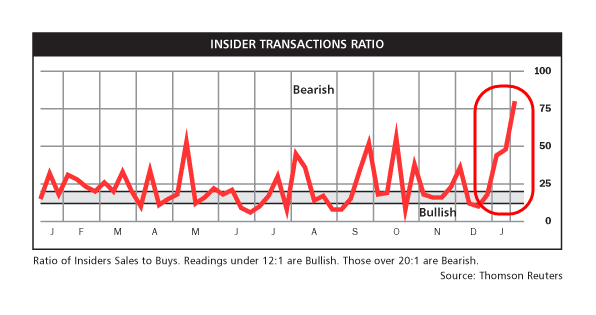
With your local friendly asset-gatherer constantly promoting the cheapness of stocks of the TINA (there is no alternative) to BTFATH, TV talking-heads jabbering over ‘stock-pickers’ markets (infuriating Cliff Asness), and CEOs trotted out day after day to espouse how bright the future looks (even if outlooks in the immediate future are down-down-down-graded); it is hardly surprising that sentiment among the sheeple is so extremely bullish. So, when we saw the chart below… we could only ask – what do the insiders know that the average-joe-investor doesn’t? Of course, we are sure someone will try and explain away this avalanche of insider-selling with “tax-related” factors or “taking-profits” but none of that negates the less-than-optimistic tone that it implies about what the short- or medium-term expectations are from management of the firms that comprise the US equity market…

Richest Scandinavian Nation Extends Its Junk Boom

Richest Scandinavian Nation Extends Its Junk Boom

Norway’s record corporate debt binge last year is set to continue as the junk bond market in Scandinavia’s richest nation becomes a magnet for companies seeking ready cash. Corporate bond issuance reached a record 104 billion kroner ($17 billion) in 2013, including 61.4 billion kroner in high-yield issuance, according to Nordea Bank AB. (NDA) Demand will probably continue to propel issuance this year as risk appetite opens up for even more speculative deals, Lars Kirkeby, chief credit analyst at Nordea in Oslo, said in an interview. Read more of this post

Philippines Slips From Best to Worst on Peso Loss: Asean Credit

Philippines Slips From Best to Worst on Peso Loss: Asean Credit

Philippine bonds, Southeast Asia’s biggest gainers in 2013, are delivering the region’s only losses this month after inflation accelerated to a two-year high and the peso slumped. Local-currency government notes dropped 1.3 percent in 2014, after gains of 5.2 percent last year that were the best among 10 Asian indexes compiled by HSBC Holdings Plc. Consumer-price increases of 4.1 percent are giving investors in Philippine 10-year securities a real yield of 0.18 percent, compared with 2.7 percent for Thailand and 1.3 percent for Malaysia, data compiled by Bloomberg show. Read more of this post

Norway’s $833 billion oil fund eyes riskier bets

Norway’s $833 billion oil fund eyes riskier bets

5:58am EST

By Gwladys Fouche and Joachim Dagenborg

OSLO (Reuters) – In May 2012 the world’s largest sovereign wealth fund joined U.S. investors BlackRock and Waddell & Reed to buy a $1.6 billion stake in motor racing’s Formula One. The people who had worked on the deal for months were looking forward to celebrating their hard work. Read more of this post

How You Can Survive a New Era in the Bond Market; Think High-Dividend Stocks, International Bonds and ‘Junk’ Bonds

How You Can Survive a New Era in the Bond Market

Think High-Dividend Stocks, International Bonds and ‘Junk’ Bonds

TOM LAURICELLA

Jan. 18, 2014 8:37 p.m. ET

BN-BD670_19LEDE_G_20140117174649SJ-AH042A_LEDE_G_20140116185104

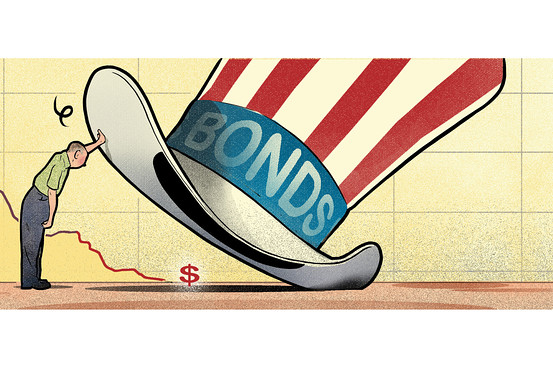
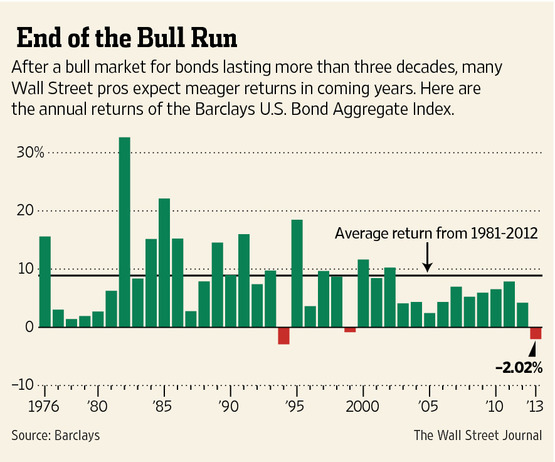
For investors, last year’s losses in the bond market should serve as a wake-up call that the era of big bond-market returns is over. For the foreseeable future, many say meager returns and occasional losses will be the norm. Read more of this post

How factory-built homes are shedding their ‘cheap’ label and exploding in popularity

How factory-built homes are shedding their ‘cheap’ label and exploding in popularity

Armina Ligaya | January 20, 2014 | Last Updated: Jan 20 6:36 PM ET
After more than three decades in her Toronto bungalow amid growing mildew problems in the 1940s-era home, Ruth Wiens decided it was to start fresh. Falling bonds yields could push mortgage rates lower as banks compete in the spring housing market, the strongest real estate period of the year Read more of this post

Going cold on Turkey: An internal power-struggle further dents Turkey’s hopes of joining the European Union

Going cold on Turkey: An internal power-struggle further dents Turkey’s hopes of joining the European Union

Jan 18th 2014 | From the print edition

20140118_EUD000_0

IN ANOTHER era, tanks might now be on the streets of Ankara and Istanbul. Over the past year Turkey has seen a crackdown on protests, corruption scandals, a purge of the police and judiciary, paranoid talk of foreign plots and fifth columns, an economic slowdown and more attempts to Islamicise society. Given this turmoil, Turkey’s soldiers would no doubt be tempted to sweep aside the failed politicians (as they have done four times in the past). That the generals have remained in barracks—or, in many cases, in jail—is a sign of democratic progress. But after years of strong growth and political reform, Turkey is sliding backwards, with more than a whiff of authoritarianism about the prime minister, Recep Tayyip Erdogan, whose Islamist-flavoured AK party has been in power since November 2002. Read more of this post

France Needs an Economic Revolution

France Needs an Economic Revolution

Once in a while the French and British engage in a rhetorical brawl, hurling verbal rotten eggs and stale baguettes at each other across the channel. The one that’s been happening in recent days has been a doozy. Read more of this post

FASB Simplifies Rules on Goodwill, Swaps for Private Companies

January 17, 2014, 3:17 AM ET

FASB Simplifies Rules on Goodwill, Swaps for Private Companies

EMILY CHASAN

Senior Editor

Private companies will soon be able to take advantage of simpler accounting for complex swaps transactions and asset valuations after bad acquisitions. U.S. accounting rule makers on Thursday  issued the simplified alternatives, following complaints from private companies that complex rules intended for public company accounting were too costly and irrelevant to their stakeholders. The overseers of the Financial Accounting Standards Board last year created a Private Company Council to address those concerns. Read more of this post

Europe bundled mortgage defaults hit two-year high; Nearly 80% of CMBS due to mature Q4 2013 fail to repay principal

January 20, 2014 3:44 pm

Europe bundled mortgage defaults hit two-year high

By Christopher Thompson

The default rate of “sliced and diced” loans backed by commercial mortgages in Europe has hit a two-year high, highlighting difficulties in resuscitating the securitisation market. Read more of this post

Drugmakers Wary Brazil Price Index for Medicine to Crimp Revenue

Drugmakers Wary Brazil Price Index for Medicine to Crimp Revenue

Brazil’s government for the first time in nine years has delayed publishing the calculation it uses to set price changes for medicine, raising concern in the pharmaceutical industry this year’s prices will be too low. Read more of this post

CEO Profit Skepticism Backs Decade’s Weakest Stocks Estimate

CEO Profit Skepticism Backs Decade’s Weakest Stocks Estimate

Investors who want to know why U.S. equity strategists are the most pessimistic in a decade need look no further than statements by chief executive officers.

For every company predicting in January that earnings will beat analyst estimates, 2.5 are projecting results that fall short, matching the worst ratio since the rally began in March 2009, according to data compiled by Bloomberg. While analysts say Standard & Poor’s 500 Index profits will rise 8.8 percent in 2014, that’s almost the same estimate they generated a year ago for 2013, when earnings ended up increasing at about half that rate, the data show. Read more of this post

BRIC or MINT? Investors suffer acronym anxiety

Updated: Tuesday January 21, 2014 MYT 6:57:33 AM

BRIC or MINT? Investors suffer acronym anxiety

LONDON: Which investment takes your fancy: BRIC, MINT or CIVETS? For many fund managers seeking the next big thing in emerging markets, the answer is none. Acronym investment – putting money into small groupings of markets which often have little in common beyond a broad economic concept – is giving way to acronym anxiety. Read more of this post

Carlos Slim Still Reaping Big Rewards From NY Times Loan

Carlos Slim Still Reaping Big Rewards From NY Times Loan

Billionaire Carlos Slim is poised to double his money after investing $250 million in a 2009 lending agreement with the New York Times, showing how dearly the newspaper’s owners paid for his help. Read more of this post

Both sides now – pros and cons of dual shares

Both sides now – pros and cons of dual shares

Business Times

20 Jan 2014

Adrian Chan

BOTH the Hong Kong and Singapore stock exchanges currently have a “one share, one vote” system. To control a company, one needs to own a significant number of shares. Read more of this post

America’s Real Manufacturing Advantage; A new wave of software innovation is about to transform industry—and give the United States the chance for a lasting edge

January 20, 2014

America’s Real Manufacturing Advantage

A new wave of software innovation is about to transform industry—and give the United States the chance for a lasting edge. See also America’s Manufacturing Advantage—In Pictures.

by Helmuth Ludwig and Eric Spiegel

The industrial sector in the United States is rebounding. Manufacturers are boosting output, building new plants, increasing exports, and creating better-paying jobs that require precise skills—and in the process are helping lead the U.S. out of the long, stubborn slump that followed the market disruptions of 2007. A growing number of political and business leaders, economists, and commentators are taking notice, and talking about a domestic “manufacturing renaissance.” Some are saying it could add millions of new and well-paid jobs, unwind the U.S.’s long-standing trade deficit, and usher in a new era of growth and prosperity. This is a welcome point of view—much more beneficial than the idea, formerly in vogue, that the country could survive on services and finance, without much of a manufacturing industry. But it is, nonetheless, an incomplete point of view. Many of these manufacturing optimists are basing their forecasts mainly on transitory changes in energy supply and relative labor costs that are not likely to provide the kind of long-term improvements they envision. Read more of this post

Korea’s Jeonse money exceeds 90% of sale price for 76,000 households

Jeonse money exceeds 90% of sale price for 76,000 households

Jin Young-tae

2014.01.21 17:44:36

Owing to an unbridled increase in jeonse price, apartments with key money deposits exceeding 90% of their estimated sale value are cropping up one after another in South Korea.
Given that apartments on auction are taken at an average of 83% of their estimated sale price, the situation means there will be an increase in jeonse tenants who end up losing some of their key money if owners are saddled with mortgages and end up selling the apartments through auction.  Read more of this post

Nintendo Mulls New Business Model After Forecasting Loss; Nintendo’s Woes Don’t Mean Game Over For Its Consoles

Nintendo Mulls New Business Model After Forecasting Loss

Nintendo Co. (7974) President Satoru Iwata said the maker of video-game machines is considering a new business model after forecasting a surprise 25 billion-yen ($240 million) annual loss because of tepid demand for the Wii U. Read more of this post

Japanese consumers and marketers alike certainly love their ヒット商品 (hitto shōhin, hit products). To understand how this term came about, we need to look back to the decade following World War II

Marketers succeed by generating hitto products

BY MARK SCHREIBER

SPECIAL TO THE JAPAN TIMES

JAN 19, 2014

Japanese consumers and marketers alike certainly love their ヒット商品 (hitto shōhin, hit products). To understand how this term came about, we need to look back to the decade following World War II. When living standards gradually began to improve from the early 1950s, Japanese consumers eagerly snapped up home appliances. As a condition for marriage, new brides demanded a home supplied with 白黒テレビ (shirokuro terebi, black-and-white TV), 洗濯機 (sentakuki, washing machine) and 冷蔵庫 (reizōko, refrigerator). These became referred to as 三種の神器 (sanshu no jingi, the three sacred treasures), which was a humorous allusion to the mirror, sword and jewel that were presented to Japan’s ancient emperors during the imperial enthronement ceremony. Read more of this post

AirAsia Prepares Japan Discount Airline After Split With ANA

AirAsia Prepares Japan Discount Airline After Split With ANA

AirAsia Bhd. (AIRA), Southeast Asia’s biggest budget carrier, is close to restarting plans for a Japanese unit after a partnership with ANA Holdings Inc. (9202) unraveled in June, Chief Executive Officer Tony Fernandes said. Read more of this post

Stop pre-launch sales to curb excessive speculation, Malaysian property developers urged

Updated: Tuesday January 21, 2014 MYT 1:19:42 PM

Stop pre-launch sales to curb excessive speculation, property developers urged

KUALA LUMPUR: Property developers should eliminate pre-launch sales to curb excessive speculation, said Minister in the Prime Minister’s Department Datuk SeriAbdul Wahid Omar. Read more of this post

Is Berjaya billionaire chief Vincent Tan set on cashing out on his assets?

Is Berjaya chief Vincent Tan set on cashing out on his assets?

Tuesday, January 21, 2014 – 09:57

Wong Wei-Shen

The Star/Asia News Network

PETALING JAYA – Berjaya group founder and billionaire Tan Sri Vincent Tan has been on a listing spree of late, begging the question if he is set on cashing out on several of his assets. Read more of this post

Taiwan’s Perng Attacks Monetary Easing for Spurring Instability

Taiwan’s Perng Attacks Monetary Easing for Spurring Instability

Taiwan’s central bank Governor Perng Fai-nan criticized monetary easing in advanced economies for destabilizing financial markets, as the Federal Reserve’s record stimulus last year spurs funds into emerging markets. Read more of this post

Thai Default Risk Soars as Funds Pull $4 Billion

Thai Default Risk Soars as Funds Pull $4 Billion: Southeast Asia

The risk of Thailand defaulting on its debt is the highest since August as anti-government protests prompt money managers to sell the nation’s assets. The cost of protecting the nation’s debt soared after investors including Wells Fargo Inc. pulled more than $4 billion from Thai stocks and bonds since Oct. 31, as rallies clogged up Bangkok roads and clashes claimed eight lives. Pacific Investment Management Co., Goldman Sachs Group Inc. and Kokusai Asset Management Co. reduced debt holdings before protests first erupted in late October, regulatory filings show. Read more of this post

Toyota may rethink Thai investment plans if crisis lingers; Malaysia said it would further open its auto industry to foreign makers of energy-efficient cars to better compete with Thailand for investment

Toyota may rethink Thai investment plans if crisis lingers

5:35am EST

By Manunphattr Dhanananphorn

BANGKOK (Reuters) – Toyota Motor Corp (7203.T: Quote,ProfileResearchStock Buzz) may reconsider investing up to 20 billion baht ($609 million) in Thailand, and could even cut production, if political unrest drags on, the head of the Japanese automaker’s local unit said on Monday. Read more of this post

Indonesia Investment to Slow in 2014 Amid Election Uncertainty

Indonesia Investment to Slow in 2014 Amid Election Uncertainty

Indonesia expects investment to slow in 2014, as companies may hold off during an election year, providing less stimulus to an economy grappling with weaker growth and a current-account deficit. Read more of this post

Not time yet to relax Singapore property cooling measures: CEOs; Property market hasn’t quite stabilised, say industry leaders

PUBLISHED JANUARY 20, 2014

Not time yet to relax cooling measures: CEOs

Property market hasn’t quite stabilised, say industry leaders

JAMIE LEE LEEJAMIE@SPH.COM.SG

Key points: TDSR has been effective; gradual removal of measures later this year could be necessary; S’pore risks losing out to competing countries. – PHOTO: REUTERS

[SINGAPORE] Despite a drastic drop in home sales and sliding home prices, cooling measures for the property sector should not be rolled back just yet, say CEOs and industry-group leaders polled by The Business Times. Read more of this post

Luck, Value Investing And Charlie Munger; Charlie Munger was 31 years old, divorced, broke, and burying his 9 year old son. Most people have no idea where he was when he was 31 and Munger is now one of the richest men in the world

Luck, Value Investing And Charlie Munger

by valueplaysJanuary 17, 2014

This has been making the rounds so I thought I’d comment on it. Aside from making Dorsey look like an ass (of course he may have just said that to be provocative), it makes some very good points but I think leaves some other out that are just as important. Here is the opening of Mark’s latest memo (full text linked below).

The Role of Luck

The first inspiration for this memo came in early November, when I picked up a copy of the Four Seasons Magazine in my hotel room in Riyadh, Saudi Arabia. I happened to turn to an article entitled “In Defence of Luck” by Ed Smith. It’s been in my Oaktree bag ever since. In his two opening paragraphs, Smith presents a thesis for dismantling:

“Success is never accidental,” Twitter founder Jack Dorsey recently tweeted. No accidents, just planning; no luck, only strategy; no randomness, just perfect logic.

It is a tempting executive summary for a seductive speech or article. If there are no accidents, then winners are seen in an even better light. Denying the existence of luck appeals to a fundamental human urge: to understand, and ultimately control, everything in our path. Hence the popularity of the statement “You make your own luck.”

That’s all it took to get my juices flowing. I – along with Smith – believe a great many things contribute to success. Some are our own doing, while many others are beyond our control. There’s no doubt that hard work, planning and persistence are essential for repeated success. These are among the contributors that Twitter’s Dorsey is talking about. But even the hardest workers and best decision makers among us will fail to succeed consistently without luck.

What are the components of luck? They range from accidents of birth and genetics, to chance meetings and fortuitous choices, and even to perhaps-random but certainly unforeseeable events that cause decisions to turn out right.

In discussing the existence and importance of luck, Smith cites the popular book Outliers by Malcolm Gladwell:

Attacking luck has never been more fashionable. No matter how flimsy the science behind the theory, popularized by author Malcolm Gladwell, that success must follow from 10,000 hours of dedicated practice, it has hardened into folklore.

Outliers is best known for Gladwell’s observation that it’s this magic number of hours of practice that makes the difference for those who are most successful. But that’s only part of Gladwell’s message, and people who think his book is all about hard work and practice miss the point. Having set out the “10,000- hours” thesis, Gladwell largely stops talking about it and turns to spend much more time on something he calls “demographic luck.” This is actually the antithesis of an insistence that hours of effort suffice.

Getting Lucky (pdf)

I had a High School football coach, Frank Ruggiero who had this on the wall of our locker room “Luck is when preparation and determination meet opportunity”.

I believe that wholeheartedly. Step back and look at most really successful people. By successful I don’t mean heirs of the Walton’s, Warren Buffett, Bill Gates or any other heir. I mean the folks who started it all. Look at them and look at their lives. A stunning number of them overcame difficulties before they were successful.   Yes, 1955 and 1956 were seemingly prime years to be born in to be at the epicenter of the computer revolution. Yet, there were millions of births that year and only a handful made the big splash. Yes, to have Ben Graham as your teacher at Columbia in the 1950?s was to learn from the master of value investing yet Graham taught hundreds (thousands?) of students, yet there is only one Warren Buffett who basically went door to door in Omaha seeking funds for his partnership.

I am by no means saying “luck” for lack of a better word plays no role (being born in the US vs Somalia for example). What I am saying is that determination plays a far greater one. There are countless people who had the same “opportunities” as Gates, Buffett, Jobs etc did but never ascended the heights the way they did. Why? Lack of skill? Lack of determination? They quit at the first setback? Anyone who know the stories of Gates and Jobs know there were countless setbacks for them yet they never quit. Luck? No.

We can even take this same line of thinking and make it relative. Let’s talk about those “unlucky” and born into poverty. There is no doubt they have started behind the curve vs those born even to the middle class. Yet, every year millions of them get themselves out of poverty and break the cycle. Why? Were they “lucky” to get a job, find a mentor, actually complete high school, go to college, refuse to join a gang or start doing drugs?  I would say virtually all have had the opportunity and some made the right choices and others, did not. I think we denigrate the success of those who made the right choices by calling them “lucky”.

Take a look at Buffett’s right hand man Munger. Most people have no idea where he was when he was 31 and now one of the richest men in the world.

In 1949, Charlie Munger was 25 years old. He was hired at the law firm of Wright & Garrett for $3,300 per year, or $29,851 in inflation-adjusted dollars as of 2010. He had $1,500 in savings, equal to $13,570 now.

A few years later, in 1953, Charlie was 29 years old when he and his wife divorced.  He had been married since he was 21.  Charlie lost everything in the divorce, his wife keeping the family home in South Pasadena.  Munger moved into “dreadful” conditions at the University Club and drove a terrible yellow Pontiac, which his children said had a horrible paint job.  According to the biography written by Janet Lowe, Molly Munger asked her father, “Daddy, this car is just awful, a mess.  Why do you drive it?”  The broke Munger replied: “To discourage gold diggers.”

Shortly after the divorce, Charlie learned that his son, Teddy, had leukemia.  In those days, there was no health insurance, you just paid everything out of pocket and the death rate was near 100% since there was nothing doctors could do.  Rick Guerin, Charlie’s friend, said Munger would go into the hospital, hold his young son, and then walk the streets of Pasadena crying.

One year after the diagnosis, in 1955, Teddy Munger died.  Charlie was 31 years old, divorced, broke, and burying his 9 year old son.  Later in life, he faced a horrific operation that left him blind in one eye with pain so terrible that he eventually had his eye removed.

Any one of those events would have been many peoples excuse for giving up and for their life not turning out how they wanted it to.  Not Munger. Some will try to negate that by saying “well, knowing Buffett helped”. I would note here that by the time Munger met Buffett he was well on his way to his millions (billions) and had he just quit on his dreams he would have never partnered with Buffett later in life.

I think it is the connotation the word “luck” has that I dislike. It implies one is successful through no effort of their own. Sure, if my last name was Walton (WMT) then, yes, being born as Sam’s grandson would in fact be “luck”. Hitting Powerball for 300M is in fact luck. Walking onto a plane that is destined to crash, is in fact “bad luck”. Does anyone wonder why successful teams always seem to have the ball bounce their way while lousy teams never do? It is statistically impossible for it to be purely chance. No, good teams makes good decisions that stop the ball from bouncing in the first place and when it does happen to bounce, they are prepared for it and react without hesitation increasing their odds of success.

But working hard your whole life and ending up a success isn’t “luck”. Anyone who is approaching 50 understands there are more than a few times in those years you could have quit, given up on a dream and settled for far less. But, you didn’t. You kept on, worked harder and one day an opportunity came to your door, and because you continued to work hard and because you never gave up, your were ready to take advantage of it.  How many times could Steve Jobs have just walked away from it all? He had set back after very public set back (was fired from the company he founded) yet never gave up. Luck?

I think if we all look back on our lives we will find times that we were stuck in a rut and things were not going as we’d like them to have been going. I also feel if we are honest, we can also say of those time “I wish I’d done this” or lament a squandered opportunity.  We can probably also find those times we blamed “bad luck” for our lack of success wasn’t really bad luck, but a missed opportunity.

I college I worked briefly for an large insurance company selling life insurance one summer. On Sat mornings we would go into the office from 9-12 and do cold call blitzes. We would get a book of names and just cold call them.  You can imagine a bunch of 21 yr olds really wanting to do this on a Sat morning. Well one Friday night a bunch of us were out having drinks. As it got late a few of us decided to go home and a few stayed out to finish the evening. The next morning the few who stayed out stumbled into the office around 11 while those who went home early were hitting the calls sheets at 9. One co-worker (we’ll call him Tom) ran out of names so he grabbed Larry’s (also fictional) call list while Larry slept off his hangover in his cubicle. Larry was happy to give up the list so he could tell the boss the names were contacted.

Wouldn’t you know one of those names ended up being a business owner who just had a friend in a partnership (different business) whose partner died. They had no insurance to cover such an event and because of that things were a mess for his friend. Also being in a partnership, this person was determined not to see the same thing happen to him. He requested an appointment (was impressed a young kid was working Sat am) that day and Tom made not only that sale but a series of other sales to other acquaintances of this person over the next couple weeks.   Those sales made Tom’s quarter (and probably year frankly).

During his performance review Larry, who was being called to the carpet for low sales numbers vs Tom lamented, “he just got lucky with that one call!!”. Did he? Was it really luck? Didn’t Larry have to same opportunity as Tom and in fact he had a better one because it was his call list the name came from. Had he come to work that day prepared to work vs vomiting in a waster paper basket in the men’s room he would have made that sale.  This man wanted insurance, it was a sale for someone, no special skills needed.

Larry was soon out of that job while heard Tom was the highest performing agent in that office. Was it luck or was the work ethic exhibited that Saturday indicative of how Tom worked and thus his success was inevitable?

Now, in no way do I feel the way Dorsey does in that there is no luck and that there are “No accidents, just planning; no luck, only strategy; no randomness, just perfect logic” . Plenty of people do all the right things and are on their way only to be killed in an accident through no fault of their own or sticken by disease. That is shitty luck. But I also wish successful people would stop apologizing for their success as if it could just as easily be any random person where they are. That simply isn’t the case.

I think we’ve gotten to the point now that people are implying “there is no success, just a series of fortunate events in which someone, anyone, could have done what you did given the exact same circumstances”.  The problem with that is we can never have the exact same circumstances. We can have the same opportunity (as Larry and Tom did) but how one reacts to it determines its outcome.  Different reaction, different outcome.

Some may claim some get more of those coveted opportunities than others.  This is true but it is also true that once you get in the habit of letting opportunity pass you by, it comes by far less often, in fact, you get to the point where you no longer even recognize it.  Yet, the converse is also true. Once you start grabbing opportunity, it seems to come at you from everywhere and in fact you begin to see it where most others don’t.  Look back at your own life and be honest, this is true. In your darkest moments, whatever that might have been, you let countless chances go by. Once you decided enough was enough and got your act together, opportunity was everywhere.  Opportunity is often there, you just have to be looking for it.

Never confuse success with luck. Millions of us get the same opportunities and yet far too many are unsuccessful (however you define that). That success can be relative, the first in your family to break the cycle of poverty, finish high school, go to college, graduate etc . It doesn’t have to be measured in millions. It can be measured in simple accomplishments. Luck isn’t the difference, it is determination and perseverance that is.

Everyone gets opportunities in life of varying degrees…….those who are successful take advantage of them…stop apologizing for and denigrating that success….you earned it.