Corporate whistleblowers: Lawyer’s poker; In-house counsels’ lips might no longer be sealed
May 20, 2014 Leave a comment
Corporate whistleblowers: Lawyer’s poker; In-house counsels’ lips might no longer be sealed
May 10th 2014 | NEW YORK | From the print edition
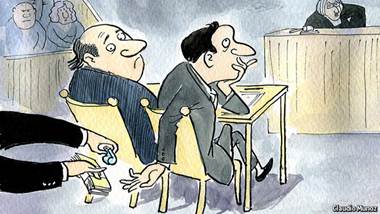
THE potential rewards of exposing corporate wrongdoing have ballooned in America, where whistleblowers can now claim up to 30% of fines imposed. Bent executives can be forgiven for feeling that the only insider they can trust not to spill the beans is the company lawyer, bound as he is by strict ethics rules and the principle of “attorney-client privilege”.
Now, though, even this bulwark of confidentiality is under threat. Whistleblowing advocates report an uptick in the number of lawyers prepared to snitch for money since the passage in 2010 of the Dodd-Frank act, which increased whistleblower bounties and protections. A number of such cases are moving forward under seal, they say. No lawyer is known to have received a payout yet, though it is impossible to be sure as recipients can opt to remain anonymous.
Growing federal support for whistleblowers has brought to a head a question that “goes to the soul of what it means to be a lawyer,” says Barry Temkin of Mound Cotton Wollan & Greengrass, a law firm: “Are we secret-keepers or gatekeepers?” The cruder question for lawbreaking corporate executives, he says, is: “Will counsel throw me under the bus for a few million?”
Some would-be whistleblowers are seeking to exploit a gap between strict state ethics rules and more-permissive federal laws and regulations, says Timothy O’Toole of Miller & Chevalier, another law firm. America’s lawyers are licensed by its states, which allow confidentiality to be breached in only a few narrow cases, such as client perjury, or to prevent a serious crime being committed—and even then disclosure should be the bare minimum “necessary”. In an ethics opinion issued last year, a New York lawyers’ association concluded that even in the rare cases where state law allows disclosure, lawyers should be prevented from claiming a bounty because the prospect of financial gain would cloud their professional judgment. Those who seek payment in return for snitching on their clients risk having their state licences revoked.
But rules written and refined by the Securities and Exchange Commission (SEC) since the Sarbanes-Oxley corporate-governance reforms of 2002 permit disclosure in broader circumstances, including civil violations of securities laws, and the award of cash bounties. Moreover, the SEC has taken the position that its regulation of lawyers’ conduct pre-empts any state rules that clash with it.
What lawyers can and can’t reveal, and whether they can be paid for it, will have to be decided by federal courts. Those who see attorney-client privilege as sacrosanct took heart from a recent case involving allegations of kickbacks at Quest Diagnostics, a medical-laboratory firm. A federal appeals court affirmed a lower court’s dismissal of a suit brought by three whistleblowers on the ground that the participation of Quest’s former general counsel represented a breach of ethics.
But the case had unique characteristics. The ethics breach resulted from the fact that the lawyer’s participation was superfluous, because two other former executives (neither of them lawyers) had also blown the whistle and had sufficient information to do so without him. Might the court have ruled differently had the lawyer come forward alone?
Moreover, the case focused solely on the interplay between state rules and the False Claims Act, not other federal laws. It was heard by the Second Circuit, which covers New York, Connecticut and Vermont. Other circuits have yet to weigh in.
The question that matters most concerns the long-term impact that whistleblowing lawyers would have on the quality of legal representation. Encouraging bosses to be candid with counsel has long been a cornerstone of the client-lawyer relationship. “It’s hard to give good advice to someone who doesn’t feel comfortable speaking with you frankly,” says Mr O’Toole. The payment of bounties might end up enriching a few lawyers but leave the rest of the profession, and its corporate clients, worse off.
 About bambooinnovator
 Bamboo Innovator