A New Blood Test Predicts Alzheimer’s With 90% Accuracy

A New Blood Test Predicts Alzheimer’s With 90% Accuracy

AGENCE FRANCE PRESSE SCIENCE  MAR. 10, 2014, 6:32 PM

Researchers in the United States say they have developed a prototype blood test that can tell with 90-percent accuracy whether a healthy person will develop Alzheimer’s disease within three years. Read more of this post


Hearing-aid apps pump up the volume, double as headphones

Hearing-aid apps pump up the volume, double as headphones

10:08am EDT

By Natasha Baker

TORONTO (Reuters) – New smartphone apps that link to hearing aids are helping people with impaired hearing to pump up the volume on their devices or to use them as headphones to stream phone calls, YouTube videos and music. Read more of this post

The Hidden Dangers of E-Cigarettes

The Hidden Dangers of E-Cigarettes

By Dessy Sagita on 11:02 pm Mar 09, 2014

Jakarta. Amid chronic tobacco addiction, Indonesia is also faced with the lurking dangers of electronic cigarettes, which have started gaining popularity in the country, experts say. Read more of this post

Autism: Women have fewer cognitive disorders than men do because their bodies are better at ignoring the mutations which cause them

Autism: Women have fewer cognitive disorders than men do because their bodies are better at ignoring the mutations which cause them

Mar 1st 2014 | From the print edition

AUTISM is a strange condition. Sometimes its symptoms of “social blindness” (an inability to read or comprehend the emotions of others) occur alone. This is dubbed high-functioning autism, or Asperger’s syndrome. Though their fellow men and women may regard them as a bit odd, high-functioning autists are often successful (sometimes very successful) members of society. On other occasions, though, autism manifests as part of a range of cognitive problems. Then, the condition is debilitating. What is common to those on all parts of the so-called autistic spectrum is that they are more often men than women—so much more often that one school of thought suggests autism is an extreme manifestation of what it means, mentally, to be male. Boys are four times more likely to be diagnosed with autism than girls are. For high-functioning autism, the ratio is seven to one. Read more of this post

The search for a cure for AIDS: If it ain’t broke.then break it

The search for a cure for AIDS: If it ain’t broke…then break it

Mar 8th 2014 | From the print edition

GENE therapy usually works by repairing a broken gene or creating a new one where none previously existed. Breaking a working gene to effect a cure is a novel approach. That, though, is what Carl June of the University of Pennsylvania and his colleagues are trying to do. As they explain in the New England Journal of Medicine, by damaging a gene called CCR5 they hope to treat—and possibly cure—infection with HIV, the virus that causes AIDS. Read more of this post

Study Gives Hope of Altering Genes to Repel H.I.V.

Study Gives Hope of Altering Genes to Repel H.I.V.

By DENISE GRADYMARCH 5, 2014

image001-19

Jay Johnson of Philadelphia took part in research involving gene editing, which zeros in on a particular gene and disables it.  Read more of this post

From Startup to Billion-Dollar Biotech: An Inside Look at Vertex Pharmaceuticals

From Startup to Billion-Dollar Biotech: An Inside Look at Vertex Pharmaceuticals

By Max Macaluso | More Articles
February 27, 2014 | Comments (0)

Vertex Pharmaceuticals (NASDAQ: VRTX  ) is a rare biotech success story. Started in 1989 by chemist Joshua Boger, the company was fueled for many years by three key ingredients: a unique approach to drug discovery, the tenacious dedication of a small group of scientists, and an ambitious long-term vision. It took decades for Vertex to translate its research and development efforts into FDA approved products. Investors who were early believers in the biotech’s mission and willing to take on risk, however, have been rewarded for their patience; shares are up more than 1,760% since the stock’s IPO in 1991. Read more of this post

Cancer-Spotting Goggles Help Surgeons Remove Diseased Cells

Cancer-Spotting Goggles Help Surgeons Remove Diseased Cells

By Caroline Winter  March 06, 2014

Innovator: Samuel Achilefu
Age: 51
Professor of radiology and biomedical engineering at Washington University in St. Louis.

Form and function: When surgeons remove a tumor, diseased tissues can be difficult to distinguish from healthy ones. A fluorescent marker and special goggles make cancer cells appear to glow under infrared light, so surgeons have an easier time excising them. Read more of this post

Cancer in the developing world: Worse than AIDS; The burden of cancer is falling increasingly heavily on the poor

Cancer in the developing world: Worse than AIDS; The burden of cancer is falling increasingly heavily on the poor

Mar 1st 2014 | From the print edition

SARA STULAC is a paediatrician, but doctors in Rwanda must be adaptable. One of her first patients after arriving from America in 2005 was a young girl with a tumour the size of a cauliflower on her face. The girl’s father, a subsistence farmer, had tried traditional healers and local doctors, but the tumour had grown, along with his expenses. An oncologist was needed. If only the country had one. Eventually Dr Stulac called one in America who talked her through the treatment that would save the girl’s life. Read more of this post

Ignoring pain can lead to problems, hasten death for elderly

Ignoring pain can lead to problems, hasten death for elderly

Jane Brody

Updated 6:25 am, Wednesday, March 5, 2014

Into every life, a little pain must fall.

My friends and I, all well into our Medicare years, often joke that if nothing hurts, you must be dead. In truth, pain is not a normal part of aging, experts note, and should not be ignored. Read more of this post

Early Treatment Is Found to Clear H.I.V. in a 2nd Baby

Early Treatment Is Found to Clear H.I.V. in a 2nd Baby

By DONALD G. McNEIL Jr.MARCH 5, 2014

BOSTON — When scientists made the stunning announcement last year that a baby born with H.I.V. had apparently been cured through aggressive drug treatment just 30 hours after birth, there was immediate skepticism that the child had been infected in the first place. Read more of this post

Yelp and others involved in online reviewing say medical professionals are increasingly being caught faking customer reviews

MARCH 4, 2014, 9:30 AM  3 Comments

Physician, Review Thyself

By DAVID STREITFELD

image001-2MedRite Urgent Care in Manhattan has come under Yelp’s scrutiny for soliciting fake reviews. Read more of this post

A robotic pill? The drawbacks for diabetics

A robotic pill? The drawbacks for diabetics

March 5, 2014: 8:50 AM ET

Drugmakers are developing a needle-less way to deliver insulin to patients, but that’s likely a long way from hitting the market.

By Gerald Bernstein

FORTUNE — A recent article in the Wall Street Journal provided a fascinating description of arobotic pill designed to replace injectable drugs like insulin that are used to treat chronic conditions like diabetes. Read more of this post

A Genetic Entrepreneur Sets His Sights on Aging and Death; J. Craig Venter is the latest wealthy entrepreneur to think he can cheat aging and death. And he hopes to do so by resorting to his first love: sequencing genomes.

A Genetic Entrepreneur Sets His Sights on Aging and Death

By ANDREW POLLACKMARCH 4, 2014

J. Craig Venter is the latest wealthy entrepreneur to think he can cheat aging and death. And he hopes to do so by resorting to his first love: sequencing genomes. Read more of this post

A powerful new way to manipulate DNA Unusual DNA sequences found in bacterium part of sophisticated immune system to fight viruses

A powerful new way to manipulate DNA

March 5, 2014 – 7:32AM

Andrew Pollack

In the late 1980s, scientists at Osaka University in Japan noticed unusual repeated DNA sequences next to a gene they were studying in a common bacterium. They mentioned them in the final paragraph of a paper: “The biological significance of these sequences is not known.” Read more of this post

For his next act, genome wiz Craig Venter takes on aging

For his next act, genome wiz Craig Venter takes on aging

Venter delivers testimony during a hearing on synthetic genomics by the House Energy and Commerce Committee on Capitol Hill in Washington

6:09pm EST

By Julie Steenhuysen

LA JOLLA, California (Reuters) – Craig Venter, the U.S. scientist who raced the U.S. government to map the human genome over a decade ago and created synthetic life in 2010, is now on a quest to treat age-related disease. Read more of this post

Of cancer and high drug prices; As cancer cases and deaths shoot up, doctors and patients are outraged by the exorbitant cost of medicines and call for action to be taken

Monday March 3, 2014 MYT 6:55:25 AM

Of cancer and high drug prices

BY MARTIN KHOR

As cancer cases and deaths shoot up, doctors and patients are outraged by the exorbitant cost of medicines and call for action to be taken. Read more of this post

Artificial heart fails test in 76-year-old

Artificial heart fails test in 76-year-old

POSTED: 04 Mar 2014 10:46
An artificial heart, made of soft “biomaterials” and an array of sensors to mimic the contractions of the heart has failed to keep alive a 76-year-old man who received the ‘heart’ which aims to enable hospitalised patients to return home and maybe even resume work while waiting for a donor heart. Read more of this post

Risks to Bone Health in Treating Chronic Disease in Younger Patients; Secondary osteoporosis is a risk with celiac disease, cancer, reflux medicines and after bariatric surgery

Risks to Bone Health in Treating Chronic Disease in Younger Patients

Secondary osteoporosis is a risk with celiac disease, cancer, reflux medicines and after bariatric surgery

LAURA LANDRO

March 3, 2014 7:16 p.m. ET

image001-11

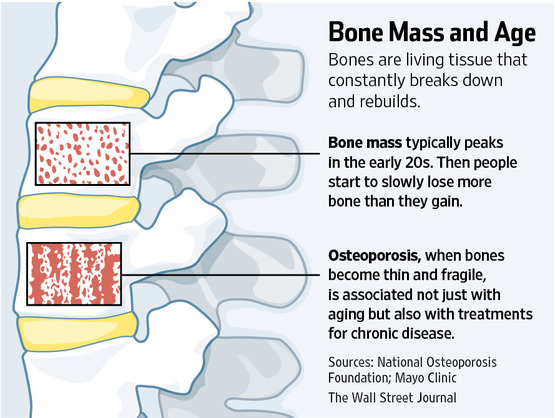
Osteoporosis, a loss of bone strength that raises the risk of fractures, is one of the most common and crippling ailments associated with aging in women. Increasingly, it is striking younger patients who have a host of other medical problems. Read more of this post

Breaking out of its rut, 3D printing shows its medical side

Breaking out of its rut, 3D printing shows its medical side

BY JAMES ROBINSON 
ON FEBRUARY 28, 2014

The 3D printing market is in a holding pattern. The technology has great potential, but only a few trained people are able to unlock it. There’s a lot of excitement about what the technology could do 20 years from now, but a similar level of grumbling that the hype has created a bubble. Insiders liken it to the PC industry in the 1980s, but people are impatient for it to change the world now. Maybe –as predicted – in 2030 there will be a $30 billion industry printing our clothes, shoes, and those little doohickeys that hold up your pictures on the wall. But there will be many years in the interim, which will be filled with speculation among warring camps of skeptics and evangelists about just how transformative it will become. Read more of this post

Chronically ill facing high drugs costs under U.S. health law

Chronically ill facing high drugs costs under U.S. health law

10:50am EST

By David Morgan

WASHINGTON (Reuters) – President Barack Obama’s ban on discriminatory health insurance practices against the sick has not stopped insurers from increasing up-front charges for the expensive drugs needed to control chronic illnesses from leukemia to multiple sclerosis. Read more of this post

Stroke prevention drug found to slow mild dementia

Stroke prevention drug found to slow mild dementia

KYODO

FEB 27, 2014

OSAKA – Researchers have found that a drug used in the prevention of strokes, cilostazol, is effective in slowing the progression of mild dementia, according to a study published Thursday in the U.S. online science journal Plos One. Read more of this post

Older adults who take blood pressure drugs have a greater risk of serious falls and related injuries, a new study reports

FEBRUARY 24, 2014, 4:00 PM  Comment

Blood Pressure Drugs Tied to Risk of Falls

By ANAHAD O’CONNOR

Older adults who take blood pressure drugs have a greater risk of serious falls, a new study reports.

Researchers looked at nearly 5,000 Americans over age 70 during a three-year period. They found that those who were taking antihypertensive medications had a 30 to 40 percent greater likelihood of experiencing severe fall-related injuries like hip fractures and head trauma. Read more of this post

Camels Linked to Spread of Deadly MERS Virus in People

Camels Linked to Spread of Deadly Virus in People

By DENISE GRADYFEB. 25, 2014

A new study suggests that camels are the major source of the Middle East Respiratory Syndrome, or MERS, a viral disease that has sickened 182 people and killed 79 of them since it was first detected in Saudi Arabia in 2012.

The animals are most likely to infect people through respiratory secretions — from coughing, sneezing, snorting or spitting — that travel through the air or cling to surfaces. Read more of this post

Boost Your Balance; Avoid Falls; Exercises in 30s and 40s Can Keep You Steadier as You Age

Boost Your Balance; Avoid Falls

Exercises in 30s and 40s Can Keep You Steadier as You Age

ANGELA CHEN

Feb. 24, 2014 6:23 p.m. ET

If you find yourself needing to sit down to take off your shoes, it might be time to start paying attention to your sense of balance. Read more of this post

Your Heart May Be Older Than You Are

Your Heart May Be Older Than You Are

SHIRLEY S. WANG

Feb. 24, 2014 8:20 p.m. ET

image001-3

We all know we should eat healthier, exercise more and sometimes take medicines to stave off heart disease. Some researchers think putting an age on our hearts will do a better job of motivating us to do all that. Read more of this post

How to Bring the Price of Health Care Into the Open; There’s a Big Push to Tell Patients What They’ll Pay-Before They Decide on Treatment

How to Bring the Price of Health Care Into the Open

There’s a Big Push to Tell Patients What They’ll Pay—Before They Decide on Treatment

MELINDA BECK

Updated Feb. 23, 2014 5:03 p.m. ET

It’s a simple idea, but a radical one. Let people know in advance how much health care will cost them—and whether they can find a better deal somewhere else.

With outrage growing over incomprehensible medical bills and patients facing a higher share of the costs, momentum is building for efforts to do just that. Price transparency, as it is known, is common in most industries but rare in health care, where “charges,” “prices,” “rates” and “payments” all have different meanings and bear little relation to actual costs. Read more of this post

Big Data may be invasive but it will keep us in rude health

Last updated: February 21, 2014 7:00 pm

Big Data may be invasive but it will keep us in rude health

By Janan Ganesh

Privacy fears that centre on the health service database are overblown

The life savers of the future will possess an intelligent layman’s grasp of medicine and no more. They will be strangers to the operating theatre and the research laboratory. The patients touched by their work will never know them. And if they have Dr as a prefix to their name, it will denote a PhD in information science or mathematics. “My son the statistician,” parents will boast. Read more of this post

How Digital Medicine Will Soon Save Your Life; You wake up with chest pain. Your smartphone reads your ECG. If it’s a heart attack, it calls an ambulance and sends your data ahead to the ER

How Digital Medicine Will Soon Save Your Life

You wake up with chest pain. Your smartphone reads your ECG. If it’s a heart attack, it calls an ambulance and sends your data ahead to the ER.

ROBIN COOK And ERIC TOPOL

Feb. 21, 2014 7:07 p.m. ET

A sweeping transformation of medicine has begun that will rival in importance the introduction of anesthesia or the discovery of the germ basis of infectious disease. It will change how patients and physicians interact. It will change medical research and therapy. “Sick care”—the current model of waiting for you to get sick and then trying to alleviate symptoms and make you well—will become true “health care,” where prevention is the mantra and driving force. Welcome to the world of digital medicine. Read more of this post

Why pharma megamergers work; Unlike deals in many industries, big mergers and acquisitions among pharmaceutical companies generally have resulted in positive returns to shareholders

Why pharma megamergers work

Unlike deals in many industries, big mergers and acquisitions among pharmaceutical companies generally have resulted in positive returns to shareholders.

February 2014 | byMyoung Cha and Theresa Lorriman

Conventional wisdom holds that large mergers have destroyed value in the pharmaceutical industry. Market commentators insist that these deals don’t work, that the challenges of large-scale integration unnecessarily disrupt the organization and critical programs, and that research and development productivity suffers. These critiques have some merit but ignore larger points: megamergers have created significant value for shareholders, and some of these deals have been critical for the longer-term sustainability of acquirers. In short, we believe that the benefits often warrant the disruption that these deals entail. Read more of this post