Better ways to play the merger mania; Big takeovers get all the attention, but demergers have a far better record of releasing value

August 2, 2013 6:28 pm

Better ways to play the merger mania

By Jonathan Eley

Big takeovers are back in the news, but what is the best way to profit from them? Mega mergers are back. This week, advertising groups Omnicom and Publicis announced a $35bn tie-up. Just a day or two earlier, Irish pharmaceuticals group Elan ended a long courtship by recommending a takeover by Perrigo. Closer to home, engineering group Invensys has recommended an offer from France’s Schneider Electric. The re-emergence of M&A has been long predicted, and there have been several false starts. Companies are sitting on big cash piles, having restructured and refinanced in the wake of the credit crunch, and that money is earning only nugatory returns in cash and other short-term instruments. The global economic recovery might still be slow and uneven, but there are now at least some tangible signs that it is heading in the right direction, giving chief executives the confidence to deploy some of that cash. Valuations in the US might be looking a bit stretched, but elsewhere in the world – especially in many parts of Europe – they are broadly reasonable. Read more of this post

Warren Buffett Has A Whopping 9,000% Gain On His Washington Post Investment

Warren Buffett Has A Whopping 9,000% Gain On His Washington Post Investment

ROB WILE AUG. 5, 2013, 5:24 PM 5,951 2

warren-buffett-43

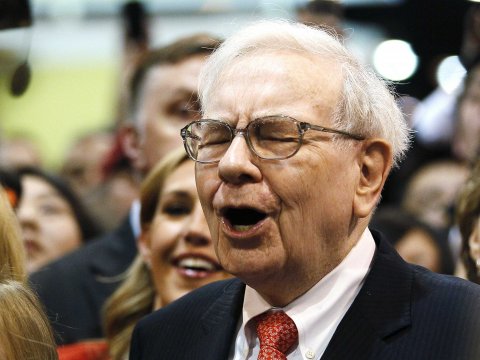
Berkshire Hathaway Chairman Warren Buffett reacts at a newspaper throwing competition before the company’s annual meeting in Omaha, May 4, 2013.

Amazon.com CEO Jeff Bezos just spent $250 million purchasing  The Washington Post. You may recall that Warren Buffett’s Berkshire Hathaway is the largest and among the longest-tenured shareholders in the Washington Post Company, which owns the paper along with a bunch of other stuff including test prep firm Kaplan. (Buffett also served 25 years on the Post’s board, having spent part of his youth in DC.) So, what gains has he seen on the investment? Buffett started accumulating shares in 1973.  As of 2004, he owned 1.7 million shares at a cost basis of $11 million, according to 24/7 Wall Street. According to Berkshire Hathaway’s most recent 13-F, he owns the same amount of shares today. That position was valued at $772 million at the end of Q1. However, the stock has been on a tear, up 55% since the beginning of the year. In after-hours trading, Washington Post Company is at $598, which values Buffett’s 1.7 million shares at $1.01 billion. Assuming the $11 million cost basis holds, that’s a whopping 9,080% return. Wow. Meanwhile, the stock is up about 1.5% after hours Monday.

Caterpillar Board Sued Over ERA Mining Machinery Acquisition for failure to heed “red flags” that should have alerted them the company was overpaying for a Chinese mine-equipment maker

Caterpillar Board Sued Over ERA Mining Machinery Merger

Caterpillar Inc. (CAT) Chairman Douglas R. Oberhelman and 13 directors failed to heed “red flags” that should have alerted them the company was overpaying for a Chinese mine-equipment maker, a shareholder said in a lawsuit. New Jersey investor Michael D. Wolin accused Oberhelman, the directors and Chief Financial Officer Edward J. Rapp of breaching their fiduciary duties to the company in a complaint filed yesterday in federal court in Chicago. Caterpillar, the world’s biggest maker of construction and mining machinery, took a $580 million writedown in January on its 2012 acquisition of Hong Kong-based ERA Mining Machinery Ltd. and its Zhengzhou Siwei Mechanical & Electrical Equipment Manufacturing Co. “The red flags clearly show that Siwei was being overvalued by Caterpillar senior management, including Rapp and Oberhelman,” Wolin said in the complaint. The board “blindly acceded” to the acquisition, he said. Among the factors Caterpillar executives should have considered were the Chinese company’s aging receivables and its need for “an immediate $50 million cash infusion” to continue operating before the deal was closed, Wolin said. Read more of this post

China Resources Group, embroiled in corruption allegations, has been accused of theft and illegal asset transfers in a previously unreported case involving British investors in the Chinese resort island of Hainan

August 5, 2013 4:55 pm

China Resources arm faces theft accusations

By Jamil Anderlini in Beijing

A subsidiary of China Resources Group, the Hong Kong-listed Chinese conglomerate embroiled in corruption allegations, has been accused of theft and illegal asset transfers in a previously unreported case involving British investors in the Chinese resort island of Hainan. Executives of Bloom World, a subsidiary of the China Resouces group that employs 400,000 people and boasts assets worth more than $120bn, are alleged to have forged documents in order to illegally transfer land in 2011 out of a company controlled by Keith Darby, a British real estate developer and former steeplechase jockey. The latest revelations come as a Hong Kong court on Monday began hearing a case against China Resources board members brought by minority shareholders who allege the company massively overpaid for several coal mines in northern China in 2010. Read more of this post

What’s in your small-cap fund? Try Boeing or Pfizer

What’s in your small-cap fund? Try Boeing or Pfizer

8:01am EDT

By David Randall

NEW YORK (Reuters) – Investors in small-cap funds may be in for a big surprise. Many portfolio managers hold heavyweight stocks like Verizon Communications, Boeing and Pfizer in funds that claim to focus almost exclusively on shares of small-capitalization companies. Overall, 211 out of the 476 actively managed small-cap funds tracked by Lipper own companies with market capitalizations of $10 billion or more. That is more than twice the size of companies that Lipper defines as the focus of small-cap funds. Investors in these actively managed funds – which include those from such well-known firms as Gabelli, Charles Schwab and T. Rowe Price – have several reasons to worry, fund experts and financial advisers say. Read more of this post

Why Chinese Stocks Perform Poorly? They had cooked books before IPO, often with the assistance of local governments

Why Chinese Stocks Perform Poorly?

08-02 17:56 Caijing

Companies’ engagement in bad business practices and high inflation levels are among the reasons.

Summary:
(1) They had cooked books before IPO, often with the assistance of local governments,
(2) They engaged in bad business practices,
(3) They sold too many new shares,
(4) They suffered cost explosion as inflation surged. Read more of this post

Handicaps of sector and name fail to check Lanxess; The once-spurned chemicals group has been transformed; judicious CEO Axel Heitmann eliminated several layers of executives and business segments are free to conduct its operations without interference from headquarters to a degree uncommon at large German companies

August 1, 2013 4:04 pm

Inside Business: Handicaps of sector and name fail to check Lanxess

By Tony Barber

Lanxess

The once-spurned chemicals group has been transformed

The ugly duckling of Leverkusen turned this week into the swan of Cologne. Lanxess, a German speciality chemicals company spun off in 2004 from Bayer, had few admirers at its birth. Conventional opinion derided it as a ragtag collection of low-margin chemicals and polymers businesses. It existed, so it was said, for no better reason than that Bayer, like some cold-blooded, profit-hungry giant, had decided to dump old-fashioned chemicals and place its bets on healthcare, nutrition and high-tech materials. Yet the last laugh is with Axel Heitmann, chief executive of Lanxess from day one. He swiftly reorganised the newborn company, selling off a quarter of its portfolio and making astute acquisitions such asthe 2008 purchase of Petroflex of Brazil, Latin America’s largest synthetic rubber producer. After years of steady growth and improved margins, Lanxesswas promoted last September to Germany’s blue-chip Dax-30 index. Read more of this post

Indian Tractor Maker Mahindra Takes On Deere

Indian Tractor Maker Mahindra Takes On Deere

By Bruce Einhorn on August 01, 2013

comp_mahindragraphic32_405

Mahindra & Mahindra (MM:IN) is one of India’s largest conglomerates, but it’s not exactly a household name in the U.S. That used to be a problem for Richard Johnson as he tried to sell Mahindra tractors in Navasota, Tex. (pop. 7,204), about 70 miles northwest of Houston. “People would say, ‘I’ve never heard of this,’ so the first thing you had to do was go through the spiel of where they’re made and all that,” he says.

Today, almost all of Johnson’s prospective tractor customers have heard of the small machines. The company has invested to make itself appear less foreign: Mahindra sponsors Championship Bull Riding and has signed on angler and TV host Bill Dance, a member of the Professional Bass Fishing Hall of Fame, as a spokesman. Mahindra commercials appear on Fox News(FOX), the Outdoor Channel, and other heartland-friendly cable networks. “Mahindra has done a good job of really getting out there,” says Johnson, who last month opened his third outlet selling the Indian company’s tractors. Read more of this post

China Metal Liquidators Sue Chairman Chun for Fraud

China Metal Liquidators Sue Chairman Chun for Fraud

The provisional liquidators of China Metal Recycling Holdings Ltd. (773) sued its founding chairman Chun Chi Wai and his wife for unspecified damages for fraud. Chun, Lai Wun-Yin and 10 companies orchestrated false trading schemes, disclosed false or misleading information to China Metal and paid dividends on inflated profits, according to a lawsuit filed on July 31 at Hong Kong’s High Court. China Metal, which called itself the nation’s biggest scrap-metal dealer, inflated the size of its business to gain a listing in Hong Kong in 2009, the Securities and Futures Commission said July 29 when it announced that it had won a court order appointing provisional liquidators for the company. The liquidators have obtained an injunction freezing more than HK$1.6 billion ($206.3 million) in assets of the defendants, a lawyer for the SFC told a court hearing today which agreed to continue their appointment. Read more of this post

Gildan Reaches Record as Branded Wear Boosts Pofit

Gildan Reaches Record as Branded Wear Boosts Pofit

Gildan Activewear Inc. (GIL), the Canadian producer of cotton T-shirts to underwear, rose to a record high after reporting third-quarter earnings at the high end of the company’s guidance and analysts’ estimates. Gildan rose 4.7 percent to C$48.15 at 11:00 a.m. in Toronto. Earlier it rose 6.6 percent to C$48.86 earlier, the highest since the company went public in June 1998 and the biggest intraday jump since June 12, 2012. The shares have gained 26 percent this year through yesterday, compared with a 0.4 percent rise in the Standard and Poor’s/TSX Composite Index. Montreal-based Gildan posted earnings of $116.5 million or 95 cents per share, adjusted for certain items, compared with $80.2 million or 66 cents a year earlier. The company previously projected earnings of 92 cents to 95 cents per share. Results beat the 94-cent average of analysts’ estimates compiled by Bloomberg. “The company began shipment of its first major Gildan-branded underwear program to a national mass-market retailer,” the company said today in a statement. “Initial retailer sales of the Gildan underwear products are very strong, and consumer demand is well in excess of expectations.” Gildan acquired New Buffalo Shirt Factory Inc. manufacturing facilities on June 21, providing it with screenprinting and decorating capabilities to enhance its ability to act as a supply chain partner for larger athletic and lifestyle brands. Gildan narrowed its full year adjusted earnings expectation to $2.67 to $2.70 per share, from its previous guidance range of $2.65 to $2.70.

To contact the reporter on this story: Lauren S. Murphy in Toronto at lmurphy48@bloomberg.net

Indian brokers said a lack of oversight allowed the nation’s biggest spot commodity exchange to stretch settlement dates, prompting a government clampdown that triggered a 65 percent tumble in its parent’s shares.

Bourse Crash Seen Triggered by Regulator Vacuum: Corporate India

Indian brokers said a lack of oversight allowed the nation’s biggest spot commodity exchange to stretch settlement dates, prompting a government clampdown that triggered a 65 percent tumble in its parent’s shares.

The National Spot Exchange Ltd. this week suspended some contracts after the government on July 14 asked the bourse not to start new obligations until further notice. The exchange permited investors to close trades in 36 days. A settlement longer than 11 days allowed the bourse to act similar to a forward market, according to Harish Galipelli, head of commodities and currencies at JRG Wealth Management Pvt. Read more of this post

India’s Financial Technologies, which controls the nation’s biggest commodity exchange, tumbled 42 percent after a subsidiary suspended trading in some contracts.

Financial Technologies Plunges Most in 15 Years: Mumbai Mover

Financial Technologies (India) Ltd. (FTECH), which controls the nation’s biggest commodity exchange, sank the most in more than 15 years after a subsidiary suspended trading in some contracts.

Financial Technologies tumbled 42 percent to 313.95 rupees at 9:57 a.m. in Mumbai, its biggest decline since December 1997. Unit National Spot Exchange Ltd. halted trading in some contracts, merged the delivery and settlement of all others and deferred them for a period of 15 days, it said in statement yesterday. Trading in its dematerialized contracts will continue, the company said. Read more of this post

Why Tinkering Too Much with Your Portfolio Won’t Pay Off

Why Tinkering Too Much with Your Portfolio Won’t Pay Off

Published: July 31, 2013 in Knowledge@Wharton

Investors run the gamut, from fire-and-forget types who buy mutual funds and leave them alone for decades, to fussbudgets who watch their portfolios minute by minute, ready to buy or sell with every up and down. But is there a golden mean that would allow the investor to act when it will really pay off, while avoiding counterproductive tinkering? Common sense says that this “Goldilocks” zone must exist, but theorists have had a hard time nailing it down, says Wharton finance professor Andrew B. Abel. “It was a mathematical nightmare,” he notes. Read more of this post

Hong Kong watchdog cracks down on China Metal Recycling, a $1.43 billion company that describes itself as China’s largest recycler of scrap metal

Hong Kong watchdog cracks down on China Metal Recycling; bankers wary

5:00pm EDT

By Rachel Armstrong

SINGAPORE, Aug 1 (Reuters) – Hong Kong’s securities regulator has taken one of its most draconian actions ever and asked the courts to liquidate a listed company, a move that could be the first of several as the watchdog hardens its stance against alleged market misconduct. The Securities and Futures Commission (SFC) says it has evidence that China Metal Recycling, a $1.43 billion company that describes itself as China’s largest recycler of scrap metal, exaggerated its financial position when it listed in Hong Kong in 2009. The case, which comes up for its next hearing in Hong Kong on Friday, underscores the SFC’s resolve to restore investor confidence to what was the world’s busiest IPO market at a time when offerings have dried up due to volatile trading conditions, China’s waning economic growth and regulatory concerns. Read more of this post

Snapped By Regulatory Storms? Braving Through Berkshire’s Former Iron Mountain to Asia. Bamboo Innovator is featured in BeyondProxy.com, where value investing lives

Bamboo Innovator is featured in BeyondProxy.com, where value investing lives:

  • Snapped By Regulatory Storms? Braving Through Berkshire’s Former Iron Mountain to Asia, July 31, 2013 (BeyondProxy)

RegulatoryStorm


IBM Says SEC Investigating Its Cloud-Computing Revenue Figures

IBM Says SEC Investigating Its Cloud-Computing Revenue Figures

International Business Machines Corp. (IBM) said the Securities and Exchange Commission is investigating how it reports revenue from offsite cloud-computing services. IBM is cooperating with the SEC in the probe, which it learned about in May, it said today in a filing, without providing further details. Revenue from cloud services, such as storing clients’ data and software applications remotely, rose 70 percent in the first half of 2013 from a year earlier, it said in the filing, repeating a figure it has disclosed before. IBM Chief Executive Officer Ginni Rometty has identified cloud computing as one of the company’s chief sources of growth amid a slowdown in demand for services such as consulting. The Armonk, New York-based company is banking on such faster-growing markets, along with buybacks and acquisitions, to help reach profit of $20 a share by 2015, up from $15.25 last year. IBM fell as much as 1.3 percent in early trading today. It had closed yesterday little changed at $196.01.

To contact the reporter on this story: Crayton Harrison in New York at tharrison5@bloomberg.net

HK Commercial Crime Bureau is believed to have started investigating the company China Metal Recycling for allegedly faking its balance sheet

(773) China Metal Recycling:
Apple Daily reported that HK Police arrested 2 individuals related to China Metal Recycling last Friday, and the Commercial Crime Bureau is believed to have started investigating the company for allegedly faking its balance sheet. Officers visited the company’s offices in Central on Friday and Saturday, taking away documents.
(773 HK) @ HK$: market cap. US$0.0m, daily liquidity US$0.0m. Broker forecasts:  buys,  holds,  sells, 0.0x current year P/E, 0.0% yield.

(773) China Metal Recycling: SFC has presented a petition to the Court of First Instance to wind up China Metal Recycling (Holdings) Limited. These applications follow an SFC investigation that found evidence suggesting that China Metal Recycling has overstated its financial position in the prospectus used for its initial public offering in 2009 and in its annual report for 2009. The SFC alleges that this was achieved by inflating the size of the company’s business and the amount of revenue generated by its major subsidiary. The SFC alleges that an overwhelming majority of the subsidiary’s purported purchases from its three major suppliers for the financial years ended 31 December 2007, 2008 and 2009 were fictitious by escalating amounts in each successive year. The SFC’s investigation also found evidence showing that the suspected exaggeration of China Metal Recycling’s financial situation remains a current issue that would affect its 2012 financial results, which to date remain unissued . China Metal Recycling said an order was granted by the High Court of the Hong Kong Special Administrative Region on 26 July 2013 appointing Cosimo Borrelli and Chi Lai Man Jocelyn, both of Borrelli Walsh Limited, as provisional liquidators to Chin a Metal Recycling on the application of the SFC. In response to the SFC’s file, the single largest shareholder of the company, Wellrun Limited expressed objection, saying that the act does not meet the interests of shareholders. The Company has arranged legal counsel to follow the issue.

Two nabbed as SFC says China Metal lied
Victor Cheung
Tuesday, July 30, 2013
Hong Kong police is understood to have arrested two individuals related to China Metal Recycling (0773) on Friday, it was learned last night. The Commercial Crime Bureau is believed to have started investigating the company on Friday for allegedly faking its balance sheet. Officers visited the company’s offices in Central on Friday and Saturday, taking away documents. One of the individuals arrested is a 46-year old man surnamed Lam and another is a 42-year old woman surnamed Lai. Both are locals and currently on bail. The Securities and Futures Commission, which is seeking to liquidate China Metal Recycling, yesterday accused the firm of inflating the size of its business and revenue before listing in 2009. The regulator, which applied on Friday to wind up the listed firm under the Securities and Futures Ordinance in a first, said China Metal had overstated its financial position in the prospectus used for its June 2009 initial public offering that raised HK$1.55 billion. An “overwhelming majority” of purported purchases by one of the firm’s subsidiaries from its three major suppliers for 2007-09, were “fictitious by escalating amounts in each successive year,” the SFC alleged. With the court granting orders to appoint Borrelli Walsh as provisional liquidators, the board of directors will be suspended. The court would void any disposition of the firm’s property and any share transfers. The matter will return to the court for a hearing on Friday. China Metal chairman and major shareholder Chun Chi-wai yesterday objected to the winding up, saying the move would not be beneficial for shareholders. The Guangzhou-based firm’s shares have been suspended since January 28 after shortseller Glaucus Research made allegations against it. Just three days before, Chun signed a deal to sell 29 percent of the state-owned firm for HK$3.4 billion. Deloitte, the auditor for China Metal, said there is no suggestion of any fault on its part.
‘Shallow Risk’ and ‘Deep Risk’ Are No Walk in the Woods

Jul 26, 2013

THE INTELLIGENT INVESTOR

‘Shallow Risk’ and ‘Deep Risk’ Are No Walk in the Woods

By Jason Zweig

BF-AF445_INVEST_G_20130726172020

Earlier this week, the Dow Jones Industrial Average hit 15567.74, a new high. That was the 28th time this year the Dow closed at a record. At these all-time-high prices, just how much riskier stocks are than alternatives like bonds, cash or gold depends largely on how you define “risk.” William Bernstein, an investment manager at Efficient Frontier Advisors in Eastford, Conn., and the author of several books on investing and financial history, says risk takes two basic forms—and understanding the difference can help investors figure out what they should be afraid of. What Mr. Bernstein calls “shallow risk” is a temporary drop in an asset’s market price; decades ago, the great investment analyst Benjamin Graham referred to such an interim decline as “quotational loss.” Shallow risk is as inevitable as weather. You can’t invest in anything other than cash without being hit by sharp falls in price. “Shallow” doesn’t mean that the losses can’t cut deep or last long—only that they aren’t permanent. “Deep risk,” on the other hand, is an irretrievable real loss of capital, meaning that after inflation you won’t recover for decades—if ever. Read more of this post

Dover is spinning off a glitzy tech unit and refocusing on heavy manufacturing. Why the strategy should pay off

SATURDAY, JULY 27, 2013

Cooler Than Smartphones

By LAWRENCE C. STRAUSS | MORE ARTICLES BY AUTHOR

Dover is spinning off a glitzy tech unit and refocusing on heavy manufacturing. Why the strategy should pay off.

ON-BB664_PORTFO_G_20130727025916

At first glance, you’d think the hot business at Dover is selling smartphone components. The global manufacturing conglomerate makes microphones, speakers, and other key parts for both Apple and Samsung, the dueling titans of mobility. Dover, it would seem, has found a classic sweet spot. Right? Actually, the company is exiting that business. In a laudable move to put long-term profit ahead of short-term sizzle, Dover (ticker: DOV) next year will spin off to shareholders a large chunk of its communication-technologies unit, which accounts for nearly 20% of total revenue. Read more of this post

Cash Is Trash? Not To These Value Fund Managers

Cash Is Trash? Not To These Value Fund Managers

The Federal Reserve has made it clear that short-term rates are on lockdown until the unemployment rate drops from its current 7.6 percent to 6.5 percent. That gives ammo to money managers who say “cash is trash.” A federal funds rate stuck near zero means cash will continue to deliver negative real returns for some time. Who in their right mind, the standard Wall Street taunt goes, would own cash when it’s a guaranteed losing proposition? Some standout value fund managers, that’s who.

Cash’s Value

The $1.1 billion Weitz Value and $980 million Weitz Partners Value funds each have cash stakes that are close to 30 percent. At the $10.6 billion Yacktman Focused fund, cash has crept up from 14 percent a year ago to 19 percent. The $1.3 billion Westwood Income Opportunity has about 16 percent in cash, more than double what it had at the start of the year. Cash makes up about 28 percent of assets in the $8.9 billion IVA Worldwide Fund, up from 10 percent a year ago, and is 33 percent of the $508 million GoodHaven fund, up from 19 percent a year ago. Read more of this post

Good Strategy, Bad Strategy by Richard Rumelt

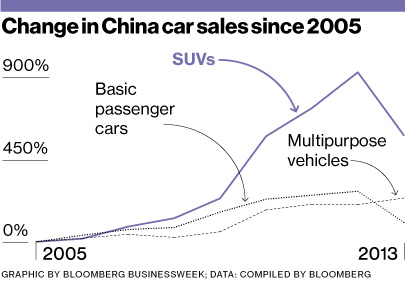
Great Wall Motor, China’s No. 1 SUV maker, has operating margins of 16 percent. That’s the highest of any carmaker

China’s Great Wall Motor Is Built on SUVs

By Tian Ying on July 25, 2013

comp_greatwall31__01__202 comp_greatwall31_405

Wang Jiangwei spent last summer sweating through a month of military drills—everything from marathon runs to rigorous calisthenics—conducted by Chinese People’s Liberation Army instructors. But Wang isn’t a soldier; he’s a researcher at Great Wall Motor (2333:HK). The training program is a creation of Great Wall’s quirky founder, Chairman Wei Jianjun, who has built China’s biggest maker of SUVs with a leadership style that stands out for its emphasis on discipline and frugality usually more common to the military. Read more of this post

Ambuja Cements fell the most in more than two decades after parent Holcim asked the Indian company to pay $593 million to buy its stake in a subsidiary. “Ambuja will be parting away with its huge cash balance without any EPS accretion”

Holcim Revamp Triggers Triggers 15% Plunge at Ambuja

Ambuja Cements Ltd. fell the most in more than two decades as analysts cut recommendations for the stock after parent Holcim Ltd. (HOLN) asked the Indian company to pay $593 million to buy its stake in a subsidiary.

Ambuja plunged 12.7 percent to 167 rupees at 11:28 a.m. in Mumbai, the sharpest slump since April 1992. Ambuja will buy Holcim’s 50.01 percent stake in ACC Ltd. (ACC) by paying 35 billion rupees ($593 million) to the world’s biggest cement maker and a share swap. ACC tumbled 4.3 percent to 1,178 rupees. Read more of this post

Data Sabotage to Moldy Toilets Rerate India’s Wockhardt

Data Sabotage to Moldy Toilets Rerate Wockhardt: Corporate India

Wockhardt Ltd. (WPL), India’s worst performing drug stock this year, is poised to extend its fall from a 15-month low as analysts cut recommendations following U.S. allegations that it blocked inspectors and destroyed data.

When U.S. Food and Drug Administration officials inquired about unlabeled vials at Wockhardt’s Waluj facility in Maharashtra state, employees immediately dumped the contents into drains, the regulator said in a letter dated July 18. The FDA also found torn quality control records in the trash. The note posted on the FDA’s website on July 23 prompted Macquarie Group Ltd. to cut its recommendation on the stock the same day, while CIMB Securities India Pvt. said it’s reviewing its rating. Read more of this post

The secretive families behind some of Australia’s best known brands

The secretive families behind some of Australia’s best known brands

PUBLISHED: 2 HOURS 45 MINUTES AGO | UPDATE: 0 HOUR 0 MINUTES AGO

Despite choosing to run their $2.3 billion plumbing business as a listed company, the Wilson family are never photographed and rarely interviewed.

ANDREW HEATHCOTE

Would you recognise a member of one of the country’s richest families if you walked past them in the street? Probably not. That’s because they are a highly private group who work hard at staying that way. Self-made billionaires like Clive Palmer and Gerry Harvey may speak freely and develop prominent public profiles, but for wealthy families, ownership can be split across dozens of people, each with their own expectations and egos. Tensions mount quickly when one relation is seen to be speaking on behalf of another. Unwritten rules dictate that people from rich families keep their mouths shut. But many of the richest people you have never heard of are responsible for well-known brands. Here are some of them:

CAROMA TOILETS

Toilet makers the Anderson family have almost no public profile. They are major shareholders in GWA, a listed supplier of household fixtures and fittings. Among the brands in the GWA stable is Caroma, distributors of bathroom necessities including baths, basins and toilets.

cddd51f8-f41d-11e2-91f5-a475718987bc_syd-5zw2shw2kic10jekbghf_original--620x348

Anderson family net wealth: $335 million.

REECE PLUMBING

Despite choosing to run their Reece plumbing business as a listed company, leading members of the Wilson family are never photographed and rarely interviewed. Peter Wilson is Reece’s chief executive and son of company chairman, Alan Wilson. Alan’s brothers Bruce and John are also directors. Reece is a $2.3 billion company. The family’s fondness for secrecy has attracted criticism from corporate governance experts but investors in Reece rarely complain – under the Wilsons’ leadership, Reece shares have risen 23 per cent over the past 12 months.

Wilson family net wealth: $1.83 billion. Read more of this post

After Billionaire Steven Cohen’s Hedge Fund Turned Focus to Market-Moving Info to ramp up “Deep Value” Investing, Regulators Grew Wary

July 24, 2013, 6:40 p.m. ET

For SAC, a Shift in Investing Strategy Later Led to Suspicions

After Steven Cohen’s Hedge Fund Turned Focus to Market-Moving Info, Regulators Grew Wary

JAMES STERNGOLD and JENNY STRASBURG

As SAC Capital Advisors LP was preparing for the 2004 launch of a new division,Steven A. Cohen had a number of portfolio managers and traders driven up from the firm’s New York offices in private cars for a gathering at SAC’s Stamford, Conn., headquarters. At a catered dinner, Mr. Cohen explained his desire to ramp up the firm’s “deep value” investing, according to people familiar with details of the gathering. He floated ideas, and traders asked questions about how money would be allocated and research teams organized. The gathering led to the formation of a new unit within SAC called CR Intrinsic—and marked the continuation of a striking shift in the firm’s investing style. Read more of this post

Finance group McMillan Shakespeare’s share price has almost halved after it said the Rudd government’s flagged changes to fringe benefit tax (FBT) laws had created uncertainty

The business of loopholes

July 22, 2013

Nathan Bell

On just about every number you care to inspect, McMillan Shakespeare is a stunningly effective business. In the float in 2004 the company raised $10.5 million at 50¢ a share. It last traded at $15.36, an increase of about 3000 per cent in nine years. The company’s return on equity has consistently been around 40 per cent, juiced up somewhat by debt, and it makes operating margins in the high 20s. Revenue since listing has increased from about $66 million a year to more than $300 million in 2012. It’s written in the stars that such businesses become darling stocks, and McMillan duly did – at least until last Tuesday. On that day it was announced that, horror of horrors, salary-packaged new cars will only get a fringe benefits tax break if a logbook can prove they are used for, you know, business. Before entering a trading halt, the company’s share price tumbled. McMillan is in the salary-packaging business, exploiting loopholes cleverly, systematically and legally. Read more of this post

From Buffett’s Scott Fetzer to Asia, Are Oddballs Odious or Opportunities? Bamboo Innovator is featured in BeyondProxy.com, where value investing lives

Bamboo Innovator is featured in BeyondProxy.com, where value investing lives:

  • From Buffett’s Scott Fetzer to Asia, Are Oddballs Odious or Opportunities? July 24, 2013 (BeyondProxy)

Oddballs


Charlie Munger Triples Publisher’s Value With Panic-Era Wager on Stocks

Munger Triples Publisher’s Value With Panic-Era Wager on Stocks

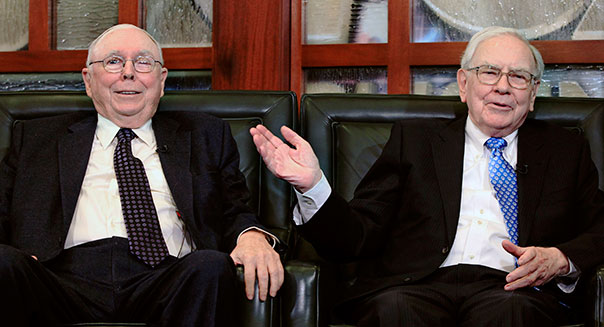
Warren Buffett, Charlie Munger

Daily Journal Corp. (DJCO), the California publisher that counts Charles Munger as its chairman, more than tripled in value since 2008 after the company jumped into stocks during the financial crisis.

Best known as Warren Buffett’s longtime business partner, Munger began accumulating equities in early 2009 at the Daily Journal. The portfolio was worth $112.3 million as of March 31, or about 65 percent of the Los Angeles-based publisher’s current market value. Investors who attend the company’s annual meetings said he signaled that Wells Fargo & Co. (WFC) was among the bets.

“Here’s a guy in his mid-80s at the time, sitting around with cash at the Daily Journal for a decade, and all of a sudden hits the bottom perfect,” said Steve Check, a Costa Mesa, California-based investment manager who has attended the publisher’s meetings since 2004. Read more of this post

Can Market Timers Beat the Index? Even those who do beat a buy-and-hold strategy in one market cycle have no greater odds of success in the next cycle

July 19, 2013, 6:25 p.m. ET

Can Market Timers Beat the Index?

Even those who do beat a buy-and-hold strategy in one market cycle have no greater odds of success in the next cycle.

MARK HULBERT

BF-AF382_HULBER_G_20130719133904

If you think you will know it when this bull market finally comes to an end, you are kidding yourself. The vast majority of professional advisers who try to get in and out of the stock market at the right time end up doing worse than those who simply buy and hold through bull and bear markets alike. Even those few who beat a buy-and-hold strategy during one period rarely beat it in the next one. What makes you so confident you can do better? Read more of this post