63 Brand-New Quotes From Warren Buffett; “More kids are ruined by the behavior of their parents than the size of their inheritance.”

63 Brand-New Quotes From Warren Buffett

By Matt Koppenheffer | More Articles | Save For Later
May 12, 2013 | Comments (8)

The tried and true “classic” Warren Buffett quotes are classics because they’re great, timeless bits of investing wisdom. But sometimes they can also feel a bit too well worn. Following are 63 brand-new quotes from Buffett, fresh from the May 4 Berkshire Hathaway (NYSE: BRK-A  ) (NYSE: BRK-B  ) shareholder meeting.

1. On playing table tennis with Ariel Hsing at Borsheims: “If you’re courageous you’ll show up with your paddle and you’ll look like an idiot.”

2. “If the market continues as it has in 2013, this will be the first five-year period that Berkshire has underperformed. … It won’t be a happy day, but it won’t totally discourage us.”

3. On what makes ISCAR great: “[They] never stop improving the product, never stop trying to make customers happy.”

4. Responding to a shareholder who thanked him for letting attendees in early from the cold and rain: “If we had a company that sold coats, we would have left you out there.”

5. On his successor: “It would be rejected like a foreign tissue if we got the wrong person in there.” Read more of this post

Why Low-Risk Innovation Is Costly

Why Low-Risk Innovation Is Costly

Companies are finding it hard to churn out “the next big thing”. Instead of the disruptive products, services and business models of yesteryears, innovations coming to market today are typically line extensions.

An Accenture survey of more than 500 executives has found that while one in five (18 percent) respondents rate innovation as their top strategic priority and two-thirds depend strongly on innovation for their long-term strategy success, and more than half feel they have a sluggish innovation process. Companies are seeking to innovate but are increasingly less satisfied with the results. The respondents also have an answer to why this is happening. They are aware that a cautious approach and reduced investment by companies to generate renovation or, at best, incremental innovation is a potentially perilous strategy. By putting formal systems in place to manage innovation, companies can protect themselves from such risks. Enterprises able to successfully innovate at a breakthrough level are far more likely to dominate and prosper in the new markets they create. They can also position themselves to master change.

Last updated: May 17, 2013 10:26 pm

Companies see innovation without results

By Paul Taylor

The vast bulk of corporate innovation initiatives are failing to deliver the results that senior executives expected. Despite increased investment in innovation, only 18 per cent of executives believe their company’s innovation efforts deliver a competitive advantage, according to a survey conducted by Accenture and published this week. Read more of this post

Education 2.0 In Indonesia: Inspiring Bamboo Innovators (Jakarta Post)

Dear Friends and All,

“What use is an esoteric academic theory like Einstein’s theory of relativity?” Answering this question with the Bamboo Innovator framework can surprisingly lead to the uncovering of resilient compounders: the Indonesian-listed bread company Indosari, the largest mass-market producer of bread in Indonesia under the “Sari Roti” brand, and Mexican-listed Grupo Bimbo, the largest bread manufacturer in the world. Interestingly, Indosari’s market value of US$750 million (now over US$900 million) is almost 20-times smaller as compared to Mexico’s Grupo Bimbo’s US$15 billion, even though both Indonesia and Mexico have gross domestic product (GDP) of US$1 trillion. What is so unique about the business models at Indosari and Grupo Bimbo? Why are they Bamboo Innovators? I like to share the article that was published in Jakarta Post, the oldest and largest-circulated English newspaper (one of the few dailies who survived the 1997/98 Asian Financial Crisis): “Education 2.0 in Indonesia: Inspiring Bamboo Innovators”.

Education 2.0 In Indonesia: Inspiring Bamboo Innovators, May 11, 2013 (Weblink: Jakarta Post)
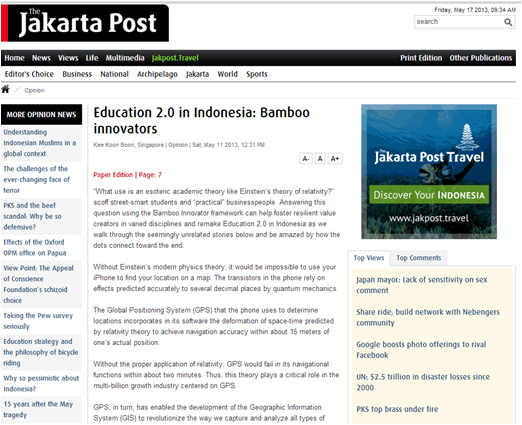
Jakarta Post_Bamboo Innovators

Below is the unedited version:

Education 2.0 in Indonesia: Inspiring Bamboo Innovators

April 2013

“What use is an esoteric academic theory like Einstein’s Theory of Relativity?” scoffed the “street-smart” students and “practical” businesspeople. Answering this question using the Bamboo Innovator framework can help foster resilient value creators in varied disciplines and remake Education 2.0 in Indonesia as we walk through the seemingly unrelated stories below and be amazed by how the dots connect towards the end.

Without Einstein’s modern physics theory, it would be impossible to use your iPhone to find your location on a map. The transistors in the phone rely on effects predicted accurately to several decimal places by quantum mechanics. The Global Positioning Satellites (GPS) that the phone uses to locate us incorporate in their software the deformation of space-time predicted by relativity theory to achieve navigation accuracy within about 15 meters of our actual position. Without the proper application of relativity, GPS would fail in its navigational functions within about 2 minutes. Thus, this theory plays a critical role in the multi-billion growth industry centered around the GPS.

GPS, in turn, has enabled the development of the GIS (Geographic Information System) to revolutionize the way we capture and analyze all types of geographical data for multiple applications from urban planning, disaster response, epidemic planning, mining and oil exploration to location-based services. ESRI is the GIS software pioneer, founded by Jack Dangermond in 1969. ESRI has an installed base of more than one million users in more than 350,000 organizations with over a billion in annual revenue achieved by 3,000 employees. ESRI grew by focusing on its users and employees, eschewing incentives such as sales commissions. “People want to do the right thing; they want to be purposeful in their life,” Jack said. “Throwing financial thresholds and goals — my experience in running at least my kind of organization is that it robs people of the culture of doing great things.”

ESRI, in turn, is linked to Singapore entrepreneur Wong Fong Fui who runs the conglomerate Boustead, which has exclusive country license to ESRI GIS software in South East Asia and Australia. Mr Wong is known as a turnaround specialist, having helped the loss-making unfocused QAF with a market cap of $15 million then in 1988 to build the Gardenia bakery brand in Singapore into a $500 million food business when it was sold, and now Boustead, which he bought for $14 million in 1996 and has a current market value of $580 million.

Interestingly, this $500 million market value has been exceeded by Wendy Yap who helped focus her family business Nippon Indosari to become a Gardenia 2.0 and the largest mass-market producer of bread in Indonesia under the “Sari Roti” brand with a market value of $750 million. Around the same time FF Wong got into Boustead, Wendy started Indosari in 1995 with her father Piet Yap, one of the Salim Group executive who co-founded Bogasari Flour Mills. The typical businessman might shrug and point out that for Indosari to be bigger than Gardenia is an obvious observation, since Indonesia is a far larger market than Singapore. However, many companies and MNC giants such as SaraLee had tried to expand in Indonesia earlier but all retreated with heavy losses. So why was Wendy Yap able to scale up while others with abundant tangible resources failed?

Indosari has adopted an open innovation business model in collaborating with Japan’s Shikishima Baking who helped Indosari in its technological processes in introducing Japanese-style soft breads that won over the Indonesian palate. Importantly, Indosari has built trust with retailers and customers to overcome the logistics nightmare that doomed its better-capitalized rivals through its strong distribution network for its highly-perishable products of more than 2 million pieces of bread daily, resulting in a dominant 90% market share. It sells its products through modern distribution channels and an innovative system of around 3,000 mobile tricycle carts to penetrate over 17,000 small traditional shops in the rural parts of Indonesia.

Yet, Indosari’s market value at $750 million pales in comparison to Mexico’s Grupo Bimbo’s $15 billion even though both Indonesia and Mexico have a GDP of $1 trillion. Bimbo is also the world’s largest bread manufacturing with over $13 billion in sales. So why is this “small white teddy bear”, Bimbo’s corporate image, which “began with great limitations” in 1945 from Mexico, a country where half the population lived below the poverty line, able to become the largest in the world and compound 24-fold in market value since 1994?

Given that over 80% of bread is sold in mom-and-pop stores in Mexico scattered miles from one another over poor roads, cultivating trust and support amongst its community of customers, suppliers and employees is critical to overcome the geographical limitations in scaling up. Small store owners tend to ask for credit which was provided informally by Bimbo. Its partnership with community bank FinComún leveraged upon the bank’s pioneering expertise in providing micro-loans to extend credit yet reduce bad debt and improve working capital position to free up more cash to carry out expansion. In a country known for the exploitation of workers, Bimbo has built an unusually people-oriented culture with its well-known policy of avoiding layoffs even in times of crisis and sponsoring its employees’ education which helped foster loyalty and committment. As a result, Bimbo was able to resist the 1991 threat from the arrival on the Mexican market of giant PepsiCo. While Bimbo innovated in integrating production-delivery-finance, none of it would amount to much if Bimbo had not offered the country affordable, edible aspiration, spreading this dream to nearly every remote corner of Mexico.

There is a common thread running through these stories: the resilient Bamboo Innovator. The vitality of the bamboo revolves around its empty hollow center in the same way as the “emptiness” of the Bamboo Innovator with its “indestructible intangibles” that derive its strength from “know-how” and “trust and support in the community”. The “emptiness” is why bamboo bend but not break in the wildest storms that snapped the mighty resisting oak tree. The intangible know-how in relativity theory has led to the multi-billion GPS industry which enabled the development of the GIS pioneered by Jack Dangermond’s ESRI whose leadership nurtured a culture of empowerment and innovations. FF Wong is attracted by this intangible know-how of ESRI, having built the “intangible” Gardenia brand. At the same time when FF Wong is building Boustead, Wendy Yap has scaled up a bigger, more focused Gardenia 2.0 at Indosari by cultivating trust and support in the company’s community of customers, suppliers, partners and employees, in the same way this “emptiness” worked wonders at Grupo Bimbo.

In the landscape of Education 2.0 in Indonesia, students can search for facts on Google, but Google and Facebook cannot tell them how to connect the dots in alignment with their talent and personality to pursue what they can excel in. With the Bamboo Innovator in their hearts, they will experience the uncanny: the raw sensual data reaching their eyes before and after are the same, but with this pertinent framework of meaning, the chaotic features and anomalies in the marketplace are visible. Instead of producing “grades”, “checklist-based holistic CV” and “high graduation salary”, the education system inspires students to be the Jack Dangermond inventor, the FF Wong and Wendy Yap entrepreneur, the quantum mechanics engineer and physics expert, the geography-based business and trade specialist, the teacher and the value investor, and so on. Their fate all intertwined as Bamboo Innovators to forge their own larger-than-self path to create value for Indonesia and the world.
Hedge Funder’s Advice On How To Go Through A Company’s Annual Report

Hedge Funder’s Advice On How To Go Through A Company’s Annual Report

BlackHatWall Street Oasis | May 16, 2013, 1:15 PM | 9,420 | 5

Still jet-lagged by 8 hours from a day and a half in London, I haven’t slept for a good 48 hours and remembered I owe WSO my process for dissecting a 10-k in the usual form. Before I get right into it, keep in mind every business is different and that will dictate the way you should read their specific annual report. What might be important to look at for an oil & gas company might be completely ignored for a hardline retail company, so don’t take this as gospel when your PM tells you to get up to speed on a company and you remember the stupid shit old BlackHat told you was right and you end up missing something crucial to making an investment decision. So with that, here is a full breakdown of how I like to look through a 10-K for the first time, what’s important to focus on, and what can be glazed over (if anything) to save time and/or not confuse yourself. As always, I’ll field questions afterwards if and when I feel like it to clear anything up. Read more of this post

Companies might be forced to boost the amount of debt they report on their balance sheets by hundreds of billions of dollars under a proposal announced to overhaul the accounting for leases

May 16, 2013, 1:05 p.m. ET

Accounting Change Could Boost Companies’ Debt

Proposed Rule Would Require Most Leases to be Treated on the Books as Debt

By MICHAEL RAPOPORT

Companies might be forced to boost the amount of debt they report on their balance sheets by hundreds of billions of dollars under a proposal announced Thursday to overhaul the accounting for leases.

If adopted, the changes could affect retailers and restaurant chains, which lease real estate at hundreds or thousands of locations. Other companies that may feel the impact are airlines and package-delivery companies, which finance aircraft through leases, and companies that lease printers, copiers and other office equipment.

The new proposal from the Financial Accounting Standards Board and International Accounting Standards Board, which set accounting rules for the U.S. and most of the rest of the world, respectively, would require companies to add all but the shortest leases to their balance sheets as obligations akin to debt. That could have a major impact, experts said, given the estimated $800 billion in new lease contracts world-wide every year. Read more of this post

STX Group Chairman Kang Duck-soo is under mounting pressure to pay some of the debts held by the struggling units of the country’s 19th largest conglomerate using his own assets

2013-05-16

STX boss pressured to give up private assets

By Na Jeong-ju

STX Group Chairman Kang Duck-soo is under mounting pressure to pay some of the debts held by the struggling units of the country’s 19th largest conglomerate using his own assets. Government officials and creditor banks say the 63-year-old executive should give up a considerable part of his fortune to take responsibility for the ongoing liquidity crisis in STX. “That’s a pre-condition for a financial lifeline. All creditor banks and the government want him to join their rescue efforts,” said an official from the Financial Supervisory Service (FSS). “They will take extreme measures, including requesting the court to seize his property, if needed.” Kang recently handed over his controlling stake in STX Offshore & Shipbuilding, which generates more than 50 percent of the group’s total revenue, to creditors. He is also considering selling the group’s overseas assets to secure cash. However, creditor banks claim that’s far from being enough to get STX out of its financial hole. Some bank officials told media Kang should pay the price for mismanaging the firm. They alleged that some of Kang’s relatives are working in key positions at STX affiliates, indicating he abused his status and power to give them jobs.  Read more of this post

Just How Useless Is the Asset-Management Industry?

Just How Useless Is the Asset-Management Industry?

by Justin Fox  |   8:00 AM May 16, 2013

Writing under a pseudonym in the Financial Analysts Journal in 1960, mutual fund executive Jack Bogle made “The Case for Mutual Fund Management.” Bogle took the track records of four leading mutual funds going back to 1930 and compared them to the performance of the Dow Jones Industrials. Not only had the four beaten the Dow, handily, but during the period from 1950 through 1956, for which the brokerage Arthur Wiesenberger & Co. (the Lipper/Morningstar of its day) had calculated mutual fund volatility, all but one of them had fluctuated less than the Dow.

“[M]utual funds in general have met the test of time, and performed in keeping with their stated policies and goals,” Bogle concluded.

As tests go, Bogle’s had its flaws. The fact that four funds (they’re not named in the article, but Bogle once told me they were Massachusetts Investors Trust, Investors Incorporated — now Putnam Investors — State Street, and Wellington) that had survived since 1930 had performed well didn’t say anything about the performance of the many funds that didn’t survive, or the new ones that popped up in the 1950s. But it’s quite possible he was right that the tiny mutual fund industry of the 1930s, 1940s, and early 1950s had served its investors admirably. Read more of this post

The Buffett Formula — How To Get Smarter

The Buffett Formula — How To Get Smarter

by SHANE PARRISH on MAY 15, 2013

“The best thing a human being can do is to help another human being know more.” — Charlie Munger

“Go to bed smarter than when you woke up.” — Charlie Munger

Most people go though life not really getting any smarter. Why? They simply won’t do the work required. It’s easy to come home, sit on the couch, watch TV and zone out until bed time rolls around. But that’s not really going to help you get smarter. Sure you can go into the office the next day and discuss the details of last night’s episode of Mad Men or Game of Thrones. Sure you know what happened on Survivor. But that’s not knowledge accumulation, it’s a mind-numbing sedative. You can acquire knowledge if you want it. In fact there is a simple formula, which if followed is almost certain to make you smarter over time. Simple but not easy. It involves a lot of hard work. We’ll call it the Buffett formula, named after Warren Buffett and his longtime business partner at Berkshire Hathaway, Charlie Munger. These two are an extraordinary combination of minds. They are also learning machines. Read more of this post

Tata Steel: Goodwill write-offs are confusing. When they happen, the managers of firms insist they do not matter. The simple, cynical—and largely true—view is that managers are vain and hate to admit mistakes

Tata Steel

Goodwill Hunting

May 14th 2013, 11:38 by P.F. | MUMBAI

GOODWILL write-offs are confusing. When they happen, the managers of firms insist they do not matter. Goodwill is the excess paid for an asset over its book value. Writing it down is a mere accounting adjustment, bosses tend to say. Yet those same bosses go to inordinate lengths to delay recognising such supposedly irrelevant, non-cash losses. On May 13th Tata Steel, an Indian firm, announced a $1.6 billion impairment, mainly of its $13 billion takeover of Corus, a British steelmaker. The deal happened six years ago. It has been clear for at least four years that it has been a financial disaster. Why recognise that now?

The simple, cynical—and largely true—view is that managers are vain and hate to admit mistakes. Investors usually decide an acquisition has gone bad within a year or two. The buyers’ shares drop. It takes longer for the accounts to catch up. Auditors should subject balance sheets to a yearly impairment test, but valuations are subjective and executives can twist their arms. When the auditors do, finally, assert themselves, companies are often blasé. An example is ArcelorMittal, another steel firm, which disclosed a $4.3 billion write-down in December. There has been no post-mortem of the long and value-destructive acquisition spree that helped generate it. Read more of this post

A Brief History of LinkedIn

A Brief History of LinkedIn
by  on May 05, 2013

From a handful of guys in a living room to 225 million members around the world. Join us for a look back at where we’ve been over the last decade. Thanks to our amazing members for being a part of our journey.

Celltrion, Korea’s largest manufacturer of biosimilars, plunged on news that its chief is under investigation for alleged involvement in stock price manipulation

013-05-09 16:53

CEO scandal hits Celltrion stocks

By Yi Whan-woo

130509_p19_CEO2 130509_p19_CEO1

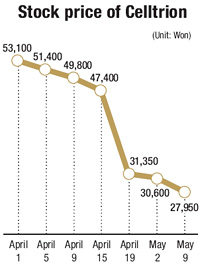
The price of stock in Celltrion plunged on news that its chief is under investigation for alleged involvement in stock price manipulation.

The country’s largest manufacturer of biosimilars closed at 27,950 won per share on the tech-laden KOSDAQ, Thursday, down 2,000 won or 6.68 percent from the previous day. It closed at 53,900 on March 29. The Financial Supervisory Service (FSS) is investigating the company and its chairman Seo Jung-jin for allegedly having ties with speculative investors who have been engaged in short-selling the firm’s shares. Read more of this post

Quantifying Wikipedia Usage Patterns Before Stock Market Moves

Quantifying Wikipedia Usage Patterns Before Stock Market Moves
08 May 2013

Financial crises result from a catastrophic combination of actions. Vast stock market datasets offer us a window into some of the actions that have led to these crises. Here, we investigate whether data generated through Internet usage contain traces of attempts to gather information before trading decisions were taken. We present evidence in line with the intriguing suggestion that data on changes in how often financially related Wikipedia pages were viewed may have contained early signs of stock market moves. Our results suggest that online data may allow us to gain new insight into early information gathering stages of decision making. Read more of this post

Any Benjamin Franklins in Asia? Bamboo Innovator is featured in BeyondProxy.com, where value investing lives

Bamboo Innovator is featured in BeyondProxy.com, where value investing lives:

Any Benjamin Franklins in Asia? May 9, 2013 (Weblink: BeyondProxy.com)

BenFranklinAsia

Charles Ellis on how much your money manager cost you and he worries about the challenges aging boomers face from low bond yields to uncertain stock returns, and dubious financial come-ons

How much does your money manager cost you?

By Penelope Wang @Money May 7, 2013: 6:01 PM ET

Charley Ellis, founder of Greenwich Associates, worries about the challenges aging boomers face from low bond yields to uncertain stock returns, and dubious financial come-ons.

Charley Ellis may not be a household name, but he commands the respect of many savvy investors.

He shook up Wall Street in 1975 with a landmark article in a financial trade journal that attacked the notion that professional money managers consistently beat the market. Nonprofessionals stand even less chance of outperforming the benchmarks, argued Ellis, so individuals need to rethink their approach to building wealth. That influential piece was the basis for Ellis’s classic investing book, Winning the Loser’s Game, the sixth edition of which is due in July. Founder of the financial consulting firm Greenwich Associates, Ellis has also served as a director of Vanguard. Today he still worries about investing costs, as well as the challenges that aging boomers face from low bond yields, uncertain stock returns, and dubious financial come-ons. Ellis, 75, spoke recently with MONEY editor-at-large Penelope Wang. Their conversation has been edited.

Read more of this post

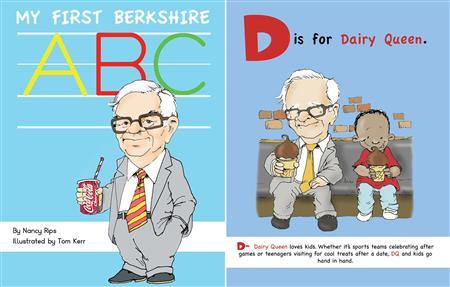
New book teaches children ABCs of Buffett’s Berkshire Hathaway

New book teaches children ABCs of Buffett’s Berkshire Hathaway

12:45pm EDT

By Jonathan Stempel

Handout photo of Chairman and CEO of Berkshire Hathaway Warren Buffett in an illustration on the cover of the book "My First Berkshire ABC"

OMAHA, Nebraska (Reuters) – Warren Buffett’s Berkshire Hathaway Inc invests in dozens of businesses, and a new book tries to explain it all to young readers, from A to Z. Two Omaha residents, author Nancy Rips and illustrator Tom Kerr, have teamed up on “My First Berkshire ABC” to teach children about one of the world’s best-known companies, and a little about the local billionaire behind it. More than 1,000 copies were sold at Berkshire’s annual meeting on Saturday, which draws thousands of people to Omaha, and where Buffett has a say on what gets sold. “You need something to bring home to your kids and grandkids to explain Berkshire,” Rips, who has also written three books about Jewish holidays, said in a joint interview with Kerr. Most pages show companies that Berkshire owns or invests in. G, for example, is for “Geico,” and features the car insurer’s talking gecko. And W is for “Wells Fargo”, and features the bank’s familiar stagecoach. The book’s theme changed at Buffett’s suggestion. “Our first effort was things like, ‘S is for sharing. Mr. Buffett believes in sharing. K is for being kind,'” Rips said. “I got an email back from Warren saying, it’s too laudatory, they will lampoon him in the news,” she continued. “And I wrote a whole new proposal: A is for Acme (Brick), B is for Borsheim’s (jewelry), C is for Clayton Homes, D is for Dairy Queen. I got an email back: ‘You’re in the show.'” Kerr has worked at many newspapers and drew McGruff, the Crime Dog for the National Crime Prevention Council. “Part of what Warren talks about is investing in things that you know,” he said. “Virtually everything in here is something that somebody can relate to and touch and understand.” Berkshire Vice Chairman Charlie Munger is shown under “Q,” stamping boxes of “quality” merchandise. Rips and Kerr have not heard from Buffett on whether he likes the book. Buffett’s assistant Carrie Sova had no comment on that question. Kerr depicted Buffett just four times, including on the cover holding his usual Cherry Coke. “This book is not all about Warren Buffett,” Kerr said. “I picked my spots. He’s so synonymous with Dairy Queen that I wanted him there, and obviously on the cover with Coca-Cola.” “Cherry Coke,” Rips interjected. “Yep,” Kerr said. “She had me change that.”

McKinsey: Amazon’s Dominance Of Retail Comes From These 3 Factors

McKINSEY: Amazon’s Dominance Of Retail Comes From These 3 Factors

Kevin Smith | May 8, 2013, 11:52 AM | 23,829 | 2

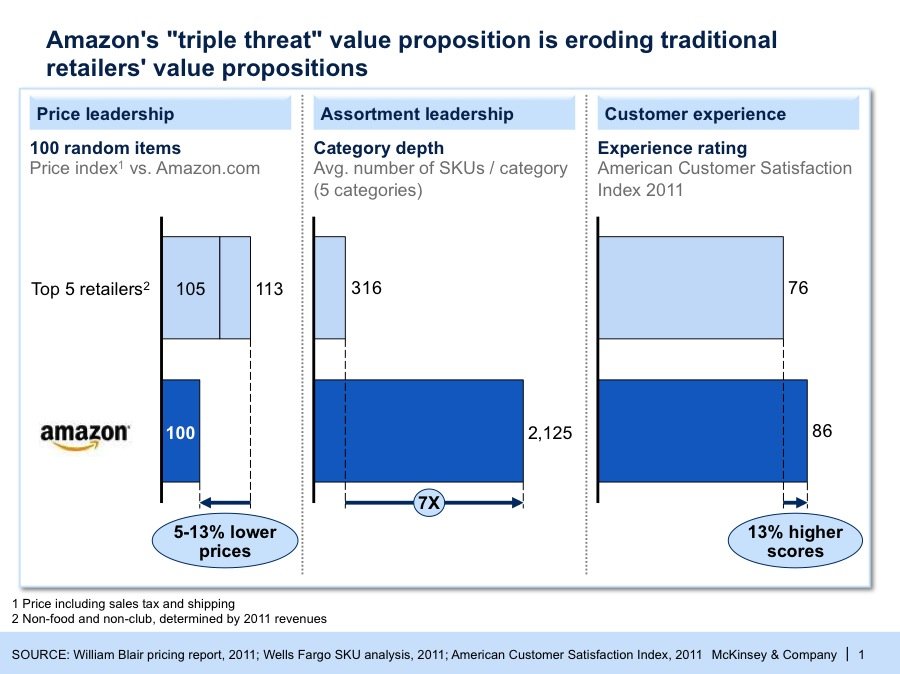
Consulting group McKinsey & Co. thinks it has figured out Amazon‘s “secret sauce.” In 2011, 13% of all U.S. online retail sales went through Amazon,McKinsey believes. The secret? Lower prices than its rivals, a greater product assortment, and better customer relations. Amazon’s domination of the retail market is bolstered by a “maniacal” tech investment strategy, according to the report. This deck shows why McKinsey believes Amazon is poised to capture even more U.S. retail market share, at the expense of its main street rivals.

jpg (15)jpg (7) Read more of this post

Why corporate giants fail to change

Why corporate giants fail to change

May 8, 2013: 12:18 PM ET

The sources of corporate failure are often prosaic and avoidable. Nokia’s experience is a case in point.

By Julian Birkinshaw

(TheMIX) — Last week, I taught a case study on the decline of Nokia to my MBA students. I asked them, “Why did Nokia fall from industry leadership to also-ran status in the space of less than five years?” Their answers were predictable:

  • “They lost touch with their customers.” True, but almost tautological — and interesting to note that this is the same Nokia that in the early 2000s was lauded for its customer-centric marketing and design capabilities.
  • “They failed to develop the necessary technologies.” Not really true — Nokia (NOK) had a prototype touchscreen before the iPhone was launched, and its smartphones were technologically superior to anything Apple (AAPL), Samsung, or Google (GOOG) had to offer during the late 1990s.
  • “They didn’t recognize that the basis of competition was shifting from the hardware to the ecosystem.” Again, not really true — the “ecosystem” battle began in the early 2000s, with Nokia joining forces with Ericsson (ERIC), Motorola, and Psion to create Symbian as a platform technology that would keep Microsoft (MSFT) at bay.

Through this period, the people at Nokia were aware of the changes going on around them, and they were never short of leading-edge technology or clever marketers. Where they struggled was in converting awareness into action. The company lacked the capacity to change in a decisive and committed way.

The failure of big companies to adapt to changing circumstances is one of the fundamental puzzles in the world of business. Occasionally, a genuinely “disruptive” technology, such as digital imaging, comes along and wipes out an entire industry. But usually the sources of failure are more prosaic and avoidable — a failure to implement technologies that have already been developed, an arrogant disregard for changing customer demands, a complacent attitude towards new competitors. Read more of this post

Cucinelli Becomes Billionaire Knitting $1,920 Cardigans

Cucinelli Becomes Billionaire Knitting $1,920 Cardigans

Brunello Cucinelli, the 59-year-old founder of the luxury fashion house that bears his name, has become a billionaire.

Knitwear brand Brunello Cucinelli SpA (BC) has more than doubled in value since its initial public offering in Milan last April, giving Cucinelli a net worth of at least $1 billion, according to the Bloomberg Billionaires Index. He has never appeared on an international wealth ranking.

“From the beginning we hoped for a positive and gentle listing,” Cucinelli said by phone from his Milan showroom through a translator. “Investors appreciate our quality, our positioning in the absolute luxury market and our Italian heritage.”

The Solomeo, Italy-based company, which sells $4,530 suede jackets and $1,920 cashmere cardigans, had sales of $360 million in 2012, up 15.6 percent in a year. It forecast “modest double-digit” revenue growth for 2013, Bloomberg News reported in February.

“It is chic sportswear where the quality of the finishing is very high,” Armando Branchini, founder of Milan-based luxury consultant Intercorporate, said in a telephone interview. “Cucinelli offers couture finishing, elegance and sophistication and yet you can wear it in a very casual way.”

Cucinelli’s 63 percent stake is valued at $947 million. He collected more than $90 million selling shares in the IPO. Read more of this post

Corporate auditors would be required to look more closely at insider business deals, like those used in many Chinese company frauds, under a rule the US audit regulator has proposed

Thursday May 9, 2013

US audit watchdog wants more scrutiny

WASHINGTON: Corporate auditors would be required to look more closely at insider business deals, like those used in many Chinese company frauds, under a rule the US audit regulator has proposed.

The Public Company Accounting Oversight Board’s (PCAOB) rule takes aim at socalled “related party transactions,” or deals between a company and corporate insiders. These kinds of transactions have played a role in many accounting frauds. Read more of this post

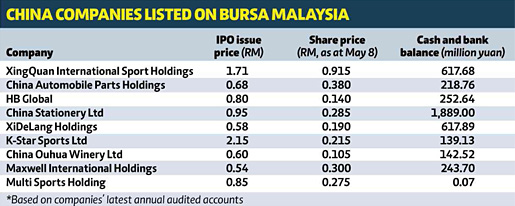
All Malaysian-listed China firms end in the red after listing

Most Bursa-listed China firms end in the red

LIM CIAN YAI

Published: 2013/05/09

KUALA LUMPUR: China-based companies listed on Bursa Malaysia mostly ended the trading day in the red yesterday, following HB Global Ltd’s investor alert announcement on Tuesday.

This is the first time a China company listed here has reported to the stock exchange a wide discrepancy between its unaudited results and that prepared by its external auditors. Bursa Malaysia leapt into action yesterday, directing HB Global to appoint a special auditor to probe the company’s affairs, particularly its financials, and identify any irregularities.

pix_bottom Read more of this post

Weeds Grow in the Stock Market’s Yield of Dreams; Investors’ intense focus on dividends could yield problems for them later on

May 7, 2013, 5:35 p.m. ET

Weeds Grow in the Stock Market’s Yield of Dreams

By JUSTIN LAHART

Investors’ intense focus on dividends could yield problems for them later on.

Usually when the Federal Reserve is in easing mode, investors set their sights on the stocks of companies whose fortunes are most likely to rise fastest with rising economic growth. But with the Fed sopping up $85 billion in Treasurys and mortgage bonds each month—and driving yields across a spectrum of bonds lower in the process—the hunt for investments that can provide a modicum of income has intensified. So the shares of companies with a history of paying dividends, which investors more typically eschew when the Fed’s foot is on the gas, have been in favor. Read more of this post

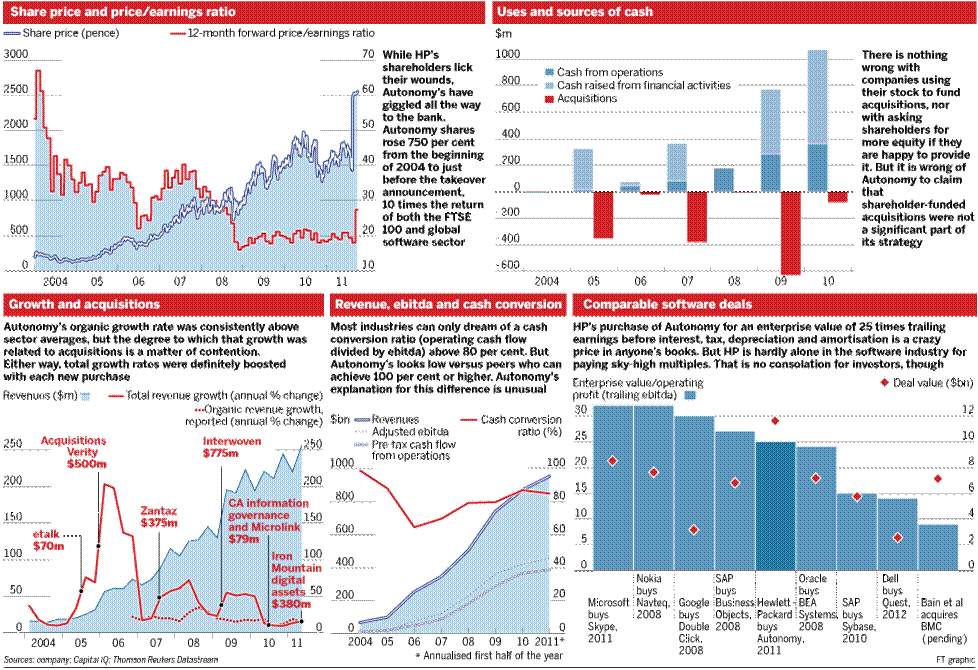
HP and Autonomy: how to lose $8.8bn

May 8, 2013 9:29 pm

HP and Autonomy: how to lose $8.8bn

By Robert Armstrong and Stuart Kirk

Hewlett-Packard appears to be in a difficult position whatever the court rules on its disastrous purchase of the software group

AutonomyHP

Making $8.8bn disappear is not easy.Hewlett-Packard managed it, and quickly, when it bought the information management software company Autonomyin 2011 for $11.6bn and wrote off 80 per cent of the purchase price a year later. HP’s history is rife with self-inflicted injuryand the Autonomy affair is, in part, a depressingly familiar story: a company in crisis overpaying for an acquisition it can tout as transformative. Heads have already rolled. Léo Apotheker, HP’s boss at the time of the deal, departed almost immediately afterwards and Raymond Lane, the board’s chairman at the time, and two other directors followed him last month. HP, however, attributed more than $5bn of the writedown to “accounting improprieties, disclosure failures and outright misrepresentations”. It alleges that low-margin hardware sales were disguised as high-margin software sales and that products were sold into the distribution channel when there was no buyer. Read more of this post

Nat Rothschild Rues ‘Terrible Mistake’ in Deal Gone Sour

Nat Rothschild Rues ‘Terrible Mistake’ in Deal Gone Sour

Nat Rothschild, dressed in a hooded sweater, jeans and hiking boots, perches on a cowhide sofa in his relatively modest chalet-style apartment in the Swiss ski resort of Klosters.

He recalls the fateful day in October 2010 when, as he scanned the globe for business opportunities, he first heard the word Bumi, Bloomberg Markets will report in its June issue.

Ian Hannam, a well-known JPMorgan Chase & Co. (JPM) investment banker, had e-mailed Rothschild suggesting he look at two coal companies, including PT Bumi Resources (BUMI), linked to the Bakrie family, a powerful Indonesian business dynasty.

“He said it was the best deal he had ever seen in his life,” Rothschild says. Read more of this post

Tips from Wall St hedge fund gurus fail to reward faithful

May 7, 2013 7:27 pm

Tips from Wall St hedge fund gurus fail to reward faithful

By Dan McCrum and Arash Massoudi in New York

Advice from the gurus of Wall Street may be rather less valuable than their fans would like to believe. Investors who bought on the basis of top tips from one of New York’s most celebrated hedge fund conferences last year spectacularly failed to beat the market. The Ira Sohn Investment conference held at New York’s Lincoln Center brings together the leading lights of the hedge fund community to share market insights as a way of raising money for cancer research. But a Financial Times analysis of last year’s tips shows decidedly mixed results. An investor who followed every top idea from the 12 speakers last year would have made 19 per cent, less than the 22 per cent gain available from a passive index fund tracking the US stock market. Many of the ideas have proved woefully miscued, including some from the most high-profile managers who will return to the stage on Wednesday: David Einhorn of Greenlight Capital and Bill Ackman of Pershing Square. Read more of this post

Berkshire Hathaway 2013: Takeaways from the Annual Meeting using the Bamboo Innovator mental model (Go to BeyondProxy.com, where value investing lives)

Bamboo Innovator is featured in BeyondProxy.com, where value investing lives:

Berkshire Hathaway 2013: Takeaways and Impressions from the Annual Meeting, May 7, 2013 (Weblink: BeyondProxy.com) – Scroll down till the end of the article.

Berkshire_Bamboo

Charles Ellis: What It Takes: Seven Secrets of Success from the World’s Greatest Professional Firms

What It Takes: Seven Secrets of Success from the World’s Greatest Professional Firms [Hardcover]

Charles D. Ellis (Author)

Book Description

Publication Date: February 11, 2013

Expert insights on what sets the great professional firms apart from all the rest

Having devoted a career that spans fifty years to consulting with and studying professional firms in the Americas, Asia, and Europe, author Charles Ellis learned firsthand how difficult it is for an organization to go beyond very good and attain, as well as sustain, excellence. Now, he shares his hard-won insights with you and reveals “what it takes” to be best-in-class in any industry. Enlightening and entertaining, What It Takes explores firms that are leaders in their particular field and the superior people who create and maintain them. Along the way, it identifies the secrets of their long-term success and reveals exactly how they can put your organization in a better position to excel when properly executed.

Read more of this post

Fortune 500 profits near record; Wal-Mart replaces ExxonMobil as biggest revenue maker

Fortune 500 profits near record; Wal-Mart replaces ExxonMobil as biggest revenue maker

By AFP | 7 May, 2013, 03.17AM IST

NEW YORK: The 500 largest US companies scored near-record profits last year and retailer Wal-Mart replaced ExxonMobil as the biggest revenue maker on the annual list,Fortune magazine said Monday. Apple cracked into the top 10 companies for the first time, vaulting into sixth place from the prior year’s number 17 slot.  The combined earnings of the Fortune 500 came in at $820 billion in 2012, slipping from the all-time high of $824.5 billion in 2011.  Earnings amounted to 6.8 percent of sales, well above the historical average of around 5.5 percent, the magazine said. “For the future the overriding question for the 500 is whether the era of abundant profits will continue,” said Fortune senior editor-at-large Shawn Tully. Tully predicted that companies would be forced to increase their staff and pay higher salaries as the economy continues to improve. “Most likely that will hold profit growth to the low single digits in the next year or two, in line with sales, as gravitational forces pull earnings back to the mean.”

Tully characterized 2012 as a year that saw the return of “animal spirits,” or an urge to action, reflected in an increase in the number of spinoffs and mergers and acquisitions.
“For several years, players have been hoarding cash and shunning expansion,” Tully said. “In 2012 they put that cash — and their rapidly appreciating shares — to work in the best year for M&A in over a decade.”

Wal-Mart reclaimed the top spot on the list from energy titan ExxonMobil after posting $469.2 billion in revenues, or $19.3 billion more than Exxon. However, Exxon’s profits of $44.9 billion dwarfed the retailer’s $17.0 billion. Exxon and Wal-Mart have traded the top two positions repeatedly in recent years. This year marks the ninth time Wal-Mart has topped the list. Energy companies continued to play a prominent role in the group, with Chevron in third place and refiners Phillips 66 and Valero Energy placing fourth and ninth, respectively. Rounding out the rest of the top 10 were Warren Buffett’s Berkshire Hathaway, ranked in fifth place, Apple (six), General Motors (seven), General Electric (eight) and Ford Motor (10).  The magazine classified financial services as the “comeback” sector of the year, leading all industry groups with $200 billion in total profits, ahead of the technology sector. JPMorgan Chase ranked 18th, Bank of America placed 21st, Wells Fargo was 25th andCitigroup finished 26th.

A Lesson From Buffett: Doubt Yourself

May 5, 2013

A Lesson From Buffett: Doubt Yourself

There was no big news at Berkshire Hathaway Inc.’s annual meeting this past weekend, but there was one great lesson for investors: Perhaps the most important thing you can do when everything seems to be going right in your portfolio is to listen to somebody who insists you are wrong. To spice up the annual ritual, Berkshire’s chairman, Warren Buffett, invited someone who has placed a bet against the stock—short-seller Doug Kass of hedge fund Seabreeze Partners Management—to join the panel of analysts posing questions to Mr. Buffett and vice chairman Charles Munger. Carp, if you will, that it didn’t take much bravery for Mr. Buffett to give air time to one skeptic among the more than 35,000 worshippers who would trample their grandmothers to kiss Mr. Buffett’s feet if he took his socks off. Complain, as many already have, that Mr. Kass’s questions weren’t all that tough. Then ask yourself: When is the last time the management of a major U.S. company sought out unrestricted criticism from someone betting against the stock? To get a sense of how unusual it was for Mr. Buffett to invite a bear to ask questions freely, consider a survey of more than 500 companies by the National Investor Relations Institute in 2011. The research found that 80% placed limits on who can ask questions during the quarterly ritual of the earnings conference call. Nearly 25% of the companies took questions only from “pre-approved lists” of callers. Only 11% permitted individual investors to ask questions; just 12% said the floor is open to everyone. What is more, 76% of companies prepared scripted answers to the questions they expected to get. According to the NIRI survey, the prepared comments by top executives that open the typical earnings conference call are prerecorded by about one out of 12 companies, but more than 80% of them don’t disclose that the remarks have been prerecorded. But before you start comparing U.S. corporate management to a closed system like, say, North Korea, ask yourself another question: When is the last time I tried as hard as possible to find someone to refute my own investing ideas? Mr. Buffett is “self-confident, but he’s not afraid of a challenge,” Mr. Kass told me last week. “I believe he enjoys challenges.” A deliberate, lifelong effort to find people to tell him why he might be wrong is one of the keys to Mr. Buffett’s success. It doesn’t come naturally to most investors. Mr. Buffett once noted about the scientist Charles Darwin that “whenever he ran into something that contradicted a conclusion he cherished, he was obliged to write the new finding down within 30 minutes. Otherwise his mind would work to reject the discordant information, much as the body rejects transplants. Man’s natural inclination is to cling to his beliefs, particularly if they are reinforced by recent experience.” Read more of this post

Buffett Has No New Investment Plan in China, Says There’s No Competitive Advantage; The pessimistic remarks about China came as a strong contrast with five years ago when he said China has huge growth potential

Buffett Has No New Investment Plan in China, Says There’s No Competitive Advantage

05-06 13:58 Caijing

The Buffet-backed BYD in March reported a drop of over 94% in net profit for the year 2012 largely due to weakening demands in the world’s second largest economy amid a downturn.

Warren Buffett, the Berkshire Hathaway CEO, said he has no new plans to invest in China, as the Oracle of Omaha remained conservative about competitive edges of the world’s second largest economy, following disappointing performance of his once favored investment in Chinese auto-maker BYD. There’s no competitive advantage in China, said the billionaire in taking up a question from a shareholder from Shanghai as the annual meeting of Berkshire Shareholders was drawing to a close in Omaha on May 4th. The pessimistic remarks about China came as a strong contrast with five years ago when he invested in a new plant of Iscar Metalworking Companies (IMC) in Dalian, a coastal city in northeast China, saying China has huge growth potential.  Buffett purchased 1.3% stake in PetroChina, China’s largest oil and gas producer, with $488million between 2002 and 2003 before selling all the shares in November, 2011, which gained the investor as much as $4billion. Berkshire Hathaway bought 225million shares of BYD, a Chinese auto and battery maker, or just under 10% of the company’s stock at 8 HKD a share before it soared to over 80HKD in 2010. The company, however, had seen slumping businesses since then with its shares dropping as much as over 80% to 12.44HKD in October, 2011. The Buffett-backed BYD in March reported a drop of over 94% in net profit for the year 2012 largely due to weakening demands in the world’s second largest economy amid a downturn. Buffett said he would prefer Chinese companies that export quality goods, especially consumer goods at last year’s annual shareholder’s meeting for Berkshire Hathaway. Berkshire vice chairman Charlie Munger said China has a huge auto market which is BYD’s main focus, and the number of cars he expected BYD to sell in the U.S. would be very small.

Investors having tough time copying Buffett’s strategies these days; Sage of Omaha’s transition to master financier baffles some, but homey advice still rings true

Investors having tough time copying Buffett’s strategies these days

Sage of Omaha’s transition to master financier baffles some, but homey advice still rings true

BY JOSH FUNK

AP MAY 6, 2013