Governing Misvalued Firms

Governing Misvalued Firms

Dalida Kadyrzhanova, Matthew Rhodes-Kropf

NBER Working Paper No. 19799
Issued in January 2014
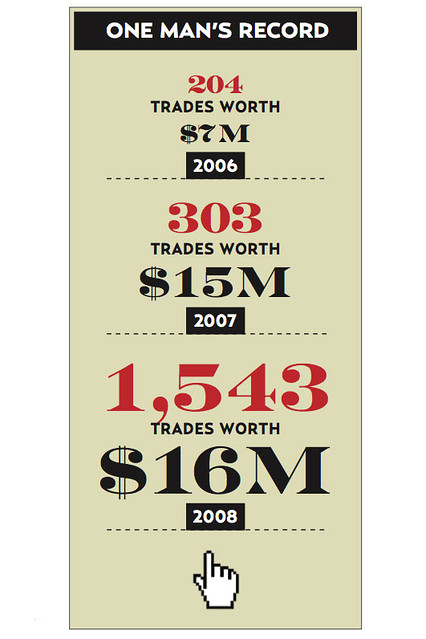
Equity overvaluation is thought to create the potential for managerial misbehavior, while monitoring and corporate governance curb misbehavior. We combine these two insights from the literatures on misvaluation and governance to ask ‘when does governance matter?’ Examining firms with standard long-run measures of corporate governance as they are shocked by plausible misvaluation, we provide consistent evidence that firm performance is impacted by governance when firms become overvalued – overvaluation causes weaker performance in poorly governed firms. Our findings imply that firm oversight is important during market booms, just when stock prices suggest all is well.

Sysco’s proposed acquisition of US Foods could lead to higher prices for restaurant meals and significantly reduce competition among suppliers

A Potentially Harmful Merger

By THE EDITORIAL BOARDJAN. 20, 2014

A proposed merger between two of the largest suppliers of food to restaurants, hotels and school cafeterias could significantly reduce competition and drive up prices of the meals Americans eat outside their homes. Of all the money consumers spend on food, nearly half is spent at restaurants. Read more of this post

Upstart Managers School Sage of Omaha; Gains for Two Younger Money Managers at Berkshire Hathaway Outpace Buffett, S&P 500

Upstart Managers School Sage of Omaha

Gains for Two Younger Money Managers at Berkshire Hathaway Outpace Buffett, S&P 500

ANUPREETA DAS 

Jan. 17, 2014 4:38 p.m. ET

The pupils are beating the master at Warren Buffett -led Berkshire Hathaway Inc.BRKB -0.15%

Two investment managers, hired by the 83-year-old billionaire in recent years as part of his succession plan, each posted returns last year that outdid both Mr. Buffett’s performance as Berkshire’s top stock picker and the Standard & Poor’s 500-stock index, according to people familiar with the matter. Read more of this post

Venture capitalists: From leafy to lofty; VC is adapting itself to the new startup landscape; VC firms are no longer seen as God-like. Some experts now claim that most of them are actually not that good at what they do

Venture capitalists: From leafy to lofty; Venture capital is adapting itself to the new startup landscape

Jan 18th 2014 | From the print edition

TECH MONEYMEN LIKE altitude. In Silicon Valley the leading venture-capital firms cluster on a leafy hill overlooking Stanford University. And when Benchmark Capital opened a branch in San Francisco, it moved into the top floor of the Warfield building, home to a popular music venue. Although it is in the Tenderloin, one of the city’s seediest districts, it offers a great view of the South of Market area, a breeding-ground for startups. Read more of this post

The Best Investor You’ve Never Heard Of: From a nondescript apartmemt, Joseph Rosenfield – a longtime pal of Warren Buffet – has turned $11 million into $1 billion. Who is he, and how did he do it?

The Best Investor You’ve Never Heard Of

FROM A NONDESCRIPT APARTMENT IN DES MOINES, JOSEPH ROSENFIELD–A LONGTIME PAL OF WARREN BUFFETT–HAS TURNED $11 MILLION INTO $1 BILLION. WHO IS HE, AND HOW DID HE DO IT?

By Jason Zweig

June 1, 2000

(MONEY Magazine) – This spring, in a modest apartment in Des Moines, Joseph Frankel Rosenfield quietly marks his 96th birthday. Rosenfield has far more to celebrate than living all the way from Theodore Roosevelt’s first presidential term to Bill Clinton’s second. If he were not a profoundly modest man, his mailbox would burst with birthday cards inscribed, “To one of the greatest investors in the world.” Read more of this post

Offshore broker’s role in Singapore penny stock crash; the eight parties had appointed the same financial adviser, Algo Capital, which operates out of a Bishan address to trade on their behalf. They had also borrowed large sums to buy substantial stakes in Blumont, Asiasons and LionGold

Offshore broker’s role in penny stock crash

Wednesday, Jan 15, 2014

Goh Eng Yeow

The Straits Times

As the new year gets under way, hope springs eternal that the penny stock market will make a strong comeback despite the bashing it received three months ago. New players are in vogue, replacing those that have fallen by the wayside after they collapsed to a fraction of their year-high price in the dramatic October crash. Traders are hopeful that the Year of the Horse will cause the stock market to gallop in price, yet at the back of their minds is one big concern: Will any penny stock revival be the real McCoy? Read more of this post

The Chinese Emperor and His Number Two: Xi-Li Power Shift, What It Means for Value Investors and the Story of Hangzhou Robam

The following article is extracted from the Bamboo Innovator Insight weekly column blog related to the context and thought leadership behind the stock idea generation process of Asian wide-moat businesses that are featured in the monthly entitled The Moat Report Asia. Fellow value investors get to go behind the scene to learn thought-provoking timely insights on key macro and industry trends in Asia, as well as benefit from the occasional discussion of potential red flags, misgovernance or fraud-detection trails ahead of time to enhance the critical-thinking skill about the myriad pitfalls of investing in Asia at the microstructure- and firm-level.

Dear Friends and All,

The Chinese Emperor and His Number Two: Xi-Li Power Shift, What It Means for Value Investors and the Story of Hangzhou Robam

Deng Xiaoping needs the number two man Zhu Rongji in China’s quest for prosperity in the 1990s as “Zhu Laoban” (朱老板, “Zhu the Boss”) pushed through wrenching state-sector reform and terrorized corrupt officials. Singapore’s Lee Kuan Yew has Goh Keng Swee, the economic architect who is said to feel depressed every time he passed by a school at the end of the school day as his thoughts were on how to find gainful employment for the school-leavers every year. The late Indonesian strongman Suharto is aided by Widjojo Nitisastro, the legendary architect of Suharto’s New Order economy. Wal-Mart is unstoppable when Sam Walton has David Glass as the key architect to implement the automated distribution vision at Wal-Mart since 1978 and is since up 1,000-fold to $250 billion in market value. Thailand’s Thaksin had Somkid Jatusripitak but the once-successful Thaksinomics ended with Somkid’s departure in 2006. The importance of a good number two man has been neglected and Thaksin’s parting shot then at the co-founder of the Thai Rak Thai Party has been predictive of his own future downfall: “Whether Somkid is in my next government or not is irrelevant to confidence in my government among business leaders. Nowadays, I am the main person who works. Everybody else in my cabinet is just my helper.”

15-1024x450

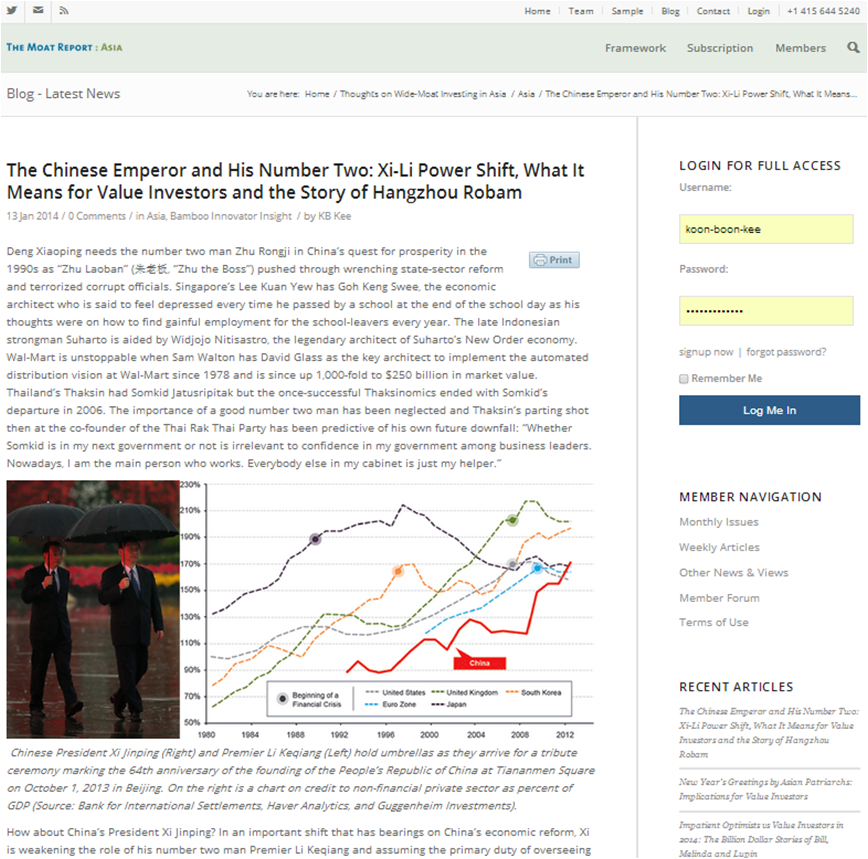
Chinese President Xi Jinping (Right) and Premier Li Keqiang (Left) hold umbrellas as they arrive for a tribute ceremony marking the 64th anniversary of the founding of the People’s Republic of China at Tiananmen Square on October 1, 2013 in Beijing. On the right is a chart on credit to non-financial private sector as percent of GDP (Source: Bank for International Settlements, Haver Analytics, and Guggenheim Investments). 

How about China’s President Xi Jinping? In an important shift that has bearings on China’s economic reform, Xi is weakening the role of his number two man Premier Li Keqiang and assuming the primary duty of overseeing economic reforms, particularly after the Plenum in November 2013. “Likonomics” is replaced by “Jinpingnomics”. Xi had personally led the drafting of the Plenum economic reform plan – the first time a party chief had done so since 2000. Xi is subverting a nearly two-decade-old division of power whereby the president, who is also party chief, handles politics, diplomacy and security, while the premier manages the economy. Xi’s predecessor Hu Jintao had played a negligible role in the economy and shared power evenly with former premier Wen Jiabao who was in charge of the massive RMB4 trillion ($660 billion) stimulus plan to respond to the 2008-09 global financial crisis which led to over RMB20 trillion ($3.3 trillion) of local government debt and concerns by investors such as George Soros who wrote recently what is perceived as a prediction of an economic crash in China: “There is an unresolved self-contradiction in China’s current policies: restarting the furnaces also reignites exponential debt growth, which cannot be sustained for much longer than a couple of years.” After rapidly consolidating power over the party and the military in his first year, Xi is now stepping in on the economy, making him the most individually powerful leader since Deng who launched China’s economic liberalization in 1978. Xi is also said to want to avoid the mistake of Hu who was outshined by Wen during the ten-year Hu-Wen administration from 2002.

Interestingly, in the February and May 2011 monthly editions of On the Ground in Asia, the predecessor of the Bamboo Innovator Insight and the Moat Report Asia, we had highlighted how the weak emperors in China and Asia would attempt to consolidate and take back power from the powerful local warlords:

“Local provinces now have greater autonomy and real power and the local warlords strive to create political dynasties capable of controlling or influencing a wide range of government projects to entrench themselves. A key risk for Asia that has not been particularly publicly highlighted is that the weakened central authority, unhappy at how his power and money base is eroded by so many different local factions, attempts to first attract all the FDI and investment flows into the regions with buzz transformational projects and privatization or PPP plans, and then, after getting a critical pool of funds, “shuts down” the place partially to reallocate power and money back to the central authority. This is a potential macro risk in Asia that investors have to keep in mind.. leverage is flattened, particularly at the LGFVs (local government financing vehicles), so as to weaken the elitist grip in local provinces through controlling the finances, resulting in China taking a “big bath writedown”, contrary to market expectations of a relatively smooth economic condition.. The new (benign elitist) leader Xi Jinping can also start to quickly produce fruits on the burnt-and-fallowed grounds when he takes over to demonstrate his competence and authority.”

The Bamboo Innovator recalled when we wrote about the above opinion in early 2011, we were derided both by some external parties and even internally for being an unnecessary alarmist, especially when Asia had rebounded strongly for almost two years from the bottom in March 2009 and everyone was minting money from property, gold, commodities and so on. The local government debt risk is not something new or unexpected and is already a known risk factored into the markets, some commented. If the information is out there, someone is already worrying about it and the risk will be impounded into the prices, they added. Shanghai Composite index is down 30% since then, Hang Seng index is still slightly down, gold down 11%, while the S&P index is up nearly 40% over the same period. Yes, while the local debt risk is not new, it definitely isn’t weighted enough by the market….

<Article snipped>

… Asian patriarchs and matriarchs add value in ways that do not appear on balance-sheets through their relationship-based deal-making capabilities. These strengths and tacit knowledge are difficult to bequeath or transfer to one’s children, and these specialized and intangible assets cannot be capitalized easily in the markets. This is why some Asian empires struggle to outlive their founders and succession tended to coincide with tremendous destruction of value. Because most Asian companies are “one-man-shop” operations with the founder making all the decisions, one of our favorite due diligence questions for Asian entrepreneurs and managers: the willingness to build a culture of decentralization/ empowerment and invest in a system to cascade decision rights throughout the organization is an important signal that the founder desires and cares to scale up the company in a sustainable manner by not hoarding knowledge.

That is why the Bamboo Innovator likes to see whether the company or country has a David Glass, a Zhu Rongji. Often, in our interaction with the Asian management, we can sense whether the emperor is playing mind games on the people around him or her so as to ascertain the worthiness of the “successor”. True Asian compounders and Bamboo Innovators have no time to waste – they build an idea or a vehicle that is larger than them so that others can be co-creators and involved in the value creation process, rather than having to fight for favors and permission and engaging in time-wasting posturing acts to be perceived in a good light by the emperor. There is a palpable sense of urgency in wanting to get things done, to realize the intangible ideas and Purpose, to keep the flames burning..

To read the exclusive article in full to find out more about the implications of the Xi-Li power shift and the story of Hangzhou Robam, please visit:

  • The Chinese Emperor and His Number Two: Xi-Li Power Shift, What It Means for Value Investors and the Story of Hangzhou Robam, Jan 13, 2014 (Moat Report AsiaBeyondProxy)

Emperor

Importance of Learning HOW to Invest, Not WHAT to Invest

Importance of Learning HOW to Invest, Not WHAT to Invest

by Jae JunJanuary 7, 2014

How to Invest – Is it as Easy as it Sounds

I am a fan of Tim Ferriss and his obsession with doing things better, smarter and more efficiently.

Reading through some old material related to The 4 Hour Chef, it is amazing to see examples of ordinary people doing extraordinary things.

  • A 132lb girl deadlifting 400lbs
  • Shinji Takeuchi, a Japanese man who started swimming at the age of 37, is the #1 watched swimmer on youtube. Blows Michael Phelps and Ian Thorpe out of the water. But why?

The theme throughout Ferriss’ book is that ordinary people can excel beyond the pack and achieve phenomenal tasks by knowing how to train instead of what to train. Read more of this post

Characteristics of Value Stocks and Value Traps

Characteristics of Value Stocks and Value Traps

by Jae JunJanuary 10, 2014

Can we Boil Down Value Traps Into a Number of Characteristics? Vitaliy Katsenelson, author of Active Value Investing, and creator of the Katsenelson Absolute PE valuation model, hosts a conference called VALUEx. In June, Jim Chanos, legendary short seller, gave a presentation on the topic of value stocks and value traps which I wanted to highlight.

Value Stocks: Definitive Traits

Predictable, consistent cash flow

Defensive and/or defensible business

Not dependent on superior management

Low/reasonable valuation

Margin of safety using many metrics

Reliable, transparent financial statements Read more of this post

Satyam scam: Where business was in bed with politicians; Exactly five years ago, Indians woke up to read a confession by B Ramalinga Raju that he had committed financial fraud by overstating profits and cash in the bank

Jan 10, 2014, 06.00 PM IST
Satyam scam: Where business was in bed with politician

R Jagannathan
Firstpost.com

Exactly five years ago, Indians woke up to read a confession by B Ramalinga Raju, chief promoter of Satyam Computer Services, that he had committed financial fraud by overstating profits and cash in the bank to the tune of around Rs 6,000 crore.
The Indian legal system has flunked its first major test of action against crony capitalism: the Satyam scandal, where business was in bed with politicians. Read more of this post

Sell-Side Analysis Most Useful When Most Wrong

Sell-Side Analysis Most Useful When Most Wrong

Equity analysts work harder when economies and financial markets are slumping. They also have more influence over stocks — even though their earnings forecasts are less accurate. Economists Roger K. Loh and Rene M. Stulz, studying analyst reports from 1983 to 2011, concluded that greater uncertainty and career concerns amid recessions and market crises mean projections are tougher to make and prove less accurate. Even so, harder times push investors to rely on them more for guidance and so increase the usefulness of analysis. Read more of this post

New Year’s Greetings by Asian Patriarchs: Implications for Value Investors (Bamboo Innovator Insight)

Updates:

  • One of our recent new subscribers last month is a Singapore-based billionaire who’s a secretive low-profile super value investor with his own multi-billion family office and we have another European-based multi-billion family office signing up too.
  • The Bamboo Innovator also met up with one of our Institutional Subscribers over  Saturday at the Detecting Accounting Frauds Ahead of the Investment Curve workshop (our 6th run of the workshop series) and he commented that while he has been cautious on the macro front, he finds the investment philosophy, the thinking process and the stock ideas highlighted in the monthly reports to be carefully researched and useful for his professional and personal growth as a value investor in taking high-conviction bets of wide-moat business models with peace of mind in an uncertain macro environment.
  • We are grateful to have the support of our subscribers and readers, an unusual and exceptional group who are not traders seeking short-term momentum, get-rich-quick, syndicates-driven ideas. We are especially grateful to our initial subscribers including the astute private investors Mr K (whose investments in Malaysia’s wide-moat innovator DKSH is up nearly 200% since March 2013) and Mr W. This reminds the Bamboo Innovator of what Harvard’s Michael Porter remarked in a recent interview last month:

“The concern is that it seems like the vast majority of energy and effort in investing has become about other things. It’s about momentum. It’s about program trading to capitalize on tiny movements in share prices. It’s about locating your servers closer to the exchange so you can trade in and out a little faster. I’m all for price discovery and liquidity, but improvements here have diminishing returns for fundamental wealth creation. One investor’s gain is often another investor’s loss.. I believe that the fundamental purpose of investing is to deploy capital to productive uses in the real economy. It’s the ability of businesses to use capital well to meet needs at a profit and grow that creates all the wealth in society. Directing capital to companies that can use it productively to create economic value, and thus wealth, is ultimately the most profound benefit investors can have on society.”

With knowledge, we have a choice to invest in the hardworking Asian entrepreneurs and capital allocators who are serious in building a wide-moat business. And we are intrinsically motivated to keep the flames burning to highlight these exceptional innovators for our subscribers who are just as unique!

The following article is extracted from the Bamboo Innovator Insight weekly column blog related to the context and thought leadership behind the stock idea generation process of Asian wide-moat businesses that are featured in the monthly entitled The Moat Report Asia. Fellow value investors get to go behind the scene to learn thought-provoking timely insights on key macro and industry trends in Asia, as well as benefit from the occasional discussion of potential red flags, misgovernance or fraud-detection trails ahead of time to enhance the critical-thinking skill about the myriad pitfalls of investing in Asia at the microstructure- and firm-level.

Dear Friends and All,

New Year’s Greetings by Asian Patriarchs: Implications for Value Investors

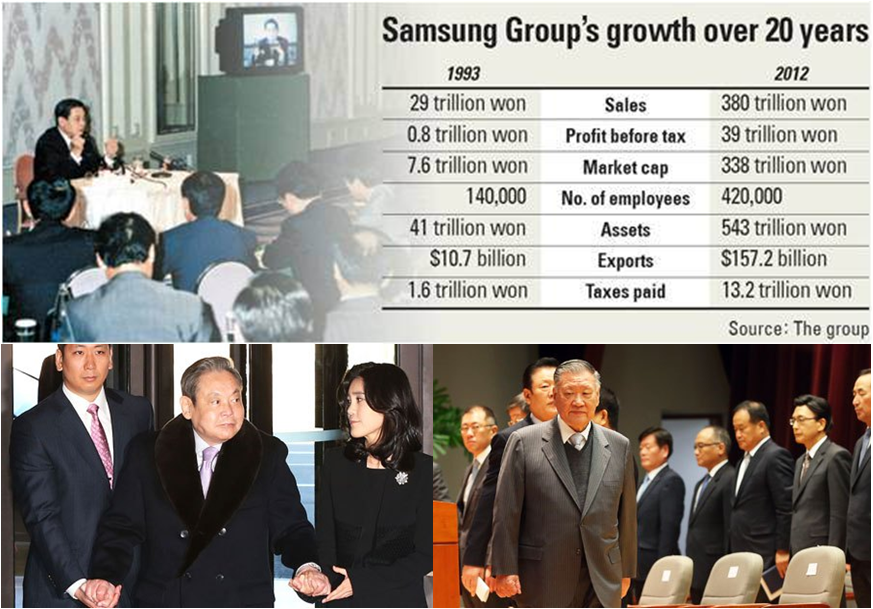
“Let us boldly throw away the business models and strategies of the past five and ten years,” said the 71-year-old Lee Kun-hee in a New Year message to Samsung Group’s 420,000 employees around the world. More than 60% of the profits of Samsung come from the flagship vehicle Samsung Electronics (005930 KS, MV $180bn), and 60% of Samsung Electronics’ profits come from mobile phones. “Let us move beyond our hardware-oriented processes and corporate culture. “Our leading businesses are constantly being challenged by competitors, while time is running out for our less dynamic businesses. It is therefore time to change once again. Economic slowdowns can present opportunities too. Let us see farther from a higher vantage point and create new technologies and markets. We must push ourselves to improve our business structure so that we can lead industry trends. We must innovate technologies that can help us compete in an uncertain future. And we must invest in systems to enhance our global management capabilities. As we move forward, we must resist complacency and thoughts of being good enough, as these will prevent us from becoming better. We should not be complacent and be armed again with a sense of crisis. We need to be a management that thrives on innovation, autonomy and creativity, that accepts challenge and is not afraid of failure. We must create an environment of ingenuity, where autonomy and creativity abound. There are social expectations on us. We will take another first step toward becoming an eternal, super first-class corporation that can’t be shaken by any obstacle. Once again, we will move strongly.” Like Nokia and Blackberry, Samsung was also disrupted by Apple but it managed to accomplish something the others did not — it bounced back, stronger than ever; to bend, and not break, like the bamboo.

New Year_Samsung

Top: On June 7, 1993, at an emergency executives meeting in Frankfurt, Germany, he told his assembled managers: “Change everything except your wife and children.” Bottom left: Samsung Electronics Chairman Lee Kun-hee walks into the Hotel Shilla in Seoul, holding hands with the hotel’s CEO and his daughter Boo-jin, to attend the 2014 New Year’s greeting ceremony; Bottom right: Hyundai Motor Group Chairman Chung Mong-koo walks into a hall to attend a New Year’s greeting ceremony at the group’s headquarters in Yangje-dong, Seoul.

“The economic condition is still difficult, especially with the strengthening of the won and the dragging out of the economic recovery,” said Koo Bon-moo, chairman of LG Group, as he asked each employee to be ready for the challenge of difficult times ahead. “We are in a crisis,” he said. “A leading firm could collapse due to a careless mistake.” LG Electronics (066570 KS, MV $10bn) has since lagged far behind Samsung Electronics. Hyundai Motor (005380 KS, MV $46bn) Chairman Chung Mong-koo, 75, also called for innovative approaches to tackle challenges. “The global economy has entered the era of low growth, which has led to a fiercer competition. Uncertainty has grown, due to technological conversions,” Chung said. “It is necessary to innovate the management system of global networks to obtain efficiency to cope with challenges.” Hyundai Group Chairwoman Hyun Jeong-eun said 2014 will be a turning point for the group. “We are in a time we can’t survive with old sales strategies, business models and management measures,” she said. “We should be reborn to carry out innovative strategies.” Hyundai Group has recently decided to sell all three of its financial affiliates – Hyundai Securities, Hyundai Savings Bank and Hyundai Asset Management – for $3.1 billion in a bid to avoid a liquidity crisis and lower its high debt ratio from nearly 500% to less than 300%. It also expects to raise $320 million by selling the Banyan Tree Hotel in Seoul which it acquired for $155 million in 2012. Hyundai Group is a conglomerate with businesses ranging from shipping and logistics to finance and machinery, but it does not include Hyundai Motor or Hyundai Heavy Industries (009540 KS, MV $18bn), which were spun off following the 1997/98 Asian Financial Crisis. Creditors have piled pressure on cash-strapped industrial conglomerates to accelerate restructuring, following a string of bankruptcies including STX, Tongyang and Woongjin.

The New Year message by these successful and crisis-aware Asian patriarchs and entrepreneurs has been sober. What are the implications for value investors? The increasing pace of business disruptive changes will accelerate the restructuring efforts of many Asian business groups to spin-off, divest, merge and acquire the different business parts to stay relevant and competitive, to make decisions and execute faster on business opportunities, and to aim for the highest valuation with an improved governance structure. Take for instance Korea’s internet giant NHN which announced the spin-off of its games division (Hangame, renamed NHN Entertainment) on 8 March 2013 from its search and mobile chatapp LINE business (Naver) with the actual split date on August 29. The rationale is for the separate entities to respond to challenges and opportunities more nimbly and quickly. Naver Corp (035420 KS, MV $21.8bn) is up 57% since the split as shown in the price chart, compared to a flat Kospi index over the same corresponding period. Understanding the company’s motivations for restructuring is critical to provide clues to the future values of new and existing entities.

Naver

To read the exclusive article in full to find out more about how restructuring aimed at improving corporate governance will be a major investment theme in Korea and Asia in 2014, please visit:

New Year


Dangdang.com founder Li Guoqing said in an interview that currently e-business companies tend to exaggerate their sales figures as the online sales in the industry excluding wholesales are generally overstated by three to four times as most non-listed companies use it to attract investors

Dangdang.com founder Li Guoqing said in an interview that currently e-business companies tend to exaggerate their sales figures as the online sales in the industry excluding wholesales are generally overstated by three to four times as most non-listed companies use it to attract investors  

An Investor’s Recipe for Success in Japan: Investing in “owner-operator” stocks can pay off nicely

SATURDAY, JANUARY 4, 2014

An Investor’s Recipe for Success in Japan

By LESLIE P. NORTON | MORE ARTICLES BY AUTHOR

Investing in “owner-operator” stocks can pay off nicely.

Google “Japanese housewife” and you get a page of X-rated links. That flagrant disrespect contrasts with the attitude toward women evident at Cookpad, Japan’s largest recipe-sharing outfit. Cookpad came public in 2009, 12 years after it was founded by Akimitsu Sano. Members submit recipes and vote on which are the best. It has become a huge hit; more than 80% of Japanese women in their 20s and 30s visit the site. “You get positive reinforcement. If you’re a housewife in Japan, you don’t get a lot of feedback,” says Ayako Weissman, who manages Asia funds for Horizon Kinetics in New York and owns Cookpad shares (ticker: 2193.Japan). In the year ended in March, the company’s earnings jumped 45% and its sales, 27%, driven by subscriptions and ads. No wonder the stock climbed about 145% in 2013. Read more of this post

How To Reduce Mistakes In Investing? Use A Powerful Checklist

How To Reduce Mistakes In Investing? Use A Powerful Checklist

by Guest PostJanuary 2, 2014

By Pope Brar

Pope Brar’s checklist for investing looks like a powerful tool for reducing mistakes.  In it, he extensively covers a long checklist, pointing out places where people often make mistakes.  We cover the entire list here, including an introduction that lays out how to use the checklist, as well as putting it in a historical context.  The full text is below: Read more of this post

Impatient Optimists Vs Value Investors in the New Year 2014: The Billion Dollar Stories of Bill-Melinda and Lupin (Bamboo Innovator Insight)

The following article is extracted from the Bamboo Innovator Insight weekly column blog related to the context and thought leadership behind the stock idea generation process of Asian wide-moat businesses that are featured in the monthly entitled The Moat Report Asia. Fellow value investors get to go behind the scene to learn thought-provoking timely insights on key macro and industry trends in Asia, as well as benefit from the occasional discussion of potential red flags, misgovernance or fraud-detection trails ahead of time to enhance the critical-thinking skill about the myriad pitfalls of investing in Asia at the microstructure- and firm-level.

Dear Friends and All,

Nearly ten years ago, the Bamboo Innovator had met with the founder of a Chinese drugmaker who was seeking to list his firm in Singapore. As this Chinese entrepreneur hails from the northeastern Shandong province and Shandong men are generally stocky like rugby players, this particular entrepreneur stood out for being unusually small-build. So the Bamboo Innovator asked him and found out that he had been afflicted with polio when he was young and he managed to recover from the disease. The gritty entrepreneur remarked that I am the only fund manager who observed this condition and made an effort to ask; he is usually bombarded by questions about profit margins and guidance on sales figures. The Bamboo Innovator is positive on people who have overcome personal adversities in life as they tend to be resilient in creating value for others. We invested in the shares of this Chinese pharmaceutical company and not only did the market value climbed four-fold from around $75 million to $300 million, but importantly it was also possibly the only Chinese S-Chip firm whose accounting was clean and did not suffer when the wave of accounting fraud revelation swept across the statistically-cheap Singapore-listed Chinese firms during the 2007/09 Global Financial Crisis.

******

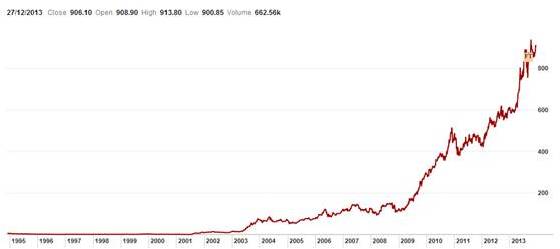
As we step forward into the New Year 2014, the Bamboo Innovator was captivated by a WSJ article “What I Learned in the Fight Against Polio” written by Bill Gates on Nov 10. It talks about how the Bill and Melinda Gates Foundation has helped India stayed polio-free for more than two years and the lessons for solving other human welfare issues worldwide. Impatient Optimists is the name of the blog (www.impatientoptimists.org) of the influential Bill & Melinda Gates Foundation featuring the work and stories of the people working every day to help alleviate suffering, poverty, diseases, promote health, and to help students realize his or her full potential. These are all urgent problems requiring innovative solutions that have long-term investment implications which we will discuss shortly with the story of the Indian compounder Lupin (NSE: Lupin, MV $6.5 billion) and how its focus in the neglected niche of anti-TB drugs transformed the firm into India’s third-most valuable listed pharmaceutical firm, compounding shareholders’ wealth by over 138-fold. Bill Gates wrote in a blog post on Dec 23 about a summary of “Good News You Might Have Missed in 2013” that include how we got smarter and faster at fighting polio and that funding commitment to the Global Fund to fight TB and malaria was renewed. Gates also shared a tweet expressing his excitement on what he is looking forward to seeing in 2014: a new vaccine called pentavalent that can prevent five diseases.

Gates

Lupin

Lupin (NSE: LUPIN) – Stock Price Performance, 1995-2013

To read the exclusive article to find out more about the story of Lupin, of Australia’s CSL which is up 85-fold to $29 billion and how value investors can potentially gaze at the next Lupin/CSL, please visit:

  • Impatient Optimists Vs Value Investors in the New Year 2014: The Billion Dollar Stories of Bill-Melinda and Lupin, Dec 27, 2013 (Moat Report AsiaBeyondProxy)

Impatient Optimists


The lesson from Sarofim’s five decades in the investment business: Buy quality stocks; hold them forever

SATURDAY, DECEMBER 28, 2013

A Lion in Winter

By ANDREW BARY | MORE ARTICLES BY AUTHOR

The lesson from Sarofim’s five decades in the investment business: Buy quality stocks; hold them forever.

BA-BD735_Sarofi_DV_20131226232024

After more than five decades in the investment business, Fayez Sarofim remains bullish on U.S. stocks, particularly brand behemoths like Coca-Cola and Philip Morris International that he has owned for decades. Sarofim has long favored well-regarded industry leaders over smaller upstarts. Read more of this post

The Best Financial Advice I Ever Got (or Gave): Wisdom from 22 successful investors

The Best Financial Advice I Ever Got (or Gave)

Wisdom from 22 successful investors.

LIZ MOYER, JASON ZWEIG, RYAN WALLERSON, LIAM PLEVEN, LESLIE SCISM, KIRSTEN GRIND And DAVID BENOIT

Dec. 27, 2013 6:10 p.m. ETThe holidays are a time for relaxing, helping the less fortunate, showering family and friends with love and attention—and, sometimes, for smiling and nodding through unsolicited stock tips from an overbearing relative who has been sampling the eggnog. But good advice can make careers and forever change lives for the better. So The Wall Street Journal asked an array of prominent people who manage, invest, study and write about money to share the single best piece of financial advice they ever received—or gave. The respondents included investors who collectively have earned billions of dollars for clients and themselves; founders and owners of businesses that are household names; and Nobel laureates who shaped the world’s understanding of the forces that drive the stock market. A leading federal judge who has presided over cases related to the financial crisis shared his thoughts, as did an agent who has negotiated some of the most lucrative contracts in the history of sports and an adviser who helps clients recover financially after a divorce.

In most cases, the recommendations are easy to follow today. Some reflect conventional wisdom, while some fly in its face. Not every tidbit is consistent with all the others. The responses, some of which were edited for clarity, appear below. But first, a word of caution: Like all advice, it should be weighed soberly—ideally, at a good distance from the eggnog. Read more of this post

Gospel from 20th Century Investment King, Sir John Templeton

Gospel from 20th Century Investment King, Sir John Templeton

by Investing CaffeineDecember 25, 2013

Exceptional returns are not achieved by following the herd, and Sir John Templeton, the man Money magazine called the greatest global stock investor of the 20th century, followed this philosophy to an extreme. This contrarian, value legend put his money where his mouth was early on in his career. After graduating from Yale and becoming a Rhodes Scholar at Oxford, Templeton moved onto Wall Street. At the ripe young age of 26, and in the midst of World War II tensions, Templeton borrowed $10,000 (a lot of dough back in 1939) to purchase 100 shares in more than 100 stocks trading at less than $1 per share (34 of the companies were in bankruptcy). When all was said and done, only four of the investments became worthless and Templeton made a boatload of money. This wouldn’t be the end of Templeton’s success, but rather the beginning to a very long, prosperous career -Templeton ended up living a full life to age 95 (1912 – 2008). Read more of this post

Sorry, haters: Unloved stocks had a great year; Stocks that analysts rated negatively in 2013 did better than the ones they liked

Dec. 26, 2013, 11:31 a.m. EST

Sorry, haters: Unloved stocks had a great year

Stocks that analysts rated negatively in 2013 did better than the ones they liked

By Brett Arends

What was the only thing better than following the advice of Wall Street analysts in 2013?

Easy. Not following the advice of Wall Street analysts. A MarketWatch analysis reveals that the stocks that these analysts hated the most a year ago produced spectacular investment returns in 2013. They beat the overall market indexes, and the stocks that analysts most loved, by a country mile. (Also see: The stupidest investment ideas of 2013) Read more of this post

Keepers of the Flame: Revisit into the Origins of Compounders in India and Asia (Bamboo Innovator Insight)

The following article is extracted from the Bamboo Innovator Insight weekly column blog related to the context and thought leadership behind the stock idea generation process of Asian wide-moat businesses that are featured in the monthly entitled The Moat Report Asia. Fellow value investors get to go behind the scene to learn thought-provoking timely insights on key macro and industry trends in Asia, as well as benefit from the occasional discussion of potential red flags, misgovernance or fraud-detection trails ahead of time to enhance the critical-thinking skill about the myriad pitfalls of investing in Asia at the microstructure- and firm-level.

Dear Friends and All,

Keepers of the Flame: Revisit into the Origins of Compounders in India and Asia

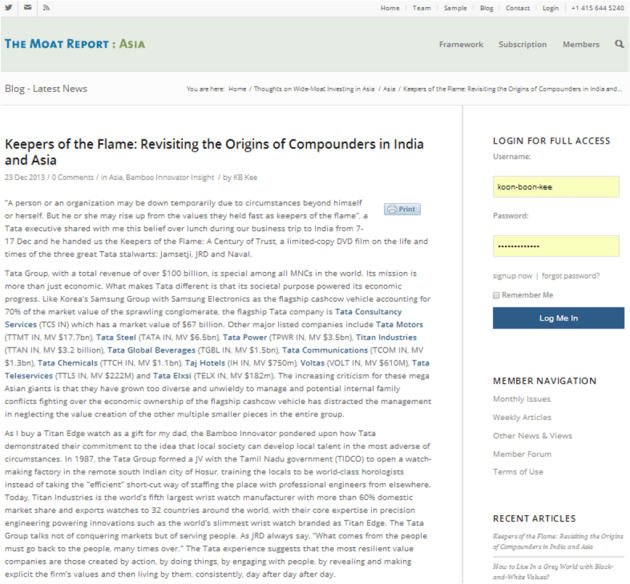
“A person or an organization may be down temporarily due to circumstances beyond himself or herself. But he or she may rise up from the values they held fast as keepers of the flame”, a Tata executive shared with me this belief over lunch during our business trip to India from 7-17 Dec and he handed us the Keepers of the Flame: A Century of Trust, a limited-copy DVD film on the life and times of the three great Tata stalwarts: Jamsetji, JRD and Naval.

Tata Group, with a total revenue of over $100 billion, is special among all MNCs in the world. Its mission is more than just economic. What makes Tata different is that its societal purpose powered its economic progress. Like Korea’s Samsung Group with Samsung Electronics as the flagship cashcow vehicle accounting for 70% of the market value of the sprawling conglomerate, the flagship Tata company is Tata Consultancy Services (TCS IN) which has a market value of $67 billion. Other major listed companies include Tata Motors (TTMT IN, MV $17.7bn), Tata Steel (TATA IN, MV $6.5bn), Tata Power (TPWR IN, MV $3.5bn), Titan Industries (TTAN IN, MV $3.2 billion), Tata Global Beverages (TGBL IN, MV $1.5bn), Tata Communications (TCOM IN, MV $1.3bn), Tata Chemicals (TTCH IN, MV $1.1bn), Taj Hotels (IH IN, MV $750m), Voltas (VOLT IN, MV $610M), Tata Teleservices (TTLS IN, MV $222M) and Tata Elxsi (TELX IN, MV $182m). The increasing criticism for these mega Asian giants is that they have grown too diverse and unwieldy to manage and potential internal family conflicts fighting over the economic ownership of the flagship cashcow vehicle has distracted the management in neglecting the value creation of the other multiple smaller pieces in the entire group.

As I buy a Titan Edge watch as a gift for my dad, the Bamboo Innovator pondered upon how Tata demonstrated their commitment to the idea that local society can develop local talent in the most adverse of circumstances. In 1987, the Tata Group formed a JV with the Tamil Nadu government (TIDCO) to open a watch-making factory in the remote south Indian city of Hosur, training the locals to be world-class horologists instead of taking the “efficient” short-cut way of staffing the place with professional engineers from elsewhere. Today, Titan Industries is the world’s fifth largest wrist watch manufacturer with more than 60% domestic market share and exports watches to 32 countries around the world, with their core expertise in precision engineering powering innovations such as the world’s slimmest wrist watch branded as Titan Edge. The Tata Group talks not of conquering markets but of serving people. As JRD always say, “What comes from the people must go back to the people, many times over.” The Tata experience suggests that the most resilient value companies are those created by action, by doing things, by engaging with people, by revealing and making explicit the firm’s values and then living by them, consistently, day after day after day.

What was shared by the Tata executive echoed the lifelong research work of the Bamboo Innovator: Why is it that some companies or people are able to bounce back from a crisis or challenge to scale greater heights, while others, particularly previously successful ones, remain in a state of protracted consolidation or even decline? Answering this question will illuminate the path for value investors to identify and invest in the emerging compounders and undervalued wide-moat innovators in Asia in the next five years.

Having spent the past decade plus in the miasmic Asian capital jungles interacting with the top management of Asian companies in various countries and sectors, we started to see how the mental model of the Bamboo can help to explain the underlying sources of moat creation and sustainability in outperforming value creators. We coined these compounders Bamboo Innovators, compounders who bend, not break even in the wildest of storms that would snap the mighty resisting oak tree. Due to their unique business models, the Bamboo Innovators are often overlooked, neglected, misunderstood and underappreciated, presenting mispricing opportunities for the value investors. The usual statistically cheap stocks in Asia are Extractors, either value traps with misgovernance issues with the controlling share owners extracting wealth from minority investors or fraudulent companies with the syndicates-insiders lying in wait.

As we head towards 2014, it is worthwhile for value investors to pause and relook into the wealth creation and destruction process of Compounders Vs Extractors. Value investors need to look beyond the aggregate market PE figures since the widening valuation chasm between the Compounders and the Extractors has distorted the “average” overall PE number; the quality wealth creators are rather pricey while most of the “cheap” companies are Extractors. In one of the figures extracted from Motilal Oswal’s 18th Annual Wealth Creation Study (2008-2013) forwarded to me by the accomplished and thoughtful value investor Hemant Amin (Part 1, Part 2), also head of the BRKets (www.brkets.com), we can see that the wealth destroyed in the Indian market during 2008-13 is at an unprecedented high of INR 17 trillion ($276 billion), nearly the equivalent of the total wealth created by the top 100 companies!

Wealth DestroyedSource: Motilal Oswal 18th Annual Wealth Creation Study (2008-2013)

Value investors in Asia cannot look purely at quant “valuation” metrics since many business models and moats are “permanently impaired” and these stocks are the fertile ground for momentum traders and nefarious insiders who have the incentive and power to manipulate prices and volumes. Value investors who attempted to invest in these statistically cheap stocks in Asia have found themselves facing deadweight losses in their portfolio. We observed firsthand how these compounders grew from strength to strength, especially in difficult times during the 2007-09 Global Financial Crisis, while others, such as some Singapore SME business owners, grew to become either contented with what they have achieved or disillusioned with their core business, straying to seek “growth” for their private interests such as property development, or simply numbing/”exciting” their senses with destructive lifestyle at the MBS/RWS casinos while treating both their listed business vehicles as a personal ATM and their employees as disposable expenses rather than as valuable intangible assets. The listed companies belonging to the latter group become dangerous value traps; some even slipped into conniving with “syndicates”. Financial numbers were “propped up” artificially with the prospects of sexy growth projects to lure in funds from investors and the studiously-assessed asset value has already been “tunnelled out” or expropriated. Western-based accounting fraud detection tools and techniques have not been adapted to the Asian context to avoid these traps. And the Bamboo Innovator has seen how the perpetrators go away scot-free and live a life of super luxury on minority investors’ hard-earned money. Of course, it is often said that if one’s hands are kept clean in the front-office of financial services industry in Asia, one cannot be wealthy. When investors have knowledge in their hands, we have a choice to stay away from these people and away from temptations and do the things that we think are right. With knowledge, we have a choice to invest in the hardworking Asian entrepreneurs and capital allocators who are serious in building a wide-moat business.

Note also that the percentage of wealth created by the top 100 wealth creators during 2008-2013 is also at an all-time high of 93%, as compared to merely 2% from the start of the Asian bull market during 2005-2010 when the Sensex index was 6,000 (now 21,000), while the Shanghai index is up from 1,200 to around 2,100 over the same period. The situation in India is a reflection of the broader Asian market: Shareholder wealth gain is increasingly concentrated amongst a core group of compounders whose management have been focused on building up scalable business models quietly to last the distance and were consolidating the industry to make market share gains or introduce new innovative products and services to fulfill unmet needs of the customers.

The Godrej Group is part of this core group of around 200-plus Asian Compounders which have the “highest order of competitive advantage” that is beyond fitting them into the usual Porter-style matrix of “low-cost” or “differentiation” strategy, as shared with us by Mr G Sunderraman, the Head of Innovation and EVP at Godrej & Boyce, the holding company of the reputable Godrej family at their corporate headquarters at Vikhroli in northeast Mumbai…

To read the exclusive article about the inner workings of the Indian and Asian compounders in full, please visit:
Keepers of the Flame

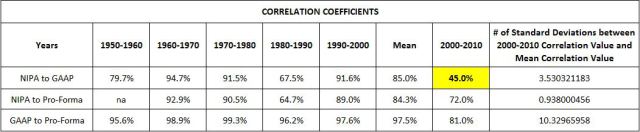
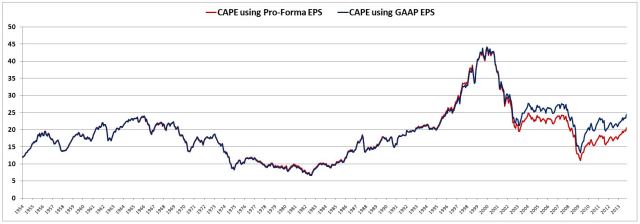
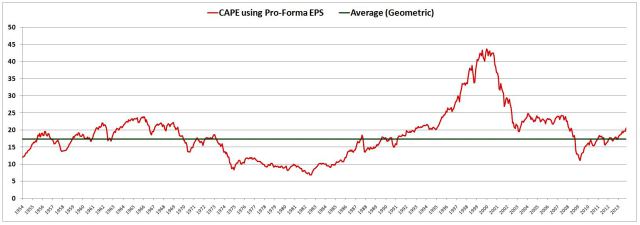
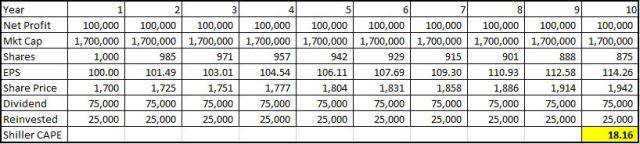
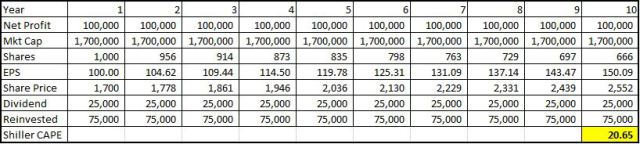
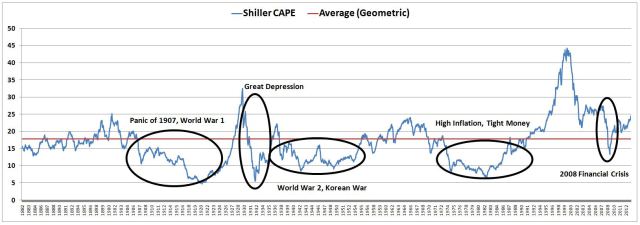
When a Good Indicator Goes Bad; Fixing the Shiller CAPE: Accounting, Dividends, and the Permanently High Plateau

When a Good Indicator Goes Bad

By John Rekenthaler | 12-17-13 | 02:45 PM | Email Article

newshiller31 reppf1 reppf2 correlcoeff8 cape-pf2 cape-pf futret shillerdiv2 shillerdiv1 shillercape pfshiller2

The New Normal
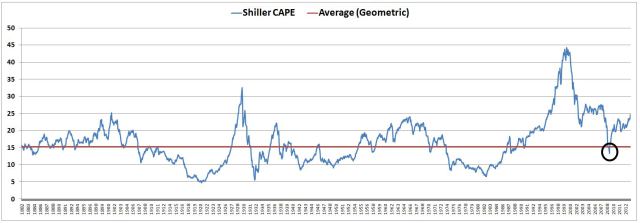
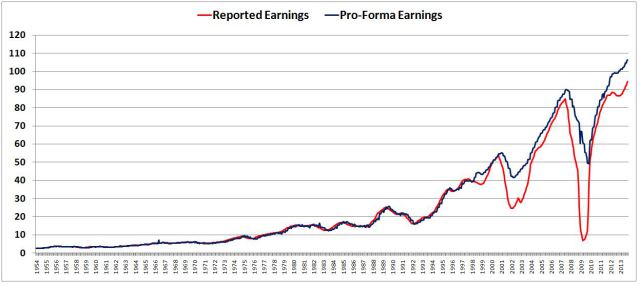
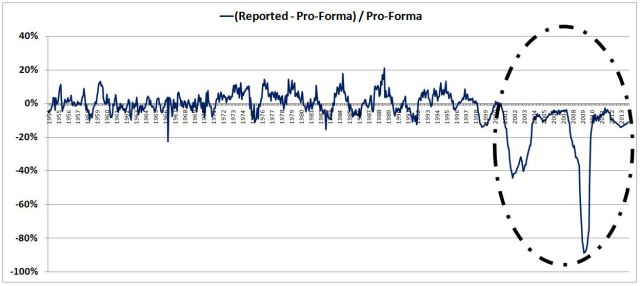
The vaunted cyclically adjusted price/earnings ratio, or CAPE, developed by Nobel Laureate Robert Shiller, is busted. The article “Fixing the Shiller CAPE: Accounting, Dividends, and the Permanently High Plateau” from Jesse Livermore’s blog “Philosophical Economics” is the best attempt yet at explaining why. Read more of this post

Corporate Culture Matters in Investing

Corporate Culture Matters in Investing

By Brian Stoffel | More Articles | Save For Later
December 18, 2013 | Comments (1)

gdoor_large

Lots of investors think the key to finding wealth-creating returns is to meticulously study a company’s financial statements. That strategy may work, but if you’re a beginning investor who isn’t sure where to start, know that this is far from the only way to succeed in the stock market. Investigating a company’s culture can be just as important — if not more so — than studying its income statement. Read more of this post

You Win By Thinking Everyone Else Is Wrong

You Win By Thinking Everyone Else Is Wrong

By Morgan Housel | More Articles | Save For Later
December 13, 2013 | Comments (17)

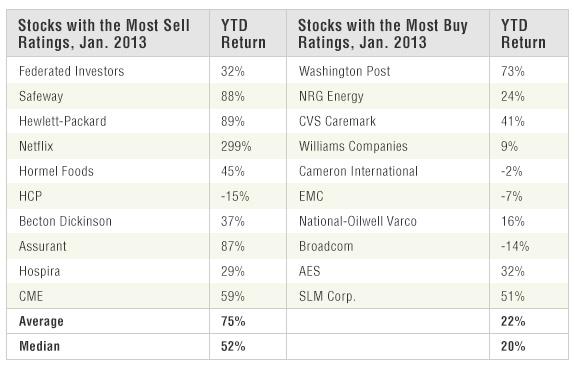
I heard an amazing statistic earlier this year. According to Bloomberg, the 50 stocks with the lowest Wall Street analyst ratings at the end of 2011 outperformed the S&P 500 by seven percentage points in 2012. Think about that. Warren Buffett’s goal was once to outperform the market by 10 percentage points a year. Doing the opposite of what Wall Street’s smartest minds recommended last year got you two-thirds of the way there. As we head toward bonus season, how did finance’s top analysts do this year? I dug through FactSet data on companies with the most buy and sell recommendations as of January. Drum roll…

unnamed1_large

Includes dividends, through December 11, 2013. Read more of this post

This is How Warren Buffett Interprets Financial Statements

This is How Warren Buffett Interprets Financial Statements

by Jae JunDecember 19, 2013

Warren Buffett is one of a kind and while he provides amazing insight and knowledge year after year in his letters and speeches, details about how to choose companies and what to look for is lacking. Warren Buffett and the Interpretation of Financial Statements is a book that manages to explain how Warren Buffett interprets financial statements which we will go through. Read more of this post

Enhance RPT rules to protect minority holders

PUBLISHED DECEMBER 16, 2013

Enhance RPT rules to protect minority holders

Use standardised templates or tools to simplify RPT identification: report

MICHELLE QUAH MICHQUAH@SPH.COM.SG

RULES governing related party transactions (RPTs) here could be enhanced to better protect minority investors who end up being disadvantaged from such transactions, says a new study on RPTs here. Read more of this post

How can investors emulate Warren Buffett’s approach?

How to Invest Like Warren Buffett

How can investors emulate Warren Buffett’s approach?

MARK HULBERT

Dec. 13, 2013 7:01 p.m. ET

Investors for years have been searching in vain for a formula to replicate Warren Buffett‘s legendary returns over the past 50 years. The wait could be over. A new study that claims to have uncovered this formula was published last month by the National Bureau of Economic Research in Cambridge, Mass. Its authors, all of whom have strong academic credentials, work for AQR Capital Management, a firm that manages several hedge funds and other investment offerings and has $90 billion in assets. Read more of this post

A Checklist for Investors: Here’s one of the most reliable ways to improve the quality of your portfolio.

A Checklist for Investors: Here’s one of the most reliable ways to improve the quality of your portfolio.

JASON ZWEIG

Dec. 13, 2013 7:35 p.m. ET

With U.S. stocks up 27% this year, many investors might already be struggling to avoid getting greedy and making careless mistakes. By building a checklist—a standardized set of questions you must answer before you commit to any investment decision—you can reduce the risk of making costly errors. The best way to do that is by looking at your past mistakes. That’s true no matter how you invest, even if you don’t buy individual stocks at all. Read more of this post

Investors Who Keep Trading—and Trading; Why do so many high-end investors struggle with making trades?

Investors Who Keep Trading—and Trading

Why do so many high-end investors struggle with making trades?

JASON ZWEIG

Dec. 13, 2013 11:26 a.m. ET

BN-AS288_money1_JV_20131209132451

“THE INVESTOR’S CHIEF problem—and even his worst enemy—is likely to be himself.” Those words from Benjamin Graham, the great investment theorist and mentor to Warren Buffett, are as true for wealthy investors today as when he wrote them in 1949. And they apply at least as well to wealthy investors as they do to everyone else. In fact, having more money can make individuals even more inclined to violate certain basic rules of investing. Read more of this post

Hedge Fund Manager John Burbank’s Investment Alchemy: The head of San Francisco–based hedge fund firm Passport Capital has figured out how to turn risk management into an alpha strategy

Hedge Fund Manager John Burbank’s Investment Alchemy

The head of San Francisco–based hedge fund firm Passport Capital has figured out how to turn risk management into an alpha strategy.

10 DEC 2013 – JAN ALEXANDER

HEDGE FUND MANAGER John Burbank III has made a career of anticipating how headline events and political edicts might affect the markets, and that’s why he was on something of a tirade the afternoon of September 19. Like every investment professional, the 49-year-old founder and CIO of Passport Capital in San Francisco had watched U.S. Federal Reserve chairman Ben Bernanke deliver a speech the day before in which he made the surprise announcement that the Fed would not start tapering its quantitative easing program yet. Read more of this post