How enlightened are you? — it doesn’t have to be religion

How enlightened are you? — it doesn’t have to be religion

BY AMY CHAVEZ

OCT 4, 2013

We’ve all heard of enlightenment: awakening to the ultimate truth of life, usually achieved by relief from suffering. With the stresses of modern life — careers, love, family, Facebook — all that mental and physical pain, who wouldn’t want to suffer a little less? Who wouldn’t want enlightenment? According to the Japanese Buddhist saint Kobo Daishi (774-835), enlightenment is obtainable within our own lifetimes. And you may even be able to prevent suffering in all lifetimes to come as well. Hot dog — sign me up! What are we waiting for? On the other hand, most of us have heard the prerequisites for achieving enlightenment: intensive meditation (no way, José!), detachment from physical and material things (that’s everything I’ve worked so hard for!), non-violence (get real!) and good will to all living beings (I don’t wanna go vegan!). No wonder more people don’t go for enlightenment. So Kobo Daishi, what do we do now? I think if Kobo Daishi, the founder of the Shingon-shu Esoteric Buddhism in Japan, were here now, he would tell us all to calm down and take a good look at ourselves. After all, life has changed a lot since his time. Yes, enlightenment takes patience and a great deal of maturity to achieve, but it is not out of our realm. And I don’t think he’d tell us to give up the material things we’ve worked so hard for. I doubt he’d even recommend becoming a spiritual hermit these days. Instead, I think he’d politely tell us that what we really need to do to achieve enlightenment is to cultivate a better mindset. While the idea of enlightenment is a Buddhist concept, it is not unique to Buddhism and you do not have to be Buddhist to reach personal enlightenment. Think of Mother Theresa, and Mahatma Gandhi (religious pluralism) — both role models of enlightenment. Rather than attempt the path to enlightenment a Buddhist monk or a spiritual leader takes, we can take our own individual path. It doesn’t even have to be religious. It does, however, have to adhere to certain accepted principles of enlightenment, many you’re already familiar with such as mindfulness and compassion for others, for example. Here are some basic things that all enlightened individuals share. Read more of this post

Passion for swords led Briton to forge career as expert

Passion for swords led Briton to forge career as expert

Paul Martin seeks to broaden the appeal of Japanese swords for the younger generations

BY LOUISE GEORGE KITTAKA

SPECIAL TO THE JAPAN TIMES

OCT 4, 2013

fl20131005a1a-870x762

Paul Martin cares for swords kept at the British Museum. Right: Martin is crowned the 1993 English karate champion in the lightweight division, a title he held three times. | COURTESY OF PAUL MARTIN

Tucked away in a quiet residential street in Tokyo’s Shibuya Ward, the Japanese Sword Museum offers a glimpse into an era where men staked their honor and their lives on the blade. The museum appears to be something of a hidden gem, since many residents do not seem aware that it exists. However, it is surprisingly popular with overseas tourists, who come to soak up the history. One frequent visitor to the museum is Briton Paul Martin, an expert on Japanese swords and their history, who now makes his home in Tokyo. Entering the museum on a recent weekday morning, he is warmly greeted by the staff. “I’ve done most of the English translation for the exhibits,” he notes. Read more of this post

To This Fan Club, Vanguard Founder John Bogle Is a Star; The Bogleheads gather online and in person to celebrate index investing and their idol

Updated October 6, 2013, 4:51 p.m. ET

To This Fan Club, Vanguard Founder John Bogle Is a Star

The Bogleheads gather online and in person to celebrate index investing and their idol

ANNA PRIOR

Fan clubs exist to enable enthusiasts to bond over everything from Porsches to poodles. But a fan club for mutual funds? “I remember being excited and telling my wife, ‘There is a group of people that hang out on the Internet that are low-cost investors just like we are,’ ” says Ed Rager, a retiree from Annandale, Va. Mr. Rager and his wife, Patti, are members of the Bogleheads, also known as the Vanguard Diehards—an online and increasingly offline community whose members tend to favor long-term, low-cost index investing inspired by Vanguard Group Inc. founder John Bogle. Read more of this post

Why So Many Trees in Fund Names? It’s a way to convey an image of security and the promise of growth

October 6, 2013, 4:50 p.m. ET

Why So Many Trees in Fund Names?

It’s a way to convey an image of security and the promise of growth

JONNELLE MARTE

In the mutual-fund business, it seems, every day is Arbor Day. Dozens of mutual funds and exchange-traded funds are named after trees. There are red oaks, black oaks and white oaks, along with sequoias, aspens, sandalwood and pine—even a whole forest of WisdomTree ETFs. Why are so many fund companies tying themselves to trees? The most obvious answer is that portfolios—like trees—don’t grow overnight, but can reach substantial heights. Companies are looking to evoke thoughts of “firmly rooted” funds capable of “long-term growth and the ability to withstand the elements,” says Catherine Weigel, senior vice president and editorial director for Carpenter Group, a marketing and creative agency specializing in the financial-services industry. The sense of long-term security that tree names convey may be particularly appealing to people saving for retirement, says Howard Breindel, co-chief executive of DeSantis Breindel, a branding and marketing firm that has experience with financial-services companies. Long-term-oriented portfolio managers will often use the tree theme to attract buy-and-hold investors instead of those who are looking “to ride a wave,” Mr. Breindel says. Read more of this post

Beyond cost cutting

2013-10-06 14:23

Beyond cost cutting

Choi In-hyuk

24-04(10)

The list of challenges facing corporate leaders today is lengthy. It includes globalization, rapidly shifting market dynamics, fallout from the European debt crisis, and a potential slowdown in Asia. As global economic pressures intensify, corporate leaders must focus on creating a competitive and sustainable cost structure. It is not enough to slash costs through short-term measures such as shuttering facilities, and reducing head count. What is required is true cost excellence in an intelligent and sustainable way in order to protect against another upward creep in costs in the future. Read more of this post

Rich People Just Care Less: The poor are more attuned to social relations, because they have to be. Reducing the economic gap may be impossible without also addressing the gap in empathy

OCTOBER 5, 2013, 2:25 PM

Rich People Just Care Less

By DANIEL GOLEMAN

Turning a blind eye. Giving someone the cold shoulder. Looking down on people. Seeing right through them. These metaphors for condescending or dismissive behavior are more than just descriptive. They suggest, to a surprisingly accurate extent, the social distance between those with greater power and those with less — a distance that goes beyond the realm of interpersonal interactions and may exacerbate the soaring inequality in the United States. A growing body of recent research shows that people with the most social power pay scant attention to those with little such power. This tuning out has been observed, for instance, with strangers in a mere five-minute get-acquainted session, where the more powerful person shows fewer signals of paying attention, like nodding or laughing. Higher-status people are also more likely to express disregard, through facial expressions, and are more likely to take over the conversation and interrupt or look past the other speaker. Read more of this post

Caregiver to wife till her death

Caregiver to wife till her death, and now son

20130930_limpingkiong_st

Tuesday, Oct 01, 2013
The Sunday Times
By Radha Basu

SINGAPORE – For eight long years, retiree Lim Ping Kiong, 77, tended gently to the daily needs of his bedridden wife, Madam Gan Siew Geong. The mother of four lost the ability to talk, laugh and walk after two brain tumour operations in 2005. Her husband of nearly 50 years sponged and dressed her and changed her diapers daily. At meal times, he fed her through a tube. Madam Gan died in her sleep late last month, aged 74. “She was in hospital first and then at a community hospital for half a year,” said Mr Lim. “Finally, the doctors said there was not much they could do. You can just take her home.” Read more of this post

Pixar: “Give us the black sheep. I want artists who are frustrated. I want the ones who have another way of doing things that nobody’s listening to. Give us all the guys who are probably headed out the door.”

Innovation lessons from Pixar: An interview with Oscar-winning director Brad Bird

What does stimulating the creativity of animators have in common with developing new product ideas or technology breakthroughs? A lot.

April 2008 | byHayagreeva Rao, Robert Sutton, and Allen P. Webb

If there’s one thing successful innovators have shown over the years, it’s that great ideas come from unexpected places. Who could have predicted that bicycle mechanics would develop the airplane or that the US Department of Defense would give rise to a freewheeling communications platform like the Internet? Senior executives looking for ideas about how to make their companies more innovative can also seek inspiration in surprising sources. Exhibit One: Brad Bird, Pixar’s two-time Oscar-winning director. Bird’s hands-on approach to fostering creativity among animators holds powerful lessons for any executive hoping to nurture innovation in teams and organizations. Read more of this post

Nils Andersen, CEO Maersk: “Instead of being part of a conglomerate and proud of when the conglomerate went well, we broke the business down, we installed performance management, a lot of coaching, as well as talking about what is important”

THE MONDAY INTERVIEW

October 6, 2013 1:47 pm

Nils Andersen, CEO, AP Møller-Maersk

By Richard Milne

When the Majestic Maersk, the latest ship from AP Møller-Maersk, docked in Copenhagen in late September, nearly 250,000 people visited it in just one week. With a length of 400m, it is the world’s largest vessel and can carry 69m pairs of Nike shoes from Asia to Europe at a cost of just 35 cents a pair. The company’s planned 20 new ships, known as Triple-Es, are one of a series of bold moves taken by the Danish conglomerate – by far the country’s biggest company by revenues with a stock market capitalisation of DKr220bn ($40bn) – under the leadership of Nils Andersen, a former chief executive of Carlsberg. Mr Andersen has gradually modernised and opened up the highly traditional Maersk, which has activities spanning from shipping and ports to oil exploration and supermarkets.

Read more of this post

Stock market historian Russell Napier focuses on great times to buy; When the answer is 400 in great scheme of buying opportunities

October 6, 2013 6:39 pm

When the answer is 400 in great scheme of buying opportunities

By John Authers

Could the S&P 500 drop to 400? At present, with the world’s most-tracked index at 1,690, barely below its all-time high, such a question seems outlandish. A fall to 400 would require a crash of more than 75 per cent. Even after the Lehman Brothers disaster, it never fell below 666. And yet the stock market historian Russell Napier has been making that forecast ever since the market hit its lows four years ago. He has cult status among investors for his book Anatomy of the Bear , which looked at the lows of the four great bear markets in the 20th century, all of which were excellent times to buy. Read more of this post

No one knows how much time they possess, so the meaning of time is not about its length

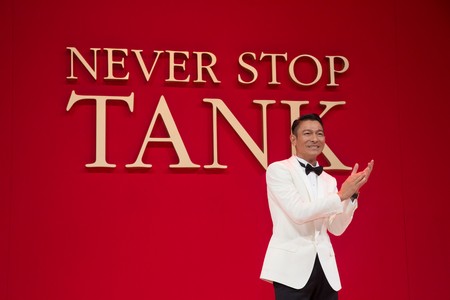
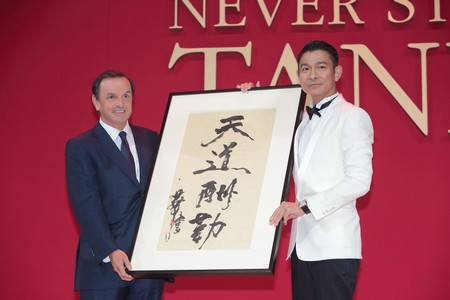
Andy Lau exudes passion and style as Cartier’s new leading man

155424155432155364155384

Hong Kong veteran actor and singer Andy Lau is the face of French luxury brand’s Cartier Tank MC timepiece. Hong Kong – Hong Kong celebrity Andy Lau brought to life the essence of the Cartier Tank MC timepiece in a short film as he delivered a message of daring, excellence and passion – values held dear to the veteran star himself. Centering on leading man Lau, the 91-second film begins as he prepares to go to a performance. On his way there, he sees things which sends him into flashbacks of his memories. Read more of this post

A Canadian Journalist Dreams Of The Day When Her Country Finally Merges With The United States

A Canadian Journalist Dreams Of The Day When Her Country Finally Merges With The United States

SARANYA KAPUR OCT. 5, 2013, 9:33 AM 4,120 56

In the dystopian future imagined by Canadian journalist Diane Francis, Russia owns all of Canada’s oil and the Chinese own all its ports. Canada is rendered a colony of the two non-Western superpowers, while the U.S. is left out in the cold, surrounded by its enemies and unable to access that sweet, sweet oil.  Calling current trade relations between these superpowers a “new cold war,” Francis believes that the U.S. and Canada need to do what any two businesses would do in the face of an external threat: consolidate. In her controversial new book, “Merger of the Century: Why Canada and America Should Become One Country,” Francis lays out her thesis for uniting the two North American countries into one. She writes, Read more of this post

Boy Sends Question About Ninjas To Head Of US Joint Special Ops, Gets A Response

Boy Sends Question About Ninjas To Head Of US Joint Special Ops, Gets A Response

GEOFFREY INGERSOLL OCT. 4, 2013, 2:16 PM 755,551 74

Is a Navy SEAL quieter than a ninja? Six-year-old Walker Greentree is a kid in a military family who was determined to find out, so he wrote to Admiral William McRaven. McRaven is head of U.S. Special Operations Command, credited with organizing and executing the raid that killed Osama Bin Laden, and is a Navy SEAL himself — he’s without a doubt one of the deadliest men on the planet. Surely, he would have an answer. Here’s how it all started, according to military nonprofit Blue Star Families: One afternoon while playing with a friend in the yard, the young Greentree was scolded by his mother.  “Be quiet like a SEAL,” said Vivian Greentree.  His friend immediately replied — as one would expect from a 7-year old. “Ninjas are quieter than SEALS.” And thus, a monumental argument began.  WHO is quieter? Ninjas or SEALS?  SEALS or Ninjas? Greentree wrote a letter to McRaven, and McRaven wrote back with an answer: “I think ninjas are probably quieter than SEALs, but we are better swimmers, and also better with guns and blowing things up.” See both letters below in a graphic from Blue Star:

final_seal_infographic

Doctor Ignores Urgent Emails, Fails To Tell Patients Of Their Cancer

Doctor Ignores Urgent Emails, Fails To Tell Patients Of Their Cancer

PATRICK SAWER, LAURA DONELLYTHE DAILY TELEGRAPH OCT. 6, 2013, 9:01 AM 2,338 5

A nurse has told how she was forced out of working for her local NHS after warning about a series of potentially dangerous problems at the GP surgery where she was employed. Annabelle Blackburn warned health managers that she had found blood test results being ignored and emails going unanswered. The problems she claimed to have found included evidence that a woman had not been told about a probable diagnosis of leukaemia, and a man who should have been told he had prostate cancer. But when the experienced nurse spoke out, other GPs in the county where she worked were told she was “exaggerating her concerns” and should not be regarded as a genuine whistleblower. Read more of this post

New Yorkers grow to like part-pedestrianisation of Times Square; “You can actually look up at the lights of the city without being hit by a car now”

October 6, 2013 7:44 pm

New Yorkers grow to like part-pedestrianisation of Times Square

By Elaine Moore

When New York City announced plans topedestrianise parts of Times Square in 2009 the city’s residents were in uproar. Wouldn’t banning cars mean the end of the frenetic energy that gave Manhattan its edge? But in the four years since Mayor Michael Bloomberg took the decision, New Yorkers have grown increasingly accustomed to taking over parts of Broadway, walking, biking and sitting in plazas across the traffic lanes. The changes have been hailed a success by business owners, residents and tourists. “You can actually look up at the lights of the city without being hit by a car now,” said one visitor. Read more of this post

Abraham Nemeth, 94, developer of Braille math code, dies

Abraham Nemeth, 94, developer of Braille math code, dies

By Matt Schudel, Sunday, October 6, 7:23 AM

Nemeth-166

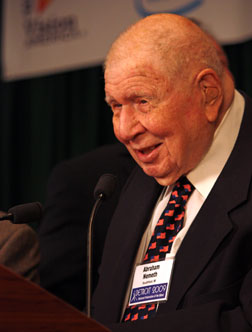
Abraham Nemeth, a blind mathematician and college professor who developed a widely used Braille system that made it easier for other blind people to become proficient in mathematics and science, died Oct. 2 at his home in Southfield, Mich. He was 94. The cause was congestive heart failure, his niece, Dianne Bekritsky, said. As a college student in the 1930s, Dr. Nemeth was discouraged from studying mathematics because it was assumed that a blind person would not be able to follow the equations and calculations written on a blackboard. He majored in psychology instead, but even with a master’s degree from Columbia University he was unable to find work in his field. He took a series of jobs, including in a factory sewing pillowcases, then decided to follow the advice of his wife: “Wouldn’t you rather be an unemployed mathematician than an unemployed psychologist?” Read more of this post

How to Make Your Own Luck: Hold on to the threads across days that, when woven together, reveal the rich tapestry of what you are achieving and who you are becoming

How to Make Your Own Luck

“All creators need to be able to live in the shade of the big questions long enough for truly revolutionary ideas and insights to emerge.”

99u_maximizeyourpotential2

“You are what you settle for,” Janis Joplin admonished in her final interview. “You are ONLY as much as you settle for.” In Maximize Your Potential: Grow Your Expertise, Take Bold Risks & Build an Incredible Career (public library), which comes on the heels of their indispensable guide to mastering the pace of productivity and honing your creative routine, editor Jocelyn Glei and her team at Behance’s 99U pull together another package of practical wisdom from 21 celebrated creative entrepreneurs. Despite the somewhat self-helpy, SEO-skewing title, this compendium of advice is anything but contrived. Rather, it’s a no-nonsense, experience-tested, life-approved cookbook for creative intelligence, exploring everything from harnessing the power of habit to cultivating meaningful relationships that enrich your work to overcoming the fear of failure. Read more of this post

The ONE Thing: The Surprisingly Simple Truth Behind Extraordinary Results

Unsanitary hand sanitizer at Beijing airport can cause sepsis: report

Unsanitary hand sanitizer at Beijing airport can cause sepsis: report

Staff Reporter

2013-10-05

Hand sanitizers provided in China’s public places can be anything but sanitary and people with cuts on their hands who use them can risk infection even leading to potentially fatal cases of sepsis, the Nanjing-based Yangtse Evening Post reports. The state-run CCTV in a recent “Is it true?” program said the hand sanitizers provided in some public places exceeded acceptable levels of bacteria by 600 times, the paper said. Mr Xia, from in Yinchuan, the capital of the northeastern Ningxia Hui autonomous region, said he recently used hand sanitizer at a local restaurant and felt an itching sensation. He immediately washed his hands with clean water for more than 10 minutes until the itching eased. Read more of this post

Specialty chemicals: Bed bugs and fracking are not the only things Ecolab has going for it

Specialty chemicals: Bed bugs and fracking are not the only things Ecolab has going for it

Oct 5th 2013 | ST PAUL |From the print edition

20131005_WBD001_0

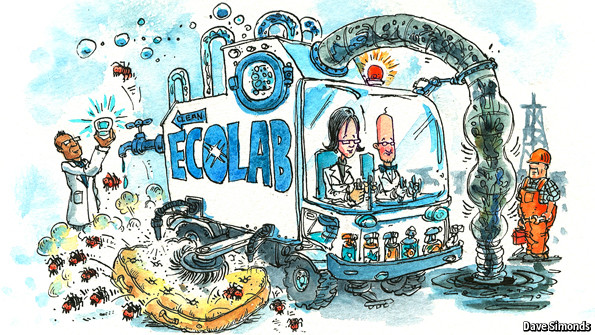
“WE ARE the nerds in the businesses nerds don’t usually bother with,” says Douglas Baker, the boss of Ecolab since 2004. Some companies, Ferrari for example, are household names even though most people have never tried their products. Ecolab, a specialty-chemicals firm, is the opposite, practically unknown to the millions of people who consume the fruits of its labour. Exterminating bedbugs is not a staple of Facebook chatter. Yet Ecolab’s hygiene-oriented nerds now play a crucial role in industries ranging from hotels, hospitals and water supply to fracking, a method of extracting natural gas. Many of these seem set for rapid growth. As a result, its share price has more than doubled since August 2011, adding more than $1 billion to the fortune of its biggest shareholder, Bill Gates.

Read more of this post

When Your Financial Planner Doesn’t Tell All. Who’s watching your financial planner? They aren’t policed as closely as brokers and investment advisers are, since no government entity specializes in regulating them

Oct 4, 2013

When Your Financial Planner Doesn’t Tell All

JASON ZWEIG

BF-AF923_INVEST_G_20131004162340

Who’s watching your financial planner? The Certified Financial Planner Board of Standards says it is. The organization, which has awarded the coveted CFP certification to nearly 69,000 financial planners, launches an investigation whenever it suspects a planner might have violated the profession’s ethical standards. Of course, most CFPs have never been disciplined by a regulator nor had a client lodge a formal complaint against them. But does the CFP Board move fast enough to punish alleged wrongdoers? Read more of this post

Capital Research and Management, which runs American Funds, is beginning to recover from the 2008 financial crisis, with outflows slowing and assets of American Funds back up to $1 trillion. Chairman James Rothenberg makes its case for active management

SATURDAY, OCTOBER 5, 2013

This American Life, In Turnaround

By LAWRENCE C. STRAUSS | MORE ARTICLES BY AUTHOR

Capital Research and Management, which runs American Funds, is beginning to recover from the 2008 financial crisis, with outflows slowing and assets of American Funds back up to $1 trillion. Chairman James Rothenberg makes its case for active management.

BA-BD076_MFQ_QA_G_20131005000418

“We disappointed a lot of people who had come to us from other places…. Now we seem to be back on track with results.” — James Rothenberg

How times have changed. Once the largest fund company and a darling of financial advisors, American Funds was famously reticent. The funds, run by the venerable Capital Research and Management, never advertised, and its portfolio managers refused to speak to the press, preferring to let their funds’ performance do the talking. But beginning in 2008, the funds didn’t have anything good to say. Poor performance during the financial crisis and its aftermath triggered more than $250 billion in net outflows in the past five years. Read more of this post

Buddhism in South Korea: Monkey business; It is not all sweetness and light at the biggest Buddhist order

Buddhism in South Korea: Monkey business; It is not all sweetness and light at the biggest Buddhist order

Oct 5th 2013 | SEOUL |From the print edition

THE Venerable Jaseung has, of late, become good at saying sorry. When eight senior monks were caught smoking and boozing over a game of high-stakes poker in a hotel room last year, the leader (pictured) of the Jogye order, South Korea’s biggest Buddhist sect, led the 108-bow repentance. Many thought he should resign. He assured them he would not run for election again. But on September 16th, he belatedly entered the race—and swiftly apologised for doing so. Read more of this post

The economics of cow ownership: If the average return on a cow is -64% once you factor in the cost of labour, why do households buy them?

The economics of cow ownership

Udder people’s money

Cattle may be a terrible investment but a decent savings vehicle

Oct 5th 2013 |From the print edition

IN INDIA there are about 280m cows. They produce valuable things—milk, dung and calves. But cattle are expensive to keep. The biggest outlay is food—the average cow consumes fodder worth about 10,000 rupees ($160) a year. Veterinary costs also add up. These expenses are so high that cows are often a poor investment. According to a new and splendidly titled NBER paper, which looks at cow and buffalo ownership in rural areas of northern India, the average return on a cow is -64% once you factor in the cost of labour. If returns on cattle are so bad, why do households buy them? People may not be thinking about economics, of course. Hindus may derive spiritual fulfilment from cow ownership. Households may prefer to produce high-quality milk at home, even if doing so costs more. Read more of this post

Hot air: Are models that show the economic effects of climate change useless?

Hot air: Are models that show the economic effects of climate change useless?

Oct 5th 2013 |From the print edition

20131005_FND000_1

MODELS simplify. They are supposed to. It is a feature, not a bug. Their formulae may be complex but models deliberately omit some things in order to focus on others. They also leave out factors that cannot be modelled satisfactorily. That is understandable, but what if the factors that cannot be modelled make a huge difference to the outcome? And what if the things that are excluded tend to produce a systematic bias in the results? Read more of this post

Duke to NYU Missteps Abroad Lead Colleges to Reassess Expansion

Duke to NYU Missteps Abroad Lead Colleges to Reassess Expansion

For two decades, U.S. universities have raced to build campuses abroad to burnish their reputation and attract foreign students. Now, controversies and stumbles at high-profile projects have led some to reconsider expansion. Among the setbacks: faculty dissent at New York University and Yale University, construction delays at Duke University’s campus in China and lackluster enrollment at Persian Gulf outposts. Politics in Russia are jeopardizing the success of Massachusetts Institute of Technology’s project in Moscow. Read more of this post

Why Lots Of Grass-Fed Beef Sold In U.S. Comes From Down Under

Why Lots Of Grass-Fed Beef Sold In U.S. Comes From Down Under

by DAN CHARLES

October 03, 2013 2:49 PM

Beef from cattle that have grazed only on pasture is in high demand — much to the surprise of many meat retailers, who didn’t traditionally think of grass-fed beef as top-quality. George Siemon, a founder of Organic Valley, the big organic food supplier, says the push for grass-fed beef started with activists who wanted to challenge a beef industry dominated by factory-scale feedlots. In those feedlots, cattle are fed a corn-heavy diet designed to make the animals gain weight as quickly as possible. Read more of this post

Work on Stuff that Matters: First Principles – Work on something that matters to you more than money.

Work on Stuff that Matters: First Principles

by Tim O’Reilly | @timoreilly | +Tim O’Reilly | Comments: 91 | January 11, 2009

I spent a lot of last year urging people to work on stuff that matters. This led to many questions about what that “stuff” might be. I’ve been a bit reluctant to answer those questions, because the list is different for everyone. I thought I’d do better to start the new year with some ideas about how to think about this for yourself. First off, though, I want to make clear that “work on stuff that matters” does not mean focusing on non-profit work, “causes, or any other form of “do-goodism.” Non-profit projects often do matter a great deal, and people with tech skills can make important contributions, but it’s essential to get beyond that narrow box. I’m a strong believer in the social value of business done right. We need to build an economy in which the important things are paid for in self-sustaining ways rather than as charities to be funded out of the goodness of our hearts. There are a number of half-unconscious litmus tests I use in my own life. I’m going to try to tease them out here, and hope that you can help me think this through in the comments.

Work on something that matters to you more than money. Read more of this post

David and Goliath: Underdogs, Misfits and the Art of Battling Giants: Malcolm Gladwell’s study of unlikely victors is his most enjoyable book yet, writes Lucy Kellaway

October 4, 2013 7:04 pm

Lucy Kellaway on ‘David and Goliath’ by Malcolm Gladwell

Review by Lucy Kellaway

Malcolm Gladwell’s study of unlikely victors is his most enjoyable book yet, writes Lucy Kellaway

David and Goliath: Underdogs, Misfits and the Art of Battling Giants, by Malcolm Gladwell, Allen Lane, RRP£16.99/Little, Brown, RRP$29, 320 pages

David and Goliath is an ill-assorted collection of anecdotes that demonstrates various things we already know. It tells us that having nothing to lose can make you bolder. That if you deploy power indiscriminately, it may backfire. And that losing a parent early on can give you a leg up if you plan on becoming a genius. Malcolm Gladwell’s new book comes without the single, catchy idea that made his earlier ones such stonking successes. The Tipping Point (2000) introduced us to the instant at which a trend became a trend. Blink (2005) told us how we make decisions without thinking. And Outliers (2008) warned that if you want to get good at something, you’ll need to spend 10,000 hours practising. Yet David and Goliath is Gladwell’s most enjoyable book so far. It is a feel-good extravaganza, nourishing both heart and mind. Each of its stories – set in Northern Ireland, Alabama, California, Vichy France and ancient Palestine – has an ending that is both happy and surprising. Gladwell is a master at marching us off in one direction, only to end up taking us somewhere else instead – somewhere better. Read more of this post

Capturing the Innovation Mindset at Bally Technologies

Capturing the Innovation Mindset at Bally Technologies

by Vijay Govindarajan and Srikanth Srinivas  |   9:00 AM October 4, 2013

Bally Technologies, a leading provider of gaming systems for casinos, has earned more than 60 awards for innovation in just the last four years. It increased R&D spending from 7-8% of revenue before 2009 to 11-12% of revenue starting in 2010, and maximized the return on that increased investment. The result: Its return on assets tripled, from an industry-lagging position below 4% to an industry-leading position above 12%. How did Bally Technologies do it? Through an innovation excellence framework. This framework is not new; we introduced a similar mindset in an earlier post with 3M. But while the foundational elements are the same, Bally Technologies uses them in a distinct way. It has a more rigorous organization structure that divides responsibilities between the innovation team and development team, and strengthens management around the opportunity pipeline. The company combines this with an intense focus on execution and weekly course correction — but also uses innovation as a means to get the employees energized. Bally Technologies has achieved great success, but only after making this framework its own. Using the five tenets we introduced before, here’s a breakdown of how the company does just that. Read more of this post