What does Chuseok mean to you?

2013-09-17 15:58

What does Chuseok mean to you?

Jeffrey Miller
This week, Koreans will be celebrating one of their most important and venerated holidays, Chuseok. By the time you are reading this Op-Ed piece, nearly a third of South Korea’s population will either be on their way or getting ready to head to their hometown for ancestral rites and family rituals. However, if you are a foreigner in Korea (and not married to a Korean) the extended holiday has a different meaning in the way that it is celebrated. Indeed, celebrating the holiday has any number of possibilities, from traveling around Korea or overseas (if you were lucky enough to find a ticket) to hunkering down in one’s dwelling and catching up on sleep, movies or work. Fortunately, the country doesn’t “close down” like it used to in the past when you had to stock up on food and videos to get through the holiday. These days there’s always some place open whether it’s a coffee shop or convenience store. Read more of this post

Just as Lee Kuan Yew overcame the Republic’s early challenges by being a “man of action” with an “unwavering and total dedication” to the country, Singaporeans can, and need to, aspire to these qualities

S’poreans need to emulate LKY’s total dedication to country: Heng

SINGAPORE — Just as former Minister Mentor Lee Kuan Yew overcame the Republic’s early challenges by being a “man of action” with an “unwavering and total dedication” to the country, Singaporeans can, and need to, aspire to these qualities as they confront the issues of a “different world” today, Education Minister Heng Swee Keat said yesterday.

BY TEO XUANWEI –

5 HOURS 13 MIN AGO

SINGAPORE — Just as former Minister Mentor Lee Kuan Yew overcame the Republic’s early challenges by being a “man of action” with an “unwavering and total dedication” to the country, Singaporeans can, and need to, aspire to these qualities as they confront the issues of a “different world” today, Education Minister Heng Swee Keat said yesterday. Making a call for action and unity among Singaporeans at a conference to mark Mr Lee’s 90th birthday, Mr Heng cited these qualities as the “deepest impression” Mr Lee left on him in his time as the founding father’s Principal Private Secretary between 1997 and 2000. Read more of this post

Are Insomnia’s Effects on the Brain as Bad As They Feel? Researchers are intrigued by how insomnia patients perform cognitive tasks despite feeling sleepy and unable to concentrate

September 16, 2013, 6:47 p.m. ET

Are Insomnia’s Effects on the Brain as Bad As They Feel?

Researchers are intrigued by how insomnia patients perform cognitive tasks despite feeling sleepy and unable to concentrate

SUMATHI REDDY

Insomniacs don’t just suffer at night. During the day, they often feel sleepy, have trouble concentrating and report greater difficulty with work or school performance than individuals who get adequate sleep. But researchers are intrigued by an apparent discrepancy: Despite what insomnia patients experience subjectively, they often seem able to perform cognitive tasks as well as people getting adequate sleep. One possibility is that insomnia doesn’t lead to inferior performance after all—maybe it just feels that way. Read more of this post

Nature vs. Nurture: New Science Stirs Debate; How Behavior Is Shaped; Who’s an Orchid, Who’s a Dandelion

September 16, 2013, 6:57 p.m. ET

Nature vs. Nurture: New Science Stirs Debate

How Behavior Is Shaped; Who’s an Orchid, Who’s a Dandelion

Researchers are making big strides understanding how genes work with the environment to shape behavior. Jonathan Rockoff and University of Arizona human development professor Bruce Ellis explain on Lunch Break.

JONATHAN D. ROCKOFF

Researchers are making strides in understanding how genes work with the environment to shape behavior, adding a new twist to the age-old debate over whether nature or nurture is mostly responsible for how people develop. They are finding that sensitivity to the environment resides in the biology of the nervous system. And some people, because of their genetic makeup and life experiences, are more sensitive to outside influences than others. Scientists point to a type they call orchids—people who wilt under poor conditions but flourish in supportive climes. Meanwhile, dandelions aren’t much affected by the world around them, whether supportive or harsh. Read more of this post

There is no secret recipe for landing the corner office, but leadership lessons from the former chiefs of Campbell Soup and Schering-Plough have helped many to the top

September 16, 2013, 11:24 a.m. ET

So You Want to Be CEO. Start Here.

There is no secret recipe for landing the corner office, but leadership lessons from the former chiefs of Campbell Soup Co. and Schering-Plough Corp. have helped many to the top.

JOANN S. LUBLIN

Many executives yearn to run a company someday. Few succeed. Doug Conant and Fred Hassan know how to up the odds. The former chief executives have helped numerous protégés make it to CEO. Five lieutenants from Mr. Conant’s decade atop Campbell Soup Co. CPB +0.33%landed the No. 1 job at a public company. They include Sean Connolly at Hillshire Brands Co. HSH +0.69% and Chris Delaney at Goodman Fielder Ltd.GFF.AU +0.27% The same dream job came true for eight associates of Mr. Hassan, a prior chief of Pharmacia Corp. and Schering-Plough Corp. MRK +0.84% Among them: Stephen P. MacMillan at StrykerCorp. SYK +1.01% and Hugh Grant atMonsanto Co. MON +1.46% (A ninth, Brent Saunders, will take the helm ofForest Laboratories Inc. FRX +1.22% on Oct. 1.) There is no secret recipe for landing the corner office. But there are plenty of ways that a strong CEO candidate can veer off track, leadership specialists say. Some fall short after rationalizing missteps by “looking at the world through rose-colored glasses,” Mr. Conant says. Other unsuccessful aspirants typically “lose their humility,” adds Mr. Hassan, who wrote a leadership book – as did Mr. Conant (though with a co-author). Read more of this post

As Education Declines, So Does Civic Culture; A generation of college graduates unable to write or reason bodes ill for liberal democracy

September 16, 2013, 7:14 p.m. ET

As Education Declines, So Does Civic Culture

A generation of college graduates unable to write or reason bodes ill for liberal democracy.

JONATHAN JACOBS

OB-YX815_jacobs_G_20130916133702

Even as the cost of higher education skyrockets, its benefits are increasingly being called into doubt. We’re familiar with laments from graduates who emerge from college burdened with student loans and wondering if their studies have prepared them for jobs and careers. A less familiar but even more troubling problem is that their education did not prepare them for responsible civic life. The decline in education means a decline in the ability of individuals—and ultimately the nation as a whole—to address political, social and moral matters in effective, considered ways. Read more of this post

When a new chief executive moves into the C-suite, the chances are about one in four the chief financial officer will be out the door within a year

September 17, 2013, 12:50 AM ET

New Bosses Often Clean House

MAXWELL MURPHY

Senior Editor

When a new chief executive moves into the C-suite, the chances are about one in four the chief financial officer will be out the door within a year. Within two years of getting a new boss, about a third of CFOs are gone, according toKorn/Ferry International, which looked at 504 CFO departures since 2010 from 1,000 of the largest companies it tracks. Among the firms with recent high-profile CFO exits: truck and engine maker Navistar International Corp.; grocery chain Supervalu; and closeout retailer Tuesday MorningCorp. Some CFOs who have successfully navigated a CEO transition offer three main tips for survival: Communication is key; identify the new boss’s strengths and weaknesses and compensate for the latter; and don’t be sand in the gears of a new strategy. Read more of this post

Get off the pitch for ideas in the boardroom; Leading a business is not like leading a sports team. In fact, it is much harder

September 16, 2013 4:36 pm

Get off the pitch for ideas in the boardroom

By Andrew Hill

Leading a business is not like leading a sports team. In fact, it is much harder

Howard Wilkinson, former manager of Leeds United, knows about pressure: “No offence to captains of industry but even a FTSE 100 chairman can postpone a board meeting. A manager can’t postpone a football match and every match is a shareholder meeting, [sometimes] in front of 88,000 people.” Mr Wilkinson’s comment also underlines what plenty of corporate executives – dazzled by insights imparted by their sporting idols – tend to forget. Leading a business is not like leading a sports team. In fact, it is much harder. Read more of this post

“To finish a piece of work, an artist [has to know how] to marshal the material [in time for an audience] coming through the door.”

September 15, 2013 1:50 pm

The art of managing artists’ egos

By Emma Jacobs

Yoko Ono has a reputation for being beyond bonkers. But not with Jude Kelly. The artistic director of London’s Southbank Centre, which had Ono curate its annual Meltdown music festival this summer, describes her as “wonderful”. Three times in fact. “A wonderful woman . . . totally untemperamental, completely wonderful . . .Totally wonderful, easy to deal with . . lovely.” Ms Kelly believes the “characterisation of creative people as temperamental” is wrong. Divas are few and far between, she says. However, on the rare occasion she does come across a prima donna (she refuses to name one) she does a quick mental calculation: weighing the quality of their output against the amount of effort involved in managing them. “It’s really annoying but if the end-product is extremely amazing, you deal with it.” Read more of this post

Can Building Great Products Help You Build Great Teams?

Can Building Great Products Help You Build Great Teams?

by Deep Nishar  |   11:00 AM September 16, 2013

Silicon Valley was built on amazing products, not on stellar leadership skills. In fact, veterans of some of the world’s most successful tech companies often look with skepticism, even disdain, on efforts to build strong management skills. The premise is that all energy should be focused solely on turning fabulous ideas into hyper growth. It’s true that if a start-up fails — or is sold — the need for enduring leadership may never arise. And in the earliest stages of a company, the need to organize, motivate and inspire large groups of people to accomplish shared goals may not be obvious. Read more of this post

Panda poop power: Microbes in pandas’ guts can help in biofuel production

Panda poop power: Microbes in pandas’ guts can help in biofuel production

Sep 14th 2013 |From the print edition

GIANT PANDAS are well known for being rather different from other bears. Having a diet composed almost entirely of bamboo is one of the things that sets them apart. It is also what attracted the interest of Ashli Brown of Mississippi State University, in a search for more efficient ways to make biofuel. Most of the nutrients found in bamboo are locked away in tough substances known as cellulose and lignin. Liberating those nutrients is an energy-intensive process that involves high temperatures and extreme pressures when carried out in a laboratory or by an industrial process. Indeed, it is the cost of doing so that makes producing biofuel out of cellulose- and lignin-rich materials, like discarded corn (maize) cobs and husks, less financially viable than generating biofuel directly from more readily digestible corn kernels. The kernels, however, can be used to feed people whereas the cobs and husks cannot. So a process that is able efficiently to turn what is a waste product into fuel could have great potential. Read more of this post

‘Everyday Sadists’ Among Us; Those who enjoying inflicting pain without provocation are not that uncommon, and not complete monsters, suggests a study trying to identify the distinct traits of such “everyday sadism.”

SEPTEMBER 16, 2013, 4:50 PM

‘Everyday Sadists’ Among Us

By JAN HOFFMAN

Try this quick word association: Sadist. And you respond… Hannibal Lecter? The Marquis de Sade? Actually, you didn’t need to come up with representatives of extreme criminal behavior or sexual torture. You might just as well have considered the colleague two cubicles over. The one who spends lunch hour splattering the brains of video game characters. Those who enjoy inflicting at least moderate pain on others, directly or vicariously, mingle with us daily. Think mean girls, taunting a classmate to commit suicide. Or the professor who grills a squirming, clueless student, lips curled in a small, savage smile. Delroy L. Paulhus, a psychology professor at the University of British Columbia, calls such people “everyday sadists.” Read more of this post

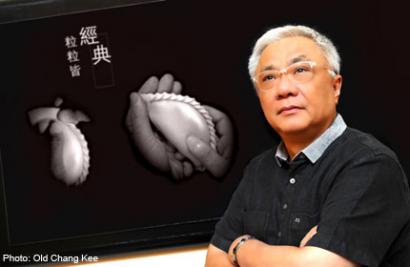
When a curry puff works – but a croissant doesn’t: When Han Keen Juan acquired Old Chang Kee in 1986, blending the old and the new worked wonders. The company grew rapidly.

When a curry puff works – but a croissant doesn’t

hankj_oldchangkee2

Monday, September 16, 2013 – 15:06

The Business Times

When Han Keen Juan acquired Old Chang Kee in 1986, blending the old and the new worked wonders. The company grew rapidly. So, next, he tried blending cultures, and introduced croissants. They were tantalisingly displayed together with the curry puffs, but did not take off. That was when the company realised that while it was the norm to hold a curry puff and eat it on the go, people preferred to enjoy their French pastry sitting down. Read more of this post

The numbers are sacrosanct: iSelect’s hard lesson for entrepreneurs

James Thomson Editor

The numbers are sacrosanct: iSelect’s hard lesson for entrepreneurs

Published 17 September 2013 07:46, Updated 17 September 2013 08:09

Shares in newly-listed insurance comparison site fell more than 4 per cent on Monday after the company confirmed it is co-operating with an ASIC investigation into how the company missed it’s prospectus revenue for the 12 months to June 30. It will not surprise to see the stock fall further in the coming days. iSelect already had committed one of the big sins of the market – getting its numbers wrong. This subsequent ASIC matters only rubs salt into that wound. Reports in Fairfax revealed on Monday that ASIC had written to iSelect demanding emails, documents and board papers regarding its missed revenue forecasts. iSelect, which listed on June 24, forecast in its prospectus that it would post revenue of $121.6 million for the year to June 30. But in late August the company revealed it had booked revenue of $118 million. The company did not publicly revise its revenue forecasts in the intervening period. iSelect said yesterday that it would fully comply with ASIC, but defended its actions. Read more of this post

Secluded heirs to the founder of Siemen called for a return to calm at the top of the German engineering giant, amid a continuing dispute over the leadership of the company’s supervisory board

September 15, 2013, 4:18 p.m. ET

Siemens Heirs Ask for Calm

Leadership Dispute Roils German Firm’s Supervisory Board

WILLIAM BOSTON

BERLIN—Heirs to the founder of Siemens AG SIE.XE +1.21% called for a return to calm at the top of the German engineering giant, amid a continuing dispute over the leadership of the company’s supervisory board. The intervention this weekend by the usually secluded heirs of Werner von Siemens, who founded the company in 1847, is a rare move and could indicate that a younger generation of successors is keen to play a more active—and public—role in Siemens, one of Germany’s biggest manufacturers. The continued jockeying for position among Siemens’s various stakeholders also could be a signal that more far-reaching change at the upper echelons of the 166-year-old company is coming soon. “It is important to the family that calm is restored,” said Nathalie von Siemens, a great-great granddaughter of the founder, in comments published by the weekly Frankfurter Allgemeine Sonntagszeitung on Sunday. “As a family, we have a close emotional connection to the company. We try to keep the traditions of the founding fathers alive.” Ms. von Siemens declined to comment further. Read more of this post

How to Fall in Love With Math: Contemplate the elegance of infinity. Don’t ask “When will I use this?”

September 15, 2013

How to Fall in Love With Math

By MANIL SURI

BALTIMORE — EACH time I hear someone say, “Do the math,” I grit my teeth. Invariably a reference to something mundane like addition or multiplication, the phrase reinforces how little awareness there is about the breadth and scope of the subject, how so many people identify mathematics with just one element: arithmetic. Imagine, if you will, using, “Do the lit” as an exhortation to spell correctly. As a mathematician, I can attest that my field is really about ideas above anything else. Ideas that inform our existence, that permeate our universe and beyond, that can surprise and enthrall. Perhaps the most intriguing of these is the way infinity is harnessed to deal with the finite, in everything from fractals to calculus. Just reflect on the infinite range of decimal numbers — a wonder product offered by mathematics to satisfy any measurement need, down to an arbitrary number of digits. Despite what most people suppose, many profound mathematical ideas don’t require advanced skills to appreciate. One can develop a fairly good understanding of the power and elegance of calculus, say, without actually being able to use it to solve scientific or engineering problems. Think of it this way: you can appreciate art without acquiring the ability to paint, or enjoy a symphony without being able to read music. Math also deserves to be enjoyed for its own sake, without being constantly subjected to the question, “When will I use this?” Read more of this post

Contrary to what we usually believe, the best moments in our lives, are not the passive, receptive, relaxing times. The best moments usually occur when a person’s body or mind is stretched to its limits in a voluntary effort to accomplish something difficult and worthwhile

The Secret To Happiness

by SHANE PARRISH on SEPTEMBER 8, 2013

Psychologist Mihaly Csikszentmihalyi once wrote: While happiness itself is sought for its own sake, every other goal – health, beauty, money or power – is valued only because we expect that it will make us happy.

If money cannot make us happy, what does?

In this excellent TED talk, Csikszentmihalyi looks to those who find pleasure and lasting satisfaction in activities that bring about a state of “flow.” In Flow: The Psychology of Optimal Experience, Csikszentmihalyi writes: Contrary to what we usually believe, moments like these, the best moments in our lives, are not the passive, receptive, relaxing times—although such experiences can also be enjoyable, if we have worked hard to attain them. The best moments usually occur when a person’s body or mind is stretched to its limits in a voluntary effort to accomplish something difficult and worthwhile. Optimal experience is thus something that we make happen. For a child, it could be placing with trembling fingers the last blockon a tower she has built, higher than any she has built so far; for a swimmer, it could be trying to beat his own record; for a violinist, mastering an intricate musical passage. For each person there are thousands of opportunities, challenges to expand ourselves.

Attention is energy.

Attention is like energy in that without it no work can be done, and in doing work is dissipated. We create ourselves by how we use this energy. Memories, thoughts and feelings are all shaped by how use it. And it is an energy under control, to do with as we please; hence attention is our most important tool in the task of improving the quality of experience.

“You have to finish things – that’s what you learn from, you learn by finishing things.” Neil Gaiman’s Advice to Aspiring Writers, Applicable to All Creative Fields

Neil Gaiman’s Advice to Aspiring Writers, Applicable to All Creative Fields

“You have to finish things – that’s what you learn from, you learn by finishing things.”

Neil Gaiman knows a thing or two about the secret of the creative life. In this mashup of Gaiman’s Nerdist podcast interview and scenes from films about writers, video-monger Brandon Farley captures the essence of Gaiman’s philosophy on writing and his advice to aspiring writers – a fine addition to celebrated authors’ collected wisdom on the craft. Transcript highlights below. Echoing E. B. White, who famously scoffed that “a writer who waits for ideal conditions under which to work will die without putting a word on paper,” and like Chuck Close, who declared that “inspiration is for amateurs – the rest of us just show up and get to work,” and like Tchaikovsky, who admonished that “a self-respecting artist must not fold his hands on the pretext that he is not in the mood,” Gaiman argues that the true muse of writing lies not in divine inspiration but in unrelenting persistence of effort and force of will:

If you’re only going to write when you’re inspired, you may be a fairly decent poet, but you will never be a novelist – because you’re going to have to make your word count today, and those words aren’t going to wait for you, whether you’re inspired or not. So you have to write when you’re not “inspired.” … And the weird thing is that six months later, or a year later, you’re going to look back and you’re not going to remember which scenes you wrote when you were inspired and which scenes you wrote because they had to be written. Read more of this post

Stress: the new workplace epidemic

Stress: the new workplace epidemic

PUBLISHED: 0 HOUR 1 MINUTE AGO | UPDATE: 0 HOUR 0 MINUTE AGO

FIONA SMITH

Five years of rolling redundancy and change programs have taken their toll on many employees and increasing numbers are struggling with anxiety and depression. There are few families untouched by the hardship of job loss and those workers who have kept their jobs often find themselves mired in “farewell fatigue”, barely able to rouse themselves to think of something original to add to the card for yet another departing colleague. Mental health speaker and author Graeme Cowan, a former management consultant, says business leaders are neglecting to consider the impact of their corporate restructures on their workforces. “Uncertainty has a huge impact,” he says, noting that one of the major banks he works with announced a restructure and it took six months for people to discover whether they still had a job. “I have never seen stress levels higher amongst Australian ­employees.” Read more of this post

Teachers and parents are using Minecraft, a popular video game, to help teach science, history, languages and ethics

SEPTEMBER 15, 2013, 1:28 PM

Disruptions: Minecraft, an Obsession and an Educational Tool

By NICK BILTON

If you were to walk into my sister’s house in Los Angeles, you’d hear a bit of yelling from time to time. “Luca! Get off Minecraft! Luca, are you on Minecraft again? Luca! Enough with the Minecraft!” Luca is my 8-year-old nephew. Like millions of other children his age, Luca is obsessed with the video game Minecraft. Actually, obsessed might be an understated way to explain a child’s idée fixe with the game. And my sister, whom you’ve probably guessed is the person doing all that yelling, is a typical parent of a typical Minecraft-playing child: she’s worried it might be rotting his brain. For those who have never played Minecraft, it’s relatively simple. The game looks a bit crude because it doesn’t have realistic graphics. Instead, it’s built in 16-bit, a computer term that means the graphics look blocky, like giant, digital Lego pieces. Read more of this post

17 Quotes On Writing That Every Wannabe Author Should Read

17 Quotes On Writing That Every Wannabe Author Should Read

MEGAN WILLETT SEP. 14, 2013, 11:30 AM 4,079 1

In a 2002 op-ed in The New York Times, best-selling author Joseph Epstein noted that “81 percent of Americans feel they have a book in them — and that they should write it.” Thanks to the rise of the self-publishing industry, that number’s probably even higher a decade later. So, wannabe authors, before you start writing the next great American novel, here’s some helpful advice from the world’s most famous and successful writers on how to perfect your craft. Learn them. Memorize them. Internalize them.

On Getting Started:

“I always advise children who ask me for tips on being a writer to read as much as they possibly can. Jane Austen gave a young friend the same advice, so I’m in good company there.” – J.K. Rowling, “Harry Potter series.

“I would advise anyone who aspires to a writing career that before developing his talent he would be wise to develop a thick hide.” – Harper Lee, “To Kill A Mockingbird.”

“You can’t wait for inspiration, you have to go after it with a club.” – Jack London, “White Fang.” Read more of this post

Germans Export Grandma to Poland as Costs, Care Converge

Germans Export Grandma to Poland as Costs, Care Converge

Sonja Miskulin has forgotten her beloved cat, Pooki. She can’t remember whether she has grandchildren and has no memory of her nine-hour journey one recent Sunday to forever leave behind her home in Germany. Suffering from dementia, the wheelchair-bound former translator celebrated her 94th birthday in a Polish nursing home last month. Her daughter sent her there in a bid for a better life and more affordable care. Read more of this post

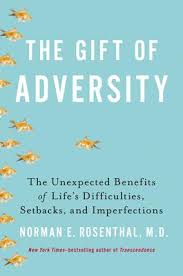
The Gift of Adversity: The Unexpected Benefits of Life’s Difficulties, Setbacks, and Imperfections

The Gift of Adversity: The Unexpected Benefits of Life’s Difficulties, Setbacks, and Imperfections Hardcover

by Norman E Rosenthal M.D. (Author)

Adversity

Adversity is an irreducible fact of life.  Although we can and should learn from all experiences, both positive and negative, bestselling author Dr. Norman E. Rosenthal, believes that adversity is by far the best teacher most of us will ever encounter. Whether the adversity one experiences is the result of poor decision-making, a desire to test one’s mettle, or plain bad luck, Rosenthal believes life’s most important lessons—from the value of family to the importance of occasionally cutting corners—can be best learned from it. Running counter to society’s current prevailing message that “excellence” must always be aspired to, and failure or mistakes of any sort are to be avoided at all costs, Rosenthal shows that engaging with our own failures and defeats is one of the only ways we are able to live authentic and meaningful lives, and that each different type of adversity carries its own challenges and has the potential to yield its own form of wisdom. Using stories from his own life—including his childhood in apartheid-era South Africa, his years after suffering a violent attack from a stranger, and his career as a psychiatrist—as well as case studies and discussions with well-known figures like Viktor Frankl and David Lynch, Rosenthal shows that true innovation, emotional resilience, wisdom, and dignity can only come from confronting and understanding the adversity we have experienced. Even when life is hardest, there are meanings to be found, riches to be harvested, and gifts that can last a lifetime.  Rosenthal illustrates his message through a series of compact, memorable chapters, each one drawn from episodes in the lives of his patients, colleagues, or himself, and concluded with a take-away maxim on the lesson learned. Read more of this post

Ortega Passes Buffett to Recapture Third-Richest Title

Ortega Passes Buffett to Recapture Third-Richest Title

The world’s 200 wealthiest people added $59 billion to their collective wealth this week as Amancio Ortega, the 77-year-old founder of the Zara clothing chain, recaptured the title of world’s third-richest person from Berkshire Hathaway Inc. (BRK/A) chairman Warren Buffett. Shares of Arteixo, Spain-based Inditex SA (ITX) have surged 20 percent since hitting their June low while Berkshire has skidded 5 percent from its 52-week high in July. Ortega has a net worth of $58.9 billion, making him $800 million richer than Buffett, according to the Bloomberg Billionaires Index. Read more of this post

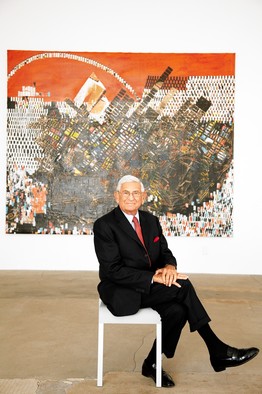
Eli Broad’s Entrepreneurial Approach to Philanthropy; The billionaire philanthropist on education, Los Angeles, and why he likes artists better than businesspeople

September 13, 2013, 9:42 p.m. ET

Eli Broad’s Entrepreneurial Approach to Philanthropy

Billionaire philanthropist Eli Broad on art, education and revitalizing Los Angeles

ALEXANDRA WOLFE

RV-AL565_WKCONF_DV_20130911111431

The philanthropist Eli Broad likes to spend much of his time with artists, whether at his table or by having their work on his walls. Although he made his $7 billion fortune in finance, the 80-year-old Mr. Broad prefers the company of creative types, such as artists Cindy Sherman and Jeff Koons. He even once caught the late Jean-Michel Basquiat smoking pot in his powder room. There’s no way to share these intimate experiences, of course, but he likes to think that at least he’s made it possible for the broad public to experience some of the same artwork. Read more of this post

Why Organizations Should Embrace Randomness Like Ant Colonies; Why are ant colonies so much better than the sum of their parts, while governments and companies are so often much worse?

Why Organizations Should Embrace Randomness Like Ant Colonies

by Andrew J. Smart  |   10:00 AM September 13, 2013

Consider the common ant. Each one is by genetic design capable of only a few simple behaviors and binary choices, making it a pretty dumb, rigid, inflexible being. Yet the collective behavior of an ant colony is adaptive, flexible and even creative; it’s a highly structured social organization. Now consider your average human. Most of us are individually adaptive, flexible and very creative. Yet the large organizations in which we work are often inflexible and incapable of adaptation and true innovation. Why are ant colonies so much better than the sum of their parts, while governments and companies are so often much worse? Read more of this post

How the bacteria in your gut may be shaping your waistline

How the bacteria in your gut may be shaping your waistline

Sep 14th 2013 | NEW YORK |From the print edition

A CALORIE is a calorie. Eat too many and spend too few, and you will become obese and sickly. This is the conventional wisdom. But increasingly, it looks too simplistic. All calories do not seem to be created equal, and the way the body processes the same calories may vary dramatically from one person to the next. This is the intriguing suggestion from the latest research into metabolic syndrome, the nasty clique that includes high blood pressure, high blood sugar, unbalanced cholesterol and, of course, obesity. This uniquely modern scourge has swept across America, where obesity rates are notoriously high. But it is also doing damage from Mexico to South Africa and India, raising levels of disease and pushing up health costs. Read more of this post

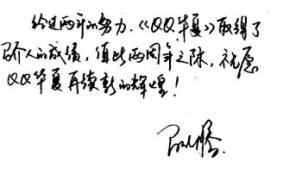
Compare the handwriting of ten top Chinese tech CEOs

Compare the handwriting of ten top Chinese tech CEOs

September 14, 2013

by C. Custer

The Chinese believe that a person’s handwriting says a lot about them. As someone with terrible handwriting, I’m inclined to think/hope that isn’t the case. But if you’re one of the people that believes you can tell something about someone from their handwriting, then enjoy this window into the personalities of ten of China’s top tech CEOs:

1378987278903

Baidu CEO Robin Li

1378987278266

Tencent CEO Pony Ma

1378987278717

Former Alibaba CEO Jack Ma Read more of this post

Panda Express: a Chinese couple’s US success story

Panda Express: a Chinese couple’s US success story

Staff Reporter

2013-09-13

pandaex-154306_copy1

Chinese nationals in the United States have a long history of making a living through opening restaurants serving Chinese food, however the number has grown rapidly over the last decade. Figures showed that there were about 28,000 Chinese restaurants in the US, which is equivalent to the total number of McDonald’s stores in the global market, reports the New Champions magazine. Panda Express — a Chinese fast food restaurant chain founded by a man with a master’s degree in mathematics and a woman with a PhD in electronic engineering — opens three new branches in the US almost every week. Read more of this post

How Johnnie Walker conquered the world

How Johnnie Walker conquered the world.

BY AFSHIN MOLAVI | SEPTEMBER/OCTOBER 2013

Mexico is rising. You can see it in the country’s swelling exports, the net-zero migration to the United States, the excitement of international bond investors, a recent credit upgrade from Standard & Poor’s, a newly confident middle class, and a per capita GDP that has doubled since 2000. Not to mention a young, dynamic, handsome new president. In case you missed all these signs, though, you can also see Mexico’s surge forward in a Scotch whisky ad. Read more of this post