Why Do We Eat Junk Food When We’re Anxious And When We Feel Unloved?

September 13, 2013, 8:36 p.m. ET

Why Do We Eat Junk Food When We’re Anxious?

ROBERT M. SAPOLSKY

The pantheon of science includes individuals who have made enormous contributions to human health—the likes of Pasteur and Salk. A pedestal in that temple awaits the scientist who solves the following mystery: Why do we eat junk food when we feel unloved? This isn’t a silly question, certainly not during September, which happens to be National Childhood Obesity Awareness Month. There’s an epidemic of obesity-related health problems, with adult-onset diabetes leading the way throughout the world. The fact that we eat when we’re not actually hungry contributes a lot to this problem. Read more of this post

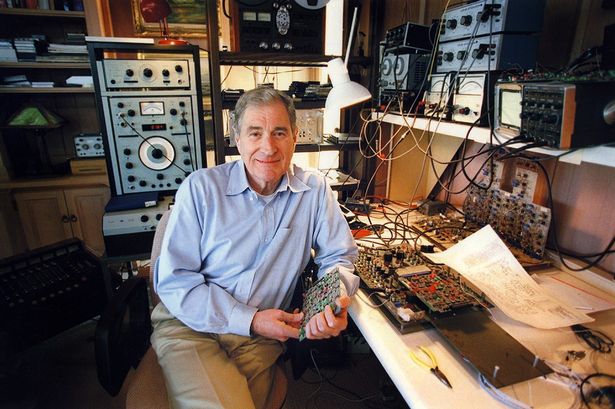
Ray Dolby, Inventor of Surround Sound, Dies at 80; while Ray Dolby was an engineer at heart, his achievements “grew out of a love of music and the arts.”

Ray Dolby, Inventor of Surround Sound, Dies at 80

Ray-Dolby-2270426 DOLBY-obit-web-articleLarge-v2

Ray Dolby, the billionaire U.S. inventor whose name became synonymous with high-end home and cinema surround sound, has died. He was 80. He died yesterday at his home in San Francisco, according to a statement by Dolby Laboratories Inc. (DLB) He had been suffering from Alzheimer’s disease and was diagnosed in July with acute leukemia, the San Francisco-based company said. Through the company he founded in 1965, Dolby pioneered noise-reduction and surround-sound technologies that are used in movies, cinemas, personal computers and home theater equipment. The Dolby logo — two block-letter Ds, facing each other — became a sign of audio quality, indicating the presence of Dolby technology that reduced the hiss from cassette tapes, for instance, or added a digital soundtrack to movies. Tom Dolby, one of his sons, said in the statement that while his father was an engineer at heart, his achievements “grew out of a love of music and the arts.” When Dolby Laboratories went public in 2005, its shares surged 35 percent on the first day of trading. The founder, who held more than 50 patents, received $306 million from the IPO, and his 69.8 percent stake became worth $1.65 billion. As of yesterday his net worth was $2.85 billion, according to the Bloomberg Billionaires Index. Read more of this post

Detecting Accounting Frauds in Asia (Part 1) (Bamboo Innovator Insight)

The following article is extracted from the Bamboo Innovator Insight weekly column blog related to the context and thought leadership behind the stock idea generation process of Asian wide-moat businesses that are featured in the upcoming monthly Moat Report Asia. Fellow value investors get to go behind the scene to learn thought-provoking timely insights on key macro and industry trends in Asia as well as benefit from the occasional discussion of potential red flags, misgovernance or fraud-detection trails ahead of time to enhance the critical-thinking skill about the myriad pitfalls of investing in Asia at the microstructure- and firm-level.

  • Detecting Accounting Frauds in Asia (Part 1), Sep 11, 2013 (BeyondProxy)

DetectingFrauds1


Opportunities in Event-Driven Investing and Spinoffs in Asia (Bamboo Innovator Insight)

The following article is extracted from the Bamboo Innovator Insight weekly column blog related to the context and thought leadership behind the stock idea generation process of Asian wide-moat businesses that are featured in the upcoming monthly Moat Report Asia. Fellow value investors get to go behind the scene to learn thought-provoking timely insights on key macro and industry trends in Asia as well as benefit from the occasional discussion of potential red flags, misgovernance or fraud-detection trails ahead of time to enhance the critical-thinking skill about the myriad pitfalls of investing in Asia at the microstructure- and firm-level.

  • Opportunities in Event-Driven Investing and Spinoffs in Asia, Sep 9, 2013 (BeyondProxy)

Spinoff


Middle Managers Have an Outsized Impact on Innovation

Middle Managers Have an Outsized Impact on Innovation

by Ethan Mollick  |   11:00 AM September 12, 2013

Just the mention of “middle managers” is enough to make people’s eyes roll back. But these supposedly boring cogs of the corporation, these objects of derision in Dilbertland, can have a profound impact on innovation and performance. Companies need to pay attention to them and reward their special talent at making the best of the restrictions and limitations of their positions — of making lemonade from lemons. For decades, researchers and businesspeople have assumed that in the thick of large organizations, what matters is process. Are the right resources available? Are incentives effective? If the organization isn’t being innovative, the solution must be structural. Read more of this post

Gianni Agnelli, the Godfather of Style; The Italian industrialist who ran Fiat during the jet-set age was one of the most stylish men of the 20th century. Many have copied his casually inventive look, but his elegance remains inimitable

September 12, 2013, 12:25 p.m. ET

Gianni Agnelli, the Godfather of Style

The Italian industrialist who ran Fiat during the jet-set age was one of the most stylish men of the 20th century. Many have copied his casually inventive look, but his elegance remains inimitable

RICH COHEN

OB-YR995_mag091_OZ_20130828151415

STYLE ICON | Agnelli, whose nicknames included ‘L’avvocato’ (because he had a law degree) and the ‘Rake of the Riviera,’ photographed by Andy Warhol in 1972

IN THE END, when the money is lost and the records broken, only style remains—a handful of gestures that recall a life or an era. Napoleon is dust, but the men at a dinner party still wear buttons on their sleeves because the Little Corporal wanted to stop his soldiers from wiping their noses. Arnold Rothstein was buried ages ago, but wise guys still carry cash in a roll in their front pockets because the gangster rumored to have fixed the World Series wanted to get at his dough fast. True visionaries are imitated not only by those who knew them but by those who knew those who knew them—culture is people copying people they’ve never met. Over time, the names are forgotten, but a few habits survive. In the last half century, there was perhaps no man more imitated than the late Gianni Agnelli, the Italian industrialist, chairman of Fiat and playboy of playboys in the jet-set age. When you see a kid wearing his watch or tie just so, you might be seeing a copy of a copy of Gianni. Read more of this post

Crying Kids on Planes Spawn Childfree Zones to Nannies

Crying Kids on Planes Spawn Childfree Zones to Nannies

Andy Curr says her worst ever in-flight experience was brought on her by her own offspring. Curr, a web designer from Sydney, was traveling from London to Bangkok about three years ago when her second-youngest daughter, then 20 months, “screamed all the way,” she said. The wailing got her older children going, too. “Once one goes off, they all start,” said Curr, 41. Balancing the needs of customers wanting a peaceful trip with those of harried parents has become a major challenge for airlines trying to cater to both groups. Singapore Airlines Ltd. (SIA)’s budget carrier Scoot unveiled a childfree zone for passengers prepared to pay extra, following AirAsia X Bhd. and Malaysian Airline System Bhd, who also segregate kids. Seat-kicking and unruly children came ahead of drunken passengers, rude cabin crew, and lecherous neighbors as on-board annoyances in a July survey by British financial services comparison website Gocompare. Respondents said they’d be prepared to add 50 pounds ($78.6) to the cost of a return flight if they could sit in childfree zones. “People love their own kids, but they might not necessarily love someone else’s to the same extent,” said Scoot Chief Executive Officer Campbell Wilson. “Allowing someone the option of traveling with the assurance of not having young children around is simply one of the many choices you have.” Scoot charges an extra S$14.95 for 41 economy-class seats directly behind business class with three inches of extra legroom, where children under 12 aren’t allowed. Read more of this post

The Chinese vending machine full of live crabs

One more way China is out-innovating the US: with a vending machine full of live crabs

By Gwynn Guilford @sinoceros 3 hours ago

guylooking-at-crabs

It’s that time of year again, when the people of China unite in tearing apart exoskeletons to suck up the flesh of hairy crabs. From August to October, the crabs—which get their name from the hair-like tendrils that grow on their claws—sell like hotcakes throughout China. Except, hotcakes don’t sell in vending machines. Live hairy crabs? Apparently, yes. On September 11, a vending machine stocked with live crabs appeared on a street in Hangzhou, the capital of Zhejiang province. The machine, which is restocked daily, sells crabs for around 20 yuan ($3.27), along with the appropriate accoutrements (crab vinegar and two bags of ginger tea). Read more of this post

In Scotland’s borderland, enthusiasm for independence elusive

In Scotland’s borderland, enthusiasm for independence elusive

Thu, Sep 12 2013

By Hannah Vinter

COLDSTREAM (Reuters) – The old battlefields where Englishmen and Scotsmen once shed each other’s blood are a reminder of historic enmities in the border region. But with a year to go before Scotland votes on independence, enthusiasm for a break between the two countries is hard to find in its towns and farming communities. The 96-mile (154-km) border cuts across mainland Britain from the North Sea to the Irish Sea, through an area that was fought over and the scene of cross-border raids for centuries. The apparent lack of support for independence, gauged by conversations with borderers, suggests Scots here will not be swayed by old rivalries – something that the “Yes” campaign has tried to capitalize on. Read more of this post

Gears allow planthopper to super jump in the right direction, report says

Gears allow planthopper to super jump in the right direction, report says

By Meeri Kim, Friday, September 13, 1:59 AM

A jumping insect has gears, scientists discovered, a rare instance in which man and nature independently converged on the same idea. It was not easy to verify. The planthopper (Issus coleoptratus) is tiny, just a bit larger than a flea. And it jumps extremely fast — with an acceleration of 200 Gs, a level close to the highest ever survived by a human. But neurobiologist Malcolm Burrows and engineer Gregory P. Sutton, both of the University of Cambridge, used a high-speed camera attached to a microscope to capture the bugs in action. They put the tiny test subjects on their backs on sticky wax and gently rubbed their bellies to provoke them to move their hind legs as if jumping. Read more of this post

James Grant: Jay-Z Rapping About Warhol Is Evidence Of An Art Bubble

JIM GRANT: Jay-Z Rapping About Warhol Is Evidence Of An Art Bubble

ROBERT FRANKCNBC SEP. 11, 2013, 6:25 PM 2,285 9

Plenty of economists, art dealers and collectors have warned of an art bubble over the past year. But there is one sure sign that the art market is overdone: Jay Z is now rapping about Warhol, Basquiat and Art Basel.

“It ain’t hard to tell 
I’m the new Jean-Michel
Surrounded by Warhols
My whole team ball
Twin Bugattis outside
Art Basel”

Market guru James Grant quotes Jay Z’s “Picasso Baby” in his latest Grant’s Interest Rate Observer, arguing that prices in the contemporary art market may not be justified by long-term value. While well-hyped artists like Jeff Koons, Damien Hirst and Jean-Michel Basquiat are fetching eight-digit prices, it’s unclear whether their work will withstand the test of time, art critics and museums. Read more of this post

Korea Will Soon Be Home To The World’s First ‘Invisible’ Skyscraper

Korea Will Soon Be Home To The World’s First ‘Invisible’ Skyscraper

MEGAN WILLETT SEP. 11, 2013, 5:39 PM 18,721 12

cheongna city infinity tower_dia-invisibible diagram_gds

The world will soon have its first “invisible” skyscraper. There’s no construction date yet for the planned 1,476-foot tower, called Tower Infinity. But its architects have just been granted a construction permit to begin building outside of Seoul, South Korea near Incheon International Airport. The visionaries behind the project, GDS Architects, will make the tower appear “invisible” using an LED facade system with optical cameras to display what’s directly behind the building. When turned on, the “reflective skin” of the building will give the illusion that Tower Infinity is blending in with the skyline. The building’s projections may also be used for broadcasting special events, or for advertising purposes, according to GDS Architects.

Read more of this post

Ex-RBS Bond Trader Gets 50 Months in Hong Kong Jail for Fraud in trying to hide losses of 19.5 million pounds ($30.8 million)

Ex-RBS Trader Gets 50 Months in Hong Kong Jail for Fraud

Shirlina Tsang, a former Royal Bank of Scotland Group Plc (RBS) trader who pleaded guilty in Hong Kong to fraud for trying to hide losses of 19.5 million pounds ($30.8 million), was sentenced to 50 months in jail. Tsang, 43, created false records of her bond trading from mid-2010 until Oct. 14, 2011 to make it appear she was generating profit at the Edinburgh-based bank, according to the prosecution’s charge sheet. RBS said it discovered the fraud two years ago after an internal review, notified the authorities and fired her.

“This is an extremely serious offense,” District Court Judge Garry Tallentire said today. Tsang could’ve been jailed for as long as seven years.

Tsang was remorseful, admitted her mistake to RBS and repaid the bank her bonus, her lawyer Edwin Choy told the judge today. Tsang’s “colossal misjudgment” was due to work stress and depression caused by her brother’s death, he said in his mitigation plea.

Anita Chow, another of Tsang’s lawyers, declined to comment on her sentence after the hearing.

“RBS takes any matter of this nature very seriously,” said Yuk Min Hui, a spokeswoman for the bank in Hong Kong. “We have been cooperating fully with all relevant authorities.”

RBS, Britain’s biggest publicly owned lender after a record 45.5 billion pound bailout in 2008, reported net income of 535 million pounds in the first half, compared with a 2 billion-pound loss in the year earlier period.

The case is Hong Kong SAR v Tsang Pui-Yu, Shirlina, DCCC326/2013, Hong Kong District Court.

To contact the reporter on this story: Douglas Wong in Hong Kong at dwong19@bloomberg.net
Why Fraudsters Should Applaud the SEC

Why Fraudsters Should Applaud the SEC

Mary Jo White began her tenure as chairman of the Securities and Exchange Commission this year with a promise: The agency would require more fraudsters to confess what they did, as opposed to the SEC’s usual practice of letting them pay fines without admitting anything. Judging from the case of Ebrahim Shabudin, the fulfillment of that pledge is off to a poor start. Shabudin, 65, is one of the few high-ranking bankers to be indicted over conduct related to the financial crisis. The San Francisco lender where he served as chief operating officer and chief credit officer, United Commercial Bank, failed in 2009, costing the Federal Deposit Insurance Corp. about $1.2 billion. Shabudin held the same positions at the bank’s publicly traded parent company, UCBH Holdings Inc. The government says he and other senior executives deliberately delayed recognizing loan losses. Read more of this post

Financial fraud is rampant but most people can’t spot it; Report finds people find outsized return pitches “appealing”

Financial fraud is rampant but most people can’t spot it: Survey

Report finds people find outsized return pitches “appealing”

By Michael Shagrin

Sep 12, 2013 @ 3:08 pm (Updated 4:10 pm) EST

Most people in the United States have been targeted by financial fraudsters, while nearly half are unable to spot classic red flags of fraud. For example, more than 40% of people surveyed for the Financial Fraud and Fraud Susceptibility in the United States report, which was released today, found an annual return of 110% for an investment to be appealing, while 43% felt that way about “fully guaranteed” investments. “These outsized returns are highly improbable, as are any sort of guaranteed returns,” said Gerri Walsh, president of the Finra Investor Education Foundation, which issued the report. Read more of this post

The Struggle for Work-Life Balance in China; Some Stressed-Out Chinese Are Re-Evaluating Their Priorities

September 12, 2013, 12:57 p.m. ET

The Struggle for Work-Life Balance in China

Some Stressed-Out Chinese Are Re-Evaluating Their Priorities

WEI GU

The public disclosure by one of China’s best-known technology entrepreneurs that he has cancer, and how that has changed his view of life, has caused some businesspeople to re-evaluate their aggressive pursuits of wealth and success. Kai-Fu Lee recently revealed his lymphoma diagnosis in a message to his 50 million followers on Sina Weibo. But what has resonated far wider is his repudiation of the work-comes-first mentality that drives so many Chinese businesspeople. “It’s only now, when I’m suddenly faced with possibly losing 30 years of life, that I’ve been able to calm down and reconsider,” wrote the 52-year-old founder and CEO of technology incubator Innovation Works and former president of Google China. He said macho efforts like seeing who could sleep less were “naive.” Read more of this post

Laura Rittenhouse’s Candor Analytics; Inspired by Warren Buffett, a former Lehman analyst figures out that plain-speaking companies have higher performance

September 3, 2013

Sally Helgesen is an author, speaker, and leadership development consultant, whose most recent book is The Female Vision: Women’s Real Power at Work(with Julie Johnson; Berrett-Koehler, 2010).

Laura Rittenhouse’s Candor Analytics

Warren Buffett’s annual shareholder letters are famous, a key element of his mystique. Inevitably, they’re described in the business media as “folksy.” But this description misses the reason these letters compel admiration from and influence the behavior of investors. The true strength of Buffett’s missives lies in their candor. (For example, here’s Buffett in the 2012 annual report of his firm Berkshire Hathaway, on his controversial investments in local newspapers: “Charlie and I believe that [some newspapers] will remain viable for a long time. We do not believe that success will come from cutting either the news content or frequency of publication. Indeed, skimpy news coverage will almost certainly lead to skimpy readership.”) Read more of this post

The Enduring Management Wisdom of Lincoln

Posted: August 26, 2013

James O’Toole is a senior fellow in business ethics at Santa Clara University’s Markkula Center for Applied Ethics and the author of 17 books, including The Executive’s Compass and Leading Change.

The Enduring Management Wisdom of Lincoln

Headlines espousing the relative decline of the U.S. industrial base, despite arecent upsurge, have left American managers focused on today’s news and this quarter’s results. As a result, few have heeded the invaluable lessons of the country’s longest-running manufacturing success story. For nearly a century, the Lincoln Electric Company has consistently ranked among the most productive manufacturing enterprises in the United States, all while not laying off a single permanent employee for more than 60 years and, for 75 years, paying bonuses to its workers that average 60 to 100 percent of their annual salaries. Yet not a single other company in the country has adopted the unique system that led to Lincoln Electric’s continuing record of success—one in which owners, managers, and workers have strong incentives to cooperate to meet the needs of customers.  Read more of this post

Hello Kitty Billionaire Found as Plush Toy Sales Surge

Hello Kitty Billionaire Found as Plush Toy Sales Surge

iS1h.Udr6l_w

Tanya Stanich, a 43-year-old lawyer, clutched a handful of pink and black Hello Kitty notebooks at Sanrio Co.’s (8136) store in Manhattan’s Times Square and touched a sequined bag adorned with the face of a cartoon cat. Growing up in Wisconsin, Stanich was introduced to the white feline, which sports a red bow and no mouth, by a California aunt, who sent her a Hello Kitty lunchbox, stickers, hair clips and pencils. Now a resident of New York’s West Village neighborhood, Stanich says she still buys the stationery to brighten up her life. “It’s nice to have something a little girly and flashy and fun,” said Stanich, a slender brunette who keeps her iPhone in a Hello Kitty case. “I could go nuts in here.” Loyal fans like Stanich have helped make Shintaro Tsuji, the 85-year-old founder of Tokyo-based Sanrio, a billionaire. Since introducing Hello Kitty in 1974, Tsuji has captured the hearts and wallets of girls, women and celebrities such as Lady Gaga by licensing the character, which appears as stuffed toys, as well as on airplanes, golf bags and even vibrators. Sanrio’s shares have doubled this year, more than the 39 percent gain in Japan’s benchmark Nikkei 225 (NKY) Stock Average, and reached a 52-week high yesterday. The company, which sells gift cards featuring cartoon characters, operates theme parks and produces and distributes movies, had 74.25 billion yen ($898.6 million) in sales its last fiscal year ending in March. “It must be way up there in terms of the most recognized franchises in the world,” said Ted Bestor, director of the Reischauer Institute of Japanese Studies at Harvard University in Cambridge, Massachusetts. “It’s very hard to see any diminution for the Japanese fondness for cuteness.” Read more of this post

How Wal-Mart’s Waltons Maintain Their Billionaire Fortune

How Wal-Mart’s Waltons Maintain Their Billionaire Fortune: Taxes

download (19)

Visitors to the Crystal Bridges Museum of American Art in Bentonville, Arkansas, leave appreciative notes on a glass wall near the entrance. “Thanks Alice!” reads one. “Merci Alice Walton, pour la vision!” reads another. Wal-Mart Stores Inc. (WMT) heiress Alice Walton founded Crystal Bridges in 2011 in a wooded ravine next to her childhood home, supplying dozens of paintings from her personal collection. Bankrolled by more than $1 billion in donations from her family, the museum attests to the Waltons’ generosity and vast wealth. It’s also a monument to their skill at preserving that fortune across generations. America’s richest family, worth more than $100 billion, has exploited a variety of legal loopholes to avoid the estate tax, according to court records and Internal Revenue Service filings obtained through public-records requests. The Waltons’ example highlights how billionaires deftly bypass a tax intended to make sure that the nation’s wealthiest contribute their share to government rather than perpetuate dynastic wealth, a notion of fairness voiced by supporters of the estate tax like Warren Buffett and William Gates Sr. Read more of this post

Think Strategically to Enable Growth in Tough times; Strategy is not about the plan

Think Strategically to Enable Growth in Tough times

by Dr. Grant Sieff | Sep 11, 2013

Dr Grant Sieff, Director of the Strategic Thinking and Execution for Growth Programme at the University of Cape Town’s Graduate School of Business, offers five steps towards thinking strategically to enable growth in tough times

The passing of Margaret Thatcher is a signifier of the times: Thatcherism is certainly gone, and so too is any naivety that we can depend on any one simple formula for global economic stability.  Dr Grant Sieff, CEO of IC Growth Group and Programme Director of Strategic Thinking and Execution for Growth at the University of Cape Town’s Graduate School of Business (GSB), describes the environment we find ourselves in as economic anarchy. “It’s not a slow evolution, it’s more like a series of shocks – more shaken than stirred,” he says.  “The nature of business is that it is in constant flux – globally, economies are slowing once again; and technology continues to evolve rapidly. Google Glass, for example, is about to come out, and could revolutionise the way we examine possibilities,” he says. However, Sieff says that inside this cauldron of radical change lie opportunities for businesses to innovate and get ahead; executives who have the ability to think strategically and execute strategies to ensure ongoing growth in the face of uncertainty and change, will prosper. But for that to happen, leaders and executives need to develop the skills to be able to identify and leverage opportunities. Sieff says that these skills can be distilled into five key steps.   Read more of this post

Mystery of acquiring another language; Neurology helps to learn a language, but hard work is what matters

September 11, 2013 4:13 pm

Mystery of acquiring another language

By Michael Skapinker

Neurology helps to learn a language, but hard work is what matters

In 1987 I interviewed Robert Maxwell, the publishing and printing magnate, at his London headquarters in Holborn Circus. His death and disgrace were some years away. As well as the Mirror newspaper group, Maxwell headed the biggest printing company in Europe and one of the largest in the US. But I was relieved, as he ordered senior managers around for my benefit, that I was observing rather than working for him – and what struck me, apart from the bullying, was his extraordinary English. Born in 1923 in a village on the Czech-Romanian border, Maxwell arrived in Liverpool in 1940 and joined the British army. Although he only started to learn the language at 17 years old, his English was fault-free and spoken with a booming upper-class accent. Read more of this post

Negotiation Tactics: The 10 Minute MBA Course On Negotiation

SEPTEMBER 9, 2013 by ERIC BARKER

Negotiation Tactics: The 10 Minute MBA Course On Negotiation

Want to learn the negotiation tactics of an MBA? I’ve cleaned up and distilled notes from the excellent negotiating course I took in MBA school taught by MIT lecturer John Richardson.

Preparation

Always, do your homework. Success in negotiation is strongly correlated with time spent preparing. Preparing in a group helps; others will come up with things you didn’t. Be ambitious. There’s usually a connection between aspiration level and what people get. (Obviously, you can go too far, so look at your benchmarks.) It’s very valuable to have things you don’t want in a negotiation so you can give them away for things you do. Read more of this post

Retailers Paul Zahra and Mark McInnes among Australia’s ‘least narcissistic’ CEOs according to an analysis of speech patterns by the Macquarie Graduate School Of Management

Michael Bailey Deputy editor

Retailers Paul Zahra and Mark McInnes among Australia’s ‘least narcissistic’ CEOs. Which sector has the biggest egos?

Published 11 September 2013 11:44, Updated 12 September 2013 07:32

They might operate at the more glamorous end of the economy but David Jones chief Paul Zahra, and his predecessor turned Premier Investments boss Mark McInnes, are among the 10 least narcissistic CEOs of ASX-listed large companies, according to an analysis of speech patterns by the Macquarie Graduate School Of Management. The MGSM measured the personal pronoun use of 100 CEOs, among Australia’s 140 largest listed companies, in the Q&A sessions of analyst briefings used to discuss their company’s earnings during the reporting season just past. The narcissism score for each CEO was the ratio of first person singular pronouns to total first person pronouns used in their speech. To avoid embarrassment and lawsuits, the MGSM has not named Australia’s most narcissistic CEOs, but have named the least egotistical bosses. In ascending order they are: Read more of this post

ASX100 CEOs: Their path to the corner office

ASX100 CEOs: Their path to the corner office

24 September 2012 Myriam Robin

Want to be a CEO? Being an executive is a crucial first step, but not all leadership roles are likely to lead to the corner office. LeadingCompany analysed the backgrounds of the ASX100 CEOs, and discovered most were promoted after delivering results in their own little fiefdom. The rest of them were chief operating officers and chief financial officers, leaving other C-suite positions out in the cold. Australia’s top boards are opting for leaders who’ve either already demonstrated leadership success, or who bring operational mastery to the chief role. Read more of this post

The product as market research: The lower cost of digital prototyping helps innovators test lots of ideas simultaneously

September 11, 2013 5:25 pm

The product as market research

By Ian Sanders

In a set of studios close to London’s Old Street roundabout, Stef Lewandowski and his team are working on changing how digital products are built and tested. What sets Mr Lewandowski, co-founder of Makeshift, apart from many of his neighbours in London’s tech community is that his business releases a new product each month, a rate that it achieves by developing multiple ideas simultaneously rather than focusing on one single product. Read more of this post

Patent Fight Erupts Over Kids’ Fad; Amid a Bracelet-Crafting Craze, a Legal Battle Has Begun Over a Tiny Plastic Clasp

September 11, 2013, 7:51 p.m. ET

Patent Fight Erupts Over Kids’ Fad

Amid a Bracelet-Crafting Craze, a Legal Battle Has Begun Over a Tiny Plastic Clasp

SARAH E. NEEDLEMAN And ADAM JANOFSKY

MK-CG204_SBRAIN_G_20130911191946 MK-CG203_SBRAIN_G_20130911185946

Rainbow Loom says it has sold more than 1 million bracelet kits. Rainbow Loom’s creator, Cheong Choon Ng, has been mired in legal disputes over his bracelet-crafting kit.

Just 6 millimeters wide, a plastic C-shaped fastener enables kids around the U.S. to connect loops of colored rubber bands to form bracelets. Now, that clasp is at the center of a legal dispute among the entrepreneurs and retailers cashing in on the hottest crafting craze in years. In August, the founder of three-year-old Rainbow Loom—a rubber-band jewelry-making kit that is a blockbuster seller this fall—sued rival Zenacon LLC, claiming it copied the “distinctive trade dress” of Rainbow Loom’s “unique” C-shaped clips with its competing FunLoom product. Read more of this post

Teaching Entrepreneurship Is in the Startup Phase; Students are clamoring for instruction, but it’s hard. There are no algorithms for success

September 11, 2013, 7:29 p.m. ET

Teaching Entrepreneurship Is in the Startup Phase

Students are clamoring for instruction, but it’s hard. There are no algorithms for success.

BILL AULET

Forget medical school or law school. These days, record numbers of high-school and college students say they aspire to be entrepreneurs. At Yale University, for example, over 20% of the undergraduates indicate that they are interested in pursuing entrepreneurship as a career. Compare that with 1980, the year I graduated from Harvard. I didn’t know what the word “entrepreneur” meant—and neither did any of my friends. There is good reason for this trend. Traditional career paths no longer offer the security they once seemed to guarantee, and startups promise young people independence, control and the possibility of making good money. Read more of this post

Vinod Khosla: 70-80% Of VCs Add Negative Value To Startups; In The Next 10 Years, Data Science Will Do More For Medicine Than All Biological Sciences Combined

Vinod Khosla: 70-80% Of VCs Add Negative Value To Startups

KIM-MAI CUTLER

posted 11 hours ago

Vinod Khosla, one of the co-founders of Sun Microsystems who later went on to create Khosla Ventures, says that the vast majority of VCs aren’t in a position to offer decent advice to startups. In fact, most of them probably hurt startups, he argued. TechCrunch founder Michael Arrington prodded Khosla to single out VCs that were horrible on boards. “Who is the VC who is the most full of shit that you’ve ever heard?” Arrington asked. “I would be offending too many people,” Khosla retorted. “Maybe some percentage that’s substantially larger than 95 percent of VCs add zero value. I would bet that 70-80 percent add negative value to a startup in their advising.” He said that most VCs “haven’t done shit” to know what to tell startups going through difficult times. “I don’t know a startup that hasn’t been through tough times,” he said. He said that founders should listen politely and just do what they want to do anyway. He said of his approach toward helping entrepreneurs: “I give them advice, but I tell them what I’m uncertain about. I’m confident that I screwed up more often than most people in this room. Hopefully, I can advise entrepreneurs to avoid mistakes. But you can never be sure if you’re trying something new and unreasonable.”  Read more of this post

Family offices talk a lot about club deals, but are they really happening, or just figments of fund managers’ imaginations?

CLUBBING TOGETHER

ARTICLE | 11 SEPTEMBER, 2013 05:07 PM | BY JEREMY HAZLEHURST

Club deals are all the rage. At least in theory. Many families are sick of paying fees to asset managers who stick their money in a black box, wave a magic wand over it and then, well, find that the money has vanished in a puff of smoke. People with burned fingers are, predictably, keen to cut out the middleman and invest directly. The idea of teaming up with other like-minded family offices to make direct private equity-style investments has an evident appeal. But club deals are not happening as fast as you might expect. “They are a bit like sex,” says David Barbour, co-head of private equity at Fleming Family & Partners, “it’s talked about more than it actually happens.” He points out that it’s hard to know how many deals are getting done, because they are off-market, which is after all “one of the attractions of doing club deals for family offices”, but suspects that the reality doesn’t match up to the desire. Read more of this post