Marissa Mayer Might Have Missed The Chance To Work For Google If It Hadn’t Been For An Unintended Keystroke

Marissa Mayer Might Have Missed The Chance To Work For Google If It Hadn’t Been For An Unintended Keystroke

ALYSON SHONTELL AUG. 24, 2013, 12:13 PM 22,490 14
marissa-mayer-young-1

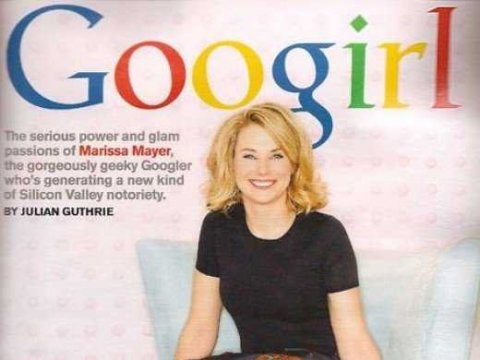
Yahoo CEO Marissa Mayer has had an impressive career which famously began at Google, where she spent a decade and made a fortune. Her unauthorized biography is detailed here, by Business Insider’s Nicholas Carlson. In it, Carlson describes how a lucky keystroke helped Marissa Mayer land at Google, which was then a little-known startup. When Mayer graduated from Stanford, she received more than 12 job offers. She wasn’t interested in adding more opportunities to the pile. So when an email from a recruiter appeared in her inbox, she tried to delete it. Luckily for Mayer, her finger missed the delete key and she ended up opening the pitch instead. The pitch promoted an opportunity at Google, a startup she had heard about through a Stanford professor.  Carlson describes the lucky incident:

Instead of hitting delete, Mayer hit the space bar and opened the email. That email’s subject line: “Work at Google?” Mayer read the email and remembered a conversation she had with Eric Roberts who was still a mentor years after she took his computer science class for non-majors. The prior fall, Roberts listened to Mayer talk about the recommendation engine she’d built, and then told her she should meet with a pair of Ph.D. students who were working on similar stuff. Their names: Sergey Brin and Larry Page. Mayer realized that Google was their startup. Trusting Roberts’ recommendation, she replied to an email she had meant to delete, writing that she’d like an interview.


At Haier, the company’s management structure pivots around ZZJYTs (zi zhu jing ying ti, which in English means independent operation units). The ZZJYT model inspires entrepreneurial spirit in workers

Taking customers to a Haier ground to serve them better

Updated: 2013-08-26 06:56

By Cecily Liu in London ( China Daily) Read more of this post

Daruma’s Mariko Gordon appreciates what it takes to succeed at business

SATURDAY, AUGUST 24, 2013

Zen and Small Stocks

By ERIC UHLFELDER | MORE ARTICLES BY AUTHOR

BA-BC687_hedgep_G_20130824010215

Daruma’s Mariko Gordon appreciates what it takes to succeed at business. Why she thinks Insulet can rise another 25% or more.

Mariko Gordon recently set a personal record: She passed through five airports in a single day. A stickler for detail and a believer in active money management, Gordon spends a lot of time checking out companies firsthand, usually working 12 hours a day, six days a week. She’s a veritable whirling dervish, trying to keep pace with the stocks of small, striving companies that tend to move around as much as she does.. Read more of this post

‘Creative Destruction’ could build a better Canada

‘Creative Destruction’ could build a better Canada

Rick Spence | 13/08/24 | Last Updated: 13/08/23 2:40 PM ET
Sometimes the road to business success isn’t easy to see.

A year ago, Karl Martin and Foteini Agrafioti had a new company, awesome technology, and no clear path. Both were engineering PhDs from the University of Toronto, he was a specialist in biometric identity systems and privacy; she developed the first technology to identify users based on their unique cardiac rhythm, and would be named U of T’s 2012 “inventor of the year.” But great technology alone does not a business make. Puzzled why big companies never came to the table with licensing deals, Agrafioti and Martin wondered what to do next. A year ago, a solution appeared. The university’s Rotman School of Business was opening a “Creative Destruction Lab” to provide mentoring and monitoring from seven of Canada’s most successful entrepreneurs — all of whom had steered tech companies to lucrative exits. Who could say no? One year later, the pair’s company, Bionym, has $1.4-million in funding and a new cause: changing the way identification works. By early next year, it will be selling Nymi, a Bluetooth-powered wristband that authenticates your identity to smartphones, tablets, computers, and eventually your car, your home, and the weight machines at your gym. Bionym is one of just eight companies that survived the first year of the Creative Destruction Lab (CDL), coming out stronger, more certain, and capitalized for success. Bionym’s success shows what can happen when you connect new entrepreneurs and promising technology with veteran mentors who understand business and know how to get things done. Read more of this post

Noise is the supreme archenemy of all serious thinkers

August 24, 2013

I’m Thinking. Please. Be Quiet.

By GEORGE PROCHNIK

SLAMMING doors, banging walls, bellowing strangers and whistling neighbors were the bane of the philosopher Arthur Schopenhauer’s existence. But it was only in later middle age, after he had moved with his beloved poodle to the commercial hub of Frankfurt, that his sense of being tortured by loud, often superfluous blasts of sound ripened into a philosophical diatribe. Then, around 1850, Schopenhauer pronounced noise to be the supreme archenemy of any serious thinker. His argument against noise was simple: A great mind can have great thoughts only if all its powers of concentration are brought to bear on one subject, in the same way that a concave mirror focuses light on one point. Just as a mighty army becomes useless if its soldiers are scattered helter-skelter, a great mind becomes ordinary the moment its energies are dispersed. Read more of this post

The Picasso Effect: What The Success of Cubism Teaches Us About Radical Innovation

The Picasso Effect: What The Success of Cubism Teaches Us About Radical Innovation

ian leslie, August 6, 2013

Paris, 1907. In a ramshackle studio in Montmartre, a twenty-six year-old Spanish artist presented the painting he had been working on day and night for the best part of a year to a small group of fellow artists, dealers and friends. They were visibly aghast. One considered the work “a veritable cataclysm”. Another concluded that its creator must be on the brink of suicide. None could foresee that it would one day be considered the most influential artwork of the twentieth century. The painting, then untitled, was later to become known as Les Demoiselles d’Avignon. It is credited as the first work of Cubism, and the catalyst for a revolution in Western art and culture. Read more of this post

Richard Branson Taught Me That ‘Successful People Start Before They’re Ready’

Richard Branson Taught Me That ‘Successful People Start Before They’re Ready’

JAMES CLEARJAMESCLEAR.COM AUG. 23, 2013, 3:06 PM 2,709

In 1966, a dyslexic sixteen–year–old boy dropped out of school. With the help of a friend, he started a magazine for students and made money by selling advertisements to local businesses. With only a little bit of money to get started, he ran the operation out of the crypt inside a local church. Four years later, he was looking for ways to grow his small magazine and started selling mail order records to the students who bought the magazine. The records sold well enough that he built his first record store the next year. After two years of selling records, he decided to open his own record label and recording studio. Read more of this post

Jeff Bezos’ Hiring Strategy in Amazon’s Early Days: The ‘Anti-Pitch’; Rather than tell prospects how happy and amazing Amazon is, Jeff Bezos would tell them that “it’s not easy to work here.” It had a powerful, intended effect — there was no disillusionment over what Amazon was when the prospect eventually joined. Those who chose Amazon in spite of the anti-pitch knew what they were getting into, and had in fact self-selected for the challenge. Amazon became known as a company whose engineers were intense and elite.

Jeff Bezos’ Hiring Strategy: The ‘Anti-Pitch’

WALTER CHENIDONETHIS BLOG AUG. 23, 2013, 3:36 PM 2,580 1

Today, the competition for top tech talent is as fierce as it’s ever been, and without a high-performing team, it’s tough to survive. It makes sense that such intense competitive pressure drives startup founders to pitch their company to prospective hires in ever more grandiose terms, exaggerate how well their company is “crushing it,” and make their culture sound like the happiest place on earth. How else can you stand out to a top candidate who’s considering offers from all of the hottest companies? It’s counterintuitive, but Amazon founder and CEO Jeff Bezos takes a totally different approach to hiring: he gives prospects a hiring anti-pitch. Rather than tell prospects how happy and amazing Amazon is, Jeff Bezos would tell them that “it’s not easy to work here.” Even in 1997, during the dot-com boom, Bezos’s anti-pitch was stark and to the point: “You can work long, hard, or smart, but at Amazon.com you can’t choose two out of three.” Read more of this post

An Alternative Reason Good Investment Managers Struggle To Persist; after the lifestyle moves up, the fear sets in. Now it’s less about the glory of the home run and more about the fear of a strikeout

An Alternative Reason Good Investment Managers Struggle To Persist

Posted by Michael Kitces on Wednesday, August 21st, 2013

Earning an income is a fundamental incentive to work. It starts with just earning enough for the essentials of food, clothing, and shelter. From there, it grows to a desire for a greater lifestyle, the “nicer things” of life, and perhaps even the opportunity to accumulate enough to not need to work in the future (i.e., to retire), which in turn incentivizes trying to further grow income and advance a career. Read more of this post

Star Stock Pickers Harder Than Ever To Find

Star Stock Pickers Harder Than Ever To Find

By Cinthia Murphy

August 22, 2013

Peter Lynch, George Soros and Bill Miller are some of the best active equity fund managers the market has seen, and to a certain degree, they also seem to be a disappearing breed. Active equity managers who become household names on the heels of stellar year-after-year outperformance are harder and harder to find these days. Lynch is famous as the stock investor who took the Fidelity Magellan Fund from its small beginnings in 1977 to $14 billion in assets by 1990, all the while beating the S&P 500 Index in 11 of those 13 years. Soros, meanwhile, is known in part for running the Quantum Fund for nearly 20 years, which generated an average annual return of more than 30 percent under his watch. Read more of this post

Why most brainstorming sessions fail; Trying to “think outside the box” won’t work if you don’t recognize the box you’re already in. Here’s how to brainstorm better

Why most brainstorming sessions fail

By Anne Fisher, contributor August 23, 2013: 10:41 AM ET

Trying to “think outside the box” won’t work if you don’t recognize the box you’re already in. Here’s how to brainstorm better.

Laughing Stock/Corbis

FORTUNE — Dear Annie: I’m a member of a 14-person brand-management team for a product whose sales were skyrocketing for a while but have now leveled off. My boss told me that senior management is “concerned” about this plateau where we seem to be stuck, and he wants me to organize some brainstorming sessions to try to come up with “outside the box” ideas for increasing sales. Not only have I never done this before, but it’s stressing me out for two other reasons. First, previous brainstorming efforts have led nowhere, so people here are pretty jaded about the whole idea. And second, my boss gave me the impression that this assignment is kind of an audition for a promotion, so I don’t want to screw it up. Do you or your readers have any suggestions? —Pittsburgh Pat Read more of this post

Paris pickpockets target tourists from China; Paris may be irrepressibly beautiful and intoxicatingly romantic, but it is still not heaven on earth

August 23, 2013 3:55 pm

Paris pickpockets target tourists from China

By Adam Thomson in Paris

For years, Paris has traded on its reputation as the City of Light and even as the city ofl’amour. But for a growing number of Chinese tourists, it is becoming the city of crime. Chinese visitors are descending on Paris in record numbers and their lavish spending on luxury brands has made them an irresistible target for thieves. Petty crime between January and the end of June in one of the world’s most-visited cities jumped 7.8 per cent compared with the same period in 2012 – but it was up by more than 24 per cent when it came to Chinese tourists. Jean-Francois Zhou, a tour operator based on the Champs-Elyseés, says that thieves see the hordes of Chinese as prime targets because they carry far more cash than visitors from other countries – in large part because of the significant fees involved in using their plastic cards abroad. Read more of this post

Otom (Others’ Time and Others’ Money) causing a ruckus among investors

Updated: Saturday August 24, 2013 MYT 7:53:44 AM

Otoms causing a ruckus among investors

GOVERNANCE MATTERS: BY SHIREEN MUHIUDEEN

THE acronym Otom looks harmless enough, but actually describes a devious charlatan who uses Others’ Time and Others’ Money (hence Otom) for their own gains. Most individuals will invest in a particular company only if they believe in the people who run it. It is all about trust and should that trust be broken, the investment will not be forthcoming. With so many investment opportunities these days, many investors are looking to diversify their portfolios by putting their money in various asset classes, which include properties, equities and, very often, unlisted equities. Read more of this post

MICHAEL BLOOMBERG: If You Want To Be Successful, Stop Going To The Bathroom

MICHAEL BLOOMBERG: If You Want To Be Successful, Stop Going To The Bathroom

JULIA LA ROCHE AUG. 23, 2013, 11:26 AM 18,286 41

michael-bloomberg-9

NYC Mayor Michael Bloomberg, the billionaire founder of media giant Bloomberg LP, said on his radio show that people who want to be successful shouldn’t go the bathroom a lot. From Politicker: [via Daily Intelligencer] “Everybody’s got different opportunities in front of ‘em, different skill sets they bring and luck plays a part of it. But my experience is that you make your own luck. The harder you work, the luckier you get.” “I always tried to be the first one in in the morning and the last one to leave at night, take the fewest vacations and the least time away from the desk to go to the bathroom or have lunch. You gotta be there. I mean, everybody says, ‘Oh, that’s crazy!’ But if you want to succeed, … you can’t control how lucky you are, you can’t control how smart you are, but you can control how hard you work, so that’s the first thing.” Cross your legs, folks.

Beware the Sirens of Management Pseudo-Science

Beware the Sirens of Management Pseudo-Science

by Freek Vermeulen  |   9:00 AM August 23, 2013

Management is not an exact science, they say. And I guess most things that involve the study of human behavior cannot be. But I sometimes wonder if that is the reason — or the excuse — that the business sections at airport bookshops are so full of nonsense. Quite often these books are written with panache. And the authors — aspiring “management thinkers” and “gurus” (never scientists) — have an excellent sense of the pulse of the business public. They are neither crooks nor charlatans; they write what they believe. But that doesn’t make their beliefs right. People can believe vigorously in voodooism, homeopathy, and creationism. Read more of this post

Bankers turned novelists found starting a new chapter tough but rewarding; “The world I used to occupy was all about dirty money”; “If you thought you worked hard as a banker you will be begging for mercy by the time you reach the end of a novel”

August 22, 2013 5:57 pm

They plotted to escape the City

By Emma Jacobs

Elmore Leonard, the American crime writer who died this week, was once asked if he could write about the wrongdoers on Wall Stin the aftermath of the financial crisis. “No – where’s the action?” he said. “My people don’t have stock. It’s the most boring thing in the world to make your money that way – using money to make money.” Nonetheless, a number of former executives, bankers and traders have attempted to do just that by leaving the constraints of the corporate world to become novelists – with some of them drawing on experiences from their previous careers. Read more of this post

Bank of America reviews long-hours culture after intern’s death; “Looking back, the money was just an anaesthetic. Ultimately, the money and perks could never make up for the exhaustion or the lack of control we all had over our lives.”

Bank of America reviews long-hours culture after intern’s death

Moritz Erhardt, who was ‘tipped for greatness’ was found dead in shower after working solidly for 72 hours at Merrill Lynch

Shiv Malik

theguardian.com, Friday 23 August 2013 13.36 BST

Bank of America Merrill Lynch will review its working practices and culture of long hours following the death of a German intern last week, who colleagues said had pulled three all-nighters in a row before being discovered by emergency services. One of the world’s largest banks issued a statement on Friday afternoon expressing shock at the death of 21-year-old Moritz Erhardt, who was working in Merrill Lynch’s investment banking division, and announced a review of working practices with a special focus on junior members of staff. Erhardt, from south-west Germany, was found dead in a shower cubicle at his temporary accommodation in east London last Thursday evening. Read more of this post

Any society with a lot of “threshold earners” is likely to experience growing income inequality. A threshold earner is someone who seeks to earn a certain amount of money and no more. If wages go up, that person will respond by seeking less work or by working less hard or less often. That person simply wants to “get by” in terms of absolute earning power in order to experience other gains in the form of leisure—whether spending time with friends and family, walking in the woods and so on. Luck aside, that person’s income will never rise much above the threshold

From the January/February 2011 issue

The Inequality That Matters

Tyler Cowen

Does growing wealth and income inequality in the United States presage the downfall of the American republic? Will we evolve into a new Gilded Age plutocracy, irrevocably split between the competing interests of rich and poor? Or is growing inequality a mere bump in the road, a statistical blip along the path to greater wealth for virtually every American? Or is income inequality partially desirable, reflecting the greater productivity of society’s stars? Read more of this post

A Brief History of Maps: A look at maps through time and what they did, and didn’t, show us.

August 23, 2013, 9:40 p.m. ET

What Lurks Beyond the Boundaries

AMANDA FOREMAN

For adults vacationing with children, the greatest test of endurance used to be putting up with the refrain “Are we there yet?” The invention of Google Maps along with similar Internet tools has mercifully spread peace and good times where guesswork and frayed nerves reigned before. Still, it is important to remember that the desire to know “where and when” is one of the noblest questions of humankind. The earliest efforts to ascribe boundaries to space and time were directed up instead of down. The ancients began with the lights in the night sky. The oldest star chart in existence depicts the Orion constellation, carved onto the tusk of a woolly mammoth during the Stone Age. Read more of this post

The Cadbury legacy

Updated: Saturday August 24, 2013 MYT 9:54:30 AM

The Cadbury legacy

OPTIMISTICALLY CAUTIOUS: BY ERROL OH

WHAT should you do if you’re hoping that a prestigious institution will one day honour your work by setting up an archive to preserve and organise your records? Here’s a suggestion: Get appointed the head of a committee that produces an influential and timely report on a hot-button topic, and from then on, become a widely recognised authority on that subject. That worked for Sir Adrian Cadbury, not that there’s any evidence that he had indeed nursed such an ambition. On Wednesday, Cambridge University’s Judge Business School issued a press release saying Cadbury had recently donated to the school copies of all his speeches on corporate governance. These go to the Cadbury Archive housed at the school. The rest of the archive’s papers are those accumulated by Cadbury when he was chairman of Britain’s Committee on the Financial Aspects of Corporate Governance. The committee was formed in May 1991 by the Financial Reporting Council, the London Stock Exchange and the accountancy profession. Read more of this post

Why IKEA Doesn’t Care If Its Delivery Service Is A Nightmare; “Amazon can disrupt anything that doesn’t have to be assembled or curated”

Why IKEA Doesn’t Care If Its Delivery Service Is A Nightmare

JESSICA WINTERSLATE AUG. 23, 2013, 10:54 AM 1,659 3

It all started because I wanted the Nelson Swag Leg Desk. Not a new, licensed reproduction—I wanted the scuffed-up, 1960-vintage Nelson Swag Leg Desk I found on eBay. It seemed to me mostly irrelevant that I could not afford the Nelson Swag Leg Desk. But my husband suggested a budgetary adjustment: Instead of pairing the Nelson Swag Leg Desk with pricey custom-built bookshelves as planned, we could economize with a jumbo set of Ikea’s Billy bookcases, which fit the appointed space almost to the centimeter. At first, I resisted this financially expedient arranged marriage of a modern-design icon to a prosaic dorm-room staple that I associated with beer pong and Gustav Klimt’s The Kiss. Eventually, though, I started talking myself into the compromise. I tried to think of it as a chic high-low flourish, like Anna Wintour pairing couture with jeans on her first Vogue cover, or Mike D plonking a Target pouf smack in the middle of his otherwise ultra-customized Brooklyn townhouse. Or something.

Read more of this post

Top 10 Reasons Why Leaders Fail

Top 10 Reasons Why Leaders Fail

DAN SCHAWBELTHE FAST TRACK 10 MINUTES AGO 0

Not everyone is meant to be a leader, but for those of you who are already leaders or aspiring to be leaders, there are a lot of lessons you can learn. Today, I’ve written ten reasons why leaders fail. It’s a collection of issues that leaders tend to have, especially in their first few years in those roles. It’s easy to get caught up in the act of leadership because you gain power, confidence and control, all of which can be your undoing. Here are 10 things that will get in the way of your success and hurt your team:

1. Leaders become selfish.

Leaders who have responsibilities seem to forget that they are there to support their team instead of themselves. They become power hungry and seek control instead of giving advice, mentoring and ensuring that the team benefits from their leadership. Read more of this post

50 years after, Martin Luther King’s ‘Dream’ still not realized in U.S.: poll

50 years after, Martin Luther King’s ‘Dream’ still not realized in U.S.: poll 7:36pm EDT By Chris Francescani tumblr_menb33cmnc1r5ss03o1_500 January-21-Martin-Luther-King-Jr.-Day Martin Luther King Jr martin_luther_king_jr_quote-1 martin_luther_king_jr_quotes_6 tumblr_m9hm5vDG2h1qzhkvho1_500 martin-luther-king-jr-day-L-xGOagM NEW YORK (Reuters) – Fifty years after Rev. Martin Luther King Jr.’s “I have a dream” speech, nearly half of those who responded to a new poll said a lot more needs to be done before people in the United States would “be judged not by the color of their skin but by the content of their character.” The Pew Research Center in Washington, D.C., found that 49 percent of those polled think “a lot more” needs to be done to achieve the color-blind society King envisioned in his 1963 “I Have a Dream” speech. But 73 percent of black respondents and 81 percent of whites thought the two races get along “very well” or “pretty well.” Read more of this post

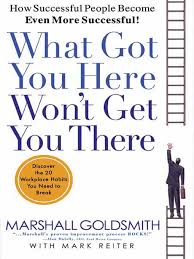
What Got You Here Won’t Get You There: How Successful People Become Even More Successful

What Got You Here Won’t Get You There: How Successful People Become Even More Successful Hardcover

by Marshall Goldsmith  (Author) , Mark Reiter (Author)

download (14)

America’s most sought-after executive coach shows how to climb the last few rungs of the ladder.

The corporate world is filled with executives, men and women who have worked hard for years to reach the upper levels of management. They’re intelligent, skilled, and even charismatic. But only a handful of them will ever reach the pinnacle — and as executive coach Marshall Goldsmith shows in this book, subtle nuances make all the difference. These are small “transactional flaws” performed by one person against another (as simple as not saying thank you enough), which lead to negative perceptions that can hold any executive back. Using Goldsmith’s straightforward, jargon-free advice, it’s amazingly easy behavior to change. Executives who hire Goldsmith for one-on-one coaching pay $250,000 for the privilege. With this book, his help is available for 1/10,000th of the price Read more of this post

Mars rover replica built by young sisters

Mars rover replica built by young sisters

Sheila Dharmarajan 17 hours agoThe Future Is Now

There’s no stopping these two science sisters. Meet Camille and Genevieve Beatty, who at 13 and 11 are being hailed for building a functioning scale model of the Mars rover that is now a permanent fixture at the famed New York Hall of Science. The Beatty rover is a near replica of the early version NASA sent to Mars in 2004 and was unveiled in early August with hoopla that’s made the red-headed North Carolina siblings science rock stars. “To have two young girls building our Mars rover is exactly the kind of thing we want to have happen here,” said Margaret Honey, president and CEO of the science center that sits on the grounds of the 1964 Worlds Fair in Flushing Meadows-Corona Park in the borough of Queens. The girls’ drive to build their rover was inspired by a documentary on the robotic exploration of the Red Planet.

Read more of this post

Daily Journal Tells SEC Munger Knows Best Buying Stocks; Munger helped triple Daily Journal’s value since 2008 by reallocating the company’s investments

Daily Journal Tells SEC Munger Knows Best Buying Stocks

Charles Munger’s Daily Journal Corp. (DJCO) told regulators that selling Treasuries and jumping into stocks was the safe move for the publisher in the financial crisis.

“The board recognized that this decision would be contrary to the conventional (but questionable) notion that the least risky way to preserve corporate capital for the long-term benefit of stockholders is to invest it in government bonds at interest rates approximating zero,” an attorney for Los Angeles-based Daily Journal wrote in a March 18 letter made public today. Read more of this post

As Humans Change Landscape, Brains of Some Animals Change, Too

August 22, 2013

As Humans Change Landscape, Brains of Some Animals Change, Too

By CARL ZIMMER

Evolutionary biologists have come to recognize humans as a tremendous evolutionary force. In hospitals, we drive the evolution of resistant bacteria by giving patients antibiotics. In the oceans, we drive the evolution of small-bodied fish by catching the big ones. In a new study, a University of Minnesota biologist, Emilie C. Snell-Rood, offers evidence suggesting we may be driving evolution in a more surprising way. As we alter the places where animals live, we may be fueling the evolution of bigger brains. Read more of this post

Judging music competitions: The sound of silence; Top musicians are judged as much for their movements as for their melodies

Judging music competitions: The sound of silence; Top musicians are judged as much for their movements as for their melodies

Aug 24th 2013 |From the print edition

SOME music has always been about the performance. Watching a rock band live, for example, is not just a matter of appreciating the quality of the sound. What the musicians get up to on stage is almost as important. But you might think that classical music would be immune from such distractions—doubly so when a performance is being judged as part of a competition. However, a study by Chia-Jung Tsay, a concert pianist who is also a researcher at University College, London, suggests that even judges awarding prizes can be swayed by what they see as well as what they hear. Dr Tsay’s study, just published in the Proceedings of the National Academy of Sciences, employed over 1,000 volunteers (half novices and half experts) to evaluate the performances of candidates in ten prestigious music competitions, to see if they agreed with the judges’ decisions. Each volunteer assessed 30 performances—the top three from each competition. The catch was that only a third of volunteers were shown the performances accompanied by the soundtrack. The other two-thirds got either to see each performance or to hear it, but not both. Novices who saw and heard the whole thing, or merely heard it, did little better than chance at working out who had won—guessing right slightly more than a third of the time. Those who only saw it, however, did much better. They agreed with the actual decision almost half the time. Even more intriguingly the experts, who one might think would be trained to screen out histrionic flummery on the part of performers and concentrate entirely on the sound of the music itself, did worse than the novices when they could hear the performance, whether or not they could see it as well: they guessed right slightly under a third of the time. When they could see but not hear it, they did precisely as well as the novices, agreeing with the judges just under half the time. Still worse, for those who believe competitions truly pick the best musician, when both novice and expert participants watched silent videos that showed only the performers’ outlines (as illustrated at the top of the article), they still got it right just under half the time. What they seemed to be picking up on were gestures that they thought conveyed passion. It was these that gave a performer his or her edge.

One moral of this story, then, is that music competitions really are a bit of a lottery. If even experts cannot pick the winner from the top three when they can see and hear the performances, it suggests that real judges in such competitions might, once they have winnowed out the no-hopers, just as well toss a coin to decide who is actually top. The other lesson, given that this is never really going to happen, is that competitors should brush up on their stage skills as well as their musical ones.

A problem of cosmic proportions: Three experiments are starting to study dark energy, the most abundant stuff in the universe. But a theory has just been published purporting to show it does not exist

A problem of cosmic proportions: Three experiments are starting to study dark energy, the most abundant stuff in the universe. But a theory has just been published purporting to show it does not exist

Aug 24th 2013 |From the print edition

20130824_STD004_0

IN THE 1920s astronomers realised that the universe was running away from them. The farther off a galaxy was, the faster it retreated. Logically, this implied everything had once been in one place. That discovery, which led to the Big Bang theory, was the start of modern cosmology. In 1998, however, a new generation of astronomers discovered that not only is the universe expanding, it is doing so at an ever faster clip. No one knows what is causing this accelerating expansion, but whatever it is has been given a name. It is known as dark energy, and even though its nature is mysterious, its effect is such that its quantity can be calculated. As far as can be determined, it makes up two-thirds of the mass (and therefore, E being equal to mc2, two-thirds of the energy) in the universe. It is thus, literally, a big deal. If you do not understand dark energy, you cannot truly understand reality. Read more of this post

Why do some people thrive when the temperature soars, while others can’t think straight without air-conditioning?

Updated August 21, 2013, 7:09 p.m. ET

Hot or Not? Why Our Inner Thermostats Differ

Some people thrive when the temperature soars; others can’t think straight.

ALINA DIZIK

Why do some people thrive when the temperature soars, while others can’t think straight without air-conditioning? Variables such as where a person grew up, their amount of body fat and even their hydration level can influence how they feel in hot or cold temperatures, says Michael Sawka, a professor at the School of Applied Physiology at Georgia Institute of Technology in Atlanta. People who avoid going outside when it’s hot—preferring to move straight from an arctic office to air-conditioned transportation to a well-chilled restaurant, store or home—can quickly lose their ability to acclimate, Dr. Sawka says. Without regularly experiencing heat, the body becomes less efficient at sweating and has more difficulty increasing blood flow to the skin—both functions that help the body cool itself. Read more of this post