Hedge Funders Are All a Little Nuts; Sleepless nights, minds racing, working out both sides of all arguments, second guessing. Stay sane? No gain.

August 27, 2013, 6:56 p.m. ET

Hedge Funders Are All a Little Nuts

Sleepless nights, minds racing, working out both sides of all arguments, second guessing. Stay sane? No gain.

ANDY KESSLER

Hedge funders are in the news. Carl Icahn tweets about his dinner with Apple‘sAAPL -2.86% Tim Cook. Dan Loeb tussles with George Clooney. Bill Ackman says Herbalife is a pyramid and shorts the stock; George Soros goes long. If you want to understand the guys who run hedge funds, you first have to realize that they—we—are a little nuts. The trick to running a hedge fund is to drink from the fire hose of information, take it all in, figure out what everyone else knows and then position your portfolio to benefit when everyone else is inevitably wrong. This is no simple feat. Sleepless nights, second guessing, minds racing, almost a split personality working out both sides of all arguments. Read more of this post

Oceans Storing Earth’s Excess Heat in Leaked UN Report

Oceans Storing Earth’s Excess Heat in Leaked UN Report

The oceans are becoming a repository for almost all the Earth’s excess heat, driving up sea levels and threatening coastlines, according to a leaked draft of the most comprehensive United Nations report addressing climate science. Temperatures in the shallowest waters rose by more than 0.1 degrees Celsius (0.18 degrees Fahrenheit) a decade for the 40 years through 2010, the study found. Average sea levels have increased worldwide by about 19 centimeters (7.5 inches) since 1901 and researchers said it’s “very likely” the system of ocean currents that includes the Gulf Stream will slow in the coming decades. Read more of this post

Boy blinded as eyes stolen by a ruthless organ trafficker

Boy blinded as eyes stolen
Wednesday, August 28, 2013

339443-china-boy-eyes-gouged-out

A six-year-old boy had his eyes gouged out, blinding him for life, in a gruesome attack that may have been carried out by a ruthless organ trafficker. Family members found the boy covered in blood some three to four hours after he went missing while playing outside. The child’s eyes were found nearby but the corneas were missing, reports said, implying that an organ trafficker was behind the harrowing attack in Shanxi province. Read more of this post

The day Gordon Merchant’s Billabong dream crumbled to nothing

James Thomson Editor

The day Gordon Merchant’s Billabong dream crumbled to nothing

Published 27 August 2013 11:59, Updated 28 August 2013 07:40

Billabong

Gordon Merchant’s Billabong pain continues to mount. Hidden within Billabong International’s ugly profit result which was announced on Tuesday morning is an awful little fact: Billabong now thinks the flagship surfwear brand that Gordon Merchant started from his kitchen table in 1973 is worth nothing. Billabong lost $859.5 million in 2013 – taking losses in the last two years to $1.13 billion – after writing off $867.2 million from the value of its brands and goodwill. Read more of this post

Ilkka Paananen says his goal is to make himself “the least powerful CEO”. Yet he runs fast-growing gaming company Supercell that is a leading light of the Nordic region’s flourishing technology start-up scene

August 27, 2013 5:55 pm

Cell structure for the digital era

By Richard Milne

Ilkka Paananen says his goal is to make himself “the least powerful CEO”. Yet he runs a fast-growing company that is a leading light of the Nordic region’s flourishing technology start-up scene. Supercell was set up in 2010 in Helsinki as a gaming company with a focus on Facebook. But after a disappointing first game, Mr Paananen bet the company on the iPad. In the middle of 2012, it put out two tablet games – Clash of Clans, a battle strategy game, and Hay Day, which has a farming theme – and by the first quarter of this year it was pulling in $179m in revenues and $106m in operating profits. About 10m people a day currently play the games.

Read more of this post

4 Time Management Tips For The Chronically Overworked

4 Time Management Tips For The Chronically Overworked

VIVIAN GIANG 15 MINUTES AGO 0

These days, “overworked” is the new normal, and learning to manage your time wisely is the key to getting ahead in today’s 24/7 work environment. The truth is, you won’t ever have more hours in a day, or fewer tasks to fulfill, but if you master your time and use it efficiently, you’ll feel less pressure and less overwhelmed. Suzana Simic, manager of career services at Computer Systems Institute — a proprietary post-secondary education institution — provides these four key time-management tips to help you tackle the daily grind.

1. Make a realistic to-do list.

Create your list the night before so you’ll have a head start the next day. “The day the tasks are due, check them off one by one until you’ve accomplished all your daily tasks,” Simic says. “Setting goals and achieving them will boost your morale and get you fired up for the next task.”

2. Turn off distractions.

There are so many possible diversions in today’s technological world. But you need to ignore as many of them as possible so you can stay focused on completing your tasks. “Put on your blinders,” Simic says. “Eliminate or reduce all the things that you don’t need to complete a complicated task. This means exiting out of emails, closing your office door and switching your phone to silent.” Read more of this post

Make Time for the Work That Matters

Make Time for the Work That Matters

by Julian Birkinshaw and Jordan Cohen

To identify the tasks you need to drop or outsource, take this interactive assessment.

More hours in the day. It’s one thing everyone wants, and yet it’s impossible to attain. But what if you could free up significant time—maybe as much as 20% of your workday—to focus on the responsibilities that really matter? We’ve spent the past three years studying how knowledge workers can become more productive and found that the answer is simple: Eliminate or delegate unimportant tasks and replace them with value-added ones. Our research indicates that knowledge workers spend a great deal of their time—an average of 41%—on discretionary activities that offer little personal satisfaction and could be handled competently by others. So why do they keep doing them? Because ridding oneself of work is easier said than done. We instinctively cling to tasks that make us feel busy and thus important, while our bosses, constantly striving to do more with less, pile on as many responsibilities as we’re willing to accept. Read more of this post

Enterprise Car Rental’s Leader on How Integrating an Acquisition Transformed His Business

Enterprise’s Leader on How Integrating an Acquisition Transformed His Business

by Andrew C. Taylor

R1309A_TAYLOR

The Idea: When the car rental company acquired Alamo and National, rather than execute a “takeover,” it moved slowly and sought to learn from its new brands.

In 2007 Enterprise Rent-A-Car was marking its 50th anniversary. We had much to celebrate. With more than $9 billion in global revenue, we were the largest car rental company in the world and one of the largest family-owned and -operated companies in the United States. As the industry leader, we had been approached from time to time about acquisition opportunities—especially after several of our competitors merged or changed owners in the mid-1990s. However, while our major rivals had always focused on renting cars at airport locations, Enterprise had concentrated on “home city” rentals, with much of our business coming from people who needed a car while their own was being repaired. So we had never really been tempted. We were growing steadily and organically, in local neighborhoods and at airports. We believed in our strong, do-it-yourself culture. And we had little interest in altering what was working so well. Read more of this post

The Truth About Customer Experience

The Truth About Customer Experience

by Alex Rawson, Ewan Duncan, and Conor Jones

Companies have long emphasized touchpoints—the many critical moments when customers interact with the organization and its offerings on their way to purchase and after. But the narrow focus on maximizing satisfaction at those moments can create a distorted picture, suggesting that customers are happier with the company than they actually are. It also diverts attention from the bigger—and more important—picture: the customer’s end-to-end journey. Read more of this post

Maximizing shareholder value: The goal that changed corporate America

Maximizing shareholder value: The goal that changed corporate America

By Jia Lynn Yang, Tuesday, August 27, 7:36 AM

ENDICOTT, N.Y. — This town in the hills of Upstate New York is best known as the birthplace of IBM, one of the country’s most iconic companies. But there remain only hints of that storied past. The main street, once swarming with International Business Machines employees in their signature white shirts and dark suits, is dotted with empty storefronts. During the 1980s, there were 10,000 IBM workers in Endicott. Now, after years of layoffs and jobs shipped overseas, about 700 employees are left. Read more of this post

Leaders must watch and wait more often

August 26, 2013 5:29 pm

Leaders must watch and wait more often

By Tom Peters

Wow or bust! Market yourself or perish! Sign up for the action faction! Don’t get sidetracked by analysis paralysis!

Those phrases urging business people to stop thinking and take action! Now! – always with an exclamation mark! – are associated with my work on what makes a successful management team. I’m not about to to recant. But I will acknowledge that two books have set me back on my heels: Quiet by Susan Cain , and Wait by Frank Partnoy. I despise terms such as “transformational”, but the ideas in these two books may actually merit them. As I put it, when speaking (loudly) about Quiet to one avowedly aggressive senior management team recently: “I’ll bet a pretty penny that you have been ignoring the half of the population who might have saved you from, or at least ameliorated, the horrendous mess of the past six or seven years.” The subtitle of Quiet is “the power of introverts in a world that can’t stop talking” and one of her arguments is that the more measured and thoughtful introverts might have helped to avoid the early 2000s feeding frenzy. But we failed to ask them aboard. Why? She unearthed voluminous research that says we find talkative people “smarter, better looking, more interesting, and more desirable as peers”. And we like fast talkers too. There is a lot to say for action- takers and risk-seekers: I have been celebrating them for 30 years. But Cain’s book gave me pause concerning the imbalance I’ve been party to, and cheerleader for. Read more of this post

Taking an Invention From Idea to the Store Shelf: Building a better mousetrap may be the easy part. After that comes patent, production and marketing, and missteps along the way can be costly

August 23, 2013

Taking an Invention From Idea to the Store Shelf

By ALINA TUGEND

EVERY once in a while, my family will toss around ideas for potential inventions. Like my son’s ultimate alarm clock, which wakes you up, tells you the weather and makes tea and toast. None of us have ever gotten past the talking phase. But a lot of other people have. Last year, the United States Patent and Trademark Office reported that 1.5 million patent applications were pending, compared with around 269,000 in 1992. And the office issued around 270,000 patents in 2012, about 160,000 more than two decades before. It’s very easy to believe that a multimillion-dollar invention is just a twist of a screwdriver away. Listen to the seductive radio and television ads that promise to help your invention fly off the shelves. Watch reality television shows like “Shark Tank,” where contestants vie to get businesses to invest in their idea. Read more of this post

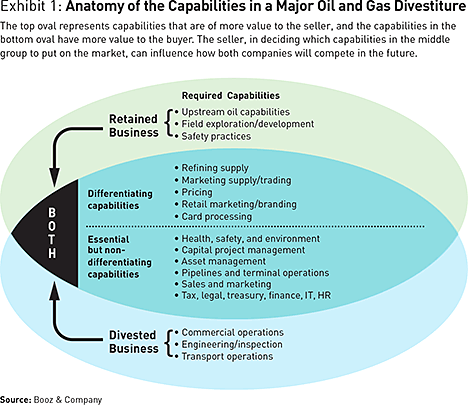
The Secret to a Successful Divestiture; When you are selling part of your company, don’t just offer buyers a potential asset; give them the capabilities to gain value from it.

August 27, 2013

The Secret to a Successful Divestiture

When you are selling part of your company, don’t just offer buyers a potential asset; give them the capabilities to gain value from it.

by Eduardo Alvarez, Steven Waller, and Ahmad Filsoof

00208_ex01

A major North American oil and gas company had formulated the straightforward part of a deal—deciding to sell one of its refineries and a group of its gas stations—a few months earlier. Now, as part of its business strategy in preparing these assets for sale, the company was diving into the details of divestiture, and the capabilities that would be affected by the deal. This exercise was going to be almost as complex as a typical merger or acquisition; certainly it would be more complex than the company’s leaders had expected. Read more of this post

Perils of holding on to corporate pet projects

August 26, 2013 1:48 pm

Perils of holding on to corporate pet projects

By Jonathan Moules, Enterprise Correspondent

Children seldom expect the downside of pet ownership when dreaming about receiving a puppy for Christmas. But at least there is usually a parent on hand with enough wisdom to put them straight. Unfortunately, ambitious business owners often do not hear the sobering warnings when it comes to their corporate pet projects. And when these puppies get out of control, the damage can be considerable. Read more of this post

College Costs Surge 500% in U.S. Since 1985: Chart of the Day

College Costs Surge 500% in U.S. Since 1985: Chart of the Day

College

The cost of higher education has surged more than 500 percent since 1985, illustrating why there have been renewed calls for change from both political parties. The CHART OF THE DAY shows that tuition expenses have increased 538 percent in the 28-year period, compared with a 286 percent jump in medical costs and a 121 percent gain in the consumer price index. The ballooning charges have generated swelling demand for educational loans while threatening to make college unaffordable for domestic and international students.

Read more of this post

A Different Formula for Happiness: In Time Perspective Therapy, people stop focusing on the past so much and look to the present and future

August 26, 2013, 7:22 p.m. ET

A Different Therapy to Find Greater Happiness

Instead of dredging up unhappy memories, focus on present, future

ELIZABETH BERNSTEIN

PJ-BQ126_BONDSJ_G_20130826162830

Say the words “therapy session” and many people will picture an hour spent on a couch dredging up unhappy childhood memories. A different approach suggests that redirecting the focus onto the present and future can make people happier, healthier and lead to better relationships. The method, called Time Perspective Therapy, involves figuring out which of six different outlooks a person has: past-positive (you love the past); past-negative (you have regrets and bad things happened in your past—or things that you now exaggerate as bad); present hedonism (you enjoy the present and like to reward yourself); present fatalism (you feel that events are beyond your control, so why bother?); goal-oriented future (you plan ahead and weigh the costs and benefits of any decision); transcendental future (you live a good life because you believe the reward is a heaven after death). Read more of this post

Fighting Fatigue in the Afternoon; Small Changes in Your Exercise Routine Can Keep You From Suffering Midday Blahs

August 26, 2013, 7:13 p.m. ET

Fighting Fatigue in the Afternoon

Small Changes in Your Exercise Routine Can Keep You From Suffering Midday Blahs

JENNIFER ALSEVER

Regular exercise is supposed to boost a person’s energy levels. So why do so many fitness fans complain of feeling fatigued during the afternoon? Making things worse, this workout-induced weariness can make it difficult to stick to a workout regimen. Researchers and fitness trainers say whether you exercise in the morning, afternoon or evening, small changes in your routine can keep you from suffering midday blahs. Read more of this post

What Science Hopes to Learn From a Baby’s Cries; Subtle differences in infant wailing can signal later developmental and neurological conditions

August 26, 2013, 7:31 p.m. ET

What Science Hopes to Learn From a Baby’s Cries

Subtle differences in infant wailing can signal later developmental and neurological conditions

SUMATHI REDDY

A newborn’s cry can signal more than whether she is hungry or tired. Subtle differences in infant wailing can provide important clues to later developmental and neurological conditions, such as poor language acquisition. Cry characteristics may also give hospitals a way to assess pain when treating babies. Down the road, researchers hope cry analysis may help doctors detect conditions and start treatment earlier. Researchers at Brown University and Women & Infants Hospital in Providence have devised a computer program to help analyze a baby’s cries. They hope to soon make it available to researchers world-wide looking to analyze crying patterns that can’t always be detected by the human ear. Read more of this post

Millions of students are finding major changes in the curriculum and battles over how teachers are evaluated, as the biggest revamps of U.S. public education in a decade work their way into classrooms

Updated August 26, 2013, 8:39 p.m. ET

Biggest Changes in a Decade Greet Students

Some Teachers, Parents Push Back on New Standards

STEPHANIE BANCHERO and ARIAN CAMPO-FLORES

NA-BX806_SCHOOL_G_20130826182107 0826SCHOOLSmap1 0826SCHOOLSmap2 0826SCHOOLSmap3 0826SCHOOLSmap4c 0826SCHOOLSmap5

Millions of students heading back to school are finding significant changes in the curriculum and battles over how teachers are evaluated, as the biggest revamps of U.S. public education in a decade work their way into classrooms. Most states are implementing tougher math and reading standards known as Common Core, while teacher evaluations increasingly are linked to student test scores or other measures of achievement. Meantime, traditional public schools face unprecedented competition from charter and private schools. Read more of this post

Researchers Study Self-Knowledge (Literally): The Body Sends Cues to the Brain; Understanding Them Can Improve Your Health

August 26, 2013, 6:59 p.m. ET

Researchers Study Self-Knowledge (Literally)

The Body Sends Cues to the Brain; Understanding Them Can Improve Your Health

SHIRLEY S. WANG

How well do people know their bodies and how does that help them function day to day? The attempt to understand how humans make sense of all the complex feedback they receive from the eyes and ears down has taken off and reached a new level of understanding in the last decade. One prong of the research being conducted in the United Kingdom, Germany, the U.S. and elsewhere is focused on understanding how well brains detect and react to cues from inside the body. Read more of this post

If predictive power is not in the cards for economics, what is it good for?

AUGUST 24, 2013, 3:09 PM

What Is Economics Good For?

By ALEX ROSENBERG and TYLER CURTAIN

Recent debates over who is most qualified to serve as the next chairman of the Federal Reserve have focused on more than just the candidates’ theory-driven economic expertise. They have touched on matters of personality and character as well. This is as it should be. Given the nature of economies, and our ability to understand them, the task of the Fed’s next leader will be more a matter of craft and wisdom than of science. Read more of this post

Kaizen and the art of human wa maintenance

Kaizen and the art of human wa maintenance

An ex-resident and frequent visitor finds convenience and joy in the little things that Japan does so damn well

BY GLENN NEWMAN

AUG 26, 2013

Little things matter. This truth is hard-wired into the Japanese psyche. Kaizen — the Japanese practice of continuous improvement through small, incremental changes — is well-known and influential worldwide. At least in the West, kaizen is primarily thought of as a method for improving manufacturing, engineering and other business processes. But kaizen goes much deeper in Japan. Kaizen here is organic, ubiquitous and attuned to the physical and psychological needs of human beings. At its best, this “human-scale kaizen” (HSK) eliminates or eases many of the mundane uncertainties, annoyances and embarrassments of daily life. Here are but a few of the innumerable examples of HSK in Japan: Read more of this post

Adults salivate at Lego’s robot kits; Mindstorms sets more complex, powerful

Mindstorms sets more complex, powerful

Adults salivate at Lego’s robot kits

AP AUG 25, 2013

p7-lego-a-20130826-870x519

Robot world: Will Gorman plays with a Mindstorms cobralike robot in

SAN JOSE, CALIFORNIA – Few are more excited about Lego’s new Mindstorms sets rolling out next month than Silicon Valley engineers. Many of them were drawn to the tech sector by the flagship kits that came on the market in 1998, introducing computerized movement to the traditional snap-together toy blocks and allowing the young innovators to build their first robots. Now, 15 years later, those robot geeks are entrepreneurs and designers, and the colorful plastic bricks have an significant influence in their lives. Read more of this post

Is Coke’s 127-year-old recipe the same? Not quite

Is Coke’s 127-year-old recipe the same? Not quite

CANDICE CHOI 11 hours ago

ATLANTA (AP) — Coca-Cola keeps the recipe for its 127-year-old soda inside an imposing steel vault that’s bathed in red security lights. Several cameras monitor the area to make sure the fizzy formula stays a secret. But in one of the many signs that the surveillance is as much about theater as reality, the images that pop up on video screens are of smiling tourists waving at themselves. “It’s a little bit for show,” concedes a guard at the World of Coca-Cola museum in downtown Atlanta, where the vault is revealed at the end of an exhibit in a puff of smoke. The ability to push a quaint narrative about a product’s origins and fuel a sense of nostalgia can help drive billions of dollars in sales. That’s invaluable at a time when food makers face greater competition from smaller players and cheaper supermarket store brands that appeal to cash-strapped Americans. Read more of this post

Everything that’s wrong with Microsoft, as told by veterans who abandoned the company; Low morale and a destructive internal culture

Everything that’s wrong with Microsoft, as told by veterans who abandoned the company

By Christopher Mims @mims August 26, 2013

It’s possible, even likely, that Microsoft is about to enter the darkest period in the firm’s history. Darker, even, than July 2000, when it seemed the US government might dissolve the house that Bill built, and force the company to be split into two different companies. The revenue Microsoft earned in the quarter ending in March 2013, $20.5 billion, probably represents a high water mark for the company, at least for the foreseeable future. In the most recent quarter, the company’s revenue missed expectations, which Microsoft blamed on ongoing weakness in the market for PCs. There is no sign that demand for PCs is going to pick up again—even Intel is projecting sales will be flat, at best—and plenty that the world’s demand for PCs, or at least the kind that run Microsoft Windows, is in terminal decline (1). Read more of this post

Microsoft’s decline from technology superpower to office utility has many causes, but none has received more focus than the management technique known inside the company as “stack ranking.”

Microsoft’s Massively Misplaced Incentives

Microsoft’s decline from technology superpower to office utility has many causes, but none has received more focus than the management technique known inside the company as “stack ranking.”

Everyone on every team is divided into three groups. A few are top performers, and are eligible for promotion and larger bonuses. Most are average. The rest are denied bonuses and often asked to leave. The performance reviews that determine these rankings occur every six months. Read more of this post

What is life all about? Using business strategy to find your life’s purpose

AUGUST 25, 2013 by ERIC BARKER

What is life all about? Using business strategy to find your life’s purpose

What is life all about? What’s your five-year plan? Your ten-year plan? If you’re anything like me, your answer is probably something along the lines of “I have no idea.” And just being asked that question makes you feel inadequate. Like you’re always supposed to know what the future will hold. In his powerful book, How Will You Measure Your Life?, Clayton Christensen reflects that so many of his students at Harvard Business School feel they should always be able to answer “What is life all about?” They expect to have their whole lives mapped out — and if they don’t, something is wrong with them.

Via How Will You Measure Your Life?:

Starting as early as high school, they think that to be successful they need to have a concrete vision of exactly what it is they want to do with their lives. Underlying this belief is the implicit assumption that they should risk deviating from their vision only if things go horribly wrong. Christensen points out a fundamental irony: these business students don’t realize that most businesses, well-planned as they may be, don’t really know what they want to be either. A full 93% of all companies start out doing one thing and abandon that strategy because it wasn’t viable. Read more of this post

How To Overcome Fear And Self-Doubt

How To Overcome Fear And Self-Doubt

JAMES CLEARJAMESCLEAR.COM AUG. 24, 2013, 12:53 PM 4,633 4

I was lifting with the owner of my gym. She was doing clean and jerks. I was squatting. In between sets, I asked if she had ever competed in an Olympic weightlifting meet. “You should do one. They are a lot of fun and you’re definitely built to be a weightlifter.” “That’s what everyone tells me, but I don’t know,” she responded. “Competitions make me kind of nervous. I just think: what if I miss this lift and all of these people see it?” Let’s pause for a moment. Remember, this is someone who OWNS a gym. She misses lifts every single week and sees hundreds of other people do the same. And yet here she is, letting her fear of being judged prevent her from doing something that she’d like to do. This little conversation reminded me of why I hate “fear–based decision making” and got me thinking about the importance of overcoming fear. Let’s talk about how you can get past fear and self–doubt and do the things that you want to do.

Fear–Based Decision Making

Fear–based decision making is when you let your fears or worries dictate your actions (or, in most cases, your lack of action). Read more of this post

The Perils of Short-Term Thinking

The Perils of Short-Term Thinking

by Javier Gimeno | Aug 23, 2013

It’s hard to ignore shareholder demands for quarterly earnings miracles. But too often what looks like “success” today can inhibit a company’s competitiveness tomorrow

Increasingly outspoken activist shareholders and a culture of instant gratification permeate today’s global boardrooms. Forget the annual report: these days, shareholders’ decisions often hinge on financial analysts‘ quarterly financial expectations – and, with perks, jobs and bonuses at stake, more and more senior executives are unable to ignore them. Pressure to produce short-term results has increased in the last five years, according to 63 percent of global executives who responded to a recent McKinsey & Company survey. This fosters what the business community has come to call “short-termism”, defined by the Financial Times as “an excessive focus on short-term results at the expense of long-term interests”.  Read more of this post

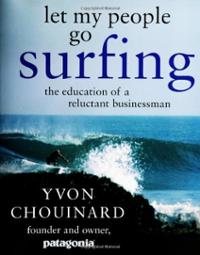
Let My People Go Surfing: The Education of a Reluctant Businessman

Let My People Go Surfing: The Education of a Reluctant Businessman Paperback

by Yvon Chouinard  (Author)

let-my-people-go-surfing-yvon-chouinard-hardcover-cover-art

In his long-awaited memoir, Yvon Chouinard-legendary climber, businessman, environmentalist, and founder of Patagonia, Inc.-shares the persistence and courage that have gone into being head of one of the most respected and environmentally responsible companies on earth. From his youth as the son of a French Canadian blacksmith to the thrilling, ambitious climbing expeditions that inspired his innovative designs for the sport’s equipment, Let My People Go Surfing is the story of a man who brought doing good and having grand adventures into the heart of his business life-a book that will deeply affect entrepreneurs and outdoor enthusiasts alike. Read more of this post