Thiel Fellow Launches A Topical Energy Spray For Absorbing Caffeine Through Your Skin

Founders Who Can’t Handle A Full Cup Of Coffee Want Everyone To Start Spraying On Caffeine Instead

ALYSON SHONTELL AUG. 20, 2013, 6:12 PM 1,479 2

In case you don’t like drinking, eating or inhaling caffeine, two founders going through investor Peter Thiel’s fellow program are creating another way to energize you. Ben Yu and Devon Soni have launched a campaign on crowdfunding platform Indiegogo for a product called Sprayable Energy. It’s an unscented, colorless formula that can be sprayed on skin, kind of like sunless tanner. It contains water, a derivative of the amino acid tyrosine, and caffeine. Four sprays equal one cup of coffee, the founders say, and each little bottle has up to 160 squirts.  The founders say they’ve “struggled with caffeine sensitivity” and the product they’re perfecting will give energy without the jitters. They also say Sprayable Energy users won’t experience a caffeine crash later in the day. Yu and Soni are seeking a modest amount, $15,000, to bring their idea to life. They’ve already raised more than $11,000 to tackle what they say is a $45 billion market. It’s worth noting that the a number of innovative ways to shoot caffeine into your system have been blocked. Perky Jerky was forced to stop putting caffeine in beef jerky, and the FDA went after inhalable solutions too.
Read more of this post

The importance of writing in Amazon’s success is a clue about why so many employers find that new college graduates aren’t well prepared to be contributors in their workplaces

Jeff Bezos’ PowerPoint prohibition

Jacqueline Pfeffer Merrill Posted on 9 Aug 2013, 1:47 AM 5,629 views PD Forum

You’ve been there too-—the really, truly awful PowerPoint presentation that makes you want to run screaming from the room. More than a decade ago, it was estimated that 30 million PowerPoint presentations were given each day—the number must be much higher today. Just think of how many millions of hours are spent every day sitting through truly terrible PowerPoint presentations. So it’s noteworthy that Amazon founder—and new Washington Post owner­­—Jeff Bezos’ proscribes PowerPoint presentations at Amazon. Bezos instead requires that employees compose 6-page narrative memos, and he starts meetings with quiet reading periods—“study halls”—in which everyone reads the memo from beginning to end. Read more of this post

Here’s Some Wonderful Writing From Elon Musk That Everyone In Business Should Emulate

Here’s Some Wonderful Writing From Elon Musk That Everyone In Business Should Emulate

JOE WEISENTHAL AUG. 20, 2013, 9:10 AM 13,368 18

There’s no shortage of reasons to call Elon Musk a badass. He’s super-successful. He has a company that does private rocket launches that look like something approaching magic. He’s made the best car of all time, according to Consumer Reports. And the latest news is that he’s made the safest car of all time, as well. Here’s another thing about him that goes overlooked: He’s a tremendous communicator, on par or possibly better than Steve Jobs. Because while Steve Jobs was talking about the magic of gadgets, Musk is actually communicating about engineering concepts, which fly above most people’s heads. Read this from Tesla’s announcement today about its safety rating. It’s a wonderful paragraph:

The Model S has the advantage in the front of not having a large gasoline engine block, thus creating a much longer crumple zone to absorb a high speed impact. This is fundamentally a force over distance problem – the longer the crumple zone, the more time there is to slow down occupants at g loads that do not cause injuries. Just like jumping into a pool of water from a tall height, it is better to have the pool be deep and not contain rocks. The Model S motor is only about a foot in diameter and is mounted close to the rear axle, and the front section that would normally contain a gasoline engine is used for a second trunk.

After you read that, you instantly grasp how Tesla’s small engine block makes it safer. Read more of this post

New CEO Of Bloomberg Media Sent Employees A Memo Explaining His Philosophy On Journalism

New CEO Of Bloomberg Media Sent Employees A Memo Explaining His Philosophy On Journalism — Here It Is

LINETTE LOPEZ AUG. 19, 2013, 3:01 PM 3,106 3

There hasn’t been a peep from the new CEO of Bloomberg Media Group, Justin Smith, since his hire was announced. Friday, however, he sent Bloomberg’s media team a quick memo about his philosophy on journalism — we’ve copied it below. The most important thing to note here is that Smith makes it clear that he is a business man. “Helping create quality content and figuring out how to commercialize it has been my life’s passion,” he wrote. Though I came out of print media, I’ve specialized in transitioning media brands onto digital and live event platforms.” Reading that, you can’t help but think of Jeff Bezos, a business man, purchasing the Washington Post from the family of journalists that held it for decades. It serves as a reminder that good journalism is alive — the problem is that it’s time to rethink how it’s sold to the people that want to consume it. Smith is promising that he knows how to do that, writing that he wants Bloomberg to choose to “live on the new, exciting frontier of media.” Note the word “choice.” Smith divides the industry into two camps — publications that are letting the industry’s changes steam roll the out of existence, and publications that accept the changes and embrace them. Check out Smith’s full memo below (emphasis ours): Read more of this post

A Stunning Chart That Shows How Nepotism Really Works

A Stunning Chart That Shows How Nepotism Really Works

JOE WEISENTHAL AUG. 19, 2013, 2:33 PM 11,010 10

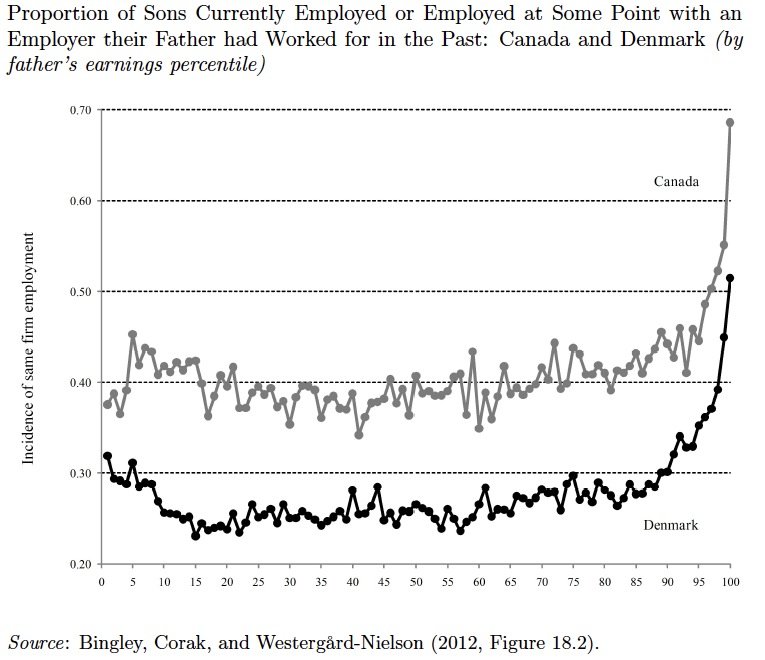
Here’s one way the rich hold onto their wealth: By hiring their spawn. This way, the wealth and the accumulated power stay in the family, rather than dissipate outwords. Toby Nangle tweeted out this great chart from economist Miles Corak, who has done a lot of work on wealth mobility. It shows the likelihood that a son at some point in their life works for the same firm that their father once worked for across various income levels. The conclusion couldn’t be more clear: The richer the father is, the more likely it is that their son will work at a firm they worked for at some point in their life. As you get to the very elite, the % of sons sharing an employer with their father just soars. The numbers in the survey are from Canada or Denmark, but the similarity across countries indicates that this is a pattern not confirmed to just those two.

screen shot 2013-08-19 at 2.30.24 pm


Taking the Xerox business model out of its box

Taking the Xerox business model out of its box

Dan Ovsey | 13/08/19 | Last Updated: 13/08/16 7:45 PM ET

DC_Ursula_Burns05.jpg

Darren Calabrese/National PostXerox CEO Ursula Burns says the inventor of the photocopier is divesting itself of traditional DocuTech processes and investing much more heavily in high-end printing and other services that cater to businesses in an era of customized, on-demand and just-in-time needs. When Ursula Burns began her career at Xerox in 1981 as part of the product development team, the company was known almost exclusively for its flagship photocopiers. Since then, she has seen the advent of the Internet, digital communication, on-demand service models and just-in-time business processes. Now the company’s CEO — and the first African-American woman to lead a Fortune 500 company — Ms. Burns has the unenviable task of transforming and re-branding Xerox into a services-based tech company that must partially distance itself from what has made its brand famous, in order to remain relevant in the future. During a recent trip to Toronto, she spoke with FP’s Dan Ovsey about the rationale and genesis behind Xerox’s service push, where it’s making strategic investments and how it will identify the people and processes to make the shift work. Following is an edited transcript of their conversation. Read more of this post

Is Economics More Like History Than Physics?

Is Economics More Like History Than Physics?

By Jag Bhalla | August 16, 2013 |  12

Is economics like physics, or more like history? Steven Pinker says, “No sane thinker would try to explain World War I in the language of physics.” Yet some economists aim close to such craziness.

Pinker says the ”mindset of science” eliminates errors by “open debate, peer review, and double-blind methods,” and especially, experimentation. But experiments require repetition and control over all relevant variables. We can experiment on individual behavior, but not with history or macroeconomics. Read more of this post

We’re not a start-up nation, Or even a nation at all, as the envy and spite aroused by the IBM-Trusteer deal reveal

We’re not a start-up nation

The Trusteer deal exposes Israel of 2013 as a collection of cultures, countries, world views, and tribes.

20 August 13 12:57, Yanki Margalit

Congratulations to Shlomo Kramer and Mickey Boodaei, the investors, and the hundreds of employees of Trusteer Ltd. An impressive business success. You established and built a real, global information security company with a reputation. Congratulations to IBM (NYSE: IBM) on its 14th acquisition in Israel and on the establishment of an information security center in the country. Read more of this post

The Beauty of Limits

August 19, 2013

The Beauty of Limits

By CARL RICHARDS

Haow often do we hear ourselves saying we want more? More freedom, more money, more time. More seems as if it would always be great, until we get it. Then we’re faced with a new set of problems that comes with having more. My work is location-independent. My wife and I could live anywhere that our budget will allow, and that ends up being a lot of places. Normally having more options is what we want, but this has actually led to a consistent problem that we spend a lot of time discussing. Read more of this post

Talking About Your Goals Makes You Less Likely To Achieve Them; the personal satisfaction of achievement is infinitely sweeter than public acclaim

Say What? Talking About Your Goals Makes You Less Likely To Achieve Them

JEFF HADENLINKEDIN AUG. 20, 2013, 10:53 AM 1,422 1

We all have a huge personal goal we want to accomplish: A big, challenging, amazing goal. We think about it, dream about it, obsess about it… but we never accomplish it. That could be because we also talked about it, because according to some studies, people who talk about their intentions are less likely to follow through on those intentions. Say you want to thru-hike the Appalachian Trail, a grueling five- to seven-month trek from Georgia to Maine. (Having completed about 2% of it, I’m not so well on my section-hiking way, much less thru-hiking.) You’re having dinner with friends and you tell them all about it. “Oh, wow!” one exclaims. “That sounds amazing. But won’t it be super hard?” Read more of this post

London Is A Better Place To Visit Than Paris [INFOGRAPHIC]

London Is A Better Place To Visit Than Paris [INFOGRAPHIC]

MELISSA STANGER AUG. 20, 2013, 3:01 PM 1,902 6

London is known for its beautiful and historic architecture. Paris is famous for its exquisite cuisine. Each city is unique in different ways, but when put head to head, which comes out on top? It’s a close call, but London clearly has the advantage, according to a new infographic by Ally Biring of travel booking site HouseTrip.com. Biring compared different aspects of each city, including restaurants, cuisine, landmarks, architecture, and local sights, and found that London topped Paris in most of these categories. London has more museums, more landmarks and attractions, and more UNESCO sites, like the Tower of London and Westminster Abbey, than Paris. It also has more restaurants, lots of free parks and museums, and it’s cheaper for tourists to get around. However, Paris made a compelling case for itself. It’s the home of Disneyland Paris and the iconic Eiffel Tower. A city well-known for its food, Paris may not have as many restaurants as London, but it has more Michelin-starred restaurants and many world-class culinary schools. Take a look at HouseTrip’s infographic to see how the two cities measure up in each category.

paris vs. london final (logo - 990px)

How ‘Power Poses’ Can Help Your Career; Posture actually affects a person’s hormones and behavior, new research shows

August 20, 2013, 6:57 p.m. ET

How ‘Power Poses’ Can Help Your Career

Posture actually affects a person’s hormones and behavior, new research shows

SUE SHELLENBARGER

New research shows posture has a bigger impact than anyone believed: It actually changes a person’s hormones and behavior, and even has an impact on how you are perceived in the workplace. WSJ’s Sue Shellenbarger and marketing executive Kathy Keim discuss. Photo: Jarrard Cole/The Wall Street Journal.

Print

Can how you stand or sit affect your success? New research shows posture has a bigger impact on body and mind than previously believed. Striking a powerful, expansive pose actually changes a person’s hormones and behavior, just as if he or she had real power. Merely practicing a “power pose” for a few minutes in private—such as standing tall and leaning slightly forward with hands at one’s side, or leaning forward over a desk with hands planted firmly on its surface—led to higher levels of testosterone and lower levels of the stress hormone cortisol in study participants. These physiological changes are linked to better performance and more confident, assertive behavior, recent studies show. Read more of this post

Command of written Chinese declines in digital era; Many Chinese resort to pinyin, or romanised Putonghua, when using a keyboard but their grasp of the written language is weakening as a result

Command of written Chinese declines in digital era

Tuesday, 20 August, 2013, 12:00am

Mandy Zuo mandy.zuo@scmp.com

Many Chinese resort to pinyin, or romanised Putonghua, when using a keyboard but their grasp of the written language is weakening as a result

A popular spelling competition run on state broadcaster CCTV has reinforced fears Chinese are losing their grasp of their own written language – thanks, it appears, to computer and mobile device keyboards. Seventy per cent of adults in the audience of Chinese Characters Dictation Competition have been unable to write, by hand, the characters for the word “toad” correctly . Read more of this post

Xinhua reveals China’s ‘Area 51’ in Inner Mongolia

Xinhua reveals China’s ‘Area 51’ in Inner Mongolia

Staff Reporter

2013-08-21

area51-152809_copy2

A satellite image of the secret Badan Jilin Desert range. (Internet photo)

After the Central Intelligence Agency acknowledged the existence of Area 51 as a testing site for U-2 spy planes, a secret Chinese missile range in the Badan Jilin Desert in Inner Mongolia has become the world’s next great site of unexplained mystery, according to Duowei News, a media outlet operated by overseas Chinese. Photo of this secret military site were first revealed by the official news agency Xinhua on Aug. 19 in a report which said the site is never featured on any official maps approved by the government and its purpose had never previously been mentioned in any media report. This secret military facility was established in 2003 for the People’s Liberation Army to test its ballistic missiles and fighters, Xinhua said. Photos published by Xinhua showed the words “those who steal secrets will be caught and executed” outside the entrance of the facility. The history of the base goes back to 1958, when it was originally designed as two shooting ranges, one for ballistic missiles and the other for aircraft. After the integration of the sites in 2003, China’s first indigenous fourth-generation fighter completed its last air-to-air missile tests over the Badan Jilin Desert on Dec. 25 of that year. Various Chinese aircraft and aviation equipment have been tested at the site before entering production. Air combat exercises similar to the Red Flag exercise held at Nellis Air Force Base in Nevada and Eielson Air Force Base in Alaska can also be conducted at the Badan Jilin range, according to Xinhua.

Eat, drink, man, woman, meatballs; Ikea has figured out ‘glocal’ in a way that has eluded foreign retailers

August 20, 2013 5:30 pm

Eat, drink, man, woman, meatballs

By Patti Waldmeir in Shanghai

Ikea has figured out ‘glocal’ in a way that has eluded foreign retailers, writes Patti Waldmeir

What modern institution in China provides food, housing, love and babysitting, all under one roof? The Communist party may have dashed the Maoist “ iron rice bowl” to the ground, but Ikea is stepping in to take up the slack. The world’s largest furniture retailer not only invites Chinese consumers to nap on its beds and snack on its dinnerware; it lets pensioners hold matchmaking sessions over free coffee in its canteens, and even provides day care for the only grandchild, to make the whole Eat Drink Man Womanthing go that much more smoothly. Read more of this post

Genius And Insanity: Do You Need To Be Crazy To Be The Best?

AUGUST 19, 2013 by ERIC BARKER

Genius And Insanity: Do You Need To Be Crazy To Be The Best?

500x200xgenius-and-insanity.png.pagespeed.ic.F5crYFTi-g

Normally the picture I put before a post is loosely connected to the subject matter. This Dilbert image, however, might really sum things up. 10,000 hours is a lot of hours. crazy amount of hours, one might say. I’ve posted a lot about “deliberate practice” and the work habits of geniuses. They’re relentless.

Via Daily Rituals: How Artists Work

“Sooner or later,” Pritchett writes, “the great men turn out to be all alike. They never stop working. They never lose a minute. It is very depressing.”

Here’s the question:

Is that just something that obsessed, crazy people do? Does this prove the often-theorized connection between genius and insanity?

We assume 10,000 hours of practice means passion or dedication. How often does it just mean stone-cold obsessed?

Brilliant, Famous — And Utterly Obsessed

Steve Jobs? Brilliant and obsessed.

Via America’s Obsessives: The Compulsive Energy That Built a Nation:

He insisted that the walls all be painted white. “No white was too white for Steve,” stated Coleman. Jobs would also don white gloves to do frequent dust checks. Whenever he spotted a few specks on either a machine or on the floor, which he was determined to keep clean enough to eat off, Coleman had to arrange for an instant scrubbing. Read more of this post

How to Make a New Product Unique

How to Make a New Product Unique

Posted: August 13, 2013

Alex Kandybin is a Booz & Company partner, based in New York, specializing in innovation in the consumer products and health care industries. Adam Michaels is the head of North American integrated business planning at Mondelez International, based in East Hanover, N.J. Previously, he was a principal at Booz & Company. Also contributing to this entry were Booz & Company senior executive advisors Shaun Holliday and Marc Robinson.

In a previous blog post, we explained why sustainable consumer product introductions are rare. We said two factors help a company stand out from the competition when introducing a new offering:

1. Unique product attributes (difficult for rivals to copy), in technology, packaging, customer experience, or design

2. Differentiated capabilities that create coherence in your company—an alignment between your business strategy and your portfolio of products

How can this inherently tricky blend be achieved? Kraft, in the food and beverage industry, offers one example. Until 2010, its strategy for launching products fared badly. Kraft tended to invest in small ideas that did not attract customers as expected. As Kraft Foods head of innovation Barry Calpino explained it at a presentation at a Consumer Analyst Group of New York conference in February 2013, the company acquired a reputation for poor execution and a lack of vision. Read more of this post

Cash-Poor Companies Feed Investor Hunger for ‘Happy Meals’ Convertible Bonds Deals; Hedge Funds Use CBs To Short-Sell Issuer’s Stock

August 19, 2013, 10:36 p.m. ET

Cash-Poor Companies Feed Investor Hunger for ‘Happy Meals’

Critics Say Deals Can Exacerbate Problems for Issuing Companies

MICHAEL ROTHFELD and TOM MCGINTY

P1-BM775A_CONVE_G_20130819190605

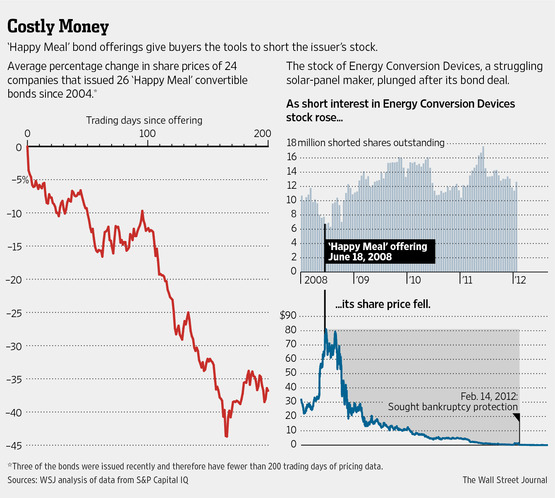
When Energy Conversion Devices Inc. needed cash, the struggling solar-panel maker turned itself into what Wall Street likes to call a “Happy Meal.” To make $316 million in bonds more appetizing, the company agreed to lend millions of its shares to hedge funds buying the bonds so they could simultaneously sell the stock in a bet against Energy Conversion’s success. A subsequent crisis in the solar-power industry hit Energy Conversion hard. The bonds, issued in 2008, plunged in value, and last year the company filed for bankruptcy protection, wiping out shareholders. But the negative wagers paid off for the hedge funds. A Wall Street Journal examination showed that hedge funds that bought the bonds were positioned to earn upward of 20% on their investments. Facing meager returns on many fronts, some hedge funds have developed a taste for Happy Meals—deals named after the McDonald’s burger-and-toy combo. Companies strapped for cash serve up everything the funds need to profit: bonds that are convertible into stock if the borrower does well, and tools for betting against the company if its prospects sour. Read more of this post

Elixir of Life sought from creatures of night prompted by bats’ ability to do better with DNA damage repair, live longer, have less cancer, carry viruses without disease

Bat Man Aims for Elixir of Life From Creatures of Night: Health

Count Dracula was onto something. Bats.

The immortal Prince of Darkness has been associated with the flying mammals since he first flitted through Bram Stoker’s 1897 novel. Now, scientists seek to unlock another trait the vampire shares with bats: the secret of longevity.

The volume of published scientific research on bat viruses has doubled in the past decade with the discovery that they’re probably a natural reservoir for global killers such as Ebola, severe acute respiratory syndrome and the Middle East respiratory syndrome. Along the way, scientists have been startled by how well they respond to the genetic wear and tear that’s a feature of life, aging and diseases such as cancer. Read more of this post

How to avoid breaking your company as it grows

How to avoid breaking your company as it grows

BY ERIN GRIFFITH 
ON AUGUST 19, 2013

Jonathan Basker has seen a fair amount of employee angst in his day. As a headhunter in Silicon Valley, he specialized in ripping workers out of unhappy, dysfunctional companies and landing them new, presumably happier, roles. He applied those lessons to his role as a recruiter at Etsy, where he helped the company scale from 83 to 200 employees, and then again at Betaworks, where he built the startup studio’s hacker-in-residence program and recruited around 40 employees. He’s got plenty of lessons from those days on maintaining a healthy, functioning company as you scale, which he delivered to an audience of entrepreneurs and techies at WeWork’s summer camp over the weekend. Read more of this post

Innovation is the key to a thriving British manufacturing industry

Innovation is the key to a thriving British manufacturing industry

There is a great deal of concern in the UK that this country’s manufacturing sector has dwindled dramatically over recent years.

The latest economic analysis by manufacturing association EEF cautiously predicts growth in the sector by the end of the year, although it does express concern about the impact of specific risks, such as a slowdown in the growth of world trade.

By Maurizio Brusadelli

7:30PM BST 18 Aug 2013

This has become particularly acute since the beginning of the financial crisis, which has led commentators to bemoan Britain’s reliance on the City at the expense of other sectors, and driving many to ask nostalgically “why don’t we make things any more?” So, are reports of the manufacturing industry’s death exaggerated? Recent data shows that all the doom and gloom is a little premature. The latest economic analysis by manufacturing association EEF cautiously predicts growth in the sector by the end of the year, although it does express concern about the impact of specific risks, such as a slowdown in the growth of world trade. And the CBI’s SME trends survey showed that last month small and medium-sized manufacturers’ optimism rose for the first time since April 2012, even though numbers of new orders actually fell in the three months to July. Read more of this post

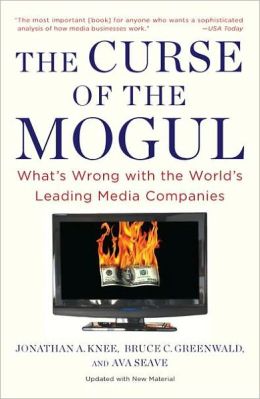
The Curse of the Mogul: What’s Wrong with the World’s Leading Media Companies

The Curse of the Mogul: What’s Wrong with the World’s Leading Media Companies Paperback– Bargain Price

by Jonathan A. Knee  (Author) , Bruce C. Greenwald (Author) , Ava Seave (Author)

9781591843900_p0_v1_s260x420

Editorial Reviews

From Publishers Weekly

The media industry is facing multiple financial and operational crises on an unprecedented scale. Rampant overpaying for acquisitions and strategic investments make incompetent corporate leaders as complicit in media’s decline as the difficult economy. The authors, professors at the Columbia Business School, focus their sights broadly but home in on the usual suspects—Ted Turner, Rupert Murdoch, Disney and an alphabet of flailing companies (e.g., TBS, CNN, TNT). They discuss the dilemma of new media vs. old, the difficulty of establishing efficient operations, mergers that worked and mergers that didn’t, and attempt to debunk any number of media myths, most assiduously the content is king platitude—considering especially that the movie, music and book industries are all floundering. An interesting subject in theory, but this treatment has the feeling of a homework assignment rather than an exposé and plods along to its meandering conclusion at a snail’s pace. Dull writing and a complete lack of human interest detail make this a tough read and a tougher sell. (Oct.)  Read more of this post

South African Naspers’ Koos Bekker Becomes Billionaire With China Media Investments in Tencent

South African Bekker Becomes Billionaire With China Media

download (12)

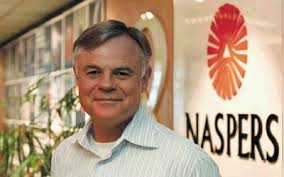
Jacobus Petrus “Koos” Bekker became a billionaire earlier this year after transforming Cape Town, South Africa-based Naspers Ltd. (NPN) from a decades-old print business into the world’s largest emerging market media company.

Formed in 1915 as De Nasionale Pers, the company published what became South Africa’s first Afrikaans-language daily newspaper, Die Burger, which went on to defend apartheid rule in commentaries and articles when the segregationist system was put in place, beginning in 1948. Read more of this post

Fashion cents and sensibility: Designers need commercial nous as well as creativity

August 19, 2013 6:23 pm

Fashion cents and sensibility

By Elizabeth Paton

When New York Fashion Week comes to town in the first week of September, a cadre of young designers will host exclusive catwalk shows all over Manhattan, generating a buzz for nascent brands as well as their seasonal offerings of exquisite studio creations.

Yet for many, the whole game has also changed. Today few fledgling visionaries are ever judged purely on artistic ingenuity. To secure a coveted spot at this year’s show calendar – and thereby catch the eye of those at the top – twenty-something talents need to show not just a brilliance for producing creative collections but also a commercially sharpened brain for the business that will foster their survival in this tough climate for the industry. Read more of this post

Sometimes 1,000 Heads Aren’t Better Than One

Sometimes 1,000 Heads Aren’t Better Than One

We are in the midst of an explosion of interest in collective intelligence, sometimes described as “the wisdom of crowds.” The basic idea is that if you aggregate the knowledge of a lot of people, you are likely to come up with the correct answer. If two heads are better than one, then a hundred heads are even better, and once we are dealing with thousands, a good answer starts to look inevitable. This idea has major implications for business decisions, stock markets, political movements and democracy itself.

In 1907, Francis Galton provided a memorable example. He asked about 800 people to guess the weight of an ox. None of them gave the correct answer (1,198 pounds), but the mean response was eerily accurate (1,197 pounds). Many experiments have replicated Galton’s finding, showing that if a large group is asked to make some numerical estimate, the mean answer (and sometimes the average) is remarkably good. Read more of this post

Practice Makes Perfect, If Your Genes Play Along

Practice Makes Perfect, If Your Genes Play Along

Like many others who read Malcolm Gladwell’s book “Outliers” when it came out five years ago, I was impressed by the 10,000-hour rule of expertise. I wrote a column (for a different publication) espousing the rule, which holds that to become a world-class competitor at anything from chess to tennis to baseball, all that’s required is 10,000 hours of deliberate practice.

David Epstein has convinced me I was wrong. His thoroughly researched new book, “The Sports Gene,” pretty much demolishes the 10,000-hour rule — and much of “Outliers” along with it. Read more of this post

How Einstein Thought: Fostering Combinatorial Creativity and Unconscious Connections

How Einstein Thought: Fostering Combinatorial Creativity and Unconscious Connections

“Combinatory play seems to be the essential feature in productive thought.”

For as long as I can remember – and certainly long before I had the term for it – I’ve believed that creativity is combinatorial: Alive and awake to the world, we amass a collection of cross-disciplinary building blocks – knowledge, memories, bits of information, sparks of inspiration, and other existing ideas – that we then combine and recombine, mostly unconsciously, into something “new.” From this vast and cross-disciplinary mental pool of resources beckons the infrastructure of what we call our “own” “original” ideas. The notion, of course, is not new – some of history’s greatest minds across art, science, poetry, and cinema have articulated it, directly or indirectly, in one form or another: Arthur Koestler’s famous theory of “bisociation” explained creativity through the combination of elements that don’t ordinarily belong together; graphic designer Paula Scher likens creativity to a slot machine that aligns the seemingly random jumble of stuff in our heads into a suddenly miraculous combination; T. S. Eliot believed that the poet’s mind incubates fragmentary thoughts into beautiful ideas; the great Stephen Jay Gould maintained that connecting the seemingly unconnected is the secret of genius; Gutenberg’s invention of the printing press embodied this combinatorial creativity; even what we call “intuition” is based on the unconscious application of this very mental faculty. Read more of this post

Feike Sijbesma, chief of Dutch nutrition and chemicals DSM, wants to transform global manufacturing

THE MONDAY INTERVIEW

August 18, 2013 2:20 pm

Feike Sijbesma, chief of DSM

By Matt Steinglass

sijbesma-high-res-e1361781309443

For several months now, Feike Sijbesma has been doggedly promoting an idiosyncratic vision for transforming global capitalism.

The head of DSM, the Dutch nutrition and chemicals group, is one of the chemical industry’s strongest proponents of shifting from fossil fuels to processes that use biological materials, such as enzymes produced by algae. All manufacturing should be in the process of becoming 100 per cent renewable, he says. Furthermore, Mr Sijbesma thinks companies around the world should negotiate international metrics – similar to international accounting standards – for assessing their impact on the environment and on society. And those whose impact is more detrimental should pay more tax. He has aired this idea in public and more privately with other industrial leaders and leading thinkers at the World Economic Forum in Davos. With annual revenues of €9bn, his company is a heavyweight in nutrition – it is the world’s largest vitamins maker, among other things – but a small player in the chemicals industry compared with petrochemical titans such as DuPont and BASF. Read more of this post

Singapore: Man with 8cm gash waited 7 hours in vain at hospital only to faint from blood loss

17-08-2013, 05:39 PM

Man with 8cm gash waited 7 hours in vain at A&E only to faint from blood loss !
stitches
Warning, viewer discretion is advised. Pictures are graphic.
STOMPer Isaac says his friend waited seven hours in vain at Changi General Hospital for a doctors to stitch up an 8cm gash on his arm he sustained at work.
His friend’s father eventually decided to relocate him to Mt Alvernia Hospital for treatment, by which time he had passed out from blood loss.
The STOMPer wrote:
“My friend, Lim, in his thirties, suffered a workplace-related accident on Aug 7, at around 11.30am.
“He had fallen down and his right forearm sustained a gash of approximately 8cm length due to a cut from a steel bar.
“His co-workers immediately rushed him to the CGH and they arrived at the Accidents & Emergency department at around noon.
“The staff nurses were quick to administer basic wound dressing and bandage to his wounds, and also an intravenous drip was also given to him.
“Lim’s father also arrived at the hospital at 2pm that day.
“However, even at 3pm, they were told by nurses that doctor was unavailable.
“Every time they asked for a doctor, the nurses would reply the doctor will ‘attend to them in half an hour’.
“To their horror, the doctor still hadn’t come and performed the stitching operation even at 5pm, and the nurses could only ‘top up’ the bandages when the blood seeped through the dressing.
“It was only at 7pm, when Lim said he was feeling faint and going to pass out, that a doctor finally came.
“To their shock, the doctor said there were still four patients waiting in line, and that Lim would have to wait until midnight before he could perform the operation on him.
“Worse still, the doctor even said that he might have to wait until the next morning.
“Upon hearing this, the Lims wanted an immediate transfer to another hospital.
“Much to their chagrin, they were told that ambulances were also unavailable.
“While having to deal with tough luck, the father managed to get his son transferred to Alvernia Hospital, at MacRitchie using his personal vehicle.
“The father was appalled by the doctor’s attitude.
“He said the doctor even shooed them away when he requested to have an immediate transfer.
“He said his son went unconscious as soon as they arrived at Alvernia Hospital, where he finally received the long awaited stitching operation by another surgeon. He received between 15 to 20 stitches.
“The father did receive a ‘concerned’ telephone call from a CGH officer on Aug 16.
“The father reprimanded the hospital staff for their behavior and for having insufficient medical personnel on duty as well as equipment such as ambulances.
“He said the Ministry of Health should look into this matter and seek to improve our hospital’s standards, before someone’s life is lost.”

Love Your Job? Thank Your Country

Love Your Job? Thank Your Country

It is widely assumed that people in economically “advanced” countries do not differ significantly in how satisfied they are with their jobs. Because they are about equally productive, the reasoning is, they must produce things the same way, and so their work experience must be the same, too. In fact, there are striking differences in job satisfaction within the West. The U.K., with very low wages relative to the country’s wealth, reports a pretty decent level of job satisfaction. Yet Germany, with its fairly high wages relative to wealth, reports an undistinguished level of job satisfaction — below Italy and Spain.  Read more of this post