Innovation drives growth for exporters to emerging economies

August 19, 2013 12:03 am

Innovation drives growth for exporters to emerging economies

By Mark Wembridge

In the battle to attract customers in emerging markets and compete with lower-cost economies, British manufacturers have discovered that brains trump brawn. Unable to compete with commoditised goods churned out in cut-price countries, new research shows that UK manufacturers are increasingly targeting innovative niche products which can be exported to emerging economies. According to a study published on Monday by the EEF manufacturers’ association, 71 per cent of British businesses polled said they were planning to use innovative ideas and services to bolster their revenues – up from 54 per cent three years ago. Read more of this post

Wary Investors Turn to Lie Pros

December 29, 2010

Wary Investors Turn to Lie Pros

Deception Detectors Find a New Niche

KYLE STOCK

When screening a fund manager, investors like to see experience and a consistent record or returns. Elizabeth Prial, however, looks for dilated pupils and uneven breathing. Ms. Prial, a psychologist and former Federal Bureau of Investigation agent, has spent most of her career looking for lies in the statements of mafia hitmen and terrorists. Now, she is on the hunt for the next Bernard Madoff, selling her deception-detection skills to institutional investors and others with large pools of money who want to know if prospective fund managers are telling the truth. “It’s usually very clear,” she said. “I’m 90% confident in most of the things that I can see.” Amid the rush to fortify the nation’s still-rickety regulations in the wake of the financial crisis, affluent investors are turning to behavioral specialists, looking to find things in faces and phrases that may not be revealed in financial statements. Read more of this post

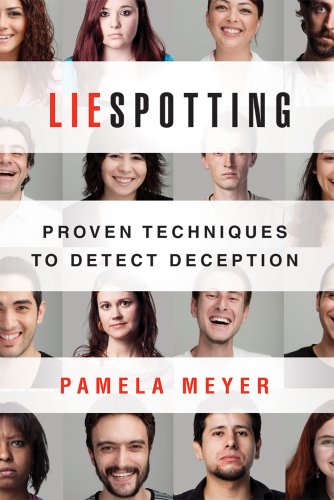
Liespotting: Proven Techniques to Detect Deception

Liespotting: Proven Techniques to Detect Deception Paperback

by Pamela Meyer  (Author)

51sfVbS8loL

GET TO THE TRUTH

People–friends, family members, work colleagues, salespeople–lie to us all the time.  Daily, hourly, constantly. None of us is immune, and all of us are victims. According to studies by several different researchers, most of us encounter nearly 200 lies a day. Now there’s something we can do about it. Liespotting links three disciplines–facial recognition training, interrogation training, and a comprehensive survey of research in the field–into a specialized body of information developed specifically to help business leaders detect deception and get the information they need to successfully conduct their most important interactions and transactions. Some of the nation’s leading business executives have learned to use these methods to root out lies in high stakes situations. Liespotting for the first time brings years of knowledge–previously found only in the intelligence community, police training academies, and universities–into the corporate boardroom, the manager’s meeting, the job interview, the legal proceeding, and the deal negotiation.

WHAT’S IN THE BOOK?

Learn communication secrets previously known only to a handful of scientists, interrogators and intelligence specialists.

Liespotting reveals what’s hiding in plain sight in every business meeting, job interview and negotiation:

• The single most dangerous facial expression to watch out for in business & personal relationships

• 10 questions that get people to tell you anything

• A simple 5-step method for spotting and stopping the lies told in nearly every high-stakes business negotiation and interview

• Dozens of postures and facial expressions that should instantly put you on Red Alert for deception

• The telltale phrases and verbal responses that separate truthful stories from deceitful ones

• How to create a circle of advisers who will guarantee your success Read more of this post

Comcasted: How Ralph and Brian Roberts Took Over America’s TV, One Deal at a Time

Comcasted: How Ralph and Brian Roberts Took Over America’s TV, One Deal at a Time [Hardcover]

Joseph N. DiStefano (Author)

comcasted-how-ralph-brian-roberts-took-over-americas-joseph-n-distefano-hardcover-cover-art

Publication Date: March 1, 2005

If you’re wondering who or what is next on Comcast’s “to-do” list–stay tuned. Be sure to take this eye-opening, rare look inside an American corporate dynasty that began as a small franchise in Tupelo, Mississippi, and grew to become the nation’s biggest cable TV company and fastest-growing Internet provider. With the tenacious investigative skills and gusto of the seasoned reporter, Joseph N. DiStefano has written a must-read history of this vital industry and its principal player, as well as the unauthorized biography of Comcast’s founder, Ralph Roberts, and his son and successor, Brian. Though rivals like Fox News owner and satellite TV baron Rupert Murdoch continue to nip at its heels, though consumer discontent simmers, Comcast, with allies in small-town city halls and Washington, D.C., as well as powerful companies like Microsoft, continues to exert influence over Hollywood, Madison Avenue, and every TV viewer. We are, indeed, all COMCASTed. Read more of this post

The Problem With Delhi’s Rich Kids: In India’s capital, the children of the nouveau riche often get whatever they want, apart from happiness

August 18, 2013, 9:00 AM

The Problem With Delhi’s Rich Kids

By Vibha Kumar

A woman I went to college with in New Delhi, now 29, lives in her family home on Prithviraj Road, one of the toniest parts of the capital. She has a shiny new convertible BMW 3 series, bought by her father. She doesn’t have a job. She called me recently and we met for lunch. She looked dull and withdrawn. She told me she was extremely depressed and felt that her life wasn’t worth living. She isn’t the only Delhi rich kid to feel this way. Sanjay Chugh, a Delhi-based psychiatrist, says he treats three or four young, wealthy, unhappy patients a day. “Such children are often brought up being told that they have nothing to worry about and that money can take care of everything,” he said. Often, newly wealthy parents don’t want their children to go through the hardships they experienced growing up, Mr. Chugh says. But they fail to teach them there is more to life than fancy drinks, new toys and branded clothes. On a recent evening at a posh lounge in Delhi, I saw Prada and Gucci-clad teenagers arrive in Lamborghinis, Jaguars and Porsches. They air kissed and went to the bar. “Hedonism is back,” a note on bar’s website says. After an hour or so of drinking, a chubby guy in the group got the bill. “Oh, just 60? Not bad,” he said loudly. It was 60,000 rupees ($1,000.) An acquaintance in Delhi says she spends most afternoons in her apartment, sitting on the couch drinking beer and smoking marijuana. Read more of this post

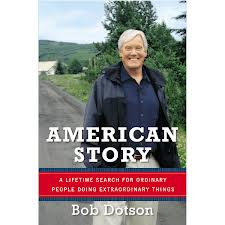
American Story: A Lifetime Search for Ordinary People Doing Extraordinary Things

American Story: A Lifetime Search for Ordinary People Doing Extraordinary Things Hardcover

by Bob Dotson  (Author)

images (36)

Release date: March 26, 2013

For the six million people who watch the Emmy Award–winning “American Story with Bob Dotson” on NBC’s Today Show, Bob Dotson’s reports celebrate the inspirational stories of everyday Americans. Dotson has been crisscrossing the country for more than forty years—logging more than four million miles—in search of people who have quietly but profoundly changed our lives and our country for the better. Now, in American Story, he presents a road map to the unsung heroes with thoughtful solutions to problems we all face, incredible ideas that work, and blueprints to living our dreams.

*The boss who came out of retirement to start a new company for his former employees who could not find work
*The truck driver who taught microsurgery
*The man you’ve never heard of who has 465 profitable patents, second only to Thomas Edison
*The doctor who developed the vaccine to prevent whooping cough, who didn’t retire until age 104

In the tradition of Tom Brokaw’s New York Times bestseller The Time of Our LivesAmerican Story is a deeply moving and endlessly fascinating alternative narrative for everyone who yearns to feel good about America. Read more of this post

Richard Feynman’s Love Letter to His Wife Sixteen Months After Her Death

Richard Feynman’s Love Letter to His Wife Sixteen Months After Her Death

by SHANE PARRISH on AUGUST 13, 2013

Via: Quantum Man: Richard Feynman’s Life in Science

7294111_121592638235

Richard and Arline were soul mates. They were not clones of each other, but symbiotic opposites – each completed the other. Arline admired Richard’s obvious scientific brilliance, and Richard clearly adored the fact that she loved and understood things he could barely appreciate at the time. But what they shared, most of all, was a love of life and a spirit of adventure.

Richard and Arline exchanged frequent letters, a lot of which appear in Perfectly Reasonable Deviations from the Beaten Track. Perhaps none better than the one Richard wrote to Arline sixteen months after her death.

October 17, 1946

D’Arline,

I adore you, sweetheart.

I know how much you like to hear that — but I don’t only write it because you like it — I write it because it makes me warm all over inside to write it to you.

It is such a terribly long time since I last wrote to you — almost two years but I know you’ll excuse me because you understand how I am, stubborn and realistic; and I thought there was no sense to writing.

But now I know my darling wife that it is right to do what I have delayed in doing, and that I have done so much in the past. I want to tell you I love you. I want to love you. I always will love you.

I find it hard to understand in my mind what it means to love you after you are dead — but I still want to comfort and take care of you — and I want you to love me and care for me. I want to have problems to discuss with you — I want to do little projects with you. I never thought until just now that we can do that. What should we do. We started to learn to make clothes together — or learn Chinese — or getting a movie projector. Can’t I do something now? No. I am alone without you and you were the “idea-woman” and general instigator of all our wild adventures.

When you were sick you worried because you could not give me something that you wanted to and thought I needed. You needn’t have worried. Just as I told you then there was no real need because I loved you in so many ways so much. And now it is clearly even more true — you can give me nothing now yet I love you so that you stand in my way of loving anyone else — but I want you to stand there. You, dead, are so much better than anyone else alive.

I know you will assure me that I am foolish and that you want me to have full happiness and don’t want to be in my way. I’ll bet you are surprised that I don’t even have a girlfriend (except you, sweetheart) after two years. But you can’t help it, darling, nor can I — I don’t understand it, for I have met many girls and very nice ones and I don’t want to remain alone — but in two or three meetings they all seem ashes. You only are left to me. You are real.

My darling wife, I do adore you.

I love my wife. My wife is dead.

Rich.

PS Please excuse my not mailing this — but I don’t know your new address.
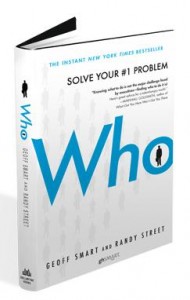
Who: The A Method for Hiring

Who: The A Method for Hiring Hardcover

by Geoff Smart  (Author) , Randy Street  (Author)

Who-by-Geoff-Smart-and-Randy-Street-190x300

In this instant New York Times Bestseller, Geoff Smart and Randy Street provide a simple, practical, and effective solution to what The Economist calls “the single biggest problem in business today”: unsuccessful hiring. The average hiring mistake costs a company $1.5 million or more a year and countless wasted hours. This statistic becomes even more startling when you consider that the typical hiring success rate of managers is only 50 percent.
The silver lining is that “who” problems are easily preventable. Based on more than 1,300 hours of interviews with more than 20 billionaires and 300 CEOs, Who presents Smart and Street’s A Method for Hiring. Refined through the largest research study of its kind ever undertaken, the A Method stresses fundamental elements that anyone can implement–and it has a 90 percent success rate.
Whether you’re a member of a board of directors looking for a new CEO, the owner of a small business searching for the right people to make your company grow, or a parent in need of a new babysitter, it’s all about Who. Inside you’ll learn how to
• avoid common “voodoo hiring” methods
• define the outcomes you seek
• generate a flow of A Players to your team–by implementing the #1 tactic used by successful businesspeople
• ask the right interview questions to dramatically improve your ability to quickly distinguish an A Player from a B or C candidate
• attract the person you want to hire, by emphasizing the points the candidate cares about most
In business, you are who you hire. In Who, Geoff Smart and Randy Street offer simple, easy-to-follow steps that will put the right people in place for optimal success. Read more of this post

The Seven Deadly Sins of Storytelling

Wednesday, July 3, 2013

Jennifer Aaker: The Seven Deadly Sins of Storytelling

A Stanford GSB professor of marketing explains why engaging your audience is key to success. 

Daniel H. Pink, author of Drive: The Surprising Truth About What Motivates Us, writes, “Right-brain dominance is the new source of competitive advantage.” Tapping the right side of the brain allows for deeper engagement by uniting an idea with an emotion. The best way to do this? Tell a compelling story.

Before you craft your story, ask yourself: “Who is my audience and what is my goal in engaging them?” Are you persuading someone to invest in your company? Are you trying to sell an idea to your co-workers? Do you want to inspire people to help a cause or save someone’s life? Start with a deep understanding of your audience, and ensure your story has a clear and powerful meaning — to them. Then you can set to work honing it for maximum impact. Read more of this post

Master’s Degree Is New Frontier of Study Online; The master’s degree offered by the Georgia Institute of Technology through massive open online courses has the potential to disrupt higher education

August 17, 2013

Master’s Degree Is New Frontier of Study Online

By TAMAR LEWIN

Next January, the Georgia Institute of Technology plans to offer a master’s degree in computer science through massive open online courses for a fraction of the on-campus cost, a first for an elite institution. If it even approaches its goal of drawing thousands of students, it could signal a change to the landscape of higher education.

From their start two years ago, when a free artificial intelligence course from Stanford enrolled 170,000 students, free massive open online courses, or MOOCs, have drawn millions and yielded results like the perfect scores of Battushig, a 15-year-old Mongolian boy, in a tough electronics course offered by the Massachusetts Institute of Technology. Read more of this post

Suddenly everyone wants New Yorker style in-depth article content. Only one catch: Who is going to write it? “We need to do what so few publications have done for recent years: Teach.”

Suddenly everyone wants New Yorker style content. Only one catch: Who is going to write it?

BY SARAH LACY 
ON OCTOBER 12, 2012

One of our most popular stories all week has been David Holmes’s report about how Tumblr wants topay for journalism. And not just cat pictures, re-written press releases, or 300 word snark-fests by junior reporters paid $12 a post. This isn’t another content farm. They want real, actual New Yorker-style long form journalism.

This is great news….mostly.

For a long time, I’ve said that I thought the reason journalism was reeling was its own fault. Daily papers had a de facto monopoly — on news, classifieds, movie listing, stock quotes, sports scores, and all types of content. And yes, the Internet destroyed it. But if daily newspapers in aggregate, had been good stewards of that role in the community, people would still have read them. Most daily papers, instead, were like the one from my hometown: more daily than a newspaper. Like paying with the cable company, no one particularly loved reading it, but there wasn’t another option for getting all those things I describe above delivered to you daily. Read more of this post

Slow media: Google announced that it will start integrating links to in-depth articles into its search results; This Is What Happens When Publishers Invest In Long Stories

A small but significant victory for slow media

BY HAMISH MCKENZIE 
ON AUGUST 6, 2013

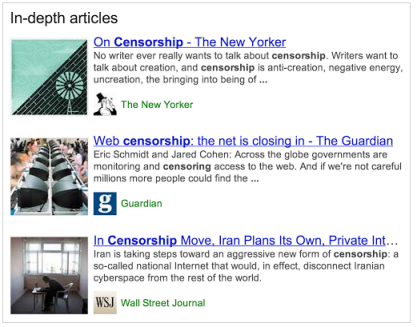
Google announced today that it will start integrating links to in-depth articles into its search results. So, if you search for “censorship,” says Google’s Pandu Nayak, “you’ll find a thought-provoking article by Salman Rushdie in The New Yorker, a piece by our very own Eric Schmidt and Jared Cohen in the Guardian, and another great article about Iran.” That means longform journalism will be treated almost the same as news, which is already featured in many search results courtesy of Google News. This is good news for people who care about “slow media” – the type of journalistic content that is not tied to a specific moment, that resists the eroding forces of faddism, and that favors quality over quantity. Not only does it unlock the power of the archive, but it sends a message that this sort of content, usually more nourishing than the “first draft of history” or slap-dash blog posts (such as this one!), deserves a pedestal that is different from, but equal to, that given to more time-sensitive information. Now that we live in an age of Twitter, we are vulnearble to automatically placing a higher value on content that gets to us the fastest. Because of its ability to instantly satisfy this thirst for “newness,” Twitter emphasizes the now while eschewing the timeless. Until now, Google’s default settings have pretty much done the same. Type “Obama” into a Google search box right now and you’ll be delivered links to his Wikipedia entry, White House bio, and then three news articles relevant to today. Nowhere on that first page is there a link to, say, Dave Remnick’s biography of the President, or Michael Lewis’s inside look at the Presidency, published by Vanity Fair.

google-indepth

An example of Google’s results for “in-depth articles.” Read more of this post

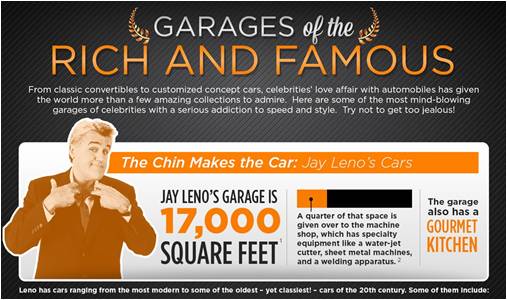
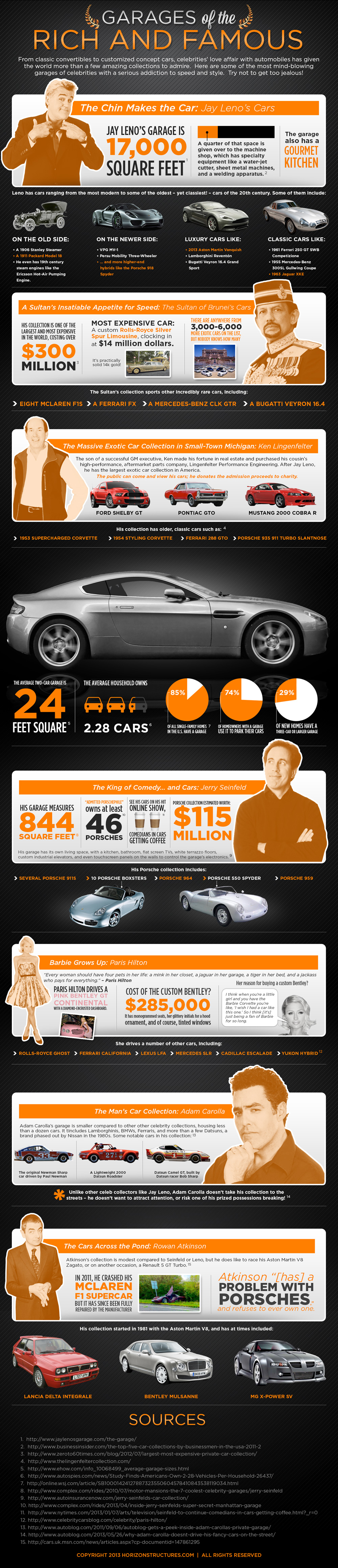
Garages of the Rich and Famous

Garages Read more of this post

Why Innovation Is Still Capitalism’s Star

August 17, 2013

Why Innovation Is Still Capitalism’s Star

By ROBERT J. SHILLER

18-VIEW-popup

CAPITALISM is culture. To sustain it, laws and institutions are important, but the more fundamental role is played by the basic human spirit of independence and initiative.

The decisive role of the “spirit of capitalism” is an old concept, going back at least to Max Weber, but it needs refreshing today with new evidence and new thinking. Edmund S. Phelps, a professor of economics at Columbia University and a Nobel laureate, has written an interesting new book on the subject. It’s called “Mass Flourishing: How Grassroots Innovation Created Jobs, Challenge and Change” (Princeton University Press), and it contains a complex new analysis of the importance of an entrepreneurial culture.

Professor Phelps discerns a troubling trend in many countries, however, even the United States. He is worried about corporatism, a political philosophy in which economic activity is controlled by large interest groups or the government. Once corporatism takes hold in a society, he says, people don’t adequately appreciate the contributions and the travails of individuals who create and innovate. An economy with a corporatist culture can copy and even outgrow others for a while, he says, but, in the end, it will always be left behind. Only an entrepreneurial culture can lead. Read more of this post

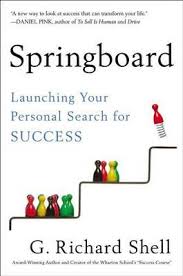
Springboard: Launching Your Personal Search for Success

Springboard: Launching Your Personal Search for Success [Hardcover]

G. Richard Shell (Author)

Springboard

Release date: August 15, 2013

Everyone knows that you are supposed to “follow your dream.”  But where is the road map to help you discover what that dream is?
You have just found it. In Springboard, award-winning author and teacher G. Richard Shell helps you find your future. His advice: Take an honest look inside and then answer two questions:
What, for me, is success? 
How will I achieve it? 
You will begin by assessing your current beliefs about success, including the hidden influences of family, media, and culture. These are where the pressures to live “someone else’s life” come from. Once you gain perspective on these outside forces, you will be ready to look inside at your unique combination of passions and capabilities. The goal: to focus more on what gives meaning and excitement to your life and less on what you are “supposed” to want.
Drawing on his decades of research, Shell offers personalized assessments to help you probe your past, imagine your future, and measure your strengths. He then combines these with the latest scientific insights on everything from self-confidence and happiness to relationships and careers.
Throughout, he shares inspiring examples of people who found what they were meant to do by embracing their own true measure of success.

Eric Adler: one of Shell’s former students who walked away from a conventional business career to help launch a revolutionary new concept in public education that has placed hundreds of inner-city high school students in top colleges.

Kurt Timken: a Harvard-educated son of a Fortune 500 CEO who found his true calling as a hard-charging police officer fighting drug lords in southern California.

Cynthia Stafford: an office worker who became one of her community’s leading promoters of theater and the arts.

Get ready for the journey of a lifetime—one that will help you reevaluate your future and envision success on your own terms. Students and executives say that Richard Shell’s courses have changed their lives. Let this book change yours. Read more of this post

In college, Meredith Perry wondered why wireless devices needed wires for recharging. That question has led to her work on a way to transmit electrical power via sound waves

August 17, 2013

An Inventor Wants One Less Wire to Worry About

By JACK HITT

18-IDEA2-popup

Meredith Perry with a covered prototype of uBeam’s wireless charger, which is under wraps until its release date

SOMETIMES, there is an actual eureka moment. For Meredith Perry, it was in late 2010, during her senior year studying astrobiology at the University of Pennsylvania. She was searching for an idea to enter into the college’s innovation competition. “It was my last year to do it,” she told me, “so I literally would just carry around a notebook and write down any annoyances, because that would be an opportunity to solve a problem and have an invention.” An admitted “professional Googler,” she’d been researching all day on her computer when she decided to pack it in for the night. “I was just standing in my room,” she said, “wrapping up my laptop charger and trying to fit it into my bag and suddenly it occurred to me: Wow, this is so archaic. Why are we using these 20-foot wires to plug in our quote-unquote wireless devices?” “See past old paradigms” is one of those cheesy riffs one might hear from an innovation expert working the business speakers’ circuit. Yet here it was, a question that inched just past what was simply accepted: Why, in a wireless age, do we still have electrical wires? Read more of this post

Good Deeds Gone Bad: Why does virtue sometimes beget more virtue but other times allow for vice?

August 16, 2013

Good Deeds Gone Bad

By MATTHEW HUTSON

ON your way to work today you may have paused to let another car merge into your lane. Or you stopped to give a dollar to a subway artist. A minute later, another chance to do the same may have appeared. Did your first act make the second more tempting? Or did you decide you had done your good deed for the day? Strangely, researchers have demonstrated both reactions — moral consistency and moral compensation — repeatedly in laboratories, leading them to ask why virtue sometimes begets more virtue and sometimes allows for vice. In doing so, they have shed an interesting light on how the conscience works. We often look to past behavior for clues about who we are and what we want, and then behave accordingly. Of course, we seek consistency not only with desirable behaviors, but also with less noble acts: in one study, subjects assigned to wear sunglasses they knew were counterfeit were more likely to cheat during the experiment. But other research shows that good behavior often makes people feel license to be bad. In one study, after shopping for environmentally friendly products, compared with conventional ones, subjects stole more money. Again, this works both ways: another study found that contemplating a taboo act increased one’s willingness to volunteer with an organ donation campaign. Read more of this post

Disney’s fairydust continues to work magic at the box office; media giant constantly reanimates itself to survive

Disney’s fairydust continues to work magic at the box office

Katherine Rushton visits the media giant that constantly reanimates itself to survive .

disney_2646207b

Disney is investing in a theme park and resort in Shanghai, worth $4.4bn Photo: Disney

By Katherine Rushton

4:02PM BST 17 Aug 2013

“I always liked Tinkerbell,” says Bob Iger, Disney’s chairman and chief executive. “She had a real attitude. I kind of like that. And being able to spread fairydust around? That’s kind of what I do for a living.” He’s not wildly off. Few companies in the world can claim to have pervaded Western culture over the past century to quite the same degree as Disney. Coca-Cola, perhaps, or Ford or McDonald’s – but however recognisable those juggernauts have become, they have not played the same role in shaping popular culture. It would take an unusual existence for a child to grow up without clapping eyes on Mickey Mouse, for example, or watching one of Disney’s other animations. Snow White did for one generation of children what The Jungle BookAriel the Little Mermaid and Aladdin have done for successive others. In many cases, Disney’s renditions of these tales have eclipsed the originals in people’s minds. Their popularity has helped Disney to become a commercial machine, with a market capitalisation of $112.3bn (£72bn), annual revenues of $42.3bn and $5.7bn of profits. But it is also a machine that can go awry if it loses the creative spark at its heart. Read more of this post

Struggling Immigrant Artist Tied to $80 Million New York Fraud

August 16, 2013

Struggling Immigrant Artist Tied to $80 Million New York Fraud

By SARAH MASLIN NIRPATRICIA COHEN and WILLIAM K. RASHBAUM

PAINTER-popup

Pei-Shen Qian’s neighbors on 95th Street in Woodhaven, Queens, knew he scratched out a living as an artist: he often dried his paintings in the sun, propping them up on the weathered white siding of his modest house. They were less clear on why he kept his windows covered, or why every so often a man in an expensive car would come to the house carrying paintings to, not from, a painter. “He would bring a painting in and show it to him, for him to work on or fix up something,” Edwin Gardiner, 68, who lives across the street, said before pausing and adding, “I don’t know what he did with it.” Parts of the mystery became clearer on Friday as neighbors learned that Mr. Qian, a quiet 73-year-old immigrant from China in a paint-flecked smock, is suspected of having fooled the art world by creating dozens of works that were modeled after America’s Modernist masters and were later sold as their handiwork for more than $80 million. Read more of this post

In praise of “laziness/busyness”: Businesspeople would be better off if they did less and thought more

In praise of laziness: Businesspeople would be better off if they did less and thought more

Aug 17th 2013 |From the print edition

20130817_WBD000_0

THERE is a never-ending supply of business gurus telling us how we can, and must, do more. Sheryl Sandberg urges women to “Lean In” if they want to get ahead. John Bernard offers breathless advice on conducting “Business at the Speed of Now”. Michael Port tells salesmen how to “Book Yourself Solid”. And in case you thought you might be able to grab a few moments to yourself, Keith Ferrazzi warns that you must “Never Eat Alone”. Yet the biggest problem in the business world is not too little but too much—too many distractions and interruptions, too many things done for the sake of form, and altogether too much busy-ness. The Dutch seem to believe that an excess of meetings is the biggest devourer of time: they talk of vergaderziekte, “meeting sickness”. However, a study last year by the McKinsey Global Institute suggests that it is e-mails: it found that highly skilled office workers spend more than a quarter of each working day writing and responding to them.

Which of these banes of modern business life is worse remains open to debate. But what is clear is that office workers are on a treadmill of pointless activity. Managers allow meetings to drag on for hours. Workers generate e-mails because it requires little effort and no thought. An entire management industry exists to spin the treadmill ever faster. All this “leaning in” is producing an epidemic of overwork, particularly in the United States. Americans now toil for eight-and-a-half hours a week more than they did in 1979. A survey last year by the Centres for Disease Control and Prevention estimated that almost a third of working adults get six hours or less of sleep a night. Another survey last year by Good Technology, a provider of secure mobile systems for businesses, found that more than 80% of respondents continue to work after leaving the office, 69% cannot go to bed without checking their inbox and 38% routinely check their work e-mails at the dinner table.

This activity is making it harder to focus on real work as opposed to make-work. Teresa Amabile of Harvard Business School, who has been conducting a huge study of work and creativity, reports that workers are generally more creative on low-pressure days than on high-pressure days when they are confronted with a flurry of unpredictable demands. In 2012 Gloria Mark of the University of California, Irvine, and two colleagues deprived 13 people in the IT business of e-mail for five days and studied them intensively. They found that people without it concentrated on tasks for longer and experienced less stress.

It is high time that we tried a different strategy—not “leaning in” but “leaning back”. There is a distinguished history of leadership thinking in the lean-back tradition. Lord Melbourne, Queen Victoria’s favourite prime minister, extolled the virtues of “masterful inactivity”. Herbert Asquith embraced a policy of “wait and see” when he had the job. Ronald Reagan also believed in not overdoing things: “It’s true hard work never killed anybody,” he said, “but I figure, why take the chance?”. This tradition has been buried in a morass of meetings and messages. We need to revive it before we schedule ourselves to death. Read more of this post

Weak entrepreneurship education could provoke backlash; much of entrepreneurship education is subpar, relying on what he describes as inspirational anecdotes rather than demanding courses that teach discrete behaviors and processes

Weak entrepreneurship education could provoke backlash

1:31pm EDT

By Sarah McBride

SAN FRANCISCO (Reuters) – When Bill Aulet tries to hire faculty to bolster entrepreneurship courses at MIT, where he is a senior lecturer at the Sloan School of Management, he often runs up against a familiar challenge. “We bring in people and interview them all the time,” he said at a breakfast in San Francisco last week to mark the publication of his new book, “Disciplined Entrepreneurship.” “They’re not MIT rigor. And we get to see the best of the best.” The paucity of teaching talent underscores what he sees as the biggest drawback in entrepreneurship education: much of it is subpar, relying on what he describes as inspirational anecdotes rather than demanding courses that teach discrete behaviors and processes. The situation could cause a backlash against entrepreneurship, he said. Such a backlash, Aulet said, could lead to undesirable outcomes including lack of policy geared toward entrepreneurship – such as tax breaks, or visas for foreign entrepreneurs – or fewer people starting companies. “Entrepreneurs won’t receive the support they need,” he said in an interview with Reuters. Read more of this post

Epic launches, Politico goes deeper: Why longform journalism is the new necessity

Epic launches, Politico goes deeper: Why longform is the new necessity

BY HAMISH MCKENZIE 
ON AUGUST 12, 2013

In the last 24 hours, there have been two major updates to the list of media companies investing in longform journalism. Last night, the New York Times’ David Carr broke the news that writers Joshuah Bearman and Joshua Davis have launched a new site for longform reporting that might appeal to movie studios looking to turn articles into motion pictures. The site, called Epic, is backed by Medium, although the Times was vague on the exact nature of the relationship. (We’ve requested an interview with Epic’s founders to find out more, but that won’t be happening until next week). Read more of this post

Lessons From Monks About Designing The Technologies Of The Future

Lessons From Monks About Designing The Technologies Of The Future

KLINT FINLEY

posted yesterday

“The purpose of technology is not to confuse the brain but to serve the body,” William S. Burroughs once said in a Nike commercial, of all places. But things haven’t worked out that way, at least not for most of us. Our technologies are designed to maximize shareholder profit, and if that means distracting, confusing or aggregating the end-user, then so be it. But another path is possible, argues Alex Soojung-Kim Pang in his new book The Distraction Addiction: Getting the Information You Need and the Communication You Want, Without Enraging Your Family, Annoying Your Colleagues, and Destroying Your Soul. Read more of this post

Only a few countries are teaching children how to think

Only a few countries are teaching children how to think

Aug 17th 2013 |From the print edition

The Smartest Kids in the World: And How They Got That Way. By Amanda Ripley. Simon and Schuster; 320 pages; $28. Buy from Amazon.comAmazon.co.uk

BAMA Companies has been making pies and biscuits in Oklahoma since the 1920s. But the company is struggling to find Okies with the skills to fill even its most basic factory jobs. Such posts require workers to think critically, yet graduates of local schools are often unable to read or do simple maths. This is why the company recently decided to open a new factory in Poland—its first in Europe. “We hear that educated people are plentiful,” explains Paula Marshall, Bama’s boss. Read more of this post

When cities start to decline, economic diversity is the thing that can save them

When cities start to decline, economic diversity is the thing that can save them

Aug 17th 2013 |From the print edition

DETROIT’S newest industry is “ruin porn”—photos that document the city’s rotting physical infrastructure. The Motor City is an extreme example of a decline that has beset industrial cities across America’s Midwest and northern Europe. Their rise and fall (and, in some cases, renaissance) illuminate the deeper forces that hold cities together and pull them apart.

It is not obvious, to economists anyway, that cities should exist at all. Crowds of people mean congestion and costly land and labour. But there are also well-known advantages to bunching up. When transport costs are sufficiently high a firm can spend more money shipping goods to clusters of consumers than it saves on cheap land and labour. Workers with specialised skills flock to such clusters to be near to the sorts of firms that hire them. Such workers make a city still more attractive to growing companies. The deep pool of jobs and workers improves matches between employer and employee, boosting productivity and pay. Read more of this post

Out-of-Pocket Healthcare Costs Soar in Singapore as 3M Healthcare System Breaks Down and Chronic Patients Cannot Utilize Their Own Hard-Earned Money Tied Up In Healthcare System Used to Fund Investments

Whither our 3M healthcare system?

There are great expectations arising from the year-long Our Singapore Conversation. Many have expressed their concerns and wishes for the future development of healthcare. And recently, we have been deluged with many articles and commentaries on the advantages and disadvantages of the Singapore system, offering various diagnoses, prognoses and even policy lessons for other countries.

BY PHUA KAI HONG –

6 HOURS 53 MIN AGO

There are great expectations arising from the year-long Our Singapore Conversation. Many have expressed their concerns and wishes for the future development of healthcare. And recently, we have been deluged with many articles and commentaries on the advantages and disadvantages of the Singapore system, offering various diagnoses, prognoses and even policy lessons for other countries.

Healthcare consultant Dr Jeremy Lim, who has worked in the public and private sectors, will be launching his book, Myth or Magic: The Singapore Healthcare System, next month.

As a frequent commentator on the local health scene — having written several pieces for this paper, for instance — he recently noted that “it is not the invisible hand of the market that drives costs down in Singapore’s healthcare system. It is the very visible hand of a strong Government that does so, as regulator and in deciding what to subsidise and what not to subsidise”. Read more of this post

Performance alone won’t win trust: study; Investors worldwide believe there is much that can be done to restore trust in investment profession

PUBLISHED AUGUST 17, 2013

Performance alone won’t win trust: study

Investors worldwide believe there is much that can be done to restore trust in investment profession

MALMINDERJIT SINGH MSINGH@SPH.COM.SG

IF you are an investment manager, you may do well in building trust with your client as he or she is likely to value ethical behaviour and transparency more than the performance of the investments. A CFA Institute/Edelman Investor Trust study shows that investors worldwide have little trust in the investment profession and believe there is much that can be done to restore trust. According to the study, just 53 per cent of investors in the US, the UK, Hong Kong, Canada and Australia trust investment firms to do what is right. Retail investors appear to be less trusting of the industry, as only 51 per cent of them indicated so, compared with 61 per cent of their institutional counterparts.

CFA Institute & Edelman Investor Trust Study: Investor trust fragile, aligned interests valued highly

Executive Summary

52% Of investors trust the financial services industry

73% Agree they have fair opportunity to profit by investing in capital markets

38% Cite “trusted to act in my best interest” as most important attribute in hiring an investment manager

The CFA Institute & Edelman Investor Trust Study examines trust by investors in investment managers, and explores what dimensions influence that level of trust. This study builds on the Edelman Trust Barometer which explores the levels of trust informed members of the public have in a variety of business, NGO, and government institutions globally.

The Investor Trust Study surveyed over 2,100 retail and institutional investors in the United States, United Kingdom, Hong Kong, Australia, and Canada, and finds that while a slim majority of respondents trust investment managers, the level of trust is fragile. The study finds that beyond the usual financial issues of performance and fees, investors place value on alignment of interests in their consideration of which managers to hire.

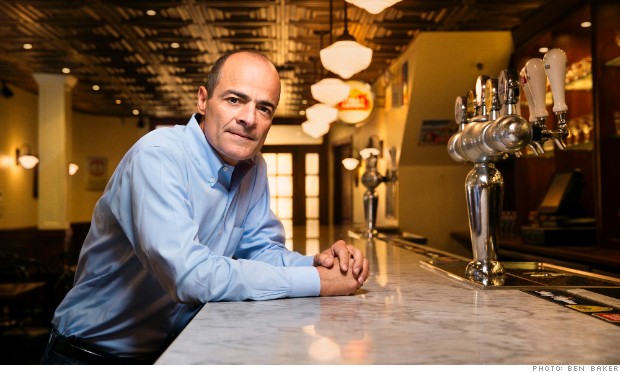
Attention to detail has become a hallmark of Brito’s leadership of Anheuser-Busch InBev (BUD), a sprawling beer behemoth forged from six mega-mergers in 25 years

Carlos Brito: (Brew)master of the universe

By Daniel Roberts, writer-reporter  @FortuneMagazine August 16, 2013: 9:08 AM ET

130814075507-bri02-carlos-brito-620xa

Carlos Brito, in his favored attire of blue jeans and button-down shirt, takes a break at Brabant Belgian Brasserie in New York City.

Carlos Brito is walking the aisles of a vast São Paulo supermarket, continually stopping to pick up pieces of trash — a paper cup, a plastic fork — or to pull certain cartons of beer to the front of the shelves for better visibility. These are the kinds of menial tasks most executives wouldn’t touch. But Brito, CEO of the world’s biggest beer company, isn’t like most executives.

Attention to detail has become a hallmark of Brito’s leadership of Anheuser-Busch InBev(BUD), a sprawling beer behemoth forged from six mega-mergers in 25 years. Despite the size of Brito’s enterprise, he handpicks promising young employees to promote early in their careers and greets each new class of global management trainees. When he visits diners and lunch counters all over the world that serve AB InBev beers, he walks behind the bar to personally inspect the boxes of empties. Read more of this post

‘I lost £150,000 due to Nineties pension sales frenzy’; A former a soldier lost his generous army pension because he was persuaded to switch to a private scheme – but he won’t win compensation

‘I lost £150,000 due to Nineties pension sales frenzy’

A former a soldier lost his generous army pension because he was persuaded to switch to a private scheme – but he won’t win compensation. Dan Hyde reports on the modern-day fallout from the 1988-94 pension mis-selling scandal.

PF-army-pension_2646258b

Sgt Phil Patrick, pictured with daughter Ayane, 5, has missed out on thousands of pounds Photo: Stuart Nicol

By Dan Hyde, Deputy Personal Finance Editor

6:11AM BST 17 Aug 2013

The harrowing legacy of the Eighties pensions revolution is resurfacing as a generation of savers nears retirement. An estimated 5 million people were sold pensions by commission-hungry salesmen between 1988 and 1994 in one of the biggest financial scandals ever to affect Britain. Typically, these workers were pulled out of generous company schemes – where their employer guaranteed a pension linked to their final salary – and enrolled instead in a substandard plan linked to stock market returns. Read more of this post

How Cath Kidston lured in high-powered women with a passion for polka dots as sales break £100m

How Cath Kidston lured in high-powered women with a passion for polka dots

Many of us spend our days staring at computer screens, but sipping coffee at our desks out of a flower-sprigged mug is bizarrely grounding, says entrepreneur Josephine Fairley, who explains the global phenomenon of Cath Kidston as sales break £100m.

kidston_2573326b

Cath Kidston has admitted that she is far from being a domestic goddess in her own home.  Photo: REX FEATURES

By Josephine Fairley

12:59PM BST 14 Aug 2013

So: just in time for her brand’s 20th birthday, Cath Kidston’s sales have broken through the £100m mark – with earnings (before interest, taxes etc) topping £21 million. Wow. This is a feat for any brand. But how has a relatively shy, seriously self-effacing (not to mention deceptively scatty-seeming, when you meet her in the flesh) woman grown her brand from a single store in then-down-at-heel Notting Hill into a global brand? Because it isn’t just Middle England which loves Cath Kidston MBE: sales are booming in Asia, too. As well as a flagship store in London’s Piccadilly, a major store is scheduled to open in Shanghai before the end of the year. Read more of this post