The Science of Winning Poker; Bluffing still matters, but the best players now depend on math theory

July 26, 2013, 6:56 p.m. ET

The Science of Winning Poker

Bluffing still matters, but the best players now depend on math theory

CHRISTOPHER CHABRIS

RV-AL176_POKER2_G_20130726230102

More than 6,300 players, each paying an entry fee of $10,000, gathered in Las Vegas early this month for the championship event of the 44th annual World Series of Poker. The tournament ran for 10 days, and just nine players now remain. They will reunite in November for a two-day live telecast to determine who wins the first prize: $8.3 million. Poker didn’t get this big overnight. In 2003, a then-record 839 players entered the championship for a shot at $2.5 million. The winner was an amateur with the improbable name of Chris Moneymaker. After ESPN devoted seven prime-time hours to his triumph, online poker took off and tournament participation ballooned, as did prize pools. The U.S. government’s ban on the major online poker sites in 2011 reined in enthusiasm, but the game has continued to grow in Europe, Asia and Latin America. Read more of this post

Boy Selling Candles Becomes Polish Billionaire Unhappy With Debt
Boy Selling Candles Becomes Polish Billionaire Unhappy With Debt

iKH9XcOc3agU

In Radom, a blue-collar Polish city better known for producing guns than entrepreneurs, Feliksa Pietruszka remembers the young boy from the neighboring apartment who sold candles at the cemetery opposite. “These were good kids,” said Pietruszka, 85, who still lives in the same building with outside toilets and coal-fired stoves for heating, as she sat in a kitchen barely big enough for two chairs and a table. “This was just a normal family.”

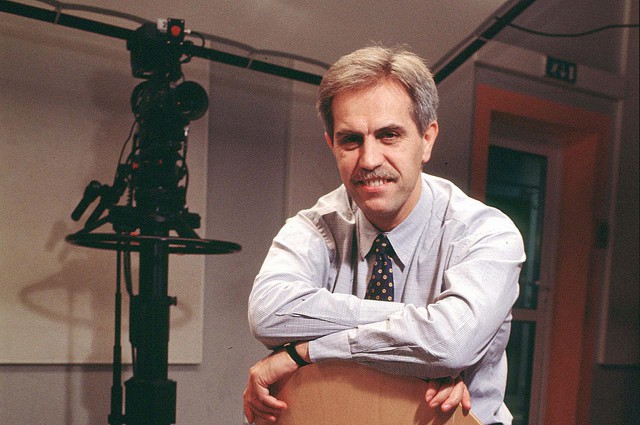
More than four decades and three changes of name later, that boy, Zygmunt Solorz-Zak, has turned his first zloty into a fortune exceeding $3 billion and a business spanning television, mobile phones, a bank and a power utility. Along the way, it also made him Poland’s biggest borrower as he expanded to compete with rivals funded by foreign investors and create the fastest mobile Internet service in the country. Read more of this post
Good Strategy, Bad Strategy by Richard Rumelt

9 Easy-To-Steal Habits Of The Super Successful

9 EASY-TO-STEAL HABITS OF THE SUPER SUCCESSFUL

WE WISH THERE WAS A HANDBOOK FOR SUCCESS, BUT THERE ISN’T. HERE’S THE NEXT BEST THING: A LIST OF WAYS YOU CAN REALIZE YOUR DREAMS–AND BE A MORE PRODUCTIVE PERSON IN THE PROCESS.

BY: MILES KOHRMAN

3014736-inline-boss-vs-leader-1

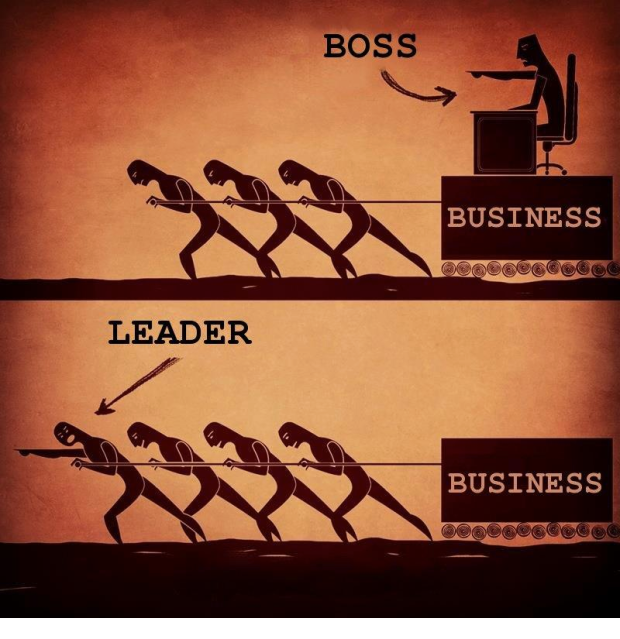
Wouldn’t it be great if success was simple? But it isn’t. There’s no one-size-fits-all answer for success in work and life, but we will do our best to steer you in the right direction. Here’s a list of helpful habits of some highly successful–and wildly productive–people to get your started. On your mark, get set, and… Read more of this post

10 Recipes for Better Thinking; How action-focused business leaders can sharpen their thinking skills

10 Recipes for Better Thinking

Jul 24, 2013

How action-focused business leaders can sharpen their thinking skills

The fact is, when you teach business, you have to know business. So it’s no surprise that some of the best professors are those with significant experience from the world of business. Yet, I’ve found some significant distinctions between academia and practitioners. For example, while a professor relies heavily on concepts and theories and prefers to maintain neutrality, a businessperson favors taking action, relying on “what worked before,” and is unafraid to take a stance. Additionally, a professor focuses on a single discipline and appreciates diversity of thought, but a businessperson is required to respond to a variety of stimuli and is pressured to make quick decisions. In other words, a professor is required to think more than he or she acts, while a businessperson is expected to act far more than he or she thinks. Though the expectations and methods of reasoning may differ between these two worlds, their styles of thinking are not contrary to one another. In fact, combining elements of both styles of thinking actually prove quite beneficial for a businessperson. As such, I’ve discovered through my experience in both academics and business, ten strategies that can sharpen the thinking of business leaders, equipping them to make smarter, more informed decisions in their fast-paced environment.  Read more of this post

Change is the giant spotlight that can illuminate a corporation’s blemishes and betray its secrets, but the friction of which is also kinetic, its heat ready to ignite a magnificent oeuvre and to liberate talent

Departures, and what they mean

BY FRITZ NELSON 
ON JULY 25, 2013

I don’t believe much in soul mates, at least where corporations and executive leadership are concerned. I believe in calculated choices and fortuitous timing, in harmonious teams, in achievable but auspicious goals, articulated with inspirational verve and backed by unmitigated, obstinate will. New leaders emerge. Old ones leave to pursue the next dream, or get kicked out, sometimes for no good reason at all. Read more of this post

Would a family business by any other name be as profitable?

WOULD A FAMILY BUSINESS BY ANY OTHER NAME BE AS PROFITABLE?

ARTICLE | 25 JULY, 2013 03:42 PM | BY RHYMER RIGBY

Earlier this year the French luxury group Pinault-Printemps-Redoute changed its name to Kering. In doing so, it took big step – it shed the family name. The decision to do so was taken by the chairman and CEO, Francois-Henri Pinault, who is the son of the business’s founder (the Printemps and Redoute are from various takeovers). Pinault cited perfectly sound business reasons for the rebranding – chief among them that only 5% of the group’s sales now come from France. Nonetheless, this is a Rubicon many family businesses would struggle to cross. Read more of this post

TSMC: A fab success; The smartphone boom has been a boon for a pioneer in semiconductors. TSMC has thrived on a mixture of serendipity and anticipation

TSMC: A fab success; The smartphone boom has been a boon for a pioneer in semiconductors

Jul 27th 2013 | TAIPEI |From the print edition

20130727_WBP001_0

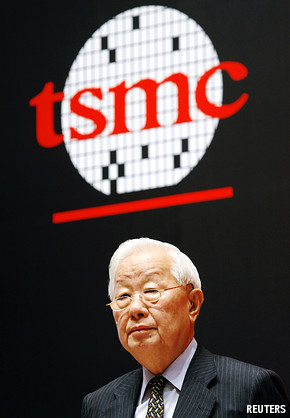
WHEN he founded Taiwan Semiconductor Manufacturing Company (TSMC) in 1987, Morris Chang recalls, “Nobody thought we were going anywhere.” Back then the rule was that semiconductor companies both designed and made chips. TSMC was the first pure “foundry”, making chips for designers with no factories, or “fabs”, of their own. The doubts of others suited TSMC nicely. Mr Chang, at 82 still chairman and in his second stint as chief executive, says that meant it suffered no competition in its first eight years. Read more of this post

An open letter to Jeff Bezos: A contract worker’s take on Amazon.com

Brutal Letter To Jeff Bezos Says Way To Get Ahead At Amazon Is ‘Be A Pretty Girl Or A Dude Who Used Liberal Amounts Of Axe’

JIM EDWARDS JUL. 25, 2013, 5:24 PM 9,887 24

A former Amazon contract worker has written an open letter to Amazon CEO Jeff Bezos that brutally dissects his temp hiring policies: “the revolving door of new hires encourages low quality work, inconsistent productivity and wastes useful resources on training,” Steven Barker wrote, after a stint as a contract worker developing Amazon’s X-Ray for TV and Movies.  Barker alleges that Amazon has a policy of hiring temporary contract workers who are let go when they’ve served 11 months, preventing them from becoming permanent employees. The result is that important projects at Amazon such as X-Ray (which allows Kindle users to tap the screen for more info on characters in movies) end up being run by poorly motivated temps, and those temps end up training the new temps, in an endless cycle of increasingly inexperienced, demotivated employees who have no incentive to do quality work because Amazon is “a dead end.” (We’ve reached out to Amazon for a rebuttal; we’ll update this if we hear back.)

An open letter to Jeff Bezos: A contract worker’s take on Amazon.com

July 25, 2013 at 11:59 am by Steve Barker 30 Comments

Dear Jeff Bezos,

In your position, I imagine that you rarely have an opportunity to receive feedback from one of your temporary-contract employees. I thought you should have some input. I hope you find this useful. Read more of this post

Lo Hsing Han, heroin king and business tycoon, died on July 6th, aged about 80

Lo Hsing Han, heroin king and business tycoon, died on July 6th, aged about 80

Jul 27th 2013 |From the print edition

20130727_OBP001_0

MEN in his line of work rarely reach old age. They die in a hail of bullets from police sharpshooters or a rival gang, and are buried fast in shallow jungle graves. Not Lo Hsing Han. At his funeral a cavalcade of cars, some carrying his portrait garlanded with flowers, processed through the streets of Yangon, Myanmar’s capital, to his high-walled villa, right by the 16th tee of the city golf club. Crowds of villagers attended from his native region, in the Golden Triangle of Myanmar’s north-east. They rubbed shoulders with former generals, two cabinet ministers and the cream of Yangon society. Read more of this post

Shanghai cake factory is using drones to deliver cakes in Shanghai

Local company takes delivery of cakes to new heights – literally

Created: 2013-7-24 2:14:51, Updated: 2013-7-24 14:10:37

Author:Yang Jian

20130724_536045_01

Three women look up in amazement as a drone carries a cake along the Huangpu River.

HAVE the cake and eat it too. And get it delivered in style as well. In a crazy story that would make even spy master James Bond sit up and take notice, a local cake factory is using drones to deliver cakes in Shanghai! And China’s civil aviation authorities are not too happy about it. Read more of this post

World’s cheapest computer costing just $25 has astonished its British creators by selling almost 1.5 million units in 18 months

World’s cheapest computer gets millions tinkering

By Judith Evans | AFP News – Sun, Jul 21, 2013

photo_1374378770461-1-HD

Japanese engineer Shota Ishiwatari displays the humanoid robot “Rapiro” which works with a “Raspberry Pi” in Tokyo on July 8, 2013. Raspberry Pi, the world’s cheapest computer, costing just $25 (£17, 19.50 euros), has astonished its British creators by selling almost 1.5 million units in 18 months

It’s a single circuit board the size of a credit card with no screen or keyboard, a far cry from the smooth tablets that dominate the technology market. But the world’s cheapest computer, costing just $25 (£17, 19.50 euros), has astonished its British creators by selling almost 1.5 million units in 18 months. The Raspberry Pi is now powering robots in Japan and warehouse doors in Malawi, photographing astral bodies from the United States and helping to dodge censorship in China. “We’re closing in on one and and half million (sales) for something that we thought would sell a thousand,” said Eben Upton, executive director of the Raspberry Pi Foundation. “It was just supposed to be a little thing to solve a little problem. “We’ve sold many more to children than we expected to sell, but even more to adults. They’re using it like Lego to connect things up.” The device, which runs the open-source Linux operating system, was designed as an educational tool for children to learn coding. But its potential for almost infinite tinkering and customisation has fired up the imaginations of hobbyists and inventors around the world. Read more of this post

Arctic Ice-Melt Cost Seen Equal to Year of World Economic Output

Arctic Ice-Melt Cost Seen Equal to Year of World Economic Output

The cost to the world from melting Arctic ice is equal to almost a year of global economic output as releasing methane trapped in the frozen continent leads to extreme weather, flooding and droughts, scientists said.

The methane emissions are an “economic time-bomb” that may cost $60 trillion from effects on the climate, according to research published today by the University of Cambridge and the Rotterdam School of Management at Erasmus University. Extreme weather events would mainly affect developing nations. Read more of this post

The secretive families behind some of Australia’s best known brands

The secretive families behind some of Australia’s best known brands

PUBLISHED: 2 HOURS 45 MINUTES AGO | UPDATE: 0 HOUR 0 MINUTES AGO

Despite choosing to run their $2.3 billion plumbing business as a listed company, the Wilson family are never photographed and rarely interviewed.

ANDREW HEATHCOTE

Would you recognise a member of one of the country’s richest families if you walked past them in the street? Probably not. That’s because they are a highly private group who work hard at staying that way. Self-made billionaires like Clive Palmer and Gerry Harvey may speak freely and develop prominent public profiles, but for wealthy families, ownership can be split across dozens of people, each with their own expectations and egos. Tensions mount quickly when one relation is seen to be speaking on behalf of another. Unwritten rules dictate that people from rich families keep their mouths shut. But many of the richest people you have never heard of are responsible for well-known brands. Here are some of them:

CAROMA TOILETS

Toilet makers the Anderson family have almost no public profile. They are major shareholders in GWA, a listed supplier of household fixtures and fittings. Among the brands in the GWA stable is Caroma, distributors of bathroom necessities including baths, basins and toilets.

cddd51f8-f41d-11e2-91f5-a475718987bc_syd-5zw2shw2kic10jekbghf_original--620x348

Anderson family net wealth: $335 million.

REECE PLUMBING

Despite choosing to run their Reece plumbing business as a listed company, leading members of the Wilson family are never photographed and rarely interviewed. Peter Wilson is Reece’s chief executive and son of company chairman, Alan Wilson. Alan’s brothers Bruce and John are also directors. Reece is a $2.3 billion company. The family’s fondness for secrecy has attracted criticism from corporate governance experts but investors in Reece rarely complain – under the Wilsons’ leadership, Reece shares have risen 23 per cent over the past 12 months.

Wilson family net wealth: $1.83 billion. Read more of this post

5 Weird (But Effective) Ways You Can Conquer Chronic Procrastination

JULY 24, 2013 by ERIC BARKER

5 Weird (But Effective) Ways You Can Conquer Chronic Procrastination

How to beat chronic procrastination

I’ve posted a fair amount of research related to procrastination in the past, let’s round it up so we have a useful list to refer to when willpower gets low.

1) “Positive” Procrastination

Yes, that’s right, procrastination can be a good thing. Dr. John Perry, author of The Art of Procrastination, explains a good method for leveraging your laziness: The key to productivity, he argues in “The Art of Procrastination,” is to make more commitments — but to be methodical about it. At the top of your to-do list, put a couple of daunting, if not impossible, tasks that are vaguely important-sounding (but really aren’t) and seem to have deadlines (but really don’t). Then, farther down the list, include some doable tasks that really matter. “Doing these tasks becomes a way of not doing the things higher up on the list,” Dr. Perry writes. A similar tip is described by Piers Steel, author of The Procrastination Equation“My best trick is to play my projects off against each other, procrastinating on one by working on another.” Dr. Steel says it’s based on sound principles of behavioral psychology: “We are willing to pursue any vile task as long as it allows us to avoid something worse.” Read more of this post

Family Business: How to Spot a Problem Patriarch; Sometimes it’s the most successful leaders who sow the seeds for the downfall of a family business

Family Business: How to Spot a Problem Patriarch

by Josh Baron and Rob Lachenauer  |  12:00 PM July 24, 2013

Sometimes it’s the most successful leaders who sow the seeds for the downfall of a family business. Carl was one of the most talented leaders of his generation. When he took over the family business, it was a struggling $10 million automotive parts distributor. Now after thirty years of being at the helm, Carl has developed a $2 billion company that is a leader in logistical services to hospitals in Europe, and also owns four other distribution businesses. At one point, Carl had 48 direct reports and had personally hired each one. At the same time, he cared deeply about his family and made sure that everyone was well taken care of. But there was a darker side to Carl’s success. Read more of this post

From Buffett’s Scott Fetzer to Asia, Are Oddballs Odious or Opportunities? Bamboo Innovator is featured in BeyondProxy.com, where value investing lives

Bamboo Innovator is featured in BeyondProxy.com, where value investing lives:

  • From Buffett’s Scott Fetzer to Asia, Are Oddballs Odious or Opportunities? July 24, 2013 (BeyondProxy)

Oddballs


The Most Counterintuitive Advice From Famous Entrepreneurs

The Most Counterintuitive Advice From Famous Entrepreneurs

BELLE BETH COOPERBUFFER JUL. 23, 2013, 5:11 PM 1,476 1

We all love to take advice from people who’ve previously been through the same situations as us or who are further along a similar path to us. For entrepreneurs this is particularly useful, since it’s such a difficult, unknown path to tread sometimes. Funnily enough, some of the advice I’ve come across through reading interviews and articles from famous entrepreneurs is often counterintuitive to what I would expect them to say. I thought it would be interesting to gather some of this advice into one place, so here are ten of the most counterintuitive pieces of advice I’ve come across from famous entrepreneur. Read more of this post

Innovation Isn’t an Idea Problem

Innovation Isn’t an Idea Problem

by David Burkus  |   8:00 AM July 23, 2013

When most organizations try to increase their innovation efforts, they always seem to start from the same assumption: “we need more ideas.” They’ll start talking about the need to “think outside the box” or “blue sky” thinking in order to find a few ideas that can turn into viable new products or systems. However, in most organizations, innovation isn’t hampered by a lack of ideas, but rather a lack of noticing the good ideas already there.

It’s not an idea problem; it’s a recognition problem. Read more of this post

Grandma on Feeding Tube Without Consent Symbolizes Japan

Grandma on Feeding Tube Without Consent Symbolizes Japan

A quarter of a million bedbound elderly people are kept alive in Japan, often for years, by a feeding tube surgically inserted into their stomach. A few months ago, my 96-year-old grandmother became one of them.

Feeding tubes are so common in Japan that my family wasn’t initially consulted about the procedure, which is effectively irreversible. When my mother walked into Grandma’s room the next morning and saw a tube, she dropped to her knees by the bedside and stayed there for hours, crying. Read more of this post

How Story Platforms Help Global Brands Go Local

How Story Platforms Help Global Brands Go Local

by Kirk Cheyfitz  |  11:00 AM July 23, 2013

While the current turmoil in Cairo may obscure the post-revolutionary optimism that pervaded the city last winter, that mood was powerful at the time. Despite the chaos in the virtual absence of government, the metropolitan region of some 14 million was taken over in January by an Arabic pop music video urging people to “go crazy” by committing acts of kindness to spread happiness. The film, produced by Coca Cola, features street scenes of people being kind and happy in well-known Cairo locations. Locals say it perfectly reflected the hopefulness and optimism of Egypt’s people as they embarked on the difficult path of building a new democracy. Read more of this post

Antiori sisters to lead wine empire Super Tuscans

Sisters to lead wine empire

by Rebecca Lynne Tan, The Straits Times|24 July 2013

20130723.154922_20130723_albieraantinori_st

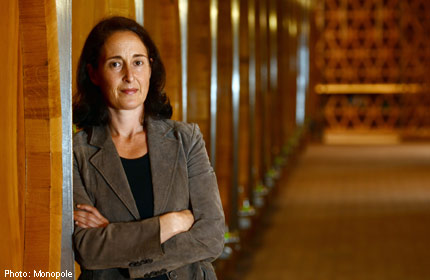
For the first time since the Antinori family began making wines more than 600 years ago, the world-renowned Italian wine company will continue into the future with an all-women team at its helm. The 26th generation is made up of three sisters – Albiera, 47; Allegra, 42; and Alessia, 38, daughters of famed winemaker Marchese Piero Antinori, 74. He is widely known as one of the founders of Super Tuscans, a category of thoroughbred Chianti wines that are commonly made with a blend of local grape varietals such as sangiovese and foreign grape varietals such as cabernet. Eldest daughter Albiera, the company’s vice-president, says: “When Dad saw that the third child was also a girl, he must have been a bit disappointed. But he’s over it, he couldn’t do much about it.” Read more of this post

Should Cities Specialize? When each city focuses on one industry, does that make the nation more productive, or hurt workers who can’t afford to relocate?

UPDATED JULY 23, 2013 9:21 PM

Should Cities Specialize?

DEBATERS

People Don’t Just Follow the Money

SPENCER CREW, AUTHOR, “FIELD TO FACTORY”

The New Yorkers who move South might be on to something: A low-paying job in Atlanta can buy a better life than a higher-paying one in New York.

Local Economies Are Only Part of the Story

ISABEL V. SAWHILL, BROOKINGS INSTITUTION

Educational resources and the stability of families have far more effect on how well young people do later in life.

Resources and Services Define a City

SUKKOO KIM, ECONOMIST, WASHINGTON UNIVERSITY

The loss of diversity caused by the convergence in local institutions and cultures may signal a move toward a more cohesive nation in time.

INTRODUCTION

The economies of American regions havebecome more alike, but economic mobility stillvaries widely among cities.

Is it fruitful for cities to specialize in one major industry – biotech in Boston, manufacturing in Detroit, media in New York? Or does that hurt workers who can’t afford to relocate, locking many out of the middle class? Read more of this post

The Art of Forgiveness: Differentiating Transformational Leaders

The Art of Forgiveness: Differentiating Transformational Leaders

Manfred F.R. Kets de Vries INSEAD – Entrepreneurship and Family Enterprise

April 18, 2013
INSEAD Working Paper No. 2013/52/EFE 

Abstract:      
This article explores the subject of forgiveness and its importance in the context of leadership. Forgiveness is one of the factors that differentiates exceptional from mediocre or ineffective leadership. When leaders forgive, they dissipate built-up anger, bitterness and the animosity that can color individual, team, and organizational functioning. Forgiveness offers people the chance to take risks, to be creative, to learn and to grow in their own leadership. Individuals, organizations, institutions, and societies can progress when people are not preoccupied by past hurts. After taking Nelson Mandela as an example of a leader who practiced forgiveness on a transformational scale, a “forgiveness questionnaire” helps readers to assess their own ability and inclination to forgive. The Lex Talionis or law of retribution, emerges, however, as an essential part of the human condition. To understand forgiveness dynamics, its meaning is deconstructed; the forgiving personality is analyzed, and forgiving and unforgiving leaders are compared using traditional conceptual frameworks and a psychodynamic lens. The journey toward forgiveness and its various stages is explored, and pseudo-forgiveness described, with a warning that forgiving doesn’t imply merely forgetting. The mental and physical costs of a non-forgiving Weltanschauung are discussed, and suggestions are made for how to become more forgiving, a process wherein self-reflection, self-understanding, and self-expression take a central position.

Zig Zag: The Surprising Path to Greater Creativity

The One Thing All Creative Geniuses Have In Common

ERIC BARKERBARKING UP THE WRONG TREE 38 MINUTES AGO 186

ZigZag

Keith Sawyer tells an interesting story about breakthrough ideas in his book, Zig Zag: The Surprising Path to Greater Creativity. Researcher Vera John-Steiner wanted to know What nourishes sustained productivity in the lives of creative individuals?“ She interviewed over 70 living creative geniuses and analyzed the notebooks of 50 dead ones (including Tolstoy, Einstein, etc.) to look at their work habits. She assumed this was going to end up as a review of Eureka! moments in the greatest creative minds. She even planned to title her book “The Leap” because it would be about those giant flashes of inspiration that led to breakthrough ideas. But she was completely wrong. Eureka! moments turned out to be a myth. There was no inspiration moment where a fully formed answer arrived. Strokes of genius happened over time. A great idea comes into the world by drips and drabs, false starts, and rough sketches.

Via Zig Zag: The Surprising Path to Greater Creativity:

Creativity started with the notebooks’ sketches and jottings, and only later resulted in a pure, powerful idea. The one characteristic that all of these creatives shared— whether they were painters, actors, or scientists— was how often they put their early thoughts and inklings out into the world, in sketches, dashed-off phrases and observations, bits of dialogue, and quick prototypes. Instead of arriving in one giant leap, great creations emerged by zigs and zags as their creators engaged over and over again with these externalized images. Read more of this post

The Innovation Mindset in Action: Sir Peter Jackson who has transformed much more than the movie industry in New Zealand—he has also transformed filmmaking globally.

The Innovation Mindset in Action: Sir Peter Jackson

by Vijay Govindarajan and Srikanth Srinivas  |   1:00 PM July 22, 2013

Pater Jackson

Peter Jackson is a game changer who transformed the practice of filmmaking. Like Jerry Buss, who revolutionized basketball, Jackson and other effective innovators share a common set of qualities that we call the innovation mindset: they see and act on opportunities, use “and” thinking andresourcefulness, focus on outcomes, and act to “expand the pie.” Regardless of where they start, innovators persist till they successfully change the game. As an only child, Jackson was often left to entertain himself. His parents bought him an 8-mm movie camera when he was 8 years old. At 16, he left school to work as a full time photo-engraver, saving as much money as he could for film equipment. He began making short films with his friends. These were amateurish horror movies, but they won awards and had a cult following. Read more of this post

Maybe Silicon Valley companies succeed because their founders care more about what they do than where they do it

Maybe Silicon Valley companies succeed because their founders care more about what they do than where they do it

BY SARAH LACY 
ON JULY 22, 2013

bill-gates-desk-picture

Michael has a great story this morning on why big companies tend to come out of Silicon Valley. It’s in response to a story aboutwhy they don’t come out of Canada. Meanwhile there’s still handwringing going on over my post about why Waze shouldn’t be the exit Israelis’ are high-fiving about. (Still.) My guess is on any given day there are posts like these on blogs all over the world. I’m not aware of a city that doesn’t want to be “the next Silicon Valley.” And yet, New York may have come the closest — and it’s still a gulf away in terms of jobs, exits, and economic impact. Read more of this post

What Bill Gates is reading this summer

What Bill Gates is reading this summer

By Ritchie King @RitchieSKing July 20, 2013

If you’re in the market for a light, sunshine-friendly novel—something with an up tempo narrative and relatable characters—then Bill Gates’s summer reading list is not for you. But if you’re a non-fiction buff with a wide range of interests, then it might be the perfect place to look for a new book. The list, which the Microsoft chairman posted on his blog Gates Notes, is his own personal reading agenda for the season—not a collection of books that he’s already read and feels inspired to promote (with the exception of one of them). It includes eight titles in all, and seven are non-fiction. “I don’t generally read a lot of fiction,” Gates writes next to the entry for Robert Cook’s Patriot & Assassin, the sole novel in the list. Taken together, the lineup reveals Gates to be a total intellectual omnivore. Notably, there isn’t a single book about computing or technology. The non-fiction titles range from a psychologist’s exploration of stereotypes to a history of the shipping container and its impact on globalization. He’s already finished reading the first book on the list—Jared Diamond’s The World Until Yesterday—and hasposted his own review of it. Here’s the list in full: Read more of this post

How Criticism Creates Innovative Teams

How Criticism Creates Innovative Teams

by David Burkus  |   9:00 AM July 22, 2013

It’s tough to find examples of successfully challenging the boss, even tougher to find stories of leaders who specifically ask to be challenged. The most common is a tale of Alfred P. Sloan at General Motors. During a meeting in which GM’s top management team was considering a weighty decision, Sloan closed the meeting by asking.” “Gentlemen, I take it we are all in complete agreement on the decision here?” Sloan then waited as each member of the assembled committee nodded in agreement. Sloan continued, “Then, I propose we postpone further discussion of this matter until our next meeting to give ourselves time to develop disagreement and perhaps gain some understanding of what this decision is about.” Read more of this post

Brazilian Billionaire Who Lost A Massive Fortune Wonders Where It All Went Wrong

Billionaire Who Lost A Massive Fortune Wonders Where It All Went Wrong

LINETTE LOPEZ JUL. 22, 2013, 12:51 PM 21,037 11

Things are worse for Brazilian billionaire Eike Batista than they have ever been before. Now he has written an open letter in the journal Valor International to express his intense regret to the public. Over the last year Batista’s gone from being the 7th richest man in the world, to hemorrhaging $2 million a day. His fortune comes from his holding company, EBX. Under its umbrella are six companies that all deal with Brazil’s natural resources and logistics. The Brazilian resource industry has gotten crushed as part of the overall emerging market slowdown. They’ve lost a combined $10 billion over the last year, says Bloomberg. What Batista wants is to be the country’s champion again, and to have investors believe in him. To regain their trust he wrote:

More than anyone, I wonder where I went wrong. What should I have done differently? A first question might be linked to the funding model I chose for the companies. Today, if I could go back in time, I would not have resorted to the stock market. I would have a structured private-equity firm that would allow me to create from scratch and develop over at least 10 years each company. And they would all remain private until I was sure that it was time to go public. In the projects that I conceived, time proved a vital stress factor for the reversal of expectations on companies bearing broadly satisfactory results and valuable assets. Read more of this post