How To Self-Publish A Bestseller: Publishing 3.0

How To Self-Publish A Bestseller: Publishing 3.0

AMES ALTUCHER

Saturday, July 20th, 2013

104 Comments

Editor’s note: James Altucher is an investor, programmer, author, and several-times entrepreneur. His latest book, “Choose Yourself!” (foreword by Dick Costolo, CEO of Twitter) came out on June 3. Follow him on Twitter @jaltucher.

My most recent book, “Choose Yourself!” sold 44,294 copies in its first month out, hit the Wall Street Journal Bestseller list, was No. 1 on Amazon for all non-fiction books for a few days and is still flirting with No. 1 in its various categories. This post is about what I did differently, why I did it differently, and how I think anyone can do this to self-publish a bestseller. I describe all the numbers, who I hired and why, and how I made the various choices I did.

Every entrepreneur should self-publish a book, because self-publishing is the new business card. If you want to stand out in a world of content, you need to underline your expertise. Publishing a book is not just putting your thoughts on a blog post. It’s an event. It shows your best curated thoughts and it shows customers, clients, investors, friends and lovers what the most important things on your mind are right now. Read more of this post

The House That Lego Built

July 22, 2013, 6:15 p.m. ET

The House That Lego Built

Lego balked at licensing warlike ‘Star Wars’ toys. But then anthropological research convinced company executives that kids like to compete.

DAVID A. PRICE

The patents on the core product of the Lego Group—its famous build-it-yourself bricks—expired decades ago, yet the company seems to be thriving: Its gross profit margin of 71% is far higher than that of other major toy companies and, for that matter, Apple. It was not always thus. Only 10 years ago, Lego was posting record losses; retailers were backlogged with unsold Lego toys; and it was unclear whether Lego would survive as an independent company. An internal review discovered that 94% of the sets in its product line were unprofitable. The turnaround story that followed is well told by Wharton professor David Robertson in “Brick by Brick.” Read more of this post

How an Introvert Can Be Happier: Act Like an Extrovert

July 22, 2013, 6:57 p.m. ET

How an Introvert Can Be Happier: Act Like an Extrovert

Extroverts are generally happier, studies show. And research shows introverts feel happier when they act extroverted.

SUMATHI REDDY

PJ-BP481_YHEALT_F_20130722192003

Both introverts and extroverts can be adept at public speaking. But whereas an extrovert might afterward want to interact with others in a large group, introverts might feel the need for self-reflection and time alone, such as by taking a walk. Extroverts, those outgoing, gregarious types who wear their personalities on their sleeve, are generally happier, studies show. Some research also has found that introverts, who are more withdrawn in nature, will feel a greater sense of happiness if they act extroverted. Experts aren’t entirely sure why behaving like an extrovert makes people feel better. One theory is that being talkative and engaging influences how people respond to you, especially if that response is positive. Others speculate that people get more satisfaction when they express their core self and opinions. Another possibility: Happiness might come simply from having successfully completed a goal, such as giving a speech. Read more of this post

From Hello Kitty to Harajuku Girls, Japan’s kawaii culture isn’t just about being “cute”; contrary to popular belief, kawaii products need to be cute, but not too cute – otherwise they won’t sell.

July 23, 2013, 10:24 AM

5 Things You Didn’t Know About Kawaii

Top of Form

By MANAMI OKAZAKI

If you’ve ever been to Japan, whether you know it or not, you will have encountered multiple examples of kawaii, the country’s dominant pop-cultural aesthetic. That bus stop shaped like a watermelon? Kawaii. Adorable police mascots? Kawaii. Harajuku fashionistas with pink tutus and purple bangs, Hello Kitty TV sets, fish cakes that look like pandas, girls in manga with sparkly eyes, construction signs that take the form of frogs? All kawaii. Kawaii culture has many guises, but what exactly is it? If it’s just the Japanese word for “cute,” as it’s usually translated, why not just call it that? In my book, “Kawaii!: Japan’s Culture of Cute,” I spoke to product designers, manga artists, fashion luminaries, event organizers, scholars and artists who deal in kawaii. One thing they made clear is that contrary to popular belief, kawaii products need to be cute, but not too cute – otherwise they won’t sell. Conflicting views abound as to what kawaii is and isn’t. In light of this, below are five things about kawaii that go against common misperceptions. I hope they help you look at kawaii in a different light. Read more of this post

KFC, McDonald’s Ice Cubes in China Found Dirtier than Toilet Water

KFC Ice Cubes Found Dirtier than Toilet Water

07-22 14:43 Caijing

CCTV said test results of samples from stores of KFC, McDonalds and the Chinese brand the Kung Fu at the same location found excessive levels bacteria colonies in their ice.

Global fast food chain KFC apologized Sunday over a central television report that ice cubes supplied in stores were found even dirtier than the public toilet water. “We are sorry about this,” KFC (China) said in the entries of its verified official micro blog on Sina Weibo, “Our quality department has inspected the restaurant and urged the staff to immediately clean and sterilize the ice-makers and other equipment strictly in accordance with our standards.” The China Central Television (CCTV) revealed on Saturday in a program that test results of samples from stores of KFC, McDonalds and the Chinese brand the Kung Fu at the same location, found excessive levels of bacteria colonies in their ice. The amount of bacteria colonies was 19 times higher than allowed under China’s national standard, and 12 times than that in the toilet water, the report said. Ice cubes in the Kung Fu were also dirtier than toilet water but not in the McDonalds, although the bacterial level there also exceed the national standard. Read more of this post

Megastore for Thai Monks Brings One-Stop Retail to Buddhism; Big Box Is a Draw for Men in Robes; Air Conditioning a Blessing to Shoppers; “Even when the economy slows down and political crisis [hits], people still want to make merit,” or do good deeds. “They want to be happy and have good fortune.”

Updated July 22, 2013, 11:13 p.m. ET

Megastore for Thai Monks Brings One-Stop Retail to Buddhism

Big Box Is a Draw for Men in Robes; Air Conditioning a Blessing to Shoppers

WILAWAN WATCHARASAKWET

P1-BM405_MONK_P_20130722165207 P1-BM406_MONK_2_P_20130722170536

Sakol Sangmalee has the biggest monk-supply store in the country.

One Bangkok megastore is making it easier for monks to find supplies as Buddhist Lent season begins in Thailand this week. WSJ’s Wilawan Watcharasakwet reports.

BANGKOK—On the western outskirts of town here, Hang Sangkapan sells everything the well-turned out Buddhist acolyte could need. At the store, which translates as “Monk Supply,” aisles are stocked with candles, Buddha statuettes (both seated and standing) as well as altar tables, CDs, books and innumerable odds and ends for monks—be they novice or abbot. Thailand has 61.5 million Buddhists among its 65.9 million people, nearly all of them practicing in the Theravada tradition. Males are expected to take the robe at least once in their lives. With heads shaved, they spend a few weeks seeking offerings and learning the Buddha’s teaching, disciplines and meditation. Read more of this post

‘Land of Smiles’? Not for tourists exposed to Phuket’s dark side

‘Land of Smiles’? Not for tourists exposed to Phuket’s dark side

AFP, July 22, 2013 – 4:41PM

From jet ski scams to robbery, assault and even police extortion, for the millions of tourists who flock to Thailand each year the kingdom does not always live up to its reputation as the “Land of Smiles”. Now following a flurry of complaints, governments are urging the country to do more to protect the safety of the record numbers of foreigners visiting Thailand. Its sun-drenched beaches, tranquil temples and libidinous nightlife have long been a magnet for tourists from around the world, but for some it is far from paradise. Drink spiking in bars can be a problem and sometimes people wake up to find they have been robbed. Read more of this post

A Beer Tale: Pilsner Urquell’s formula for success; How the iconic brand won back U.S. fans by making the product more exclusive — and better tasting.

A Beer Tale: Pilsner Urquell’s formula for success

July 22, 2013: 8:28 AM ET

How the iconic brand won back U.S. fans by making the product more exclusive — and better tasting.

By Beth Kowitt, writer

10

FORTUNE — The Pilsner Urquell brewery in the Czech Republic is a regular stop for beer aficionados. Visitors make their way down to the cellars to drink beer out of wooden barrels. It’s a place where people fall in love with the beer, says Pilsner Urquell brand manager, Chad Wodskow. The problem for SABMiller (SBMRF), which owns the brand, is that people would come back to the U.S., buy a Pilsner at their local bar, and accuse the company of bringing over a different brew. SABMiller is one of the parent companies of MillerCoors, which imports the beer into the U.S. Read more of this post

Ctrl Alt Delete: Reboot Your Business. Reboot Your Life. Your Future Depends On It

Your Career Won’t Be Predictable, And That’s A Good Thing

WRITTEN BY: MITCH JOEL

There is no gold watch in your future. Careers just aren’t as predictable as they once were. Here’s how you can manage.

1682611-inline-mitch-joel-cover

This is an excerpt from Mitch Joel’s Ctrl Alt Delete: Reboot Your Business. Reboot Your Life. Your Future Depends On It. © 2013 by Mitch Joel. Reprinted by permission of Business Plus. All rights reserved

To be an effective business leader (and this is, without question, the goal for those of us who want to still be employable moving forward) requires you to not only personally embrace a digital-first posture but to also look microscopically at your career to date and where it is headed.

I’m fascinated by successful people and their career paths. Do you know what I never hear when I listen to a successful businessperson speak or when I read a biography of someone I respect? I never hear a story that goes like this: “I always knew that I wanted to be in marketing. There was never any doubt in my mind. All through elementary school, all I could do was daydream about marketing campaigns and working on a company’s overall strategic vision. While other kids were outside playing, I was busy drawing up logos for imaginary companies. In high school, I started the marketing club and could not wait until our economics teacher touched–ever so slightly–on the topic of marketing. Right after high school graduation, I interned at an advertising agency and could not wait to pursue my MBA with a focus on marketing.” Read more of this post

As luck would have it: Historian, China scholar and bestselling author Jonathan Spence retraces a career driven by serendipity

As luck would have it

Sunday, 21 July, 2013, 12:00am

Kate Whitehead

Historian, China scholar and bestselling author Jonathan Spence retraces a career driven by serendipity, writes Kate Whitehead.

Jonathan Spence – historian, intellectual and eminent China scholar – is not one for a snappy answer. He’s not slow to reply; just very thorough. Unhurriedly he paints a picture, sketching in plenty of detail and planting his response somewhere in the middle. Ask him when he first became interested in China and he won’t give you a hard and fast answer. He’ll talk about his childhood, about his first conscious memory, and then go on to ponder whether we can even be certain that a memory is genuine. He’ll want you to understand the context behind what he’s saying – and it will always be interesting. Perhaps that’s what sets him apart from other historians – this knack of spinning his web and drawing you in. Read more of this post

Madness and the delicate art of exercising power in negotiating

Madness and the delicate art of exercising power in negotiating

INSEAD | Business | Sat, July 20 2013, 3:46 PM

Unpredictability can be an asset in making people do what you want as a leader and a negotiator. In October, 1969, the Nixon White House indicated to the Soviets that the “madman was loose” as the US military ostentatiously flew bombers packed with thermonuclear weapons near the Soviet border for three consecutive days. It was part of the then-president’s “Madman” strategy, designed to make the leaders of other countries, especially the Soviet Union, think that the American president was quite literally emotionally unstable and disjointed. Senior U.S. officials, such as Secretary of State Henry Kissinger, not only portrayed Nixon as irrational and volatile to his Soviet counterparts, but made them think that Nixon was totally unpredictable. The sudden decision to bring the bombers home reinforced the “madman’s” unpredictable nature and baffled the Soviets. Read more of this post

Beware your heroes and heed the lesson of stargazer Galileo Galilei

Beware your heroes and heed the lesson of stargazer Galileo Galilei

BY NORIKO HAMA

SPECIAL TO THE JAPAN TIMES

JUL 21, 2013

A scene from “The Life of Galilei” seems to encapsulate the dilemma Japan faces as it gropes for new leadership. “Woe betide a nation without heroes.” “Not so. Woe betide a nation in need of heroes.” This exchange from the play by anti-establishment German playwright Bertolt Brecht is a traumatic one in which Galileo Galilei returns from his encounter with the Grand Inquisitor. (The production I saw was in Japanese. The translations are my own.) The latter has managed to convince the scientist to rescind his views on celestial dynamics and shut up about the earth moving round the sun. It turns out that even the great Galileo is susceptible to threats when they are accompanied by a display of the latest advances in torture tools. The above lament over the lack of heroes is an utterance of Master Galileo’s foremost student, who did not believe even for a moment that his great tutor would capitulate. Read more of this post

How Companies Can Get Smart About Raising Prices; Marketers too often do precisely the wrong things, alienating customers and getting little return. Here’s how they can do it right.

Updated July 21, 2013, 4:01 p.m. ET

How Companies Can Get Smart About Raising Prices

Marketers too often do precisely the wrong things, alienating customers and getting little return. Here’s how they can do it right.

KUSUM L. AILAWADI and PAUL W. FARRIS

LE-AA274B_PRICE_G_20130719125704

How do you get Customers to pay more for your products? It’s a question no company wants to face. Raise prices in the middle of a sluggish economy, and they risk alienating customers they can’t afford to lose and leave themselves vulnerable to competitors. Yet they have little choice but to ratchet up. The cost of making consumer goods and getting them to stores has been rising for some time. And a lot of the old strategies for shaving overhead, such as outsourcing, are getting less effective in economic terms and more unpopular in humanitarian terms. Read more of this post

Advice for CFOs: Don’t Think Fast; When chief financial officers think too fast, they can get the company into a lot of trouble. Here’s how to slow down and avoid such problems, based on insights from Nobel laureate Daniel Kahneman

July 21, 2013, 4:01 p.m. ET

When CFOs Think Fast…

…They may get the company into a lot of trouble. Here’s where they go astray—and how to avoid it.

HERSH SHEFRIN

LE-AA276_FAST_G_20130719120855

Daniel Kahneman, in his best-selling book, “Thinking, Fast and Slow,” says there are basically two modes of thinking. Fast and slow. Fast thinking is intuitive, he says. It arises from experience and broad unconscious associations between ideas. Slow thinking, in contrast, relies on reason, analysis and deliberation. Both have their time and place. But the psychology professor and Nobel laureate in economics warns about the risks of too much fast thinking when thinking slowly would lead us to better decisions. Chief financial officers would do well to heed that advice. Too often, they take mental shortcuts, trusting their instincts instead of doing the math. And the results can be damaging to their companies’ shareholders, employees and customers. Here are some of the ways fast thinking leads CFOs astray, and a few suggestions as to how such problems can be avoided. Read more of this post

Ernst & Young has unwittingly rebranded itself with the same name as a Spanish soft porn magazine. “It’s marketing 101: you check who has the rights to the name.”

Rude shock as Ernst & Young rebrands

PUBLISHED: 0 HOUR 25 MINUTE AGO | UPDATE: 0 HOUR 23 MINUTE AGO

dd7eef6a-f281-11e2-af75-865935e314ff_EY_646_edited-1--646x363 0896cfe6-f27e-11e2-af75-865935e314ff_IMG (1)--236x230

Ernst & Young now shares its name with a racy Spanish magazine.

AGNES KING

Professional services giant Ernst & Young has unwittingly rebranded itself with the same name as a Spanish soft porn magazine. The London-based global accounting and advisory firm should have run a quick Google search first before re-branding itself as “EY”. It now shares a name with a racy Spanish magazine, EY! Magateen, featuring near-naked male models in homoerotic poses. As a result, a Google image search of “EY” brings up photos of strapping lads clad in low-cut briefs, with Brazilian flags covering their crown jewels, alongside the Ernst & Young logo and exterior shots of the company’s offices. “This is a definite balls-up,” marketing and brand expert Mark Ritson said. “It’s marketing 101: you check who has the rights to the name, whether it means something rude in a foreign language and who owns the digital personality.” Read more of this post

Mastery by Robert Greene

True entrepreneurs find worth in the worthless and possibility in the impossible

True entrepreneurs find worth in the worthless and possibility in the impossible

Jul 20th 2013 |From the print edition

20130720_WBD000_0

ENTREPRENEURSHIP is the modern-day philosopher’s stone: a mysterious something that supposedly holds the secret to boosting growth and creating jobs. The G20 countries hold an annual youth-entrepreneurship summit. More than 130 countries celebrate Global Entrepreneurship Week. Business schools offer hugely popular courses on how to become an entrepreneur. Business gurus produce (often contradictory) guides to entrepreneurship: David Gumpert wrote both “How to Really Create a Successful Business Plan” and “Burn Your Business Plan!”.

But what exactly is entrepreneurship (apart from a longer way of saying “enterprise”)? And how should governments encourage it? The policymakers are as confused as the gurus. They assume that it must mean new technology; so they try to create new Silicon Valleys. Or that it is about small businesses; so they focus on fostering start-ups. Both assumptions are misleading. Read more of this post

Fast Time and the Aging Mind; Is it possible that learning new things might slow our internal sense of time?

July 20, 2013

Fast Time and the Aging Mind

By RICHARD A. FRIEDMAN

AH, the languorous days of endless summer! Who among us doesn’t remember those days and wonder wistfully where they’ve gone? Why does time seem to speed up as we age? Even the summer solstice — the longest, sunniest day of the year — seems to have passed in a flash. No less than the great William James opined on the matter, thinking that the apparent speed of time’s passage was a result of adults’ experiencing fewer memorable events: “Each passing year converts some of this experience into automatic routine which we hardly note at all, the days and the weeks smooth themselves out in recollection to contentless units, and the years grow hollow and collapse.”

Don’t despair. I am happy to tell you that the apparent velocity of time is a big fat cognitive illusion and happy to say there may be a way to slow the velocity of our later lives. Read more of this post

Let’s Shake Up the Social Sciences: It is time to create new social science departments that reflect the breadth and complexity of the problems we face as well as the novelty of 21st-century science

July 19, 2013

Let’s Shake Up the Social Sciences

By NICHOLAS A. CHRISTAKIS

TWENTY-FIVE years ago, when I was a graduate student, there were departments of natural science that no longer exist today. Departments of anatomy, histology, biochemistry and physiology have disappeared, replaced by innovative departments of stem-cell biology, systems biology, neurobiology and molecular biophysics. Taking a page from Darwin, the natural sciences are evolving with the times. The perfection of cloning techniques gave rise to stem-cell biology; advances in computer science contributed to systems biology. Whole new fields of inquiry, as well as university departments and majors, owe their existence to fresh discoveries and novel tools.

In contrast, the social sciences have stagnated. They offer essentially the same set of academic departments and disciplines that they have for nearly 100 years: sociology, economics, anthropology, psychology and political science. This is not only boring but also counterproductive, constraining engagement with the scientific cutting edge and stifling the creation of new and useful knowledge. Such inertia reflects an unnecessary insecurity and conservatism, and helps explain why the social sciences don’t enjoy the same prestige as the natural sciences. Read more of this post

Glorious Misadventures: Nikolai Rezanov and the Dream of a Russian Americ

Russia’s American empire: When the tsarist empire reached California

Jul 20th 2013 |From the print edition

20130720_BKP002_0

Glorious Misadventures: Nikolai Rezanov and the Dream of a Russian America. By Owen Matthews. Bloomsbury; 320 pages; £20. To be published in America in November by Bloomsbury; $28. Buy from Amazon.comAmazon.co.uk

HIS breath stinking from scurvy, his hair crawling with lice, and starving in his fine clothes, Nikolai Rezanov was as unlikely a suitor as he was an ambassador. His most urgent mission, when he arrived in 1806 at the tiny Spanish fort of San Francisco, was trade: tools and weapons in exchange for grain, for the hungry garrison he had left behind in Russian Alaska. Spain forbade such trade, but Rezanov (pictured here as the Japanese saw him) was not cowed by rules. Once clean and fed, he was an exotic, cosmopolitan presence in the tiny settlement. His wooing (passionate but pragmatic) of Conchita, the 15-year-old daughter of the fort’s commander, brought both a deal and a betrothal. His ship groaning with cargo, he left, promising to return and bring his bride back to the delights of St Petersburg. Read more of this post

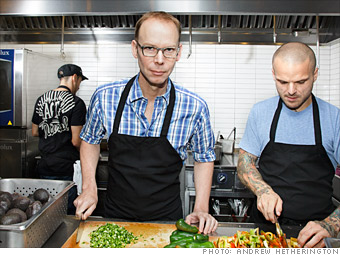
Chipotle Founder Reveals Why People Thought His Restaurant Wouldn’t Work

Chipotle Founder Reveals Why People Thought His Restaurant Wouldn’t Work

ASHLEY LUTZ JUL. 19, 2013, 3:13 PM 2,432 1

chipotle_kitchen_steve_ells

Chipotle founder and CEO Steve Ells started an empire. But Ells said that many thought his idea of making burritos and tacos from a few fresh ingredients wouldn’t work. On an earnings conference call, Ells described the biggest criticism people had with his first restaurant: “I remember 20 years ago people said, ‘Steve, a menu with burritos and tacos, I mean, you’re going to have to add new stuff pretty soon,'” Ells told investors. “But it’s the combinations of things that people can make, not only for taste but for diet and people can vary enough over the years during their visits that really keeps Chipotle fresh.” Ells opened the first Chipotle in Denver, Colorado in 1993. Today the chain has more than 1,500 locations. And while Chipotle might have few ingredients on the menu, there are a mind-boggling number of combinations to be had. Our math found that 655,360 different options were possible from Chipotle’s current ingredients.

A Buffett Fortune Fades in Brooklyn; Case of Othmer Gift to Ailing Hospital Is Cautionary Tale for Wealthy Donors; As early investors with Warren Buffett, Donald and Mildred Othmer quietly amassed a fortune that they believed would sustain their favorite charities for generations

July 19, 2013, 4:39 p.m. ET

A Buffett Fortune Fades in Brooklyn

Case of Othmer Gift to Ailing Hospital Is Cautionary Tale for Wealthy Donors

ANUPREETA DAS

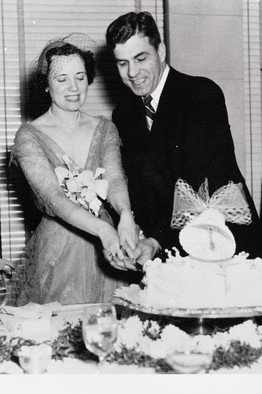
As early investors with Warren Buffett, Donald and Mildred Othmer quietly amassed a fortune that they believed would sustain their favorite charities for generations. Among those organizations: Long Island College Hospital in Brooklyn, N.Y., for which the Othmers created a $135 million endowment in the 1990s, “to be held in perpetuity,” according to their wills.

OB-YG358_0719ot_DV_20130719165318

Mildred Topp Othmer and Donald Frederick Othmer cutting their wedding cake in Manhattan, November 1950. Read more of this post

It is getting easier to foresee wrongdoing and spot likely wrongdoers

Don’t even think about it

It is getting easier to foresee wrongdoing and spot likely wrongdoers

Jul 20th 2013 |From the print edition

THE meanest streets of Kent are to be found in little pink boxes. Or at least they are if you look at them through the crime-prediction software produced by an American company called PredPol. Places in the county east of London where a crime is likely on a given day show up on PredPol’s maps highlighted by pink squares 150 metres on a side. The predictions can be eerily good, according to Mark Johnson, a police analyst: “In the first box I visited we found a carving knife just lying in the road.” PredPol is one of a range of tools using better data, more finely crunched, to predict crime. They seem to promise better law-enforcement. But they also bring worries about privacy, and of justice systems run by machines not people. Read more of this post

Bruce Lee’s daughter recalls his energy as fans mark anniversary

Bruce Lee’s daughter recalls his energy as fans mark anniversary

Shannon Lee, daughter the late Kung Fu legend Bruce Lee, poses in front of a portrait of her father at the Hong Kong Heritage Museum

8:41am EDT

By Brian Yap

HONG KONG (Reuters) – The daughter of kung fu legend Bruce Lee spoke fondly on Friday of her father’s powerful presence and energy at a preview of an exhibition to mark the 40th anniversary of his death. Fans are gathering in the former British colony of Hong Kong for a series of commemorative events, including art gallery shows, exhibitions and even street graffiti. Many fans are urging the Hong Kong government to do more to honor the star of movies such as Enter The Dragon and Game Of Death. Shannon Lee was just four years old when her father died in Hong Kong from acute swelling of the brain at the age of 32, at the height of his career. Read more of this post

The latest research suggests humans are not warriors in their genes, after all

The latest research suggests humans are not warriors in their genes, after all

Jul 20th 2013 |From the print edition

EDWARD WILSON, the inventor of the field of sociobiology, once wrote that “war is embedded in our very nature”. This is a belief commonly held not just by sociobiologists but also by anthropologists and other students of human behaviour. They base it not only on the propensity of modern man to go to war with his neighbours (and, indeed, with people halfway around the world, given the chance) but also on observations of the way those who still live a pre-agricultural “hunter-gatherer” life behave. Add this to field studies of the sometimes violent behaviour of mankind’s closest living relative, the chimpanzee, and the idea that making war is somehow in humanity’s genes has seemed quite plausible. It has even been advanced as an explanation for the extreme levels of self- sacrificial altruism people sometimes display. (If a neighbouring tribe is coming to wipe yours out completely, then giving up your own life to save your fellows might actually make evolutionary sense.) Read more of this post

Make It Brew: The rise of craft breweries is less a story about business than one about taste

July 19, 2013, 3:55 p.m. ET

Make It Brew

The rise of craft breweries is less a story about business than one about taste.

MAX WATMAN

Do you remember where you were when you tasted your first Anchor Steam? If you do (and don’t worry, you’re not alone), then Tom Acitelli’s “The Audacity of Hops” is going to make you very happy. Mr. Acitelli’s exhaustive chronicle of the American beer revolution begins “on a breezy, warm day in August 1965,” when Fritz Maytag walked into the Old Spaghetti Factory “and ordered his usual beer: an Anchor Steam.” The brewery was about to close, and the next day, Fritz Maytag—inheritor of not just his great grandfather’s washing machine fortune, but his father’s blue cheese fortune, as well—bought 51% of the company, tweaked the recipe and lit a fire under the brew kettle of American beer that is still burning. For hop heads, this is a defining moment. It’s like reading about Henri Cartier-Bresson looking at Martin Munkácsi’s “Three Boys at Lake Tanganyika,” going out to a shop in Marseilles and finding a box with a curvy “L” printed on the side. Read more of this post

The 10 greatest white elephants

Thursday 18 July 2013 11.52 BST

The 10 greatest white elephants

In-Tempo-apartment-buildi-010

Benidorm’s In Tempo is the latest huge construction project to end up unused. Here are nine more examples from history

Benidorm’s In Tempo building. Photograph: intempobenidorm.com

Sometimes man’s optimism knows no bounds. In a bad way. Take yourself back to 2005, when people would’ve given themselves hernias laughing if you suggested the world was about to be plunged into a crisis that would make the Great Depression look puny. The European property market was at its frothiest, with developers throwing up luxury apartments and offices at the slightest excuse. In Spain they went a bit wilder than most. As a result, when the sun set of this fantasy in 2008, many cities found themselves lumbered with zombie projects. Read more of this post

Working late at the office, milking it too; White-collar criminals are often dedicated employees with a problem they can’t share, but are they getting off lightly?

Working late at the office, milking it too

July 20, 2013

Ben Butler

White-collar criminals are often dedicated employees with a problem they can’t share, but are they getting off lightly? Ben Butler reports.

HP_ben_narrow-20130719210619171434-300x0

They are quietly beavering away at the accounts, stalwart senior managers willing to shoulder more than their share of the management load, trusted members of the team who have put in plenty of years and are perhaps a little overdue for a pay rise, but don’t complain. And they’re stealing from the company. Forget the portrait of embezzlers as snakes in suits, sharp operators and office psychopaths who talk fast and bully others to get their way. New research based on interviews with convicted white-collar criminals shows the average person who decides to steal a substantial amount of money from work is a self-sacrificing hard worker with a problem he or she can’t share. Usually it’s gambling, but the pressure to maintain appearances can also drive managers and company owners – especially men – to dip their fingers in the till. Read more of this post

Inside the shady world of Asian finance; “Nothing Gained” is a thriller that paints an intriguing, if unsettling, portrait of the world of investment banking

2013-07-19 17:11

Inside the shady world of Asian finance

By Kim Young-jin

After the 2008 financial crisis, plenty of ink was spilt to explain why stock markets plunged and governments bailed out large financial institutions. For those unversed in the jargon of international finance, it was not an easy event to understand. The evictions, foreclosures and unemployment that followed in some parts of the world, of course, were a gut-punch for millions. But factors such as sub-prime mortgages and high risk, complex financial products didn’t exactly make for riveting reading. Phillip Y. Kim, a first-time novelist with a long history in the banking industry, is out to change that. His new book, “Nothing Gained,” is a thriller that paints an intriguing, if unsettling, portrait of the world of investment banking. Having worked for 25 years at such firms as Lehman Brothers and Morgan Stanley, the Korean-American is well placed to shed light on some of the more colorful, if unsavory, aspects of the industry. Rife with details about the high-rolling lifestyles of the nouveau riche, and with a plot filled with intrigue, Kim is able to expose readers to the complicated world of banking in Asia and the pitfalls of unfettered greed. “The pursuit of wealth inevitably attracts unique and charismatic personalities, and often leads to incredible circumstances,” Kim said in an email interview. “I wanted to tell an entertaining story that was based on some of the events I witnessed or heard about over the years. The plot stems from the drowning death of Jason Donahue, a wealthy expat banker in Hong Kong, which sends tremors through the corporate elite. Cheryl, his wife, is forced to deal with his web of unethical business dealings, including the matter of $20 million unaccounted for.  To protect her family, Cheryl, a Korean-American, engages with a motley crue of shady characters, and traverses the globe to find the one person that can help her. He is aided by Todd Leahy, Jason’s chief of staff. We asked Kim ­ who has spent much of his career in Asia ― about the transition from banker to novelist, Asia’s “one percent,” and the role of Asian economies in global finance. Read more of this post

The People’s Choice: Distrust; Collapsing confidence in government is bad news, but there’s a way out; Government has to work better, meaning that it needs to modernize and become more useful in our everyday lives

July 19, 2013, 7:24 p.m. ET

The People’s Choice: Distrust

Collapsing confidence in government is bad news, but there’s a way out

GERALD F. SEIB

Senate Majority Leader Harry Reid sat in an elegant room in the Capitol on Monday afternoon, knowing that the body he leads was in imminent danger of a partisan meltdown. A bitter dispute was still raging over a seemingly simple task—the confirmation of presidential nominees. The crisis led him to muse about the broader consequences of what sometimes appears to be permanent congressional dysfunction.

“When I ran the first time, the approval rating of Congress was at 45%,” said Sen. Reid, who came to Washington from his home state of Nevada three decades ago. “Now it’s at 10%. In all the time Gallup has been doing its polling, no institution has ever been recorded at lower than that.” Read more of this post