Lessons from the first millionaire online teacher

Lessons from the first millionaire online teacher

BY SARAH LACY 
ON JULY 8, 2013

Software programming? Yeah it’s an okay way to  make a living. But the real money is in teaching.

Or at least that’s the recent experience of Scott Allen, a programmer and teacher the tech-y online education platform Pluralsight.com. Allen has earned more than $1.8 million through fees and royalties from Pluralsight over the last five years. He says each monthly royalty check has increased in size over that period — the smallest increase being 10 percent month-over-month. That far outdid his expectations when he started making educational videos for Pluralsight. “It’s amazing,” he says.

I got pitched this story this morning with the subject line “Online ed’s first millionaire teacher.” I was drawn to it, because I could imagine the same story being pitched about blogging or online journalism several years ago. There are a lot of parallels between what those two industries are going through, and how each are grappling with the Web’s potential for disruption. Read more of this post

The future is in creativity, not mere productivity

The future is in creativity, not mere productivity

Organisations have nearly perfected the industrial model of managing work. For individuals, this model ensures that we know what we are supposed to do each day. For organisations, it guarantees predictability and efficiency.

4 HOURS 31 MIN AGO

Organisations have nearly perfected the industrial model of managing work. For individuals, this model ensures that we know what we are supposed to do each day. For organisations, it guarantees predictability and efficiency. The problem with this model is that work is becoming commoditised at an increasing rate, extending beyond manual tasks into knowledge work, as data entry, purchasing, billing, payroll and similar responsibilities become automated. Organisations are finding that it is increasingly difficult to draw value from the optimisation of repetitive work. The value of products and services today is based more and more on creativity — the innovative ways that products take advantage of new materials, technologies and processes. Read more of this post

Loro Piana Brothers Become Billionaires Selling Cashmere

Loro Piana Brothers Become Billionaires Selling Cashmere

Sergio and Pier Luigi Loro Piana, the brothers who head Italian cashmere clothier Loro Piana SpA, have emerged as billionaires after agreeing to sell 80 percent of the family-owned company to LVMH Moet Hennessy Louis Vuitton SA (MC).

LVMH’s 2 billion euro ($2.57 billion) purchase is subject to approval by competition authorities, the Paris-based company said yesterday in a statement. The deal gives Quarona, Italy-based Loro Piana an enterprise value of 2.7 billion euros. Enterprise value is defined as market capitalization plus debt minus cash. The Loro Piana brothers will retain 20 percent of the business, LVMH said. Read more of this post

Spanish message in a bottle; Carlos Moro has nurtured a flourishing winery based on patents; sales at Matarromera, one of Spain’s top 20 wine groups by sales, have risen by 43 per cent, fuelled by a surge in exports, since the start of the crisis

July 9, 2013 5:32 pm

Spanish message in a bottle

By Tobias Buck

World view: Carlos Moro says Matarromera was based on globalisation ‘before people spoke about globalisation’

When Carlos Moro wants to show off the heart of his winery group, he takes visitors neither to the famous vineyards that dot the Spanish region of Ribera de Duero, nor to the dark cavernous halls that house hundreds of oak barrels filled with the latest vintages.

Instead, he opens the door to a brightly lit laboratory on the first floor of a bodega, or winery, just outside the village of Valbuena. Perched at computer screens and scientific instruments are more than a dozen researchers in white lab coats. The walls are covered with posters of molecules and technical diagrams explaining some of the seven patents awarded to the winery in recent years. There is not a corkscrew or wine bottle in sight. Read more of this post

Even Levy’s $7,000-a-Day Matched by Other Arts Titans

Even Levy’s $7,000-a-Day Matched by Other Arts Titans

Reynold Levy made about $7,000 each weekday as president of Lincoln Center for the Performing Arts.

Glenn Lowry, director of the Museum of Modern Art, earned about the same, $1.8 million in 2011.

The senior Carnegie Hall stagehand’s reward for moving a piano: that’s anyone’s guess, but his annual pay was $465,000.

As the pillars of New York culture attempted to rebound from the financial crisis in 2011, so did compensation at the top. Read more of this post

Shaping Innovation Processes Through Humor

Shaping Innovation Processes Through Humor

Marcel Bogers University of Southern Denmark

Trine Heinemann University of Helsinki

June 18, 2013
Proceedings of the Participatory Innovation Conference; June 18-20, 2013; Lahti, Finland; pp. 325-329

Abstract: 
In this paper we present a case study of how humor is employed at the micro-level of collaborative innovation processes. Based on data from workshops in which participants work together to construct new business models for a particular company, we employ the method of Conversation Analysis to find that humor (laughter) may be an important condition for the acceptance of proposals at the interactional micro-level of innovation processes. A particular finding is that company-internal representatives’ use of humor differs from company-external participants in terms of their orientation to having different rights and responsibilities in the innovation process.

The world according to investors

world-investors

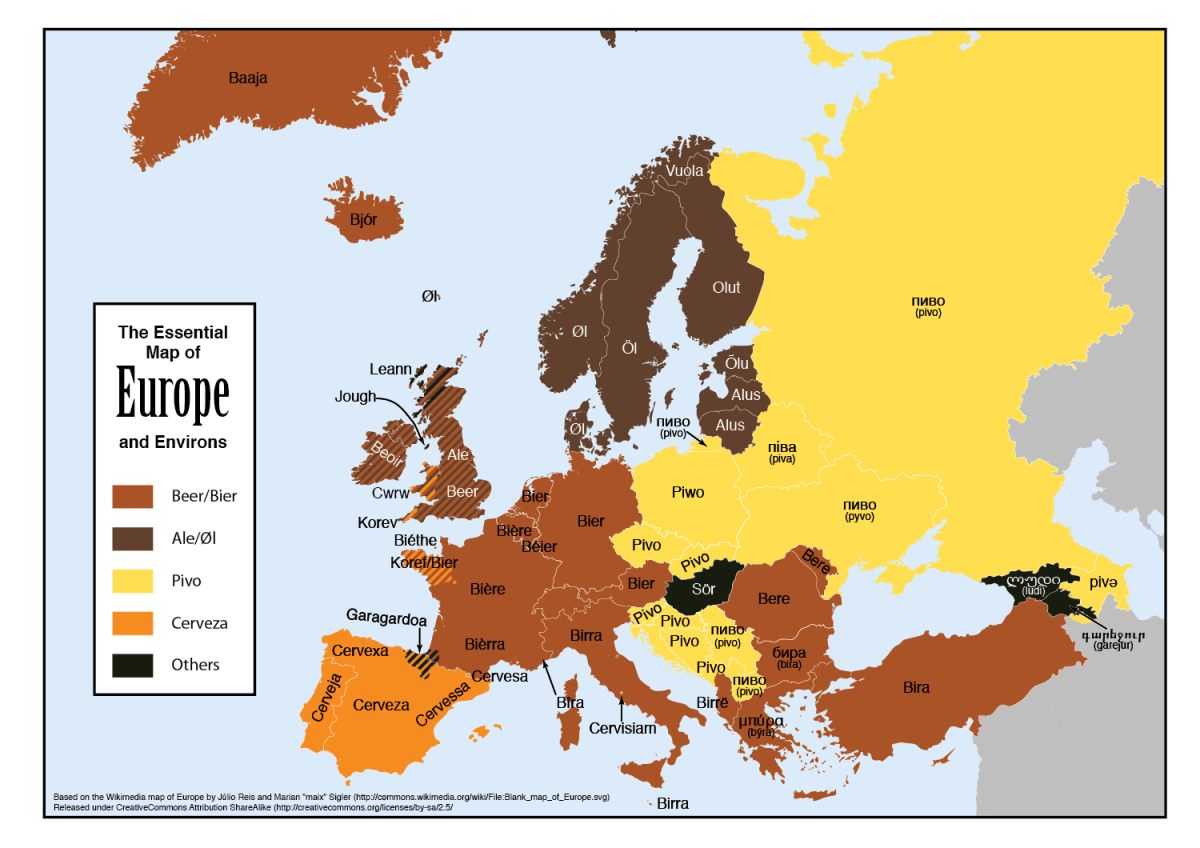
How To Say ‘Beer’ In Every Language While You’re Traveling Across Europe [MAP]

eurobeer-map

Why can’t they all just get along? Stress-fuelled conflict in the workplace is increasing and ultimately warring staff are the problem of the business

Why can’t they all just get along?

July 3, 2013

Belinda Williams

Stress-fuelled conflict in the workplace is increasing and ultimately warring staff are the problem of the business.

There’s nothing more frustrating for small business owners with massive financial responsibilities than to be dragged into the perceived petty squabbles of feuding staff. But it’s actually that unsympathetic attitude that can prolong the standoff.

A common cause of workplace tiffs is unmanaged stress, psychologist Rebecca Henshall says. Read more of this post

Singapore’s education system should not be Finland; Education reform in Singapore is not just about planning and logic. It needs to address a societal culture; Singapore has to watch out that the competitiveness which contributes to achievement does not become destructive of people’s ability to circulate knowledge, develop their whole character and experience happiness

Singapore should not be Finland

As the national conversation continues over the future shape of Singapore’s education system, the example of Finland has cropped up now and again.

5 HOURS 19 MIN AGO

As the national conversation continues over the future shape of Singapore’s education system, the example of Finland has cropped up now and again. Should we emulate the Finnish system where tuition is unheard of, students take a compulsory national examination only at age 18-19, and teachers are given tremendous autonomy? After all, Finnish students have consistently scored among the top in the world on standardised tests — so could this be a lower-stress path to success? TODAY’s reports on Finland’s model, published in March, inspired its own “conversation” between two education experts — the National Institute of Education’s (NIE) Associate Professor Ng Pak Tee and Boston College’s Professor Andy Hargreaves. Both have worked together closely on high-performing education systems since 2011, when Prof Hargreaves visited NIE as CJ Koh Professor and Assoc Prof Ng visited Boston College as Visiting Scholar. Read more of this post

Nostalgia, long considered a disorder, is now recognized to counteract loneliness, boredom and anxiety — making life seem more meaningful and death less frightening

July 8, 2013

What Is Nostalgia Good For? Quite a Bit, Research Shows

By JOHN TIERNEY

SOUTHAMPTON, England — Not long after moving to the University of Southampton, Constantine Sedikides had lunch with a colleague in the psychology department and described some unusual symptoms he’d been feeling. A few times a week, he was suddenly hit with nostalgia for his previous home at the University of North Carolina: memories of old friends, Tar Heel basketball games, fried okra, the sweet smells of autumn in Chapel Hill. His colleague, a clinical psychologist, made an immediate diagnosis. He must be depressed. Why else live in the past? Nostalgia had been considered a disorder ever since the term was coined by a 17th-century Swiss physician who attributed soldiers’ mental and physical maladies to their longing to return home — nostos in Greek, and the accompanying pain, algosBut Dr. Sedikides didn’t want to return to any home — not to Chapel Hill, not to his native Greece — and he insisted to his lunch companion that he wasn’t in pain.. Read more of this post

No idea is perfect, so just get going; Jeremy Carson, founder of 100bodycare, explains why you don’t need a perfect idea to get going in business

Start-up diary: No idea is perfect, so just get going

Jeremy Carson, founder of 100bodycare, explains why you don’t need a perfect idea to get going in business – and reveals the mistakes he made that saw him take three years to make just three shower gels.

100bodycarejeremyc_2605497b

Jeremy Carson, founder of 100bodycare, choosing ingredients for his products

9:30AM BST 02 Jul 2013

Should I start my own business? It’s a question that many people agonise over throughout their career. They read the business pages and ask themselves if they have the traits, experience and right attitude to risk. After setting up my business three years ago, I’ve come to believe these questions are pointless. In that time, I’ve met many business people – from the founder of international food companies like Ella’s Kitchen, to student enterprises. The founders’ traits, experience and attitudes to risk could not be more different. The only common theme seems to be the drive to make your own decisions. This was what I saw in those people and it’s also what I believe motivated me as I look back and search for the reason I decided to start-up from nothing. My business has just started trading. I make a range of 100pc natural toiletries with sports recovery benefits. It’s taken me three long years to get to this stage in which time I’ve identified the right people to work with, developed product formulations, resolved production issues, tested numerous types of packaging, searched for ingredients suppliers and negotiated with retailers. Where did my motivation come from? It was a complete accident. I had just taken a job working abroad and was one month from my start date when a pain I had in my right ankle was diagnosed as severe arthritis. I needed hospital treatment and couldn’t take the role. Luckily, my future employer agreed to keep my position open for three months. For the first time in my life, I was given ample time to think about what I’d learned over my 12 year career. Like most people on a career break, I debated the merits of starting a business. I was buoyed by the false confidence which came from having once started a business as a student and being labelled as an “intrapreneur” by a large corporation. But, as usual, I concluded the time wasn’t right. However, as the sessions to restrengthen my leg continued, I kept thinking of how frustrated I was with the lack of independence that I had in my previous jobs and would continue to have if I stayed in that life. It always concerned me that in large corporations, it seemed that no matter how far your career progressed you would never really make your own decisions. I remember speaking to a managing director who told me that every month he would fly to monthly meetings to be told what to do by his executive board. With this thought going around in my head I, finally decided that I wanted to develop a business that was uniquely my own. Read more of this post

What Is Resilience? “Resilience,” like love, is difficult to define. Yet everyone is talking about how to build or maintain it

What Is Resilience?

05 July 2013

Brian Walker, a research fellow at the Commonwealth Scientific and Industrial Research Organization (CSIRO) in Australia and at the Stockholm Resilience Center, is Chair of the Resilience Alliance.

CANBERRA – “Resilience,” like love, is difficult to define. Yet everyone – from United Nations Secretary-General Ban Ki-moon to government agencies, company boards, and community groups – is talking about how to build or maintain it. So, is resilience a useful concept or just a fleeting buzzword? To answer that question, we need to start with a different one: How much do you think you can change without becoming a different person? How much can an ecosystem, city, or business change before it looks and functions like a different kind of ecosystem, city, or business? All of these are self-organizing systems. Your body, for example, maintains a constant temperature of approximately 37 degrees Celsius. If your body temperature rises, you start to sweat in order to cool down; if your temperature falls, your muscles vibrate (shiver) to warm up. Your body relies on negative feedbacks to keep it functioning in the same way. That is basically the definition of resilience: the capacity of a system to absorb disturbance, re-organize, and keep functioning in much the same way as before. Read more of this post

Connect, Then Lead

Connect, Then Lead

by Amy J.C. Cuddy, Matthew Kohut, and John Neffinger

Is it better to be loved or feared?

R1307C_A

Niccolò Machiavelli pondered that timeless conundrum 500 years ago and hedged his bets. “It may be answered that one should wish to be both,” he acknowledged, “but because it is difficult to unite them in one person, it is much safer to be feared than loved.”

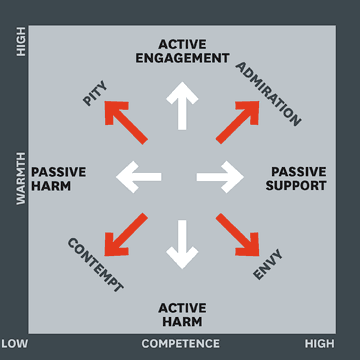
Now behavioral science is weighing in with research showing that Machiavelli had it partly right: When we judge others—especially our leaders—we look first at two characteristics: how lovable they are (their warmth, communion, or trustworthiness) and how fearsome they are (their strength, agency, or competence). Although there is some disagreement about the proper labels for the traits, researchers agree that they are the two primary dimensions of social judgment. Read more of this post

How Experts Gain Influence

How Experts Gain Influence

by Anette Mikes, Matthew Hall, and Yuval Millo

R1307E_A

In 2006 the risk management chiefs of two British financial institutions—we’ll call them Saxon Bank and Anglo Bank—were in similar situations. Each reported directly to the CEO and had, in theory, the same influence in their organizations. But by 2011 Saxon’s risk management group, unified around a common purpose, was deeply engaged in critical work throughout the bank, while Anglo’s, divided into two specialized and loosely connected groups, had little visibility outside specific areas of expertise.

Our close study of these two banks offers lessons for other functional experts in search of influence, from management consultants and internal auditors to HR and marketing executives. We have identified four competencies—trailblazing, toolmaking, teamwork, and translation—that help functional leaders or groups in any organization compete for top management’s limited time and attention, and ultimately increase their impact. Read more of this post

The Uses (and Abuses) of Influence: An Interview with Robert Cialdini

The Uses (and Abuses) of Influence

An Interview with Robert Cialdini by Sarah Cliffe

Robert Cialdini, considered the leading social scientist in the field of influence, was initially drawn to the topic because he saw how easily people could step over an ethical line into manipulation or even abuse. His 2001 book Influence, which laid out six principles of persuasion, was eloquent about the dangers of persuasive techniques in the wrong hands. A best-selling article he wrote for HBR the same year, “Harnessing the Science of Persuasion,” looked at the positive side of persuasion: how managers could use those principles to run their organizations more effectively. Cialdini is the Regents’ Professor Emeritus of Psychology and Marketing at Arizona State University and the president of the consulting firm Influence at Work. In this edited interview with HBR executive editor Sarah Cliffe, he drills deeper into everyday uses of persuasion inside businesses and describes new research on the ethics of influence. Read more of this post

“Made In America”

“Made In America”

MATT BURNS

Friday, July 5th, 2013

we-can-do-it

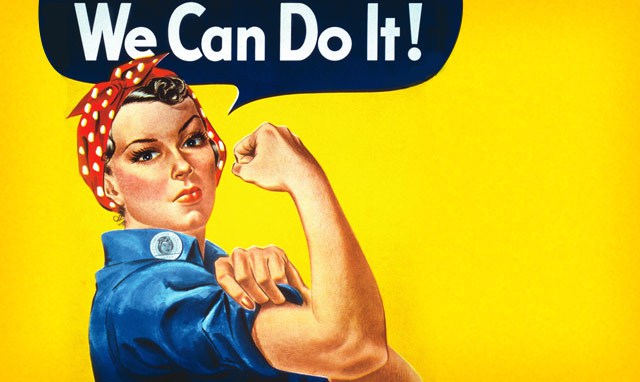
The five-day work week. Chevrolet. Grand Funk Railroad. Steel plants on the shores of Lake Michigan. This is America.

There is a rebirth happening right now. It’s happening all over the country. Pockets of makers here, a consumer electronics company there. A startup accelerator in beautiful Harbor Springs, Mich. They’re appearing all over this land. And it’s all heavily advertised. “Made in America” is, sadly, in vogue right now. “Imported from Detroit”, “This American buys American.” All bumper sticker catch phrases fueling America’s greatest innovation: capitalism. And why not? Manufacturing is the brawn that built this land but capitalism is the beating heart. Capitalism drives this country. And it drove companies out, too. Labor is cheaper elsewhere. Tim Cook’s supply chain management became the norm. Profit and loss statements trended towards “build it somewhere else.” “Made in China”. It’s stamped on the bottom of my coffee mug. On the back of my phone. It’s everywhere because we put it there. There was a time not all that long ago that America was the center of manufacturing and innovation. General Motors. Bell Labs. Motorola. Fairchild Semiconductor. Silicon Valley. The lone entrepreneur making it big. America has always been a land of chance. Risk it all and move out west. Find gold. Build with silicon. It’s this sense of entrepreneurship that makes the country great. Most startups fail. A dramatic amount fail. But it’s that sense of possibility that initially made America great and is fueling its current growth. Read more of this post

On its 80th birthday, beer can back in style; Technology once again is transforming how Americans drink their beer

On its 80th birthday, beer can back in style

Michael Felberbaum, AP Business Writer9 a.m. EDT July 7, 2013

Brewers like Sam Adams design special cans to improve flavor experience

Major beer companies add features like the punch-top or bowtie

Craft brewers, like Sly Fox, are re-imagining the can with a “topless” version

nb20130722f2a-870x489

RICHMOND, Va. (AP) — Nearly 80 years ago Richmond revolutionized the beer world. For it was in this Southern city in 1935 that canned beer — complete with how-to instructions — was first sold. Krueger’s Cream Ale and its punch-top can became an instant hit, propelling the humble beer can to iconic status. That is, until Americans returned to bottles and the beloved craft brews they contained, a cultural turn that left canned beer looking decidedly low-brow. But more recently craft brewers rediscovered cans, realizing they weren’t just retro-cool, but with a few tweaks might even be able to kick bottles in the can. Welcome to the beer can revolution, 2013-style. Technology once again is transforming how Americans drink their beer. Read more of this post

Why We Underestimate Risk by Omitting Time as a Factor

Why We Underestimate Risk by Omitting Time as a Factor

Suppose I offer you a simple gamble. Throw a dice: If you get a six, you win $10; if not, you lose $1. The loss is more likely; the win brings more money. Willing to play? The generally accepted way for deciding in such cases — developed originally by the French mathematician Blaise Pascal in the 17th century — is to think of probabilities. The outcome will always be a win or loss, but imagine playing millions of times. What will happen on average? Clearly, you’ll lose $1 about five times out of six, and you’ll win $10 about one time out of six. Over many gambles, this averages out to about 83 cents per try. Hence, the gamble has a positive “expected” payoff and is worth it, even if the gain is trifling. Play a million times and you’re sure to win big. But here’s something odd. Suppose I offer precisely the same gamble, only scaled up. Roll a six and you now win not $10, but 10 times your total current wealth; if you roll anything else, you lose your entire wealth (including property, pensions and all possessions). Your expected profit is now far bigger — equal to 83 percent of your total current wealth. Still want to play? It turns out that most people won’t take the latter bet, even though it will, on average, pay off handsomely. Why not? For most of us, putting everything on the line seems too risky. Intuitively, we understand that getting wiped out carries a brutal finality, curtailing future options and possibilities. Read more of this post

Douglas J. Dayton, Target Stores’ Founding President, Dies at 88

Douglas J. Dayton, Target Stores’ Founding President, Dies at 88

Target Dayton

Douglas J. Dayton, who served as the first president of Target department stores when his family’s retailing company created the chain 61 years ago, has died. He was 88. He died on July 5 at his home in Wayzata, Minnesota, following a long battle with cancer, his wife, Wendy Dayton, said. With four brothers, Dayton took over and reshaped the Dayton Co., which had begun under their grandfather, George Draper Dayton, as Dayton’s department store in downtown Minneapolis. When the company in 1961 formed the discount chain called Target, Dayton became president. The first Target opened in May 1962 in Roseville, Minnesota. By the end of that year, three other Target stores were open, all in the suburbs of the Twin Cities of Minneapolis and St. Paul. In 1966, Target expanded outside Minnesota, opening stores around Denver. Read more of this post

Lovebirds separate when the going gets rough; Social changes in China in the past several decades mean couples have to make more effort to stay married for life

Lovebirds separate when the going gets rough

Social changes in China in the past several decades mean couples have to make more effort to stay married for life. -China Daily/ANN
Sun, Jul 07, 2013
China Daily/Asia News Network

20130707.124226_love430

Social changes in China in the past several decades mean couples have to make more effort to stay married for life. Besides people’s growing wealth, changes in sexual norms and looser divorce laws, another factor influencing marital breakdowns is the rise of smaller nuclear families, say researchers. “In the past, many couples stayed together for the benefit of their children,” says Wei-jun Jean Yeung, a sociology professor at the National University of Singapore, whose research includes transformations within Chinese families. “Nowadays, many couples have none or one or much fewer children than before,” so the physical and emotional ties binding the couple are no longer as strong. Read more of this post

The Real Reason You Learn A Lesson Better When You Teach It: Nachas, pride and satisfaction that is derived from someone else’s accomplishment

The Real Reason You Learn A Lesson Better When You Teach It

ANNIE MURPHY PAULTHE BRILLIANT BLOG JUL. 6, 2013, 8:11 AM 1,508 

Learning, and thinking, are deeply social activities. 

This is not the traditional view (Rodin’s iconic sculpture, “The Thinker,” is conspicuously alone in his chin-on-fist musings), but it’s the view that is emerging out of several decades of social science research. Our minds often work best in interaction with other people’s minds, and there are particular kinds of relationships that are especially good at evoking our intelligence. One is the master-apprentice relationship, which I wrote about here. Another, of course, is the teacher-student relationship—but today I want to talk about the benefits of this relationship for the teacher. For thousands of years, people have known that the best way to understand a concept is to explain it to someone else. “While we teach, we learn,” said the Roman philosopher Seneca. Now scientists are bringing this ancient wisdom up to date, documenting exactly why teaching is such a fruitful way to learn — and designing innovative ways for young people to engage in instruction. Read more of this post

Global Yellow Pages CEO Stanley Tan loses $25.4m in 2 days in financial products, sues UBS

Yellow Pages CEO loses $25.4m in 2 days, sues UBS

Saturday, Jul 06, 2013, AsiaOne

acc430

SINGAPORE – Global Yellow Pages CEO Chen Bao Neng (Stanley Tan) is taking UBS to court after he suffered losses amounting to $25.4 million in just two days. According to Lianhe Zaobao, the 55-year-old executive director had invested in 16 financial products through UBS from October 2007 to August the following year. He then lost $25.4 million in the 2008 financial crisis.  Read more of this post

How Wal-Mart Became the World’s Biggest Retailer

How Wal-Mart Became the World’s Biggest Retailer

By Alex Planes
July 2, 2013 | Comments (1)

On this day in economic and business history…

The first Wal-Mart (NYSE: WMT  ) opened its doors in Rogers, Arkansas on July 2, 1962. At this point in his life, Wal-Mart founder Sam Walton had already racked up over two decades of experience as a retailer. He got his start in the industry as a management traineein one of J.C. Penney‘s (NYSE: JCP  ) Iowa stores in 1940. Penney’s focus on maximizing the value of a customer’s visit goes a long way toward explaining Walton’s lifelong obsession with making his own store experiences better through research and observation. Five years later, Walton purchased his first store, a Ben Franklin five-and-dime in Newport, Arkansas with a $20,000 from his father-in-law. Walton took the unprofitable Ben Franklin and turned it into that company’s biggest success in Arkansas, learning along the way that lower prices and proper in-store marketing techniques can make a world of difference in the brutally competitive retail industry. Read more of this post

Do Bigger Desks Make People Dishonest? Putting people in that big corner office might not be a business strategy that helps the rest of us

Do Bigger Desks Make People Dishonest?

Putting people in that big corner office might not be a business strategy that helps the rest of us.

We know that people in large corner offices sometimes do bad things. Could the size of the space actually be one cause?

If you’re skeptical about a link between office size and dishonest behavior (and we were), take a look at a new study from Columbia, MIT, Northwestern, Harvard and Berkeley. Across four experiments, it finds that certain expansive environments make people feel more powerful, and that this sense of power can lead to dishonesty. The researchers aren’t saying all people who get big offices go out and rob banks. But they do show environment is relevant, and that might be worth thinking about (for instance, if you’re moving to a new space).  Read more of this post

Back to the drawing-board: Design companies are applying their skills to the voluntary and public sectors

Back to the drawing-board: Design companies are applying their skills to the voluntary and public sectors

Jul 6th 2013 |From the print edition

20130706_WBD000_0

THE office looks like a cross between a Starbucks and a youth club. Bicycles are piled high in racks; there is a ping-pong table in a corner. Young people sit at long pine benches, sipping coffee and poring over laptops, the males looking as if they are taking part in a beard-growing competition. But do not be deceived by the laid-back atmosphere: this is the London branch of one of the world’s most successful design consultancies, IDEO. When it started up in Silicon Valley in 1991 one of its founders, David Kelley, said he did not want to employ more people than could fit in a school bus. Today IDEO has more than 600 employees and offices in eight countries. Read more of this post

Lincoln Mastered Wisdom of Unsent Letter After Gettysburg

Lincoln Mastered Wisdom of Unsent Letter After Gettysburg

Abraham Lincoln, remembered 150 years after a “decisive” battle of the U.S. Civil War, could have excelled in modern-day Washington politics, one of the pre-eminent scholars on the American president says.

“He would be tech savvy, he would lose the beard, he would have some cosmetic surgery, he would make an asset of his height,” historian Harold Holzer said in an interview for Bloomberg Television’s “Political Capital with Al Hunt” airing this weekend. “He was so smart about working with the press, getting the press to work in his behalf, giving out exclusives, and he would have mastered any medium.”

As one measure of Lincoln’s political prowess, Holzer recited an often-told tale of Lincoln thinking twice before dispatching a letter upbraiding his general who defeated the enemy at the Battle of Gettysburg, a turning point for the Northern victory in the Civil War. It was a precursor to the dilemma of hitting the send button on a regrettable email. Read more of this post

How a failed book led to the creation of a new blogging platform

How a failed book led to the creation of a new blogging platform

BY NATHANIEL MOTT 
ON JULY 5, 2013

Claudio Gandelman wanted to write a book. He had been asked to write something about online dating and romance ever since he became the chief executive of Match.com Latin America, and so he reached out to a friend in publishing who might be able to help him get this book published. The only problem was Gandelman’s writing, which would have to be heavily revised by a ghost writer before a book would even become a real possibility. He decided to shelve the project and, like so many other writers whose writing wasn’t quite fit to print, decided to turn to the Web. Read more of this post

Fedspeak: Complex Monetary Policy Spawns Flights of Metaphors; Central Bankers Wax Poetic, Invoking Punch Bowls, Bulls and Scarlett Johansson

Updated July 5, 2013, 6:45 a.m. ET

Fedspeak: Complex Monetary Policy Spawns Flights of Metaphors

Central Bankers Wax Poetic, Invoking Punch Bowls, Bulls and Scarlett Johansson

VICTORIA MCGRANE

At a news conference in mid-June, Federal Reserve Chairman Ben Bernanke struggled to explain what the Fed is trying to do, attempting this metaphor: “We’re going to be shifting the mix of our tools as we try to land the ship in a smooth way onto the aircraft carrier.” He then turned to automobiles, a favorite of central bankers. Trying to distinguish between reducing the Fed’s monthly bond-buying and raising short-term interest rates, he said the former is “akin to letting up a bit on the gas pedal as the car picks up speed” while the latter is “beginning to apply the brakes.” There is a long tradition of explaining complex monetary policy with metaphors. Back in 1955, in a speech littered with analogies to driving, bomb shelters and school exams, then Fed Chairman William McChesney Martin made popular the line that the duty of the Fed was to take away the punch bowl just as the party gets good. Read more of this post

A third of all French restaurants serve dishes prepared largely or entirely elsewhere; Restaurateurs may be forced to draw up new, more honest menus

French restaurateurs may be forced to draw up new, more honest menus

Jul 6th 2013 | PARIS |From the print edition

GIVEN the state of France’s economy, its politicians ought to have bigger worries. But one of the hottest topics in parliament these days is how to force restaurants to reveal whether they make their boeuf bourguignon on the premises or rip open packets and warm up the contents.

On June 27th the lower house approved an amendment to a consumer-rights bill that will force restaurants to label the dishes they prepare from fresh ingredients in their own kitchens as “fait maison”, or “home-made”. This is tougher than the optional label the government proposed, but less stringent than the obligatory description of every dish on every menu as either home-made or based on industrial products, which some want. If the reform goes through, in 2014 the menus of every establishment, from little brasseries in the Dordogne to multi-starred restaurants in Paris, could be sporting truth-in-eating symbols instead of appetising but misleading tags such asfaçon grandmère—“just as grandma used to make it”. Read more of this post