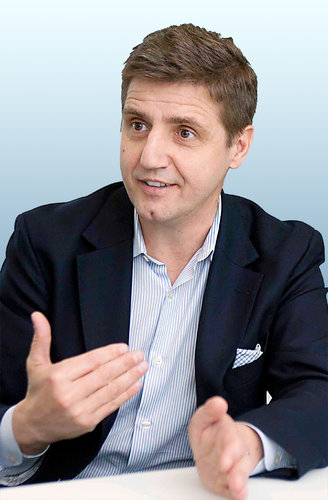
On the 16th anniversary of the devaluation of the baht (July 2, 1997), which preceded the Asian financial crisis, former steel tycoon Sawad Horrungruang talks about the lessons learned

16TH CRISIS ANNIVERSARY

Asian financial crisis and the lessons learned

Nophakhun Limsamarnphun
The Nation July 6, 2013 1:00 am

30209826-01_big

Sawad: In hindsight, the biggest lesson was that if you borrowed in foreign currency, there would be multiple risk factors.

Ex-steel tycoon recalls downfall on 16th anniversary of baht devaluation

On the 16th anniversary of the devaluation of the baht (July 2, 1997), which preceded the Asian financial crisis, former steel tycoon Sawad Horrungruang said, “Back then, companies in my area of business [NTS, NSM and affiliated firms] owed as much as US$2.7 billion to foreign and Thai creditors. “The loans were denominated in foreign currencies, so the combined debt doubled overnight as soon as the baht was devalued, and then plunged from Bt25 to the dollar to more than Bt50 [debt jumped from between Bt140 billion and Bt150 billion]. “Back then, interest rates also jumped to more than 10 per cent and if you defaulted, the rate would shoot up to nearly 30 per cent. The massive foreign-exchange losses and high cost of funds meant that it was impossible for any decent business to survive. “In hindsight, the biggest lesson was that if you borrowed in foreign currency, there would be multiple risk factors. In this era of globalisation, whatever happens in the US, Europe or elsewhere is going to effect businesses in Thailand. Read more of this post

Machiavelli doesn’t belong to the 1 percent; “The Prince” is oft-quoted on Wall Street, but its author was a hero of the working class who despised elites

SATURDAY, JUN 29, 2013 11:00 PM MPST

Machiavelli doesn’t belong to the 1 percent

“The Prince” is oft-quoted on Wall Street, but its author was a hero of the working class who despised elites

BY CHRIS MAISANO

I keep a portrait of Machiavelli over my desk at work — an interior design choice that, I have learned, dismays some of my coworkers. Amid a recent mid-afternoon zone out, I received an email from one of them with the title “Who Wants to Serve a Billionaire?” The message contained a link to an article in the Guardian about a growing group of international multi-billionaires, their so-called “superyachts,” and the desperate lower-class Britons and Eastern Europeans who serve them as deckhands. Read more of this post

The Road To Resilience: How Unscientific Innovation Saved Marlin Steel; A little maker of metal baskets shows how U.S. manufacturers can thrive against all comers

THE ROAD TO RESILIENCE: HOW UNSCIENTIFIC INNOVATION SAVED MARLIN STEEL

A LITTLE MAKER OF METAL BASKETS SHOWS HOW U.S. MANUFACTURERS CAN THRIVE AGAINST ALL COMERS.

BY: CHARLES FISHMAN

3012591-inline-slide-1-177-feature-the-wire 3012591-inline-slide-2-177-feature-the-wire

Custom-made for a supplier of GM auto parts, this basket holds pump housings firmly in place as they are washed; the mesh top aids water flow. Owner Drew Greenblatt thought Marlin would give him an easy annuity. Then he found himself in a showdown with Chinese competitors.

The American economy has some really quirky corners–places so esoteric or tucked away we hardly notice them. In 1998, Drew Greenblatt bought one of those corners–a company called Marlin Steel that specialized in a single product: wire bagel baskets, which bagel stores use to display their wares. Marlin had the market to itself. “You had the guy who made baskets for the doughnut stores, Dunkin’ Donuts and the like,” Greenblatt says. “You had the guy who made the metal chafer stands that buffet serving dishes sit on, with the cans of Sterno. And you had us, doing the bagel baskets.” Marlin’s customers were the big chains: Einstein Bros., Bruegger’s. “Once in a while, we’d edge into each other’s business,” he says. “The doughnut guy would try to get some bagel stores. But mostly we did our own thing.” Read more of this post

Ferrari-Beating Great Wall Motor Shows Wei Jianjun Forging Next Hyundai

Ferrari-Beating Great Wall Shows Wei Forging Next Hyundai

Wang Jiangwei recalls spending last summer sweating through a month of military drills conducted by Chinese People’s Liberation Army instructors. Wang isn’t a soldier; he’s a researcher at Great Wall Motor Co. His Baoding, China-based employer is so profitable, it generates a fatter margin than any listed carmaker in the world. Behind the success is Chairman Wei Jianjun, who has built China’s biggest SUV maker with a leadership style that stands out for its emphasis on discipline and frugality. “The military training is pretty serious and tough,” said Wang. “Not only new hires but people who get promoted, even those becoming department heads, need to redo training.” Great Wall represents a rare breed of Chinese automakers independent of foreign partners and government, sparing it from having to split profits and endure extra bureaucracy. With the stock surging 60-fold (2333) in Hong Kong since its 2008 low, Wei has become Asia’s wealthiest car executive, with an estimated fortune of $6.5 billion as he strives to create China’s first global automotive brand. “Wei is a real professional, a real entrepreneur,” said Bill Russo, formerly vice president of Chrysler Northeast Asia and now president of automotive consultant Synergistics Ltd. in Beijing. “If there’s one or two automakers able to survive all the competition with foreign rivals in the next decades or so, Great Wall will definitely be one of them.” Read more of this post

“If you want to develop leaders and not followers, one of the key things you have to learn to do is delegate.” OTIS president says a key to management is learning to delegate and appreciate employees’ efforts, even if they don’t succeed

July 4, 2013

Pedro Baranda of Otis Elevator, on the Push for Innovation

By ADAM BRYANT

This interview with Pedro Baranda, president of the Otis Elevator Company, was conducted and condensed by Adam Bryant.

04CORNER-popup

Pedro Baranda, president of the Otis Elevator Company, says that “if you want to develop leaders and not followers, one of the key things you have to learn to do is delegate.”

Q. What was your first management role?

A. I studied a lot in my 20s — a six-year program in Spain, and then a Ph.D. here in the United States. So my first management role was when I was about 30. I was a research engineer and I had to hire two people.

Q. And was it an easy transition for you?

A. I probably made quite a few mistakes and learned from them. The main mistake I tended to make — and probably still do sometimes — is that because I’m an engineer, I like to get into the details of things. So I got some feedback about it early on, such as, “Let me do my job.” That was an important lesson, because if you want to develop leaders and not followers, one of the key things you have to learn to do is delegate. One of my bosses once told me: “You’ve got to delegate because there are only three possible outcomes. You tell them what your expectations are, and if their solution is better than yours, that’s fantastic. If the solution is the same as yours would be, then it’s fantastic, too, because at least you didn’t have to do it. And if it’s not as good as you expected, you can always take the time to teach them why and what to do differently. That way, you will have learned about the person and the person will have learned from you.” That lesson about delegation is fundamental if you want to develop leaders and not followers. I heard an expression from one of my business professors — that talent flow is the best predictor of future cash flows — and that has stayed with me. Read more of this post

William Heinecke, an Early Entrepreneur in Asia, Is Still Finding Success; The billionaire chairman of Minor International has maintained the spirit of American entrepreneurship: find a gap and fill it

JULY 4, 2013, 1:48 PM

William Heinecke, an Early Entrepreneur in Asia, Is Still Finding Success

By RON GLUCKMAN

dbpix-heinecke-tmagArticle

From his Asian base, William Heinecke is expanding into Africa, the Middle East and Australia. “It’s a more complex world,” he says. “But the skills of being an entrepreneur haven’t changed, and probably won’t change.”

BANGKOK — William Ellwood Heinecke has always followed his instincts. He started his first businesses, cleaning offices and selling advertising, as an expatriate high school student in Bangkok. He was a millionaire before he reached voting age. Defying conventional wisdom at the time about overseas appetites, he introduced pizza to Asians in the early 1980s, the start of an empire of retailers, restaurants and resorts built around classic brands like Pizza Hut, Sizzler, Marriott and Esprit. It encompasses more than 10,000 rooms and 1,400 restaurants across 22 countries. He has moved up the value chain, developing his own successful brands. Now Mr. Heinecke, the billionaire chairman of Minor International, has aggressively steered expansion into the Middle East, Africa, Australia and emerging markets across Asia, flying around the region in corporate jets, swooping in on huge deals. Maintaining the spirit of American entrepreneurship, Mr. Heinecke has kept his mantra the same: find a gap and fill it. Read more of this post

How Simple Can Life Get? It’s Complicated; Scientists have long wondered how much life can be stripped down and still remain alive. The answer seems to be that the true essence of life is not some handful of genes, but coexistence

July 4, 2013

How Simple Can Life Get? It’s Complicated

In the pageant of life, we are genetically bloated. The human genome contains around 20,000 protein-coding genes. Many other species get by with a lot less. The gut microbe Escherichia coli, for example, has just 4,100 genes.

Scientists have long wondered how much further life can be stripped down and still remain alive. Is there a genetic essence of life? The answer seems to be that the true essence of life is not some handful of genes, but coexistence. Read more of this post

Emotional competence is just as important in education and learning

Emotions are just as important in education

Competence is the desired outcome of professions such as medicine and all forms of learning. To become competent often involves more than thinking: You have to acquire motor learning or skills training, and emotional and social learning (or affective learning).

6 HOURS 23 MIN AGO

Competence is the desired outcome of professions such as medicine and all forms of learning. To become competent often involves more than thinking: You have to acquire motor learning or skills training, and emotional and social learning (or affective learning). Most educational institutions, schools and colleges emphasise the thinking aspect, or cognition. Less attention is paid to the emotional aspects. Yet, emotions are important as they play a vital part in learning, and can help or hinder a child’s academic commitment and success in school. Positive emotions directly relate to interest and self-motivation, which drive the attitudes critical for acquiring knowledge; negative emotions like depression are linked to the converse. Read more of this post

Douglas Engelbart, Computer Mouse Creator, Visionary, Dies at 88

July 3, 2013

Computer Visionary Who Invented the Mouse

By JOHN MARKOFF

engelbart-web-popup

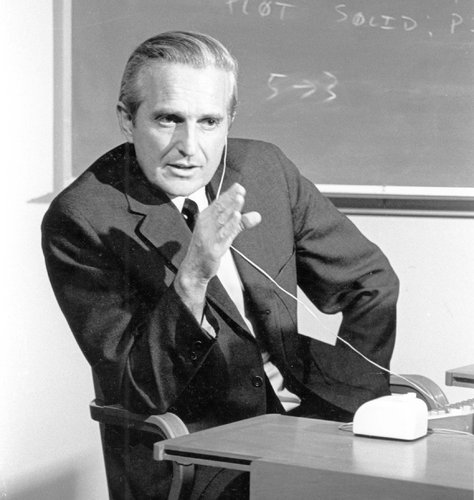
Douglas C. Engelbart with an early computer mouse in 1968, the year it was unveiled

Douglas C. Engelbart was 25, just engaged to be married and thinking about his future when he had an epiphany in 1950 that would change the world.

He had a good job working at a government aerospace laboratory in California, but he wanted to do something more with his life, something of value that might last, even outlive him. Then it came to him. In a single stroke he had what might be safely called a complete vision of the information age.

The epiphany spoke to him of technology’s potential to expand human intelligence, and from it he spun out a career that indeed had lasting impact. It led to a host of inventions that became the basis for the Internet and the modern personal computer. Read more of this post

How ‘God Bless America’ Became America’s Anthem

How ‘God Bless America’ Became America’s Anthem

The “God Bless America” that we know today was forged from collaboration between its composer, Irving Berlin, and Kate Smith, the performer who first made it famous. Behind the scenes, though, the two of them battled for control of the song. The story begins in 1918, when Berlin was drafted as an Army private, a few months after he officially became a U.S. citizen. While stationed at Camp Upton in Yaphank, New York, Berlin was asked to write a soldier show to raise money for a community house to be built at the camp. The revue, called “Yip, Yip, Yaphank,” staged at New York City’s Century Theatre, included a blackface number, satirical spoofs of Army life (including “Oh, How I Hate to Get Up in the Morning”) and Ziegfeld Follies-style dance numbers featuring soldiers in drag that one reviewer characterized as “one long laugh.”

Berlin wrote “God Bless America” as the show’s finale, but decided to end instead with the upbeat “We’re on Our Way to France.” Berlin later said he changed his mind because “God Bless America” was “too obviously patriotic for soldiers to sing.” People in the military already amply demonstrate their patriotism through service, he believed. Patriotic songs were for civilians. Read more of this post

‘Africa’s Oprah’ launches pioneering TV network

‘Africa’s Oprah’ launches pioneering TV network

AP JUL 3, 2013

wb20130704a3a-870x580

Historic: Mosunmola ‘Mo’ Abudu, CEO of EbonyLife TV, attends the launch of the entertainment network on Sunday in Lagos. | AP

LAGOS – A woman who could be considered Africa’s Oprah Winfrey is launching an entertainment network that will be beamed into nearly every country on the continent with programs showcasing its burgeoning middle class. Mosunmola “Mo” Abudu, 48, wants EbonyLife TV to inspire Africans and the rest of the world, and to change how viewers perceive the continent. The network’s programming tackles women’s daily-life subjects — everything from sex tips to skin bleaching. “Not every African woman has a pile of wood on her head and a baby strapped to her back!” Abudu said. “We watch Hollywood as if all of America is Hollywood. In that same vein, we need to start selling the good bits of Africa.” Read more of this post

The Writing of a Great Address: Lincoln began forming his thoughts just after the Battle of Gettysburg.

July 3, 2013, 7:19 p.m. ET

The Writing of a Great Address

Lincoln began forming his thoughts just after the Battle of Gettysburg.

PEGGY NOONAN

RV-AK646_BKRV_G_G_20130530102818

The air is full of the Battle of Gettysburg, whose 150th anniversary this week marked. Those who love history are thinking about Little Round Top and Devil’s Den, Culp’s Hill and the Peach Orchard, and all the valor and mistakes of men at war. The mystery of them, too. How did Joshua Chamberlain, a bookish young professor of rhetoric from Maine, turn into a steely-eyed warrior of the most extraordinary grit and guts at the exact moment those qualities were most needed? He was a living hinge of history. Why did Robert E. Lee, that military master who always knew when not to push it too far, push it too far and order Pickett to charge that open field? Read more of this post

Fourth of July a Day of Bloody Protest in U.S. History

Fourth of July a Day of Bloody Protest in U.S. History

On July 4, 1934, the U.S. was in the fourth year of an economic crisis. On the West Coast, longshoremen had taken advantage of their newly acquired unionization rights and were on strike. In San Francisco, there was an uneasy calm on the waterfront after a vicious battle between police and strikers the day before.

The peace lasted only for a few hours. San Francisco’s police were planning another attempt to open the port. On the morning of July 5, they fired tear gas and charged the picket lines. The struggle lasted for hours. “It was a Gettysburg in the miniature,” the San Francisco Chronicle reported. By evening, two strikers were dead and the National Guard had set up machine-gun nests to guard the port. Read more of this post

The Economics of Mad Geniuses: Is it possible that mental illness could, in some cases, be good for worker productivity?

JULY 3, 2013, 12:56 PM

The Economics of Mad Geniuses

By CATHERINE RAMPELL

In a magazine column this week, I talked about how expanding access to mental health care could be a cost-effective way to help the economy, given the economic costs of untreated or inadequately treated illness (like worker absenteeism and subsidized housing). Now to play devil’s advocate: Is it possible that untreated mental illness is not entirely bad for the economy, that mental illness could in some cases improve worker productivity? After all, history is littered with examples of “mad geniuses” whose creativity and innovativeness have sometimes been attributed to alleged mental illness (e.g., Thomas EdisonErnest HemingwayVincent Van GoghJohn Nash). There are likewise entrepreneurs of our own time who have been publicly characterized as having some sort of mental or at least neurological disorder. Former executives of JetBlue and Kinkos, for example, famously credited their A.D.H.D. with helping them think more creatively. Stories about 48-hour-straight coding sessions in Silicon Valley can sound a bit like manic behavior, too. Read more of this post

Clash! 8 Cultural Conflicts That Make Us Who We Are; Novel thinking about conflict and co-operation

uly 3, 2013 5:15 pm

Novel thinking about conflict and co-operation

Review by Trisha Andres

Clash! 8 Cultural Conflicts That Make Us Who We Are

By Hazel Markus and Alana Conner (Hudson Street Press, $25.95)

Clash

Should Mark Zuckerberg lose the trademark hooded sweatshirt when he goes to meet investors in Wall Street? According to the authors of Clash! – a manual for navigating cultural divisions in the modern world – the answer is a resounding yes. They write: “In Silicon Valley, his attire isn’t a problem; Steve Jobs broke the CEO dress code a generation before when he adopted a black turtleneck and jeans as his power suit. But on button-down Wall Street Zuck’s hoodie causes an uproar. The Northeast establishment sees the young entrepreneur’s refusal to don at least a jacket when he is in New York as a sign of disrespect.” The book splits people ac­cording to two modes of operating: independent and interdependent – with the former better at adapting to and mimicking those across various cultural divides. “Independent selves view themselves as individual, unique, influencing others and their environments, free from constraints and equal,” the writers explain. Read more of this post

Inside the Brains of Winners

July 3, 2013, 12:13 PM

Inside the Brains of Winners

By Jeff Brown

images (18)

Everyone knows a name dropper when they hear one. Buzz names like Gates, Jiwei, Jobs, Nooyi, Zuckerberg and Winfrey can give dramatic pause to a conversation and pique collegial interest. But their mere mention can also throw a name dropper under the credibility bus quicker than they can say “My cousin was college roommates with J.K. Rowling’s agent’s sister.” Read more of this post

Out-of-the-box thinking takes Goodpack places; “Once, I visited a rubber factory when a lorry hit something… The splinters were stuck to the rubber… It took an enormous amount of time to remove the splinters and the contamination to the rubber. “So I thought we should look at something that is easy to pack, environmentally friendly, easy to stack and cheaper than the wood we were buying.”

Out-of-the-box thinking takes Goodpack places

20130703_ST_2D_goodpack

Wednesday, Jul 03, 2013

Rachael Boon, The Straits Times

SINGAPORE – Unlike most other Singapore companies, it all started for Goodpack founder and chairman David Lam with the need to solve a packaging problem which had been plaguing buyers of natural rubber. For years, they had bemoaned the damage caused to raw rubber during the shipping process in one of Singapore’s oldest industries. Wooden crates used to package natural rubber bales would be tossed around in ships, causing wooden splinters, sawdust and other debris to contaminate the raw material. This foreign matter then clogged up machines used to process the rubber. After latex is tapped from trees, it is coagulated and refined as rubber for use in tyres and other rubber products. Mr Lam, now 60, became aware of the packaging problem in the late-1980s when he was involved in trading natural rubber. Spotting a potentially vast market opening, he turned his mind to how best to replace the wooden crates with better packaging. Read more of this post

“Must-Have” vs “Nice-To-Have”: Exploiting the Sector-Company Gap in Asia. Bamboo Innovator is featured in BeyondProxy.com, where value investing lives

Bamboo Innovator is featured in BeyondProxy.com, where value investing lives:

  • “Must-Have” vs “Nice-To-Have”: Exploiting the Sector-Company Gap in Asia, July 3, 2013 (BeyondProxy)

SectorCoGap

Statue of Liberty reopens July 4

Months after Sandy, Statue of Liberty reopens July 4

2013-07-03 02:45:58 GMT2013-07-03 10:45:58(Beijing Time)  SINA.com

liberty070213e

Closed to the public since Superstorm Sandy slammed into New York last October, the Statue of Liberty will once again welcome tired and huddled masses — of tourists — on July 4. About 15,000 people are expected to flock to the landmark for a day of festivities including a morning ribbon-cutting ceremony with Mayor Michael Bloomberg and Interior Secretary Sally Jewell. More than three million people visit the 305-foot (93-meter) statue — as tall as a 22-story building — each year. The monument did not sustain damage during the mega-storm that smashed into the US East Coast on October 29. But Liberty Island, the tiny speck of land on which it sits off the southern tip of Manhattan, was devastated. Three-quarters of the island was flooded, some parts under more than five feet of water. Docks and railings were dislodged, power and phone lines damaged, and sidewalks were ripped up by the waves and wind. In the months since Sandy, hundreds of construction workers and National Park Service personnel from across the country have handled repairs. The city and the park service reached a deal to reestablish security checkpoints in Manhattan, before tourists take the short boat ride to Liberty Island. Some minor restoration work remains undone with a few days to go before the grand reopening. But the thousands of visitors expected on Thursday will largely have the same access as before the storm. Tourists who have reserved tickets in advance — and are ready to climb the 377 steps — will be able to visit the statue’s crown, which had only reopened to the public just before Sandy struck following a $30 million face lift. The total cost of post-Sandy repairs on both Liberty Island and neighboring Ellis Island — the port of entry for millions of immigrants at the start of the 20th century — has been put at $59 million. Ellis Island, hit harder by the storm, is still closed to the public, with no date set for its reopening. Power and telephone lines are still down there. Hundreds of thousands of museum items were transferred to other storage facilities due to the lack of air conditioning. The Statue of Liberty is one of the Big Apple’s most popular tourist attractions. In 2011, it drew 3.7 million visitors and generated $174 million in economic activity for the city. About 400 people usually work at the site, providing security, assistance to visitors, and operating tour boats, souvenir shops, restaurants and other small vending stands. Lady Liberty was named a UN World Heritage site in 1984. Created by French sculptor Auguste Bartholdi, with the help of Gustave Eiffel for the interior metal structure, France gave the statue to the United States as a gift and sign of friendship in 1876. That year marked the 100th anniversary of American independence. Then US president Grover Cleveland inaugurated the statue on October 28, 1886.

FT Summer books guide: From Bretton Woods to Britten’s century, FT writers and guests pick their books of the year so far

June 28, 2013 7:49 pm

Summer books guide: From Bretton Woods to Britten’s century, FT writers and guests pick their books of the year so far

FICTION

Life After Life, by Kate Atkinson, Doubleday, RRP£18.99, 480 pages

One character; multiple lives. Atkinson’s protagonist, Ursula Todd, sometimes senses she has travelled the same paths before. We see those other Ursulas, each born in 1910, as they live (and die). Shortlisted for the 2013 Women’s Prize for Fiction. Read more of this post

The Most Famous Booze From Every State

boozemap

11 Reasons People End Up Unhappy With Their Lives: We mistake political gain for achievement; We’re afraid of sniping or sarcasm; We equate acquisition with satisfaction

11 Reasons People End Up Unhappy With Their Lives

JEFF HADENLINKEDIN JUL. 2, 2013, 2:44 PM 6,074 4

Not happy with your professional or personal life? If that’s the case, the problem isn’t your upbringing, or a lack of opportunities, or bad luck, or the result of other people holding you back. The problem is you. If our lives suck, we’re letting it happen. Maybe the problem lies in what we believe – and in what we do.

1. We mistake political gain for achievement.

Infighting, positioning, trying to look better by making other people look worse… playing politics can help get you ahead. But if you win by politics you ultimately lose since political success is usually based on the impulses, whims, and caprices of other people – often other people you don’t even like. That means today’s success can be tomorrow’s failure – and that success or failure is largely outside your control. Real achievements are based on merit. Real achievements can’t be given or taken away by anyone. Real success is truly satisfying. Read more of this post

Early Calculator: The Sad Story of an Inventor at Buchenwald; A Viennese engineer worked meticulously in a concentration camp on the world’s first pocket calculator. After the war, others profited from his invention

07/03/2013 04:49 PM

Early Calculator: The Sad Story of an Inventor at Buchenwald

By Frank Thadeusz

A Viennese engineer worked meticulously in a concentration camp on the world’s first pocket calculator. After the war, others profited from his invention.

Herzstark

Curt Herzstark’s fate seemed to be sealed in 1943 when the Nazis sent him to Buchenwald concentration camp. But then Herzstark, the son of a Jewish industrialist, received the unexpected opportunity to become an Aryan. “Look, Herzstark,” one of the camp commandants said to him, “we know that you are working on a calculating machine. We will permit you to make drawings. If the thing is worth its salt, we’ll give it to the Führer after the final victory. He’ll certainly make you an Aryan for that.”

The engineer had made a pact with the devil. Night after night, after daily forced labor in the camp, Herzstark made detailed design plans for the world’s smallest mechanical calculating machine. He was given special rations as motivation, and he eventually survived the concentration camp. But there was no final victory, and Hitler was never able to enjoy the invention. Read more of this post

Darwin’s humbling lesson for business; The match between capabilities and environment is the key to success

July 2, 2013 4:49 pm

Darwin’s humbling lesson for business

By John Kay

The match between capabilities and environment is the key to success

Your correspondent is sitting below a large and ugly statue of Charles Darwin, overlooking the bay where the great scientist stepped ashore on Chatham, now San Cristobal, the most easterly of theGalápagos Islands. I am here to discuss the ways in which evolutionary theory can contribute to our understanding of social sciences.

It seems barely possible that careful observation of finches, mockingbirds andtortoises could fundamentally change the way we think about the world. But in the 19th century it did. The Galápagos, 700 miles from the mainland of Ecuador, contain flora and fauna that differ from those of the rest of the world and differ, but less, from island to island. The genius of Darwin was to apprehend the process by which this pattern came about. Read more of this post

How music festivals make money: From Coachella to Made In America, multi-act music festivals are big business. How do they rake in the cash?

How music festivals make money

July 3, 2013: 5:00 AM ET

From Coachella to Made In America, multi-act music festivals are big business. How do they rake in the cash?

By Melissa Locker, contributor

FORTUNE — Back in April, more than 150,000 music fans flocked to Indio, Calif., for the Coachella Valley Music and Arts festival. In mid-June, Bonnaroo drew over 100,000 people to Manchester, Tenn., to see Sir Paul McCartney and R. Kelly, among others. Sasquatch brought droves of people to a far-flung corner of Washington State for a long weekend. Every year, more and more festivals seem to pop up in addition to the dozens of music events that already exist. For every Lollapalooza, Austin City Limits or Riot Fest there’s a Governor’s Ball, which just held its third festival, or Catalpa Festival, which is in its second year. Read more of this post

The Immortal Life of the Enron E-mails; A decade after the Enron scandal, the company’s internal messages are still helping to advance data science and many other fields

The Immortal Life of the Enron E-mails

A decade after the Enron scandal, the company’s internal messages are still helping to advance data science and many other fields.

By Jessica Leber on July 2, 2013

Corporate corpus: Volumes of e-mails that were sent and received in Enron’s headquarters in Houston, seen here in 2002, are still parsed and dissected by computer scientists and other researchers. Former Enron executive Vincent Kaminski is a modest, semi-retired business school professor from Houston who recently wrote a 960-page bookexplaining the fundamentals of energy markets. His most lasting legacy, however, may involve thousands of e-mails he wrote more than a decade ago at the energy-services company. Read more of this post

Seoul’s start-up generation; A group of ambitious young software entrepreneurs is striking out in South Korea

July 2, 2013 4:50 pm

Seoul’s start-up generation

By Simon Mundy

Led by example: technology entrepreneur Jimmy Kim co-founded Sparklabs, an incubator to provide would-be founders with advice and funding

Jay Mok’s family were shocked: 29 years old, recently married, a graduate from a top Seoul university with a good job at a global consulting firm, his career was a source of pride. Then he quit to pour his savings into developing a smartphone application.

“The older generation don’t understand as much about IT or the mobile business,” he says. “They think if I fail, the whole family will fail.” Read more of this post

Cirque Du Soleil Performer Sarah Guillot-Guyard, a 31-year-old mother of two children ages 8 and 5, Plunges To Her Death During Live Vegas Show

Cirque Du Soleil Performer Plunges To Her Death During Live Vegas Show

ALY WEISMAN JUL. 1, 2013, 10:15 AM 8,517 5

cique-du-soleil-1

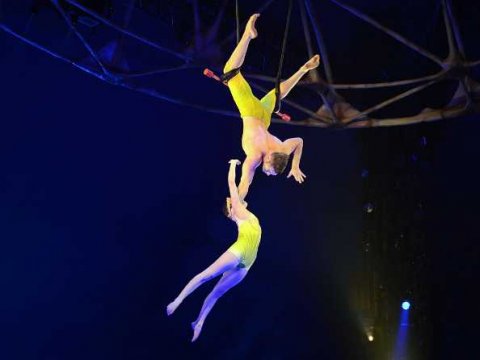
31-year-old Sarah Guillot-Guyard fell 50 feet to her death Saturday night in Las Vegas.

A female Cirque du Soleil performer died Saturday night after falling during a performance of the show “Ka” at the MGM Grand in Las Vegas. The incident marks the first death from an accident onstage in Cirque’s 30-year history. Sarah Guillot-Guyard, a 31-year-old mother of two children ages 8 and 5, fell nearly 50 feet in a fatal high-wire accident. Read more of this post

“Hire mediocre people and make yourself look good.” The manager’s fear of delegating; Some executives hold their businesses and their employees back by not letting go; “I never wanted to delegate for fear of losing my clients”

Last updated: July 1, 2013 7:57 pm

The manager’s fear of delegating

By Naomi Shragai

A young chief executive who founded a thriving company appears to be at the peak of his success. But instead of enjoying his achievement, he is stress­ed and overwhelmed with responsibility. His problem is a failure to delegate work. “The company is a triangle and I feel at the bottom of it, holding everything up,” is how he expresses his dilemma. Although he envies managers who are able to delegate, he feels unable to, believing that the company is an extension of himself and his personality. He adds: “I make these emotional connections and I believe that what I do is about the relationships I make with people. I never wanted to delegate for fear of losing my clients.” Although most executives would agree that delegating is crucial to a business’s success, many still micromanage in such a way that they continue to control most aspects of the work. For many, the skill of delegating can be learnt. But when an executive fails to do so even if it is essential to the growth and functioning of the business, the problem may be more deep-rooted. Beliefs that I have come across in my psychotherapy practice, such as “this business is all about me”; “no one can do it as well as me”; or “people are likely to let me down”, are all justifications that sabotage delegation. One consequence of these beliefs is that staff being managed can feel undermined or undervalued, and may soon lose interest in their jobs. The harm to the company can be twofold, according to Jeannie Hodder, a business coach who works at London Business School. First, micromanaged staff cease thinking for themselves, and without imaginative input the company is deprived of innovative ideas and can stagnate. Second, overly hands-on executives can be left feeling overburdened and stressed, and without time to devise strategy. Read more of this post

How LEGO Stopped Thinking Outside the Box and Innovated Inside the Brick

How LEGO Stopped Thinking Outside the Box and Innovated Inside the Brick

Published : July 01, 2013 in Knowledge@Wharton

Few toys have caught the imagination of children everywhere more than LEGOs — the multi-colored plastic blocks that can snap together to construct houses, castles, space ships or fantastical imaginary figures. The Danish company (whose name roughly translates to “play well”) traces its roots to a failed carpenter named Ole Kirk Christiansen, who in 1932 decided to put his skills to work creating toys made of wood. In the late 1940s, Christiansen invested in the then-risky injection molding technology needed to make the plastic blocks. In the late 1950s, Ole Kirk’s son, Godtfred, came up with the interlocking stud-and-tube design that made the company a household name. But there is a side to the company’s story that is rarely told, one that Wharton practice professor David Robertson says can serve as a guide to both the importance and the perils of innovation in today’s global marketplace. In his new book,Brick by Brick: How LEGO Rewrote the Rules of Innovation and Conquered the Global Toy Industry, Robertson, who wrote the book with journalist Bill Breen, recounts how a binge of innovation almost bankrupted LEGO — and how the company brought itself back from the brink by returning to its roots. An edited transcript of the conversation follows.

Knowledge@Wharton: We’re here today with Wharton practice professor David Robertson, author of the new book, Brick by Brick: How LEGO Rewrote the Rules of Innovation and Conquered the Global Toy Industry. David, thanks for being with us today. Read more of this post